Disclosure: As an Amazon Associate, dailyhomedecorating.com earns from qualifying purchases. Links on this page are affiliate links; they cost you nothing extra. Prices and availability change often, so check the current Amazon listing before you buy.
These lawn mower reviews cover the six lines that between them answer almost every domestic lawn: two gas benchmarks, a wide-cut specialist, and three cordless platforms at three different tiers. Each is reviewed on the same tests — cut, handling, ownership effort and value within its tier — so the profiles can be compared honestly rather than merely admired individually. For the single-class deep dive, see our lawn mower review.
Key Takeaways
- Best overall gas: the Honda HRX line, for stamina, finish and longevity.
- Best cordless: the EGO Power+ line, for cutting confidence without petrol.
- Best value gas: the Toro Recycler line, a mulching specialist at a mid tier.
- Best platform plays: Greenworks and Ryobi, whose batteries run whole sheds of tools.
- Best for big lawns: the Toro TimeMaster, a wide-cut walk-behind that thinks it is a rider.
In this guide
How These Reviews Were Put Together
Each line was judged against the lawn it is actually for, because a mower that is magnificent on a half-acre and miserable in a courtyard has not failed — it has been mis-sold. The tests that matter are the ones repeated across this roundup: cut quality on a weekly-kept lawn, behaviour when the grass gets long, handling on slopes and around obstacles, noise in a real street, and the ownership routine — servicing, storage, consumables — that decides whether year five feels like year one. Tiers are described qualitatively, as the class deserves: the question is never which mower costs least, but which mower’s total proposition fits your ground.
The Reviews

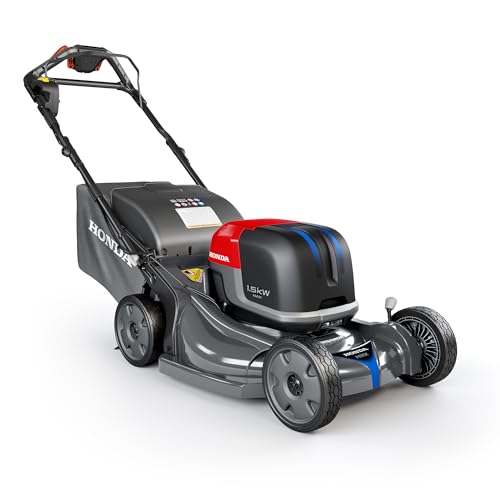
Honda HRX Series Gas Mower
Best Overall Gas — Premium tier
The HRX family is the mower other gas mowers are measured against, and a season with one explains why: the engine starts with an ease that becomes a habit of trust, the drive pulls the machine up slopes without drama, and the deck mulches finely enough that bagging becomes a choice rather than a necessity.
In long grass it simply continues, which is the gas family’s whole argument in one behaviour. The ownership routine is the full petrol one — oil, filter, fuel discipline, winter thought — and the tier is premium. For the lawn that justifies both, no walk-behind in this roundup is more complete.
Strengths
- Superb cut and mulching in all conditions
- Confident self-propelled drive on slopes
- Reputation for very long service life
Trade-offs
- Premium tier
- Full gas servicing and fuel routine
- Heavy around tight obstacles
Best for: Medium-to-large lawns, slopes and coarse grass; owners happy with engine care.
Not suited for: Small flat lawns and quiet-street, early-morning mowing.
EGO Power+ Select Cut Cordless Mower
Best Cordless — Premium tier
The EGO mower line is the proof that cordless has grown up. It cuts real grass with real confidence, starts silently at a button, and folds into a shed corner like it was designed by someone who owns a small shed. The high-voltage platform is the deeper story: one battery family across mowers, trimmers, blowers and more.
Its limits are honest ones — runtime is finite, and a very large lawn will want a second pack resting in the charger — and its tier is premium once the platform is counted. For the owner who wants the modern experience without the modern compromises of early cordless machines, this is the roundup’s recommendation.
Strengths
- Gas-like cutting without fuel, fumes or pull cords
- Quiet enough for early mowing
- One battery platform for the whole shed
Trade-offs
- Premium tier including packs
- Runtime finite on the largest lawns
- Packs are consumables with a lifespan
Best for: Kept medium-to-large lawns and owners building a cordless tool platform.
Not suited for: The largest plots on one pack, and buyers counting every penny of tier.
Toro Recycler Gas Mower
Best Value Gas — Mid tier
The Recycler is the thinking owner’s gas mower: a mulching specialist whose deck and blade are designed to make clippings vanish, sold at a mid tier by a maker with a service network everywhere. For the weekly mulch-mower, it delivers most of the premium gas experience where it counts — the finish — and saves the difference.
It is less refined than the flagship gas lines and bagging plays second fiddle to its mulching brief, but as a proposition — stamina, finish, network, tier — it is the easiest gas recommendation in this roundup for an ordinary medium lawn.
Strengths
- Mulching finish that leads its tier
- Gas stamina without the premium tier
- Parts and service everywhere
Trade-offs
- Gas routine in full
- Bagging is the secondary mode
- Less refined than flagship lines
Best for: Weekly mulch-mowing on medium lawns.
Not suited for: Owners who bag everything or who are leaving petrol behind.

Greenworks 40V Cordless Mower
Best for Small Lawns — Mid tier
Greenworks built its mower line for the lawn most people actually have: small-to-medium, fairly flat, cut on a Saturday morning. It is light to push, quiet to run, simple to store, and backed by a wide platform of sensibly tiered tools, which makes it the roundup’s easiest recommendation for the ordinary suburban plot.
Ask it to reclaim a meadow or climb a bank and it will tell you, politely, that you bought the wrong mower — but that is true of every machine here outside its brief. Inside its brief, it is close to flawless value.
Strengths
- Light, quiet and genuinely easy to live with
- Broad platform at accessible tiers
- Minimal maintenance
Trade-offs
- Not built for overgrowth or steep slopes
- Push drive on much of the line
- Runtime sized for modest lawns
Best for: Small-to-medium flat lawns mowed little and often.
Not suited for: Rough, steep or large plots.
Ryobi 40V Cordless Mower
Best Platform Value — Entry to mid tier
Ryobi’s mower is a good mower and a brilliant platform decision. The cutting is competent, the handling friendly, the storage easy — and if your shelves already hold the platform’s drills, trimmers and blowers, the mower slots into chargers you own and batteries you have already paid for, which quietly makes it the best-value machine in this entire roundup for those households.
Starting the platform from zero for this mower alone is a weaker case, and large or coarse lawns exceed its brief. But platform owners should read this profile as addressed to them personally.
Strengths
- Exceptional value for existing platform households
- Enormous compatible tool range
- Simple, friendly operation
Trade-offs
- Ordinary case if you own no platform tools
- Class limits in heavy grass
- Modest-lawn runtime
Best for: Ryobi platform owners with small-to-medium lawns.
Not suited for: Large lawns, and from-scratch buyers wanting premium cutting.
Toro TimeMaster Wide-Cut Gas Mower
Best for Big Lawns — Premium tier
The TimeMaster answers a specific question — how fast can a walk-behind cut a big lawn? — with a wide deck, self-propelled drive and gas stamina, finishing open ground in a fraction of the passes a standard mower needs. For the large-lawn owner who does not want a rider’s cost, storage and maintenance, it occupies a niche almost alone.
The niche is the caveat: it is bulky in store, deliberate in turns and wasted in a small garden. Buy it for open acres of suburbia and it is a revelation; buy it for a cottage plot and it is a wardrobe with a blade.
Strengths
- Wide deck slashes mowing time on open ground
- Drive handles the machine’s size
- Rider pace without rider ownership
Trade-offs
- Bulky to store and turn
- Premium tier
- Pointless on small or intricate lawns
Best for: Large, open lawns whose owners reject riding mowers.
Not suited for: Small, bed-filled or gate-restricted gardens.
Head-to-Head: What Actually Separates Them
Three axes separate these six lines. The first is stamina: the three gas machines cut indefinitely and shrug off overgrowth, while the cordless three trade that stamina for quiet and cleanliness within a battery’s budget. The second is platform: the cordless lines are really battery systems with a mower attached, and their value compounds with every compatible tool you own, while the gas lines stand alone and ask only for a fuel can and a service routine. The third is geometry: five of the six are standard-width suburban machines, and the TimeMaster is a different species for open ground. Choose your position on those three axes — the method in how to choose a lawn mower formalises it — and the shortlist chooses itself.
Mowing Technique: The Habits Behind a Better-Looking Lawn
The mower matters, but technique decides most of what your lawn looks like on a Sunday evening. The single most useful rule is the one-third rule: never cut more than a third of the grass blade’s height in one pass. Scalping long grass in one go shocks the plant, exposes soil to weeds and leaves a yellow, stressed finish; two passes a few days apart bring an overgrown lawn back far more kindly than one brutal cut.
Cutting height deserves thought rather than a fixed habit. Taller grass shades its own roots, holds moisture and crowds out weeds, so most lawns look and cope better cut a little longer than instinct suggests, with the height eased up further in hot, dry spells when the grass is under stress. Lower settings suit formal, fine lawns in the growing season, but even they suffer if the height drops suddenly rather than gradually.
Work in a pattern that suits the garden: straight overlapping passes on open rectangles, following the contour on curves, with each pass overlapping the last slightly so no uncut strips survive between wheel tracks. Vary the pattern week to week — mowing the same lines forever compacts soil along the wheel runs and trains the grass to lean one way. Leave the edges and tight corners for a trimmer rather than forcing the mower into flower beds, and if you mulch-mow, mow often enough that the clippings are short enough to disappear into the sward instead of lying in clumps.
Timing helps too. Dry grass cuts cleanly and clumps less, so mowing after the dew has lifted beats dawn or dusk sessions on wet grass, which also makes slopes treacherous and decks clog. Sharp blades, sensible height, little-and-often timing: those three habits do more for most lawns than any upgrade of machine.
Safety First: The Rules That Matter Every Time You Mow
Every mower, whatever powers it, spins a steel blade fast enough to throw stones and cut through whatever it meets, so the safety habits below are not fine print — they are part of using the machine, and they apply before, during and after every single session.
The first rule governs any work near the blade or under the deck. Before you tip a mower, scrape the deck, clear a blockage or touch the blade for any reason, switch the engine or motor off and make sure it cannot restart: on a gas mower, disconnect the spark plug lead; on a cordless mower, remove the battery pack; on a corded mower, unplug it and keep the plug where you can see it. A blade that can still be spun by a bumped starter or a squeezed bail bar is a blade that can injure you, and most serious mower injuries happen during exactly this kind of quick maintenance, not during mowing itself.
Never reach under a mower while it is running, and never reach under one that has just been switched off until the blade has come to a complete stop — a spinning blade coasts for a while after the power cuts. If grass clumps clog the discharge chute mid-job, stop, wait for a full stop, make the machine safe as described above, and clear the clog with a stick or a tool, never with your hand.
Before you start, walk the whole lawn and clear it: pick up stones, sticks, toys, hoses, bones and any other debris. A mower blade can fling a small stone at dangerous speed, and hidden objects also damage blades and decks. Keep children and pets completely out of the mowing area while you work and until the mower is put away; they should never ride on, play near or “help” push a mower, and bystanders belong indoors or well away from the cutting path and the discharge side.
Dress for the job: sturdy closed footwear with grip, long trousers, and eye protection as a minimum, with ear protection a sensible addition around a gas engine. Loose clothing, jewellery and dangling laces stay away from the machine. On slopes, work at a steady, conservative pace: with a walk-behind mower, mow across the face of the slope rather than straight up and down it, so the mower cannot roll back toward you if you slip, keep your footing deliberate, and never mow a slope when the grass is wet and slippery. If a slope feels too steep to walk confidently, it is too steep to mow with a walk-behind machine.
Fuel needs its own discipline on gas models. Refuel outdoors only, away from any ignition source, with the engine off and cooled — petrol vapour and a hot exhaust are a bad combination. Use an approved fuel container, never fill to the brim, wipe spills before starting, and store fuel away from living spaces and heat sources. For cordless models, charge batteries on a stable, dry surface with the maker’s charger, and store packs somewhere cool and dry rather than in a freezing or roasting shed.
Lawn Mower Reviews: How to Read the Rest of This Roundup
Read the six profiles above against your own lawn rather than against each other. Each profile’s “not suited for” line is as much a part of the review as its praise, and the fastest way to use this roundup is elimination: strike the lines whose brief excludes your ground, then choose among the survivors by tier and temperament. Two or three lines will survive for most lawns, and between genuine survivors there is rarely a wrong answer — only a better fit for your storage, your street and your Saturdays.
Matching the Six to Six Lawns
The new-build estate lawn — small, flat, overlooked on all sides: the Greenworks line, quiet and light, with the Ryobi the pick if the platform already lives in the garage. The established family half-acre — football, dog, trampoline, coarse grass: the Honda HRX, bought once and kept. The keen mulcher’s medium plot: the Toro Recycler, whose whole design serves the weekly mulching rhythm. The large, open, rectangular plot: the TimeMaster, finishing in passes what others finish in expeditions. The platform household — drills, trimmers and blowers already cordless: whichever of EGO or Ryobi matches the batteries on the shelf, with EGO the step up for bigger ground. The sloping garden: a self-propelled version of the HRX or Recycler, chosen for drive first and everything else second. Six lawns, six answers, no orphans: that is what a healthy category looks like.
A Season With Each Type: Ownership Diaries in Brief
Spring with gas begins with a service ritual — oil, filter, fresh fuel — and the deep satisfaction of a first pull that starts. Spring with cordless begins with a battery clicked in and a button pressed, and feels faintly like cheating. Summer separates them socially: the gas owner plans mowing around neighbours and heat, the cordless owner mows at dawn before a hot day without a thought. Autumn tests stamina, and the gas diary fills with long-grass victories while the cordless diary fills with technique — raised decks, second passes, packs rotated through the charger. Winter is where the gas owner pays the final instalment of the bargain, draining and storing with care, while the cordless owner wipes the deck, parks the packs somewhere temperate and forgets the machine until March. Neither diary is a hardship; they are simply different books, and this roundup’s profiles are written so you can choose which one you would rather keep.
Accessories and Extras Worth Considering
A second battery is the highest-value extra in cordless mowing, converting runtime from a budget into a non-issue. A spare blade is the highest-value extra in all mowing: swap sharp for dull in minutes and sharpen the spare at leisure, and the lawn never suffers a torn cut while a blade waits for attention. A mulch plug or bag, if your machine’s second mode needs one, completes the versatility you paid for. A simple cover keeps a stored mower clean in a working shed. Beyond those, accessories divide into the genuinely useful — a striping roller for the formal lawn, among the best roller lawn mowers territory — and the decorative, and the honest advice of this roundup is to buy the short list, skip the long one, and spend the difference on the garden itself: overseed, feed and edge with tools like the trimmers and sprayers in the related guides below.
When to Buy: Seasons and Model Cycles
Mowers are seasonal goods and their tiers move with the calendar. The year’s new lines arrive for spring at full tier; the previous lines discount as the season turns, and the deepest value of the year sits in the autumn clearance, when a mower bought, serviced and stored properly is simply next year’s mower at this year’s kindness. The risk in autumn buying is only storage: a machine must winter clean, dry and — for gas — with its fuel managed, or the saving evaporates into a spring repair. Buy in spring if the lawn cannot wait; buy in autumn if it can, and let the winter be the discount.
Second Opinions: Where This Roundup Might Be Wrong
Honest reviews publish their doubts. This roundup may overrate the HRX line for owners whose lawns never test it — premium virtues are invisible on easy ground, and the Recycler may be the truer recommendation for more households than the flagship. It may underrate the Ryobi line’s mower as a mower, judging it through its platform; judged blind, it is a perfectly sound machine. And it may date: cordless lines improve yearly, and the gap this roundup describes between the EGO line and the mid-tier cordless field will narrow. Read the profiles for their reasoning, which ages slowly, rather than their rankings, which age like milk — and weight the “not suited for” lines, which age slowest of all.
The Lines We Left Out, and Why
Every roundup is an act of exclusion. Corded lines were left out because their territory — the smallest lawns — is honestly served by almost any competent model, and the choosing there is about cable length and weight rather than lineage. Reel mowers were left out as a different instrument for a different ritual, reviewed in spirit wherever this site discusses small fine lawns. The premium European and commercial lines were left out on tier: magnificent machines whose natural reader is a groundskeeper, not a householder. And the no-name budget lines were left out on evidence: a mower is a decade purchase, and a roundup that cannot stand behind a machine’s parts pipeline in year seven has no business recommending it in year one. What remains — the six profiles above — is the market’s honest centre.
Long-Term Reliability: What the Years Do to Each Line
Project each profile forward. The Honda and Toro gas lines age the way serviced engines age: gradually, predictably, with parts available and knowledge everywhere — the safest long-term bets in the roundup. The EGO line ages as a platform: the mower itself is durable, the packs are the timeline, and the bet is on the platform’s continued health, which its breadth supports. Greenworks and Ryobi age similarly, with their enormous installed bases arguing for parts and packs long into the future. The TimeMaster ages as a specialist: superb while its niche lasts, and a machine to sell on proudly when the big lawn goes. No line here is a reliability gamble; the gamble, as always, is the owner’s routine.
Buying Order for Common Situations
Stated as plainly as this roundup can make it. If you can buy only one mower for an unknown future lawn, buy the EGO line for its breadth of competence, or the Recycler if the future lawn might be rough. If you know your lawn precisely, buy by the matching section above and ignore this paragraph. If the budget is the binding constraint, buy the Greenworks line for small lawns, the Recycler for medium ones, and the Ryobi instead if its platform already lives in your garage. If money is no object and the lawn is demanding, the HRX is the roundup’s summit; if the lawn is vast, the TimeMaster is its own summit. Every path through this paragraph ends at a machine this roundup is content to recommend, which is the definition of a healthy category.
The Roundup’s Method, Defended
A word about why these reviews are written the way they are, because the method is the message. Each line was reviewed as a system in a setting — machine, lawn, owner, season — rather than as a specification with a handle, because that is how mowers are actually experienced and how they actually fail. Raw power was deliberately under-weighted: on kept lawns it saturates quickly, and the differences that survive a season are deck behaviour, drive, noise and the ownership routine. Tiers were described qualitatively because a mower’s cost is a decade-long stream, not a number, and because the honest comparison between a mid-tier machine used weekly and a premium one used reluctantly is not close. Readers who apply the same method to lines this roundup omitted will reach sound verdicts without us, which is the most useful thing a roundup can teach.
If the Shortlist Were Forced to One Page
Compress the six profiles to their essence. The HRX is the gas mower for people who intend to keep a serious lawn for a long time. The EGO is the cordless mower for people who want the modern experience without asterisks. The Recycler is the gas mower for mulchers who count value. The Greenworks is the cordless mower for ordinary lawns honestly described. The Ryobi is the platform made visible — buy it with your shed, not against it. The TimeMaster is the wide answer to a wide question. Six sentences for six machines, and a reader who recognises their own lawn in one of them has found their mower; the rest of this roundup exists to confirm the recognition and to warn, in the “not suited for” lines, where recognition would be a mistake.
After the Purchase: Making the Review True
Every profile in this roundup carries an implicit condition: the verdict holds for an owner who keeps the simple routine. The HRX’s longevity assumes its services; the EGO’s confidence assumes charged, healthy packs; the Recycler’s finish assumes a clean deck and a sharp blade. This is not fine print — it is the same condition every honest review in the category carries, stated plainly because the commonest cause of a “bad mower” story is a good mower maintained by nobody. Buy from this shortlist, keep the routine in the guides linked below, and the review you would write after three seasons is, with high confidence, the one already written here.
How the Six Lines Age in the Shed
A roundup usually ends at the purchase; owners live after it, so consider the six lines as shed-mates across the years. The gas pair ask for their rituals and repay them with indifference to time: a serviced Honda or Toro in year eight is, in every way that matters to the lawn, the machine it was in year two. The TimeMaster ages with its niche — magnificent while the big lawn lasts, and the first thing sold, proudly and profitably, when it doesn’t. The cordless three age as platforms age: the mowers themselves barely change, the packs tick like clocks, and the owner’s loyalty is renewed or revoked at the battery shelf rather than the mower shelf. None of the six becomes an embarrassment; that, across a whole shortlist, is rarer than it should be, and it is the deepest compliment this roundup can pay the category’s current state.
The Reader’s Shortlist: A Self-Test
Close the roundup with the exercise it has been building toward. Name your lawn’s size band, its slope, its grass and its obstacles in one sentence each. Strike every profile whose “not suited for” line describes any part of that sentence. From the survivors, strike any whose platform or servicing story does not fit your shed and your habits. What remains — usually two lines, sometimes one — is your shortlist, and the choice between genuine survivors should be made by handling, by dealer and by the boring virtues, not by further reading. If nothing survives, your lawn is telling you something the roundup respects: it belongs to a rider, a service or a redesign, and the honest recommendation is to listen. Reviews exist to shorten this exercise, not to replace it, and a reader who finishes here with two names and a measuring tape has used the roundup exactly as intended.
One Season Later: The Follow-Up This Roundup Owes You
Roundups are snapshots, and mowers are movies, so here is the follow-up in advance — the checks to run on whichever line you buy, at the end of its first season, to confirm the review’s verdict in your own garden. Did it start willingly every time, or is there a ritual grievance forming? Did the deck stay clean with reasonable effort, and is the finish still what the first month promised? Did the runtime or the fuel routine fit the lawn’s real size, or were you rationing by July? And the master question: did you mow more often, and enjoy it more, than with whatever came before? Four yeses mean the match was right and the next decade is a formality. A no is not a disaster — it is a diagnosis, and every guide linked from this roundup exists to act on one.
The Roundup’s Answers to the Questions Readers Actually Ask
Beyond the formal FAQ, three questions arrive whenever this roundup is discussed, and they deserve direct answers here. “Which one would you buy with your own money?” For the median lawn behind these reviews, the EGO line — with the Recycler the answer the moment the household prefers a fuel can to a battery shelf. “Which one is the mistake-proof choice?” The Greenworks line, for any lawn it fits: its failure mode is merely adequacy, while every other line’s failure mode is mismatch. “Which one will my grandchildren argue over?” The Honda, serviced, on the evidence of every shed in the country. Roundups should not hide behind balance when a reader asks plainly; those are the plain answers, and the profiles above contain the reasoning that qualifies them.
Reading the Tiers Across the Roundup
A final cross-cutting observation. The six lines form three honest pairs: two premium flagships proving what each power family can do at its best; two mid-tier workhorses proving how much of the flagship outcome the sensible money buys; and two specialists — the platform play and the wide-cut — proving that fit beats rank. A reader who understands the pairs understands the market, because almost every mower not in this roundup is an attempt at one of those six positions. Judge any stranger by asking which pair it belongs to and whether it earns its place there; the roundup’s method then outlives the roundup, which is what methods are for.
The Roundup’s Last Word
Six lines, six lawns, one category in rude health. The modern mower market’s embarrassment is not quality but choice, and choice is only an embarrassment to the unmethodical. You now hold the method — territory first, axes second, handling third — and a shortlist in which every survivor has earned its place. Measure the gate, pick your pair, handle the finalists, and then go and mow something. The reviews will keep; the grass will not.
The Roundup’s Method for Handling Disagreement
Readers will find other roundups ranking these six lines differently, and the disagreement deserves a word rather than a shrug. Rankings move when the test lawn moves: put the six on a steep acre and the order inverts; put them on a courtyard and it inverts again. Rankings also move when the weighting moves — score noise at zero and gas climbs; score servicing at zero and it climbs further. This roundup has published its lawn (the kept suburban range, with excursions) and its weights (finish and fit over headline power) precisely so that readers whose ground differs can re-derive their own order from the profiles rather than borrowing ours. A roundup you can re-derive is worth more than a ranking you must merely trust.
Six Lines, One Sentence Each, Revisited After a Season
Season-end verdicts, compressed. The Honda remains the mower other mowers are measured against, and a season did nothing to dethrone it. The EGO remains the future arriving early, its only argument conducted in minutes of runtime. The Recycler remains the thinking mulcher’s value, unglamorous and right. The Greenworks remains the answer for the lawn most people actually own. The Ryobi remains the platform’s best advertisement, bought with the shed or not at all. The TimeMaster remains a specialist that makes big lawns feel small and small lawns feel absurd. Six sentences, six survivors, and a reader no worse off than the season found them — which, in a category this contested, is the roundup’s definition of success.
What to Do With This Roundup Now
Three actions, in order. First, run the self-test from earlier in this article and write down your two survivors. Second, handle those two machines — in a shop, at a neighbour’s, wherever hands are allowed — with the boring virtues as your checklist. Third, buy the one your hands chose, from the channel that will service it, and enter its routine in a logbook the same week. Everything after that is mowing, and mowing, done with the right machine on the right lawn, is the part of this subject that no review can improve upon.
Postscript From the Shed Door
Roundups end, but the six lines in this one go on being started, pushed, emptied, cleaned and stored in thousands of sheds, and their real reviews are written there — in first-pull starts on April mornings, in decks that clear the wettest May cut without complaint, in batteries that click home in the dark. This roundup’s profiles are best read as predictions of those shed-door verdicts, made from the only evidence available at a desk: design, reputation, platform and the accumulated testimony of owners. Buy by the method, keep the routine, and your shed door will confirm the prediction — which is all that any roundup, however long, has ever really been able to promise.
Filed With the Roundup: A Note on Confidence
Roundups should declare their confidence as plainly as their rankings, so here is this one’s. Confidence is highest in the matching method and the “not suited for” lines, which rest on the stable facts of lawns and machines. It is high in the family-level verdicts — gas stamina, cordless convenience — which a decade of owner testimony supports. It is appropriately lower in the fine ordering within each pair, where a season, a region or a reviewer’s hands could reasonably shuffle the places, and lowest of all in anything touching the future, where next year’s battery chemistry outranks this year’s prose. Buy on the high-confidence layers, treat the ordering as guidance, and the roundup will have served you exactly as well as it claims to.
Acknowledgements to the Unreviewed
A roundup’s debts deserve a line. To the dealers whose benches keep the country’s mowers honest and whose regional wisdom informed several profiles here, whether they know it or not. To the owners whose decade-old machines, produced proudly in driveways and forums, supplied the longevity evidence no laboratory can fake. And to the lines that missed the cut by a whisker — the competent corded machines, the honourable reel mowers, the specialists of regions and grasses this roundup could not cover — whose absence is a matter of pages, not of merit. The category is bigger than any six profiles; these six are simply where a reader does best to start.
That closes the roundup as filed: six lines, honestly profiled, honestly bounded, and a method that will outlast every ranking in it — which is the most any set of reviews can fairly promise its readers.
Reading Lawn Mower Reviews Against Your Own Space and Routine
A single review session can flatter or condemn a lawn mower unfairly, so this section slows the judgement down and looks at what only repeated, ordinary use tends to reveal. Run the lawn mower through your least favourite version of its job first, not the easiest demonstration: the awkward corner, the rushed weekday timing, the fuller load, the lower light, or whatever condition in your routine makes this category work hardest. Seasonal thinking helps more than expected: a lawn mower bought in one season will meet different light, humidity, mud, heat, guests and routines in another, so judge its size, storage and upkeep against the hardest season it will face. Finish the longer check by looking at wear points rather than features: the hinge, seam, edge, wheel, latch, surface or joint on a lawn mower that moves, flexes or gets handled most is where its second year is decided, whatever its first week felt like.
Use a simple decision checklist at the end: the lawn mower fits the measured space, suits the real frequency of the job, matches the household’s cleaning temperament, has obtainable parts, and has a named storage home — five yeses make a confident order. If a problem with the lawn mower repeats in the same spot or the same stage of the job, treat the pattern as the clue — patterns point to setup, surface or technique, while random problems point more often to the individual unit. For troubleshooting, start with the boring causes first: power, water, fit, blockage, alignment, a full container, a loose connection or a setting changed by the last person who used the lawn mower, because boring causes account for most apparent failures. Keep a short note of what you adjusted on the lawn mower during the first month, even just a line on your phone, since those notes turn vague impressions into a setup you can repeat, share or troubleshoot months later.
Notice the small recovery moments: how the lawn mower behaves when you pause mid-task, change your mind, need to move it, clean it sooner than planned, or hand it to someone in the household who has never used it before. A well-judged lawn mower explains itself to that second person without a lecture, with controls, grips, openings or adjustments that make sense on contact, and that intuitiveness is worth recording because guests, partners and teenagers will all test it. If you want a concrete listing check, take a name already shortlisted in this guide, such as Honda HRX Series Gas Mower, EGO Power+ Select Cut Cordless Mower and Toro Recycler Gas Mower, and verify that exact lawn mower listing against the measurements and compatibility questions above, field by field, rather than trusting the headline description alone. Keep the packaging of a larger lawn mower until those first ordinary tests are done, flattened if space is tight, because re-boxing an awkward shape from scratch is the hidden difficulty inside many otherwise straightforward returns.
Look at replacement parts and consumables for the lawn mower while you are still comparing, confirming that the pieces most likely to wear, clog, tear, fade or get lost can actually be obtained without replacing the whole product. Share the checklist result with anyone who shares the space, since a lawn mower chosen by one person and resented by another rarely survives, however sensible the purchase looked on paper. Think about who else will use the lawn mower and what they will do differently: shorter reach, less patience, stronger habits, no interest in the manual, and a tendency to leave things wherever they were last set down. Watch for edge cases in your own home: the pet that investigates everything, the child who treats every new object as furniture, the guest who uses force where you use familiarity, and the weather, light or season that changes how a lawn mower behaves.
Decide in advance what good enough looks like for the job the lawn mower does in your home, because chasing a flawless result usually costs more time than the flaw itself, and most households are happier with a reliable ninety percent they actually repeat. Read the manual’s warnings page for the lawn mower even if you read nothing else, because that page is a compressed list of every way the product has ever been misused, and it tells you exactly which of your own habits needs adjusting. Consider the cleaning rhythm honestly: a lawn mower that needs attention after every use suits a household that enjoys small rituals, and frustrates a household that wants to finish a job and walk away, so match the upkeep to the temperament, not the intention. When something about the lawn mower disappoints, change one variable at a time — position, setting, timing, load, accessory or technique — and give the change a fair trial, because changing three things at once leaves you with a better or worse result and no idea why.
Measure before anything else, and measure the lawn mower in its working state rather than its packed or folded state, because handles extend, lids open, cords trail, doors swing and users stand somewhere, and all of that belongs in the measurement. Check the floor, wall, ground or surface the lawn mower will meet, since level, texture, moisture and finish decide more about everyday performance in garden & lawn settings than most shoppers expect when they are comparing listings on a screen. Plan the storage home for the lawn mower before it arrives, naming the exact cupboard, corner, shelf, hook or stretch of floor, because a product without a home migrates around the house and slowly becomes the clutter it was bought to reduce. Test the lawn mower in the first week under deliberately ordinary conditions rather than saving it for a special occasion, so that any problem surfaces while returning, exchanging or adjusting your setup is still simple.
Frequently Asked Questions
Which mower in this roundup is best overall?
There is no single winner, only best fits. The Honda HRX line is the most complete gas mower here; the EGO line is the most complete cordless one; the Toro Recycler is the best value in gas; and the TimeMaster is alone in its wide-cut niche. If a typical suburban owner forced one name from us, the EGO line’s combination of cut, quiet and platform makes it the modern default — with the HRX the answer the moment the lawn gets large, steep or coarse.
Are the premium lines worth their tier over the mid-tier ones?
When the lawn demands it, yes: size, slope, coarse grass and platform breadth all convert premium spending into weekly relief. On an ordinary kept lawn, the mid-tier lines in this roundup — the Recycler and the Greenworks family — deliver most of the outcome for a friendlier tier, and the difference is better spent on blades, servicing and the rest of the garden. Premium buys capability and refinement, not a different colour of grass.
How do these reviews treat runtime and power claims?
Sceptically and qualitatively. Runtime depends on grass length, density, moisture and pace, so any single figure is a fair-weather promise; what matters is whether a mower’s platform offers larger packs and second-battery strategies for bigger lawns. Power is judged by behaviour in long grass rather than by headline numbers. That is why these profiles describe what each machine does in the overgrown test instead of reciting specifications.
Which of these is quietest for a dense street?
The cordless three, by a wide margin, with the Greenworks and Ryobi lines the lightest and calmest of all and the EGO line close behind despite its greater power. All three let you mow early or late without negotiating with the street. The gas lines are honest machines but they announce themselves; on a dense street at antisocial hours, that announcement is a genuine ownership cost.
What should I check in person before buying any of these?
The handle height against your body, the weight in a turn, the height-adjustment mechanism, and whether the machine fits your gate and your shed — bring measurements. On cordless models, check the rest of the platform’s tool range on the shelf beside it. On gas models, confirm where you will service it. Ten minutes of physical checking prevents the commonest buying regret in the category: a good mower that does not fit your life.
Do any of these mowers suit a sloped lawn?
The self-propelled gas lines — the HRX and the Recycler in its driven versions — and the TimeMaster on open slopes, with technique doing the rest: traverse the face of the slope, keep the pace deliberate, never mow it wet. Push cordless models suit gentle inclines only. A steep bank defeats every walk-behind eventually, and the honest recommendation there is a trimmer, terracing or planting.


