Disclosure: As an Amazon Associate, dailyhomedecorating.com earns from qualifying purchases. Links on this page are affiliate links; they cost you nothing extra. Prices and availability change often, so check the current Amazon listing before you buy.
Learning how to choose a lawn mower is really learning how to read your own lawn, because the right machine for a flat quarter-acre of fine grass is the wrong machine for a sloping, rough half-acre, and the showroom cannot tell the difference — only you can. This guide walks through the decision in the order it should actually be made: lawn first, power source second, features last.
Key Takeaways
- Measure your lawn honestly before you shop; size and slope decide more than any feature list.
- Pick the power source — gas, cordless, corded or manual — before you compare individual models.
- Self-propelled drive is worth it on slopes and larger lawns, and wasted money on a small flat one.
- Deck width is a trade: wider covers ground faster, narrower threads gates, beds and tight corners.
- Buy into a battery platform you can reuse across other garden tools if you go cordless.
- Safety and maintenance habits matter as much as the machine; a dull blade ruins any mower’s cut.
In this guide
What You Need to Know Before Comparing Models
Start with the ground itself. Walk your lawn with fresh eyes and note its true size, its slopes, its obstacles — trees, beds, play equipment, narrow side passages — and how far the furthest corner sits from a power socket. Note the grass itself: fine and ornamental, or coarse, weedy and prone to getting away from you in a wet month. Note, too, your storage: a mower lives somewhere for a decade, and a machine that does not fit the shed will live under a tarp and die young.
Then be honest about the gardener. Mowing is a weekly appointment in the growing season, and the best mower is the one you will actually enjoy using: light enough to handle, quiet enough for your street, simple enough that starting it never becomes a negotiation. A keen gardener with a big plot and a strong back can happily run a heavy gas machine; a busy owner of a small lawn will keep it cut far more reliably with a light cordless model that starts at the press of a button.
Finally, understand that a mower is a system, not an object. Gas models bring fuel storage and engine servicing into your life. Cordless models make you a citizen of a battery platform, with chargers and packs shared across tools. Corded models tie you to a socket and a route. Choosing the system you can live with matters more than any single specification, which is why the companion piece, the lawn mower buying guide, treats the types in depth while this guide concentrates on the decision itself.
How to Choose a Lawn Mower in 7 Steps
Step 1: Measure the Lawn and Map Its Obstacles
Everything downstream depends on area. A small lawn — the kind you can cross in twenty paces — suits a compact corded, cordless or even reel mower. A medium suburban lawn is the heartland of the standard walk-behind. A genuinely large plot pushes you toward wide decks, self-propelled drive or a rider. Count the obstacles as carefully as the area: every tree, bed and gate is a turning manoeuvre, and a lawn broken into small, fiddly sections rewards a nimble, narrower machine far more than a fast, wide one.
Step 2: Choose the Power Source Before the Brand
Gas offers unlimited runtime and the most muscle for thick or neglected grass, at the price of noise, fumes and servicing. Cordless offers quiet, clean, push-button convenience with runtime limits that matter only if your lawn outgrows a charge. Corded offers simplicity and lightness for small lawns near the house. Manual reel mowers offer silence and exercise on tiny, flat, fine lawns. Decide this first, because it halves the catalogue instantly and every later comparison happens inside one family. Our head-to-head, lawn mower vs electric lawn mower, works through the gas-versus-electric argument in full.
Step 3: Decide Between Push and Self-Propelled
A push mower’s wheels turn because you push; a self-propelled mower drives its wheels and asks you only to steer and keep pace. On flat, small-to-medium lawns, pushing is honest exercise and the simpler machine is cheaper to buy and to maintain. On slopes, on large lawns, or for anyone whose knees, back or shoulders have opinions, self-propelled drive transforms the job. If your lawn has any meaningful slope, treat drive as close to essential; if it is a flat postage stamp, skip it and spend the difference elsewhere.
Step 4: Match Deck Width to Your Ground, Not Your Ambition
A wider deck cuts a wider swath and finishes open ground faster, but it is clumsier around beds, heavier to turn and may not fit through your side gate — measure the gate before you fall for a wide machine. A narrower deck takes more passes but threads a typical garden gracefully. Most suburban lawns sit happily in the middle of the range; only genuinely open ground justifies going wide, and only genuinely tiny or obstacle-strewn plots justify going narrow.
Step 5: Decide How the Clippings Will Be Handled
Mowers mulch clippings finely back into the lawn, discharge them from the side, or collect them in a bag. Mulching returns moisture and nutrients and eliminates bag-emptying, but it demands frequent mowing so clippings stay short. Bagging leaves the tidiest finish and handles longer grass, at the cost of constant emptying and somewhere to put the clippings. Side discharge is the rough-and-ready option for long grass. Many mowers offer more than one mode; check that the modes you will actually use are the ones the machine does well, rather than paying for versatility you will never switch on.
Step 6: Check Height Adjustment and Wheel Design
You will change cutting height with the seasons and the weather, so the adjustment mechanism matters weekly: a single lever that moves all wheels together is a small luxury you will appreciate every time, while individual wheel adjusters are a fiddle you will resent. Large rear wheels roll more easily over rough or sloping ground and make turning less of a wrestle. And try the handle: adjustable or folding handles suit different heights of gardener and halve the storage footprint.
Step 7: Weigh Noise, Storage and the Platform Question
Close the decision with the practicalities. If you mow early, late or in a dense neighbourhood, a quiet electric machine is a social courtesy as much as a feature. If storage is tight, look for folding handles or upright storage on cordless models. And if you choose cordless, choose the platform, not just the mower: the batteries are the expensive part, and a platform shared with your trimmer, blower and other tools — the kit you will round out with things like the best grass edge trimmers — spreads that cost across the whole garden shed.
Gear for This Guide: Four Mowers That Cover the Main Decisions
The four machines below are prose profiles of well-known lines, included to show how the steps above land on real choices. Treat each as a representative of its type rather than a lone recommendation, and compare it against the fuller shortlist in our lawn mower reviews.

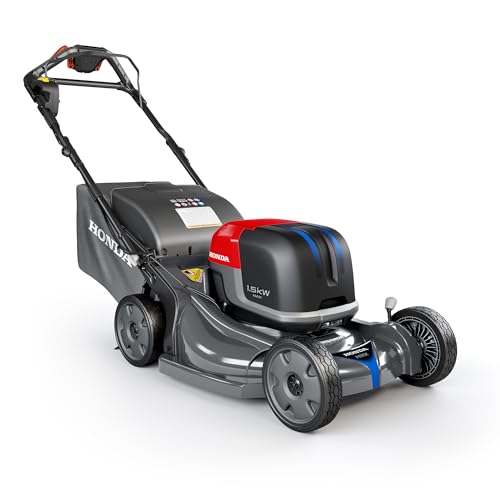
Honda HRX Series Gas Mower
Premium-tier gas walk-behind
The Honda HRX line is the machine the steps above point to when the answers are: medium-to-large lawn, thick grass, a slope worth respecting and an owner happy to do basic engine care. It is a self-propelled gas mower from the maker whose small engines have the strongest reputation in the class, with a deck designed to mulch finely as well as bag.
In the framework of this guide it scores where gas should score: sustained power in heavy growth, drive that takes the slope out of the job, and height adjustment simple enough to use weekly. It asks in return for fuel storage, oil changes and a midwinter thought about storage.
Strengths
- Sustained cutting power in thick or damp grass
- Self-propelled drive that suits sloped lawns
- Mulching and bagging both handled well
Trade-offs
- The most maintenance of any pick here
- Heavier to manoeuvre in tight corners
- Premium tier within gas walk-behinds
Best for: Owners of medium-to-large lawns with slopes or coarse grass who do not mind engine care.
Not suited for: Small flat lawns, noise-sensitive streets, or anyone who wants push-button simplicity.
EGO Power+ Select Cut Cordless Mower
Premium-tier cordless walk-behind
The EGO Power+ line represents the top end of cordless mowing: a high-voltage platform built to feel like gas without the petrol, aimed at medium and larger suburban lawns. In step terms, it is the answer when the lawn is big enough that runtime matters but the owner wants quiet, clean, low-maintenance mowing.
Its platform is the point as much as the mower: the same large packs run a wide family of garden tools, so the battery investment works across the shed. Expect a heavier machine than entry cordless models and a premium tier to match.
Strengths
- Gas-like cutting confidence without fuel or fumes
- Strong battery platform shared across many tools
- Quiet running and push-button starting
Trade-offs
- Premium tier, especially with larger packs
- Heavier than entry-level cordless mowers
- Runtime still finite on very large lawns
Best for: Medium-to-large lawn owners who want cordless convenience without giving up cutting confidence.
Not suited for: Anyone whose lawn regularly outgrows a single charge and who has no second pack.

Greenworks 40V Cordless Mower
Mid-tier cordless walk-behind
Greenworks’ mid-voltage line is the cordless answer for the classic small-to-medium suburban lawn: light, simple, quiet and easy to store, with a battery platform that also powers a broad range of everyday garden tools at a friendlier tier than the premium platforms.
Worked through the steps, it fits a flat or gently sloping lawn, an owner who mows little and often, and a shed where the mower shares space with everything else. It is not the tool for reclaiming a meadow, and it does not pretend to be.
Strengths
- Light, simple and easy to store
- Quiet push-button operation
- Platform batteries fit many other garden tools
Trade-offs
- Less muscle for thick, overgrown grass
- Runtime suits small-to-medium lawns best
- Push drive only on much of the line
Best for: Owners of small-to-medium, reasonably flat lawns who mow regularly.
Not suited for: Large, steep or frequently overgrown lawns.
Toro Recycler Gas Mower
Mid-tier gas walk-behind
The Toro Recycler line is built around mulching — the name is the mission — and sits in the sensible middle of the gas market: self-propelled versions for lawns with some slope, a reputation for chopping clippings fine enough to vanish into the sward, and pricing in tier terms well below the premium gas lines.
It suits the owner whose answers run: medium lawn, mulching preferred, some engine care acceptable, premium tier not required. Toro’s long presence in lawn care also means parts and service are easy to find, which matters over a decade of ownership.
Strengths
- Mulching performance is the design priority
- Self-propelled options for sloped lawns
- Parts and service widely available
Trade-offs
- Gas noise, fumes and servicing remain
- Bagging is secondary to its mulching brief
- Heavier than cordless equivalents
Best for: Mulch-mowing owners of medium lawns who want gas stamina at a mid tier.
Not suited for: Anyone set on avoiding engine maintenance entirely.
Common Mistakes When Choosing a Mower
The commonest mistake is buying for the lawn you wish you had: the wide, fast machine for a garden of beds and corners, or the featherweight for a plot that turns out to be half rough meadow. The second is ignoring the gate, the shed and the socket — physical facts that outlast enthusiasm. The third is choosing a cordless mower by the mower alone and discovering the battery platform locks you into tools you do not want; choose the platform as deliberately as the machine.
Owners also underestimate slopes, buying a push mower for ground that will fight them every week, and overestimate their appetite for maintenance, buying gas for its power and then resenting every oil change. Finally, many buyers fixate on the purchase tier and forget the ownership costs — fuel, servicing, battery replacement — laid out in the lawn mower pros and cons, which is worth reading before any money moves.
Pro Tips From the Far Side of the Learning Curve
Buy at the end of the season if you can wait: outgoing models drop a tier as new lines arrive, and a mower bought in autumn, stored properly, is new in every way that matters come spring. Whatever you buy, learn the blade before the features — a sharp blade on a modest mower out-cuts a dull blade on a flagship. Keep the manual; the height settings, oil grade and storage procedure in it are written for your exact machine. And photograph your lawn in its worst month, not its best, and shop against that photograph.
Worked Examples: Three Buyers, Three Right Answers
The flat quarter-acre. Fine grass, two flower beds, a shed with room to spare, an owner who mows on Saturday mornings. The steps land on a mid-tier cordless mower with mulching: quiet for the neighbours, light around the beds, batteries shared with a trimmer. Gas would be power without purpose here.
The sloping half-acre. Coarse grass, a bank at the back, an owner who sometimes lets it grow long between cuts. Now the answers flip: self-propelled gas, chosen for drive on the slope and stamina in long grass, with bagging for the heavy cuts and mulching for the weekly trim. The same budget spent on cordless would buy runtime anxiety.
The pocket lawn. A small, flat square of fine grass in front of a terraced house, no shed, storage in a hallway cupboard. A compact corded mower or a reel mower wins: light, upright-storing, silent. Anything bigger is not a better mower for this lawn; it is a storage problem with a blade. If the patch grows by way of a move, the decision can be revisited with the framework in is a lawn mower worth it.
Safety First: The Rules That Matter Every Time You Mow
Every mower, whatever powers it, spins a steel blade fast enough to throw stones and cut through whatever it meets, so the safety habits below are not fine print — they are part of using the machine, and they apply before, during and after every single session.
The first rule governs any work near the blade or under the deck. Before you tip a mower, scrape the deck, clear a blockage or touch the blade for any reason, switch the engine or motor off and make sure it cannot restart: on a gas mower, disconnect the spark plug lead; on a cordless mower, remove the battery pack; on a corded mower, unplug it and keep the plug where you can see it. A blade that can still be spun by a bumped starter or a squeezed bail bar is a blade that can injure you, and most serious mower injuries happen during exactly this kind of quick maintenance, not during mowing itself.
Never reach under a mower while it is running, and never reach under one that has just been switched off until the blade has come to a complete stop — a spinning blade coasts for a while after the power cuts. If grass clumps clog the discharge chute mid-job, stop, wait for a full stop, make the machine safe as described above, and clear the clog with a stick or a tool, never with your hand.
Before you start, walk the whole lawn and clear it: pick up stones, sticks, toys, hoses, bones and any other debris. A mower blade can fling a small stone at dangerous speed, and hidden objects also damage blades and decks. Keep children and pets completely out of the mowing area while you work and until the mower is put away; they should never ride on, play near or “help” push a mower, and bystanders belong indoors or well away from the cutting path and the discharge side.
Dress for the job: sturdy closed footwear with grip, long trousers, and eye protection as a minimum, with ear protection a sensible addition around a gas engine. Loose clothing, jewellery and dangling laces stay away from the machine. On slopes, work at a steady, conservative pace: with a walk-behind mower, mow across the face of the slope rather than straight up and down it, so the mower cannot roll back toward you if you slip, keep your footing deliberate, and never mow a slope when the grass is wet and slippery. If a slope feels too steep to walk confidently, it is too steep to mow with a walk-behind machine.
Fuel needs its own discipline on gas models. Refuel outdoors only, away from any ignition source, with the engine off and cooled — petrol vapour and a hot exhaust are a bad combination. Use an approved fuel container, never fill to the brim, wipe spills before starting, and store fuel away from living spaces and heat sources. For cordless models, charge batteries on a stable, dry surface with the maker’s charger, and store packs somewhere cool and dry rather than in a freezing or roasting shed.
Mowing Technique: The Habits Behind a Better-Looking Lawn
The mower matters, but technique decides most of what your lawn looks like on a Sunday evening. The single most useful rule is the one-third rule: never cut more than a third of the grass blade’s height in one pass. Scalping long grass in one go shocks the plant, exposes soil to weeds and leaves a yellow, stressed finish; two passes a few days apart bring an overgrown lawn back far more kindly than one brutal cut.
Cutting height deserves thought rather than a fixed habit. Taller grass shades its own roots, holds moisture and crowds out weeds, so most lawns look and cope better cut a little longer than instinct suggests, with the height eased up further in hot, dry spells when the grass is under stress. Lower settings suit formal, fine lawns in the growing season, but even they suffer if the height drops suddenly rather than gradually.
Work in a pattern that suits the garden: straight overlapping passes on open rectangles, following the contour on curves, with each pass overlapping the last slightly so no uncut strips survive between wheel tracks. Vary the pattern week to week — mowing the same lines forever compacts soil along the wheel runs and trains the grass to lean one way. Leave the edges and tight corners for a trimmer rather than forcing the mower into flower beds, and if you mulch-mow, mow often enough that the clippings are short enough to disappear into the sward instead of lying in clumps.
Timing helps too. Dry grass cuts cleanly and clumps less, so mowing after the dew has lifted beats dawn or dusk sessions on wet grass, which also makes slopes treacherous and decks clog. Sharp blades, sensible height, little-and-often timing: those three habits do more for most lawns than any upgrade of machine.
How Your Grass Type Changes the Choice
Grass is not one thing, and the mower that flatters a fine ornamental lawn can labour on a coarse utility one. Fine, dense turf of the kind used for show lawns rewards a clean, precise cut and tolerates — even prefers — a lighter machine used often; it rarely tests a mower’s power but punishes a dull blade and a deck that tears. Coarse, vigorous grasses, the kind seeded for family wear and football, grow fast, stay lush and arrive at the mower thick and sometimes wet; they reward stamina, a deck that clears clippings freely and height settings with room to spare.
Shady lawns grow thin and moss-prone and want to be cut longer and gentler, with clippings collected if disease is about; a mower that scalps will finish what the shade started. Lawns on poor, thin soil grow slowly and suit almost anything, but they expose every bump to the blade, favouring larger wheels and a deck that rides smoothly. New lawns, in their first season, want a light machine and a high cut while roots establish. Read your grass before you read catalogues: the catalogue cannot see your lawn, and this single act of attention eliminates more wrong purchases than any specification comparison.
Seasonal and Regional Considerations
Climate edits the decision too. In regions with a long, wet growing season, grass spends much of the year lush and heavy, which argues for stamina, corrosion-resistant decks and bagging capacity for the wet cuts. In hot, dry regions, growth is a spring and autumn event with a summer pause, runtime matters less than the ability to cut high and mulch finely to shade roots and hold moisture. Where winters are hard, storage and winterising move up the list: a gas mower in an unheated shed in a cold climate needs its fuel managed properly, and cordless batteries prefer to winter somewhere temperate rather than in a freezing outbuilding.
Local rules belong in the reckoning as well. Some municipalities restrict gas mower noise or hours, some newer developments effectively require quiet equipment by covenant or custom, and some regions offer incentives for electric garden equipment. None of this should override the lawn-first logic of the steps in this guide, but a mower that falls foul of local rules is a poor purchase however well it cuts, so check before the machine comes home rather than after.
A Glossary of Mower Terms Worth Knowing
Deck: the housing that contains the blade; its size sets the cutting width and its shape governs airflow and finish. Mulching: cutting clippings repeatedly inside the deck until they are fine enough to fall into the lawn and feed it. Bagging: collecting clippings in a rear or side bag for a tidy finish and easy removal. Side discharge: ejecting clippings from the side of the deck, the mode for long grass. Self-propelled: the engine or motor drives the wheels; you steer rather than push. Bail bar: the handle bar you hold to keep the blade turning; release it and the blade stops — the mower’s core safety control. Cutting height: the distance from ground to blade, adjustable on the wheels or deck, and the setting you will change most. Platform: a cordless battery system shared across tools; the batteries fit every tool in the family. Torque: twisting force; in mower terms, the ability to keep the blade turning when the grass fights back. Knowing these nine terms turns a specification sheet from marketing into information.
Trying Before You Buy, and the Second-Hand Question
Where a dealer allows it, handle the machine: lift it, turn it, work the height lever, fold the handle. Mowers are bought on specifications and lived with through wrists and shoulders, and ten minutes of handling predicts satisfaction better than an hour of reading. Ask about the service bench as much as the showroom: where will it be sharpened, serviced and repaired, and are blades and bags stocked locally?
Second-hand mowers deserve a fair hearing in a choosing guide, because good machines outlast owners’ enthusiasm and the used market is full of nearly-new mowers from lawns that became patios. Judge a used machine by cold starting, blade straightness, deck soundness and the seller’s story, and budget a service and a blade into the true price. What you should never buy used is damage: a bent blade, a cracked deck or an engine that knocks is not a bargain at any tier, because each suggests violence underneath that you cannot inspect. Buy the previous owner’s care, never their neglect.
Budgeting in Tiers: What Each Tier Actually Buys
Tiers in this category buy identifiable things, and naming them prevents both overspending and false economy. The entry tier buys adequacy: a sound cut on an easy lawn, basic height adjustment, and a machine whose refinements are few but whose fundamentals are honest. The mid tier buys breadth and durability: better decks and mulching, drive options, stronger platforms, and the build quality that makes a decade plausible. The premium tier buys capability at the edges — power for the worst month, width for the biggest lawn, refinement in drive and handling — plus longevity features whose value only appears in years five to ten. The choosing error is rarely the tier itself; it is buying a tier for features your lawn never invokes, or starving a demanding lawn with a tier that cannot serve it. Match the tier to the hardest honest description of your ground, and the money follows the grass rather than the brochure.
The Final Checklist Before Money Moves
Run this list in order, out loud if necessary. I have measured the lawn, the gate, the narrowest passage and the storage space. I have chosen the power family and can say why in one sentence. I have decided on drive based on my slopes, not my optimism. I know my default clippings mode and the machine I am buying is designed around it. If cordless, I have read the platform’s whole tool range and would buy into it again. If gas, I know where it will be serviced. I have handled the machine or its sibling and worked its height lever. I have read the warranty’s fine print on batteries or deck corrosion. And I have checked local rules on noise and hours. Nine yeses: buy with confidence. Any no: that item is your remaining homework, and it is cheaper done now than after delivery.
After the Purchase: The First Month With a New Mower
The first month sets the habits that decide the decade. Read the manual properly once — not the safety pages only, all of it — and register the warranty while the receipt is findable. Make the first mow a slow, high, learning mow: you are mapping the lawn’s bumps, slopes and hidden edges as much as cutting it. Establish the maintenance rhythm immediately: deck cleaned after every mow, blade checked monthly, fuel or battery routine followed from day one rather than adopted after the first failure. Note what surprises you — the corner it cannot reach, the slope that feels different under power — and solve those in month one with technique or a trimmer, before they become the reasons you dread the job. A mower befriended in its first month is a mower still liked in its tenth year.
Choosing for Someone Else: Gifts, Parents and Shared Machines
Sometimes the chooser is not the user, and the steps in this guide bend accordingly. Buying for an older parent, weight falls and starting effort dominate everything: the lightest cordless machine with the simplest controls is the right gift even if the lawn could justify more, because a mower that lives unused in a parent’s shed helps nobody. Buying for a new homeowner, versatility dominates: a mid-tier machine that mulches and bags will survive the garden’s first redesigns. Buying a shared machine for two households, durability and a neutral platform dominate, and the agreement about servicing and storage should be written before the purchase, not negotiated after the first breakdown. In every case the principle survives: choose for the hands that will push it and the lawn it will actually meet, not for the person paying or the lawn in the brochure photograph.
The Ten-Minute Showroom Test
When the shortlist is down to two or three machines, decide with your body. Push each one the length of the shop and turn it at the end, twice; the one that turns like furniture is the one that will fight you at every headland for a decade. Work the height lever with one hand. Lift the front, then the back, as you would to clean or load it. Fold and unfold the handle. On a cordless model, remove and refit the battery with your eyes on the latch, not the instructions. On a gas model, mime the starting sequence and ask yourself honestly whether you will still enjoy it in year six. Ten minutes of this predicts ownership satisfaction better than any review — including the ones on this site — because reviews test machines on their lawns, and you are about to test yours on your body.
If the test leaves two machines level, let the platform and the service bench decide: the battery family with the tools you will actually buy, the dealer whose workshop you would trust with a fault in May. Those are the tie-breakers that keep paying out long after the showroom differences are forgotten.
Choosing When the Lawn Is About to Change
Gardens are not finished things, and a mower bought for today’s lawn may meet a different one within a few seasons: the extension that eats a corner, the children’s football pitch that becomes a flower garden, the rough bank finally terraced. Choose with one eye on the probable direction of change. A lawn likely to shrink argues for versatility in a smaller machine rather than investment in width. A lawn likely to grow — a plot bought rough and being tamed in stages — argues for buying one size up in stamina, because the taming years are the hardest work the mower will ever do. A lawn likely to be redesigned entirely argues for the honest stopgap: a sound used machine, chosen by the second-hand tests in this guide, while the real budget waits for the real garden.
The same logic applies to the gardener’s own trajectory. A mower is a ten-year companion, and the ten years will change the hands that push it. Adjustable handles, electric starting and self-propelled drive are, among other things, insurance bought cheaply in advance — features that cost little at purchase and can add years of independent mowing later. Choosing well means choosing for the household’s future as honestly as for its present, and the steps in this guide accommodate both: simply answer them twice, once for the lawn and gardener you have, and once for the ones you reasonably expect.
A Word on Brands, Badges and Loyalty
Every category has its tribes, and mower owners defend their badges with a warmth that surprises outsiders. Strip the tribalism away and a residue of sense remains: established makers support their machines with parts, dealers and documentation for decades, and that support — not the badge — is what loyalty is actually purchasing. A no-name machine at an entry tier may cut perfectly for three seasons and become unrepairable in the fourth for want of a part that costs less than the fuel in its tank. The choosing rule that follows is unglamorous and reliable: buy the least machine that fully serves your lawn, from a maker whose parts pipeline you can verify, through a channel that will exist when you need it. Brand loyalty earned that way is not tribalism; it is bookkeeping.
The Choice in Retrospect: What Owners Wish They Had Weighted
Ask experienced owners what they would weight differently and the answers form a pattern this guide endorses. Almost nobody wishes they had bought more power; many wish they had bought more convenience — the drive they talked themselves out of, the platform they nearly chose, the lighter machine they decided was beneath them. Several wish they had measured the gate. A striking number wish they had spent less time comparing models within a family and more time choosing the family itself, because the family decided their decade and the model merely decorated it. And nearly all of them, whatever they bought, volunteer the same closing advice unprompted: whatever you choose, keep the blade sharp. A choosing guide can do worse than end where its subjects end — with the family chosen deliberately, the physical facts measured, and the blade understood as the soul of the machine.
One Page, Whole Decision
Everything in this guide compresses onto one page, and here it is. Your lawn’s size, slope, grass and obstacles choose the family and the size. Your maintenance appetite confirms or vetoes the family. Your gate and shed veto the dimensions. Your platform, if cordless, is chosen as a system, not an accessory. Your tier follows the hardest honest description of the ground. Your hands make the final call between the survivors. Print that page, answer it in pencil, and the choosing is done — the rest of this guide, and the cluster around it, exists to explain why those six sentences work, to warn where they bend, and to stand behind the purchase they produce for the decade it will serve.
A Room-by-Room Fitting Walkthrough Before You Choose a Lawn Mower
Technique matters more with a lawn mower than most instructions admit, because the same product can feel clumsy or effortless depending on the order you do things in and the setup you repeat each time. Start by standardising your starting position: the lawn mower in the same place, at the same setting, height or configuration each time, so that any change in results tells you something about the job rather than about a forgotten adjustment. Check the floor, wall, ground or surface the lawn mower will meet, since level, texture, moisture and finish decide more about everyday performance in garden & lawn settings than most shoppers expect when they are comparing listings on a screen. Consider the cleaning rhythm honestly: a lawn mower that needs attention after every use suits a household that enjoys small rituals, and frustrates a household that wants to finish a job and walk away, so match the upkeep to the temperament, not the intention.
If you want a concrete listing check, take a name already shortlisted in this guide, such as Honda HRX Series Gas Mower, EGO Power+ Select Cut Cordless Mower and Greenworks 40V Cordless Mower, and verify that exact lawn mower listing against the measurements and compatibility questions above, field by field, rather than trusting the headline description alone. Measure before anything else, and measure the lawn mower in its working state rather than its packed or folded state, because handles extend, lids open, cords trail, doors swing and users stand somewhere, and all of that belongs in the measurement. Use a simple decision checklist at the end: the lawn mower fits the measured space, suits the real frequency of the job, matches the household’s cleaning temperament, has obtainable parts, and has a named storage home — five yeses make a confident order. When something about the lawn mower disappoints, change one variable at a time — position, setting, timing, load, accessory or technique — and give the change a fair trial, because changing three things at once leaves you with a better or worse result and no idea why.
Test the lawn mower in the first week under deliberately ordinary conditions rather than saving it for a special occasion, so that any problem surfaces while returning, exchanging or adjusting your setup is still simple. Photograph your setup once the lawn mower is working well — the position, settings, arrangement or layout you settled on — so that after a move, a deep clean or a seasonal break you can recreate the arrangement that worked instead of rediscovering it. For troubleshooting, start with the boring causes first: power, water, fit, blockage, alignment, a full container, a loose connection or a setting changed by the last person who used the lawn mower, because boring causes account for most apparent failures. Keep a short note of what you adjusted on the lawn mower during the first month, even just a line on your phone, since those notes turn vague impressions into a setup you can repeat, share or troubleshoot months later.
Share the checklist result with anyone who shares the space, since a lawn mower chosen by one person and resented by another rarely survives, however sensible the purchase looked on paper. Seasonal thinking helps more than expected: a lawn mower bought in one season will meet different light, humidity, mud, heat, guests and routines in another, so judge its size, storage and upkeep against the hardest season it will face. Slow down at the difficult part rather than speeding up, because most lawn mower tasks fail at the moment of impatience — the forced fit, the skipped check, the extra load — and a ten-second pause at that moment prevents most of the damage and most of the rework. Read the manual’s warnings page for the lawn mower even if you read nothing else, because that page is a compressed list of every way the product has ever been misused, and it tells you exactly which of your own habits needs adjusting.
If someone else in the household shares the lawn mower, agree the same basic sequence together, because two conflicting techniques — different settings, storage spots or cleaning habits — will make even a good product seem inconsistent from one use to the next. If a problem with the lawn mower repeats in the same spot or the same stage of the job, treat the pattern as the clue — patterns point to setup, surface or technique, while random problems point more often to the individual unit. Watch for edge cases in your own home: the pet that investigates everything, the child who treats every new object as furniture, the guest who uses force where you use familiarity, and the weather, light or season that changes how a lawn mower behaves. Decide in advance what good enough looks like for the job the lawn mower does in your home, because chasing a flawless result usually costs more time than the flaw itself, and most households are happier with a reliable ninety percent they actually repeat.
Look at replacement parts and consumables for the lawn mower while you are still comparing, confirming that the pieces most likely to wear, clog, tear, fade or get lost can actually be obtained without replacing the whole product. Think about who else will use the lawn mower and what they will do differently: shorter reach, less patience, stronger habits, no interest in the manual, and a tendency to leave things wherever they were last set down. Plan the storage home for the lawn mower before it arrives, naming the exact cupboard, corner, shelf, hook or stretch of floor, because a product without a home migrates around the house and slowly becomes the clutter it was bought to reduce. Build a tiny finishing ritual: a quick inspection of the result, a wipe, empty, coil, cover or reset of the lawn mower as appropriate, and a note of anything that felt different, so the next session starts from a known state instead of a mystery.
Frequently Asked Questions
How do I know what size mower my lawn needs?
Work from area and obstacles rather than area alone. Small, open lawns suit compact decks; medium suburban lawns sit in the standard walk-behind range; large or open plots justify wide decks or a rider. Then subtract for obstacles: every bed, tree and narrow gate argues for a narrower, more nimble machine. Measure your gate and storage space before buying, because a mower that cannot reach the lawn or fit the shed fails regardless of its specifications.
Is gas or electric better for a first mower?
For most first-time owners of small-to-medium lawns, cordless electric is the gentler start: push-button starting, little maintenance and quiet running. Gas earns its place when the lawn is large, sloped or coarse enough that runtime and raw power genuinely matter. Corded electric suits small lawns near the house. The honest answer follows your ground, not fashion, and the full comparison is worked through in our gas-versus-electric guide.
Do I really need a self-propelled mower?
You need one if your lawn slopes, if it is large, or if pushing a mower is physically hard for you; in those cases drive transforms the job from a workout into steering. On a small, flat lawn it adds cost, weight and complexity for little benefit. A useful test: if you dread the slope in your garden now, with no mower at all, you will dread it more pushing one uphill.
How long should a lawn mower last?
A decent walk-behind mower, maintained on schedule, should serve for many years — routinely a decade or more for the machine itself. Gas engines need their oil, filter and plug routine; cordless mowers usually outlast their first battery pack, which is a replaceable consumable. The killers are neglect and storage: a clean, dry-stored, sharp-bladed mower ages slowly, while one left wet and clogged under a tarp ages in a couple of seasons.
Should I mulch or bag my clippings?
Mulching suits regular mowing: clippings stay short, vanish into the lawn and return moisture and nutrients, with no bags to empty. Bagging suits longer grass, a formal finish, or lawns where clippings would track indoors. Many owners do both seasonally — mulch the weekly trim, bag the first heavy cut of spring. Choose a mower whose strength matches the mode you will use most, rather than the mode you might use once.
What is the one-third rule and why does it matter when choosing?
The rule says never remove more than a third of the grass height in one pass, because scalping shocks the plant and invites weeds and disease. It matters when choosing because it sets your mowing frequency: a mower that is quick and pleasant to use gets used little and often, which is exactly what the rule demands. A machine you dread starting will be used rarely and brutally, and no specification can compensate for that.


