Disclosure: As an Amazon Associate, dailyhomedecorating.com earns from qualifying purchases. Links on this page are affiliate links; they cost you nothing extra. Prices and availability change often, so check the current Amazon listing before you buy.
Food storage bags vs reusable silicone bags is the defining choice of the modern storage drawer, and it is not really a contest between two products — it is a choice between two philosophies. On one side, the classic disposable food storage bag: pennies per use, zero washing, a fresh sterile surface every time, and a piece of single-use plastic in the bin at the end. On the other, the reusable silicone bag: a durable, heat-tolerant, washable pouch that costs real money upfront and then serves for years, asking only to be washed and dried like any other kitchen tool. Quick verdict: choose disposables for raw meat, long freezes, travel and the messy jobs where hygiene and certainty rule; choose silicone for the daily rhythm of leftovers, lunches, produce and reheating; and know that most well-run kitchens end up choosing both, allocated by job — this article shows you exactly where the line falls.
It is worth saying why this particular versus matters more than most product comparisons. Storage bags are not an occasional purchase; they are a daily interface between your household and its food, touched more often than almost any appliance you own. A wrong allocation does not announce itself as a bad purchase — it leaks value slowly, in freezer-burned portions, in unwashed reusables quietly retired, in a drawer that never quite has the right bag for the job at hand. Getting the allocation right, by contrast, is one of those small domestic decisions that pays out in calm, saved food and saved money every single week, which is why this article takes its criteria one at a time and refuses to hide behind a single score.
Key Takeaways
- Disposables win on convenience, hygiene certainty for raw foods, and zero maintenance.
- Silicone wins on long-run waste, durability, and heat — it can reheat and cook where film bags cannot.
- Freezer performance is close for weeks; disposables in vacuum form win for months.
- The real deciding factor is your washing habit: silicone only pays off if it is washed and dried after every use.
- A hybrid drawer — silicone for the daily cycle, disposables for raw and long jobs — beats either pure system for most homes.
- Check price on Amazon for both sides before deciding, as pack configurations change often.
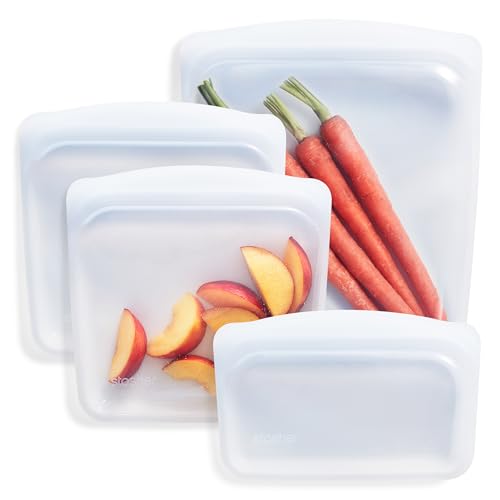
Food Storage Bags vs Reusable Silicone Bags: Side by Side
| Criterion | Disposable Food Storage Bags | Reusable Silicone Bags |
|---|---|---|
| Material | Polyethylene film, storage or freezer grade | Food-grade silicone, thick and flexible |
| Closure | Press zip, double zip or slider | Pinch-lock seal across a wide lip |
| Upfront cost | Very low per box | Higher per bag; a set is a real purchase |
| Ongoing cost | Continuous repurchasing | Minimal after purchase |
| Freezer use | Excellent for weeks to a few months (freezer grade) | Very good for weeks to a few months |
| Heat | Not for cooking or reheating | Microwave, water bath and oven-adjacent uses within limits |
| Care | None — use and discard | Wash and dry fully after every use |
| Waste | One piece of plastic per use | One bag for years of uses |
| Raw meat | Ideal — fresh surface, discarded after | Usable but demands thorough hot washing |
| Lifespan | Single use by design | Years with proper care |
The table compresses; the sections below argue. Read the criteria in the order of your own priorities — a household that leads with hygiene will read this comparison differently from one that leads with waste, and both readings are legitimate.
Two definitions before the arguing starts, so the comparison stays honest. “Disposable food storage bags” in this article means the mainstream zip, slider and vacuum film bags — the format most kitchens grew up with — and not the compostable or novelty variants whose performance still trails them. “Reusable silicone bags” means food-grade silicone pouches with pinch-lock seals, the durable end of the reusable shelf, and not the lightweight PEVA reusables that borrow the disposable’s shape; those appear later as the middle option, because they genuinely are one. With those boundaries set, every verdict below compares the strongest mainstream form of each philosophy — anything less would be a comparison of straw men, and this category deserves better.
In this guide
Cost Over Time: The Pennies vs the Purchase
The disposable’s cost structure is a slow drip: individually trivial, collectively continuous, and scaled directly by how much your household stores. The silicone bag’s cost is a single step: a set costs what it costs on day one, and then the per-use cost falls with every cycle until it undercuts the drip — provided the bag stays in service. The crossover point is therefore not a date but a behaviour: it arrives quickly for a bag used daily and washed in the dishwasher, and it never arrives for a bag used monthly or abandoned in a drawer. Neither side is “cheaper” in the abstract. Disposables are cheaper for light users and for the raw-meat jobs that should never be reusable-by-washing in disposable form; silicone is cheaper for heavy daily users over any horizon longer than a season. Verdict on cost: disposables for light and risky use; silicone for heavy daily use; and be honest about which user you are, because this criterion is decided in your kitchen, not in the products.
One cost nuance belongs here because it reverses many first impressions: the disposable’s drip is not only money but errands — a household that stores heavily is restocking constantly, and a run-out at the wrong moment (mid-portioning, raw chicken on the board) is a genuine disruption that a stocked reusable drawer never suffers. Conversely, the silicone set’s step cost buys an underrated peace: the storage drawer simply stops being a consumable to manage. Households differ in which irritation they would rather never feel again, and that preference — not the arithmetic, which is close at moderate usage — is often what actually tips this criterion at the till.
Hygiene and Food Safety: Where the Sides Genuinely Differ
This is the criterion where the disposable case is strongest and must be stated without flinching. A fresh disposable bag is a clean surface by definition, and for raw meat, poultry and seafood — the highest-risk storage jobs in a home kitchen — the use-it-and-bin-it model eliminates cross-contamination risk entirely. That is why the rule exists: a disposable bag that held raw meat is never washed and reused. Silicone can handle raw foods, but it transfers the safety burden to the washing: a thorough hot wash or a dishwasher cycle makes it safe, and anything less does not. For cooked foods, produce and leftovers, the hygiene gap narrows to nothing — a washed silicone bag is as clean as the plate beside it. The failure mode to fear is not silicone itself but the damp, unwashed reusable stored sealed, which is a care failure available to any reusable. Verdict on hygiene: disposables win outright for raw proteins; a tie for everything else, conditional on washing discipline — the theme that runs through food storage bags pros and cons.
Freezer Performance and Freezer Burn
In the freezer, the two sides are closer than marketing suggests. A freezer-grade disposable with the air pressed out protects food well for weeks to a few months; a silicone bag, with its thicker wall and reliable pinch-lock, performs comparably over the same horizon, and its durability means no puncture worries from frozen edges. Neither matches the vacuum branch of the disposable family, which removes nearly all air and extends protection to many months — the one freezer result neither side of this comparison can claim. Silicone has one freezer quirk: its bulk. A freezer full of silicone bags holds less than a freezer full of flat film bags, because the material’s thickness and structure do not file as thin. For the household whose freezer is an archive, that space cost matters; for the household freezing this week’s leftovers, it does not register. Verdict on freezing: a draw for ordinary horizons, with disposables ahead on space efficiency and their vacuum cousins ahead of both on duration — the full freezer playbook is in food storage bags buying guide.
Heat, Cooking and Reheating: Silicone’s Home Turf
Here the comparison stops being close. A disposable film bag is a storage-only tool: it must not cook, reheat or sit in hot water, and treating it otherwise is misuse. A silicone bag is a cooking-adjacent vessel — it reheats leftovers in the microwave, warms food in a water bath, handles sous vide within its limits, and goes from freezer to heat without a transfer dish. That single capability rewrites the leftovers workflow: store, freeze, reheat and serve from one bag, with one item to wash. For households whose storage is dominated by cooked food cycling through the fridge, this is not a bonus feature; it is the centre of the product’s value. For households whose storage is dominated by raw ingredients, it is nearly irrelevant. Verdict on heat: silicone, unopposed — the clearest single-criterion win in this entire comparison.
Environmental Impact: The Honest Ledger
The silicone case is usually argued here, and the core of it is sound: one durable bag displaces hundreds of single-use ones across its life, and for high-frequency safe jobs — lunches, snacks, produce, leftovers — the displacement is real and large. But the honest ledger has the second column this comparison must keep visible: food waste. A disposable bag that saves a portion of meat from freezer burn has prevented an environmental cost far larger than its own footprint, and a silicone bag bought and abandoned after a month is a heavier object wasted than any film bag. The environmental winner is therefore the system that prevents food waste first and minimises plastic second — which in practice is the hybrid: silicone carrying the daily safe cycle, disposables reserved for raw, messy and long-freeze work where their protection is the point. Verdict on environment: silicone for the daily cycle, disposables where they prevent food waste — and any household claiming a pure answer is omitting half the ledger, as are food storage bags worth it argues in full.
Convenience and Daily Life
Convenience splits into two kinds. Disposables offer the convenience of zero process: seal, store, discard, with no washing queue and no rotation to manage — a convenience that peaks on tired evenings and busy prep days. Silicone offers the convenience of capability: one bag that stands open while you fill it, seals with a press, reheats its contents and cleans in the dishwasher — a convenience that peaks in the leftovers rhythm and in small kitchens where one tool doing three jobs saves real space, including in flats whose fridge is a compact model like those in best mini fridges. Disposables are also the traveller’s convenience: light, discardable, and no loss if left behind. Silicone is the homebody’s. Verdict on convenience: disposables for process-free and travel use; silicone for the at-home daily rhythm.
Strengths and Trade-Offs of Each Side
Disposable food storage bags — strengths: a fresh, certain surface for raw foods; zero maintenance; the lowest possible per-unit commitment, with sizes for every job. Trade-offs: continuous plastic waste and repurchasing; no heat tolerance; seal quality that depends on the user’s care.
Reusable silicone bags — strengths: years of service from one purchase; heat tolerance that merges storage and reheating; a robust seal and a self-standing design that handles liquids calmly. Trade-offs: real upfront cost; a wash-and-dry obligation after every use; bulk that taxes small drawers and freezers.
Who Each Option Suits — and Who Should Skip Each
Disposables suit the batch cook portioning raw meat, the bulk freezer, the traveller and camper, the household in a season of life with no washing capacity to spare, and anyone whose storage is occasional enough that a reusable would never reach its crossover. Silicone suits the daily leftover cook, the lunch packer, the small kitchen that values multi-tasking tools, the household with a dishwasher and a tidy rhythm, and anyone whose objection to bags was always the plastic rather than the format. Skip disposables as your main system if your use is a heavy daily cycle of safe foods — you are paying the drip and the waste for jobs silicone does better. Skip silicone if your storage is mostly raw proteins, if bags in your home will sit unwashed, or if your freezer space is precious and your freezing is measured in months — in that last case the disposable family’s vacuum branch is your answer instead. The step-by-step selection process in how to choose food storage bags will place you if you are still unsure.
Durability and Lifespan: One Day vs Years
The disposable’s lifespan is a design choice, not a flaw: it is engineered to perform perfectly once. That has an underappreciated consequence — consistency. Every disposable in the box is at full performance; there is no degradation curve to manage, no inspection habit required, no moment where you wonder whether this bag is past its best. Silicone’s lifespan is the opposite proposition: years of service in exchange for stewardship. The material itself is remarkably indifferent to time and temperature, but the seal’s crispness and the surface’s condition depend on care — washed promptly, dried fully, stored open, kept from sharp edges that can nick it. A well-kept silicone bag in year four performs close to its year-one self; a neglected one can be retired by its own owner’s habits within months. Verdict on durability: disposables for guaranteed, management-free performance; silicone for longevity that rewards a tidy household — and punishes, with unusual precision, an untidy one.
Taste, Odour and the Fridge’s Social Life
A subtler criterion, but one households notice. Disposable film is neutral: it neither holds odours from its previous contents — it has none — nor lends any taste to food, and a fresh bag around strong cheese or onion confines smells as well as any thin barrier can. Silicone is famously flavour-neutral in use, but it has a memory quirk: stored sealed after holding something pungent, without a thorough wash, it can carry a whisper of that food into its next job. The fix is trivial — wash promptly, store open — and belongs to the same care discipline as everything else on the silicone side. In the fridge’s social economy, both sides confine odours adequately when sealed well; the vacuum branch of disposables confines them best of all, which is one reason strong fish and cheese so often end up there. Verdict on taste and odour: a near-tie, with disposables ahead on zero-memory freshness and silicone entirely satisfactory under ordinary care.
The Hybrid Drawer: How the Two Sides Divide a Real Week
Because this comparison keeps ending in a hybrid, it is worth describing the hybrid working, so readers can recognise whether it matches their own week. Monday’s bulk shop divides as follows: raw chicken and mince into disposable freezer bags, portioned, labelled, frozen flat — the jobs where a fresh surface and a certain seal are non-negotiable. The week’s vegetables and the half-used herbs go to silicone and lightweight reusables in the fridge, where they will be opened daily and washed without drama. Tuesday’s leftover soup reheats in the silicone bag it was stored in. Wednesday’s packed lunches ride in reusables that come home to the dishwasher. Friday’s marinade for the grill sits in a disposable — the one bag of the week whose contents make washing a reusable genuinely unpleasant — resting in its bowl in the fridge. The weekend’s garden glut, if the season provides one, meets the vacuum sealer, because those bags will still be in the freezer when the hybrid’s other members have cycled a hundred times.
Count the week’s consumption and the pattern is clear: reusables carried the frequency, disposables carried the risk, and neither side was asked to do the job it does badly. Total disposable use fell to a fraction of the all-disposable baseline, while hygiene never depended on anyone scrubbing a bag that held raw chicken at the end of a long day. That is the hybrid’s real argument — not moderation for its own sake, but allocation: each material doing the work its properties suit, which is the same job-first principle behind food storage bags review and every other article in this cluster.
Notice, too, what the hybrid does to the comparison’s hardest criteria. Hygiene stops being a contest, because the risky jobs are assigned to the side that wins them by design. Waste stops being a guilt ledger, because the remaining disposable use is visibly purposeful — each bag either protected food for months or handled a raw job no one should wash their way out of. Cost stops being an argument, because each side is bought only in the quantity its jobs require. The hybrid does not split the difference between the two philosophies; it takes each philosophy’s strongest claim at full value, in the territory where that claim is true. That is a rarer and better outcome than most versus decisions produce, and it is available to any household willing to stock a drawer with intent instead of allegiance.
Sizes, Formats and Availability
The disposable side owns the long tail of sizes: snack, sandwich, quart, gallon, two-gallon, plus rolls and specialty formats, available in every supermarket and corner shop, identical enough across makers that a household can switch brands without relearning its system. The silicone side offers a curated handful of sizes — typically snack, sandwich, half-gallon equivalents and stand-up formats — sold mainly online and in kitchen shops, with meaningful variation between brands in seal design and dimensions. For a household with one unusual, recurring size need — the turkey, the bakery tray, the fishing trip — disposables will almost always have the exact format, while silicone asks you to approximate. For the core sizes that cover ninety percent of home storage, both sides are fully served. Verdict on range: disposables, clearly — breadth is one of the classic format’s structural advantages, and silicone’s narrower range is the price of its durability.
The Middle Option This Comparison Should Not Hide
Honesty requires naming the third contestant: lightweight PEVA reusables, which sit between the two sides of this comparison and take votes from both. Against disposables, they offer the same sizes and feel in a washable film at a modest price. Against silicone, they offer lightness, flat storage and a much lower entry cost, at the price of heat tolerance and lifespan. For lunch-and-snack duty specifically, many households find PEVA the actual winner of this three-way contest — silicone’s heat powers are wasted on a sandwich, and the disposable’s freshness is wasted on a biscuit. We keep the headline comparison binary because the philosophical choice — single-use versus durable — is the one households deliberate over; but the buying conclusion often includes the middle option for the middle jobs, and our food storage bags buying guide builds exactly that three-layer drawer.
Failure Stories From Each Side, and What They Teach
Each side’s failures are characteristic. The disposable fails by seal: the marinade that escaped a track closed over a wet edge, the freezer bag that split along a fold in month three, the storage-grade bag asked to do a freezer’s job. Its failures are sudden, visible and usually traceable to a mismatch or a moment’s carelessness. The silicone bag fails by neglect: the seal that went vague after a year of being stored damp, the bag retired early because it was never washed promptly and carried odours, the expensive set that became drawer clutter when the household’s rhythm changed and nobody admitted it. Its failures are slow, quiet and usually traceable to a habit rather than an event. The lesson cuts across the comparison: choose the side whose failure mode your household is better at preventing. Careful sealers with chaotic washing habits should lean disposable; tidy washers who resent fiddly closures should lean silicone. Self-knowledge, in this category, is a specification.
Switching Costs and the Order to Buy In
Households rarely choose once; they migrate, and the migration has a sensible order. Starting from all-disposable — the default — the cheapest experiment is a small silicone or PEVA set for the single most frequent safe job, usually lunches or leftovers. If that set is in constant rotation after a month, expand it; the household has demonstrated the washing habit that the entire silicone case rests on. If it idles, stop: the experiment cost little and answered honestly. Migrating the other way — from an all-reusable intention back toward disposables for the raw and the long jobs — is equally healthy and usually happens after the first marinade leak or the first freezer-burned roast teaches the horizon lesson. Neither migration is a defeat. The end state of both is the hybrid, reached from opposite directions, and the households that arrive there tend to stay, because the allocation stops generating the failures that made them question the format in the first place.
Footprint at Home: Drawers, Freezers and Counter Space
The comparison has a physical dimension that kitchen size decides. Disposables store as flat boxes — a working stock of three sizes fits in a single drawer with room for the marker and the labels, and the bags themselves add almost nothing to a freezer beyond the food they hold. Silicone stores as objects: a working set of eight to twelve bags wants real drawer volume, stands or nests imperfectly, and in the freezer each bag carries its material’s thickness as overhead on every item. In a generous kitchen neither fact matters. In a small flat — the kind where the fridge itself was chosen from compact options — the disposable’s near-zero footprint is a genuine structural advantage, and the silicone set must justify its volume by the reheating and durability services it renders daily. Verdict on footprint: disposables for tight kitchens and packed freezers; silicone where space exists or where its multi-function earns the room.
Children, Guests and Other People’s Hands
A storage system is used by everyone in the house, and the sides differ in how they treat unfamiliar hands. Disposable press seals are the most skill-dependent closure in the kitchen: children, guests and anyone with limited dexterity routinely leave them half-closed, and the failure is silent. Sliders — the disposable family’s answer — close the skill gap almost completely. Silicone’s pinch-lock sits between: a firm press along a wide lip, more forgiving than a zip track, less mechanical than a slider, and robust enough that a child’s lunch survives the school bag. For households where many hands pack and store, closure forgiveness is a first-order criterion, and it pushes toward sliders for the shared jobs whichever side leads the system overall. Verdict on shared use: silicone and sliders share the honours; the plain press-seal disposable is the one option that assumes a single careful operator.
Long-Term Ownership: Loss, Drift and Replacement
Ownership over years reveals differences the first month hides. Disposable ownership is a subscription you barely notice: boxes arrive with the shopping, the stock level is visible at a glance, and running out is a same-day problem with a same-day solution anywhere. Its drift risk is complacency — the drawer slowly filling with four sizes when two would do, because each box was cheap and unconsidered. Silicone ownership is stewardship: bags are lost to school bags and offices at a slow rate, seals age at different speeds, and the set gradually becomes a mixed generation of crisp and tired members that the owner must curate — demoting the tired to dry duty, replacing the lost, resisting the urge to buy a whole new set when two bags would do. Neither pattern is onerous, but they suit different temperaments, and a household that hates curating objects will experience silicone’s stewardship as a tax that quietly cancels its savings, while a household that enjoys maintained tools will find the same curation satisfying. Verdict on ownership: disposables for the set-and-forget temperament; silicone for the steward — with the hybrid, once again, available to households that contain both.
The Scorecard in Words
For readers who want the whole comparison on one screen before the recommendations: disposables take hygiene for raw foods, range of sizes, footprint, travel, and guaranteed per-use performance. Silicone takes heat and reheating, long-run waste, long-run cost for daily users, and durability. Freezer performance ties at ordinary horizons, with the disposable family’s vacuum branch beyond both. Convenience splits by kind — process-free versus capability-rich. Environment splits by ledger — plastic versus food waste — and resolves into the hybrid. It is also worth stating what neither side may claim: neither is impact-free to make. Silicone is an energy-intensive material whose virtue is purely its longevity in service; film is a petroleum product whose virtue is how little of it each use requires. The comparison therefore rewards use, not purchase — a silicone bag used a thousand times is a triumph, a silicone bag used nine times is worse than the nine disposables it replaced, and a disposable used to save a kilo of beef is a bargain by any honest accounting. Buy the side you will use most, and use the side you bought: the environment, like the budget, is decided downstream of the till. No honest reading of that scorecard produces a shutout, which is why this article’s final recommendation is an allocation rather than a coronation, and why households that insist on a single winner usually end up re-litigating the decision at the first failure their chosen side was never built to prevent.
How to Decide: Questions That Branch
Ask these in order. Is most of your bag use raw meat, marinades or long freezing? Then disposables lead, and silicone joins only for leftovers. Is most of your use cooked food, produce and lunches, cycling daily? Then silicone leads, and disposables stay for the raw jobs. Will every reusable be washed and dried the same day, by hand or machine, without resentment? If not, discount silicone’s case heavily — its entire value is downstream of that habit. Do you reheat in the storage vessel or cook sous vide? That single yes can settle it for silicone regardless of the rest. Is freezer space your scarcest resource? Then film’s flat filing argues disposable for the freezer specifically, whatever you choose for the fridge. Most households, answering honestly, land on the hybrid — and should take that landing as the correct answer rather than a failure to commit.
Worked briefly, for a typical family of four: their yeses cluster on daily leftovers and school lunches (silicone territory), a monthly bulk shop divided for the freezer (disposable territory), and a summer glut of garden beans (vacuum territory). Their honest washing answer is “the dishwasher handles it” — which keeps the silicone case alive. Their freezer is a standard upright, not an archive, so film’s flat filing matters for the bulk portions. The decision writes itself: a mid-size silicone set for the fridge and lunch rhythm, freezer-grade disposables for portioning and marinades, and the vacuum question postponed until a freezer-burned joint makes it — which, with air pressed out and horizons respected, may be never. Total commitment: modest. Total coverage: complete. That is what a resolved comparison looks like in practice, and it is reachable for almost any household that answers the five questions with its real week rather than its aspirational one.
What This Comparison Cannot Decide for You
Every versus article should confess its limits. This one cannot measure your household’s washing honesty — only a month with a starter set can. It cannot price the two sides for you, because pack configurations change constantly and this site quotes none; it can only tell you the structure of the costs, which side drips and which side steps. It cannot weigh your environmental values, which are yours: two households can read the same honest ledger and land on different sides because one counts plastic heavily and the other counts food waste heavily, and neither is wrong. And it cannot predict your life’s next season — the baby, the garden, the new job with the long commute and the packed lunches — each of which reshuffles the criteria overnight. What it can do, and has tried to do, is give you the criteria in their true weights, the verdicts criterion by criterion, and the hybrid pattern that resolves the comparison for most kitchens. The remaining variable is your week, and you are the world’s leading expert on it.
That confession is also a promise about how to use the verdicts above: treat each criterion’s verdict as a vote, weight the votes by your own priorities, and distrust any total — including ours — that arrives without showing its working. A household that weights hygiene double will land disposable-led; one that weights waste double will land silicone-led; both will still, if they are honest, keep a minority holding of the other side for the jobs where the verdicts flipped. The versus format tempts writers to crown a winner, but in a category where the two sides’ strengths are this complementary, the crown itself is the error. Allocation is the answer, and it has been the answer since the first household kept a roll of bags beside a jar it washed.
Where to Buy: The Representative Picks
For the disposable side: Ziploc Gallon Freezer Bags
The double-zip freezer benchmark: freezer-grade film, a seal with audible feedback, and the write-on block a labelling system needs. This is the disposable against which the silicone case must argue — and on raw, frozen and occasional jobs, it wins the argument. Check price on Amazon for current box counts.

For the reusable side: Stasher Silicone Bags
The silicone standard: platinum food-grade silicone, a pinch-lock seal, self-standing, and safe across freezer, microwave, water bath and dishwasher. If the silicone side of this comparison is yours, this is its strongest representative — the one whose durability makes the long-run maths work.
A word on buying either side well. For disposables, consistency is the product: choose makers whose film and seals behave identically from box to box, because the system’s trust is built on that sameness. For silicone, grade and seal design are the product: platinum-cured silicone and a wide, positive pinch-lock separate the decade-long bags from the disappointing ones, and the difference is visible in the hand before it is visible in the price. On both sides, buy the smallest sensible quantity first, live with it through a full cycle of your week’s jobs, and expand only the side that your own kitchen keeps reaching for. The comparison in this article can rank the criteria; only your drawer can rank the products.
Liquids, Soups and Sauces: The Stress Test
If one job stress-tests both sides, it is liquids. A disposable zip bag of soup is a calculated risk: the seal is good, the film is strong, and yet the whole arrangement depends on a friction closure behaving perfectly while horizontal in a fridge or vertical in a lunch bag. Experienced households mitigate — freeze flat, store upright, double-bag for travel — and the mitigations work, but they are mitigations. A silicone bag approaches the same job with structural advantages: a wide compression seal, walls that stand the bag upright while filling and in the fridge, and no thin film to puncture. For stock-making, soup-batching households, this criterion alone can justify the silicone side of the drawer. Its limit is capacity and the pop risk of an overfilled bag under a squeeze — respect the fill line and the advantage holds. Verdict on liquids: silicone for the fridge and the reheat; disposables, frozen flat, for the freezer archive; and neither trusted loose in a travel bag without a second layer.
Final Recommendation by Use Case
For raw portioning and marinades: disposable freezer bags, without debate. For bulk and months-long freezing: the disposable family’s vacuum branch. For daily leftovers and reheating: silicone. For lunches and snacks: silicone at home base, with lightweight reusables and occasional disposables in support. For travel: disposables. For the typical mixed household: the hybrid drawer — silicone for the rhythm, disposables for the risk — which this comparison recommends not as a compromise but as the answer the evidence keeps producing. Round out the rest of the kitchen’s organisation with the same job-first thinking, from best storage baskets to best under bed storage.
Personalised one step further: the new parent, washing bottles at midnight, should not be assigned a washing-based storage system for anything that can be disposable — this season of life votes disposable, and the silicone era can begin when sleep returns. The committed meal-prepper, cooking five lunches every Sunday, is silicone’s ideal citizen and should buy the good set without the budget detour. The angler, the hunter and the gardener, whose freezers are archives, belong to the vacuum branch with disposables in support, and silicone barely enters their decision. The student in a shared house, whose bags will be borrowed, lost and left in communal sinks, should buy the cheapest respectable disposables and feel no guilt whatsoever — durability is wasted on a system with no steward. The comparison was never really between two products. It was between two relationships with objects: use-and-release versus keep-and-care. Kitchens, like people, thrive when the relationship matches the season they are in.
The Deciding Details: Food Storage Bags in Daily Use, Side by Side
Comparisons are usually argued on headline features, but the better test puts the food storage bags and the alternative through the same rooms, the same tasks and the same awkward moments. This section sets out that shared test, so the decision rests on differences that will actually be felt.
Start With Your Space and Your Routine
Beware of choosing a food storage bags for a rare occasion, such as a large gathering once a year, if that choice makes everyday use worse for the other fifty-one weeks. Ask how the food storage bags will be cleaned on an ordinary week, with the products and time you actually have, not with a special routine you are unlikely to keep up. A slight wobble, a stiff action or a small misalignment on day one rarely improves on its own, so address it during setup while adjustments are still easy to make. Look for the detail photographs in the listing, not just the wide shots, and zoom in on edges, joints, fasteners, controls and finishes, which is where build quality usually shows itself first.
Mixed households sometimes solve the comparison by assigning each option a zone or a role, but only choose that compromise if you have the space and storage to support both properly. Take a break between shortlisting and ordering if you can, and return to the listings with fresh eyes, because fatigue makes almost any food storage bags look acceptable late in a long search. Apply the same checks to each shortlisted example, whether that is the Ziploc Gallon Freezer Bags; the Stasher Silicone Bags, because consistent testing is what makes the differences between models visible. Write down the three tasks you will do most often with the food storage bags and score each shortlisted option against those tasks alone, ignoring features you are unlikely to touch.
If you are replacing an older food storage bags, list what failed or frustrated you about it, and check each item on that list against the new listing before you order its successor. Equally, list what your old food storage bags did well, because replacements sometimes quietly lose a virtue you relied on, such as a size, a shape or a simplicity the new model has redesigned away. Colour and finish samples in listings are taken under controlled light, so expect the food storage bags to look different at home and favour options that sit comfortably with the tones already in the room. Compare how each option handles the in-between moments, such as being half full, partly open, moved aside or used in a hurry, because daily life happens mostly in those moments.
When Small Problems Appear
Think about the end of the food storage bags’s life with you as well, including whether it could move to another room, be passed on, or be stored without damage when your needs change. Ask what you would give up, not just what you would gain, by choosing the food storage bags over the alternative, since every either-or choice in Food Storage & Organization trades one kind of convenience for another. Photograph the food storage bags as delivered, before assembly or first use, so that any later question about condition, parts or finish can be answered from evidence rather than memory. Recheck any adjustable part of the food storage bags after the first week of use, once materials have settled and the household has stopped being careful with it.
If two options look nearly identical, compare the parts you will touch every day, since those contact points decide whether a food storage bags feels solid or flimsy after the novelty wears off. Think about the season in which the food storage bags will work hardest, and judge it against that season rather than the mild week in which you happen to be shopping. Keep the care routine simple enough to repeat: a food storage bags that needs ten minutes of attention weekly will usually get it, while one that needs an hour monthly often gets none. Where the food storage bags meets the floor, the wall or another surface, check what protects both sides, because scuffs and marks in those contact zones are the most common early complaint.
Finally, judge the food storage bags against the life you actually lead this year, not the tidier or more ambitious life in the listing photographs, and the choice will usually make itself. Beware of comparisons based on a single photograph of each option, since the food storage bags and the alternative photograph differently and the more photogenic one is not necessarily the more practical one. If the listing offers accessories for the food storage bags, decide which ones solve a problem you already have, and set aside the ones that only solve problems the listing itself invented.
A Short Decision Checklist
- Where the food storage bags and its accessories will be stored when not in use
- The measured space, including clearance to use and clean around the food storage bags
- Delivery path, from the door to the final position
- Packaging kept until the food storage bags has passed its first trial in place
- What your current arrangement does badly that the food storage bags must fix
- The one feature you will not compromise on
- Who will use the food storage bags most, and any limits they have
- How the food storage bags will be cleaned in an ordinary week
Taken together, these checks take only a little time, yet they answer the questions that decide whether the food storage bags suits your home, your household and your routine, and they do so before money changes hands rather than after.
Frequently Asked Questions: Food Storage Bags vs Reusable Silicone Bags
Are reusable silicone bags better than disposable food storage bags?
Better at some jobs, worse at others. Silicone is better for daily leftovers, lunches and reheating, and far better on waste across its long life. Disposables are better for raw meat hygiene, long freezer storage (especially vacuum), travel and zero-maintenance use. The honest answer for most kitchens is a hybrid, with each side allocated to the jobs it wins.
Can silicone bags replace disposable bags in the freezer?
For ordinary freezing over weeks to a few months, yes — silicone freezes well and its seal is reliable. Two caveats: silicone bags are bulkier, so a packed freezer holds less; and for storage measured in many months, vacuum-sealed disposables protect food better than either zip bags or silicone. Match the tool to the horizon.
Is it safe to store raw meat in a reusable silicone bag?
It can be done safely only with thorough hot washing or a dishwasher cycle afterwards, every time. Many households prefer to keep raw meat in disposables precisely to remove that burden and risk. If you do use silicone for raw proteins, treat the wash as part of the recipe, not an afterthought, and never store the bag again until it is fully dry.
Which option is cheaper in the long run?
For a household using bags daily, silicone becomes cheaper over time because one purchase replaces years of boxes. For light or occasional users, disposables are cheaper because the silicone set never reaches enough uses to pay back. The crossover is behavioural: it depends on uses per week and on the bags staying in service, not on the products alone.
Which is better for the environment?
Silicone, for the high-frequency safe jobs, because it displaces hundreds of single-use bags. But the full ledger includes food waste, which outweighs bag plastic: a disposable that prevents food from spoiling is an environmental positive. The lowest-impact system is the hybrid — reusables for the daily cycle, disposables where they protect food or handle raw risk.
Can silicone bags be used for sous vide and reheating?
Yes — that is one of their defining advantages. Quality silicone bags tolerate microwave reheating and water baths within their stated limits, merging storage and cooking in one vessel. Disposable film bags must never be used this way. Always follow the specific product’s temperature guidance, and keep any bag away from direct flame or oven elements.
Related reading: food storage bags review · food storage bags buying guide · best closet organizer shelves


