Disclosure: As an Amazon Associate, dailyhomedecorating.com earns from qualifying purchases. Links on this page are affiliate links; they cost you nothing extra. Prices and availability change often, so check the current Amazon listing before you buy.
Learning how to choose food storage bags sounds like overkill for a humble kitchen staple — until you count what the wrong choice costs: the freezer-burned roast in a storage-grade bag, the marinade that escaped a single thin seal, the premium reusable set abandoned by a household that never wanted to wash bags in the first place. Choosing well is not complicated, but it is sequential. It also helps to know that the category’s products have converged in basic competence: the mainstream makers all produce serviceable film and seals, so the choosing that matters is about fit — grade, closure, material, size — rather than about hunting for the one competent bag among incompetent ones. That convergence is good news. It means a household that runs the steps below can buy with confidence from the shortlist the steps produce, instead of agonising over marginal differences between near-identical boxes. The deciding criteria are, in order: the jobs your household actually does, the storage horizon those jobs need, the material and closure that fit them, and the sizes your meals come in. This guide walks those steps in order, names the gear that fits each outcome, and finishes with the mistakes and worked examples that make the method stick.
Key Takeaways
- Start with your jobs — freezing, fridge, lunches, marinades — never with a brand or an offer.
- Match the film grade to the horizon: freezer grade for the freezer, always; vacuum for months.
- Choose the closure your hands can work when they are wet, cold or tired.
- Decide disposable versus reusable by your washing honesty, not your intentions.
- Stock two core sizes deeply and specialty sizes shallowly.
- Check price on Amazon at purchase time, since pack sizes and counts change often.
The short answer, for readers in a hurry: most households should choose a freezer-grade double-zip bag in quart and gallon as the core, add sliders if hands are often wet or weak, add reusables sized to the daily lunch-and-leftover cycle if washing is realistic, and add vacuum only if food regularly waits months in the freezer. The steps below are that sentence, unpacked into a method you can rerun whenever your household changes.
Why a method at all, for objects this cheap? Because the cost of choosing badly in this category is not the price of the bags — it is the price of the food they fail, the space they waste and the small daily friction of a drawer that never quite fits the cooking. Those costs are paid invisibly, in spoiled portions and abandoned systems, which is why households so often feel vaguely that their storage “doesn’t work” without ever identifying a culprit. A method makes the culprits visible in advance, when they are still free to avoid. Seven steps and one week of tallying is a modest tuition for a system the household will use several times a day for years — and the steps generalise, as readers of this cluster will notice, to nearly every storage decision in the home.
What You Need to Know Before Comparing Any Bags
Four facts frame every sensible choice in this category. First, freezer burn is caused by air and time: the air left around food dries and oxidises its surface, so every choice you make is really a choice about air management — how much air the format leaves, and how well its film slows moisture loss across your storage horizon. Second, film grade is a specification, not a slogan: freezer-grade film is thicker and stays flexible when cold; storage-grade film is built for the fridge and will betray you in the freezer over any meaningful span. Third, seals are the moving part: every failure story in this category is a seal story — a track closed over a crumb, a slider knocked, a pinch-lock under-pressed — so closure design and your own sealing conditions deserve weight out of proportion to their cost. Fourth, hygiene draws bright lines that no preference overrides: a disposable bag that held raw meat, poultry or seafood is never washed and reused, and a reusable is only as safe as the wash and the full dry that follow each use.
A fifth fact, smaller but practical, completes the frame: bags interact. The system you choose is a set, not a sequence of independent purchases, and its members cover for one another — the disposable absorbs the reusable’s bad jobs, the vacuum absorbs the zip bag’s long ones, the slider absorbs the press seal’s wet-handed ones. Choosing any one member in isolation, however excellent, leaves the uncovered jobs to improvisation, and improvisation in storage usually means cling film, a bowl with a plate on it, and food quietly ageing. Judge candidates as recruits to a small team with named roles, and ask of each not “are you the best bag?” but “which of my jobs do you make safe?” Hold those four facts and the market becomes legible. The dozens of boxes on the shelf collapse into a few real variables — grade, closure, material, size — and the rest is packaging. The steps that follow simply take the variables in the order that eliminates the most wrong choices earliest, which is the whole secret of choosing well in a category that works hard to look complicated. If you want the product-level evidence behind the variables, it is gathered in food storage bags reviews; this guide is about the decision itself.
In this guide
The Science in Plain Language: Air, Moisture and Time
It is worth slowing down on the physics, because every step in the method above is applied physics wearing an apron. Food deteriorates in storage through a handful of mechanisms: microbes, which cold slows; oxidation, which needs oxygen; and moisture migration, which needs a path. A bag intervenes in the last two. By collapsing around food, it denies oxidation its workspace; by interposing film, it slows moisture’s escape — and the film’s thickness and composition set how slow that escape is, which is why grade and horizon are married in Step 2. Freezer burn is what moisture escape looks like when it wins: the surface dries, ice crystals sublime away, and the damaged layer never recovers in cooking. Vacuum sealing is simply the limiting case of the same physics — remove the air almost entirely and weld the barrier shut — which is why its horizon is not a little longer than a zip bag’s but several times longer.
Temperature stability is the silent partner in all of this. A bag cannot rescue food in a freezer that warms and cools in cycles, because each cycle pumps moisture and grows ice crystals; nor can it extend fridge life for food stored warm. Choosing bags well therefore includes one environmental check: your cold storage should actually be cold and steady, and food should be cooled before it is sealed away for the fridge, so condensation does not pool inside the bag and shorten the very life you bought it to extend. None of this requires equipment to verify — a freezer that keeps ice cream firm and a fridge that keeps milk sweet for its expected span are doing their part — but it explains the occasional household whose good bags seem to fail: the bags were chosen well and the environment quietly vetoed them.
How to Choose Food Storage Bags in 7 Steps
Step 1: List your real jobs for one week
Before any product is considered, write down what your household actually stored in the last seven days — or better, tally the next seven. Note each job plainly: portioned raw chicken for the freezer, leftover soup for two days, school sandwiches, half an avocado, a marinade, garden beans for winter. Patterns emerge fast, and they are often surprising: households that think of themselves as freezers discover lunches dominate; households buying freezer bags by the case discover their freezer turns over in a fortnight. This list is the specification every later step serves. Choosing without it is how variety packs of unused sizes happen. Keep the tally somewhere visible — the fridge door is traditional — and let everyone in the household add their marks, because the cook’s list alone will miss the lunch packer’s, the snack raider’s and the leftover hunter’s jobs entirely. A complete tally is a household portrait, and more than one family has discovered, reading theirs, that their storage arguments were really about jobs nobody had ever said out loud. The list takes a week to make and repays that week for years, which makes it the highest-value step in this guide relative to its cost — a cost of exactly one pencil. Common error inside this step: listing aspirational jobs — the batch cooking you intend to start — alongside real ones. Buy for the real list; let aspirations earn their bags when they become habits.
Step 2: Set your storage horizons
Beside each job, write how long the food must keep. Hours to days is fridge territory, where almost any decent bag performs. Weeks to a few months is freezer territory, requiring freezer-grade film and disciplined air removal. Many months is vacuum territory, where no zip or pinch seal should be trusted to protect expensive food. The horizon step eliminates more wrong products than any other: it retires storage-grade bags from your freezer list, retires zip bags from your harvest list, and tells you whether the vacuum question is even on your table. Be honest about the tail, not the average — the one roast that waits four months matters more to this decision than the twenty items eaten within the week.
While setting horizons, learn your own freezer’s truth: a frost-free freezer cycles its temperature slightly to stay frost-free, which is harder on long-stored food than an old manual-defrost chest that simply sits at temperature. Households with frost-free uprights should shave their expectations — treat the zip-bag horizon as the shorter end of its range — and households freezing for a season should know that the humble chest freezer, for all its excavation inconveniences, is the kinder archive. The bag decision and the appliance reality are one system, and Step 2 is where they meet.
Step 3: Choose your material family for each job
Now assign materials. Raw proteins and marinades point to disposables, because the hygiene rule makes their single use a feature. Daily lunches, produce and leftovers point to reusables if — and only if — the washing in Step 5 checks out: silicone for durability and heat, PEVA for lightness and price. Long horizons point to vacuum film and its machine. Most households finish this step with a hybrid assignment, and that is the correct shape of an answer, not indecision: each material has a territory, and your job list has neighbourhoods in all of them. The fuller argument between the two main families is laid out in food storage bags vs reusable silicone bags.
One refinement within this step saves many households a misstep: distinguish the jobs by risk, not just by food. A cooked stew and a raw chicken may both be “freezer portions”, but they sit at opposite ends of the hygiene spectrum, and the material assignment should follow the risk. Cooked, cooled foods are reusable-friendly even in the freezer; raw proteins are disposable territory even in the fridge. Drawing the line by risk rather than by location produces the allocation that survives contact with real kitchens — and it explains why the same household can be enthusiastically reusable at lunch and unapologetically disposable on portioning day without any contradiction.
Step 4: Pick the closure your hands can trust
Consider the conditions under which you actually seal bags: hands wet from washing produce, cold from the freezer, tired at the end of a prep session, or small and young at a lunch-packing counter. Press seals demand dry, aligned fingertips and punish haste; double tracks add forgiveness and feedback. Sliders mechanise the close and are the kindest option for wet, cold, weak or young hands. Pinch-lock silicone seals press shut across a wide lip and suit confident, deliberate closers. Vacuum welds remove the question entirely at the price of the machine ritual. If you can, handle candidates before committing — a closure that feels wrong in the shop will feel worse at the sink in February — and run the water test on your finalist: fill, seal, invert, squeeze. Extend the test to your household, too: hand the finalist to the youngest and oldest people who will use it and watch them close it without instruction. A closure that only the household’s most careful member can operate is a closure that will fail weekly in the hands of everyone else, and the failure will be silent, wet and discovered late. Shared kitchens should choose for the median hand, not the best one. A closure that passes in your hands, in your conditions, is worth more than any specification printed on a box.
Step 5: Interrogate your washing honesty
This step applies if reusables are on your list, and it is the step households most often fudge. Ask, concretely: when a reusable comes home in a lunch bag at 6 p.m., what happens to it? If the true answer is a hot wash or the dishwasher that night and a spot on the drying rack, reusables will thrive in your kitchen and repay you for years. If the true answer involves the sink, a pile, and good intentions, price that in: choose a small reusable set for the easiest jobs, keep disposables carrying the rest, and revisit in a season. There is no moral dimension to this step — only fit. The most expensive bag in this category is the premium reusable a household does not wash, and the cheapest is whichever bag actually gets used for its intended job, which is the heart of are food storage bags worth it.
Step 6: Fix your size mix and counts
Translate the job list into sizes. Quart and gallon cover most kitchens: quart for produce, cheese and leftovers; gallon for marinades, bulk portions and freezing. Add sandwich sizes only if lunches genuinely leave the house, snack sizes only for a real portioning habit, two-gallon or rolls only for the turkey-and-harvest class of jobs. Then set counts by frequency: the hero size in the largest count, supporters in small ones, because a bag’s value is realised only when its size matches its job — the half-empty gallon wastes film and traps air, the overstuffed quart strains its seal at the worst moment. Households in small flats, where even the fridge may be a compact unit like those in best mini fridges, should weight this step heavily: the right two sizes, deeply stocked, beat a rainbow of sizes competing for one drawer.
Step 7: Buy a trial quantity, then commit
Resist the warehouse-sized first purchase, however good the unit price looks. Buy one box or one small set of each chosen type, run it through a full cycle of your real jobs — a big shop, a prep day, a week of lunches, a freezer session — and judge by performance in your kitchen: seals in your hands, sizes against your meals, washing against your evenings. Then commit to counts with confidence, because you are no longer buying packaging claims. This step costs a little in unit price and saves a great deal in drawers full of almost-right bags, which is the most common way this category wastes money. Judge the trial by three tests only: did the seal hold in your hands on your busiest day, did the sizes fit your actual meals without waste or strain, and did the care rhythm — washing, drying, restocking — happen without resentment? A candidate that passes all three has earned the bulk purchase. A candidate that fails one has given you the most valuable information in the whole choosing process at the lowest possible price, and the correct response is gratitude and a different box, not perseverance. It also builds the labelling and rotation habits while the stakes are small, so the system is already running when the full stock arrives.
A Worked Tally: One Household’s Week, Decoded
To show the steps breathing, here is a real-shaped week put through them. The tally reads: Monday, a bulk pack of chicken divided into four portions (freezer, weeks); Tuesday, leftover curry (fridge, two days) and a packed lunch; Wednesday, half an onion, the end of a cucumber, and a marinade for Thursday’s grill (fridge, overnight); Thursday, sandwiches for two packed lunches; Friday, a double batch of soup, half eaten, half frozen (freezer, a month); the weekend, a market haul — berries, greens, a whole fish — and a loaf portioned for the freezer. Count the jobs and the portrait is unmistakable: this is a freezing-and-lunch household with a marinade habit, whose horizons are mostly weeks, with nothing — this week — in the many-months class.
Run the steps and the drawer assembles itself. Horizons: freezer grade for the chicken, soup and loaf; fridge grade acceptable for the two-day items, though standardising on freezer grade simplifies stocking. Materials: disposables for the raw chicken, the fish and the marinade; reusables welcome for the lunches, produce and leftover curry, if the washing answer is honest. Closure: the marinade and the wet-handed Monday portioning argue for a box of sliders alongside the double-zip core. Sizes: gallon for the chicken pack and the loaf, quart for everything else, sandwich for the lunches — a three-size kitchen with quart as the hero. Vacuum: not this week, not this household, until a horizon appears that zip bags cannot honourably serve. The tally took a pencil and a week; the resulting system will run, with minor adjustments, for years — and when the household changes, the same pencil re-runs the same steps. That reproducibility, more than any single product, is what this guide is selling.
Reading Listings Like a Chooser
Armed with the steps, product listings become short documents. Read them in the order of your criteria and stop when one disqualifies itself. Grade first: if the word freezer is absent and your job is freezing, close the tab — no closure, count or claim downstream can repair the film. Material second, for reusables: a named material (platinum silicone, PEVA) signals a maker willing to be judged; vague eco language signals the opposite. Closure third: double track, slider or pinch-lock, matched to your Step 4 hands. Sizes fourth: confirm the count is in the size you need, not blended across sizes into a flattering total. Claims last, and discounted: airtight applied to a zip bag means air-resistant with good technique; freshness durations should be read against the horizons in Step 2, not against hope. A listing that survives this reading has earned a trial quantity. A listing that fails it has saved you money by failing early, on the screen instead of in the freezer — which is, in the end, the entire economic argument for having a method at all, and the reason food storage bags review and this guide reach the same shortlists from opposite directions.
Gear for This Guide: The Picks Each Outcome Points To
Ziploc Gallon Freezer Bags — the core disposable
If your steps land on a disposable core, this is its benchmark form: freezer-grade film, a double zip with clear feedback, and a write-on block for the labelling habit. Best for: freezing, portioning and marinating in most households. Not suited for: many-month storage or zero-plastic goals. Check price on Amazon for the count that matches your Step 6 audit.
Hefty Slider Freezer Bags — the closure upgrade
If Step 4 exposed press seals as your weak point, the slider is the targeted fix: one-pass closing that works with wet, cold or weaker hands, on honest freezer film. Best for: prep days and shared kitchens. Not suited for: travelling liquids, where a double zip holds the edge.

Stasher Silicone Bags — the durable reusable
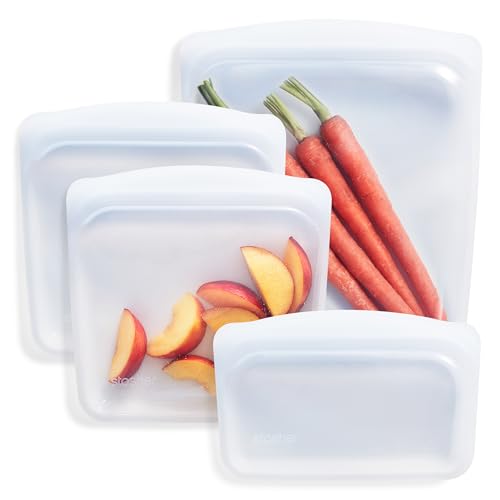
If Steps 3 and 5 cleared reusables with a genuine washing habit, silicone is the long-service form: pinch-lock seal, freezer-to-microwave range, dishwasher care. Best for: daily leftovers, lunches and reheating. Not suited for: households whose honest Step 5 answer was the sink pile.

FoodSaver Vacuum Seal Bags and Rolls — the long-horizon system
If Step 2 surfaced horizons measured in months, this is the only family that answers them: machine-evacuated, heat-welded storage that defeats freezer burn at its cause. Best for: bulk buying, harvests and sous vide. Not suited for: daily leftovers, where its ritual outweighs its benefit.
The Two Questions That Settle Household Arguments About Bags
Choosing is often a negotiation between the people who cook, the people who wash and the people who pay, and two questions settle most of the disputes this category generates. The first: who does the work this choice creates? A reusable system creates washing work; a disposable system creates restocking work; a vacuum system creates session work. Naming the worker — honestly, in the room — converts an abstract preference fight into a rota discussion, and rotas can be agreed where philosophies cannot. The second: which failure would annoy us more? The marinade leak, the freezer-burned joint, the unwashed bag pile, the run-out box on portioning day — every household has a failure it finds genuinely maddening and others it shrugs at, and the right system is the one engineered against the maddening one. Ask both questions before the purchase, and the steps above stop being one person’s research imposed on a household and become what they should be: a shared specification that the drawer then simply fulfils.
Common Mistakes When Choosing Food Storage Bags
The mistakes repeat so reliably that naming them is half the cure. Choosing by brand habit — the box your parents bought — without checking it against your own job list. Choosing by the headline offer, which optimises the seller’s shelf, not your freezer. Freezing in storage-grade film because the box was open, the single most expensive mistake in the category measured in spoiled food. Buying variety packs whose sizes match no meal you cook. Buying premium reusables on intention rather than washing evidence. Buying a vacuum machine for a fortnight’s freezer. Ignoring the closure your hands need, then sealing badly forever and blaming the bags. And forgetting the system around the bags — no marker, no labels, no rotation — so that good products underperform in a chaotic drawer. Every one of these is a choosing error, not a product error, which is why a method like this guide’s outperforms any amount of product research done without it; the complementary product research lives in food storage bags buying guide.
Two further mistakes deserve naming because they masquerade as virtues. The first is over-standardising: deciding that one bag will do everything, in the name of simplicity, and then watching it fail at the extremes — the sandwich bag in the freezer, the gallon bag around a single lemon. Simplicity in this category means a small set of well-matched tools, not a single tool stretched past its design. The second is choosing for the household you wish you had: the meal-prepping, garden-growing, batch-cooking household of aspiration, equipped in full, while the actual household orders in twice a week and freezes nothing but ice. Aspiration is a fine reason to change habits; it is a poor basis for a shopping list, because the bags bought for the imagined life sit as evidence against it. Buy for the tally. If the tally changes — and the method makes re-choosing cheap — buy again, gladly, for the new reality.
A Note on Budget: Where to Spend and Where to Save
Choosing well includes choosing where money matters, and in this category the map is clear. Spend on the freezer workhorse — the bag whose failure costs a joint of meat — because seal consistency and film quality are what the extra money actually buys, and they buy it where failure is expensive. Spend on the closure if your hands need help, because a slider or a good pinch-lock pays its premium back in successful seals every single day. Save on the low-stakes sizes: snack and sandwich bags for dry duty are close to commodities, and store brands serve them honourably. Save by refusing the variety pack and the speculative premium, which are the category’s two great money sinks. And save, above all, by buying counts matched to your tally — the cheapest bag is the one that gets used for its intended job, and the most expensive is the premium product, however discounted, that your household’s habits leave in the drawer. This allocation — premium at the point of failure cost, economy at the point of low stakes — is the financial expression of the whole method, and it is why two households can spend the same total on bags and end with systems of very different quality.
Pro Tips From Kitchens That Get This Right
Keep the marker in the bag drawer, not the junk drawer — labelling fails on distance, not intention. Freeze flat on a tray, then file upright like books; the freezer becomes an index instead of an excavation. Fold the bag’s top cuff outward before filling, so the seal track stays clean and dry — the cheapest leak prevention in existence. Use water displacement for the items you cannot vacuum: lower the open bag into water, let pressure push the air out, seal at the waterline. Date with the freezing date and the contents, in that order, every time. Store reusables open and dry beside the disposables, so the choice between them happens at the moment of use. And run a five-minute freezer review monthly — eat the oldest, note the gaps — because a chosen system still needs a pilot. Small kitchens benefit doubly from these habits, and they pair well with the corralling approach of best storage baskets for the cupboards around the drawer.
Three more tips from the same kitchens, each earned the damp way. Keep one dedicated bowl that lives in the fridge as the marinade bag’s cradle — it contains the leak that eventually happens to everyone, and its permanent residence means the habit needs no decision. Write the label before you fill the bag, on the dry bag, with the marker that lives in the drawer; labels attempted on cold, wet film are where labelling systems go to die. And when a bag of something frozen flat has thawed, cut the corner rather than fighting the seal with wet hands — the bag was retiring anyway, and the corner pours like a jug. None of these will ever appear on packaging. All of them separate the kitchens where the chosen system sings from the kitchens where it merely functions.
Worked Examples: Three Buyers, Three Right Answers
The Sunday batch cooker. Her job list is portioning, freezing and lunches; her horizon is two to six weeks; her hands are wet all Sunday. Her steps produce: gallon and quart freezer double-zips as the core, sliders for prep day, one silicone bag for the week’s reheating leftovers, no vacuum — her horizon never justifies it. Total system: three boxes and a bag, every item earning its place weekly.
Read her example for its method rather than its contents: she did not begin with a preference for or against any material, and she did not ask which bag was “best”. She asked what Sunday demanded, how long the food would wait, and what her hands were doing at sealing time — and the products selected themselves, almost without argument. That is the experience this guide is designed to produce. When choosing feels like arguing, a step has usually been skipped, most often the first one: the household is debating products because it has not yet agreed on the job list the products are for.
The market gardener. His job list is a summer glut and a winter of eating it; his horizon is the tail that matters — six months and beyond. His steps produce the opposite portfolio: a vacuum machine and rolls as the core, freezer zips for the short-stay items, reusables barely featuring because his kitchen’s rhythm is seasonal, not daily. Judged by a lunch household’s standards his drawer looks extreme; judged by his horizon it is the minimum viable system.
The small-flat couple. Their jobs are nightly leftovers, work lunches and a small freezer; their constraint is space in every dimension, down to a compact fridge. Their steps produce: two silicone bags that store, freeze and reheat, a set of lightweight reusables for lunches, and a single modest box of freezer zips for raw portioning. No bulk counts, no machine — their Step 6 audit showed a two-size kitchen, and they bought exactly that, leaving the drawer room to spare for the rest of a small home’s storage, organised along the lines of best under bed storage.
Three buyers, three portfolios that share almost nothing except the method that produced them — and each would judge the others’ drawers as wrong, which is exactly the point. There is no universal right answer hiding behind these examples, waiting for a better reviewer to find it. There is a right answer per household, recoverable in a week with a pencil, and the confidence that comes from knowing your drawer was specified rather than accumulated. If you take nothing else from this guide, take the pencil.
One last reassurance for the reader who has followed the steps and still feels the pull of the aisle’s forty boxes: the downside of a wrong choice here is bounded and small, provided the grade and hygiene lines were respected. A suboptimal size mix costs a few wasted bags; a suboptimal closure costs some patience; both correct themselves at the next restock, which in this category is never far away. Choosing food storage bags is a skill with cheap tuition and daily dividends — run the steps once, and you own it for every kitchen you will ever cook in.
Choosing for Life’s Edge Cases
The method holds under stress, but three situations deserve explicit treatment because they change the weights. The first is a new baby or any season of exhaustion: downgrade every choice that depends on washing, upgrade every choice that depends on certainty, and let disposables carry jobs they would not carry in a rested year — the correct system is the one a depleted household can actually run. The second is cooking for an elderly parent or anyone with reduced grip and eyesight: closures become the first criterion rather than the fourth, sliders and pinch-locks move to the core, and labels should be large and high-contrast, because a storage system its user cannot seal or read is not a system. The third is a house move or a first kitchen: resist equipping for the imagined life; buy the trial quantities of Step 7, live in the place for a month, and let the real job list — which will differ from the imagined one in at least one important way — finish the choosing for you. In each case the steps do not change; only the honest answers inside them do, which is precisely what a method is for.
After Choosing: The First Month With Your System
Choosing ends at the purchase, but the value is decided in the month after, so this guide closes the loop. In week one, set the stage: bags in the prep zone, marker in the drawer, reusables stored open beside the disposables, a drying spot designated. In weeks two and three, run the full repertoire deliberately — one bulk shop portioned and frozen flat, one marinade, a week of lunches, leftovers sealed and dated — and notice friction while it is still cheap to fix: a size that is always wrong, a closure that fights you, a reusable that is never clean when needed. In week four, adjust without sentimentality: change the size mix, swap the closure, demote or expand the reusables, and set the restock counts from the month’s evidence rather than the first guess. Households that run this month end with a system fitted the way a good shoe is fitted — by walking in it — and the choosing method above becomes a five-minute annual review instead of a recurring aisle dilemma. That is the real destination of learning how to choose food storage bags: not a perfect purchase, but a kitchen that stops having to think about the question.
And when the kitchen does think about it again — because a child arrives, a garden gets planted, a parent moves in, a job changes the lunch situation — the method is waiting, unchanged, in this page. Rerun the tally, reset the horizons, reassign the materials, and the drawer updates itself to the new life in an afternoon. Choosing, done this way, is not a talent and not a research project. It is a short conversation between a household and its own week, repeated whenever the week changes — and it is available to anyone willing to spend one week with a pencil before spending anything at all.
Getting It Right in Practice: A Careful Working Check for the Food Storage Bags
The main steps for the food storage bags are covered above; what follows is the working discipline around those steps, covering preparation, order of work, the checks that catch mistakes early and the small follow-up habits that keep the result sound. It is written for real homes, where interruptions and imperfect spaces are normal.
Start With Your Space and Your Routine
Ask how the food storage bags will be cleaned on an ordinary week, with the products and time you actually have, not with a special routine you are unlikely to keep up. If you shop with someone else, agree the must-haves together before looking, so that the food storage bags you choose is a shared decision rather than one person’s compromise discovered later. Plan where the packaging and any old item being replaced will go on delivery day, a small step that prevents a rushed, careless first setup of the new food storage bags. If the listing offers accessories for the food storage bags, decide which ones solve a problem you already have, and set aside the ones that only solve problems the listing itself invented.
Check your work from a distance as well as up close, because proportions, levels and alignment in Food Storage & Organization tasks are far easier to judge from across the room. Set the assembled food storage bags up fully before deciding it is wrong for the space, since partly built or badly positioned pieces often look worse than they will once finished and levelled. Apply the same checks to each shortlisted example, whether that is the Ziploc Gallon Freezer Bags; the FoodSaver Vacuum Seal Bags; the Stasher Silicone Bags, because consistent testing is what makes the differences between models visible. If the food storage bags needs assembly, read the instruction preview if one is offered, count the steps honestly against the time you have, and check whether a second pair of hands is recommended.
Seasonal checks suit most Food Storage & Organization items well, so tie a quick inspection of the food storage bags to a job you already do, such as changing clocks or clearing gutters. Do not let a single impressive feature distract you from a basic mismatch in size, capacity or care needs, since basics decide satisfaction long after features stop being novel. Compare how each option handles the in-between moments, such as being half full, partly open, moved aside or used in a hurry, because daily life happens mostly in those moments. Where the food storage bags has a surface you will set things on, lean on, or load, consider the heaviest realistic load in your household rather than the lightest display load in the photos.
When Small Problems Appear
Small problems are easiest to solve in order: check position first, then adjustment, then cleaning, and only then conclude that the food storage bags itself is at fault. Whatever the task, preparation decides most of the result with a food storage bags, so lay out what you need, clear the area and read the relevant steps fully before you begin rather than discovering a missing item halfway through. Beware of choosing a food storage bags for a rare occasion, such as a large gathering once a year, if that choice makes everyday use worse for the other fifty-one weeks. If you are replacing an older food storage bags, list what failed or frustrated you about it, and check each item on that list against the new listing before you order its successor.
Households with children or pets put different demands on a food storage bags than the listing photographs suggest, so judge edges, stability and cleanability against your real household, not a styled one. Finally, judge the food storage bags against the life you actually lead this year, not the tidier or more ambitious life in the listing photographs, and the choice will usually make itself. Keep the care routine simple enough to repeat: a food storage bags that needs ten minutes of attention weekly will usually get it, while one that needs an hour monthly often gets none. Guests notice different things than owners do, so if the food storage bags will be used by visitors, test it from a fresh user’s point of view, without the habits you have already built around it.
Start by writing down the job the food storage bags has to do in your home, in one plain sentence, before you look at another listing, because a clear job statement turns a long shortlist into a short one.
A Short Decision Checklist
- The measured space, including clearance to use and clean around the food storage bags
- Packaging kept until the food storage bags has passed its first trial in place
- The main job the food storage bags must do, written in one sentence
- What your current arrangement does well that the food storage bags must not lose
- The one feature you will not compromise on
- The material and finish, matched to light, moisture and wear in its spot
- Assembly needs, tools required and whether help is needed
- What your current arrangement does badly that the food storage bags must fix
Taken together, these checks take only a little time, yet they answer the questions that decide whether the food storage bags suits your home, your household and your routine, and they do so before money changes hands rather than after.
Frequently Asked Questions About How to Choose Food Storage Bags
What is the most important factor when choosing food storage bags?
The match between the bag and the job’s storage horizon. Freezer-grade film for freezing, vacuum for months, any decent bag for a few fridge days. Most disappointment in this category comes from horizon mismatches — good bags asked to protect food longer than their design allows — rather than from brand differences, which are smaller than the packaging suggests.
Should I choose disposable or reusable food storage bags?
Choose by job and by washing honesty. Raw meat, marinades and long freezes belong to disposables (or vacuum). Daily lunches, produce and leftovers belong to reusables if your household will wash and dry them the same day — silicone for durability and heat, PEVA for lightness. Most households rightly end with both, allocated by job.
What sizes of food storage bags should I choose?
Start with quart and gallon, which cover the great majority of home jobs: quart for produce, cheese and leftovers; gallon for marinating, bulk portions and freezing. Add sandwich size for daily lunches and larger formats only for proven needs like turkeys or harvests. Let a week of tallied use set the counts, with the hero size bought deepest.
Are slider bags a better choice than zip bags?
For many hands, yes. Sliders close in one pass and forgive wet, cold, weak or young hands, removing the most common sealing error. Double zips hold a slight edge for travelling liquids and have no small part to crack. Choose the closure that matches the hands and conditions in your kitchen — that match matters more than the mechanism’s reputation.
When should I choose vacuum seal bags instead?
When your storage horizon is measured in months: bulk meat buying, garden harvests, game and fish, or expensive items you cannot afford to lose to freezer burn. Vacuum sealing removes nearly all the air that causes burn, which no zip or silicone bag can match. For horizons of days to a few weeks, a freezer-grade zip bag with the air pressed out is the proportionate choice.
How do I know if a food storage bag is good quality before buying?
Read for the specifications that matter: freezer grade stated plainly, double sealing tracks or a slider from a consistent maker, and — for reusables — the material named specifically (platinum silicone, PEVA) rather than vaguely. Then verify with the water test on your first bag: fill, seal, invert and squeeze over the sink. A bag that passes in your own hands has answered the quality question better than any listing can.
Related reading: food storage bags review · food storage bags pros and cons · best closet organizer shelves


