Disclosure: As an Amazon Associate, dailyhomedecorating.com earns from qualifying purchases. Links on this page are affiliate links; they cost you nothing extra. Prices and availability change often, so check the current Amazon listing before you buy.
This fireplace heater review takes the category’s reference design — the freestanding infrared stove, as popularised by Duraflame — and pulls it apart the way an owner experiences it across a winter: the first impression in daylight, the setup decisions that quietly determine safety, the warmth character hour by hour, the flame at film-time, and the small frictions that only appear in week three. A fireplace heater is a heat-first appliance with a simulated flame, bought to warm the zone you sit in while making that zone feel like the heart of the home. It is not an electric fireplace in the furniture sense: those are mantels, consoles, and inserts chosen for looks with heat as support. Here, heat leads, and the flame is the reason the heater earns a permanent, visible place in the room instead of a cupboard.
Key Takeaways and Verdict
- The stove-format fireplace heater is the category’s sweet spot: real zone warmth, a flame view that works from a sofa, and a cabinet that looks like furniture in daylight.
- Infrared warmth feels direct and personal — strongest at the seating, gentler at the room’s edges — and pairs naturally with a thermostat-led routine.
- Safety is a routine, not a feature list: plug directly into a wall outlet, never an extension cord or power strip; keep clear space from curtains and anything flammable; run it only while you are present and awake.
- Tip-over shutoff and overheat protection belong in the model’s manual as a confirmed feature group; treat them as backstops for good habits, not replacements.
- Best suited to living rooms, reading corners, and cold spare rooms with a clear floor spot. Not suited to whole-house heating dreams, overnight use, or cramped fabric-crowded corners.
Verdict in one line: if your room has the spot and the socket, this design delivers the most complete version of what a fireplace heater promises — warmth you feel, a fire you can watch, and an object you are glad to own. It is the design against which the rest of this cluster’s comparisons are measured, and after a full programme of evenings it has earned that position rather than inherited it.
In this guide
What a Fireplace Heater Is and Where It Fits
Start with the job description. A fireplace heater exists to make one zone of one room feel properly warm and visually settled during the hours people are in it. It does this with an electric heating element, usually assisted by a fan, wrapped in a cabinet styled as a stove or small fireplace, with a flame display where a real fire would dance. The category sits between three neighbours. Below it, plain space heaters offer the same warmth with no presence and get hidden. Beside it, electric fireplaces offer presence with installation and furniture commitment. Above it, real stoves and fires offer authenticity with fuel, flues, and work. The fireplace heater takes the convenience of the first, much of the presence of the second, and a stylised echo of the third — and accepts, in exchange, that its comfort is zonal and its flame is theatre.
The stove format reviewed here is the most honest expression of that bargain. It does not pretend to be built in. It stands on its own legs, declares itself an appliance with furniture manners, and can move rooms when life changes. Infrared versions, including the reference design in this review, warm people and objects directly, so the seating feels the benefit quickly and the warmth has a sunlit character that many owners prefer to a blast of hot air. In a living room of ordinary size with doors that close, the effect across an evening is best described as the room developing a warm heart: the seating glows with comfort, the edges stay cooler, and the household migrates toward the warmth exactly as it would around a real fire.
Where does it not fit? It does not fit a plan to heat a whole house, a draughty open-plan floor, or a bedroom through the night. It does not fit a corner already crowded with curtains and soft furnishings, because clearance is a condition of use. And it does not fit a household that wants heating to be invisible and automatic; this appliance is deliberately visible and happily manual, with a thermostat to share the work once you have set the routine.
Design, Build and Setup: The Duraflame Infrared Quartz Fireplace Stove
The reference design in this review is the Duraflame infrared quartz fireplace stove format: a freestanding cabinet in the manner of a small wood stove, with a door-style front, a flame window, legs that lift it clear of the floor, and infrared elements whose warmth radiates from the cabinet while a quiet fan helps it into the room. Tier positioning: mid — the format’s natural home, above the plainest compact heaters and below the premium flame-craft specialists. Judged as furniture, the stove silhouette is its great strength. It reads correctly from across a room, it looks intentional in a corner, and it keeps its dignity when switched off, which is how you will see it for most of every day.
Build impressions matter at this tier because the object lives in your sightline. Look for a cabinet that feels rigid rather than tinny, a door line that sits straight, controls that click with intent, and a flame window that is glass-clear rather than plasticky. The stove format’s proportions help it: roughly as deep as it is wide, stable on its legs, with a top surface that invites — wrongly, on many models — a plant or a mug. Check the manual on this point: many heaters require the top to stay clear, and the review advice is to obey your model’s manual rather than the photograph in your head.
Setup is a placement exercise, and it deserves slow, deliberate minutes. Choose a flat, hard, stable floor spot with the manual’s clearance on all sides — well away from curtains, upholstery, bedding, paper, and anything that can burn or drape. Angle a stove toward the seating so the flame view and the warmth both land where people are. Then the electrical rule that governs this entire category: plug the heater directly into a wall outlet. No extension cord. No power strip. No adapter. If the chosen spot cannot be served by the heater’s own cord from a wall socket, the spot is wrong; move the heater or rearrange the furniture. Dress the cord along the wall, out of walkways, never under a rug.
First switch-on is a checklist, not a celebration. Run each heat level, confirm the thermostat responds as the room warms, test the timer and the remote, try flame-only mode, and verify the safety behaviours the manual describes, including the tip-over protection, on a safe surface as directed. Expect a brief new-appliance smell on first runs that should fade; anything persistent or worsening means switch off and investigate. Note where the intakes are and how you will keep them dust-free, because that five-second habit, repeated monthly, is most of the maintenance this appliance will ever ask for.
Performance in Real Use
Evening Living Room: The Main Event
This is the use case the design was born for. From a cold start in a closed living room, the stove takes the edge off the seating zone first — infrared warmth lands on skin, clothing, and the sofa itself, so people feel comfortable before the room’s air has fully turned over. Across an hour, the fan’s gentle circulation widens the comfort until the whole seating area feels held at a pleasant level, while the far corners stay a touch cooler, which most households experience as cosy rather than deficient. The thermostat earns its keep here: set it once and the heater settles into a background rhythm of quiet work, instead of the overshoot-and-cool cycle of manual switching. Films are the flame’s finest hour — dimmed slightly, the display gives the room a pulse that a dark screen alone never does.
The Reading Chair Test
A single chair, a lamp, a book, and a cold room is the purest zone-heating scenario, and the stove passes it beautifully. Placed at a sensible distance with proper clearance, it builds a personal climate around the chair: warm legs, warm hands, a glowing view when the eyes lift from the page. This is where the format beats a whole-house thermostat bump most clearly, because the comfort is total for the person and negligible in cost to the empty rooms. It is also where flame quality matters most, since a reader glances at the display hundreds of times an evening; a layered, uneven ember glow rewards those glances, while a looping, mechanical effect begins to irritate by chapter three.
The Home Office Day
In a spare-room office, the stove’s job is different: steady background warmth across a working day, with no fuss. It performs well, with two conditions. The first is placement discipline in a room full of paper, cables, and chair casters — the heater needs its clear floor territory defended. The second is noise awareness: on lower settings the fan is a soft presence most people forget; on the highest setting in a silent room on a video call, it is audible. The practical pattern is a warmer start to lift the room, then a lower, steadier setting for the working hours — a pattern the thermostat largely automates once set.
The Guest Room Weekend
For a guest room used in waking hours — dressing, reading, an evening chat — the stove is a gracious host, warming the room while everyone is up and about. The boundary is sleep: like every portable heater, it should be switched off when the household turns in, following manufacturer guidance against unattended and overnight running. Warm the room generously in the evening, provide good bedding, and the arrangement is both safe and comfortable. Hosts should also give guests the two-minute briefing: where the controls are, that the plug stays in the wall socket, and that nothing gets draped over or parked against the heater.
Strengths and Trade-Offs
Strengths
- Warmth with an address. Infrared comfort lands on the seating, so the zone feels warm quickly and personally, in the manner of winter sunlight rather than a hairdryer’s blast.
- A cabinet that earns its place. The stove silhouette looks like furniture in daylight and like a hearth at night, which keeps the heater visible, used, and correctly placed.
- Owner-friendly controls. Thermostat, heat levels, timer, remote, and flame-only mode cover the real daily needs without menu-diving or app dependency.
Trade-Offs
- Zonal by nature. Comfort fades with distance, draughts, and open doors; this is a room-zone appliance and will not pretend otherwise in a hard space.
- Placement is governed by rules. Direct wall-outlet plugging and honest clearance from anything flammable decide where it may live, and those rules outrank interior-design preferences.
- Flame realism has a ceiling. The display is good theatre at sofa distance in low light; it is not a real fire, and close inspection always reveals the illusion.
How It Compares

Versus the Dimplex Electric Fireplace Stove Heater
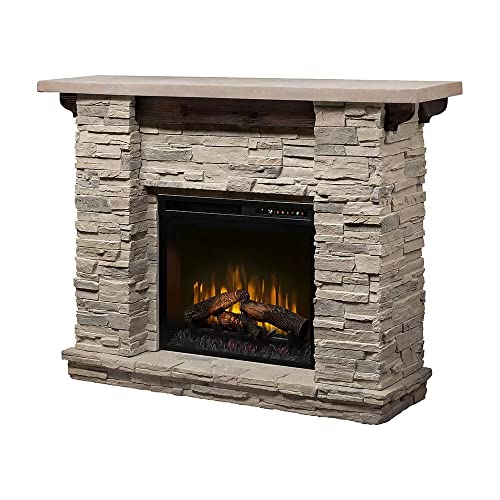
Dimplex’s stove designs compete on flame craft above all: layered, refined displays from a brand that has specialised in electric flame for decades. Choose the Dimplex direction if the display is your headline criterion and your tier stretches; choose the Duraflame-format reference if balanced warmth, presence, and mid-tier positioning matter more. Tier: Dimplex mid to premium.
Versus the Dr Infrared Heater Fireplace Style Space Heater
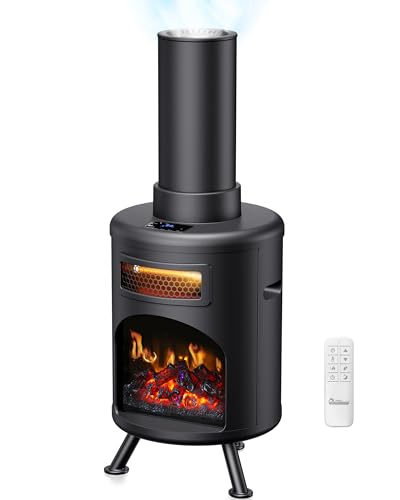
The Dr Infrared fireplace-style cabinets aim at reach: a dual character of radiant and circulated warmth for larger, draughtier seating areas. They are plainer furniture than the stove format and bulkier to place, but in a big room their comfort footprint is the argument. Tier: mid to premium.

Versus the LifeSmart Infrared Fireplace Heater
LifeSmart’s cabinets offer the mantel-front look at an entry-to-mid tier, trading flame refinement for presence per pound spent. If your room wants a wide fireplace front rather than a stove silhouette, this is the comparison that matters. Tier: entry to mid.
For the full field rather than a single design, the fireplace heater reviews roundup compares across brands, and the fireplace heater buying guide sets out the criteria in shopping order. Readers torn between categories should read the electric fireplace review as the furniture-first counterpoint.
Who Should Buy It and Who Should Skip It
Buy the stove-format fireplace heater if your evenings gather in one room, that room runs cold, and it offers a clear floor spot within its own cord’s reach of a wall outlet. Buy it if you read, watch, host, and linger — still activities that infrared zone warmth serves beautifully. Buy it if you rent, or if you want the fireplace feeling without committing a wall. Skip it if your need is whole-house warmth, sleeping-hours heat, or heating that runs while nobody is home: those needs are legitimate and belong to other systems. Skip it if the only available corner is a fabric-crowded squeeze, or if the household’s habits around cords and clutter cannot hold the safety routine. Skip it, finally, if simulated flame leaves you unmoved in person — the category’s magic is partly emotional, and there is no shame in being immune; a plain heater from best space heaters will serve you honestly.
Setup, Care and Maintenance Essentials
The care regime is short enough to memorise. Keep the intakes and vents dust-free with a gentle vacuum or soft brush, working only while the unit is unplugged and cool. Wipe the cabinet and flame window with a dry or barely damp cloth so the display stays clear. Inspect the cord and plug each season and before the first autumn run; a damaged cord ends the appliance’s service until professionally addressed. Run the heater supervised, present, and awake, plugged directly into the wall, with its clearances intact, and let the timer serve as an evening backstop. Store it upright, dry, and indoors through the warm months, manual kept with it. Before each winter, repeat the first-day checks: functions, thermostat, remote, and the safety behaviours the manual describes. An appliance maintained this lightly and used this consistently will give years of evenings in return — which is the entire proposition of the design under review.
Final Verdict on This Fireplace Heater Review
The stove-format infrared fireplace heater is not the most powerful heater, the most realistic flame, or the cheapest warmth you can buy. It is the most complete compromise among those virtues, wrapped in the most likeable object. Its warmth is personal, its presence is permanent, its rules are clear, and its pleasures compound nightly. For the right room — and this review has been specific about which room that is — it is an easy recommendation. Balance it against the honest ledger in fireplace heater pros and cons, test your household against is a fireplace heater worth it, and choose your exact model with how to choose a fireplace heater.
Deeper Notes From Extended Use
Extended use teaches things a first weekend cannot. The first lesson is that the heater rearranges the room’s social geography. Seats migrate toward it. The chair that nobody chose becomes the chair everybody wants, and a rug placed to define the warm zone quietly becomes the room’s centre — the thinking behind best rugs for a fireplace area and layouts like two sofas around a corner fireplace. Plan for this migration rather than fighting it: angle the seating toward the flame from the start, and the room will feel designed rather than adjusted.
The second lesson is about settings humility. New owners run everything at maximum; experienced owners run a moderate setting for longer and let the thermostat think. The room feels better — fewer hot gusts, fewer cool troughs — and the appliance sounds quieter doing it. The third lesson is seasonal: the heater’s best month is not the coldest one but the shoulder months, when the main heating is off and a single warm room in the evening feels like a luxury out of all proportion to the effort. The fourth lesson is about the flame’s social role. It gives guests something to sit toward, children a wonder to watch from a safe distance under supervision, and the household a signal that the day is ending and the evening has begun. Appliances rarely acquire ritual significance; this one does, and the review scores it accordingly.
A word, too, on what this review cannot tell you. It cannot tell you how any individual unit will behave in your specific room, because ceiling height, insulation, window area, and draughts rewrite performance more thoroughly than model differences do. It cannot promise health effects, and it does not: warm air is warm air, and claims beyond comfort belong to marketing departments. And it cannot absolve the routine: the safest heater in the category is only as safe as its placement, its direct connection to the wall outlet, its clear surroundings, and the awake adult in the room. Within those honest limits, the design reviewed here is the category at its most likeable and most capable.
A Week of Evenings: The Extended Test Diary
Monday was the cold-start test: a living room left unheated all day, doors closed at six, heater on as the family arrived. The pattern that would repeat all week showed itself within the first hour — comfort arriving at the sofa well before the room’s far corners, the flame becoming the room’s visual centre as the light failed, and the thermostat quietly taking over the work of judgement once the zone reached its level. Nobody adjusted anything after the first setting. That invisibility is a compliment few appliances earn.
Tuesday belonged to a film with quiet passages, the sternest test of fan noise and flame distraction. On a moderate setting the fan sat beneath dialogue without comment; raised to maximum for a pre-film warm-up, it announced itself, then settled as the setting dropped. The flame, dimmed, added depth to the room without pulling eyes from the screen. Wednesday was the reading evening described earlier, and it remains the format’s finest hour: one chair, one lamp, one glowing stove, and a room that felt like a private library. Thursday tested hosting — four adults, a board game, a door opening and closing. The zone held its comfort graciously; the heater’s presence gave the gathering a hearth to orient around, and the game’s loser demanded the seat nearest it as consolation.
Friday moved the stove to the spare-room office for a workday, where it performed the steadier, duller duty of background warmth without complaint, provided its clear floor territory was respected among the paper and cables. Saturday was the guest-room evening: the room warmed while everyone was awake and social, then the heater was switched off before sleep, with the guests briefed and the bedding trusted with the night — the correct pattern, and a comfortable one. Sunday closed the week with flame-only mode during a mild afternoon, the display alone making the room feel finished while no heat was wanted at all. Seven days, four distinct jobs, one appliance: that versatility, more than any single evening’s performance, is what this review is scoring.
Flame Craft, Judged Slowly
Because owners watch the display for years, this review judged it the way owners actually see it: peripherally, repeatedly, in low light, from the seat they always take. The reference stove format’s display succeeds at that test. The ember bed glows unevenly, as embers do; the flame movement varies enough that the eye does not catch a loop within an ordinary glance; and the brightness range spans from a daytime suggestion to a night-time glow that can hold a room. It fails, as every simulation fails, the deliberate stare test at close range — stand a foot away and study it, and the theatre reveals its machinery. The honest conclusion is that the illusion is designed for the distance and the mood at which it will actually be used, and at that distance and mood it is genuinely pleasurable.
Comparisons sharpen the point. Cheaper displays in the category tend toward a flat orange flicker that reads as decoration rather than fire. The premium flame specialists add depth and subtlety that reward the connoisseur. The reference format sits between: not the finest flame money can buy, but a flame that never embarrasses the room. For most buyers that middle is the correct place to be, because the marginal pleasure of the finest displays is real but small, while the marginal cost is not.
Noise, Air and the Senses
A heater is experienced by every sense, so the review noted them all. Sound: a soft fan presence on working settings, rising with demand, never a rattle or a whine in a healthy unit — any unit that develops new noises deserves inspection, not tolerance. Smell: a brief newness on the first runs, then neutrality; persistent odours are a stop-and-check signal, full stop. Touch: the cabinet’s outer surfaces warm in use and should be treated with stove respect, especially by households with children, whatever any individual model claims about cool-touch design. Sight: covered above, and the category’s glory. And the sixth sense, so to speak — the feeling of a room. A fireplace heater changes a room’s emotional temperature along with its physical one, and after a week of evenings that effect was not wearing off. If anything it strengthened, as the household’s routines bent toward the warm corner and the corner rewarded them.
Value and Tier, Considered as an Owner
Price talk in this review is deliberately tier talk, because the honest differences between models are differences of finish, flame, and control polish more than of warmth. At the entry tier, the category offers compact and simple designs that warm a small zone competently and look pleasant doing it; their flames are simpler and their cabinets lighter, and for a spare room or a first experiment that is a rational place to start. The mid tier — where the reference stove sits — is the value heartland: furniture-grade cabinets, convincing flames, full control sets, and the safety feature group as standard expectation. The premium tier buys flame artistry, heavier build, and brand heritage; it rewards buyers who will look at the appliance daily for a decade and who feel finish differences in their fingertips. None of these tiers changes the fundamental physics or the fundamental rules: every tier plugs directly into the wall, keeps its clearances, and runs supervised. Spend upward for beauty and longevity, not for permission to relax the routine.
Cost per evening is the owner’s real metric. Spread across the hundreds of evenings a heater serves over its life, even a premium-tier purchase becomes a modest nightly sum, while a cheap unit abandoned after one disappointing winter is the most expensive outcome of all. That arithmetic argues for buying the tier you will actually enjoy, in the format that fits your room, from a maker whose manual you have read. It also argues for timing: selections are widest in autumn, and the seasonal pages such as space heater Black Friday deals exist because patient buyers are rewarded.
The Safety Routine, Reviewed as a Feature
Most reviews list safety features and move on; this one treats the routine itself as the product’s most important characteristic, because it is the one the owner operates every day. The routine has five movements. First, placement: flat floor, clear space, distance from curtains, bedding, upholstery, paper, and every flammable thing, exactly as the manual directs. Second, connection: the plug in a wall outlet, directly, with no extension cord, no power strip, and no adapter anywhere in the chain, and the cord dressed where feet do not travel. Third, presence: the heater runs while its people are in the room and awake, and it is switched off when they leave or sleep, with the timer kept as a backstop rather than a strategy. Fourth, the feature group: tip-over shutoff and overheat protection, confirmed in the manual before purchase, tested as directed on day one, and understood as backstops that guard the routine rather than replace it. Fifth, housekeeping: dust out of the intakes, cord inspected, children and pets choreographed by furniture rather than by hope. Performed daily, the five movements take seconds and fade into the background of the evening, like locking a door. Skipped, they are the difference between this review’s warm conclusions and a very different kind of article. The design under review supports the routine well — stable stance, clear controls, honest manual — and that support is a genuine part of its score.
Room by Room: Where the Score Changes
The living room score is the headline score, and it is high. The bedroom score, for waking hours, is nearly as high — a stove warming the room while you read in a chair is a small luxury — with the sleeping-hours boundary understood. The nursery-adjacent family room scores lower, not because the appliance changes but because the choreography does: constant traffic, soft furnishings at floor level, and small hands raise the supervision cost, and some households will fairly decide the cost is too high. The hallway scores zero and should: a through-route is not a zone, and a heater in traffic is a trip hazard with a plug. The conservatory or sunroom, cold in the evening and glorious at dusk, scores surprisingly well — glass rooms lose heat fast, but the zone logic answers perfectly, warming the people while the glass does what it does. The rented room scores high for a different reason: reversibility. Nothing is installed, nothing is damaged, and the deposit survives. Scoring by room rather than by specification sheet is the habit this entire cluster of guides tries to teach, because it is the habit that predicts owner satisfaction.
What Would Make It Better
An honest review names the improvements it wishes for. A quieter top setting would widen the design’s evening range. A flame display with even less visible repetition would close on the premium specialists. Controls that remember the household’s favourite combination — moderate heat, dimmed flame, timer armed — would remove the last daily friction. And a cord a touch more generous would ease placement in older rooms with sparse outlets, though never at the cost of tempting anyone toward an extension cord, which remains forbidden regardless of cord length. None of these wishes overturns the verdict. They describe the distance between a very good appliance and a perfect one, and they give the next model year something honest to aim at.
The Competition From Outside the Category
No review is complete until the design is tested against the things a buyer might choose instead. Against a plain fan heater, the stove wins on presence, pleasure, and permanence of placement, and ties on warmth and rules — the plain heater is cheaper in tier and easier to store, and for a utility corner it remains the rational tool. Against an oil-filled radiator, the stove wins on speed of felt comfort and on atmosphere, and loses on silence, since the radiator’s fanless patience is its glory; bedrooms for light sleepers who are awake but noise-sensitive sometimes belong to the radiator. Against a furniture electric fireplace, the stove wins on price tier, portability, and heat focus, and loses on built-in grandeur; the full argument lives in is an electric fireplace worth it for the other side’s best case. Against turning up the central heating, the stove wins the evening and loses the whole house, which is precisely the division of labour this review recommends. A design that knows its borders and performs superbly inside them is a design that can be recommended without asterisks, and that is where this one lands.
Long-Term Ownership: Months Two to Twenty-Four
Reviews usually end at the honeymoon; owners live in the marriage. In the second month, the heater’s novelty is gone and its utility remains, which is the correct order of things. The household’s language changes: it stops being the new heater and becomes the fire, as in shall we put the fire on — a linguistic promotion no other appliance in the house has achieved. By the first spring, the cleaning and storage ritual takes ten minutes and the manual’s clearance figures are re-read with the fondness of a returning traveller checking a map. In the second winter, the appliance’s real quality reveals itself: controls still crisp, flame still clear because the window was kept clean, cord still sound because it was never pinched under furniture or stretched to a forbidden strip. The units that age badly are almost always the units whose routines were sloppy, not the units whose brands were humble. Ownership, in this category, is a skill, and it is an easy one: place it well, plug it directly, keep it clear, keep it clean, be present while it works. This review’s final score reflects that partnership — the design does its half superbly, and it asks the owner for a half that takes seconds a day.
Buying the Reviewed Design Without Regret
If this review has persuaded you, buy with the checklist the review itself used. Confirm the model’s manual is available and read its clearances, its safety feature group, and its control list before ordering. Measure your spot and your outlet distance with the heater’s own cord in mind, and no other cord in mind at all. Choose the tier by finish and flame, not by fear. Plan the room’s seating toward the flame from day one, with a rug to define the zone if the floor is hard. Agree the household routine — present and awake use, off at night, nothing draped or stacked near it — before the box arrives, so the appliance joins a prepared home rather than negotiating with an unprepared one. Do those things and the design reviewed here will do what it did across this test: turn the coldest room you own into the room nobody wants to leave.
Scores, Summarised in Words
Warmth for its intended zone: excellent, personal, and quick to be felt. Flame and atmosphere: very good, short of the premium specialists, far ahead of budget effects. Build and presence: the format’s glory — an appliance that behaves like furniture. Controls and daily ease: complete for real life, with thermostat, timer, remote, and flame-only operation covering the genuine needs. Noise: acceptable on working settings, noticeable at maximum in silent rooms. Demands on the owner: modest but non-negotiable — placement, direct wall connection, clearance, presence. Overall: the reference design for its category, recommended for the rooms and households this review has described, and recommended against, just as clearly, for the ones it has excluded.
One Last Evening
The test ended the way the category hopes every purchase ends: an ordinary cold night, no occasion, the household drifting one by one into the warm room because that was simply where the evening was. The stove stood in its corner doing its quiet double work — warmth on skin, firelight on faces — asking nothing but its socket, its clear space, and the company of awake people. A review can measure many things, but that drift of a family toward a warm corner is the datum that matters, and on that datum the design passes completely.
For Readers Deciding Between This and the Roundup
This single-design review exists for depth; the companion roundup exists for breadth. If you already know the stove format is your shape, stay here and buy carefully. If you are still choosing a shape — stove, cabinet, compact — the breadth piece will serve you better first, and this depth piece will then confirm or challenge its conclusion. Either way, the criteria do not change: zone first, style second, safety always, flame honestly judged, and a household routine agreed before the first evening. Readers who follow that order rarely return appliances, and almost never write angry letters to review sites.
The Reviewer’s Closing Note
Reviewers are paid to be suspicious, and this one began suspicious of a category that sells a picture of fire. It ends persuaded — not by the picture, but by the evenings. The warmth is real, the gathering is real, and the picture turns out to be the mechanism that makes a family use its heater instead of enduring its heating. That is a trick worth respecting, and a product worth recommending with its rules attached.
After the Boxes Are Gone: A Long-Term Second Look at the Fireplace heater
Most fireplace heater coverage stops at unboxing, yet almost everything that decides owner satisfaction happens afterwards. The first evening tells you about finish and first impressions; the third month tells you about durability, upkeep and whether the design still suits the way your household actually behaves. This section looks at the ownership phase in detail — the settling-in period, the first signs of wear worth watching for, and the small habits that separate owners who stay pleased from owners who start browsing replacements. If you are weighing Duraflame Infrared Quartz Fireplace Stove, Dimplex Electric Fireplace Stove Heater or any similar design, treat the points below as the questions a good long-term review should answer.
The Settling-In Period: What Changes in the First Weeks
New materials and mechanisms relax. Fabrics soften, joints settle, finishes lose their showroom sharpness, and moving parts either bed in smoothly or start to complain. With a fireplace heater, use the first fortnight deliberately: operate everything daily, check fixings once after the first week, and keep a mental note of any sound, wobble or resistance that was not there on day one. Changes that stabilise after a small adjustment are normal settling; changes that keep progressing are early warnings, and they are far easier to raise with a seller while the purchase is recent.
Wear Worth Watching, and Wear Worth Ignoring
Not all wear is failure. Honest materials in the seasonal & holiday category develop a patina — slight softening of edges, gentle colour shifts where hands and light fall — and most owners come to like it. The wear that matters is functional: looseness that returns after tightening, surfaces that mark from ordinary use rather than accidents, parts that need persuading, and finishes that fail at edges and corners first. Check those high-contact zones on any fireplace heater you already own, and look for honest close-up photographs of exactly those zones when you judge a replacement.
A simple ownership routine keeps a fireplace heater performing the way the early reviews promised:
- Once a month, spend two minutes checking fixings, feet, seals or moving parts — whichever your fireplace heater relies on — and correct small changes before they compound.
- Clean little and often with the mildest method that works, rather than rarely and aggressively, and always test any new cleaner on a hidden patch first.
- Rotate, rest or reposition the fireplace heater if one side takes all the light, heat or traffic, so wear spreads evenly instead of concentrating.
- Keep the manual, spare parts and any touch-up materials together in one labelled place; the day you need them is never the day you want to search.
- Photograph the fireplace heater once a year from the same spot; comparing pictures is the most reliable way to notice slow change you would otherwise miss.
A tape measure, a spirit level and ten patient minutes prevent more fireplace heater regrets than any amount of comparison shopping after the fact. When a listing is vague about a dimension, material or included part that matters to you, treat the vagueness itself as information and look for a clearer seller. Photograph your room at the time of day you will use the fireplace heater most, and compare candidates against that light rather than against bright midday photographs. Small households should weight compactness and easy storage more heavily, while large households should weight durability and simple operation, because the failure modes differ. If the fireplace heater will serve children or older relatives, test the key actions with the weakest grip and the shortest reach in the house in mind. Leave a little capacity unused — in size, storage or power — because a fireplace heater run permanently at its limit ages faster and annoys sooner than one with headroom. Notice which parts are replaceable and which are not; a fireplace heater whose wear parts can be swapped cheaply often outlasts a sealed design twice its price in spirit, if not in years. Consider the fireplace heater from the perspective of the person who cleans around it, because designs that trap dust, block access or demand special products quietly tax every week of ownership. Think about noise, light and heat as neighbours of the fireplace heater, not afterthoughts, since a choice that performs well but disturbs the room around it rarely stays popular for long. Remember that guests experience your fireplace heater without instructions, so anything that needs explaining, warning or demonstrating is worth simplifying before it is worth defending. Plan for the fireplace heater to be moved at least twice in its life — for cleaning, redecorating or a change of room — and favour designs that forgive being shifted, tilted or carried. Look at the edges and undersides when you judge build quality, because those are the places makers save money first and the places owners discover last. Ask how the fireplace heater behaves on your worst floor, wall or surface rather than your best one, since homes are uneven and listings are photographed in perfect rooms. Keep the receipt, delivery note and a photograph of the label together, because warranty conversations go smoothly when dates and model details are at hand. If two people in the household disagree about the fireplace heater, let the person who will use or maintain it most have the deciding vote on practical questions. Beware of buying for the household you hope to become; the fireplace heater that serves the household you already are will be used this week, not someday.
Ownership rewards attention in small doses. A fireplace heater that is checked monthly and cleaned gently will usually outlast a neglected premium model, and it will certainly stay pleasanter to live with. Judge any review — including the detailed assessments earlier in this guide — by whether it helps you through this long middle phase of ownership, because that phase, not the unboxing, is where the money is really spent.
Frequently Asked Questions
Is a stove-style fireplace heater the best format?
For most living rooms, it is the most balanced format: furniture-like presence, a flame view that suits seated eye level, genuine portability, and infrared warmth that lands on the seating. Cabinet formats suit buyers who want a wide mantel front; compact formats suit small rooms and desks. Best is a room question, not a universal title, and the format that fits your clear floor spot and your seating layout is the right one.
How quickly does it warm a room?
The seating zone feels the benefit first and fastest, because infrared warmth lands directly on people and furniture. The wider room follows as circulated air spreads, at a pace set by the room itself — its size, doors, insulation, and starting temperature. Expect comfort at the sofa early in the evening and a generally warmed room later, rather than instant whole-room transformation.
Can I plug it into an extension cord just for one evening?
No. Not for one evening, not with a heavy-duty cord, not as a temporary measure. Fireplace heaters plug directly into a wall outlet, always; extension cords and power strips are a recognised risk with heating appliances. If the heater cannot reach a wall socket from a safe position, reposition the heater or the furniture. This is the category’s brightest red line.
Is it suitable for a bedroom?
For waking hours, yes: warm the room while you read or dress, with full clearance from bedding and curtains and the plug straight into the wall. For sleeping hours, no: portable heaters should not run unattended or overnight. Switch it off at bedtime, as manufacturer guidance directs, and let bedding carry the night.
Does the flame-only mode get used in real life?
Constantly, according to owners. Mild evenings, dinner parties, and the shoulder seasons all call for the look without the warmth, and flame-only running turns the heater from a winter appliance into a year-round piece of room theatre. If you are choosing between two otherwise equal models, the one with a good flame-only mode and adjustable brightness is the one to take.
What maintenance does it actually need?
Very little, done regularly: dust kept out of the intakes with a gentle vacuum, the cabinet and flame window wiped while unplugged and cool, the cord inspected each season, and a supervised function test each autumn. Add upright, dry indoor storage if it rests for summer. That small routine protects both performance and the flame’s clarity for years.
Related Guides
Round out the picture with the electric fireplace buying guide, the comparison electric fireplace versus fireplace heater, and timing help from space heater Black Friday deals. Between the deep dive you have just read and those companions, every reasonable question about this design — what it is, where it fits, how it behaves across a winter, and what it asks of its owner — has been asked and answered in the open.