Disclosure: As an Amazon Associate, dailyhomedecorating.com earns from qualifying purchases. Links on this page are affiliate links; they cost you nothing extra. Prices and availability change often, so check the current Amazon listing before you buy.
An electric fireplace buying guide has one job: to stop you buying a flame picture when what you actually wanted was warmth, or buying a heater when what you actually wanted was a room that feels finished. An electric fireplace is both a piece of furniture and a heating appliance, and the balance between those two identities is different in every model on the market. Some units are essentially beautiful frames with a modest warming element inside. Others are serious zone heaters wearing a costume of logs and light. Neither is wrong. What is wrong is paying for one while expecting the other, and that mismatch is the single most common reason these products get returned, resold, or quietly unplugged and forgotten in a corner.
This guide works through the whole decision in the order it actually matters: the type of unit that fits your room and your building, the way the flame effect is made and how convincing it looks from your sofa, the heating approach described in plain qualitative terms, the controls you will genuinely use, and the safety rules that are not optional with any plug-in heater. Shortlists of representative models appear as prose-only recommendations throughout, because the right choice depends on your room first and brand second.
Key Takeaways
- Decide the format first — freestanding stove, mantel package, wall-mounted, or insert — because format decides where the unit can live and how permanent it feels.
- Flame realism varies enormously; the viewing angle from your actual seat matters more than any photograph on a listing.
- Heat from an electric fireplace is zone heat for the room you are in, best understood as taking the chill off a living space rather than replacing a whole-home heating system.
- Every plug-in heater, fireplace-styled or not, must plug directly into a wall outlet — never into an extension cord or a power strip — and must keep clear space around it away from curtains and soft furnishings.
- Controls you will actually use beat features you will not: a clear remote, a thermostat, a timer, and a flame-only mode cover nearly everything that matters day to day.
- Measure your space, your outlet position, and your viewing distance before you fall for a style; most disappointment is a sizing problem, not a quality problem.
In this guide
Electric Fireplace Buying Guide: What an Electric Fireplace Does and the Main Types
An electric fireplace produces two things: a visual flame effect and, when you ask it to, warm air. The flame effect is created with light — reflected, projected, or displayed — playing over moulded logs, crystals, or a screen, depending on the design. The heat comes from an electric heating element with a fan that moves warmed air into the room, or in some designs from infrared elements that warm objects and people more directly. Crucially, the two systems are independent. Almost every model lets you run the flame with the heat switched off, which is why these units get used on summer evenings and in already-warm rooms purely for atmosphere. That separation is the product’s defining trick, and everything in this guide follows from it.
Freestanding Stove-Style Units
The stove style copies the shape of a small wood stove: a compact box body, a door-like front with a viewing window, short legs, and often a handle detail. It sits on the floor, plugs in, and can be moved between rooms as needs change. Stove units suit renters, small rooms, and anyone who wants the fireplace feeling without committing furniture space to it. Because the body is small, the flame window is small too — charming up close, less of a focal point across a large room. Heat leaves from the front or base, so the unit needs clear floor space in front of it and should never be pushed back into a corner against soft furnishings.
Mantel Packages and Media Consoles
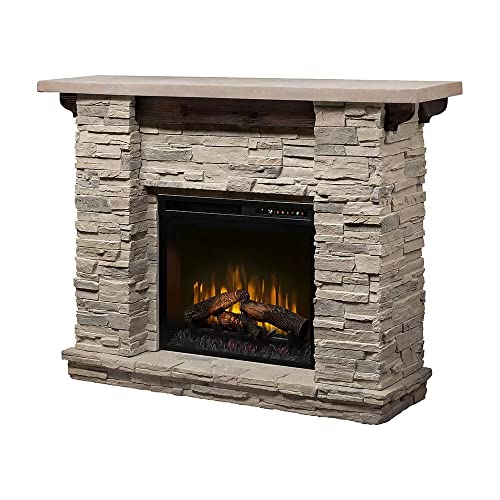
A mantel package pairs an electric firebox with a surround that imitates a traditional fireplace breast or a media console with storage and a place for the television. This is the format that most changes how a room feels, because it creates the architectural focal point that many modern rooms lack. The firebox inside is usually a separate insert, which matters later: if the insert ever fails, it can often be replaced without discarding the furniture around it. Mantel packages are the heaviest and least portable option, they anchor the room’s layout around themselves, and they reward careful measuring — of the wall, of the television if one is going above or on top, and of the distance from your seating to the flame window.
Wall-Mounted and Recessed Units
Wall-mounted electric fireplaces are long, low, linear panels that hang on the wall like a wide picture or are recessed into a stud wall for a flush finish. The flame presentation is panoramic — a ribbon of flame over crystals, stones, or driftwood-style media — and the look is contemporary rather than traditional. Hanging one is within reach of a confident home improver; recessing one is a bigger project that may need an electrician and should only be done exactly as the manufacturer instructs. These units suit media walls and modern living rooms, and their heat typically vents from the front or top edge, so whatever hangs above them needs the clearance the manual specifies.
Inserts for Existing Fireplaces
An insert is a self-contained firebox designed to slide into an existing masonry or prefabricated fireplace opening, or into a cabinet or mantel surround built to receive it. Log-set inserts are even simpler: a moulded log arrangement with the flame effect and heater built in, placed on the grate of a fireplace that no longer burns wood. Inserts are the answer for homes with a real but unused fireplace — because the chimney is damaged, because burning is restricted locally, or because the household is finished with ash and wood storage. Measure the opening in three places, check the back slope of the firebox, and confirm where the power cord will run before ordering; insert fit is unforgiving in a way freestanding units are not.
Top Picks at a Glance
The shortlist below represents the main formats with a model that typifies each one. These are prose-only recommendations — compare current listings, read the manufacturer’s own specifications, and check price on Amazon at the point of purchase. Badges describe the role each model plays in a shortlist, not a laboratory ranking.
Duraflame 3D Infrared Electric Fireplace Stove — Best Overall Stove Style
Best for: renters and small-to-medium living rooms that want a movable, traditional-looking unit. Not suited for: large open-plan spaces needing a wide focal point. The Duraflame stove format is the reference point for the whole stove category: a three-dimensional flame effect behind a door-style window, a metal body that reads as a real stove from across the room, and infrared-style heat that feels gentle rather than blasty. Strengths: compact footprint, genuine portability, and a flame view that holds up from normal seating distance. Trade-offs: the viewing window is modest, and like every stove unit it needs clear floor in front of it where the warm air leaves.
Touchstone Sideline Electric Fireplace — Best for Modern Media Walls
Best for: contemporary rooms, wall-hung or recessed installations, and wide seating arrangements. Not suited for: traditional décor or anyone who cannot manage a wall installation. The Sideline family represents the linear wall-mounted class: a wide ribbon of flame, interchangeable media beds, and colour options for both flame and ember bed on many variants. Strengths: the panoramic flame suits how people actually arrange sofas now, and the flush recessed look is the most architectural in the category. Trade-offs: installation effort is real, and the modern aesthetic clashes honestly with period rooms.

Dimplex Revillusion Electric Fireplace Insert — Best for Existing Fireplaces
Best for: homes with an unused real fireplace opening and owners who want the most convincing log-and-flame presentation. Not suited for: rooms with no fireplace opening or cabinet to receive it. Dimplex builds its reputation on flame technology, and the Revillusion approach — flames appearing to rise through the centre of a full log set rather than behind it — is the class benchmark for realism in an insert. Strengths: flame depth, a substantial firebrick-look interior, and sizing options across common openings. Trade-offs: premium positioning within the category, and the insert format demands exact opening measurements.

PuraFlame Western Electric Fireplace Insert — Best Mid-Tier Insert
Best for: buyers who want an insert with a traditional log presentation at a mid-tier position. Not suited for: buyers wanting the most advanced flame technology in the category. PuraFlame’s Western line represents the honest middle of the insert market: a framed firebox, a resin log set, adjustable flame brightness, and remote control, without the flagship flame systems of the premium tier. Strengths: straightforward sizing, a classic look that suits most mantels, and simple controls. Trade-offs: flame depth is flatter than the premium benchmark, and the trim frame style will not suit every surround.
Amerlife Electric Fireplace TV Stand — Best Furniture-First Package
Best for: rooms that need storage and a television stand as much as they need a flame. Not suited for: minimalists or anyone likely to rearrange the room often. Amerlife’s fireplace TV stands typify the media-console format: cabinet storage, a surface sized for a large television, and a firebox centred beneath. Strengths: one purchase solves the room’s focal-point and storage problems together, and the firebox is a standard insert format. Trade-offs: self-assembly is a real project, and the whole piece is heavy once built.
Costzon Freestanding Electric Fireplace — Best Entry-Tier Starting Point
Best for: first-time buyers, spare rooms, and anyone testing whether the category suits their life. Not suited for: buyers who know they want flagship flame realism. Costzon’s freestanding units occupy the entry tier of the category: simple stove and mantel-look designs, basic flame effects, and straightforward heat. Strengths: an accessible way to learn what you value — format, flame, or heat — before spending more. Trade-offs: materials and flame sophistication reflect the tier, and controls are basic.
How Much Heat Do You Actually Need?
Electric fireplace heat should be understood qualitatively, because that is how you will experience it. A plug-in fireplace on a standard household circuit is a zone heater: it takes the chill off the room you are sitting in, makes a draughty living room feel settled, and lets you turn the whole-home heating down a notch while you are in one place. It is not a replacement for a home’s main heating system in cold weather, and any buying decision that assumes otherwise ends in disappointment. What varies between models is how the heat is delivered. Fan-forced units warm the air and circulate it, so the room’s temperature rises evenly but the warmth fades fairly quickly once the unit stops. Infrared-style units radiate more of their warmth toward people and objects, so you feel it sooner on skin and upholstery even before the air itself is warm. Neither approach changes the total energy available from a wall outlet; they change the feel, and the feel is a legitimate reason to prefer one model over another.
Room size still matters. A compact stove in a small bedroom or study can make the space genuinely cosy. The same unit in a vaulted, open-plan living area will produce a pleasant warm zone around the sofa and little else. Match the ambition to the architecture: bigger rooms and higher ceilings argue for the larger formats, for positioning the unit near where people sit rather than across the room, and for treating the fireplace as one part of a layered approach alongside rugs, curtains, and draught-proofing. For broader comparisons of room heating, our guide to the best space heaters covers the wider category this product sits inside.
How Real Does the Flame Need to Look?
Flame realism is where the price tiers in this category actually live, and it is worth understanding what you are paying for. Entry-level effects use a rotating reflector and coloured light to suggest flickering behind a log set; from a distance, in a dim room, the impression is pleasant, and up close the mechanism shows. Mid-tier designs improve the log moulding, add ember-bed glow, and layer the light so the flame appears to have some depth. Premium systems — the benchmark being designs where flames seem to emerge from within and in front of the logs rather than on a flat plane behind them — survive scrutiny from a metre away and from side angles. Side angles matter more than buyers expect: most living rooms have a seat that sees the fireplace obliquely, and flat effects collapse into a visible light show from that seat while deep effects still read as fire.
Judge flame quality the way you will actually use it. Most viewing happens in the evening, at sofa distance, often with the television on and the flame as background. In those conditions a good mid-tier effect is genuinely satisfying, and the premium difference is a luxury rather than a necessity. If, however, the fireplace is the room’s main event — no television, chairs arranged facing it, long winter evenings — the flame is doing the work of entertainment, and the premium tier earns its position. Also check the practicalities: flame brightness adjustment for bright rooms, flame colour options if your décor wants them, and above all the flame-only mode, because a flame you can run without heat doubles the seasons the unit earns its floor space.
Which Controls Will You Really Use?
Control lists on listings are long; daily life uses four things. First, a remote control, because nobody wants to cross a cold room to adjust the fireplace that was supposed to make the room cosy — check that the remote covers flame, heat, and timer, not just power. Second, a thermostat rather than bare high/low heat settings, because a thermostat holds a comfort level and cycles the heater sensibly, while fixed settings leave you toggling the unit on and off yourself. Third, a timer or automatic shut-off, which suits evening routines and gives peace of mind. Fourth, clear manual controls on the unit itself, for the day the remote is lost in the sofa. Beyond those four, treat extras honestly: app control and voice-assistant integration are convenient if your home already runs that way and pointless clutter if it does not; flame colour wheels are fun for a week and then stay on one setting for most households; crackle sound effects divide opinion sharply and should be auditioned, in a video if not in person, before you pay for them.
What Size and Format Fit Your Room?
Sizing an electric fireplace is a furniture decision before it is an appliance decision. Start with the wall or floor space the unit will occupy and measure it twice, including skirting boards, radiators, and the swing of nearby doors. Then measure the viewing distance from your main seat: small stove windows suit close seating, wide linear units suit wide sofas, and a large mantel package in a small room overwhelms both visually and physically. Check the outlet position early. The unit must plug directly into a wall outlet, and the cord’s reach decides where freestanding models can actually stand; planning to stretch a cord across a walkway or to use an extension cord is not a workaround, it is a safety failure, and it rules out that position. Finally, think about what sits near the unit. Heat leaves the front of most models, so the clear zone in front belongs to the fireplace, not to a rug edge, a curtain hem, or the dog’s bed — and our notes on the best rugs for fireplace explain how hearth-area rugs and heat sources coexist sensibly.
Safety Rules That Are Not Optional
An electric fireplace is a heater, and heater safety rules apply in full regardless of how decorative the unit looks. Plug the unit directly into a wall outlet. Never run a fireplace heater through an extension cord, a power strip, or a multi-way adapter: heating appliances draw sustained high current, and cords and strips that feel fine with a lamp can overheat under a heater’s load. Keep the space around the unit clear — curtains, throws, cushions, newspapers, and upholstered furniture should never drape over, lean against, or sit within the clearance the manufacturer specifies, and nothing at all should cover the unit or block its air intake and outlet. Do not leave a running heater unattended, and follow the manufacturer’s guidance about switching the unit off before you sleep rather than letting it run unsupervised overnight. Keep the unit out of bathrooms and away from water unless it is specifically rated for such locations, supervise children and pets around any operating heater, and stop using the unit and seek advice if the cord or plug is damaged, if the plug feels hot, or if the unit cycles the room’s breaker. These rules are the same ones that apply across the whole category of plug-in heating, and they are part of why our wider heating coverage, including the best space heaters, repeats them so insistently.
How to Prioritise by Use Case
The Renter Who Cannot Modify Anything
Your format is chosen for you: freestanding. A stove-style unit or a small freestanding mantel-look model plugs in, stands on its own feet, and leaves with you when the lease ends. Prioritise flame quality at close range, because rental living rooms tend to be compact, and a thermostat, because rental heating is often expensive and imprecise and the fireplace’s job is to make one room comfortable while the rest of the home stays cool. The Duraflame stove format above is the natural reference design for this profile.
The Homeowner With a Dead Real Fireplace
Your format is an insert, and your first task is measuring, not shopping. With the opening’s width, height, and depth recorded — and the firebox’s rear slope checked — the insert market opens up properly. Prioritise flame realism, because the unit sits in a real hearth where guests will look at it closely and compare it with memory, and prioritise a firebox interior that looks like a fireplace rather than a screen. The Dimplex Revillusion class is the realism benchmark here; the PuraFlame Western class is the mid-tier alternative. For the full argument about whether the conversion is worthwhile, see is an electric fireplace worth it.
The Media-Room Builder
Your choice is between a linear wall unit and a fireplace TV stand, and the decider is installation appetite. Recessing a wide Touchstone Sideline-style unit into a media wall gives the most finished result and the least flexibility afterwards. A console package such as the Amerlife class gives storage and simplicity at the cost of visual drama. Either way, plan the television’s height and the unit’s heat venting together: heat must never blow directly onto the television or into a cabinet void, and the manufacturer’s clearance above the firebox is a hard requirement, not a suggestion.
The Bedroom and Spare-Room Buyer
Small rooms reward restraint. A compact stove or a slim freestanding unit provides the glow and the zone warmth a guest room or bedroom wants, and the features that matter are quiet operation, a thermostat, a timer, and flame-only mode for evenings when the room is already warm. Apply the safety rules with extra care in bedrooms: clear space around the unit, nothing draped nearby, the unit plugged straight into the wall, and the heater switched off before sleep in line with the manufacturer’s guidance. Layered textiles do the rest of the comfort work — see the best blankets for living room for the same layering logic applied to soft furnishings.
First Setup and Care Essentials
Setup for most freestanding units is genuinely simple: unbox, attach legs or feet if they ship separately, position the unit with its clearances respected, plug directly into the wall outlet, and run the flame and heat through one full cycle while you are present to confirm everything behaves. Mantel packages and consoles add furniture assembly — allow real time, follow the order in the manual, and do not force firebox trims into place. Wall-mounted and recessed units deserve the most care: fixings must suit the wall construction, recessed installations must follow the manufacturer’s framing and clearance instructions exactly, and any hardwiring belongs to a qualified electrician. Whatever the format, keep the manual; the clearance figures and cleaning instructions in it are specific to your unit and override general advice, including this guide’s.
Care is light but not zero. Dust the intake and outlet grilles so airflow stays free, wipe the viewing glass or panel with a soft cloth so the flame stays crisp, and check the cord and plug periodically for damage or heat discolouration. Log sets and media beds gather dust like any ornament; a soft brush restores them. Before the heating season starts, run the heater for a short supervised period — a faint warm-dust smell on first use after months idle is common and should clear quickly; a persistent smell, noise, or tripped breaker is a reason to stop and have the unit checked. Storage between seasons, for portable units, means a dry place, the cord loosely coiled rather than tightly wound, and nothing heavy stacked on top.
Mistakes to Avoid
The most expensive mistake is buying the format that fits the photograph rather than the room: a wide linear unit for a narrow chimney breast, a deep mantel package for a walk-through room, an insert ordered before the opening was measured. The second is judging flame quality from a listing video shot in a dark studio; your room, your lighting, and your viewing angle are the test that counts, which is why return terms deserve a read before purchase. The third is treating heat as an afterthought in either direction — expecting whole-home warmth from a plug-in unit, or dismissing zone heat that would in practice make your main room comfortable every evening. The fourth is any compromise on the electrical rules: an extension cord “just for now”, a power strip because the outlet is awkward, a unit tucked against curtains because the room is small. There is no safe version of those compromises with a heater. The fifth is ignoring the unglamorous specifications — cord length, vent position, assembly weight, the noise of the fan in a quiet room — because those are the details that decide whether a fireplace becomes part of the household or a bulky regret. The balanced version of this whole discussion, weighing the category honestly, is in our electric fireplace pros and cons, and the step-by-step method is in how to choose an electric fireplace.
What About Running Costs and Efficiency?
Every electric fireplace converts electricity into heat at effectively the same efficiency at the point of use — that is a property of resistive electric heating, not a brand achievement — so efficiency claims should never decide a purchase. What decides your bill is how long the heater runs and what it lets you avoid heating. The economics of an electric fireplace are the economics of zone heating: if a fireplace keeps the living room comfortable through the evening while the main heating stays low for the rest of the house, the household can come out ahead. If the fireplace is added on top of a fully heated house purely for looks, it is an extra cost — a modest one in flame-only mode, a real one with the heater running for hours. A thermostat is therefore an economy feature as much as a comfort feature, because a unit that cycles to hold a temperature uses less energy than one blasting on its highest setting until someone crosses the room to switch it off. A timer works the same way for people who fall asleep in armchairs. None of this requires a spreadsheet; it requires honesty about which mode the unit will spend its life in. Buyers who know they want the flame far more often than the heat can weight flame quality heavily and treat the heater as a bonus. Buyers replacing a draughty room’s main comfort source should weight the thermostat, the heat delivery style, and the room fit, and treat the flame as the bonus.
Build Quality, Noise, and the Details That Decide Long-Term Satisfaction
Showrooms and listings foreground flame and format; ownership foregrounds everything else. Fan noise is the first example. Every fan-forced unit makes some sound, and in a living room with a television it disappears into the background, but in a quiet bedroom or a reading chair it becomes the room’s soundtrack. Infrared-style and radiant-leaning designs tend to run quieter in character, and thermostatic cycling means the fan comes and goes rather than droning constantly — a pattern some people find more noticeable, not less. If you are sensitive to noise, prioritise models whose owners describe them as quiet, and be honest that no fan heater is silent.
Materials decide how the unit ages. Metal stove bodies shrug off knocks and heat cycles; furniture-style surrounds in manufactured wood look rich but dislike being dragged across floors, leaned on during moves, or placed where sun and radiator heat dry them unevenly. Viewing panels should sit flat and rattle-free; doors on stove models should latch with a positive feel, because a door that buzzes at a certain fan speed will find that speed every evening. Remotes deserve suspicion: small, dark, button-crowded remotes vanish into sofas and frustrate guests, while simple remotes with a few large controls get used for years. Check whether the unit remembers its settings after a power cut or whether it returns to a default state — a small behaviour that matters in homes where the fireplace is part of a nightly routine. Check, too, what happens when something eventually fails. Fireboxes in mantel packages and consoles are often standard inserts that can be swapped, which extends the furniture’s life considerably; fully integrated one-piece designs may have no such path. Asking that question before purchase separates a ten-year piece of furniture from a three-year appliance.
Finally, weigh the unphotogenic logistics. How heavy is the unit, and can it be moved by the people in your household? Does the cord reach a wall outlet from the only sensible position without crossing a walkway? Is the air intake somewhere your particular room will keep clear — not behind a curtain, not under a low shelf, not where a pet bed migrates? Does the warm-air outlet blow toward the seating, or toward a wall it will scorch with dust marks over a season? These questions sound mundane because they are, and they are also the difference between the fireplaces people recommend to friends and the ones they apologise for. Our hands-on evaluation of the category’s reference designs, the electric fireplace review, works through several of these ownership details model by model.
Matching Flame Media and Style to Your Room
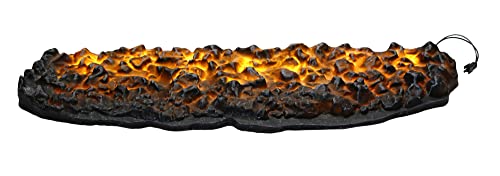
The flame needs something to play over, and the choice of media quietly sets the room’s whole register. Moulded log sets are the traditional option and the right one for stove units, mantel packages, and inserts in period homes; the best log sets are moulded from real charred wood, with grain and ash detail that holds up when the flame is off — an underrated test, because the fireplace spends most of its life unlit and should look like furniture, not like a switched-off appliance. Crystals, glass beads, and smooth stones belong to the linear wall-mounted world, where the flame ribbon reads as a design element; they suit rooms with other contemporary lines and look stranded in a cottage interior. Driftwood-style media splits the difference and pairs naturally with coastal and relaxed schemes. Ember beds matter as much as the media above them: a glowing ember bed sells the illusion at the edges of attention, where most fireplace viewing actually happens, and adjustable ember brightness is worth more than a dozen flame colour options.
Style matching extends to the surround. A mantel package is a piece of case furniture and should be judged like one — against your existing wood tones, your floor, and the room’s proportions. White and painted surrounds brighten dark rooms and suit coastal and modern-farmhouse schemes; dark wood surrounds anchor traditional rooms but can dominate small ones. Stove units in matte black are the most forgiving purchase in the category, because the wood-stove silhouette has looked correct in every interior style for decades. Whatever you choose, view the unit’s proportions against your seating rather than its wall: a fireplace that is slightly too small reads as a toy from the sofa, while one slightly too large reads as architecture. When in doubt, tape the unit’s outline on the wall or floor with painter’s tape and live with the outline for a day. That humble test prevents more returns than any specification sheet, and it costs nothing.
How to Compare Listings Without Being Misled
Product listings for electric fireplaces are written to sell, and a few habits protect you. Treat heated-area claims as marketing until the manufacturer’s own manual confirms the basis for them; the honest frame is the qualitative one used throughout this guide — zone heat for the room the unit sits in. Be sceptical of any listing that promises whole-home warmth from a plug-in appliance. Look for the unglamorous confirmations instead: a thermostat rather than only heat levels, flame-only operation, a timer, the vent position, the cord length, the required clearances, and whether replacement remotes and parts are obtainable. Photographs deserve the same scepticism as text: flame images are routinely enhanced, rooms are darker than yours, and scale is flattered by wide lenses. Videos from ordinary owners, however unpolished, show the flame from real angles in real light. Finally, read the negative comments with a classifier’s eye. Complaints about delivery damage and assembly time are logistics; complaints about fan noise, weak flame from the side, thermostats that overshoot, and cords that fall short are product intelligence. A model whose criticisms are all logistical is usually a sound buy; a model whose criticisms cluster on the flame and the heat is telling you exactly what living with it is like.
Everyday Life With Children, Pets, and Guests
Electric fireplaces are often chosen by households that cannot have a real fire — homes with toddlers, cats, dogs, or a family member for whom smoke and open flame are out of the question — and the category genuinely serves those homes, with honest caveats. The viewing glass on most models stays far cooler than a real stove’s, and there is no spark, ash, or flue to manage. But the heater outlet is still a heater outlet: warm air leaves it at temperatures that deserve respect, small fingers and curious noses should be supervised around any operating heater, and the unit should be positioned so its clear zone survives real life — not where a play mat migrates, not where a dog settles against the warmth, and not where a crawling route passes. Wall-mounted units mounted at the manufacturer’s height keep the heat source out of toddler reach entirely, which is one reason young families gravitate to them. For guests, the fireplace’s simplicity is a social asset: anyone can work a remote, nobody needs a fire-lighting lesson, and the room gains its focal point at the press of a button. That ease — the fire as a light switch rather than a chore — is ultimately what the category sells, and households that value it rarely go back.
Putting the Shortlist to Work: A First-Month Reality Check for Your Electric fireplace
A buying guide can rank features, but a electric fireplace only proves itself once it is living in your seasonal & holiday routine. The first month is the honest test period: the novelty fades, the daily habits settle in, and the small mismatches between a listing photo and your room become impossible to ignore. Use the weeks after delivery as a structured trial rather than a victory lap. Keep the packaging until you have lived with the electric fireplace through ordinary weekdays and one busy weekend, because the two situations stress very different qualities. What follows is a practical way to judge whether the model you chose is genuinely right, and what to adjust while adjusting is still easy.
Week One: Fit, Clearance and the Walk-Past Test
Start with movement. Walk the routes you actually use — carrying laundry, a tray, a vacuum, or shopping bags — and notice whether the electric fireplace narrows any of them. Open every door, drawer, lid or panel to its full travel and check it against walls, skirting and neighbouring furniture. Sit or stand where you will normally use it and look at it from that height, not from the doorway: proportions that looked balanced in a listing can feel top-heavy or lost once your eye level changes. If something feels awkward now, it will not improve with familiarity; small placement changes made in week one are far easier than returns made in month three.
Weeks Two to Four: Load It the Way You Really Live
Most electric fireplace disappointments come from a gap between the staged use in photographs and the untidy reality of a working home. So load it honestly. Put the heavy, awkward, everyday items in first, not the photogenic ones, and leave it that way for a fortnight. Watch for the early warning signs that matter: flexing, wobbling, sticking, fading, lingering odours, or parts that need constant re-adjusting. Note which features you reach for daily and which you have not touched at all, because that pattern tells you what to prioritise — and what to ignore — if you ever buy a second one for another room.
Before the trial month ends, run through this short decision checklist for your electric fireplace:
- Photograph the electric fireplace in place from the doorway and from your usual seat, and judge the proportions from the pictures rather than from memory.
- Check every fixing, joint and moving part once by hand, and tighten or adjust anything that has settled after the first days of use.
- Move one item you use every day to the most reachable position, and one rarely used item to the least reachable, then see whether the layout still makes sense.
- Clean the electric fireplace once using only the method the maker recommends, and note how long it honestly takes you.
- Write down the single change you would make if you bought again — size, finish, layout or configuration — while the reasoning is still fresh.
Remember that guests experience your electric fireplace without instructions, so anything that needs explaining, warning or demonstrating is worth simplifying before it is worth defending. Plan for the electric fireplace to be moved at least twice in its life — for cleaning, redecorating or a change of room — and favour designs that forgive being shifted, tilted or carried. Look at the edges and undersides when you judge build quality, because those are the places makers save money first and the places owners discover last. Ask how the electric fireplace behaves on your worst floor, wall or surface rather than your best one, since homes are uneven and listings are photographed in perfect rooms. Keep the receipt, delivery note and a photograph of the label together, because warranty conversations go smoothly when dates and model details are at hand. If two people in the household disagree about the electric fireplace, let the person who will use or maintain it most have the deciding vote on practical questions. Beware of buying for the household you hope to become; the electric fireplace that serves the household you already are will be used this week, not someday.
If the electric fireplace passes the month with only minor grumbles, you have bought well, and the remaining niggles are usually arrangement problems rather than product problems. If it fails on fit or on daily friction, act while the return window is open instead of hoping the irritation will fade. Either way, the trial turns a hopeful purchase into a known quantity, and that knowledge is what makes the next seasonal & holiday decision faster and calmer.
Frequently Asked Questions
Can an electric fireplace heat a whole house?
No, and it should not be bought with that expectation. A plug-in electric fireplace is a zone heater on a standard household circuit: it warms the room it sits in, taking the chill off a living space and making the seating area genuinely comfortable. Whole-home heating remains the job of your main system. Used as intended — one room, occupied, with doors closed against draughts — the effect is substantial. Spread across an open-plan floor or expected to carry a house through cold weather, it will disappoint, and the disappointment is a mismatch of expectations rather than a defect in the unit.
Is it safe to plug an electric fireplace into an extension cord or power strip?
No. This is the most important safety rule in the category. Heating appliances draw sustained high current, and extension cords and power strips are not built to carry that load safely for hours; they can overheat even when they feel adequate. Plug the fireplace directly into a wall outlet, always. If the outlet position does not suit the place you want the fireplace, move the fireplace or have an electrician add an outlet in the right place. There is no extension cord, however heavy-duty its marketing sounds, that this guide will endorse for a heater.
Can I run the flame without the heat?
Yes — on almost every model, and it is one of the category’s best features. The flame effect and the heater are separate systems, so you can have a glowing fireplace on a warm evening, in a room that is already comfortable, or purely as a night-light ambience in a living room, with the heating element completely off. Flame-only running costs very little energy compared with heating, because it is essentially a light display. When comparing models, confirm the flame-only mode exists and check whether brightness is adjustable, since a flame that cannot be dimmed can feel harsh in a dark room. Flame-only operation is also the mode that makes an electric fireplace a four-season piece of furniture rather than a winter appliance, and for many households it ends up being the mode used most across the year.
How close can furniture and curtains be to an electric fireplace?
Follow the clearance distances in your unit’s manual, because they are set for that model’s vent position and heat output. As a working principle, keep a clear zone in front of and around the unit: nothing draped over it, no curtain hems or throws within reach of the warm-air outlet, no upholstered furniture pressed against it, and never block the air intake. Treat the space in front of the fireplace the way you would the space in front of any heater. If a room layout cannot give a model its required clearances, that model is the wrong choice for that room, however much you like its looks.
Do electric fireplaces need a chimney, venting, or professional installation?
No chimney or venting is needed, because nothing burns: there is no flue gas, no ash, and no carbon monoxide produced by the unit itself. Freestanding models need no installation beyond positioning and plugging in. Mantel packages need furniture assembly. Wall-mounted units need secure fixings into a suitable wall. Recessed installations and any hardwired connection should follow the manufacturer’s instructions precisely and are jobs for a qualified electrician where wiring is involved. The absence of a flue is exactly why inserts can revive a fireplace whose chimney is no longer safe for real fires.
What is the difference between an electric fireplace and a fireplace heater?
The terms overlap in shops, but the useful distinction is intent. An electric fireplace is bought as a focal point — furniture, an insert, or a wall feature — that also provides zone heat. A fireplace heater is a portable heater styled to suggest a fireplace, bought primarily for movable warmth with some flame ambience attached. The full head-to-head, including which suits renters, media rooms, and spare rooms, is in our comparison of the electric fireplace vs fireplace heater. For a deeper single-product evaluation, see our electric fireplace review and the multi-model electric fireplace reviews.
Bottom line. Choose the format your room and building allow, judge the flame from your own seat and lighting, expect honest zone heat rather than whole-home warmth, refuse every shortcut on the electrical safety rules, and the electric fireplace you buy will do the two jobs it promises — a room that looks like it has a heart, and a seat that feels warm — for years. If you take one discipline from this guide, let it be sequencing: room first, format second, flame third, features last. Buyers who shop in that order almost never regret the purchase, because each step eliminates the models that would have disappointed them before money changes hands. Buyers who shop in the reverse order — falling for a feature list, then a flame video, then forcing the format into a room it does not fit — are the ones writing the regretful reviews the rest of us learn from. The category itself is mature, honest, and genuinely useful; it rewards a methodical buyer completely.