Disclosure: As an Amazon Associate, dailyhomedecorating.com earns from qualifying purchases. Links on this page are affiliate links; they cost you nothing extra. Prices and availability change often, so check the current Amazon listing before you buy.
These electric fireplace reviews take the category’s six most representative designs — a stove, two inserts, a linear wall unit, a furniture console, and an entry-tier freestanding model — and review each one against the same standard: how convincing the flame is from a real seat, how the warmth behaves in a real room, how the controls survive daily life, and what the unit is like to own after the novelty has worn off. Electric fireplace reviews are often written as if the products differ mainly in size and styling. They do not. They differ in intent. One is built to revive a dead hearth so faithfully that guests look twice. One is built to disappear into a media wall. One is built to be carried from room to room for a decade. Reading the category by intent, rather than by catalogue order, is what this roundup does — so that the model you choose is the one whose compromises you will never notice, because they are compromises you do not care about.
Key Takeaways
- Best all-rounder: the stove-style class led by the Duraflame reference design — portable, convincing, and installation-free.
- Best flame realism: the premium insert class led by Dimplex Revillusion, for homes with an existing fireplace opening to fill.
- Best for modern rooms: the Touchstone Sideline linear class — a wide flame ribbon made for media walls.
- Best furniture solution: the Amerlife fireplace TV stand class, which solves storage, television, and focal point in one piece.
- Best mid-tier insert: the PuraFlame Western class — traditional looks and honest controls without the flagship flame system.
- Best entry point: the Costzon freestanding class, for households testing whether the category belongs in their lives.
- Every model here is a zone heater with heater rules: plug directly into a wall outlet, never an extension cord or power strip, keep clearances clear, and never leave the heater running unattended.
- The classes separate less on heat — all share the same electrical ceiling — than on flame depth, format permanence, and how much of the room each one reorganises around itself.
- Mid-tier is the category’s value centre in nearly every class; premium money buys flame depth and architecture, entry money buys information about your own household.
- Judge every flame five ways before committing — from your distance, from the side chair, in daylight, switched off, and watched for a full minute to catch the pattern’s loop — because those five checks predict ownership satisfaction better than any specification.
In this guide
Electric Fireplace Reviews: How These Models Were Assessed
Each design below was assessed on five axes, weighted the way owners weight them after a season of use. Flame quality comes first and is judged from seating distance in evening light, from the front and from the oblique chair, because that is where flame effects either hold or collapse. Heating character comes second and is judged qualitatively — how the warmth reaches people, how the thermostat behaves, how the room feels after an hour — because plug-in units share an electrical ceiling and differ in choreography rather than power. Controls come third: the remote’s completeness, the thermostat and timer, the flame-only mode, and whether the unit itself carries full manual controls. Build and off-state presence come fourth, since the unit is furniture for the majority of its hours. Ownership comes fifth: noise character, dust and care demands, cord and placement practicality, and the maker’s support. Safety is not an axis but a gate — every model discussed is a plug-in heater that must connect directly to a wall outlet, keep its manufacturer clearances from curtains and soft furnishings, and be switched off rather than left running unattended, in line with its manual. Models are presented as classes led by a representative design, in prose only; check the current listing for the exact variant, its specifications, and its price on Amazon before buying.
Duraflame 3D Infrared Electric Fireplace Stove — Best All-Rounder
Best for: renters, small-to-medium living rooms, spare rooms, and home offices. Not suited for: large open-plan spaces or buyers wanting a built-in architectural feature. The stove format is the category’s centre of gravity, and this class leads it because it balances every axis without a weak one. The flame is genuinely three-dimensional, playing through a moulded log set behind a traditional door window, dimmable from a bright-room glow to a late-evening ember. The heat is infrared in character — it lands on people and furnishings first, the way a real fire’s warmth does — and a working thermostat holds the room’s comfort without drama. The metal body looks and feels like the stoves it imitates, the remote is complete, and the whole unit can be carried to another room when life rearranges itself.
Strengths: no installation of any kind; a flame that convinces at the distances this format is used at; gentle, person-first warmth; four-season usefulness through flame-only mode. Trade-offs: the viewing window is modest, so the fire reads as a companion rather than a spectacle; the fan is audible in a silent room; and the format needs clear floor in front of it where its warmth leaves, which small rooms must honestly spare. In the single-product depth this class deserves, our electric fireplace review evaluates it as the reference design for the whole category.

Dimplex Revillusion Electric Fireplace Insert — Best Flame Realism
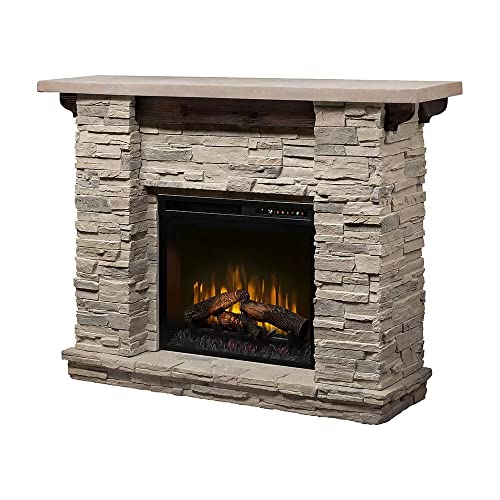
Best for: homeowners with an unused real fireplace, period rooms, and anyone whose priority is the illusion itself. Not suited for: rooms without a fireplace opening or cabinet, renters, or buyers on an entry budget. Dimplex built its name on flame technology, and the Revillusion approach is the current benchmark: the flames appear to rise from within and in front of a full-sized log set, against a firebrick-look interior, so the eye finds depth wherever it lands. From the armchair beside the hearth — the angle that exposes every other effect — this class still reads as a fire. The insert format also restores the room’s original geography: the fireplace becomes the focal point it was built to be, with no flue, no fuel, and no ash ever again.
Strengths: the most convincing flame in the category; substantial sizing options across common openings; a hearth-authentic interior that looks right even unlit. Trade-offs: premium positioning; a permanent installation decision; and total dependence on measuring the opening correctly before ordering — width, height, depth, and the firebox’s rear slope all matter. The heater inside behaves like the rest of the category — honest zone warmth for the room — so the premium buys the picture, not more heat, and buyers should choose it with that clarity.
Touchstone Sideline Electric Fireplace — Best for Modern Media Walls
Best for: contemporary living rooms, wall-hung or recessed installations, and seating arranged for a television. Not suited for: traditional décor, renters who cannot fix to walls, or buyers wanting a hearth to sit beside. The Sideline class rethinks the fireplace as a wide, low ribbon of flame over crystals, stones, or driftwood-style media — less an imitation hearth, more a living light feature. Flame and ember-bed colours adjust on many variants, the profile can hang on the wall or recess flush into it, and the width suits how sofas are actually arranged now: spread out, facing a wall that also holds the screen. Heat vents from the front or top edge depending on installation, which makes the manufacturer’s clearances — especially beneath a mounted television — a design input, not fine print.
Strengths: the most architectural presence in the category; a panoramic flame that serves wide seating; a genuinely modern aesthetic that traditional formats cannot imitate. Trade-offs: real installation effort, with recessed versions best treated as a project and any hardwiring left to an electrician; a look that refuses rustic rooms; and a flame that reads as design rather than as a fire illusion, which purists should recognise before choosing it. For the household whose room is organised around a screen, this class is not a compromise — it is the correct native format, and the stove and insert classes are the compromises.

PuraFlame Western Electric Fireplace Insert — Best Mid-Tier Insert
Best for: buyers with a fireplace opening or mantel who want the traditional insert look at a mid-tier position. Not suited for: buyers who will study the flame from the next chair and demand flagship depth. The Western class is the insert market’s honest middle: a framed firebox with a classic trim, a resin log set with a credible ember glow, adjustable flame brightness, remote control, and sizing that covers the common run of openings. Nothing about it pretends to be the premium benchmark, and that honesty is its charm — across a room, in the evening, inside a real mantel, the effect is warm, traditional, and entirely satisfying.
Strengths: straightforward sizing and installation into existing surrounds; a classic presentation that suits the widest range of mantels; simple, complete controls. Trade-offs: flame depth is visibly flatter than the Revillusion class when the two are compared at close range; the trim styling is traditional in a way that will not bend toward contemporary rooms; and the class competes in the market’s most crowded tier, so variant-checking on the listing matters. For the household whose hearth is viewed from the sofa rather than inspected from the hearth rug, this is frequently the smartest money in the insert market.
Amerlife Electric Fireplace TV Stand — Best Furniture-First Package
Best for: rooms that need a television stand, storage, and a focal point solved in a single purchase. Not suited for: households that rearrange rooms often, or anyone who dislikes self-assembly furniture projects. The Amerlife class treats the fireplace as the centre of a media console: cabinets and shelving flank or surround a standard-format firebox, and the top surface carries a large television. The firebox itself is a conventional insert with a log flame and remote control — perfectly serviceable, deliberately not the star — because the product’s real proposition is the furniture around it. One delivery replaces a stand, adds storage, and gives the wall a reason to exist when the screen is off.
Strengths: three room problems solved at once; a standard insert format that keeps the firebox conceptually replaceable; storage that swallows the media clutter that otherwise colonises the hearth area. Trade-offs: assembly is a genuine project measured in hours and patience; the finished piece is heavy and effectively permanent in its spot; and the television’s position relative to the firebox’s heat vent must respect the manual’s clearances exactly. Heat rises, electronics dislike it, and the manual’s figures are the whole law on the subject. Judged as furniture with a fire included, this class earns its place; judged as a fireplace with furniture attached, the flame-first classes above it win.
Costzon Freestanding Electric Fireplace — Best Entry-Tier Starting Point
Best for: first-time buyers, spare rooms, seasonal use, and households testing the category before committing. Not suited for: buyers who already know they want realism, refinement, or a decade-long furniture piece. Costzon’s freestanding class covers the entry tier with stove and mantel-look designs whose flame effects are simple — a flickering suggestion behind logs rather than a layered illusion — and whose controls cover the essentials without flourish. That simplicity is the point. The class lets a household learn the only facts that matter — whether the family gathers around a flame effect, whether zone heat suits the room, whether the format fits the furniture — at the category’s most accessible position.
Strengths: an honest, low-commitment route into the category; the same zero-installation, flame-only flexibility as every class here; formats light enough to move between rooms and seasons. Trade-offs: materials, flame sophistication, and control refinement all reflect the tier; fan character is plainer; and a household that falls for the category will likely upgrade within a few years, making this a tuition payment as much as a purchase. There is no shame in that sequence — much of the category’s ownership began exactly here — but buyers who already know their standards should start higher and pay once.
Side-by-Side: The Six Classes Compared
| Class | Format | Flame Character | Best Room | Tier Position |
|---|---|---|---|---|
| Duraflame stove class | Freestanding stove | Three-dimensional, close-range | Small-medium living room, office, spare room | Mid |
| Dimplex Revillusion class | Insert | Deepest, hearth-realistic | Room with a dead real fireplace | Premium |
| Touchstone Sideline class | Wall-mounted / recessed | Wide ribbon, contemporary | Modern media room | Mid to premium |
| PuraFlame Western class | Insert | Traditional, mid-depth | Mantel viewed from across the room | Mid |
| Amerlife console class | TV stand package | Standard insert flame | Room needing storage and a stand | Mid |
| Costzon freestanding class | Freestanding | Simple flicker | Spare room, first purchase | Entry |
Read the table by room, not by rank. Every class here is the best answer to a different question, and the category’s only true failure mode is a mismatch: the premium insert bought for a room with no hearth, the entry stove bought for a household of fire purists, the linear panel bought for a cottage. The selection method that prevents mismatch — room first, format second, flame third, features last — is laid out step by step in how to choose an electric fireplace, and the full first-time buyer’s framework is in our electric fireplace buying guide.
Which Class Suits Which Household
Renters and the alteration-averse should start with the stove class and stop there unless the room is huge; nothing else in the category respects a lease so completely. Homeowners with a dead fireplace should measure the opening before reading another word of any review, because the insert classes — Revillusion for the close-inspection household, Western for the across-the-room household — exist precisely for them. Media-room households should decide between the Sideline class’s built-in drama and the Amerlife class’s furniture practicality, and the decider is whether the room needs storage or spectacle more. Spare-room and guest-room buyers should weight quiet operation and the entry-to-mid classes, because a guest room’s fireplace works a dozen evenings a year and should be priced accordingly. Second-unit buyers — the category’s quiet majority, households adding a fireplace to another room after the first one succeeded — should simply repeat whichever class already proved itself in their main room, because consistency of remotes, routines, and expectations is worth more than a marginal flame improvement. And every household, whichever class it chooses, should run the same final checks: flame-only mode present, thermostat rather than only heat levels, timer present, vent position known, cord able to reach a wall outlet directly with no extension, clearances compatible with the room’s real furniture, and return terms read. The wider heater context for the heat side of these products is covered in our guide to the best space heaters.
Ownership Notes Across All Six Classes
Some truths apply to every model in this roundup, and collecting them in one place saves repeating them six times. Noise: every fan-assisted unit makes some sound, infrared-leaning designs tend to present the gentlest character, and thermostatic cycling means the sound comes and goes — in living rooms it vanishes under life, in bedrooms it should be planned around by warming the room before sleep and switching the heater off. Dust: intakes and log sets gather it at the room’s own rate, pet homes faster, and a minute with a soft brush and a cloth restores both airflow and flame crispness. Remotes: they are small, dark, and magnetically attracted to sofa interiors; a fixed home for the remote is the cheapest quality-of-life upgrade in the category. Cords: every unit’s cord must reach a wall outlet directly, because a heating appliance must never run through an extension cord or a power strip — treat outlet position as a placement constraint on equal footing with the view. Clearances: the manufacturer’s figures govern, curtains and throws and pet beds stay out of the warm-air path, and nothing is ever draped over a heater, however decorative its disguise. Season starts: run the heater briefly under supervision after idle months, expect a faint warm-dust smell that clears, and treat anything persistent — smell, noise, breaker trips — as a stop-and-investigate signal. Households weighing the category as a whole, rather than model by model, will find the ledger set out in our electric fireplace pros and cons and the value verdict in is an electric fireplace worth it.
Reading Flame Quality Like a Reviewer
Since flame quality decides more purchases than every other axis combined, it deserves a method rather than an adjective. Reviewers who do this well use the same five checks, and any buyer can repeat them in a showroom or inside a return window. First, the distance check: view from the seat the household actually uses, not from the flattering metre in front of the display, because depth effects are built for sofa range. Second, the side check: move to the oblique chair, the one at forty-five degrees, where flat effects collapse into a visible light panel and layered effects still read as fire. Third, the daylight check: a flame that only works in a darkened room will spend half its life looking washed out, so judge it once with the curtains open. Fourth, the off check: unlit, in ordinary light, the unit is furniture — log moulding, glass tint, body finish, and proportions are what the room lives with for most hours. Fifth, the loop check: watch for a full minute without looking away, because flame patterns repeat, and a rhythm your eye catches in sixty seconds will announce itself every evening for years. Applied across this roundup, the five checks explain the ordering without any mystery: the Revillusion class passes all five at the highest level, the stove class passes four and thins only at the side check, the Western class passes at distance and softens up close, the Sideline class changes the test entirely by offering a design flame rather than an illusion, the console class’s insert passes as an honest mid-tier effect, and the entry class passes the distance check in dim light and cheerfully fails the rest — which, at its tier and purpose, is a fair result rather than a scandal.
Running Costs and Longevity Across the Classes
Running costs do not meaningfully separate these classes, and pretending otherwise would be a reviewer’s invention. All six draw from the same wall outlet, convert electricity to heat with the same point-of-use efficiency, and cost what the household’s habits cost: flame-only evenings are trivial, heating evenings follow the local price of electricity, and the thermostat-equipped classes waste less of both by cycling instead of blasting. Where classes do separate is longevity, and the pattern is consistent. The flame systems are the longest-lived components everywhere — light-based, with nothing to consume. The heating components carry the wear: fans first, then thermostats and elements, typically after years of service and typically announcing themselves with noise or faltering heat rather than failure without warning. Furniture-format classes add a second lifespan to consider: the Amerlife class’s cabinetry will outlive its first firebox, and because the firebox is a standard insert format, the furniture’s life can extend across a replacement — the same logic applies to mantel packages generally. The stove class’s metal body is effectively permanent, which is why second-hand examples remain common and serviceable. The entry class is where longevity expectations should be set lowest, in materials and in maker support; it is priced for a first chapter, not a whole story. Across all classes, the ownership habits that extend life are identical and unglamorous: keep intakes dusted and unblocked, keep the cord unpinched and undamaged, keep clearances clear so the unit never cooks in its own trapped heat, and keep the manual.
Where Owners Disagree — and What the Disagreement Tells You
The most useful signal in owner feedback is not the average sentiment but the recurring disagreements, because each one identifies a genuine fork in taste that a buyer can locate themselves on. The first fork is crackle sound: models that offer it split households between those who find it completes the illusion and those who hear a short audio loop within one evening and never enable it again — if you are sensitive to repetition in other contexts, you already know your side. The second fork is flame colour options: some owners rotate colours with seasons and moods, while the majority set a natural flame once and never touch the control again, which suggests paying for colour range only if you are demonstrably a settings-tinkerer in the rest of your home. The third fork is the thermostat’s cycling: some owners experience the gentle on-off rhythm as the sound of a system working, others as an interruption, and the split correlates with how quiet the rest of the home is. The fourth fork is size regret, and it runs in both directions — households that bought small for a large room and find the fire underweight, and households that bought a commanding piece for a small room and feel crowded by it — which is why the painter’s-tape outline test recommended in our electric fireplace buying guide prevents more disappointment than any review can. None of these forks has a correct side. Each has your side, and the value of a roundup like this one is less in ranking the classes than in helping you notice which fork you are standing at before the box arrives.
Installation Day: What Each Class Actually Asks of You
Reviews often compress installation into a single word — “easy” — when the classes differ enough to deserve a paragraph each. The stove class asks for a decision and a wall outlet: carry it in, stand it where its cord reaches the outlet directly, respect the clearances, and the installation is complete before the packaging is broken down. The entry freestanding class asks the same, with lighter weight and occasionally a few legs or a base to attach. The insert classes ask for preparation: the opening measured in three places, the rear slope of an old firebox understood, a plan for the cord’s route to an outlet that does not involve draping it across the hearth or trapping it under the insert’s weight, and then a slide into place that is simple precisely because the measuring was not. The console class asks for a furniture afternoon — panels, fasteners, patience, a second pair of hands for the heavy stages — and for the firebox clearances to be checked before the television goes on top, not after. The linear class asks the most: wall fixings matched to the wall’s construction for a hung unit, or genuine building work for a recessed one, with framing, clearances, and any hardwired connection handled exactly as the manufacturer specifies and, where wiring is involved, by a qualified electrician. None of this is hidden cost; it is the format’s nature priced in effort rather than money, and households that choose with installation day in mind are rarely surprised by it. The through-line across all six is the electrical rule that no format negotiates: the unit’s own cord, into a wall outlet, directly — never an extension cord, never a power strip — because the appliance inside every one of these beautiful objects is a heater, and heaters are wired with respect or not at all.
Choosing by Tier, Without a Single Price
Because this roundup is deliberately free of prices, the tier question has to be answered in terms of what each level buys, and the answer is unusually consistent across the classes. The entry tier buys participation: the silhouette, a flame suggestion, basic heat, and the knowledge of whether the category suits your household. It is the right spend for spare rooms, seasonal rooms, and genuine uncertainty, and the wrong spend for a main room in a household that already knows its standards. The mid tier buys the complete experience with no apologies: layered flames that convince at sofa distance, thermostats that behave, remotes that cover everything, materials that feel like furniture, and makers who support their products. For most households, in most classes, the mid tier is where this category’s value lives — the stove class and the Western insert class both sit here, which is not a coincidence. The premium tier buys the last increment of illusion and architecture: flame depth that survives the side chair, interiors that honour a real hearth, widths that command a media wall. That increment is real and it is priced like one, and it is worth it precisely to the households who will sit closest to the fire — literally — for the longest evenings. The discipline is to know which buyer you are before the tiers start their work on you, because every tier in this category is honestly built for somebody, and the only wasteful purchase is the one aimed at a household you do not have. The decision framework in is an electric fireplace worth it is built to identify exactly that, and the practicalities of the hearth zone itself are covered in our best rugs for fireplace guidance.
Final Recommendations by Scenario
The first fireplace, in a rented flat. The Duraflame-class stove, without hesitation. It will teach the household everything about its own habits — how often the flame runs, whether the warmth suffices, which chair becomes the fireside chair — and every lesson transfers if a later home invites an insert or a wall unit. Nothing is installed, nothing is left behind, and nothing about the choice forecloses the future.
The dead hearth in a house you own. Measure the opening, then choose between the two insert classes by viewing distance. If the household’s chairs sit close and the fire will be studied, the Revillusion class earns its premium in the only currency that matters here — belief. If the hearth is seen across the room, the Western class delivers the same restoration at the mid tier, and the difference is better spent on the surround, the mantel styling, and the room around it.
The new media wall. The Sideline class if the wall is being built anyway and the aesthetic is contemporary; recess it, respect its clearances beneath the screen, and let the flame ribbon do what no traditional format can. If the wall already exists and storage is short, the Amerlife class achieves ninety percent of the transformation with none of the building work.
The guest room and the spare room. The entry freestanding class, chosen without guilt. These rooms host a dozen fireside evenings a year; the category’s core magic — a glow, a welcome, a warm room for a guest — survives the tier intact, and the household’s serious money belongs in the room where the family actually lives.
The second fireplace. Repeat the class that already works in your main room. Ownership has taught you its remote, its thermostat’s habits, its dust schedule; a second unit of the same family doubles the comfort and adds nothing to the household’s learning curve. Novelty is a poor reason to complicate a routine that already ends every evening well.
What Has Changed in This Category — and What Stubbornly Has Not
A roundup written honestly should note where the category is moving, because buyers inherit its trajectory. Flame technology is the moving frontier: layered, depth-creating effects that were once a single maker’s signature are spreading down the tiers, which means the mid-tier buyer of today gets an illusion that would have been premium not long ago — one more reason the mid tier is this category’s value centre. Controls are moving too, toward app and voice integration layered on top of the remote rather than replacing it; households deep in a smart-home ecosystem will use them, and everyone else will use the remote and lose nothing. Furniture integration keeps deepening, with consoles and mantel packages designed as coordinated room systems rather than fireboxes with wood around them. What has not changed is more instructive. The electrical ceiling has not moved: a wall outlet delivers what it delivers, and every class in this roundup heats one room honestly and no more. The safety discipline has not moved: direct connection, clearances, supervision, off rather than unattended — the same rules, because the physics that wrote them is unmoved by fashion. And the human fact has not moved at all: people gather around a glow, arrange their chairs toward it, and end their days better in its company. The category sells that fact in six formats now. These reviews exist to help you pick the format; the fact itself needs no review.
How to Use These Reviews With a Listing Open
A roundup earns its keep at the moment a buyer sits with a listing open and a decision to make, so here is the working method, class by class, in the order a careful buyer actually proceeds. Start by confirming the class, not the model: listings blur formats with phrases like “fireplace heater” applied to everything, and the first task is to establish whether the product in front of you is a stove, an insert, a linear panel, a console, or an entry freestanding unit — because every expectation in these reviews is indexed to class, and a model judged against the wrong class will always look better or worse than it is. Next, verify the four controls that decide daily life — flame-only mode, a thermostat rather than only heat settings, a timer, and full controls on the unit as well as the remote — in the manufacturer’s own description rather than in a marketplace summary, because summaries copy each other and manuals do not. Then find the unglamorous numbers that are not prices: the vent position, the cord length, the required clearances, the unit’s weight, and the opening or wall dimensions it demands, and check them against your room’s measurements rather than your room’s hopes. Then read the owner feedback with the classifier’s eye this site recommends: logistics complaints — delivery, assembly time, packaging — tell you about the seller; product complaints — fan character, flame from the side, thermostat behaviour, a cord that falls short — tell you about the fireplace, and a model whose criticisms are all logistical is usually the sound buy its class promises. Finally, hold the tier discipline: decide whether your household is an entry, mid, or premium buyer for this room before the listing’s photographs start negotiating, because they will, and they are better at it than most of us. Followed in order, that method converts these reviews from reading material into a decision — which is the only thing a review is finally for. The same discipline, generalised beyond this category, is the backbone of our electric fireplace buying guide, and the households who apply it are the ones whose fireplaces are still being praised, in the past tense of purchase and the present tense of use, years later.
After the Boxes Are Gone: Long-Term Ownership Notes From Electric fireplace Reviews
Most electric fireplace coverage stops at unboxing, yet almost everything that decides owner satisfaction happens afterwards. The first evening tells you about finish and first impressions; the third month tells you about durability, upkeep and whether the design still suits the way your household actually behaves. This section looks at the ownership phase in detail — the settling-in period, the first signs of wear worth watching for, and the small habits that separate owners who stay pleased from owners who start browsing replacements. If you are weighing Duraflame 3D Infrared Electric Fireplace Stove, Dimplex Revillusion Electric Fireplace Insert or any similar design, treat the points below as the questions a good long-term review should answer.
The Settling-In Period: What Changes in the First Weeks
New materials and mechanisms relax. Fabrics soften, joints settle, finishes lose their showroom sharpness, and moving parts either bed in smoothly or start to complain. With a electric fireplace, use the first fortnight deliberately: operate everything daily, check fixings once after the first week, and keep a mental note of any sound, wobble or resistance that was not there on day one. Changes that stabilise after a small adjustment are normal settling; changes that keep progressing are early warnings, and they are far easier to raise with a seller while the purchase is recent.
Wear Worth Watching, and Wear Worth Ignoring
Not all wear is failure. Honest materials in the seasonal & holiday category develop a patina — slight softening of edges, gentle colour shifts where hands and light fall — and most owners come to like it. The wear that matters is functional: looseness that returns after tightening, surfaces that mark from ordinary use rather than accidents, parts that need persuading, and finishes that fail at edges and corners first. Check those high-contact zones on any electric fireplace you already own, and look for honest close-up photographs of exactly those zones when you judge a replacement.
A simple ownership routine keeps a electric fireplace performing the way the early reviews promised:
- Once a month, spend two minutes checking fixings, feet, seals or moving parts — whichever your electric fireplace relies on — and correct small changes before they compound.
- Clean little and often with the mildest method that works, rather than rarely and aggressively, and always test any new cleaner on a hidden patch first.
- Rotate, rest or reposition the electric fireplace if one side takes all the light, heat or traffic, so wear spreads evenly instead of concentrating.
- Keep the manual, spare parts and any touch-up materials together in one labelled place; the day you need them is never the day you want to search.
- Photograph the electric fireplace once a year from the same spot; comparing pictures is the most reliable way to notice slow change you would otherwise miss.
Plan for the electric fireplace to be moved at least twice in its life — for cleaning, redecorating or a change of room — and favour designs that forgive being shifted, tilted or carried. Look at the edges and undersides when you judge build quality, because those are the places makers save money first and the places owners discover last. Ask how the electric fireplace behaves on your worst floor, wall or surface rather than your best one, since homes are uneven and listings are photographed in perfect rooms. Keep the receipt, delivery note and a photograph of the label together, because warranty conversations go smoothly when dates and model details are at hand. If two people in the household disagree about the electric fireplace, let the person who will use or maintain it most have the deciding vote on practical questions. Beware of buying for the household you hope to become; the electric fireplace that serves the household you already are will be used this week, not someday. A tape measure, a spirit level and ten patient minutes prevent more electric fireplace regrets than any amount of comparison shopping after the fact. When a listing is vague about a dimension, material or included part that matters to you, treat the vagueness itself as information and look for a clearer seller.
Ownership rewards attention in small doses. A electric fireplace that is checked monthly and cleaned gently will usually outlast a neglected premium model, and it will certainly stay pleasanter to live with. Judge any review — including the detailed assessments earlier in this guide — by whether it helps you through this long middle phase of ownership, because that phase, not the unboxing, is where the money is really spent.
Frequently Asked Questions
Which electric fireplace looks most like a real fire?
The premium insert class, led by the Dimplex Revillusion designs, because its flames appear to rise through a full log set against a firebrick-look interior, giving the eye genuine depth from the front and from the side chair. The stove class’s three-dimensional flame is the next most convincing and the most convincing among freestanding formats. Entry-tier effects suggest fire pleasantly at a distance in a dim room but show their mechanism up close. The honest test is always your own room: your light, your seat, your viewing angle, judged inside the return window.
Which electric fireplace is best for a rental home?
The freestanding stove class, because it asks for nothing the lease forbids: no fixings, no alterations, no installation, and it leaves with you. It plugs directly into a wall outlet, stands on its own feet, and can move between rooms as the household’s needs change. Wall-mounted classes can suit long rentals with a cooperative landlord, but the stove is the only class that is unconditionally rental-proof. Check any lease clause about portable heaters, keep the manufacturer’s clearances, and the arrangement is as clean as the category gets. It is also the class whose second-hand market is deepest, which matters to renters furnishing a first home on a budget — a used stove in good order, its cord and plug inspected and its first runs supervised, delivers the format’s whole experience at the entry tier’s outlay.
Do any of these actually heat a room well?
Yes — as zone heaters, all six classes warm the room they sit in and make a seating area genuinely comfortable, with infrared-leaning designs feeling fastest because their warmth lands on people directly. None of them heats a whole house or replaces a main heating system, because all plug-in units share the same electrical ceiling. The differences between classes are in delivery character and thermostat behaviour, not in total power. Buy for the room the unit will live in, close the door, position the warmth toward the seating, and the heating side of every class here does its honest job. Two further habits separate the households that praise their unit’s warmth from those that shrug at it: drawing curtains against evening draughts so the room keeps what the heater gives it, and letting the thermostat — rather than repeated manual switching — hold the comfort level through the evening.
What is the safest way to plug in an electric fireplace?
Directly into a wall outlet, with the unit’s own cord, full stop. Never use an extension cord, a power strip, or a multi-way adapter with a heating appliance: the sustained current draw can overheat them even when they seem to cope. If the desired position has no reachable outlet, move the unit or have an electrician install an outlet where it is needed. Keep the cord untrapped — not pinched under furniture legs, not run beneath rugs where damage hides — and inspect it occasionally. This single rule prevents more heater incidents than every other precaution combined.
Can I put a television above an electric fireplace?
Only within the manufacturer’s stated clearances, and with the heat path considered honestly. Many media consoles and wall installations are designed for exactly this arrangement, with the firebox’s warm air venting forward, away from the screen. What is never acceptable is improvising: a television hung at a guessed height above a unit whose manual specifies a greater clearance, or a console whose vent blows into the television’s underside. Heat and electronics are poor neighbours, the manual’s figures are written for your exact model, and they override any photograph in a listing — including photographs showing a television mounted closer than your manual allows.
Electric fireplace or fireplace heater — which should I buy?
Buy the electric fireplace if the flame and the furniture presence are the point — a focal point for the room that also warms it. Buy the fireplace heater if movable warmth is the point and the flame is a bonus styling touch on a portable heater. The two overlap in shops and diverge in ownership: fireplaces anchor rooms and routines, heaters follow needs around the house. Our dedicated head-to-head, electric fireplace vs fireplace heater, works through the criteria one by one, and the hearth-area practicalities in our best rugs for fireplace notes apply to whichever you choose.
Bottom line. Six classes, six intents, no universal winner — and that is the category’s strength. The stove class for freedom, the premium insert for illusion, the linear class for modern rooms, the mid-tier insert for honest value, the console for furniture logic, and the entry class for learning what your household actually wants. Choose by room and intent, hold every model to the same safety discipline, and any of the six will do the two things this category promises: make the room look like it has a heart, and make the seat by it warm. If these reviews have a single sentence worth carrying into the showroom or the listing page, it is this: there is no best electric fireplace in this roundup, there is only the best match between a class and a household — and the match is knowable in advance, from the room’s measurements, the building’s rules, the seating’s distance, and the household’s honest habits. Buyers who do that small amount of homework before choosing between these six designs almost never write the regretful reviews the rest of us learn from; they write the other kind, the ones that begin with a season count and end with a second purchase for the other room.