Disclosure: As an Amazon Associate, dailyhomedecorating.com earns from qualifying purchases. Links on this page are affiliate links; they cost you nothing extra. Prices and availability change often, so check the current Amazon listing before you buy.
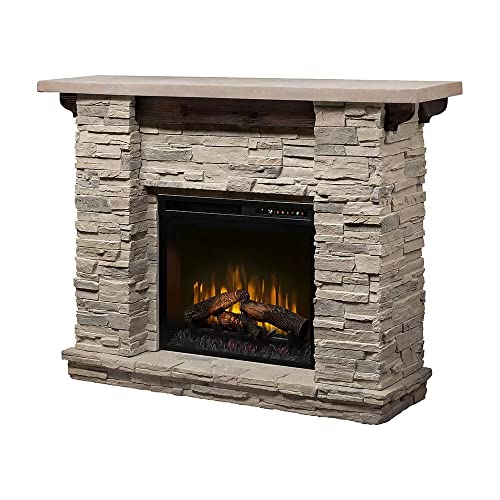
The electric fireplace vs fireplace heater question confuses shoppers because the two products overlap in appearance, in vocabulary, and sometimes in the same manufacturer’s catalogue. Both plug into a wall outlet. Both show a flame effect. Both warm a room. The difference is intent, and intent decides everything about ownership. An electric fireplace is a focal point that heats: a piece of furniture, an insert in a hearth, or a wall feature, bought to give a room a heart, with zone warmth included. A fireplace heater is a heater that decorates: a compact, portable appliance bought to move warmth where it is needed, wearing a flame effect as a pleasant styling touch. Neither is the better product in the abstract. Each is the better product for a different household, and this comparison works through the criteria one by one — with a verdict on each — so you can find which household is yours.
Quick verdict. Choose the electric fireplace if the flame will be watched, the unit will live in one room as furniture, and the room needs a focal point as much as it needs warmth. Choose the fireplace heater if warmth must move — between rooms, between floors, between a house and a workshop or a rental — and the flame is a bonus rather than the purpose. Households that choose against their real pattern of use end up with a beautiful fireplace they keep moving, or a portable heater they keep apologising for. Both mistakes are avoidable in the next ten minutes of reading.
Key Takeaways
- The dividing line is intent: fireplace equals furniture with heat; fireplace heater equals portable heat with a flame costume.
- Flame quality, size, and presence belong to the electric fireplace; portability, simplicity, and price-tier accessibility belong to the fireplace heater.
- Heating performance is a draw — both are plug-in zone heaters on the same electrical ceiling, warming one room honestly.
- Safety rules are identical and absolute for both: direct wall-outlet connection, never an extension cord or power strip, clear space from curtains and furnishings, and no unattended running.
- Renters who move often lean heater; homeowners furnishing a room lean fireplace; many households eventually own one of each, in that order.
- The freestanding stove format blurs the line entirely — judge any borderline product by the criteria in this comparison, never by the label on its box.
- By the end of a season the difference is a shape of life: the fireplace gives a household a centre, the heater gives it a route — and most people recognise their own pattern within a paragraph of each description.
In this guide
Electric Fireplace vs Fireplace Heater: The Two Products Side by Side
| Criterion | Electric Fireplace | Fireplace Heater |
|---|---|---|
| Primary purpose | Room focal point and furniture, with heat | Portable warmth, with flame styling |
| Typical formats | Mantel packages, inserts, wall-mounted panels, stove designs | Compact stove-look and cabinet-style portable units |
| Flame quality | The product’s centrepiece; layered and dimmable at mid tier and above | A styling touch; simple effects, smaller windows |
| Heat delivery | Zone heat for its room, thermostat-controlled | Zone heat for wherever it is carried, thermostat on better models |
| Portability | Freestanding models move occasionally; most formats stay put | Built to move — handles, light weight, room to room |
| Installation | None for freestanding; assembly or wall work for larger formats | None |
| Presence when off | A piece of furniture; part of the room’s design | An appliance in the corner |
| Tier range | Entry to premium, furniture-priced at the top | Entry to mid, appliance-priced |
The table’s pattern is consistent: wherever the criterion concerns the room — presence, flame, permanence — the fireplace wins; wherever it concerns movement and simplicity, the heater wins; and wherever it concerns heat or safety, the two are the same appliance underneath. The sections below take the contested criteria in turn. For the full category framework behind the fireplace side, see our electric fireplace buying guide; for the wider heater field the fireplace heater belongs to, see the best space heaters.
Flame Quality and Presence
This is the electric fireplace’s home criterion, and it is not close at the tiers where fireplaces are meant to be watched. A mid-tier electric fireplace builds its flame from layered light over a full log set or a wide media bed, dims it across the evening, and sustains the illusion from the sofa and, at the premium end, from the side chair. It is designed, lit, and proportioned as the room’s visual centre, and when it is switched off it remains a designed object — a mantel, a stove silhouette, a panel on the wall. A fireplace heater’s flame is a smaller window on a smaller box, built from simpler effects, and it reads honestly for what it is: a cheerful suggestion of fire on an appliance whose real job is elsewhere. In a dim room it is pleasant. Beside a real fireplace’s flame, it is not a contest anyone entered it into. The presence gap widens in daylight, when the heater returns to being a box in the corner and the fireplace continues to furnish the room.
Criterion verdict: electric fireplace, decisively — this is what its extra size, tier range, and furniture intent are for.
Heating Performance
Strip away the costumes and both products are plug-in electric heaters on a standard household circuit, which means both deliver zone heat for one room and neither replaces a home’s main heating system. The fireplace heater sometimes presents itself as the more serious heater, and the fireplace as the decorative one, but the physics refuses the distinction: the ceiling is the outlet, and both products live under it. What genuinely differs is delivery and control. Better fireplace heaters concentrate on the heating brief — straightforward fan-forced or infrared delivery, a thermostat on respectable models, heat that follows the unit to whichever room is cold. Electric fireplaces spread their budget between flame and heat, and their thermostats and timers are usually at least as refined, because the product is expected to run all evening as part of the room’s routine. Feel differs too: a fireplace’s warmth is aimed at a fixed seating arrangement and can be positioned once, perfectly; a heater’s warmth is aimed wherever it is carried and set down, which is flexibility at the price of a new compromise each time.
Criterion verdict: a draw on power, a split decision on pattern — the fireplace heats a settled room better, the heater heats a changing household better.
Portability and Flexibility
The fireplace heater’s defining win. It is light, compact, often handled, and built to live a nomadic life: the cold bedroom this week, the home office next week, the workshop or the guest room or the rental property after that. It stores in a cupboard through summer without a second thought. The electric fireplace, by contrast, is a commitment to a room. Freestanding stove designs move without drama, and that is the format to choose if you want fireplace presence with some flexibility retained — but mantel packages, consoles, inserts, and wall units are placed, not carried, and their value depends on staying. Households should interrogate their own history here: if your heating needs have genuinely moved around your home in the past year, believe that pattern; if your evenings happen in one room and always have, the fireplace’s permanence is not a limitation but a description of your life.
Criterion verdict: fireplace heater, decisively — portability is its entire design brief.
Installation and Commitment
The fireplace heater asks for nothing: unbox, place with clearances respected, plug directly into a wall outlet. The electric fireplace spans a spectrum from that same nothing — freestanding stove designs — through furniture assembly for mantel packages and consoles, to wall fixing for panels and genuine building work for recessed installations, with any hardwiring properly left to an electrician. Commitment mirrors installation. A heater is a reversible decision that can be returned, stored, lent, or replaced without the room noticing. A fireplace — above all an insert fitted to a hearth or a panel recessed into a wall — becomes part of the home’s fabric, which is its glory when the choice is right and its cost when the household’s life changes. Renters, the alteration-averse, and anyone in a transitional home should price that reversibility honestly; it is worth more than a tier of flame quality to a household that will move within two years.
Criterion verdict: fireplace heater for zero commitment; the fireplace’s commitment is a feature only when the home and the household are settled.
Running Costs and Value
Both products convert electricity to heat at the point of use with the same efficiency, and both cost what electric heating costs when the heater is running — so the running-cost comparison is a draw, decided by hours and habits rather than by product. The value comparison is where they separate. A fireplace heater’s price buys a heating appliance, and it should be judged against other heaters: on that scale it carries a small premium for its flame styling, which each household can weigh for itself. An electric fireplace’s price buys furniture, a flame feature, and a heater in one object, and it should be judged against the cost of achieving those three things separately — against a mantel installation, against decorative lighting, against a heater — a comparison under which even premium fireplaces often look rational. The trap is cross-judging: pricing the fireplace as if it were only a heater makes it look absurd, and pricing the heater as if it were furniture makes it look disappointing. Each product is good value inside its own intent and poor value inside the other’s, which is the whole comparison in one sentence.
Criterion verdict: a draw on running costs; on value, each wins inside its own intent and loses inside the other’s.
Safety and Daily Discipline
Here the comparison dissolves entirely, because the safety profile is one profile. Both products are plug-in heating appliances, and every rule applies to both with equal force. Plug the unit directly into a wall outlet — never through an extension cord, a power strip, or an adapter, because a heater’s sustained current draw can overheat cords and strips that handle lesser appliances without complaint. Keep the manufacturer’s clearances clear: no curtains, throws, bedding, or upholstered furniture within the warm-air path, nothing draped over the unit, no blocked intakes. Do not leave a running heater unattended, and follow the manufacturer’s guidance about switching off before sleep rather than heating a room unsupervised overnight. Supervise children and pets around either product, inspect cords periodically, and stop using any unit whose plug runs hot, whose cord is damaged, or which trips breakers. Neither product produces combustion risks — no flame, no sparks, no flue gases — and that shared advantage over real fires belongs to both equally. A household unwilling to keep this discipline should buy neither product; a household willing to keep it gets the full benefit of both.
Criterion verdict: identical — the safest choice is the household that follows the rules, not either product.
One safety-adjacent difference does deserve a sentence, because households raise it often: the fireplace’s fixed position makes its discipline easier to keep. A unit that never moves has its clearances arranged once, its cord dressed once, its outlet relationship permanent — the safe configuration is the default configuration. A portable heater’s discipline must be re-established at every placement, in rooms whose outlets and curtains were not arranged for it, by whoever carried it there, including tired people at three in the morning. That is not an argument against portability; it is an argument for treating each new placement of a heater as a small installation, with the same ten seconds of attention — outlet direct, clearances clear, nothing draped, supervision planned — that the fireplace received once. Households that build that habit get the heater’s full flexibility at the fireplace’s full safety standard, which is the best outcome available on either side of this comparison.
Strengths and Trade-Offs of Each Side
Electric fireplace — strengths.
- A flame worth watching: layered, dimmable, and sized to the room, with flame-only mode for every season.
- Furniture presence that gives a room a focal point and continues to furnish it when switched off.
- Formats for real architecture — hearths revived, media walls completed, mantels installed where none existed.
Electric fireplace — trade-offs.
- Permanence: most formats commit to a room, and the larger ones commit to a layout.
- Furniture-tier pricing at the top of the range, which only makes sense judged as furniture.
- Installation effort that scales with ambition, from assembly afternoons to recessed building work.
Fireplace heater — strengths.
- True portability: warmth that follows need around the home, with storage to match.
- Zero installation and zero commitment — a reversible purchase in every sense.
- Appliance-tier accessibility, with the flame as a genuine pleasure rather than a pretence.
Fireplace heater — trade-offs.
- A flame that suggests rather than convinces, in a window sized for an appliance.
- No furniture presence: off and stored, it contributes nothing to the room.
- A heating brief it shares with every plain heater, against which its styling premium must justify itself.
Who Each Option Suits — and Who Should Skip Each
The electric fireplace suits the settled household furnishing a real room: the homeowner reviving a dead hearth, the media-room builder, the renter in a long lease whose living room lacks any focal point, the family that gathers in one place every evening and wants that place to feel finished. It suits anyone who has caught themselves saying the room needs something, where the something is a heart rather than a temperature. It does not suit the household whose cold problems move around, the short-tenure renter, or the buyer whose budget must answer a heating problem first and a décor problem never. The fireplace heater suits the mobile pattern of life: the household with one cold room at a time and a different one next month, the home worker heating an office inside an empty house, the landlord-pleasing tenant who cannot alter anything and may not stay, the workshop and guest-room and cabin pattern where warmth is occasional and must arrive with the person. It does not suit the buyer who will sit in front of it nightly expecting a fireside — that buyer is describing a fireplace and will feel the substitution every evening. The balanced ledger for the fireplace side alone is set out in our electric fireplace pros and cons, and the worth-it calculus for settled households is in is an electric fireplace worth it.
How to Decide: Questions That Branch
Answer in order; the first decisive answer usually settles it. Will the unit live in one room for the foreseeable future? If no, the fireplace heater — portability is not a feature you might use, it is the product. If yes: is there a fireplace opening, a mantel wall, or a media wall asking for a focal point? If yes, the electric fireplace, in the format the architecture requests. If no focal point is needed and the room simply runs cold: does the cold stay in this room? If it moves — bedrooms in winter, office in the workday, wherever the household actually is — the heater again. If the cold and the household both stay in this room, ask the flame question: will people sit and watch it, most evenings, as part of how the room is enjoyed? If yes, the fireplace, and spend on the flame tier your seating distance demands. If the honest answer is that the flame would be a novelty for a fortnight, buy the heater and let its little window be a bonus. One last branch, for the undecided household with a settled room and a real focal-point hunger but a heater’s budget: buy the heater now, learn the household’s patterns for a season, and let the fireplace be the considered second purchase. That sequence — heater first, fireplace when intent is proven — is how a large share of two-product households actually formed, and it wastes the least money of any path in this comparison.
Where to Buy: Representative Models for Each Side
These are prose-only representatives of each side’s strongest form; compare current listings and check price on Amazon before buying.

For the Fireplace Side: Dimplex Revillusion Electric Fireplace Insert
The premium expression of the fireplace intent: flames rising through a full log set inside a real hearth, the deepest illusion in the category, and a room permanently reorganised around its fire. Choose this side’s flagship when the home is settled, the hearth is empty, and the flame will be watched closely for years. Best for: hearth revival. Not suited for: any household that might move the fire.
For the Fireplace Side, Modern Rooms: Touchstone Sideline Electric Fireplace
The fireplace intent in contemporary form: a wide flame ribbon, hung or recessed, that completes a media wall and serves wide seating. Best for: modern rooms organised around a screen. Not suited for: traditional décor or walls that cannot take fixings.
For the Heater Side: Duraflame Portable Infrared Quartz Fireplace Heater
The heater intent in its most fireplace-like dress: a compact, movable unit with a stove-style flame window and infrared-character warmth that lands on people directly. It is the natural bridge product — the one undecided households buy first. Best for: warmth that moves between rooms with a flame bonus. Not suited for: serving as a room’s permanent focal point.
For the Heater Side, Entry Tier: Costzon Freestanding Electric Fireplace Heater
The accessible expression of the heater side: light, simple, and honest about its priorities, with a basic flame effect over a portable heater’s heart. Best for: spare rooms, workshops, and first tests of the pattern. Not suited for: nightly fireside viewing.
Final Recommendation by Use Case
For the settled living room with a hearth or a feature wall: the electric fireplace, at the flame tier your closest seat demands — the insert classes are reviewed head-to-head in our electric fireplace reviews. For the modern media room: the fireplace again, in its linear form. For the renter, the mover, the one-cold-room-at-a-time household, and the office-in-an-empty-house: the fireplace heater, with a thermostat, carried proudly. For the bedroom: either, used the same disciplined way — warm the room, enjoy the glow, heater off before sleep, clearances always respected — with layered bedding doing the overnight work, a principle our best blankets for living room coverage extends across the home’s soft furnishings. For the household that cannot decide: the heater now, the fireplace when the pattern proves itself, and no regret in either direction. And for the hearth area itself, whichever side wins, our notes on the best rugs for fireplace explain how floor coverings and heat sources share the zone safely.
The Middle Ground: Where the Two Categories Blur
Honest comparisons admit their fuzzy edges, and this one has a wide one. The freestanding stove format lives in both worlds at once: sold as an electric fireplace by furniture retailers and as a fireplace heater by appliance retailers, sometimes in the same week, occasionally as the same product. Infrared stove-style units are the classic border case — furniture-shaped, room-anchoring in a small space, yet light enough to carry and priced in the heater’s upper range. The blur is not a marketing trick; it reflects a real middle pattern of life, the household that wants a fireside in one main room but cannot commit to mantels, inserts, or wall work. For that household the stove format is not a compromise between the two sides of this comparison — it is the correct answer that the comparison’s extremes both point toward. The practical way to handle the blur is to ignore the label on the box entirely and interrogate the product with this article’s criteria: How layered is the flame, and from how far will we watch it? How heavy is it really, and how often will we honestly move it? Does it have a thermostat, a timer, flame-only mode? Where does its heat leave, and what clearances does its manual demand? A product that answers like a fireplace should be bought as one, whatever its listing calls it; a product that answers like a heater should be priced as one, whatever its photograph suggests. Labels are for shelves. Criteria are for households.
A Season With Each: How the Difference Feels by Spring
Specifications separate these products on day one; routines separate them by the end of a winter, and the divergence is worth describing because it is what owners actually report. The fireplace household’s season has a centre. Evenings organise themselves around the fire’s room; the flame-only mode stretches the product’s life into the shoulder seasons and then into summer gatherings; the unit becomes part of how the home is described to other people. Its frustrations are the frustrations of furniture — a room layout it dictates, a remote that hides, dust on a log set. The heater household’s season has a route instead of a centre. The unit’s winter is a tour of duty — the cold snap in the bedroom, the work-from-home weeks in the office, the guest weekend — and its triumphs are small rescues rather than a settled atmosphere. Its frustrations are the frustrations of appliances: a flame nobody quite believes, a corner it makes uglier, a summer in storage that makes the household forget it owns the thing until the next cold snap. Neither season is better. They are different shapes of domestic life, and most people, reading those two paragraphs honestly, recognise their own household in one of them within a sentence or two. That recognition — not any specification in this comparison — is the decision. The criteria above exist to confirm it, price it, and keep it safe; the recognition itself is the household’s own knowledge of how it lives, and it should be trusted over every argument in this article, including this one.
Noise, Light, and the Evening Environment
One criterion rarely makes the comparison tables, yet it shapes nightly satisfaction: what each product does to a room’s sensory environment beyond warmth. Both products contain fans when their heaters run, and both are audible in silence and unobtrusive under ordinary life — a rough parity, with the fireplace’s larger cabinets sometimes giving its fan a mellower character and the compact heater’s fan sitting closer to its listener simply because the unit is placed closer. Where they diverge is light. The fireplace is a light source by design: its glow is meant to be the room’s evening register, adjustable from a bright-room flicker to a midnight ember, and households plan around it the way they plan around a lamp. The heater’s flame window is a smaller, simpler light — pleasant, fixed in character, and closer to a night-light’s contribution than to a hearth’s. Sound effects widen the gap on models that offer them: fireplace-tier crackle, whatever a household thinks of it, is at least designed as ambience, while appliance-tier sound is an afterthought best left off. For media rooms the fireplace’s glow competes with the screen in a way households either love — the room stays alive during a film — or manage with the dimmer; the heater never raises the question. None of this is decisive alone, but for the household choosing a product that will share its evenings for a decade, the environment a product creates is not a footnote to its performance. It is its performance.
Criterion verdict: electric fireplace — it is designed as part of the room’s light and life; the heater is designed to be overlooked, and succeeds.
Longevity, Storage, and Second Lives
The products also age differently, and the difference follows from their intents. A fireplace is bought for a decade: its furniture formats hold their place through redecoration cycles, its insert formats can be replaced inside a surviving surround, and its second-hand market is a furniture market — a good stove or mantel package changes hands and glows on in another household’s evenings. Its failure mode is gradual and partial: a fan that tires, a remote that vanishes, a firebox that can often be swapped while the piece remains. A fireplace heater is bought for a need, and needs end: the cold house is insulated, the baby grows, the job goes back to an office. Its second life is storage, lending, and the spare room, and its failure mode is the appliance’s — total, unceremonious, and usually answered with a replacement rather than a repair, because its tier never promised otherwise. Neither pattern is a criticism. But buyers should purchase with the pattern in view: the fireplace’s higher outlay is amortised across a decade of evenings in a way the heater’s never needs to be, and the heater’s lower outlay is protected by the fact that its job may simply finish. Judged across a whole ownership, the two products’ economics are closer than their price tags suggest — one more reason the decision belongs to intent and pattern, not to the shelf edge.
Criterion verdict: the fireplace wins on lifespan and second life; the heater wins on never needing either.
Two Households, Two Right Answers
Abstract criteria persuade the mind; households are persuaded by recognising themselves. Consider the first household: a couple in a house they own, with a bricked-up fireplace in the living room, two armchairs that face it out of habit, and evenings that happen in that room with a reliability their friends tease them about. Their cold problem is mild — the house heats adequately — but their room problem is total: the wall where the fire should be is a blank, and every evening ends facing it. For this household the fireplace heater would be a category error with a handle: portable warmth they do not need, wearing a small apologetic flame, standing in front of the hearth-shaped absence it cannot fill. The electric fireplace — specifically an insert that returns the hearth to service — is not a purchase so much as a restoration, and its permanence, its furniture pricing, and its flame tier are all justified by the room it completes. Now consider the second household: a family in a rented house with draughty, uneven heating, a baby whose room runs cold, a parent working from a converted corner of a bedroom, and a lease with eighteen months to run and a clause against alterations. Their room problem is nil — no wall is asking for anything — and their cold problem is real, mobile, and urgent in three different places across a single week. For this household the electric fireplace would be a beautiful anchor dropped in a harbour they are leaving: its permanence unusable, its flame unwatched, its furniture logic irrelevant beside a baby’s cold room at three in the morning. The fireplace heater — carried upstairs, plugged directly into the wall outlet, warming the room that needs it tonight — is not the lesser product. It is the only one of the two that understands their life. Every reader’s household is a variation on one of these two, or on the stove-format middle between them, and the comparison’s entire apparatus — tables, criteria, verdicts — exists to help a household see which portrait it is sitting for.
Reading the Two Listings Without Being Played
Because the categories blur in shops, the listings themselves deserve a criterion-style reading. Fireplace heater listings borrow the fireplace’s language relentlessly — “hearth”, “fireside”, “ambience” — while photographing the unit in rooms it could not furnish and at scales a wide lens flatters; the tell is the specification block, where the product’s true dimensions, weight, and window size confess its appliance nature. Electric fireplace listings commit the opposite sin, borrowing the heater’s language of power and coverage, implying warmth across areas that no plug-in appliance can honestly serve; the tell there is any suggestion of whole-home or multi-room heating from a single wall outlet. The defence in both directions is the same discipline this comparison has used throughout: translate every claim into the criteria. A coverage claim becomes a question about your room’s size and your seating’s distance. A realism claim becomes a question about layering, log moulding, and the side view. A portability claim becomes a question about the product’s actual weight and your actual stairs. A safety claim becomes a check that the manual’s clearances suit your room and that your outlet is where the cord can reach it directly. Products that survive translation are worth their tier on either side of this comparison. Products that depend on the blur are telling you, in advance, exactly which disappointment they have scheduled — and the household that reads listings this way will find that the fireplace-versus-heater decision, which looked confusing in the shop, becomes almost embarrassingly clear at the kitchen table.
A Note for Landlords, Hosts, and Second Homes
Three special situations bend the comparison in instructive ways. Landlords furnishing rental properties lean toward the electric fireplace more often than the heater logic suggests, because a fireplace photographs as a feature, justifies a room’s arrangement for tenants, and — being furniture — stays with the property rather than walking away; the counterweight is that tenants must still be trusted with a heater’s discipline, and the property’s documentation should state the rules plainly: direct wall-outlet use, clearances kept, no unattended running. Hosts of short-stay properties face the same equation with the dial turned up: a fireplace transforms a listing’s photographs and a guest’s evening, guests need no instruction beyond a remote, and there is no fuel, ash, or flue for a changeover clean to manage — which is why the format has become near-standard in renovated holiday lets. Second homes and cabins reverse the logic again: the building sits cold and empty for weeks, so the product that matters on arrival is whichever warms the occupied room fastest while the building’s real heating does the deep work — often the heater’s simplicity wins the first hour, while the fireplace wins every hour after. None of these situations changes the criteria. Each simply re-weights them, and a buyer who can say which situation they are in has usually already made the decision this comparison exists to support.
The Tie-Breaker Tests: Electric fireplace or Fireplace Heater, Judged in Five Real Situations
Specification tables rarely settle the electric fireplace question, because most households do not live at the extremes where one option dominates. What settles it is a handful of ordinary situations, repeated weekly, in which one design quietly fits better than the other. Run both candidates through the five situations below — honestly, with your own rooms, habits and household in mind — and the choice usually stops being a coin toss. Keep score as you go; a candidate that wins three situations clearly is almost always the right purchase, even if the other wins on paper.
Situation One and Two: The Busy Weekday and the Crowded Weekend
First, picture the electric fireplace — or its alternative — at seven on a weekday morning, when everyone is in a hurry and nobody is being careful. Which design forgives haste? Which one can be used half-asleep, one-handed, or by the least patient person in the house without a workaround? Then picture the weekend version: guests, extra loads, longer sessions, and the electric fireplace in continuous rather than occasional use. Designs that shine in short bursts sometimes annoy over long stretches, and the reverse is also true. A candidate that handles both rhythms without complaint has passed the two hardest tests in everyday life.
Situations Three to Five: Small Spaces, Shared Users and the Bad Day
Next, shrink the setting: imagine the same choice in the smallest room it might ever serve, or after a future move to a smaller home. Versatility across spaces is a hidden form of value that rarely appears in listings. Then multiply the users: children, guests, an older relative, a pet. A electric fireplace that only works for one careful adult is a fragile purchase in a shared home. Finally, imagine the bad day — something spills, breaks, clogs, overheats or simply refuses to cooperate. Which option is easier to clean up, work around, repair or replace a part for? The answer to that last question is the one owners remember longest.
Score each candidate out of five against these tie-breakers before you decide:
- Haste test: the electric fireplace can be used correctly by a rushed, distracted person with no instructions and no damage done.
- Endurance test: it stays comfortable, stable and pleasant through the longest session your household realistically gives it.
- Shrink test: it would still earn its place if you moved somewhere noticeably smaller next year.
- Sharing test: every regular user in the household can operate it safely and without a personal workaround.
- Bad-day test: the most likely failure can be cleaned, fixed or worked around in under half an hour with ordinary household tools.
Consider the electric fireplace from the perspective of the person who cleans around it, because designs that trap dust, block access or demand special products quietly tax every week of ownership. Think about noise, light and heat as neighbours of the electric fireplace, not afterthoughts, since a choice that performs well but disturbs the room around it rarely stays popular for long. Remember that guests experience your electric fireplace without instructions, so anything that needs explaining, warning or demonstrating is worth simplifying before it is worth defending. Plan for the electric fireplace to be moved at least twice in its life — for cleaning, redecorating or a change of room — and favour designs that forgive being shifted, tilted or carried. Look at the edges and undersides when you judge build quality, because those are the places makers save money first and the places owners discover last. Ask how the electric fireplace behaves on your worst floor, wall or surface rather than your best one, since homes are uneven and listings are photographed in perfect rooms. Keep the receipt, delivery note and a photograph of the label together, because warranty conversations go smoothly when dates and model details are at hand. If two people in the household disagree about the electric fireplace, let the person who will use or maintain it most have the deciding vote on practical questions. Beware of buying for the household you hope to become; the electric fireplace that serves the household you already are will be used this week, not someday. A tape measure, a spirit level and ten patient minutes prevent more electric fireplace regrets than any amount of comparison shopping after the fact. When a listing is vague about a dimension, material or included part that matters to you, treat the vagueness itself as information and look for a clearer seller. Photograph your room at the time of day you will use the electric fireplace most, and compare candidates against that light rather than against bright midday photographs.
If the scores end level, choose on the factor you cannot change later — footprint, capacity or core construction — and let accessories settle the rest. And if one candidate wins the situations but loses your heart, notice that too: a electric fireplace is looked at and lived with daily, and liking the thing is a legitimate, durable advantage. What this method removes is the worst outcome of all — choosing by headline feature and discovering, a month later, that your real life preferred the other one.
Frequently Asked Questions
What is the real difference between an electric fireplace and a fireplace heater?
Intent, expressed in design. An electric fireplace is furniture first — a mantel, insert, wall feature, or stove design built to be a room’s focal point — with a heater inside. A fireplace heater is a portable heater first — compact, light, made to be carried between rooms — with a flame effect as styling. Both plug into a wall outlet, both show a flame, and both warm one room. They diverge in flame quality, presence, permanence, and price logic: fireplaces are priced as furniture, heaters as appliances. The right choice is the one whose intent matches how your household actually lives.
Which one heats better?
Neither, in total terms — both are plug-in zone heaters under the same electrical ceiling, warming the room they occupy and not the whole house. The differences are in delivery and pattern. The fireplace’s warmth is positioned once, aimed at a fixed seating arrangement, and refined by an evening-long thermostat routine. The heater’s warmth follows the household and can be placed close to whoever is cold, which often feels more effective in shifting patterns of use. Judge by pattern, not by power claims, and treat any listing promising whole-home heat from either product with the scepticism it deserves. Room preparation matters more than product choice on this criterion: a closed door, curtains drawn against draughts, and the unit aimed at people rather than at a wall will make either product feel like the stronger heater, while an open-plan space with the unit marooned in a corner will make both feel weak.
Which is safer?
They are equally safe and equally demanding, because both are electric heaters. Neither produces combustion risks — no open flame, sparks, or flue gases. Both require the same discipline: plug directly into a wall outlet and never through an extension cord or power strip; keep clearances clear of curtains, throws, and furniture; never block the intake or drape anything over the unit; do not run the heater unattended or overnight against the manufacturer’s guidance; supervise children and pets. The product does not make a household safe — the household’s habits do, identically, for both.
Can a fireplace heater replace an electric fireplace?
For warmth, yes, in the room it occupies. For the fireplace’s actual job — a focal point the room is arranged around, a flame worth watching from the good chair, a piece of furniture that completes the wall — no, and the gap is visible every evening. The substitution works when the household’s need was always heat and the flame was decoration in their minds too. It fails when the need was a fireside. Most households that attempt the substitution in the wrong direction end up owning both products within a couple of years, which is the expensive way to learn the distinction this comparison exists to teach.
Is an electric fireplace worth the extra over a fireplace heater?
When the flame and the furniture presence will be used nightly, yes — the premium buys the room’s focal point, a flame that sustains belief, and an object that furnishes the room even when off, none of which the heater attempts. When the need is movable warmth, no — the premium buys permanence a mobile household cannot use. The single-product depth on the fireplace side is in our electric fireplace review, and the selection method for either side is in how to choose an electric fireplace. Worth, here, is not a property of the products; it is a property of the match. A useful way to test the match before spending is to count, over one ordinary week, the evenings your household spends in the room a fireplace would anchor, and the number of times warmth was wanted somewhere else. Households are often surprised by their own tally — the room count is higher, or the wandering-warmth count is higher, than the story they told themselves — and the tally, unlike any advertisement, has no interest in the outcome.
Can I use either one in a bedroom?
Yes, with the discipline bedrooms demand from any heater. Place the unit with its clearances fully respected — no bedding, curtains, or clothing anywhere near the warm-air path — plug it directly into a wall outlet, and use it to warm the room and provide an evening glow. Follow the manufacturer’s guidance about unattended operation, which means the heater goes off before sleep rather than running through the night; a timer makes the routine tidy. Flame-only mode, where a fireplace offers it, is a light effect and a pleasant way to wind down, governed by the same manual. Warm room, glowing fire, heater off, bedding on: that is the safe and comfortable pattern.
Bottom line. Electric fireplace vs fireplace heater is not a contest with a winner; it is a fork with two right answers, and the signpost is your own pattern of life. Settled room, watched flame, furniture hunger: fireplace. Moving warmth, shifting rooms, appliance logic: heater. Heat and safety are the same underneath both, so the decision can be made purely on intent — which is a luxury few product comparisons offer, and a reason to make this one confidently. If you are still torn after the criteria, run the tiebreaker that owners themselves endorse: picture the product in your home on an ordinary Tuesday in February, not on the day it arrives. Picture where it is standing, who is near it, whether its flame is lit, whether it moved that week. The product that appears in that picture without any forcing — the one your imagination places as easily as a chair — is the one your household will still be glad of in five years. Buy that one, plug it straight into the wall, keep its clearances like a promise, and let the other product go to the household it was made for.