Disclosure: As an Amazon Associate, dailyhomedecorating.com earns from qualifying purchases. Links on this page are affiliate links; they cost you nothing extra. Prices and availability change often, so check the current Amazon listing before you buy.
Is a fire pit worth it? The honest short answer is that a fire pit is worth it if your household will gather around it often, in a place where it may safely and legally burn, with someone willing to run it properly — and it is not worth it if any of those three conditions fails, whatever the season’s marketing says. This article earns that answer slowly: what you actually get for the purchase, what it really costs beyond money, the households it pays off for and the ones it quietly taxes, the alternatives that sometimes serve better, and a decision checklist that turns a season of wondering into a single honest sitting. No prices are printed here, deliberately — the value of a fire is measured in evenings, and evenings are counted in a currency every household mints differently.
Key Takeaways
- Worth it if: you entertain or unwind outdoors weekly in the mild seasons, your plot and rules allow a fire with clearances to spare, and the chores read as ritual rather than tax.
- Not worth it if: open flame is restricted where you live, smoke would wage war on your neighbours, or the pit would be lit a handful of times and stored for the rest of the year.
- The value is frequency divided by friction: every design choice that lowers friction — right fuel, right size, right placement — raises the pit’s worth more than any upgrade.
- Best for: social households, shoulder-season garden lovers, and families building an unplugged ritual. Not suited for: the storage-poor, the rule-restricted, and the ambience-only shopper better served by lights and a heater.
- Safety is part of the value equation: a pit you must worry about is a pit whose evenings are already discounted.
In this guide
Is a Fire Pit Worth It: What You Actually Get
What you actually get is not a bowl. You get a reason — a standing, visible reason for your household to be outside after dark, in months when the garden would otherwise be a view through glass. Owners describe the effect in strikingly practical terms: evenings migrate outdoors; guests stay longer and leave happier; children acquire a supervised craft and a circle to belong to; couples recover the long, unhurried conversation that indoor screens dissolve. You get warmth of a specific, intimate kind — radiant, close, tuneable by the lean of a chair — that turns spring and autumn from seasons you watch into seasons you inhabit. You get light that no fitting imitates and a focal point that organises a patio’s furniture, planting, and social geometry around itself in daylight as much as at night. And you get it, in the durable designs, for years: a steel or stainless pit has no software to obsolete, no battery to fade, nothing to wear out except its owner’s habits. Priced across a realistic life of weekly seasonal use, the cost per evening falls to the level of a drink — which is why owners, asked years later, so often call it the best-value purchase in their garden. Priced across four evenings a year, the same arithmetic reverses completely. The product does not change; the denominator does, and the denominator is you.
It is worth naming what you do not get, in the same breath, because worth-it judgements rot on inflated expectations. You do not get whole-garden heating: the warmth is a circle’s, not a landscape’s. You do not get effortlessness from wood, ever — and from propane you get it at the price of ritual. You do not get a feature that maintains itself, impresses neighbours automatically, or forgives a bad placement. And you do not get permission: local rules, burn bans, leases, and building regulations decide whether the fire may exist at all, and a pit bought against them is worth nothing in the most literal sense. The households in the next sections divide almost entirely on whether they priced these absences in advance.
The Real Costs Beyond Money
The first real cost is space — not the bowl’s footprint but the whole arrangement’s: clearances on every side under your local rules, chairs at radiant distance, walkways behind them, a fuel store for wood or a tank’s home for propane, and a storage answer for the months the pit is an object rather than an event. In a generous garden that cost is invisible; in a small one it is the purchase, and households should measure it as such. The second cost is time in small, perpetual instalments: building and tending wood fires, ending them properly, moving ash only when it is completely cold into a lidded metal container, covering and uncovering, checking propane connections with soapy water and closing valves, inspecting hoses and welds each season. None of it is heavy. All of it is forever, and it falls due at tired moments, which is why attitude toward it — ritual or tax — predicts satisfaction better than income predicts tier.
The third cost is attention, the safety premium that never switches off. A fire pit is an open flame at home: outdoor use only, never in a house, garage, or tent, because carbon monoxide is odourless and lethal; placement at a safe distance from the house, fences, and anything flammable, following local rules; fires supervised without exception; children and pets kept at a watched distance; and a flame never, ever hurried with gasoline or other flammable liquids. For many households this attention is a pleasure in itself — the craft of running a fire well — and for some it is a low background worry that discounts every evening by a few degrees of relaxation. Both responses are legitimate data. The fourth cost is social: smoke, in wood’s case, spent into shared air, where neighbours hold an informal veto that wise owners consult before the first fire rather than after the first complaint. Add these four costs honestly and the worth-it question stops being about a product’s price entirely — it becomes a question about a household’s space, time, attention, and street, which is why two families can buy the same pit and give opposite, equally truthful answers to this article’s title.
Who It Pays Off For
It pays off, first, for the frequent host: the household whose garden already gathers people and merely lacks a centre. For them the pit compounds — every gathering gets warmer, longer, and easier to host, because the fire entertains while the host cooks, talks, and relaxes. It pays off, second, for the shoulder-season devotee: the gardener who feels the loss of the outdoor months most keenly and gains the most evenings back, spring and autumn transformed from both ends. It pays off, third, for the ritual family: parents building an unplugged institution their children will remember as the smell and circle of home, with fire craft taught under supervision as part of the inheritance. Each of these profiles shares the same foundations — permission in their rules, room in their plot, a fuel matched to their patience, and seating arranged for the fire’s radiant geometry, of the kind compared in best chairs for a fire pit. Given those foundations, this article’s answer for these households is not cautious: yes, worth it, and buy the tier your frequency justifies, because cost per evening is already on your side.
Who Should Skip It
Skip it, first, if your rules say so — a local prohibition, a lease, a building rule, a plot that cannot give a fire its clearances. No evening is worth a fire that should not exist, and the alternatives below exist precisely for you. Skip it, second, if smoke would make enemies: the small, dense plot where every wood fire is a neighbour incident, unless propane’s clean flame — checked against your rules — gives you the gathering without the grievance. Skip it, third, if your honest forecast is a handful of fires a year: at that frequency the storage, covering, and walking-around costs dominate, and the same money buys years of campsite fires, a superb patio heater, or seating that serves every evening rather than four. Skip it, fourth, if nobody in the household wants the fire-keeper’s role or the propane liturgy — the unglamorous truth is that an unwanted chore attached to a leisure product is a countdown to disuse. And skip it, for now, if your family stage makes supervision a strain rather than a rhythm; the toddler years pass, gardens wait, and a pit bought later, into a life ready for it, is worth more than a pit bought early and resented. Skipping, in this article’s judgement, is not the failure mode of the decision. Buying against your own facts is.
Strengths and Trade-Offs of Owning One
Strengths of ownership. A gathering point that works every time it is lit; a season stretched at both ends; an unplugged, teachable, memorable ritual that costs little per evening at real frequencies; and a durable, repairable object in a disposable age. Trade-offs of ownership. Space and storage surrendered year-round; chores and safety attention in perpetuity; smoke’s social cost where wood is burned; and total dependence on weather and rules for the evenings themselves. The strengths are experiential and compound with use; the trade-offs are structural and constant regardless of use — which is the whole mathematics of the worth-it question in one sentence, and why frequency is the variable every section of this article keeps returning to.
Alternatives to Consider
The alternatives deserve respect rather than a dismissive paragraph, because for the skip-it households they are the right purchase. A patio heater gives targeted warmth for dining and working outdoors, with no smoke, no ash, and no flame craft — and no centre, no light show, no ritual; households whose evenings are meals rather than gatherings often find it strictly better. Lanterns, candles, and string lights — the world of best outdoor string lights — give atmosphere at almost no duty or footprint, and for the ambience-only shopper they deliver most of the desired effect at a fraction of the commitment. An electric flame feature gives the picture of fire with a switch, indoors-adjacent flexibility, and none of the heat or the hazards — a legitimate choice where open flame is prohibited. And the zero purchase is an alternative too: fires at campsites, beaches where permitted, and friends’ gardens deliver the experience at its best with none of the ownership, which is the correct answer for the genuinely occasional user. A fire pit is worth it only when it beats these — for your household, on your evenings — and for the profiles above, it does, clearly.

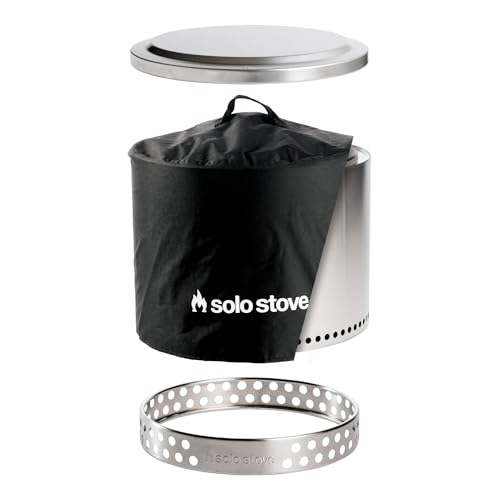
If You Buy: Solo Stove Bonfire
For the worth-it household that burns wood near neighbours, the Solo Stove Bonfire is the value case in premium form: smokeless engineering that protects the social licence to burn, stainless durability that stretches the denominator of evenings across years, and portability that lets the pit follow the household’s life. Its worth collapses at low frequency, like every premium design — the tier is a bet on your own calendar. Best for: weekly burners. Not suited for: the occasional.
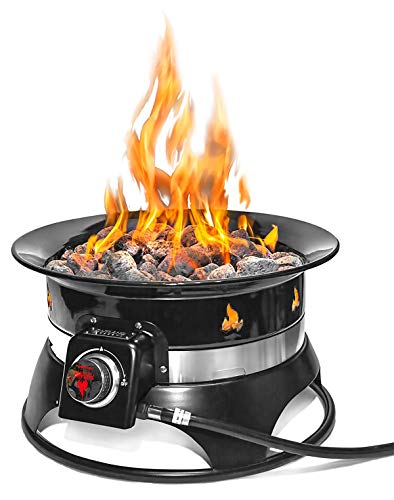
If You Buy: Outland Living Firebowl
For the worth-it household whose evenings are short, decks are home, or rules restrict wood, the Outland Living Firebowl makes the value case in propane: the lowest friction per evening in the category, which is another way of saying the highest likely frequency — and frequency, this article has argued throughout, is where worth lives. Best for: spontaneous, restricted, deck-based households. Not suited for: ritual seekers, for whom its convenience is precisely the absence they would feel. Households still torn between the fuels should settle it with fire pit versus propane fire pit before settling it with a purchase.
How to Get the Most Value If You Buy
Value, once bought, is manufactured by habits. Place the pit where the breeze works for you and the cover lives within reach, because friction is the enemy and every step saved is an evening gained. Keep fuel dry and near for wood, tanks ahead of need for propane, and the whole kit — tools, firelighters, metal ash container, screen — in one known home, so that lighting up is a decision rather than a treasure hunt. Build the rhythm early: small first fires, the fire-keeper role rotated and thanked, ash dealt with cold the next day without drama, and a one-month review where placement and seating get adjusted while adjustment is cheap — the seating guides in best chairs around a fire pit and best Adirondack chairs for a fire pit exist for exactly that review. Invite people: a fire’s value is social at its core, and a pit lit for guests earns its evenings twice. And protect the asset the boring way — cover on, ash out, hoses and welds inspected each season — because every additional year of service divides the original decision by a larger, happier number.
The Decision Checklist
Answer yes or no, honestly, and apply the rule at the end. One: do your local rules, and any lease or building conditions, permit the fire you want, where you want it? Two: can your plot give it safe clearances from the house and anything flammable, with chairs at a comfortable distance and room to move? Three: will someone in your household light it at least a couple of times a month across the mild seasons — by desire, not intention? Four: is the fuel decided by your evenings — wood for ritual and time, propane for speed and permission — rather than by a photograph? Five: have you priced the whole system — cover, screen or stand, ash kit or tank routine, seating — in a tier you can sustain? Six: will the safety liturgy be performed at eleven at night in November — supervision, distance for children and pets, cold ash, leak checks — without resentment? Seven: does the thought of an ordinary Tuesday fire make you smile? The rule: six or seven yeses, buy with confidence and buy quality; four or five, buy propane, buy smaller, or borrow a season of fires first; three or fewer, skip it and spend the garden’s budget where your evenings actually live. The checklist is blunt because the purchase is durable — a pit will be in your garden, asking its questions, for years, and it deserves to be asked them first, once, in full.
The Worth-It Question Across a Decade
Most purchases are judged across a season; a fire pit deserves a decade, because its life in a household has chapters that change the answer as they turn. In the first chapter — the honeymoon — everything is worth it: novelty carries frequency, technique is a game, and even the ash feels like evidence of a life being lived well. The second chapter is the honest middle, where the pit either becomes furniture in the emotional sense — the place birthdays migrate to, the reason the garden is used in October — or becomes infrastructure’s opposite, an object the mower goes around. Nothing about the product decides which; the match made at purchase, and the habits built in the first month, decide it almost completely. The third chapter is the family chapter, where the pit’s worth is suddenly measured in other people’s memories: children who learned fire craft at it, parents who were drawn out of the house by it, friends who became neighbours and neighbours who became friends around it. Owners in the third chapter answer this article’s question with a look that suggests the question has become slightly absurd — and owners whose pit stalled in chapter two answer it with a shrug and a listing on a resale site. Both are telling the truth about the same object.
The decade view also reframes the tier question, which bedevils the first month. A premium pit’s worth is a slope, not a step: it begins as the most expensive option and becomes, across a decade of weekly seasonal fires, one of the cheapest pleasures the household owns, because durable materials keep dividing the decision by new evenings. An entry pit’s worth is a spike: glorious in its first seasons, then dependent on the kindness of storage and climate for its later chapters. Neither shape is wrong; they suit different certainties. The household sure of its ritual should buy for the decade and let the slope work. The household testing its appetite should buy for the spike and graduate with knowledge. The only shape that reliably disappoints is the mismatch — premium bought on a guess, or flimsy bought for a devotion — and it disappoints not because the tier was wrong in itself but because the household’s chapter structure was misread at the till. Read your own chapters honestly: who will gather, how the children will grow into or out of the garden, how long this house is home. A fire pit bought for the life you are actually about to live is worth it with a completeness that no discount can imitate.
Renters, Movers, and Borrowers: The Worth-It Variants
Renters face the question with a twist: permission first, portability always, and a horizon set by a lease rather than a decade. For them the worth-it answer often lands on a compact propane bowl or a portable wood pit used where rules allow — purchases that move house with their owners and lose nothing by it. The renter’s mistake is the built-in temptation, investing in a landlord’s garden; the renter’s triumph is a pit that has served three gardens by its fifth year and carries the memories of all of them. Movers in owned homes face a softer version of the same logic: a portable design is an asset that travels, a permanent feature is an asset that stays, and the choice between them is really a forecast about the household’s own map. Neither group should accept the lazy verdict that temporary living makes fires not worth it — some of the most devoted owners in any survey of the category are renters whose pit is the one piece of home they carry with them.
Borrowers deserve a section of their own, because borrowing is the worth-it question’s control experiment. A household that borrows fires — at campsites, at friends’ pits, at holiday homes — for a full season learns its true frequency without spending anything but attention: how often the desire actually arrives, how the chores feel when they are someone else’s, whether the smoke charms or grates by the fourth evening. If the borrowed season ends in longing, the purchase case has been proven by the only evidence that matters, and the household can buy its tier with a steady hand. If it ends in contentment, the household has saved a purchase, a footprint, and a storage problem, and can spend the garden’s budget on the seating and lighting that serve its real evenings. Either outcome is a success of the method. The only failure available in this entire decision is buying blind — and it remains, happily, entirely optional.
What Owners Say After the First Year — and What It Proves
Ask owners at the one-year mark and their answers sort themselves into a pattern so regular it amounts to evidence. The delighted owners talk about evenings, not equipment: the night the neighbours stayed until the embers, the autumn the garden got used like a room, the teenager who started joining voluntarily. When they mention the pit itself it is in the grammar of furniture — ours, the corner, the usual spot. The disappointed owners talk about equipment, not evenings: the rust, the smoke, the cover that never fit, the tank that emptied mid-party. The difference is not luck, and it is only partly the products. It is the denominator, expressing itself in vocabulary. A pit woven into a household’s rhythm disappears into the life it serves; a pit that never found a rhythm remains an object, and objects get judged as objects — harshly, and on their worst days. This is why the worth-it literature, such as it is, keeps circling back to frequency and friction: they are not two factors among many, they are the mechanism by which every other factor is experienced.
There is a subtler testimony worth recording, from owners who bought twice — who replaced a first, mismatched pit with a second, matched one. Almost none of them concluded that fire pits were not worth it; they concluded that their first choice was not worth it, and they can usually name the exact mismatch in a sentence: wrong fuel for our evenings, wrong size for our circle, wrong tier for our climate, wrong placement for our wind. That precision is hopeful news for a reader still deciding, because every one of those mismatches is visible in advance to a buyer using the method in this cluster of guides. The second-purchase owners are, in effect, the control group proving the experiment: the same households, the same gardens, opposite verdicts — with the choice as the only changed variable. Worth, in this category, is chosen. Choose it deliberately and the first pit can be the right one.
One more owner voice belongs here, because it corrects a fashionable exaggeration in both directions: the owner who uses the pit moderately — a few times a month in season, less in high summer — and rates it worth it without evangelism. Not every good purchase must be a weekly institution. A pit that hosts a birthday beautifully, warms a handful of perfect autumn evenings, and waits patiently under its cover between them can earn its footprint in a household that values those evenings highly and its storage cheaply. The checklist in this article sets its thresholds as guidance, not law, precisely for this owner: frequency matters, but so does the weight of the evenings themselves, and only the household can weigh its own.
It helps, before the checklist, to run one final visualisation that owners swear by: picture the pit on its worst evening, not its best. Rain has threatened all day, the wind is wrong, the fuel is the last of the store, the guests are tired, and the fire — if it happens at all — will be small, smoky or brief, and followed by the full liturgy of ending and ash. If that picture still contains something you want — the attempt, the huddle, the story it will become — your household’s desire is load-bearing and the purchase will survive its bad evenings, which every long ownership includes. If the picture feels like a warning, believe it with equal seriousness: you are picturing the evenings that decide whether a pit is used in year two, and a household that only wants the best evenings should borrow them, rent them, or visit them, rather than buying the whole calendar. Worth-it decisions are made on averages but broken on worst cases, and a buyer who has priced the worst evening honestly has very little left to fear from the purchase.
And picture, in fairness, the counterfactual worst evening: the mild, clear, perfect night in a garden with no fire in it, guests drifting indoors at dusk because the chill arrived unanswered, the season closing a month earlier than it needed to. For some households that picture is painless — the indoors is lovely, the evenings complete without flame. For others it has a small ache in it, the ache of a garden underused and a ritual unbuilt. That ache, honestly located and honestly weighed, is the most reliable worth-it instrument in this entire article — more reliable than any checklist, including the one below, which exists to make sure the ache is not the only voice consulted. Desire proposes; rules, space, fuel, and frequency dispose; and the household that has heard all five voices can buy, or skip, with the quiet confidence that the answer will still look right in a decade.
The Gifts, Resale, and Second-Hand Angles
Worth-it questions arrive in disguises, and three of them deserve direct answers. As a gift, a fire pit is worth it only when the giver knows the recipient’s rules, plot, and fuel heart — otherwise it is a beautiful obligation, and the generous alternatives are the system’s gifts: a quality cover, fireside tools, a set of chairs for a pit already loved. As a second-hand purchase, a pit can be superb value, because durable designs age slowly and honestly: inspect the bowl for burn-through and rust at its hottest points, legs and welds for soundness, and for propane units the hose, connections, and burner with particular care, replacing perished parts before first use and leak-checking as if it were new — because to your garden, it is. As a resale, your own well-kept pit retains a dignity that neglected ones do not, which is one more quiet dividend of the maintenance rhythm: care is never only about the current season. Each angle returns to the same root — the pit’s worth is a property of a match and a history, and both can be inspected, honestly, before money moves in any direction.
There is also the household-negotiation angle, familiar to anyone who has shared a garden and a budget: one partner ablaze with enthusiasm, the other holding the checklist. This article sides, structurally, with both. The enthusiast is right that the value of a fire pit lives in experiences that spreadsheets cannot pre-count — the unplanned evening, the neighbour who became a friend. The sceptic is right that those experiences have preconditions — permission, placement, fuel, frequency — that enthusiasm cannot repeal. The resolution that serves real households is the staged purchase: agree the rules and placement together, start at the tier the sceptic can bless, and let a season of actual evenings arbitrate the upgrade question. Households that argue the decision in that order rarely regret it in either direction, because the fire itself gets to testify — and its testimony, lit or unlit across a season, settles arguments that no article can.
Finally, a word about timing the decision itself, because worth-it questions have seasons. Asked in the first warm week of spring, every household overestimates its fireside future; asked in the grey end of November, every household underestimates it. The honest asking happens with a calendar open: count last year’s outdoor evenings from memory or photographs, mark the months your garden was actually used after dark, and let that record — not the mood of the asking day — feed the checklist. Households are often surprised in both directions: the family certain it never sits out discovers a dozen evenings in the photo roll, and the enthusiast discovers that work, weather, and children’s schedules left four. Either discovery is the decision improving itself. A fire pit is worth it for the household in the photographs, at the frequency the calendar confesses, in the garden as it is — and a decision made on that evidence has the deep, unglamorous property that defines every good purchase in this cluster of guides: it does not need to be revisited.
The worth-it question also has a geography, and it is worth a paragraph before the checklist closes the argument. In a cool climate with long, usable shoulder seasons, a fire pit’s evenings multiply — spring arrives earlier around a fire, autumn leaves later — and the same purchase divides by a far larger number than in a climate of brief, fierce summers and winters that empty the garden entirely. In a mild climate the pit competes with perfection and may be lit less, because evenings need no warming to be pleasant; its worth there rests on light, ritual, and gathering rather than heat. In a hot climate its season inverts, belonging to winter nights and the cool hours after summer dusk. None of these geographies forbids the purchase; all of them reprice it, and a household honest about its own sky will forecast its evenings more accurately than any review written under a different one. Count your climate’s gift of fireside evenings as carefully as you count your plot’s clearances — the two numbers, multiplied, are very nearly the answer to this article’s question.
And if, after the checklist and the calendars and the worst-evening visualisation, the answer remains genuinely balanced — five yeses, a willing household, a permitted plot, a heart divided between desire and doubt — there is a respectable final move that this article endorses without reservation: buy the smaller, simpler, more portable version of the fire you want, and let a year of real evenings cast the deciding vote on the larger commitment. A modest pit, honestly used, is not a compromise but an experiment with excellent resale manners and a habit of becoming permanent — many households discover that the starter was the destination, its size suiting their circle better than the flagship of their imaginings ever would. The worth-it question, asked that way, stops being a gamble on a single answer and becomes a sequence of small, evidence-gathering steps, each cheap, each reversible, each teaching the household something true about itself. That is how the best owners in this category actually decided, whatever they later told their friends about knowing all along.
There remains the question behind the question, which this article has circled and should finally land on: what is an evening worth? Households do not buy fire pits with the part of the budget that calculates; they buy them with the part that remembers — the part that knows a perfect October night in the garden, with people it loves arranged in a warm circle, is not a commodity with a substitute available at a better tier. That knowledge is not irrational, and a worth-it analysis that excluded it would be precise and useless in equal measure. The checklist, the calendars, the worst-evening test — all of this article’s machinery — exists not to overrule that knowledge but to protect it: to make sure the evenings it imagines are permitted, placed, fuelled, and frequent enough to exist outside imagination. Desire proposes the fire; diligence builds the conditions; and worth, when it arrives, arrives as the two shaking hands beside a lit bowl on an ordinary night that did not stay ordinary.
So the final answer to the title is a sentence with two halves, and both halves must be kept. A fire pit is worth it — for the household whose facts align, it is among the most rewarding, durable, and memory-dense purchases a home can hold. And it is worth it only then — because the same object, against the facts, is a rusting monument to a photograph. Your task is not to decide whether fire pits are worth it in general, a question with no honest answer, but whether yours will be, a question with a very honest one, waiting in your rules, your plot, your calendar, and your heart, in that order of consultation. Consult them all, believe what they tell you, and act without second-guessing: the households that do, on the evidence of every owner this article has drawn on, do not spend much time asking the question again.
Worth, then, is not a property of the pit but a relationship — between an object of unusual durability and appeal, and a household with the room, the permission, the patience, and the appetite to meet it on its own terms. Relationships of that kind are not bought in a single transaction; they are entered, maintained, and either deepened or allowed to lapse, evening by evening, season by season. The households in this article who call their fire pit worth it are, without exception, the ones who entered the relationship with their eyes open and their habits ready. The ones who do not are, without exception, the ones who bought the object and skipped the relationship. Everything you need to be in the first group is in the checklist above and the guides beside this one — and the first group, it should be said plainly, is a wonderful place to spend a decade of evenings.
The Earn-Its-Place Test: When a Fire Pit Repays the Space It Takes
Worth-it questions about a fire pit are really questions about frequency, so start by honestly counting how often the job it does actually arises in your household in a normal month, not in the motivated week when you decided to shop for one. Multiply that frequency by the friction it removes each time — minutes saved, mess avoided, a workaround retired, a room made usable for longer each day — and the value of a fire pit stops being a feeling and becomes a rough but usable number. Consider the cleaning rhythm honestly: a fire pit that needs attention after every use suits a household that enjoys small rituals, and frustrates a household that wants to finish a job and walk away, so match the upkeep to the temperament, not the intention. Watch for edge cases in your own home: the pet that investigates everything, the child who treats every new object as furniture, the guest who uses force where you use familiarity, and the weather, light or season that changes how a fire pit behaves.
The deciding experiment is to live one ordinary week noticing every moment the fire pit would have been used, marking each one down, because a week of real tally marks settles the worth-it question better than another evening of comparison shopping. Look at replacement parts and consumables for the fire pit while you are still comparing, confirming that the pieces most likely to wear, clog, tear, fade or get lost can actually be obtained without replacing the whole product. Finally, remember that the best fire pit for your home is the one whose size, habits and upkeep disappear into your routine, leaving only the result behind — a cleaner surface, a better-lit seat, a tidier shelf, an easier job — week after ordinary week. Check the floor, wall, ground or surface the fire pit will meet, since level, texture, moisture and finish decide more about everyday performance in patio & outdoor living settings than most shoppers expect when they are comparing listings on a screen.
For troubleshooting, start with the boring causes first: power, water, fit, blockage, alignment, a full container, a loose connection or a setting changed by the last person who used the fire pit, because boring causes account for most apparent failures. Photograph your setup once the fire pit is working well — the position, settings, arrangement or layout you settled on — so that after a move, a deep clean or a seasonal break you can recreate the arrangement that worked instead of rediscovering it. Plan the storage home for the fire pit before it arrives, naming the exact cupboard, corner, shelf, hook or stretch of floor, because a product without a home migrates around the house and slowly becomes the clutter it was bought to reduce. A fire pit earns its place fastest in households where the job is frequent and the current workaround is genuinely annoying, and slowest where the job is seasonal, occasional, or already handled well by something you own.
Read the manual’s warnings page for the fire pit even if you read nothing else, because that page is a compressed list of every way the product has ever been misused, and it tells you exactly which of your own habits needs adjusting. Think about who else will use the fire pit and what they will do differently: shorter reach, less patience, stronger habits, no interest in the manual, and a tendency to leave things wherever they were last set down. Keep the packaging of a larger fire pit until those first ordinary tests are done, flattened if space is tight, because re-boxing an awkward shape from scratch is the hidden difficulty inside many otherwise straightforward returns. Then subtract the standing costs honestly: the floor, shelf, cupboard or counter space a fire pit occupies every day, the cleaning and upkeep it asks for, and the small accessories or consumables its ownership quietly requires.
Borrowed enthusiasm is the trap here: a fire pit can be excellent and still not be worth it for you, if your neighbours, your feed or your guests use theirs weekly while your own routine would reach for it a handful of times a year. Decide in advance what good enough looks like for the job the fire pit does in your home, because chasing a flawless result usually costs more time than the flaw itself, and most households are happier with a reliable ninety percent they actually repeat. Use a simple decision checklist at the end: the fire pit fits the measured space, suits the real frequency of the job, matches the household’s cleaning temperament, has obtainable parts, and has a named storage home — five yeses make a confident order. Seasonal thinking helps more than expected: a fire pit bought in one season will meet different light, humidity, mud, heat, guests and routines in another, so judge its size, storage and upkeep against the hardest season it will face.
Measure before anything else, and measure the fire pit in its working state rather than its packed or folded state, because handles extend, lids open, cords trail, doors swing and users stand somewhere, and all of that belongs in the measurement. When something about the fire pit disappoints, change one variable at a time — position, setting, timing, load, accessory or technique — and give the change a fair trial, because changing three things at once leaves you with a better or worse result and no idea why. Test the fire pit in the first week under deliberately ordinary conditions rather than saving it for a special occasion, so that any problem surfaces while returning, exchanging or adjusting your setup is still simple. If you want a concrete listing check, take a name already shortlisted in this guide, such as Solo Stove Bonfire and Outland Living Firebowl, and verify that exact fire pit listing against the measurements and compatibility questions above, field by field, rather than trusting the headline description alone.
Frequently Asked Questions
Is a fire pit worth it for a small backyard?
It can be, if a compact design fits with the clearances your local rules require and seating that keeps everyone comfortable, and if smoke — for wood — will not pour into neighbouring windows. Many small yards get more value from a compact propane bowl, whose instant control and clean flame suit tight quarters, or from skipping the pit and investing in lighting and seating instead. Measure the whole arrangement before deciding; the pit alone is never the footprint.
How often do you need to use a fire pit for it to be worth it?
There is no universal threshold, but the pattern is consistent: households lighting up a couple of times a month across the mild seasons almost always judge the purchase worthwhile, because the chores spread thin and the system cost divides across many evenings. Households lighting up a few times a year usually reach the opposite verdict. Be honest about the forecast rather than the aspiration — your calendar, not your intentions, sets the denominator.
Is a propane fire pit more worth it than a wood one?
It is more worth it for households whose constraint is time, permission, or smoke: its low friction raises real-world frequency, and frequency is where worth lives. It is less worth it for households whose desire is specifically the ritual, heat, and cooking of wood, for whom propane’s convenience removes the very thing being bought. Worth follows the match between fuel and household, which is why this article refuses to crown a fuel in the abstract.
Does a fire pit add value to a home?
A portable pit should be bought for your own evenings, not as an investment: it is a movable appliance, and any effect on a sale is indirect, through a garden that presents as loved and usable. A well-built permanent fire feature can contribute to that presentation more substantially, as part of a designed landscape. In both cases the honest position is the same — let property value be a possible bonus, never the reason, because the evenings are the return you can actually count.
What is the biggest hidden cost of a fire pit?
Attention, in most households’ experience: the perpetual, non-negotiable duties of safe ownership — placement discipline, supervision, cold ash handling for wood, leak checks for propane, and the rule of outdoor-only use because of carbon monoxide. The money costs beyond the bowl — cover, screen, fuel, seating — are real but finite; the attention cost renews with every fire. Households that enjoy the craft barely notice it; households that do not should count it at full price before buying.
When is the best time to buy a fire pit?
When your decision is made — rules checked, placement chosen, fuel settled — rather than when a promotion appears. Buying ahead of your main season gives you the learning fires in forgiving weather and the full stretch of evenings to enjoy; seasonal sales periods, of the kind tracked in black friday outdoor deals, can reward a household whose homework is already done. A discounted pit bought against your facts is still the wrong pit, at any tier.
Related Guides
Turn a yes into a purchase with the fire pit buying guide, verify it against the ledger in fire pit pros and cons, work the steps in how to choose a fire pit, and set the circle with best outdoor chairs for the patio.