Disclosure: As an Amazon Associate, dailyhomedecorating.com earns from qualifying purchases. Links on this page are affiliate links; they cost you nothing extra. Prices and availability change often, so check the current Amazon listing before you buy.
Weighing up entryway bench pros and cons is the right way to shop for one, because this is a piece of furniture with genuine strengths and genuine drawbacks, and which side wins depends entirely on your household. On the plus side, a bench gives you a seat exactly where shoes happen, corrals footwear and bags into one defined place, and makes the first few feet of your home feel planned rather than accidental. On the minus side, it takes floor space in rooms that often have none to spare, open versions display your shoes to every visitor, and a badly chosen one becomes an expensive surface for piling things on. This article works through both sides honestly, household by household, so you can decide with your eyes open.
Quick Verdict and Key Takeaways
An entryway bench suits households where several people change shoes at the same door, where footwear currently lives in a pile, and where there is a measured stretch of wall that can hold a bench without squeezing the walkway or fouling the door swing. It does not suit entries so narrow that any furniture turns them into a corridor obstacle, households that will not maintain the system, or anyone whose real problem is coats alone — hooks solve that more cheaply. The pros are about daily friction removed; the cons are mostly about space and discipline. If you have the space and even modest discipline, the pros win comfortably.
- Pro: a seat at shoe height removes the daily balance-and-hop routine for children, older relatives, and anyone with boots.
- Pro: defined shoe storage ends the migrating pile and the tripping hazard that comes with it.
- Pro: one piece can combine sitting, storage, and a landing surface for bags and keys.
- Con: it consumes scarce floor space and can crowd narrow halls or block a door swing if sized carelessly.
- Con: open storage shows everything, and closed storage is slower to use — there is no invisible, instant option.
- Con: the system only works if the household uses it; a bench ignored becomes a shelf with a pile beside it.
In this guide
Entryway Bench Pros and Cons: The Pros in Detail
A Proper Seat Exactly Where Shoes Go On and Off
This is the founding benefit and still the biggest one. Putting on boots, tying laces, helping a small child with wellingtons, or easing shoes off tired feet are all tasks designed by life to happen at the front door, and most homes provide nowhere to sit while doing them. People improvise with the bottom stair, the edge of a planter, or a one-legged lean against the wall, and older family members simply find the whole routine harder than it should be. A bench fixes the ergonomics of a moment that happens at least twice per person per day. Multiplied across a household and a year, that is thousands of small moments made easier — the kind of improvement that never shows in a photograph but is felt every single day.
Shoe Clutter Gets a Defined Home
Shoe piles are not really a tidiness problem; they are a missing-infrastructure problem. Shoes gather at the door because the door is where they are removed, and if there is no designated place within one step of removal, the floor becomes the place. A bench with shelves or a rack creates that designated place at the exact point of need, which is why it works where resolutions and baskets elsewhere fail. The visual difference is immediate, but the practical differences matter more: no more tripping over trainers in the dark, no more hunting for the second shoe under a heap, no more gritty soles ground into the hallway floor or rug because pairs are lined up on shelves instead.
One Piece Solves Several Problems at Once
Few furniture purchases cover as many small jobs as an entryway bench. Depending on the design, the same footprint provides seating, shoe storage, hidden storage for hats and gloves and dog kit, a surface for setting down bags while keys are found, and — in hall-tree form — hooks for coats. Each of those jobs would otherwise need its own piece or its own workaround, each taking space of its own. Consolidation is a genuine advantage in small homes, where the alternative to one multi-purpose bench is often three single-purpose items competing for the same wall.
The Entry Starts to Feel Like a Room
There is a psychological benefit that owners mention often: a bench turns a corridor into a destination. The entry becomes a place where you sit for a moment on arriving home, where a guest can perch to take off shoes without awkwardness, where the house presents a composed first impression instead of a scatter of footwear. Homes feel calmer when thresholds are organised, and the effect carries into the rooms beyond, because clutter stopped at the door does not migrate to kitchen counters and bedroom chairs. If you rent or are staging a home for sale, a bench is also one of the fastest ways to make an entry photograph and feel intentional without any permanent change.
It Helps Children and Older Relatives Most
The people who gain most from an entryway bench are those at the ends of the age range. Children get a seat at a height they can manage, a shelf they can reach, and a routine — sit, shoes off, shoes on the shelf — that is simple enough to become automatic, which is the foundation of every tidy-entry system that actually survives family life. Older relatives get stability: sitting to change shoes instead of balancing reduces strain and risk, and a sturdy bench near the door doubles as a rest point when carrying shopping in. Households with visitors who have mobility difficulties find the bench quietly does accessibility work that no one had to announce.
Flexibility Few Built-Ins Can Match
Unlike fitted joinery, a bench can move. It can shift along the wall when a pram or a wheelchair changes the layout, travel to a new home, be promoted to the end of a bed or demoted to a garden room, and be replaced without a tradesperson. That flexibility makes it a low-commitment way to test whether an entry system works for your household before investing in anything permanent, and it suits renters who cannot fix joinery to walls — with the important exception that tall hall-tree designs still need their anti-tip anchoring, which may require a conversation with a landlord.
The Cons in Detail
It Eats Floor Space in the Tightest Part of the Home
The honest first drawback: entries are small, and a bench is not. Even a slim design takes a strip of floor along the wall and projects into the room by its full depth, and in a narrow hall that projection is felt by every passing person, every day. If the walkway becomes a sideways shuffle, the bench will be resented no matter how well it stores shoes, and resentment kills use. This con is absolute rather than relative — no cleverness in design removes the footprint — which is why measuring, and honestly judging the remaining passing width with someone seated, comes before everything else in the buying process.
It Can Obstruct Doors, Radiators, and Daily Routes
Related to footprint is placement conflict. Entries are crowded with functional elements: doors that swing, radiators that need airflow, light switches, thermostat controls, and the natural walking line between rooms. A bench that blocks a door’s swing gets hit daily and loosens its own joints; one that covers a radiator wastes heat and can suffer finish damage from the warmth; one that sits across the walking line becomes a shin hazard at night. Many returns and regrets trace back not to the bench itself but to a placement that fought the room. The con is avoidable with a tape measure, but it is real, and it eliminates some entries from bench ownership altogether.
Open Storage Displays Your Shoes to Everyone
The most popular bench format — open shelves — puts your footwear collection on permanent display at the front door. Muddy trainers, worn running shoes, and the odd unpaired sandal are all part of the first impression your home makes, and for design-conscious households or formal halls, that display is a genuine aesthetic cost. Closed storage solves the look but introduces its own friction, covered below. There is no design that is simultaneously instant to use, fully concealed, and well ventilated; every bench picks its compromise, and buyers who do not realise a compromise exists end up disappointed with whichever one they unknowingly chose.
Closed Storage Is Slower and Less Airy
Lift-up seats and drawers hide the mess, but they ask for effort at the exact moment people are least inclined to give it: arriving home tired, hands full, children scattering. If using the storage requires moving a seated person, lifting a lid, and arranging shoes inside, some household members will simply stop, and shoes will accumulate on top of the bench instead — the worst of both worlds, since now the seat is gone too. Enclosed compartments also ventilate poorly, so damp shoes stored inside can stay damp and smell, and the compartment can take on the odour. Closed benches suit accessories and seasonal gear better than daily wet footwear, and buyers who expect them to swallow everyday shoes often learn that the hard way.
It Demands a System, and Systems Need Maintaining
A bench is not a self-tidying object. It works when shoes at the door are limited to what the storage holds, when off-season pairs rotate to a closet, when grit is swept from shelves, and when the seat is defended against becoming a dumping surface. Households differ enormously in their appetite for that maintenance, and a bench bought for a household that will not run the system becomes, within a month, a piece of furniture with a shoe pile beside it — arguably worse than no bench, because money was spent to arrive at the same view. This is the con least discussed in product listings and the one that decides real-world satisfaction most often. Our guide to how to choose an entryway bench that fits your habits is built around avoiding exactly this mismatch.
Tall Designs Add an Anchoring Obligation
Hall trees and bench-and-hook combinations bring a safety duty that simple benches do not. A tall unit loaded with coats and bags, possibly pulled at by a child, must be fixed to the wall with the manufacturer’s anti-tip hardware, into fixings suitable for the wall construction. That means tools, the right wall plugs, and in rented homes, permission. Skipping the anchor because the unit feels steady unloaded is a real and common mistake, and the obligation is a legitimate point in the cons column: if you cannot or will not anchor, you should not buy the tall design, full stop. Choose a low bench and a separately fixed hook rail instead, and get most of the function without the tipping profile.
Comfort and Capacity Have Real Limits
A bench seat is a perch, not a sofa. It is designed for the two minutes of shoe-changing, and its depth and padding reflect that; anyone imagining long, lounging sits by the door will find most designs too upright, too shallow, or too firm. Capacity is limited too — in space, because only so many pairs fit the shelves, and in use, because seating should follow the manufacturer’s guidance for the specific model rather than a household’s optimism. Two adults piling onto a light decorative bench is how joints loosen and seats crack. Treat seating load qualitatively and honestly: designs sold as everyday family benches, with braced frames, are built for the daily routine; delicate or novelty pieces are occasional seats, and no amount of wishing changes which is which.
What the Trade-Offs Mean for You
For Busy Families
The pros dominate. The seat ends the shoe-changing scrum, open shelves match children’s actual behaviour, and the system — if sized to the real shoe count — pays for itself in calmer mornings within the first week. The cons to manage are capacity and grit: choose more storage than you think you need, finishes that forgive mud, and anchor anything tall. A family that runs the seasonal shoe rotation will find almost nothing in the cons column that survives contact with their routine.
For Small Flats and Narrow Halls
The balance is finer. The space con is at its sharpest here, and the first question is not which bench but whether the walkway survives one. If it does — measured, with someone seated — the pros are amplified, because a small home feels every square foot of organisation a bench adds, and a storage bench can replace a shoe rack, a stool, and a clutter surface in one footprint. If the walkway does not survive, believe the tape measure and choose hooks plus a boot tray instead; the honest no is also a good outcome. Layouts that work are collected in entryway benches for small spaces.
For Formal Homes and Frequent Entertainers
The display con leads. Guests arrive through the same door as the family’s muddy boots, so either the bench conceals — a closed storage design, accepting the slower access — or the household commits to keeping the open shelves ruthlessly edited and attractive. Many formal homes split the difference: a handsome closed bench at the front door for the family’s limited smart footwear, and the working shoe storage at a back or garage door where nobody photographs it. The pros of a seat and a composed first impression are real here; they just require the concealment version of the product.
For Renters
Flexibility is the headline pro — a bench is furniture, not a fixture, and it leaves with you. The anchoring con needs thought: low benches need no fixing at all, which makes them the renter-friendly default, while tall hall trees need wall fixings that your tenancy may not allow. A low bench plus a hook solution that your landlord accepts, or hooks on the back of a door, reproduces most of the system without a single screw in a wall that is not yours.
How an Entryway Bench Compares With the Alternatives
| Option | Seat | Shoe storage | Conceals clutter | Main weakness |
|---|---|---|---|---|
| Entryway bench with shelves | Yes | Open, at the door | No | Shoes on display |
| Closed shoe cabinet | No | High capacity, hidden | Yes | Nowhere to sit |
| Hooks and a boot tray | No | Floor tray only | No | Coats solved, shoes barely |
| Console table with baskets | No | Baskets only | Partly | Styled surface, no seat |
| Hall tree | Yes | Open or cubbies | Partly | Large, must be wall-anchored |
Read the table by your main problem. If the problem is sitting, only the bench and the hall tree answer it. If the problem is maximum hidden shoe capacity, the cabinet wins and the bench should be its partner rather than its replacement. If the problem is purely coats, the hooks win on simplicity and cost. The bench’s claim is breadth: it is the only option that answers sitting, shoes, and surface in a single footprint, and breadth is exactly what most mixed-problem entries need. For the full shopping framework, see the complete entryway bench buying guide.
Designs That Show Both Sides
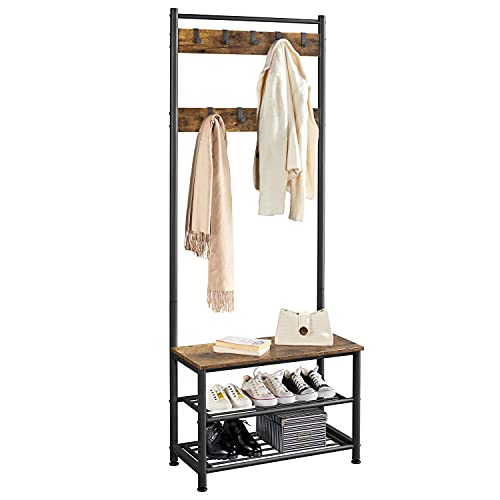
VASAGLE Shoe Storage Bench
The open-shelf format in its purest form: the pros of instant access, ventilation, and a clear seat are all present, and so is the display con — everything is visible. Best for households whose door-side shoe collection is small enough to look deliberate. Check the current listing for configuration and dimensions.

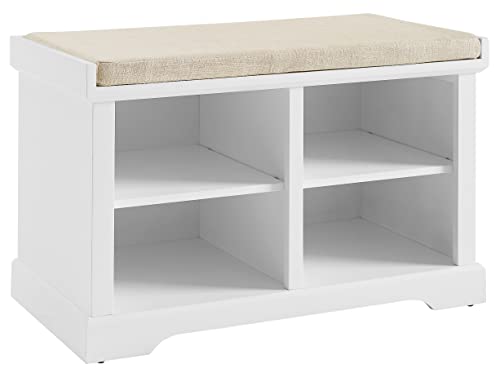
Crosley Entryway Bench
Traditional furniture styling softens the space con by making the footprint feel intentional in a formal hall, and storage layouts in this style tend toward the concealed end, trading a little access speed for a composed look. Best where the entry is seen from living rooms all day.

Yaheetech Entryway Bench with Shoe Rack
Capacity-led designs maximise the storage pro and, in tall versions, add the coat pro — along with the anchoring obligation in its clearest form. Fit the anti-tip fixing during assembly, load lower hooks heaviest, and the cons reduce to visual size alone.
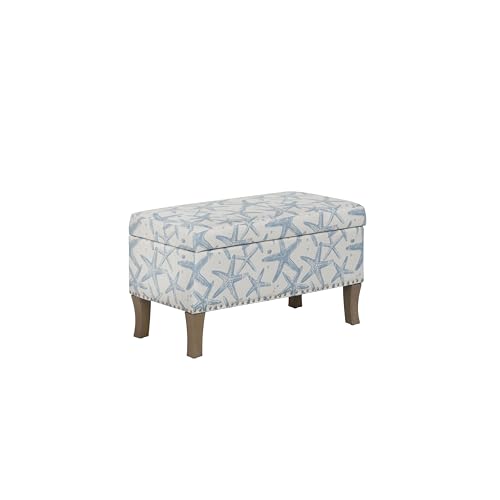
DHP Storage Bench
Compact storage-bench designs suit the small-flat balance described above: concealment and a seat in a shallow footprint. The trade-offs are the enclosed-storage ones — slower access, less air for damp shoes — so plan the interior for accessories and keep daily footwear in a tray or small rack alongside.
How to Buy Smart: Checking the Cons Before They Apply to You
Every con in this article is testable before you spend anything, and a smart buyer runs the tests. For the space con, tape the bench’s footprint on the floor with painter’s tape, live with the outline for two days, and sit on a chair placed inside it while someone walks past — the walkway verdict will be obvious. For the door-swing con, open every nearby door fully with the outline in place. For the display con, gather the shoes that will actually live on open shelves and look at them as a group; if the sight bothers you now, it will bother you daily, so choose closed storage or a stricter rotation. For the system con, ask the household, honestly, whether shoes will be limited to the storage provided; if the answer is laughter, buy more capacity or a different solution. For the anchoring con, identify your wall construction and confirm you can fit the manufacturer’s anti-tip hardware before ordering a tall design.
Then check the product itself with the same rigour. Follow the manufacturer’s own guidance on seating use rather than assuming any bench holds any household. Look for braced frames and fixed shelving in the construction description, read the assembly instructions if they are published, and favour finishes you can wipe clean in the places wet shoes and bags will touch. If you are comparing the value question separately, is an entryway bench worth it weighs the costs against the benefits in full.
Setup and Care That Reduce the Cons
Good setup neutralises several cons before they bite. Assemble on a clear floor, follow the maker’s sequence, and tighten all screws firmly and evenly as instructed; then re-tighten after the first couple of weeks, when new joints have settled — a bench that starts rigid stays rigid, and rigidity is what keeps the space it occupies feeling worthwhile. Fit anti-tip anchors on tall designs during assembly, not as a later chore, using fixings matched to your wall. Position a mat inside the door and a boot tray for wet months so grit and water are intercepted before they reach shelves and finishes, which directly reduces the display con: clean shoes on open shelves look like a system, muddy ones look like a mess.
Ongoing care is a short list done regularly. Sweep or shake grit from shelves weekly, wipe finishes when marks appear rather than letting them build, air enclosed compartments on dry days, and run the seasonal edit — off-season shoes out, basket contents swapped — twice a year, using the same visit to check hook, hinge, and frame fixings and tighten anything that has worked loose. Defend the seat: a key tray and a bag hook give arrivals somewhere to land that is not the sitting surface, and that small provision protects the bench’s core benefit more than any other habit. With those routines in place, most of the cons column shrinks to the single unavoidable one — the footprint — which you already accepted with a tape measure before buying.
Bottom Line
The pros of an entryway bench are functional and daily: a seat where shoes happen, storage where shoes land, and an entry that feels like a room. The cons are spatial and behavioural: it takes room, it shows or slows storage depending on design, and it asks the household to run a light system. Households with the measured space and a realistic view of their own habits will find the pros decisive, and the designs in this cluster — compared in our entryway bench reviews and tested in depth in the entryway bench review — cover the main ways of striking the balance. Households without the space should take the hint gracefully: hooks, a tray, and a clear walkway beat a resented bench every time. Either way, you now know which side of the ledger your home falls on, and that was the point of weighing it properly.
If you take one sentence from this article, take this one: the bench is never the variable that decides satisfaction — the match between the bench and the household is. A modest bench in a home it fits will be loved for a decade, and a magnificent one in a home it fights will be sold within a year. So weigh your space, your shoe count, your walls, and your family’s real habits with the same care you would weigh the furniture itself, because in this purchase the household is half the product. The pros and cons above are the checklist; your tape measure and your honesty supply the answers.
Pros and Cons by Bench Type
Simple Seat Benches
The simple seat maximises the sitting pro and minimises the footprint con, because nothing about it pretends to store. It is the easiest bench to live with in a narrow hall, the easiest to move for cleaning, and the easiest to repurpose elsewhere in the house later. Its con is written into its name: it organises nothing, so it only makes sense where storage already exists nearby — a shoe cabinet, a closet, a disciplined household. Bought alone to solve a shoe problem, it disappoints; bought to solve a sitting problem, it is close to perfect, and it is the design least likely to be regretted because its promise is so modest and so completely kept.
Open-Shelf Shoe Benches
This is the format most buyers mean by an entryway bench, and its pros and cons are the article in miniature. The pros: instant, visible, ventilated storage that households genuinely use, combined with the seat. The cons: display and capacity limits. Its sweet spot is the household with a moderate, rotating shoe collection and a door that is more family entrance than formal stage. Its failure mode is success — more shoes arrive than shelves hold — and the cure is planned rotation, not a bigger pile beside it.
Closed Storage Benches
The closed bench’s pro is composure: from the doorway, nothing is visible but furniture. It is the only format that lets a working family entry present like a guest entry, and it protects stored items from dust and from dogs with opinions about shoes. Its cons are friction and air, as covered above, plus a subtle one: because the interior is invisible, it can become a forgotten jumble unless someone owns the organisation. Dividers, small boxes, or baskets inside the compartment fix that, and households that add them report the closed bench as the best of both worlds; households that skip them report a cupboard of last resort.
Hall Trees and Bench-and-Hook Combinations
The hall tree has the longest pros list — seat, shoes, coats, bags, sometimes a shelf for hats — and the longest cons list to match: the largest footprint, the strongest visual presence, the anchoring obligation, and the highest assembly effort. It is the right answer precisely where the entry has no closet and the household’s outerwear currently lives on banisters and chair backs, because there the pros are transformative rather than incremental. It is the wrong answer where a closet already exists or the hall is small, because there the cons are paid in full for benefits that duplicate what the house already has. Judgement about hall trees is therefore unusually binary: measure the closet question first.
Upholstered and Cushioned Benches
Comfort and welcome are the pros; vulnerability is the con. An upholstered bench is the one guests compliment and the one that shows the wet November afternoon. The deciding factors are fabric and traffic: a wipeable, tightly woven fabric in a household without muddy paws can serve for years, while delicate upholstery under daily family assault cannot. The middle path — a wooden bench with a separate cushion — deserves emphasis because it splits the difference so neatly: the comfort pro is kept, the vulnerability con is contained to a replaceable component, and the bench can change its look with a new cushion cover for the cost of fabric rather than furniture.
What Changes After a Year of Ownership
Short-term reviews of entryway benches miss the ownership curve, so it is worth describing honestly. In the first month, the pros feel largest: the entry looks transformed, the routine is new enough to be consciously enjoyed, and the household is on its best behaviour with the system. Around the third month, the maintenance reality arrives — grit in the shelves, the first scuffs, a cushion that needs cleaning, fixings that have settled and want their re-tightening. Owners who do the small jobs find the bench settles into invisibility, which is the true long-term pro: the entry simply works, and nobody thinks about it.
The cons also evolve. The footprint con fades fastest, because humans adapt to a fixed layout within weeks and stop perceiving the bench as an intrusion; what remains is only the objective question of passing width, which the tape test settled before purchase. The display con, by contrast, can grow if the shoe collection grows, which is why the seasonal edit matters more in year two than in month one. And the system con reveals itself slowly: households discover which member never uses the storage, which category of item never got a home, and whether the bench’s layout matches the life actually lived. The encouraging pattern is that nearly all of these are adjustable — a basket added, a rotation enforced, a cushion replaced — without replacing the bench itself. A bench is one of the more forgiving purchases in the house, provided the two irreversible decisions, size and type, were made with the honesty this article has tried to supply.
The Cost Side of the Ledger, in Words
Because the pros and cons of ownership are not only about space and habits, the ongoing costs deserve an honest paragraph — described qualitatively, as they vary too much by design to pin down responsibly. A bench asks little: occasional cleaning products you already own, perhaps a replacement cushion cover in time, perhaps felt pads under legs to protect a hard floor. What it returns in avoided costs is easy to overlook: shoes stored off the floor last as they should, hallway flooring and rugs suffer less grit damage at the threshold, and the household avoids buying the series of half-solutions — baskets, racks, stools — that an unresolved entry tends to accumulate over the years. Set against the single purchase, the running ledger is favourable for any bench that is actually used, which loops the argument back to its recurring theme: use is the variable that decides everything, and use is decided by fit, placement, and capacity far more than by the object itself.
There is also a time ledger. The bench costs a few minutes of maintenance a week and returns a few minutes of searching, balancing, and tidying frustration a day. Households feel this exchange most in the morning peak, when one person sitting calmly to lace shoes instead of hopping in a doorway changes the emotional temperature of everyone’s departure. It is a soft benefit, impossible to photograph and easy to dismiss in a listing, but owners consistently rank it above the storage they thought they were buying. When you weigh pros and cons for your own home, give that daily-calm factor a line of its own; for many households it ends up carrying the decision.
A Short Decision Summary
If your entry has a measured wall, a walkway that survives a seated person, and a shoe pile that embarrasses you, the pros win — buy the bench, favour open storage for daily footwear, anchor anything tall, and run the light system. If your entry fails the walkway test, the cons win — take the hook-and-tray alternative without regret and revisit the question if you move. If your entry passes the space test but your household’s shoe count is very high, split the verdict: a bench for sitting and daily pairs, partnered with a closed cabinet for capacity. And if your problem is coats alone, let the cons talk you out of the bench entirely and buy the best hook rail you can fix properly. Each of those outcomes is a success of the weighing process, because each matches the solution to the problem that actually exists — which is all that pros and cons, honestly listed, were ever for. The remaining articles in this cluster turn that verdict into action: the entryway bench buying guide for choosing, and the step-by-step choosing guide for the measuring and testing routine in full.
Two Households, Two Opposite Verdicts
To see the weighing process work in practice, consider two real-shaped households reaching opposite conclusions from the same facts. The first is a family in a Victorian terrace: narrow hall, no entry closet, four people, a dog, and a shoe situation best described as geological, with strata. Their tape test passes by a small margin — the walkway stays workable with a slim, deep-enough bench and a seated adult. Every pro applies at full strength: the seat ends the stair-sitting routine, open shelves match the children’s behaviour, hooks above end the banister-coat era, and the dog kit gains a basket and a home. The cons are managed one by one — slim depth for the space, open format for the friction, an anchor for the tall hooks, a boot tray for the dog-season mud. Verdict: buy, and the bench becomes the hardest-working wall in the house within a week.
The second household is a couple in a new-build flat with an entry alcove so compact that the door, a radiator, and the kitchen doorway all compete for the same few feet. Their tape test fails plainly: any bench deep enough to sit on leaves a passing width that turns the alcove into a turnstile, and the radiator position means the bench would sit against heat all winter. The pros are real but unreachable — they would love the seat and the storage — while the cons are structural and permanent. Verdict: no bench. They fit a hook row above a boot tray, a narrow wall shelf for keys, and a folding step stool that lives in the kitchen for the rare boot-lacing emergency, and their entry works better than it would have with the bench they wanted. Both households weighed the same pros and cons; the tape measure, not taste, separated their answers — and both answers were right.
Three Misconceptions That Distort the Weighing
The first misconception is that a bench’s job is storage, with sitting as a bonus. In lived experience the order reverses: the seat is used every day by everyone, while storage is used by the shoes that happen to be current. Buyers who choose purely by storage capacity end up with deep, capacious pieces that perch badly, and they sit on them daily wondering why the purchase feels slightly wrong. Judge the seat first — height, depth, sturdiness under shifting weight — and the storage second, and the daily experience improves out of proportion to the change.
The second misconception is that a tidier-looking option is a tidier option. Closed storage photographs tidier, and open storage photographs honest, but the lived tidiness of each depends on the household’s friction tolerance, not on the door or lid. Many a concealed bench hides chaos while the open shelf beside a disciplined rotation looks immaculate. When weighing this pro and con, weigh your family’s behaviour, not the catalogue image; the catalogue household always puts its shoes away, and yours, like everyone’s, is made of people.
The third misconception is that the decision is permanent and total. A bench is movable, replaceable, and partnerable — it can start as the whole system, gain a cabinet later, move to another door, or leave for another room entirely if the entry changes. That reversibility is itself a pro worth listing: unlike fitted joinery, a bench lets you test a system at low commitment and adjust. The households that fare worst are not those that chose the second-best bench; they are those that never tested anything because the decision felt too final. It is not final. Tape the floor, choose honestly, anchor what is tall, and let a season of real arrivals and departures cast the deciding vote.
Where the Trade-Offs Show Up in Daily Use: Entryway Bench in Practice
This section exists to move past the tidy two-column summary and watch where each advantage and disadvantage actually appears during an ordinary week. It adds a layer that a feature list cannot give you, grounded in the living room furniture context this entryway bench will actually live in. Where this guide names examples such as VASAGLE Shoe Storage Bench, Crosley Entryway Bench, Yaheetech Entryway Bench with Shoe Rack, use them as test cases for the checks below rather than as shortcuts past them.
Think about who else has a vote. A entryway bench is usually shared, moved, cleaned or complained about by more than one person, and the second user’s priorities are often the ones that surface after the return window closes. Check height, weight, reach, noise, heat, sharp edges or sheer visual presence, whichever apply, against the smallest, oldest or least enthusiastic person who will live with it. If you are buying for a household that includes children, pets, elderly relatives or lodgers, run the clumsy scenario too: the spill, the knock, the curious tug, the door left open. A robust entryway bench choice survives other people; a fragile one only survives its buyer.
Consider the edge cases that sit just outside normal use, because a entryway bench will meet all of them eventually. The unusually large load, the unusually small task, the day you are in a hurry, the day something else in the room is broken and this has to cover for it. Versatility is not about a long feature list; it is about behaving predictably when conditions are imperfect. Where a design offers settings, modes, attachments or configurations, ask what each one is actually for in your home, and be suspicious of flexibility you cannot attach to a real occasion. One well-judged configuration used weekly beats five clever ones used once, and the honest entryway bench for your home is the one whose strengths line up with your most frequent edge case, not your rarest.
Build a simple decision checklist and score it in writing. Five lines are enough: fit in the space, fit with the routine, ease of cleaning or upkeep, quality of the parts that move or wear, and how the entryway bench will be stored or will look when it is not the centre of attention. Score each contender quickly, then look only at the lowest scores, because purchases are usually ruined by their weakest point rather than saved by their strongest. If two options tie, choose the one whose weakness is cheapest or easiest to live with. This sounds mechanical, and it is meant to: a written checklist is the best defence against the very human habit of falling for the last photograph you looked at.
Finally, plan the first fortnight. Decide where the entryway bench will live from day one, what it replaces, what accessory or companion it needs straight away and what small job you will use to learn its habits while returning it is still simple. Keep the packaging until that learning period is over, note anything that surprises you, and deal with a mismatch early rather than adapting yourself around a poor fit for years. The households that end up happiest with a entryway bench are rarely the ones that researched longest; they are the ones that checked fit honestly, bought for the ordinary week, and paid attention during the first days instead of assuming the decision ended at checkout.
One more angle is worth your time: the second-order costs. A entryway bench changes what happens around it. It can demand a different cleaning product, a new storage habit, a moved piece of furniture, a rearranged cupboard or a standing arrangement with the people you live with. List those knock-on effects before you buy and decide whether you accept them as part of the deal. Sometimes the answer is an easy yes, and the entryway bench earns its place by improving the whole routine around it. Sometimes the honest answer is that the supporting changes are the real project, and the purchase should wait until you are ready for them. Either answer is useful; the only bad outcome is discovering the knock-on effects by accident, one irritation at a time, after the decision can no longer be revisited.
It also helps to separate the problems a entryway bench can solve from the problems it merely moves. If the underlying difficulty is space, the answer may be a smaller format or a different location rather than a more elaborate model. If the difficulty is time, look for the option that removes steps rather than the one that performs each step slightly better. If the difficulty is that several people want different things, a compromise design that everyone rates as good enough will usually outlast a specialist design that one person loves and everyone else avoids. Naming the real problem in one sentence, out loud, before you order, is a surprisingly powerful filter, and many shoppers find that the sentence itself points at a different entryway bench than the one they started out researching.
Start with the unglamorous measurements. For a entryway bench, the numbers that decide satisfaction are rarely the headline ones in a listing; they are doorway width, turning space on the stairs, floor clearance and the distance to the nearest table or lamp. Write the real dimensions of your space down, including the awkward constraints you normally work around without thinking, and hold every contender up against that sheet rather than against a showroom photograph. Then walk the route the entryway bench will take on delivery day and during normal use. A choice that fits on paper but fights you every time it is moved, opened, cleaned or stored will lose its shine quickly, however strong its other qualities look in a comparison table.
Next, rehearse the week, not the ideal day. Picture the entryway bench inside movie nights, reading sessions, guests staying longer than planned and children treating every edge as a climbing frame. Most disappointment comes from buying for the best-case scenario: the tidy version of the household, the motivated version of yourself, the weather or the guest list you hope for rather than the one you usually get.
Frequently Asked Questions
What is the biggest disadvantage of an entryway bench?
For most homes it is the footprint. Entries are the smallest spaces in the house, and a bench permanently claims a strip of it, narrowing the walkway and potentially conflicting with door swings and radiators. That is why the tape-on-the-floor test matters so much: if the remaining passing width feels tight with someone seated, the disadvantage outweighs every advantage, and a hook-and-tray system is the better answer.
Do open shoe shelves under a bench look messy?
They look exactly as tidy as the shoe collection on them. A limited, edited set of pairs in regular use reads as a deliberate system, especially with a mat and boot tray handling the muddy exceptions. An overflowing collection reads as clutter at eye level. If your household keeps many pairs at the door or you want a formal first impression, choose closed storage or a cabinet partnership instead. A useful middle habit is the two-pair rule: each person keeps two pairs at the door — one everyday, one weather pair — and everything else lives in a closet, which keeps open shelves looking intentional in almost any household.
Is a hall tree bench safe for homes with children?
It can be, provided it is anchored to the wall with the manufacturer’s anti-tip hardware, fitted during assembly into fixings suitable for your wall, and provided heavy bags are kept on lower hooks. An unanchored tall unit is the risk; the anchoring step is not optional decoration. If you cannot anchor, choose a low bench and a separately fixed hook rail, which removes the tipping profile entirely.
Will my family actually use a bench, or will shoes pile up beside it?
Families use storage that sits exactly where the behaviour happens and that has enough capacity for the real shoe count. Piles form beside benches that are too small, too far from the door, or closed designs whose lids add friction. Size generously, place the bench within a step of where shoes come off, favour open shelves for daily footwear, and run a seasonal rotation so capacity never runs out.
Are cushioned entryway benches practical?
They are comfortable and welcoming, and practicality depends on fabric and household. Tightly woven, wipeable fabrics, removable covers, and mid-tone colours handle entry life well; delicate pale upholstery in a muddy, dog-owning household will suffer. A cushion on a wooden bench is the flexible compromise — comfort that can be lifted off, cleaned, or replaced without replacing the bench.
What if my entry is too small for any bench?
Then the cons have won fairly, and the alternative system is simple: a row of hooks at heights your household can reach, a boot tray to define the shoe zone, a mat to catch grit, and a small wall-mounted shelf or basket for keys and gloves. It will not give you a seat, but it will give you order — and if a stair sits near the door, it can cover the sitting job informally, as it probably does already.
Related Guides
the entryway bench buying guide · runners that soften a bench zone · hallway rugs for under-bench warmth