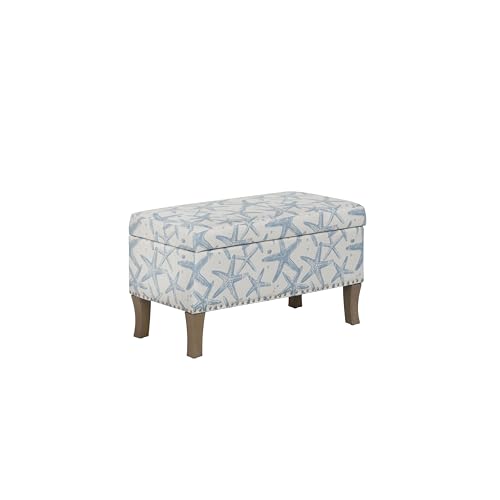
Disclosure: As an Amazon Associate, dailyhomedecorating.com earns from qualifying purchases. Links on this page are affiliate links; they cost you nothing extra. Prices and availability change often, so check the current Amazon listing before you buy.
This entryway bench buying guide starts with a simple observation: the entryway is the hardest-working few feet in most homes, and it is usually the least planned. Shoes migrate toward the door, bags land wherever there is a flat surface, coats drape over chair backs, and everyone sits on the bottom stair to pull on boots. An entryway bench answers all of that at once. It gives people a proper seat at the exact moment they need one, it gives shoes and bags a defined home, and it turns a pass-through strip of floor into a small, organised room of its own. This guide explains the main types, the features that actually matter, and how to match a bench to your household, your space, and the way you really come and go each day.
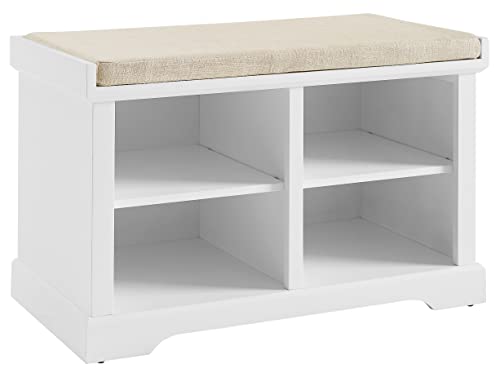
Key Takeaways
- The best entryway bench is the one sized to your wall and your routine, not the largest one that fits.
- Decide first whether you need open shoe storage, hidden storage, hooks above, or simply a seat — that choice narrows the field fast.
- Seat height and depth decide comfort more than style does; a bench you perch on awkwardly will be ignored.
- Sturdy joinery, a stable base, and finishes that tolerate wet shoes matter more than decorative detail.
- Tall bench-and-hook combinations must be anchored to the wall, exactly as the manufacturer directs, to prevent tipping.
- Measure the door swing and the walkway before you order; a bench that blocks either will annoy you daily.
In this guide
What an Entryway Bench Does and the Main Types
At its core, an entryway bench is a seat placed where shoes go on and off. Around that simple job, designs have multiplied into a family of furniture that can also store shoes, hide clutter, hold coats, and define the boundary between outdoors and in. Understanding the main types first keeps you from comparing pieces that were never meant to do the same job.
The Simple Seat Bench
The simplest form is a plain seat: legs, a top, and nothing else. It suits households that already have a closet or shoe cabinet nearby and only lack somewhere to sit. Simple benches keep a small entry feeling open, slide easily for cleaning, and work in narrow halls where storage furniture would crowd the walkway. Their weakness is obvious — they organise nothing. If loose shoes are your main problem, a seat alone will not solve it, and pairs will simply gather underneath in a less tidy version of the pile you have now.
The Shoe Bench With Open Shelves or a Rack
The most popular type pairs the seat with one or two open shelves or a slatted rack below. Everyday shoes live on the shelves, visible and easy to grab, while the seat stays clear for sitting. Open storage ventilates damp footwear, which matters in rainy or snowy climates, and it encourages the habit you want: shoes off, shoes onto the shelf, done. The trade-off is visual. Open shelves show everything, so this type looks best when the household keeps a limited number of pairs at the door and rotates the rest to a closet.
The Storage Bench With a Lift-Up Seat or Drawers
Hidden-storage benches conceal the mess. A hinged seat lifts to reveal a compartment for hats, gloves, scarves, dog leads, and the seasonal clutter that otherwise colonises the hall. Drawer versions organise smaller items neatly and let you open storage without asking anyone to stand up. These benches make a formal entry look calm and uncluttered, and they are the natural choice when guests arrive through the same door the family uses. The compromises are access and air: stored shoes get less ventilation, and a lift-up seat is slower to use than an open shelf, so most households store accessories inside and keep daily shoes elsewhere.
The Hall Tree Bench With Hooks and a Back
Hall trees combine a bench with a tall back panel carrying hooks, sometimes with a top shelf or cubbies. They solve the whole entry problem in one footprint: sit, hang, store. For homes without an entry closet, a hall tree is often the single most transformative piece of furniture you can add. The costs are presence and safety. A hall tree is visually large, can overwhelm a small or low-ceilinged hall, and — critically — a tall, loaded piece can tip if a child climbs or heavy bags swing from the top hooks. Every tall model must be fixed to the wall with the anti-tip hardware and method the manufacturer supplies, into suitable wall fixings, before it is used. Treat that step as part of assembly, not an optional extra.
The Cushioned and Upholstered Bench
A padded seat changes the character of the piece. Upholstered benches feel welcoming, suit traditional and formal entries, and double as extra seating that can be pulled into a living room when guests overflow. Fabric, however, meets wet coats, muddy paws, and damp trousers at the door. If you choose upholstery, favour tightly woven, wipeable fabrics, removable covers where offered, and mid-tone colours that forgive marks between cleanings. A cushion added to a wooden bench is a flexible middle path: comfort when you want it, and the cushion can be lifted away for cleaning or replaced when it wears.
Entryway Bench Buying Guide: Top Picks at a Glance
The four picks below represent the main buying directions rather than a single winner. Each is described in prose so you can judge the design against your own entry; check the current listing for the exact configuration, finish, and dimensions before ordering. Badges reflect the job each design does best.
VASAGLE Shoe Storage Bench — Best Overall for Most Entries
Benches in this style pair a padded or solid seat with open shoe shelving below and a frame that keeps the footprint compact. That combination covers the two core jobs — sitting and shoe order — without the visual weight of a tall unit, which is why this format is the default recommendation for average-sized entries. Look for a frame that feels rigid when you sit and shift your weight, shelving spaced for the footwear your household actually wears, and a finish you can wipe down after wet weather.

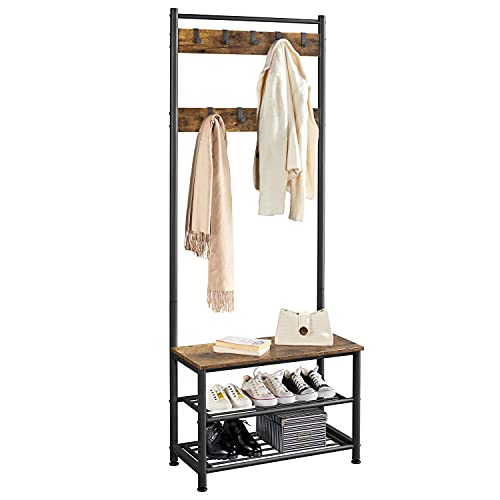
Yaheetech Entryway Bench with Shoe Rack — Best for Coat-and-Shoe Overflow
Bench-and-rack designs in this family lean into capacity: more shoe tiers, and in taller versions, hooks above for coats and bags. They suit busy households that keep several pairs per person at the door. The same caution applies as with any tall or heavily loaded design — assemble it fully, tighten every fixing as directed, and anchor tall versions to the wall before loading the hooks.

Bush Furniture Entryway Storage Bench — Best for a Finished, Furniture Look
Traditional furniture makers offer benches that read as proper cabinetry: framed panels, considered hardware, and finishes matched to living-room pieces. Choose this direction when the entry opens directly into your main living space and the bench will be seen all day. Storage is usually a mix of cubbies, drawers, or a lift-up seat, so check that the internal layout matches what you plan to hide.
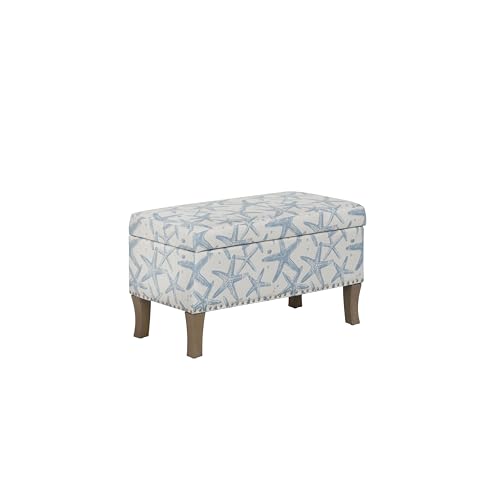
Linon Storage Bench — Best for Hidden Storage in a Formal Hall
Storage benches in this style prioritise concealment: a clean exterior, a seat that lifts or drawers that close, and nothing on show. They are the calmest-looking option for guest-facing entries. Plan what goes inside before you buy — accessories, linens, and seasonal gear suit enclosed compartments better than damp everyday shoes.
How Much Seating and Storage Do You Actually Need?
Capacity questions cause more wrong purchases than style questions. Start with people. Count how many household members arrive home together on a normal day, because that is your peak load. One person sitting to change shoes takes a comfortable stretch of seat; two children doing it at once take more, and they take it at exactly the same moment, usually while an adult is standing in the doorway holding shopping. If your bench will routinely host two sitters, prioritise length and a frame that stays steady when weight lands unevenly at one end.
Then count shoes honestly. Walk to your door and count the pairs currently there, including the ones kicked under furniture. That number, not an idealised one, is your storage requirement. Open shelves hold a limited number of pairs in view; if your count is high, either choose a multi-tier rack design, accept a rotation system where only current-season pairs live at the door, or pair a simple bench with a separate closed shoe cabinet. A bench that overflows within a week teaches everyone to stop using it, and the pile returns beside it instead.
Finally, list the non-shoe items that live at your door: bags, hats, gloves, leads, umbrellas, sports kit. Each needs a destination in your plan — a hook, a basket on the bench, a compartment inside it — or it will colonise the seat. The seat must stay clear. The moment sitting requires moving a pile of things first, the bench has failed at its main job, no matter how much it stores.
What Size Entryway Bench Fits Your Space?
Measure three things before browsing: the wall length available, the depth you can spare without narrowing the walkway, and the swing of the door. The bench must never sit where the opening door strikes it, and people must pass comfortably while someone is seated with legs extended into shoe-changing position. In narrow halls, depth is the critical dimension; a slim bench that hugs the wall beats a deeper, more capacious one that turns the hall into an obstacle course.
Seat height shapes comfort. A seat that is too low makes standing up a effort, especially for older family members and anyone with stiff knees; too high and shorter legs dangle, which makes balancing while tying laces awkward. Sit on chairs in your home that feel right for putting on shoes and use them as your reference when comparing listed seat heights. Depth matters similarly: a very deep seat invites lounging and clutter, while a shallow one perches you at the edge. For a working entry seat, a moderate depth that supports you while you lean forward to your feet is the practical target.
Leave breathing room in the plan. A bench that exactly fills a wall leaves no space for an umbrella stand, a boot tray in winter, or the bag that gets set down while keys are found. In practice, choosing a bench slightly shorter than the maximum that fits produces a calmer, more usable entry than filling every inch. If your entry is very small, consider whether a wall-mounted folding seat or a compact bench under a row of hooks serves you better than a full storage piece. For more small-space layouts, see entryway benches sized for small spaces and the cluster companion how to choose an entryway bench step by step.
Which Materials and Finishes Survive Entryway Life?
An entryway bench lives a harder life than almost any other furniture. It takes wet shoes, grit carried in on soles, damp coats dripped from above, keys and bags dropped onto it, and the daily scrape of being sat on by people in outdoor clothing. Solid wood and well-made wood composites with a sealed finish handle this well and can be wiped clean; look for finishes that do not water-mark at the first wet umbrella. Painted finishes freshen a hall and hide scuffs reasonably, but check edges and corners, where knocks concentrate, for a finish that will not chip away quickly.
Metal-framed benches bring a slimmer profile and shrug off moisture, which suits coastal homes, mudrooms, and households with working boots. Wooden seats on metal frames warm the look and stay comfortable. Rattan, wicker, and woven designs bring texture and suit relaxed interiors, but they trap grit, are harder to clean thoroughly, and flex more under sitting loads, so they fit guest entries and light use better than a farmhouse mudroom in February.
Whatever the material, judge the construction. Sit down and shift your weight sideways: a good bench feels like one piece. Check how shelves and stretchers are fixed, whether the frame has bracing between the legs, and whether the seat feels supported across its span rather than springy in the middle. Seating loads should always be discussed in the manufacturer’s own terms — follow the maker’s stated guidance for the specific model, and if a listing does not state who the seat is intended for or how it should be used, treat very light, decorative pieces as occasional seating rather than the family’s daily perch. When two adults will sit together regularly, choose designs sold explicitly as benches for everyday seating, with braced frames, over novelty or purely decorative pieces.
Open Storage, Closed Storage, or Hooks Above?
This is the defining layout decision, and it should follow your household’s habits rather than your aspirations. Open storage works because it is effortless: no lid, no door, no drawer stands between a tired person and putting shoes away. Households with children, or anyone who knows their family will not open a compartment fifty times a week, should default to open shelves for daily footwear. Closed storage works when appearance leads — a guest-facing hall, a bench visible from the living room, or a household disciplined enough to use it. Many homes do best with a hybrid: open shoe shelves below, a small closed compartment or baskets above for the visual clutter of gloves, leads, and chargers.
Hooks change the equation entirely. A bench under hooks — whether a hall tree or a bench paired with a separate wall rail — clears coats and bags off the seat and off the floor. If you go this route, plan hook heights for the shortest regular user, keep the heaviest bags on lower hooks, and remember the anchoring rule for tall combined units. Freestanding coat elements beside a bench should also be stable and, where the maker provides fixings, secured. A bench alone cannot solve a coat problem; be honest about whether coats are part of your clutter before deciding a simple bench will fix the entry. Our companion piece the honest pros and cons of entryway benches works through these trade-offs in more depth.
How to Prioritise by Use Case
The Family Mudroom Routine
Prioritise capacity, wipeable surfaces, and open storage. Multiple shoe tiers, hooks at varied heights, and a seat long enough for two children at once will earn their keep every school morning. Choose finishes that forgive mud, add a boot tray beside the bench in wet months, and anchor anything tall. Style matters least here; a mudroom bench is equipment, and the right test is whether the Monday-morning rush gets calmer.
The Small Apartment Entry
Prioritise footprint and dual purpose. A compact storage bench gives a studio or small flat a seat, shoe order, and a hiding place for clutter in one shallow piece, and it can serve as extra seating when friends visit. Measure depth first, favour legs that keep the floor visible so the space feels larger, and use the wall above with a slim hook rail rather than choosing a tall hall tree that dominates the room. See compact entryway bench ideas for apartments for the small-flat angle.
The Formal, Guest-Facing Hall
Prioritise appearance and concealment. A closed storage bench or an upholstered design keeps the first impression composed, hides the family’s daily footwear, and can echo the furniture in adjoining rooms. Accept the slower access as the price of the look, and keep a small, discreet shoe solution — a basket or a tray — for the pairs that inevitably stay out.
The Dog-Owning Household
Prioritise storage for leads, towels, and waste-bag supplies within reach of the seat, plus surfaces that survive wet paws. A bench by the door where you can sit to towel a dog, with a compartment or basket for the kit, turns a chaotic routine into a calm one. Choose dark or patterned cushions, keep a washable throw over upholstery in muddy seasons, and place a mat under and in front of the bench to catch the worst of the weather.
Mini-Reviews: Matching Each Pick to Its Home
VASAGLE Shoe Storage Bench
Best for: everyday family entries that need sitting and shoe order in one compact piece. Not suited for: households wanting coats handled by the same unit, or anyone needing hidden storage for a formal hall. The strength of this format is balance — open shelves that get used, a seat that stays available, and a footprint that fits most walls. Its trade-off is visibility: the shoes are on show, so it rewards a household that keeps the door-side collection edited. Keep a basket on top for keys and gloves and the whole entry routine lands in one place.
Yaheetech Entryway Bench with Shoe Rack
Best for: high-traffic doors with several pairs per person and, in hall-tree versions, coats to hang. Not suited for: very small halls where a tall unit would loom, or anyone unwilling to anchor a tall piece to the wall. Capacity is the headline strength; the trade-off is visual size and the discipline required to keep many open tiers tidy. Anchor it, load lower hooks with the heaviest bags, and it becomes the hardest-working wall in the house.
Bush Furniture Entryway Storage Bench
Best for: entries that open into living space, where the bench must look like furniture rather than equipment. Not suited for: mud-heavy rural routines where delicate finishes would suffer. The strength is the finished, coordinated look and thoughtful storage layouts; the trade-off is that prettier surfaces ask for a little more care with wet boots and grit. A boot tray and a wipe-down habit keep it looking smart.
Linon Storage Bench
Best for: calm, guest-facing halls and anyone whose priority is hiding clutter. Not suited for: daily shoes that need ventilation, or households that know a lift-up lid will defeat them. Concealment is the strength — the hall looks composed even on chaotic days. The trade-off is slower access, so store accessories and seasonal gear inside and give everyday footwear an open home nearby. For a second opinion on the type, read our entryway bench review and more entryway bench reviews compared.
First Setup and Care Essentials
Assembly day decides how the bench feels for years. Lay out every part and fixing before you start, follow the manufacturer’s sequence rather than improvising, and tighten screws firmly and evenly as directed — then re-check and re-tighten them after the first week or two of use, because new joints settle as timber and boards bed in. If your bench has a tall back or hook panel, fit the anti-tip anchor to the wall before anything goes on the hooks; use fixings appropriate to your wall type, and if you are unsure about the wall, ask a professional rather than guessing. Position the bench, check the door swing again with the piece in place, and level it so it does not rock — a rocking bench loosens its own joints over time.
Care is mostly prevention. A mat inside the door catches grit before it reaches the bench; a boot tray contains meltwater in winter. Wipe spills and drips the day they happen, especially on wood finishes, and lift stored shoes out occasionally to sweep the shelves, where grit accumulates and grinds into finishes. Cushions benefit from regular shaking-out and spot cleaning per the maker’s care label; enclosed compartments stay fresher if you air them with the lid open on a dry day now and then. Once or twice a year, work along the bench checking fixings, hinge screws, and hook tightness, tightening anything that has worked loose. Five minutes of this keeps a bench solid for years.
Mistakes to Avoid
The classic mistake is buying for the entry you wish you had: a dainty decorative bench for a family of five with a dog, or a towering hall tree for a hall where it blocks the light switch. Buy for your counted shoes, your measured wall, and your real habits. The second mistake is ignoring the door swing and discovering the collision after assembly. The third is skipping the wall anchor on a tall unit because it feels steady on day one — steadiness changes when hooks are loaded and a child pulls on a coat. The fourth is choosing white upholstery for a working door in a wet climate. And the fifth is filling every storage space on day one, leaving no slack for the season’s change of footwear; leave a shelf partly empty and the system will flex instead of overflowing. If you are still deciding whether the piece earns its place at all, is an entryway bench worth it gives the honest verdict, and for the groundwork beneath any bench, hallway rugs that work under benches and entryway runner rugs for narrow halls are worth a look.
How Does an Entryway Bench Fit Different Home Styles?
Because the entry is the first interior a visitor sees, the bench carries a styling job as well as a practical one, and the good news is that every major interior direction has a natural bench format. In a farmhouse or cottage entry, a solid wood bench with a warm, worn-friendly finish and open shoe shelves underneath feels native, especially with baskets tucked below for hats and gloves. In a modern or minimalist hall, a low bench with clean lines, slim legs, and no visible storage keeps the architecture in charge; hide shoes in a closed compartment or accept a strict two-pairs-per-person rule so the openness survives. Traditional halls suit the cabinet-style bench with framed panels and proper hardware, the kind of piece described in the picks above, while industrial spaces take metal-framed benches with wood seats and open rack shelving without blinking.
Colour deserves a practical word. The entry takes the worst light in the house and the most dirt, so very pale finishes show every scuff and very dark ones show every dusting of dried mud and pet hair. Mid-tone woods and paints forgive both, which is why they dominate real-world entries. If your heart is set on a bold colour, a painted bench is one of the easiest pieces in the house to repaint in a few years when the finish tires or your taste changes — another quiet advantage of simple wooden designs over upholstered ones.
Styling the top of the bench is a balancing act, because styling competes directly with sitting. A cushion, a folded throw, and one tray for keys is about the limit for a working bench; beyond that, people stop sitting on it and it becomes a shelf with ambitions. Style the wall instead: a mirror above the bench bounces light and gives a last-check moment before leaving, hooks styled as a deliberate row look intentional, and a runner underfoot defines the zone. The bench stays clear, the entry still looks composed, and both jobs get done.
What About Wet Weather, Boots, and Seasonal Change?
Design your bench setup for the worst month, not the average one. In wet or snowy seasons the entry receives boots that are taller than shoe shelves expect, meltwater that pools under footwear, and a rotation of heavier coats. A bench with a low open shelf can leave the floor beneath free for a boot tray, which is often the most workable arrangement: everyday shoes on the shelf, tall and sodden boots on the tray. Check shelf spacing against your tallest regular footwear before ordering, and remember that slatted or rack-style shelves let water and grit fall through to a tray or mat below instead of marinating the shoes above.
Summer changes the load rather than removing it: sandals multiply, sports shoes rotate in, and sun hats and bags need homes. The households that stay organised are the ones that treat the bench as a system with a seasonal edit. When the season turns, move off-season footwear to a closet, swap the basket contents — gloves out, sunscreen and sunglasses in — and give the bench its twice-yearly tightening and deep clean at the same moment. The bench itself does not change; the discipline around it does, and building that edit into the calendar is what separates entries that work for a decade from entries that work for a month.
If your household includes anyone who comes home genuinely muddy — gardeners, builders, young footballers — consider siting and surface choices accordingly: a bench near a back or garage door in washable finishes may serve better than a prettier piece at the front door, and some homes sensibly run two modest benches, one at each door, rather than one large one at a door half the family never uses. The principle generalises: put the seat where the shoes actually come off.
Entryway Bench or Something Else? Comparing the Alternatives
A bench is not the only answer to entry disorder, and an honest buying guide should say when another piece does the job better. A closed shoe cabinet stores more pairs per inch of wall than any bench and hides them completely, but offers nowhere to sit; households whose members are happy changing shoes standing, or who have a stair to sit on, may find a cabinet plus a small wall hook rail the tidier system. A simple row of hooks with a boot tray beneath is the cheapest, slimmest solution of all and suits entries so narrow that any bench would crowd the walkway — but it asks everyone to balance or use the stairs for boots and laces.
A console table with baskets beneath gives a formal hall a styled surface and some storage, yet no seat; it is the right answer when the entry problem is keys, post, and appearance rather than shoes. An upholstered ottoman or storage cube at the door gives a soft seat and hidden storage in a tiny footprint, at the cost of shoe capacity. The bench wins when the problems arrive together — sitting, shoes, and a surface for bags — which is most family homes, most of the time. If your problem is only one of those, buy the single-purpose piece and buy it well. The cluster’s verdict piece, whether an entryway bench is worth it for your home, walks through that decision household by household.
Buying Online Without Regretting It
Most entryway benches are bought unseen, so the listing has to do the work your hands would do in a shop. Read the assembled dimensions, not the box dimensions, and compare them against your taped measurements. Study the construction description: how the seat is supported, how shelves attach, whether the frame includes stretchers or bracing, and what the manufacturer says about intended seating use. Look at the assembly instructions if they are linked — they reveal more about build quality than any photograph, including whether anti-tip hardware is supplied for tall models and how many fixings hold the seat.
Photographs need translating too. Lifestyle images are staged in entries larger than most, so scale the piece against the door in the image rather than trusting the impression of size. Zoom into joints, shelf edges, and cushion seams where sellers allow it. Check the finish name against other pieces you own if you are trying to match wood tones, and expect some variation in real timber and in screen rendering; ordering a finish described in words you understand — a mid oak, a painted white — reduces surprises. Finally, confirm the returns route before ordering a piece this size, keep the packaging until the bench is assembled and sat on, and photograph any damage before you build rather than after. None of this is glamorous, but a bench is a ten-year object bought in ten minutes; the checks above are how those ten minutes earn the ten years.
Three Worked Examples: Putting the Guide Together
A Terraced Hall With a Family of Four
The wall is moderate, the door opens inward against the adjacent wall, and the shoe count at the door is high and young. The right answer here is an open-shelf shoe bench at the longer end of what the wall allows, with two shelf tiers, a wipeable finish, and a hook rail mounted separately above at two heights — lower for the children now, with the rail long enough to matter later. A separate rail, rather than a hall tree, keeps the purchase flexible: the bench can move rooms in a future house, and the tall-unit anchoring question becomes the simpler one of fixing a rail properly. Add a boot tray in winter, a basket for gloves on the bench end, and the school-run bottleneck moves from the stairs to a seat designed for it.
A Studio Flat With No Hall at All
Here the door opens into the living space, so the bench must earn its footprint three ways. A compact closed storage bench placed immediately inside the door creates the psychological boundary of an entry: shoes hidden inside or in a tray beneath, a seat for changing them, and a surface that can hold a bag for the thirty seconds keys take to find. Because it sits in the living room, finish and legs matter — a piece that reads as furniture, raised on legs so the floor line continues beneath it. The mistake to avoid is the open shoe rack, which in a studio means looking at footwear from the sofa all evening.
A Country Cottage With a Working Back Door
The front door is for guests; the back door is for life. The bench belongs at the back: a robust, open design in finishes that shrug off water, sized for two, with space beneath for a deep boot tray and a row of strong hooks above for working coats. Appearance yields to function entirely, and the buying questions change accordingly — shelf spacing for tall boots, a seat that tolerates being sat on in wet trousers, and fixings that can be tightened with ordinary household tools during the twice-yearly check. The front door keeps a small, prettier seat for visitors, proving the rule that the bench follows the routine, not the architecture.
A Final Durability Checklist Before You Commit
Run down this list against any bench you are about to order. The frame should feel like a single rigid piece when seated weight shifts sideways. The seat should be supported across its span, not only at its edges. Shelves should be fixed, not resting loose, and spaced for your tallest everyday footwear. Fixings should be complete in the box, with the manufacturer’s instructions followed exactly and screws tightened evenly, then checked again after the first weeks of use. Tall or hook-carrying designs should come with anti-tip hardware, and you should know your wall type and the right fixings for it before assembly day. Finishes should be wipeable everywhere shoes, bags, and wet coats will touch. The storage layout should match a list you actually wrote — counted shoes, named accessories — rather than a vague hope of tidiness. And the assembled size should leave the door swing, the walkway, and a little breathing room intact. A bench that passes all of that is not merely a purchase; it is the end of the pile of shoes by the door, which is what you were really buying.
Understanding the Quality Tiers Without Talking Numbers
Entryway benches sort themselves into three broad quality tiers, and recognising which tier a listing belongs to prevents both overspending and disappointment. At the entry tier you find lightweight flat-pack designs in basic finishes, intended for light or occasional use: a single person, a guest entry, a rented flat where the bench may not move with you. These pieces can serve perfectly well within that brief, provided you assemble them carefully, tighten fixings thoroughly, and respect their decorative nature — they are not the family’s daily workhorse, and treating them as one is how they fail early.
The mid tier is where most households should shop. Here frames gain bracing, finishes gain durability, storage layouts become thoughtful rather than nominal, and cushions, hinges, and hardware feel made for repetition. A mid-tier bench assembled well and maintained with the twice-yearly tightening round should handle daily family use for years. The premium tier buys materials and making: solid timbers, joinery rather than only fixings, upholstery in hard-wearing fabrics, and the kind of finish that can be repaired rather than only replaced. Premium makes sense at a front door the house will keep for decades, or where the bench doubles as visible living-room furniture. What premium does not buy is immunity from the rules in this guide — a beautiful bench in the wrong size, with the wrong storage for your habits, still fails. Tier follows fit, never the other way round, and the qualitative positioning in the picks above is there to help you place each design honestly before you check its current listing.
One last encouragement: the entry is a small space with an outsized effect on how a home feels, because it is where every arrival and departure happens. A bench chosen with the care in this guide does not just store shoes — it removes a dozen small daily frictions, the hunting for a seat, the tripping over trainers, the bag on the floor, the coat on the banister, and replaces them with a routine so smooth it becomes invisible. That invisibility is the sign the purchase was right. Nobody admires a working entryway bench after the first month; everybody simply lives more easily around it, which is the highest compliment furniture of this kind can earn.
Before You Commit: A Hands-On Fit and Compatibility Check for Entryway Bench
This section exists to treat this as the final check before money changes hands, the point where a shortlist stops being a list of features and becomes a decision about one specific home. It adds a layer that a feature list cannot give you, grounded in the living room furniture context this entryway bench will actually live in. Where this guide names examples such as VASAGLE Shoe Storage Bench, Yaheetech Entryway Bench with Shoe Rack, Bush Furniture Entryway Storage Bench, use them as test cases for the checks below rather than as shortcuts past them.
It also helps to separate the problems a entryway bench can solve from the problems it merely moves. If the underlying difficulty is space, the answer may be a smaller format or a different location rather than a more elaborate model. If the difficulty is time, look for the option that removes steps rather than the one that performs each step slightly better. If the difficulty is that several people want different things, a compromise design that everyone rates as good enough will usually outlast a specialist design that one person loves and everyone else avoids. Naming the real problem in one sentence, out loud, before you order, is a surprisingly powerful filter, and many shoppers find that the sentence itself points at a different entryway bench than the one they started out researching.
Start with the unglamorous measurements. For a entryway bench, the numbers that decide satisfaction are rarely the headline ones in a listing; they are doorway width, turning space on the stairs, floor clearance and the distance to the nearest table or lamp. Write the real dimensions of your space down, including the awkward constraints you normally work around without thinking, and hold every contender up against that sheet rather than against a showroom photograph. Then walk the route the entryway bench will take on delivery day and during normal use. A choice that fits on paper but fights you every time it is moved, opened, cleaned or stored will lose its shine quickly, however strong its other qualities look in a comparison table.
Next, rehearse the week, not the ideal day. Picture the entryway bench inside movie nights, reading sessions, guests staying longer than planned and children treating every edge as a climbing frame. Most disappointment comes from buying for the best-case scenario: the tidy version of the household, the motivated version of yourself, the weather or the guest list you hope for rather than the one you usually get. If the entryway bench only makes sense when everything goes to plan, it is the wrong size, the wrong format or the wrong purchase for now. If it still looks useful on the tired, rushed, slightly chaotic version of the day, it has passed the most honest test there is, and the remaining questions are about detail rather than direction.
Pay close attention to the recurring friction points, because they compound. With a entryway bench, owners tend to run into fabric marking, cushions softening unevenly and legs scratching the floor when the piece gets dragged instead of lifted. None of these is dramatic on its own, and that is exactly why they get underestimated at buying time. Ask how the design you are considering handles each one: can the wearing part be replaced, can the awkward part be reached without tools, does the job take two minutes or twenty. A entryway bench that makes its own upkeep easy gets maintained; one that makes upkeep a project gets neglected, and neglected products perform badly in ways that then get blamed on the original purchase.
Use the listings as a checklist rather than as entertainment. For each entryway bench you shortlist, note the exact variant, the included parts, what is sold separately, and which photographs show the item in a setting like yours rather than in a studio. If a model named elsewhere in this guide catches your eye, treat it as a worked example for this process: run it through the same measurements, the same weekly rehearsal and the same friction list before letting familiarity turn into preference. Consistency is the whole trick. Shoppers go wrong not by choosing the objectively weaker entryway bench, but by judging one contender on features, the next on looks and the third on a single enthusiastic anecdote.
Think about who else has a vote. A entryway bench is usually shared, moved, cleaned or complained about by more than one person, and the second user’s priorities are often the ones that surface after the return window closes. Check height, weight, reach, noise, heat, sharp edges or sheer visual presence, whichever apply, against the smallest, oldest or least enthusiastic person who will live with it. If you are buying for a household that includes children, pets, elderly relatives or lodgers, run the clumsy scenario too: the spill, the knock, the curious tug, the door left open. A robust entryway bench choice survives other people; a fragile one only survives its buyer.
Frequently Asked Questions
What size entryway bench should I buy?
Start from your wall and walkway, not from a catalogue. Measure the available wall, the depth you can spare while keeping a comfortable passing width, and the door swing, then choose a bench a little shorter than the maximum length so the entry keeps some breathing room. Match seat height to chairs you already find comfortable for putting on shoes, and make sure two regular sitters fit if your household arrives home together.
Is open or closed shoe storage better?
Open storage is used more faithfully because nothing stands between the user and putting shoes away, and it ventilates damp footwear. Closed storage looks calmer and suits guest-facing halls, but it is slower to use and less airy. Many households do best with a hybrid: open shelves for daily shoes and a closed compartment or baskets for accessories and clutter.
Does an entryway bench need to be fixed to the wall?
A simple low bench does not. Anything tall — a hall tree, a bench with a high hook panel, or a unit children might climb — must be anchored with the anti-tip hardware and method the manufacturer supplies, into fixings suitable for your wall. Do this during assembly, before loading hooks, and re-check the anchor when you do your periodic tightening round.
Can an entryway bench work in a very small hall?
Yes, if you choose for depth first. A slim bench with legs keeps the floor visible and the hall feeling larger, and pairing it with a wall-mounted hook rail handles coats without a tall unit. In the smallest spaces, a compact storage bench also earns its place as extra seating. Measure carefully, and let the walkway and door swing make the final decision.
How do I keep an entryway bench tidy?
Give every category of item a named home — shoes on shelves, keys in a tray, gloves in a basket — and keep the seat itself sacred for sitting. Edit the shoe collection at the door when seasons change, sweep grit from shelves regularly, and leave a little storage slack so new items have somewhere to go. Systems stay tidy when they have spare capacity, not when they are packed full. A five-minute reset once a week, ideally at a set moment like Sunday evening, keeps the small drifts from becoming the old pile again.
What should I check before ordering?
Confirm the assembled dimensions against your measurements, the storage layout against your counted shoes and accessories, the seat height against a chair you like, and the assembly and anchoring requirements against your walls and skills. Read the current listing carefully for finish, configuration, and care instructions, and check the maker’s guidance on seating use so the design matches the load your household will actually give it.
Related Guides
entryway bench pros and cons in full · is an entryway bench worth it · console tables for the other end of the hall