Disclosure: As an Amazon Associate, dailyhomedecorating.com earns from qualifying purchases. Links on this page are affiliate links; they cost you nothing extra. Prices and availability change often, so check the current Amazon listing before you buy.
So, is an entryway bench worth it? The short answer is yes — worth it if your household changes shoes at one main door, if footwear and bags currently live on the floor, and if a measured stretch of your entry wall can hold a bench while leaving a comfortable walkway with someone seated. It is not worth it if your entry fails that walkway test, if your only clutter problem is coats, or if your household honestly will not keep shoes to the storage provided. The value of a bench is not in the object; it is in the twice-daily routine it repairs, multiplied by every person in the house, for years. This article weighs that value properly — what you actually get, what it really costs beyond money, who it pays off for, and who should spend the same money and space on something else.
Key Takeaways
- Worth it when: several people use one door, shoes pile up, and the walkway test passes with room to spare.
- Not worth it when: the entry is too narrow for any bench, coats are the whole problem, or the household will not run a light rotation system.
- The real return is time and calm — thousands of easier shoe changes — not the storage alone.
- The real costs are space, a little weekly maintenance, and, for tall designs, a non-negotiable wall-anchoring job.
- A bench that is used daily repays its cost in any tier; a bench that is ignored repays nothing, so fit and habits decide the verdict before price ever could.
- If you are on the fence, the tape-measure tests in this article settle it faster than any amount of browsing.
In this guide
What You Actually Get
Strip away the styling photographs and a bench buys you four concrete things. The first is a seat at the exact point of need. Shoes, boots, children’s wellingtons, an older parent’s careful unlacing — all of it happens at the door, and a bench converts those moments from balancing acts into seated tasks. That sounds small until you multiply it: twice a day, per person, across years, the bench delivers thousands of small easements, and furniture that serves thousands of times earns its place differently from furniture that serves occasionally. Ask anyone who has lived with a bench and then without one; the absence is felt in the first week, in the body, at the door.
The second thing you get is a boundary. Shoes stop at the bench. Bags land on or beside the bench. Keys gather in the tray on the bench. The rest of the house — the kitchen counters, the bedroom chairs, the sofa arms where coats used to migrate — is quietly relieved of entry duty. Homes feel calmer when thresholds work, because clutter stopped at the door does not diffuse through every room, and the bench is the piece that makes the threshold work as a system rather than a hope.
The third thing is storage that is actually used, which is rarer than storage that is merely owned. Because the bench’s shelves sit exactly where shoes come off, compliance costs nothing, and a storage system with zero compliance cost is the only kind that survives contact with tired families. The fourth thing is a first impression: an entry that reads as a planned room — a seat, ordered shoes, a place for everything — rather than the house’s apology. For households that host, sell, or simply care how home feels at the moment of arrival, that impression is a real part of the return, and it arrives every single day, for residents most of all.
The Real Costs Beyond Money
An honest worth-it assessment counts the costs that are not on the receipt. The largest is space. A bench permanently claims a strip of the smallest room in the house, narrows the walkway by its depth, and forecloses other uses of that wall. In a generous hall that cost is trivial; in a narrow one it is the whole question, and it is paid every day, by every passer-by, whether the bench is used or not. Measure it with the seated-walkway test — a chair where the bench will go, someone seated and leaning to their shoes, someone else passing with a bag — and treat a failure as a final answer, because no benefit in this article outbids a hallway that fights its own household.
The second cost is maintenance, small but real: grit swept from shelves, finishes wiped, a cushion protected in mud season, fixings re-tightened after settling and checked twice a year, and the seasonal rotation that keeps capacity honest. None of it is heavy; all of it is forever, and households should accept it knowingly. The third cost applies only to tall designs — hall trees and bench-and-hook combinations — and it is an obligation rather than a chore: the unit must be anchored to the wall with the manufacturer’s anti-tip hardware, into fixings right for the wall, before the hooks are loaded. If your walls, your tenure, or your willingness cannot meet that obligation, the tall design is not worth it for you at any price, and the low bench is the version whose value you should weigh instead. The fourth cost is subtler: a bench sets a standard the household must then keep, and some households experience that standard as pressure rather than relief. Know yours before you buy.
Who It Pays Off For
The Family With a School-Run Bottleneck
This is the household where the bench’s value compounds fastest. The morning departure compresses several people’s shoe changes into the same ten minutes at the same door, and a bench with open shelves turns that scrum into a seated, sequenced routine. Children gain a routine they can own — sit, shoes, shelf — and parents gain the small miracle of leaving on time without the archaeological shoe dig. For this household the bench is not worth it in the abstract; it is worth it specifically at eight in the morning, every weekday, and the rest of the day is a bonus.
The Multigenerational or Mobility-Aware Home
Where an older relative lives or visits often, the bench’s seat becomes quiet accessibility infrastructure: a stable, familiar place to sit for the most balance-testing task of the day, placed exactly where that task occurs. The value here is independence — shoes managed without help, arrivals and departures kept dignified — and it is the kind of value households consistently underrate before purchase and overrate, gratefully, after. Choose the sturdiest everyday design, seat height matched to the least flexible user, following the manufacturer’s seating guidance for the model, and the bench earns its place on this ground alone.
The Small Home That Needs an Entry It Does Not Have
In flats and studios where the door opens into living space, a bench — especially a compact storage design — manufactures the threshold the floor plan forgot. Outdoor things stop at the bench; the room beyond stays a room. The value is spatial psychology as much as storage, and small-home owners feel it disproportionately, because in a small home every object must justify its footprint in more than one way, and a bench that seats, stores, and divides space justifies itself three times before breakfast. The condition is the walkway test, applied without mercy, because small homes are also where a too-deep bench does the most damage.
Who Should Skip It
The Entry That Fails the Tape Measure
If the seated-walkway test fails, or the door swing cannot clear any honest bench, the verdict is no — and it is a successful verdict, not a disappointed one. The alternative system costs less and works: hooks properly fixed at reachable heights, a boot tray to define the shoe zone, a mat for grit, a small shelf for keys. Households that accept the measurement and build that system end with a better entry than households that force a bench into a space that resents it, and the money saved is available for the rooms that can use it.
The Household Whose Problem Is Only Coats
A bench without hooks does nothing for coats except receive them, draped, onto its seat — at which point it fails as a seat too. If coats on the banister are your whole complaint and shoes are already housed, buy the best hook rail you can fix properly, or a standalone coat solution, and let the bench go. The worth-it question always begins with naming the real problem, and a bench is the answer to a compound problem — sitting plus shoes plus landing surface — not to every problem that happens to occur near a door.
The Household That Will Not Run Any System
Some households, honestly assessed, will not rotate shoes, will not limit door-side pairs, and will not defend a seat against dumping. For them a bench becomes a costly shelf with a pile beside it, and the money is better spent on a large closed shoe cabinet that hides a bigger, less disciplined reality, or on nothing at all. There is no shame in this verdict — self-knowledge is the rarest input in furniture buying — but there is waste in ignoring it. The middle path, for households unsure of their discipline, is the open-shelf bench: the format whose compliance cost is lowest, and therefore the one most likely to convert good intentions into a working routine. The balanced ledger behind these verdicts is laid out in entryway bench pros and cons.
The Strengths and Trade-Offs of Owning One
Strengths of owning:
- A seat at the point of need, used thousands of times across the bench’s life.
- Shoe storage with zero compliance cost, because it sits where shoes come off.
- A threshold that works: clutter stops at the door instead of diffusing through the home.
Trade-offs of owning:
- A permanent claim on scarce entry space and walkway width.
- A light but endless maintenance rhythm — grit, wiping, tightening, rotating.
- For tall designs, an anchoring obligation that cannot be skipped or deferred.
Notice the shape of that ledger: the strengths are all daily and cumulative, while the trade-offs are mostly fixed and knowable in advance. That asymmetry is why the bench so often proves worth it — the costs can be fully inspected before purchase with a tape measure and an honest conversation, while the benefits keep arriving after the costs have been forgotten. Purchases with that shape are the ones households rarely regret, provided the inspection actually happens.
Alternatives to Consider
Worth-it is always relative to the alternatives, so price the bench against its real rivals — in attention and space as much as in money. The closed shoe cabinet stores more pairs per inch and hides them completely, and for a household whose problem is purely shoe volume, it may be the worthier buy; pair it with a small stool if sitting is occasionally needed. The hook rail plus boot tray is the minimalist system: cheapest in space, silent on sitting, and entirely sufficient where shoes are few and the stairs are near. The console table with baskets serves the formal hall whose problem is keys, post, and appearance rather than footwear. Each alternative wins its own brief outright, which is precisely the point: the bench is worth it when your brief is the compound one, and the alternatives are worth it when yours is not.
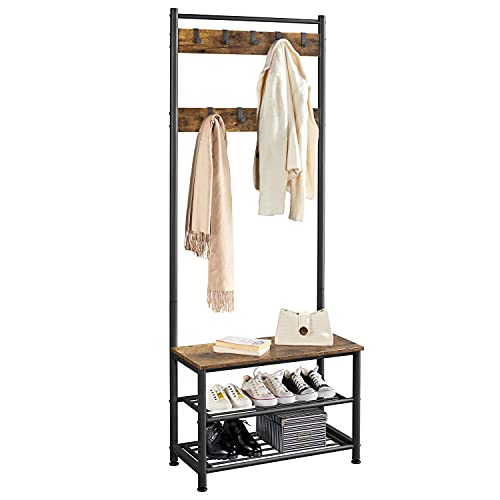
VASAGLE Shoe Storage Bench — The Default Worth-It Answer
For the compound brief — sitting, daily shoes, average wall — the cushioned open-shelf bench is the design whose value case is easiest to make, because its storage asks nothing of the household and its seat serves everyone. Check the current listing for dimensions and configuration, judge the construction for bracing, and it is the first design to measure against your space.

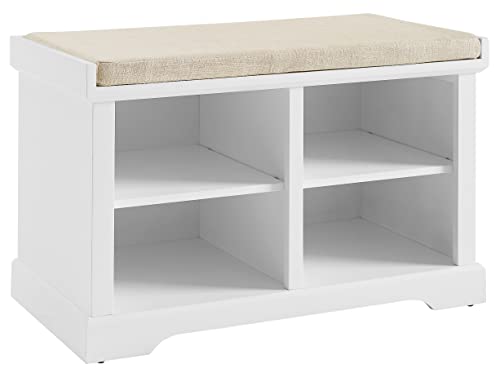
Crosley Entryway Bench — When Appearance Is Part of the Value
Where the entry is a reception space, part of what a bench buys is the room’s composure, and traditional furniture styling delivers that part of the value along with the seat and storage. Worth it where guests and open-plan sightlines make the first impression a daily event rather than an occasional one.
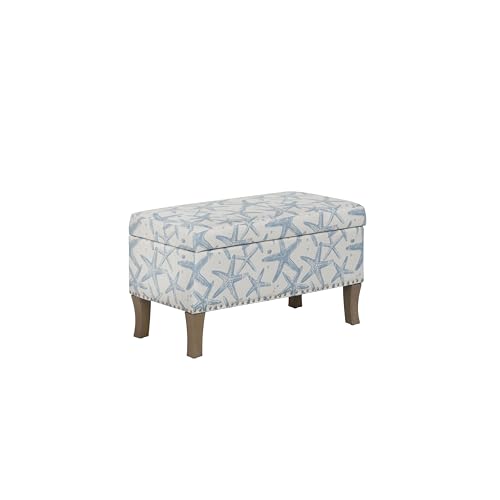
DHP Storage Bench — The Small-Space Value Case
In a flat or studio, the compact storage bench’s value is the manufactured threshold: seat, concealment, and boundary in one shallow footprint. Its capacity is modest, so its worth depends on the rotation habit — which small households, having no choice, tend to run best of all.
How to Get the Most Value If You Buy
Value is not only chosen; it is operated. Buy the format your behaviour supports — open shelves for daily shoes, closed compartments for accessories — and size it from the wet-season shoe count with a rotation for the overflow, because a bench at capacity is a bench about to be bypassed. Assemble it like the investment it is: frame square, screws tightened firmly and evenly as the manufacturer directs, rocking eliminated before use, and every fixing re-tightened after the first weeks as joints settle. Anchor tall designs during that same assembly, with the supplied anti-tip hardware and wall-appropriate fixings, and load lower hooks with the heaviest bags. Complete the system on day one — mat, boot tray, key tray, a basket for the door’s small clutter — because the accessories are what turn a piece of furniture into the routine that pays you back.
Then run the light rhythm that keeps the value flowing: grit swept weekly, finishes wiped as marks appear, the shoe collection rotated at each season’s turn, and a twice-yearly pass along every fixing — frame, shelves, hinges, hooks, anchor — tightening anything that has eased. Defend the seat’s purpose kindly but firmly; a bench that remains sittable remains valuable, and a bench that becomes a shelf is a storage unit you overpaid for. Households that operate a bench this way report the same arc: a month of noticing it, a year of relying on it, and then the long, quiet period where its value is simply the absence of a problem nobody remembers having. That is what worth it looks like from the inside. The choosing method that gets you there is in how to choose an entryway bench, the designs are compared in entryway bench reviews, and the deep dive on the leading format is the entryway bench review.
The Decision Checklist
Answer honestly; the pattern of answers is the verdict.
- Does the seated-walkway test pass, with the door swing clear? If no — stop; build the hook-and-tray system instead.
- Do three or more shoe changes happen at this door on a normal day, or two with difficulty (boots, children, stiff knees)? If yes, the seat’s value compounds fast.
- Is there a shoe pile, bag scatter, or coat migration that a boundary at the door would actually stop?
- Can your household keep door-side shoes to a rotation the storage holds? If unsure, choose open shelves and the largest capacity your space honestly allows.
- If you want hooks or a tall unit, can you anchor it properly to your wall, with permission if you rent? If no, choose the low bench.
- Is your main problem sitting plus shoes — not coats alone, not shoe volume alone? If it is one of the single problems, its single-purpose solution may be worth more.
The rule for closing: four or more answers in the bench’s favour, with the first one mandatory, means buy — and buy the best-made version of the right format your tier allows, because a daily-use object repays making. A failure on the first question, or a main problem the bench does not address, means the alternative system is your worth-it answer, and reaching that answer through this checklist has saved you the cost of learning it in your hallway.
One closing observation about the checklist itself: it is deliberately biased toward the measurable. Sentences about style, longing, and the photograph that will not leave your head are absent from it, not because those things are worthless — the entry’s look is a genuine part of the value, as this article has said — but because they are the part of the decision that needs no help. Desire arrives unassisted; measurement must be scheduled. So run the six questions, let the pattern speak, and then, if the verdict is yes, allow yourself the full pleasure of choosing the prettiest bench that passes them. That order — evidence first, delight second — is the whole method, and households that keep it rarely ask this article’s question twice about the same door.
The Value Curve: Month One, Year One, Year Five
Worth-it judgements go wrong when they are made at a single moment, because a bench’s value has a curve. In month one, the value is mostly visual and novel: the entry looks transformed, the household is consciously pleased, and the system runs on enthusiasm. Honest assessors discount month one almost entirely — nearly any organised entry photographs well for a month. By year one, the true pattern has declared itself. The households in this article’s worth-it profiles have folded the bench into reflex; the seat is used without thought, the shelves hold the rotation without policing, and the maintenance rhythm has either become habit or revealed itself as the household’s weak point. A bench that reaches year one in that state has effectively proven its verdict, because the failure modes — overflow, dumping, wobble, resentment of the footprint — all declare themselves well before the first anniversary.
By year five, the value has changed character again: it is no longer about the entry at all, but about everything the entry stopped from happening elsewhere. The hallway floor that was not worn by grit at the threshold. The shoes that lasted because they were stored aired and upright rather than heaped. The mornings, in their thousands, that began without a search or a squabble. The relative who kept managing their own shoes, in their own time, at a seat that was simply there. None of that appears in any listing, and all of it is what owners mean, inarticulately, when they say the bench was worth it. The practical translation for a buyer is this: judge the purchase against year five’s ledger, not month one’s photograph, and weight the boring variables — fit, format, bracing, your own habits — exactly as heavily as this article has, because those are the variables year five is made of.
Worth It, Tier by Tier
The value question also has a tier answer, stated qualitatively as this cluster states all such things. At the entry tier, a bench is worth it for light briefs: a guest door, a single occupant, a first home where the piece may be outgrown or left behind. The value there is real but front-loaded — the transformation is immediate, the lifespan is whatever the light construction gives, and the household should buy with that horizon honestly in mind. At the mid tier, worth-it peaks for most households: the making survives the daily routine, the formats are fully realised, and the cost of the object is spread across the longest realistic count of uses. This is the tier where the bench most reliably becomes invisible infrastructure, and invisible infrastructure is the highest state furniture of this kind can reach.
At the premium tier, the worth-it case changes from arithmetic to tenure. Furniture-grade making, solid materials, and finishes that can be repaired rather than replaced justify themselves in homes that will keep the same entry for a long time, and in open-plan spaces where the bench is effectively living-room furniture under daily observation. The premium bench is not more worth it for a household that moves every few years or whose door is a mud-first working entrance; there, mid-tier making and wipeable pragmatism return more value per unit of commitment. The pattern across tiers is the pattern across this whole article: worth is not a property of the object but of the match — between object, household, and horizon — and the buyer’s job is to make the match, not to find the mythical bench that is worth it for everyone.
Three Households Run the Numbers — in Habits, Not Currency
Consider the verdict working itself out in three homes. In the first, a family of five in a house with one front door and no entry closet, the bench-and-hooks system absorbs the entire arrival routine: five people, two shoe changes each daily, coats that used to colonise the stairs. Their worth-it evidence is not a feeling but a list of absences — no shoe pile, no banister coats, no morning searches — sustained across school years. Even at a premium tier, that household’s bench would have been worth it; at the mid tier they chose, it is the least regretted purchase in the house.
In the second home, a couple in a flat with a narrow hall, the checklist’s first question did its work. The seated-walkway test failed for every bench they liked and passed only for the shallowest compact design, whose capacity their two-person, already-rotated shoe collection genuinely fits. They bought the compact, and its worth is of the manufactured-threshold kind: modest in storage terms, transformative in how the flat feels to come home to. The same couple, in a larger home, would have been a standard worth-it case; in this one, the margin was the tape measure, and respecting it is what kept their verdict positive instead of resentful.
In the third home, the honest answer was no, and it is included because a worth-it article that never says no is an advertisement. A household with a wide porch, a mudroom at the back that already seats and stores, and a front door used mainly by guests had no compound problem at the front door at all — only a wish for the entry to look more composed. A bench there would have been décor wearing a system’s clothing. They bought a console table and a mirror instead, solved the actual problem — appearance — directly, and kept the bench money for a room with a real brief. Their verdict completes the article’s argument: worth it is a conclusion, not a default, and it is earned household by household, door by door, tape measure by tape measure.
The Returns Nobody Lists: Guests, Viewings, and Everyday Pride
Some of a bench’s returns never appear in a storage calculation. The first is hospitality. A guest who can sit to remove their shoes, in a home whose entry plainly expects it, has been welcomed in a way that words at the door do not quite achieve; households that host often find the bench working socially as much as practically, and visitors with any stiffness or balance concern are quietly grateful for it in a way they may never mention. The second return is presentational. If the home is ever sold or let, the entry is the first interior a viewer stands in, and a composed threshold — seat, ordered shoes, a defined place for everything — sets the terms on which the rest of the home is judged. Estate agents have a vocabulary for this that buyers can safely translate as: the bench is doing value work before the viewing has properly begun.
The third return is the residents’ own daily morale, the least measurable and, owners insist, the largest. Coming home to an entry that works — to a seat, a system, a small room that receives you properly — is a different experience from coming home to a pile, repeated twice a day for years. Homes are judged by their inhabitants in exactly these repeated moments rather than in their set pieces, and furniture that improves a repeated moment improves the home in the way that matters most. A worth-it assessment that ignores this return will still reach the right answer for most households, because the practical returns suffice; but for the household on the fence, the daily-morale return is often the honest tiebreaker, and there is nothing soft-headed about counting it. It is, after all, the return you will collect most often.
When the Answer Changes: Life Stages and Moving House
Worth-it is not a lifetime verdict on a product; it is a verdict on a match, and matches change as households do. The couple whose compact bench was a marginal yes becomes, with a child and a pram, a household whose entry equation has been rewritten — sometimes toward a larger system at a different door, sometimes toward the discovery that the walkway test now fails and the bench must migrate to a bedroom while hooks and a tray take over the door. The family whose hall tree was transformative becomes, when the children leave, a household with a beautiful, oversized monument to a routine that no longer happens, and the bench’s second life in a smaller role is a graceful demotion rather than a failure. None of this argues against buying; it argues for buying the movable, re-deployable object over any fixed solution, and for re-running this article’s checklist whenever the household changes shape. A bench is worth it for a stage of life, honestly assessed — and since stages last years and benches are neither permanent nor precious, that is commitment enough. Buy for the household you have, in the home you have, with the horizon you can actually see, and let the next stage make its own decision with its own tape measure.
The Cost of Not Buying, Counted Fairly
Every worth-it analysis should also price the status quo, because doing nothing is not free — it is merely unbilled. The household without a bench pays in the currencies this article has tracked throughout: the daily balance-and-hop at the door, priced in effort and, for older members, in risk; the shoe pile’s slow damage to flooring and rugs at the threshold, where grit concentrates exactly where feet pivot; the search time for the second shoe, multiplied by every rushed morning; the migration tax, as coats and bags colonise the stairs, the banister, and the nearest chair in every adjoining room; and the low, constant untidiness that residents stop seeing and guests never do. None of those costs arrives as an invoice, which is why they are so easily ignored in the comparison — the bench’s price is vivid and singular, while the status quo’s price is diffuse and daily. Set them side by side honestly and many fence-sitting households find the question answers itself: they are already paying for an entry system, in the worst possible currency, and the bench merely converts the payment into furniture.
The same fairness requires admitting where the status quo is genuinely cheap. A household with a near-door stair, a disciplined two-pair habit, and a closet that swallows the rest is already running most of the bench’s system with the architecture it has, and its unbilled costs are small. For that household the bench’s marginal value is mostly the seat’s comfort and the entry’s appearance — real, but modest — and the worth-it answer may fairly be not yet, or not this year. The checklist below is built to distinguish exactly these two situations, the quietly expensive status quo from the quietly adequate one, because they look identical from the doorway and are opposites in the ledger.
Buy Once, Cry Once: The Last Word on Value
There is an old workshop saying that the cheapest tool is the one you buy once, and it applies at the front door with unusual force. The bench market’s saddest pattern is the household that buys light for a heavy job, replaces the piece within a couple of years, and ends having paid for two benches and enjoyed neither — the first too flimsy to love, the second shadowed by the feeling of paying twice. The worth-it framework in this article exists largely to prevent that pattern: name the job honestly, match the tier to the traffic, assemble the purchase properly, and the single bench serves the long term that the arithmetic assumed. The reverse pattern also exists — the household that buys furniture-grade for a guest door used twice a month — and it is wasteful in the quieter currency of over-commitment, though at least the object itself gives pleasure. Between the two errors, the first is commoner and costlier, which is why this cluster’s advice leans, whenever a household is torn between tiers for a daily door, toward the better-made option: daily use is the great multiplier, and it multiplies durability differences exactly as it multiplies the seat’s small daily kindnesses. Worth it, in the end, is rarely about the bench at all. It is about whether the household did the honest work — the measuring, the counting, the naming of its own habits — that lets any good object prove its value. Do that work, and the answer to this article’s question will not need this article to tell it to you.
Still on the Fence? Run the Two-Week Trial
Households that remain undecided after the checklist have one more instrument available, and it costs nothing: simulate the bench before buying it. Tape its footprint on the entry floor at the dimensions of the design you favour, place a dining chair inside the outline to serve as the seat, and put a crate or box where its storage would be. Then live with the simulation for two weeks, through real mornings and real weather, without cheating the outline — no stepping over the tape as if it were not furniture, no exiling the crate when guests come. The simulation will answer, with your own household as the laboratory, every question this article has raised in the abstract. The walkway will pass or fail a hundred times a day. The seat will be used or ignored by exactly the people whose behaviour decides the real purchase. The storage crate will fill to a level that tells you your true door-side shoe count, and the seat will either stay clear or collect the household’s clutter in a preview of the discipline question.
At the end of the fortnight the verdict is usually unmistakable, and it arrives with a confidence no review can give you. Households that found the tape outline constantly in the way have their no, cheaply and certainly. Households that found the chair occupied every morning and the crate full every evening have their yes, and something more valuable than the yes: the exact dimensions, format, and capacity their own trial validated, which converts the subsequent purchase from a hope into a specification. This is the deepest sense in which a bench is worth it — not that a magazine or a guide declares it so, but that a household tested the idea against its own life and watched its own life approve it. Run the trial, trust the tape, and buy — or do not buy — with the calm of someone who already knows.
Is an Entryway Bench Worth It? A Final Summing-Up
Everything in this article compresses into a single paragraph, and it is this. An entryway bench is worth it when a household’s arrivals and departures are currently harder, messier, or more precarious than they need to be, and when the entry can physically host the solution without stealing the walkway that makes the room work. Its value is not decorative and not really about storage; it is the conversion of a twice-daily friction — multiplied by people, by years, by weather — into a seated, ordered, almost pleasant routine, at the cost of one measured strip of wall and a few minutes of maintenance a month. Households that fit that description and buy accordingly almost never revisit the question. Households that do not fit it — the narrow hall, the coat-only problem, the mudroom already doing the job — are not missing out; they are simply shopping for a different answer, and this article has tried to honour their no as carefully as everyone else’s yes. If you have read this far with a tape measure in hand, you already know which household yours is. Trust the measurement, choose the format your habits support, anchor anything tall, and let the door start working the way a door should.
The Break-Even Question in Real Life: When an Entryway Bench Pays Its Way
This section exists to ask the break-even question honestly, counting not just the purchase but the space, upkeep and attention the item will claim for as long as it is owned. It adds a layer that a feature list cannot give you, grounded in the living room furniture context this entryway bench will actually live in. Where this guide names examples such as VASAGLE Shoe Storage Bench, Crosley Entryway Bench, DHP Storage Bench, use them as test cases for the checks below rather than as shortcuts past them.
Start with the unglamorous measurements. For a entryway bench, the numbers that decide satisfaction are rarely the headline ones in a listing; they are doorway width, turning space on the stairs, floor clearance and the distance to the nearest table or lamp. Write the real dimensions of your space down, including the awkward constraints you normally work around without thinking, and hold every contender up against that sheet rather than against a showroom photograph. Then walk the route the entryway bench will take on delivery day and during normal use. A choice that fits on paper but fights you every time it is moved, opened, cleaned or stored will lose its shine quickly, however strong its other qualities look in a comparison table.
Next, rehearse the week, not the ideal day. Picture the entryway bench inside movie nights, reading sessions, guests staying longer than planned and children treating every edge as a climbing frame. Most disappointment comes from buying for the best-case scenario: the tidy version of the household, the motivated version of yourself, the weather or the guest list you hope for rather than the one you usually get. If the entryway bench only makes sense when everything goes to plan, it is the wrong size, the wrong format or the wrong purchase for now. If it still looks useful on the tired, rushed, slightly chaotic version of the day, it has passed the most honest test there is, and the remaining questions are about detail rather than direction.
Pay close attention to the recurring friction points, because they compound. With a entryway bench, owners tend to run into fabric marking, cushions softening unevenly and legs scratching the floor when the piece gets dragged instead of lifted. None of these is dramatic on its own, and that is exactly why they get underestimated at buying time. Ask how the design you are considering handles each one: can the wearing part be replaced, can the awkward part be reached without tools, does the job take two minutes or twenty. A entryway bench that makes its own upkeep easy gets maintained; one that makes upkeep a project gets neglected, and neglected products perform badly in ways that then get blamed on the original purchase.
Use the listings as a checklist rather than as entertainment. For each entryway bench you shortlist, note the exact variant, the included parts, what is sold separately, and which photographs show the item in a setting like yours rather than in a studio. If a model named elsewhere in this guide catches your eye, treat it as a worked example for this process: run it through the same measurements, the same weekly rehearsal and the same friction list before letting familiarity turn into preference. Consistency is the whole trick. Shoppers go wrong not by choosing the objectively weaker entryway bench, but by judging one contender on features, the next on looks and the third on a single enthusiastic anecdote.
Think about who else has a vote. A entryway bench is usually shared, moved, cleaned or complained about by more than one person, and the second user’s priorities are often the ones that surface after the return window closes. Check height, weight, reach, noise, heat, sharp edges or sheer visual presence, whichever apply, against the smallest, oldest or least enthusiastic person who will live with it. If you are buying for a household that includes children, pets, elderly relatives or lodgers, run the clumsy scenario too: the spill, the knock, the curious tug, the door left open. A robust entryway bench choice survives other people; a fragile one only survives its buyer.
Consider the edge cases that sit just outside normal use, because a entryway bench will meet all of them eventually. The unusually large load, the unusually small task, the day you are in a hurry, the day something else in the room is broken and this has to cover for it. Versatility is not about a long feature list; it is about behaving predictably when conditions are imperfect. Where a design offers settings, modes, attachments or configurations, ask what each one is actually for in your home, and be suspicious of flexibility you cannot attach to a real occasion. One well-judged configuration used weekly beats five clever ones used once, and the honest entryway bench for your home is the one whose strengths line up with your most frequent edge case, not your rarest.
Build a simple decision checklist and score it in writing. Five lines are enough: fit in the space, fit with the routine, ease of cleaning or upkeep, quality of the parts that move or wear, and how the entryway bench will be stored or will look when it is not the centre of attention. Score each contender quickly, then look only at the lowest scores, because purchases are usually ruined by their weakest point rather than saved by their strongest. If two options tie, choose the one whose weakness is cheapest or easiest to live with.
Frequently Asked Questions
Is an entryway bench worth it for a small apartment?
Often yes, and sometimes most of all — because a compact storage bench manufactures an entry where the floor plan provided none, seating you, hiding clutter, and drawing the line where outdoor things stop. The condition is absolute, though: the walkway test must pass at the bench’s real depth, with someone seated. Small homes gain the most from a bench that fits and suffer the most from one that does not, so measure twice and let the tape decide. Renters in small flats should add one more consideration in the bench’s favour: it is a threshold that requires no permission, no fixing, and no alteration, and it leaves with you when you go — which makes its value portable in a way that fitted entry furniture, however lovely, can never be.
Is a bench worth it if I already have a shoe rack?
It depends what the rack leaves unsolved. If shoes are stored but nobody has anywhere to sit — if the stairs are doing seat duty and older visitors balance against the wall — the bench adds the missing half of the system and is worth it on the seat alone. If the rack works and sitting is genuinely no one’s problem, the bench adds little, and the money belongs elsewhere. Name the unsolved problem first; worth follows the answer.
How long does an entryway bench take to pay for itself?
In the only currency that matters here — use — the payback is fast for the right household: a bench sat on and stored in twice a day by several people accumulates hundreds of uses in its first months and thousands across its life, against a single purchase and a light maintenance rhythm. Households that use it daily describe the value as obvious within the first season; households that would not use it daily should take that as the answer and skip it. There is a useful self-test hidden in that: count yesterday’s shoe changes at your door, honestly, including the dog’s exits and the children’s forgotten-item returns. If the count is high, your household is already performing the routine the bench serves, at full price in effort — the bench simply makes the performance comfortable, and purchases that comfort an existing routine are the safest value in the home.
Is a hall tree worth more than a simple bench?
It is worth more only where its extra functions are needed — chiefly where no entry closet exists and coats, bags, and hats need homes at the same door. There, it replaces several pieces and earns its size. Where a closet already handles coats, the hall tree’s extra value is theoretical while its costs — footprint, assembly, and the anchoring obligation — are entirely real, and the simple bench is the worthier buy.
What if I buy one and it does not work out?
Benches are among the most re-deployable furniture in the house: the foot of a bed, a child’s room, a garden room, a landing. A bench that fails at one door often serves for years at another, which softens the risk of trying — provided the first failure was about fit for that spot rather than about build quality. Keep the packaging until the bench is assembled and sat on, check the listing’s returns terms before ordering, and the experiment stays a cheap one either way. It is worth adding that a bench which moves rooms also tends to move households — it is among the pieces adult children ask for and flat-sharers negotiate over — which is a small, unscientific, but strangely reliable sign that the original purchase was worth making.
Is it worth buying a better-made bench, or is the basic one enough?
For a daily family door, better making is worth it in the qualitative sense used throughout this cluster: bracing, durable finishes, and fixings that hold turn the same design into a longer, quieter service life, and daily use multiplies that difference. For a guest door, a first flat, or any light-duty brief, a simpler bench is honestly enough, and the saving is real. Match the making to the traffic, as you matched the format to the problem.
Related Guides
the complete entryway bench buying guide · benches sized for families · runners that complete the entry