Disclosure: As an Amazon Associate, dailyhomedecorating.com earns from qualifying purchases. Links on this page are affiliate links; they cost you nothing extra. Prices and availability change often, so check the current Amazon listing before you buy.
Comparing end table reviews side by side is the fastest way to see what actually separates one design from another — and it is rarely the thing the photographs emphasise. Put six representative end tables next to each other, as this roundup does, and the differences that matter turn out to be structural: how wide the base is against the height, where the storage lives, how the table is braced, and which seat in which room the design was really made for. The finish is the last difference, not the first. This comparison covers the category’s main schools — the classic shelf table, the entry lightweight, the tiered storage design, the round accent, the industrial frame and the decorative premium piece — and judges them all on the same ground: stability in position, usefulness of surface and storage, fit against real sofas, behaviour under daily traffic, and care burden. One principle governs the whole comparison and it is stated here so every verdict below makes sense: an end table is tall for its footprint, which makes it the most tip-prone furniture in the living room, so stability is scored first and styling second, always. Readers who want the single-category deep dive should start with the end table review; readers who want the criteria before the candidates should start with the end table buying guide. This page is for the moment of choosing between actual designs.
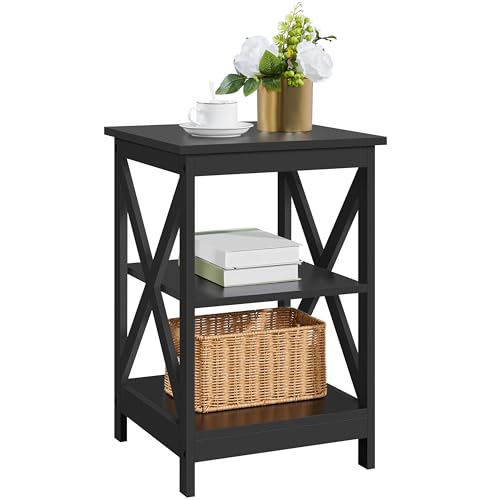
Key Takeaways
- The classic shelf-table format is the all-round benchmark: best balance of stability, storage and everyday usefulness.
- Lightweight entry designs earn their place in adult, low-traffic rooms and lose it in family rooms, where their lightness is the risk.
- Tiered storage designs hold the most per inch of floor — provided the contents display well and the heaviest items live lowest.
- Round accent tables trade surface for safety of passage: no corners at hip or toddler height along the walkway.
- Every design in this comparison must pass the same in-position test — corner press, gentle rock, load rehearsal — and tall or narrow tables in homes with children need a wall anchor regardless of brand or tier.
- Second lives matter in a close call: the classic and framed designs transition to nightstand and office duty most easily, which is worth real money across a table’s lifespan.
In this guide
The Line-Up at a Glance
| Design | Badge | Format | Storage | Tier | Strongest suit |
|---|---|---|---|---|---|
| Convenience Concepts Oxford End Table | Best Overall | Classic four-leg with shelf | Open lower shelf | Mid | Family living rooms |
| Furinno Simplistic End Table | Best Budget | Compact lightweight frame | Minimal | Entry | First homes, spare rooms |
| Yaheetech End Table | Best Storage | Tiered open shelving | Multiple open tiers | Entry to mid | Readers, crafters |
| Nathan James Mina Side Table | Best Accent | Round accent table | Top only | Mid | Reading corners |
| VASAGLE End Table | Best Industrial | Metal frame with shelves | Open shelf tiers | Mid | Modern rooms |
| Kate and Laurel End Table | Best Decorative | Decorative accent table | Varies by design | Premium | Finished, styled rooms |
Badges mark roles, not a league table. The sections that follow review each design in full, then compare the field on the criteria that decide ownership — because the right question is never which of these is best, but which is best for the seat, the room and the household it will actually serve.
How the Comparison Was Judged
Each design was assessed on five criteria, weighted in the order households feel them. Stability first: base width relative to height, leg placement, bracing, and behaviour under the corner-press test in position. Surface and storage second: whether the top rehearses well against a real evening load of lamp, drink, book and phone, and whether the storage format matches the clutter it will meet. Fit third: how forgiving the design’s proportions are against typical sofa arms and gaps, and how it behaves in the walkway. Traffic behaviour fourth: how the finish and structure take the daily regime of mugs, condensation, bumps and dusting. Care fifth: the maintenance the design demands to stay tight, planted and presentable across years. Tier positioning is reported honestly for each design but was never allowed to substitute for the criteria — in this category, an expensive table can fail the first test and a modest one can pass all five, and the reviews below say so where it happens.
One scope note, in the interest of the honesty this series aims for: these six designs represent the open-format mainstream of the category — shelf, tier, frame and accent schools. Drawer and cabinet end tables, which trade the open look for hidden storage, are the comparison’s neighbouring territory rather than its subject, and they are covered as a format in the buying guide linked above. If your household’s clutter needs hiding rather than displaying, start there; if it needs organising in the open, the six below are the field to choose from, and one of them is right for your seat.
A Word on Tiers, Since the Comparison Spans Them
The six designs span the category’s tiers from entry to premium, and a fair comparison should say what the money actually buys as you climb. At the entry tier it buys the format itself — a surface, a stance, a footprint — with lightness as the accepted compromise. In the middle tiers it buys structure: bracing, frames, shelves that stay tight, finishes that tolerate the daily wipe without negotiation. At the premium tier it buys design — silhouette, finish, presence — which is a real thing and worth paying for in a finished room, provided the structure underneath has not been traded away to pay for it. What money never buys in this category is exemption from the physics: the premium table tips under the same edge load as the entry one if its base is narrow, and the entry table stands as safely as any when it is wide, low-loaded and anchored. Buyers should therefore climb tiers for the reasons each tier is actually selling — structure in the middle, design at the top — and run the same tests at every level. The comparison’s badges were assigned on exactly that basis, which is why the overall badge sits in the middle of the range: in this category, the middle is where structure, storage and value most often meet.
End Table Reviews: The Designs in Full
Convenience Concepts Oxford End Table — Best Overall
The Oxford is the design this comparison keeps returning to, because the classic format it represents gets the fundamentals right in the right order. The stance is four-square, with the structure tied together by a lower shelf that does three jobs at once: it stores the book queue and the basket, it braces the legs against racking, and — loaded with the heaviest books in the house — it holds the centre of gravity low, which is the quiet physics behind the table’s planted feel. The top rehearses well against the standard evening load, with room for a lamp set toward the wall and a drink on its coaster without either crowding the other. In traffic it behaves like furniture rather than décor: nothing about it asks to be tiptoed around. Its limitations are the format’s limitations, honestly worn. The open shelf displays what it stores, so the household whose clutter is not presentable will see its mess faithfully reflected. The traditional styling, while it blends with most living rooms, will not satisfy a buyer looking for a statement. And like every table here, it must be anchored if it will serve within a toddler’s patrol. None of those caveats displaces it: measured against its seat and set up properly, this is the end table most households should buy first and compare everything else against.
Best for: family living rooms and first end-table purchases. Not suited for: hiding clutter, or strongly contemporary rooms wanting a sculptural piece.
- Strengths: planted four-square stance; shelf adds storage, bracing and ballast; versatile traditional look.
- Trade-offs: open storage on display; styling is safe rather than striking.
Furinno Simplistic End Table — Best Budget
The Simplistic is the entry tier with its priorities straight: a compact surface, a small footprint, straightforward assembly, and nothing spent on pretending to be more. In the right context it reviews well — the spare room that needs a lamp and a water glass, the first apartment furnishing three gaps at once, the rental where furniture must move easily and often. Its small scale suits tight gaps that the classic format would crowd, and its simplicity means there is little to go wrong beyond the one thing that matters. That one thing is weight, or rather the lack of it. A lightweight table is the easiest in this line-up to shift with a bump, to drag while dusting, and to tip under an edge load, and this review’s conditions are therefore at their strictest here: place it against a wall, load it lightly, keep the lamp small and toward the wall, and anchor it without debate if children are in the home. Within those conditions it is an honest product that does an honest job. Asked to anchor a busy family room, it is simply the wrong tool, and no badge in this comparison should be read as saying otherwise.
Best for: renters, first homes, spare rooms and low-traffic corners. Not suited for: primary family-room service or unanchored use around children.
- Strengths: entry-tier positioning; compact footprint; simple, quick format.
- Trade-offs: lightest table here — placement and anchoring discipline are essential; minimal storage.

Yaheetech End Table — Best Storage
Yaheetech’s tiered approach answers the category’s most common complaint — the top is too small — by going vertical. Multiple open levels in a single footprint give the reader a library, the crafter a project station and the organised household a display-and-store system that genuinely absorbs what a bare top cannot. Reviewed on capacity per inch of floor, nothing else in this line-up is close. The conditions are structural. A tiered table is taller in effect than its top suggests, because its usefulness invites loading at every level, and the loading rule is absolute: heaviest items on the lowest tier, always, with each shelf checked for flex under its real load before the lamp goes on top. The openness that makes the tiers useful also makes them visible — this is storage for households whose things look well on shelves, and it will not hide a single charger. Assembly deserves care too, since more levels mean more joints to keep tight. For the right household — book-heavy, display-happy, disciplined about loading low — it is the most capable design here. For the household that tidies by hiding, the drawer formats discussed in the end table buying guide will serve better.
Best for: readers, crafters and open-storage households. Not suited for: hiding clutter, or loading heavy items on upper tiers.
- Strengths: highest storage capacity in the line-up; vertical use of a small footprint.
- Trade-offs: fully open storage; demands load-low discipline and flex checks.

Nathan James Mina Side Table — Best Accent
The Mina represents the round accent school, and its review turns on a trade the other designs do not offer: surface area exchanged for passage safety and softness of line. In a room of rectangles — sofa, rug, media unit, coffee table — a round table is the visual rest the eye wants, and along a walkway its lack of corners is a daily, physical kindness at hip height and at toddler forehead height alike. As a reading-chair companion it is close to ideal, holding lamp, book and drink in a composed little arrangement. The honest costs are capacity and scrutiny. The round top holds less than a rectangular one of similar width, and the lamp-plus-two-books arrangement becomes a negotiation. And because accent designs vary in their bases more than any other school, this is the pick where the in-position tests matter most: corner-press equivalent — press the rim at several points around the circle — and a gentle rock, before the lamp is trusted to it. Passed, it is the most charming table in the comparison. It asks only that you buy it for the corner it suits rather than the load it cannot carry.
Best for: reading corners, styled rooms, walkway-adjacent placements. Not suited for: maximising surface, or heavy multi-object loads.
- Strengths: corner-free passage safety; accent styling; composed small arrangement.
- Trade-offs: least top capacity here; base stability must be verified in position.

VASAGLE End Table — Best Industrial
VASAGLE’s framed formula — a defined metal frame carrying panel shelves — reviews as the modern room’s workhorse. The frame is the story: it assembles into a squarer, more rigid structure than all-panel designs at a similar tier, and rigidity is what keeps a table feeling planted through years of bumps and dusting. The shelf tiers take baskets and books well, giving the design real storage credibility in the open format, and the industrial styling pairs naturally with the metal-and-fabric language of contemporary sofas and media furniture. The review conditions are maintenance-shaped. Framed tables announce looseness early as a faint rattle at a joint, which is useful information if you act on it — a quarter-turn at the fixing restores the planted feel — and a slow decline if you do not. The look is also a commitment: in a traditional room this design reads as a visitor, not a resident. For modern rooms wanting open storage with structural confidence, it is the strongest alternative to the classic benchmark, and the head-to-head between the two is mostly a styling decision once both have passed the stability test in position.
Best for: modern and industrial-leaning rooms, open shelf storage. Not suited for: traditional schemes, or owners who will never re-check a fixing.
- Strengths: rigid framed construction; useful tiers; contemporary styling.
- Trade-offs: room-specific look; joints need periodic attention.
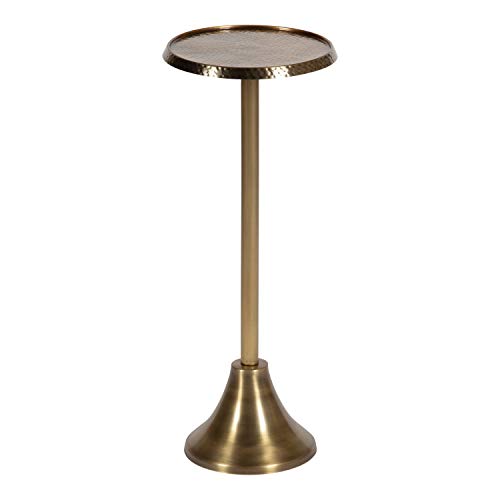
Kate and Laurel End Table — Best Decorative
The premium decorative school is reviewed on different first principles: the table is bought to complete a room, and its surface is almost a by-product. Judged that way, Kate and Laurel’s designs deliver — the silhouettes and finishes in this school are the ones guests notice and photograph, and in a finished guest room, a formal living room or a styled reading corner, that is a legitimate and complete job description. This comparison’s discipline still applies, and at this tier it applies with interest, because decorative designs include the category’s most theatrical bases. The review protocol is unchanged: measure the base against the height, press the rim in position, rehearse the real load, and protect the finish with coasters as household law, since decorative finishes record use more honestly than workhorse ones. A premium table that passes those tests is a fair purchase for the room it completes. A premium table bought on silhouette alone, in a family traffic line, is the most expensive way in this line-up to learn the article’s opening principle.
Best for: finished rooms, guest rooms and styled corners. Not suited for: high-traffic family zones or coaster-free households.
- Strengths: design and finish quality; completes a styled room.
- Trade-offs: premium positioning; finishes need protection; base must be verified, not assumed.
A Month of Evenings: Living With Each School
Specifications separate these designs on paper; evenings separate them in fact. The classic shelf table’s month is uneventful in the best way — the shelf finds its permanent residents within a week, the top settles into its lamp-and-current-book arrangement, and the table disappears into the room’s routines. Its one recurring moment is dusting day, when the open shelf’s contents must be lifted and replaced, a two-minute tax on display storage. The lightweight entry table’s month is defined by placement: against a wall in an adult room it serves without incident, while in a busy room its tendency to shift a little with every bump becomes the household’s small recurring chore — nudging it back, straightening the lamp — until someone fits the anchor or moves it somewhere quieter, after which it too disappears into routine.
The tiered design’s month is the most active. Its levels invite constant small curations — the book queue rotates, the craft project expands, a plant arrives — and households that enjoy that enjoy this table most of all. Its risk month is the one where loading discipline slips, when a heavy object migrates to an upper tier for convenience and stays; the flex check exists for exactly that drift. The round accent table’s month is social: guests notice it, the walkway thanks it nightly, and its owner learns its capacity by heart — lamp, book, drink, nothing more — and either makes peace with the limit or starts eyeing a companion piece. The framed industrial table’s month is mechanical: silent if its joints were tightened in sequence and re-checked at week four, faintly vocal if they were not. And the decorative table’s month is visual — it completes the room every single day, and asks in return that coasters be treated as law and that its base, verified on day one, be left in the placement that passed the test. None of these months is a bad month. Each is simply a different ownership texture, and choosing between these designs is, more than anything, choosing which texture your household will enjoy living inside.
Materials Across the Line-Up
Material cuts across the six designs and deserves its own comparison, because two tables of identical format in different materials are different ownership propositions. Traditional wood and wood-look finishes — the classic school’s home ground — bring warmth and a forgiving relationship with touch-ups, and they hide the small marks of traffic better than any glossy surface. Engineered panels with modern laminates, common across the entry and framed designs, are the easiest surfaces in this comparison to keep clean: a wipe restores them, and their consistency suits modern rooms. Their weakness is the seam and the edge, where sitting moisture does its quiet work, so the coaster habit matters more, not less, for the easiest-care material in the line-up — a small paradox worth remembering. Metal frames contribute rigidity and a clean line, ask for felt pads under hard objects, and telegraph looseness early, which this comparison counts as a virtue. Glass, present in the wider decorative school though not the headline six, remains the specialist’s choice: unmatched visual lightness, unmatched fingerprint visibility, and a firm requirement for tempered construction on a verified base in any home with children. Across every material, the edge of the top proved the detail owners physically meet most — eased edges forgave, sharp edges reminded — and it is worth a line in any buyer’s notebook alongside the grander criteria.
Head-to-Head: the Criteria That Decide
Stability
Ranked by inherent stance rather than by tier: the classic Oxford format leads, its corner-set legs and low shelf producing the most planted feel under the corner-press test. The framed VASAGLE follows closely when its joints are tight. The tiered Yaheetech is sound when loaded low and top-heavy when not — its ranking is in the owner’s hands. The round Mina and the decorative Kate and Laurel designs vary by base and must be individually verified. The lightweight Furinno ranks last by physics, not by fault: it is the table most dependent on wall placement and anchoring. In a home with children, apply the anchor rule to all six and the ranking becomes a comfort rather than a safety question.
Surface and Storage
For raw capacity the Yaheetech’s tiers win outright; for balanced everyday storage the Oxford’s single low shelf is the most usable, because it takes the book queue and the basket without demanding display discipline at several heights. The VASAGLE’s tiers sit between the two. The Mina’s round top is the smallest working surface here and proud of it — it is a composed arrangement, not a holding area. The Furinno and the decorative designs treat storage as incidental. Households should choose this criterion by their clutter type, as the storage analysis in end table pros and cons sets out: hiders need drawers, which none of these six majors in — a useful reminder that this line-up covers the open-format mainstream, and the cabinet school is the alternative when hiding is the requirement.
Fit and Placement
All six must be matched to the arm height of their seat — the comparison cannot do that for you, and the measuring method in how to choose an end table remains the deciding step. Within that, the Furinno’s compact footprint fits the tightest gaps, the Mina’s round profile fits the tightest walkways, and the Oxford and VASAGLE fill a standard sofa-side gap most completely. Small-room buyers should also consult the dedicated small-space selection in end tables sized for small spaces, where footprint discipline is the whole game.
Care and Longevity
The workhorse finishes — the Oxford’s traditional surfaces, the VASAGLE’s panels — tolerate the coaster-and-wipe regime with the least ceremony. The Yaheetech asks for dusting at several levels. The Mina and the decorative designs ask for coaster discipline to protect the look you paid for. All six ask for the same structural care: a re-tighten after the first month, a stability re-check every few months and after every move, and an anchor check wherever one is fitted. Longevity in this comparison is less a property of the designs than of the owners, which is perhaps the most useful sentence in it.
Verdicts by Household
Family living room: the Oxford, anchored, books low — the comparison’s clearest verdict. First apartment or rental: the Furinno where traffic is adult and placement is against a wall; step up to the Oxford if the room is the household’s centre. Reader’s home: the Yaheetech for the book-rich, the Mina for the one-book purist. Modern room: the VASAGLE, with the Oxford as the traditional counterweight. Finished, styled room or guest room: Kate and Laurel, verified in position. Still undecided on the category itself: the value case is argued in is an end table worth it, and the neighbouring surfaces for shared seating are compared in coffee tables for board games.
Second Lives: the Line-Up Reconsidered
End tables outlast room schemes, so this comparison also graded each design on its second career — the nightstand, hallway, office-corner and guest-room roles it may inherit. The classic Oxford transitions best: its shelf-and-top format is a natural nightstand, its traditional look survives most redecorations, and its stance suits every placement that includes a wall to anchor to. The VASAGLE follows it into home offices and modern bedrooms without missing a step, its tiers as useful for reference books and chargers as for living-room baskets. The Yaheetech’s second life is the organised hallway or the craft room, anywhere vertical open storage is the point. The Mina graduates to the guest room and the reading corner permanently — roles it was arguably always auditioning for. The Kate and Laurel designs hold their value as finishing pieces wherever the room they complete happens to be, provided the move includes a fresh stability check in the new position. The Furinno’s second life is the shortest but the most mobile: it is the table that follows a household through rentals and rearrangements, always useful, never precious. None of this should override the first-placement decision — buy for the seat in front of you — but in a close call between two designs, the one with the longer second life is the rational tiebreak, and it is a criterion no listing will ever score for you.
The Cost of Choosing Wrong, by Design
A comparison should also price its mistakes, qualitatively at least. Choose the lightweight design for a family room and the cost is vigilance: a table that must be watched, repositioned and eventually replaced or exiled to a quieter room. Choose the tiered design for a hiding household and the cost is exposure: every charger and remote on permanent display, and a room that never quite looks tidy however good the table is. Choose the round accent for a book-heavy seat and the cost is overflow — the stack on the floor beside the beautiful table, which is the floor’s old job returning. Choose the decorative design for a coaster-free household and the cost is written on its finish within the season. Choose any design at the wrong height and the cost is the smallest and the most relentless: a reach that registers, every evening, for years. And choose any tall, narrow design for a toddler’s territory without an anchor, and the cost is the one this comparison refuses to soften — a risk no styling justifies. Read backwards, the list is a buying guide in negative: match weight to traffic, format to clutter, capacity to load, finish to habits, height to the seat, and anchoring to the household’s smallest members, and there is no wrong choice left in the line-up. The positive version of the same method is the end table buying guide, and the two-sided ledger behind it is in end table pros and cons.
Testing Notes: the Corner-Press Test, School by School
Because stability leads this comparison’s criteria, the test that measures it deserves its own notes. The method is deliberately simple, so any buyer can repeat it on delivery day: with the table assembled and standing in its final position on the room’s actual floor, press down firmly on the front corner of the top — the corner furthest from the wall — then on each remaining corner, watching and feeling for lift at the opposite feet, rock across either axis, or flex in the structure. Then load the table as it will live — lamp, books, the evening’s objects — and repeat. A table that stays planted through both rounds has passed the only stability examination that matters, because it reproduces, in miniature and in safety, the loads that tip furniture in real life: weight arriving at an edge, from the room side, without warning.
By school, the pattern is consistent enough to guide a purchase. Four-leg designs with a low shelf or stretcher bracing — the classic school — pass most forgivingly, because their geometry spreads an edge load across the widest base and their shelf load pulls the centre of gravity down. Framed designs pass when their joints are fully tight and announce any shortfall as movement at the frame, which is correctable on the spot. Tiered designs pass or fail by their loading: books low, tiers honest, and they pass; a heavy object parked high, and the test finds it immediately — which is the test doing its job, not the table failing yours. Round and pedestal-leaning designs concentrate the question onto the base, and the test should be run at several points around the rim; a wide, weighty base passes calmly, a narrow decorative one declares itself at the first press. Lightweight designs move most under the test, and their passing grade is conditional: against the wall, lightly loaded, anchored where children are concerned. Run the test on whatever you buy, from whatever school — it takes two minutes, it cannot be faked by a photograph, and it converts this comparison’s first criterion from opinion into evidence in your own room.
Pairs and Combinations From This Line-Up
Because many sofas want two tables, the comparison closes its analysis with the combinations that work. The matched Oxford pair is the formal default — equal service, level lamps, a settled room — and the safest recommendation for a family sofa. The Oxford-and-Mina combination is the lived-in favourite: storage and ballast at the busy end, corner-free charm at the reading end, heights matched so the lamps align. The VASAGLE-and-Yaheetech pairing serves the modern, storage-hungry room, all open tiers and frames, and demands the tidiest household of any combination here. Two Furinno tables are the renter’s pair — light, movable, honest — with the standing instruction that both live against walls and lightly loaded. And the Kate and Laurel designs pair best with restraint: one decorative table as the room’s jewel, balanced by a quieter classic at the other end, rather than two statements competing across one sofa. In every combination the rules repeat themselves — match heights, anchor where children are concerned, load low — because pairs do not dilute the category’s physics; they double the number of places it must be respected.
How to Choose Between the Final Two
Most buyers who reach this comparison end with two candidates, and the final choice is best made by rehearsal rather than by re-reading. Put both designs’ footprints on your floor in painter’s tape, at the actual gap beside your actual sofa, and live with each outline for a day: walk the walkway, sit in the seat, reach sideways to where the top would be. The outline that your body stops noticing is the right footprint. Then rehearse the load for each: the lamp, the drink, the book stack, the basket — arranged on a tray of the candidate’s top size, or across the shelves the candidate offers — and look at what each format does to your real objects. One design will organise them and the other will merely hold them, and that difference is the ownership experience in miniature. Finally, apply the household test: who bumps this spot, who leans here, who is learning to stand against this furniture — and whether the candidate’s stance, plus an anchor where needed, answers them. If both designs survive all three rehearsals, choose on styling and tier without guilt; the comparison has done its work, and at that point there is no wrong answer left. If one fails a rehearsal, believe the rehearsal over the photograph, every time. The method generalises beyond this line-up, and it is written up as a complete routine in how to choose an end table for buyers comparing designs beyond these six.
Home worker on the sofa: none of these six is a desk, and this comparison will not pretend otherwise — but as the drinks-and-notebook station beside a laptop worker, the Oxford’s shelf and stance serve best, keeping liquids planted and separate from the keyboard. Frequent host: one fixed table from this line-up plus a nesting set for guest nights beats two fixed tables in most rooms; among the six, the Mina’s corner-free profile is the kindest to a crowded room’s circulation. Guest room: Kate and Laurel for the finished look, or the Oxford if guests’ clutter needs a shelf — and in either case choose the design a stranger finds obviously sturdy, because guests do not know your furniture’s habits and should never need to learn them.
Delivery Day: the Comparison Continues at Home
A comparison article can narrow six designs to your final one; it cannot finish the job, because the last examination happens in your room. Treat delivery day as the final round of this comparison and run it properly. Assemble the table on a soft surface, fixings tightened in sequence. Stand it in the exact gap it will occupy — not near it, in it — and check the three fits: height against the sofa arm as you sit, footprint against the walkway as you pass, and lamp position against the light you actually read by, in the evening, not at noon. Run the corner-press test from the notes above, unloaded and then loaded with the table’s real residents. Rehearse the evening: sit, reach, set down, pick up, twenty times in imagination and twice in fact. If the table passes, fit the anchor where the household requires one, route the lamp cord out of foot traffic, and keep the packaging for the first week while the room delivers its verdict. If it fails — wrong height, wrong stance, wrong presence — send it back while sending back is a formality, and order the design your measurements now describe with total precision. This is not indecision; it is the comparison method completing itself, and the households that allow it are the ones whose tables, years later, nobody in the house ever thinks about at all.
The Short Version, for Readers in a Hurry
If the whole comparison must shrink to a paragraph, it is this. Buy the classic shelf table if you are buying one table for a normal living room and want the decision finished. Buy the lightweight design only for quiet, adult, wall-side duty. Buy the tiers if your clutter displays, the round table if your walkway is tight or your reader is devoted, the framed design if your room is modern and your storage open, and the decorative piece if the room is finished and the table is its final touch. Measure your sofa arm before any of it, test the winner in position on delivery day, load it low, anchor it where children are concerned — and then enjoy the most-used small surface in your home for years, whichever badge it wears.
Detail by Detail: Reading a End Table Listing Like an Inspector
Listings present a end table at its best, so this section slows the assessment down and looks at the evidence an individual model offers: its construction, its finish, its listing detail and the checks you can run before and just after it arrives. The aim is a verdict based on inspection rather than impression.
Start With Your Space and Your Routine
Do not let a single impressive feature distract you from a basic mismatch in size, capacity or care needs, since basics decide satisfaction long after features stop being novel. Decide in advance which single feature you would refuse to compromise on, and let that one priority settle ties between otherwise similar end table choices. When something about the end table starts to annoy you, note whether the cause is the product itself, its position, or the way it is being used, since each cause has a different and usually cheaper fix. If the listing offers accessories for the end table, decide which ones solve a problem you already have, and set aside the ones that only solve problems the listing itself invented.
Consistency is the detail to hunt for in a end table: consistent gaps, even finish, matching parts and smooth actions usually indicate care in manufacture that shows up later as reliability. Where the end table has moving parts, work them through their full range during your first checks, listening and feeling for roughness that a photograph cannot show. Apply the same checks to each shortlisted example, whether that is the Furinno Simplistic End Table; the Convenience Concepts Oxford End Table; the Kate and Laurel End Table, because consistent testing is what makes the differences between models visible. Households with children or pets put different demands on a end table than the listing photographs suggest, so judge edges, stability and cleanability against your real household, not a styled one.
Think about the season in which the end table will work hardest, and judge it against that season rather than the mild week in which you happen to be shopping. Look for the detail photographs in the listing, not just the wide shots, and zoom in on edges, joints, fasteners, controls and finishes, which is where build quality usually shows itself first. A slight wobble, a stiff action or a small misalignment on day one rarely improves on its own, so address it during setup while adjustments are still easy to make. Start by writing down the job the end table has to do in your home, in one plain sentence, before you look at another listing, because a clear job statement turns a long shortlist into a short one.
When Small Problems Appear
Keep the fittings, spare parts and instructions that come with the end table together in one labelled place, because the part you need in a year is always the one that was put somewhere safe. A single end table can be well made and still wrong for your home, so keep two verdicts separate as you assess it: the quality verdict and the fit-for-your-life verdict. Take a photograph of the space before you order and mark the intended position of the end table on it, then revisit that photo whenever a listing tempts you toward a larger or different style. Plan where the packaging and any old item being replaced will go on delivery day, a small step that prevents a rushed, careless first setup of the new end table.
Beware of choosing a end table for a rare occasion, such as a large gathering once a year, if that choice makes everyday use worse for the other fifty-one weeks. A good test is the two-week question: imagine the end table after a fortnight of ordinary use, with no special effort from you, and ask whether you would still choose it. Consider the busiest version of the day, not the calmest one, and ask whether the end table still works when people are hurrying, carrying things or sharing the same space. Recheck any adjustable part of the end table after the first week of use, once materials have settled and the household has stopped being careful with it.
Compare how each option handles the in-between moments, such as being half full, partly open, moved aside or used in a hurry, because daily life happens mostly in those moments.
A Short Decision Checklist
- The one feature you will not compromise on
- The material and finish, matched to light, moisture and wear in its spot
- Packaging kept until the end table has passed its first trial in place
- The measured space, including clearance to use and clean around the end table
- What your current arrangement does badly that the end table must fix
- What your current arrangement does well that the end table must not lose
- Assembly needs, tools required and whether help is needed
- The main job the end table must do, written in one sentence
Taken together, these checks take only a little time, yet they answer the questions that decide whether the end table suits your home, your household and your routine, and they do so before money changes hands rather than after.
Frequently Asked Questions
Which end table is best overall?
For most households, the classic shelf-table format represented here by the Convenience Concepts Oxford: it balances stability, storage and everyday usefulness better than any other school, and its lower shelf doubles as ballast when loaded with books. Best overall is always conditional on fit, though — the right height against your sofa arm matters more than any badge, including this one.
Are budget end tables worth buying?
Yes, in the right context. A lightweight entry design serves spare rooms, rentals and low-traffic adult corners honestly and at an accessible tier. Its limits are physical: it must be placed against a wall, loaded lightly and anchored if children are in the home. The mistake is not buying a budget table; it is asking a budget table to do a family room’s anchoring job.
How do I compare end tables for stability?
Compare base width against height, legs at the corners against inset or pedestal supports, and bracing — a lower shelf or stretcher — against none. Then verify in position: press firmly on each corner or rim point and rock the table gently on both axes. Any design that lifts or rocks under that test needs its fixings, its placement or its anchor sorted before it is loaded, whatever its tier.
Which end table is best for small spaces?
For the tightest gaps, a compact design like the Furinno; for tight walkways, a round design like the Mina, whose lack of corners keeps passage comfortable; for small rooms that still need storage, a tiered design that goes vertical. Measure the gap and the walkway first, and let those numbers — not the styling — produce the shortlist.
Do any of these end tables hide clutter?
The six designs compared here are open-format specialists: shelves and tiers store and display, but they do not hide. If your household’s clutter needs a door or a drawer — chargers, remotes, medication, controllers — choose a cabinet or drawer-format end table instead, and treat these six as the comparison set for open storage. Matching format to clutter type matters more than any other choice in this category.
Should I buy a matching pair from this line-up?
Only if both ends of your sofa are genuinely used every evening and the room is formal enough to want symmetry. Most households do better with one table placed where the use is, or with two different designs balanced in height so their lamps align. The comparison above supports mixing: a storage design at the busy end and an accent design at the quiet end is a legitimate, often ideal, pairing.
Related Guides
- end table review
- end table buying guide
- swivel chairs for the living room
- end tables for modern homes
- how to choose an end table step by step
Whichever design you choose from this comparison, choose it the way the comparison was built: measurements first, format second, stability always — and the table at your elbow will earn its place every evening it stands there.


