Disclosure: As an Amazon Associate, dailyhomedecorating.com earns from qualifying purchases. Links on this page are affiliate links; they cost you nothing extra. Prices and availability change often, so check the current Amazon listing before you buy.
Is an electric fireplace worth it? The honest answer is that the question has no universal reply, because the product’s value is not stored in the product — it is generated, evening by evening, by the match between the fireplace and the household that owns it. For the household that gathers in one room, in a home where a real fire is impossible or unwanted, the answer is an emphatic yes that owners repeat for years. For the household hoping to heat a whole house from a wall outlet, or furnishing a room nobody sits in, the answer is an equally emphatic no. This article exists to locate your household on that map before money moves: what you actually get, what it really costs beyond the price, the profiles it pays off for, the profiles it never will, and a closing checklist that converts the whole discussion into a decision.
Short answer. Worth it if your evenings happen in one main room, if that room lacks a focal point or has a dead one, if a real fire is impractical, prohibited, or simply more work than your life has room for, and if you will use the flame — including its heat-free mode — most days of the year. Not worth it if your real problem is a cold house needing heating-system help, if the room in question is rarely occupied, or if your household’s love of fire is specifically a love of combustion — the smell, the sound, the tending — because no light effect, however excellent, repays a buyer who wanted the thing itself. Between those poles sits a large, honest middle of households for whom the answer is “worth it, in the right format, at the right tier” — and the rest of this article is devoted to telling them exactly which format and tier that is, and to giving the households at the poles the confidence to act on their clearer verdicts without second-guessing.
Key Takeaways
- The value is generated by use: flame evenings per year, not features per listing, decide whether the purchase pays.
- What you get is three products in one object — a room’s focal point, a four-season atmosphere feature, and an honest zone heater.
- The real costs beyond money are floor space, a room’s layout committed around the unit, heater discipline, and electricity for the hours the heater runs.
- It pays off fastest for settled households with a dead hearth, a featureless main room, or a ban on combustion — and slowest for mobile households and heat-first buyers.
- Alternatives — a plain heater, a fireplace heater, restoring a real fire — each beat it for exactly one kind of household, and the article names them.
- The decision checklist at the end converts the argument into seven yes-or-no questions; five or more yes answers is the buying signal.
- The single most predictive number is flame evenings per year — count yours pessimistically before buying, because several hundred evenings make any tier look cheap and a few dozen make any tier look expensive.
- Worth is a property of rooms and routines, not of objects: the same unit is an emphatic yes in the living room it completes and a clear no in the spare room nobody sits in.
In this guide
Is an Electric Fireplace Worth It: What You Actually Get
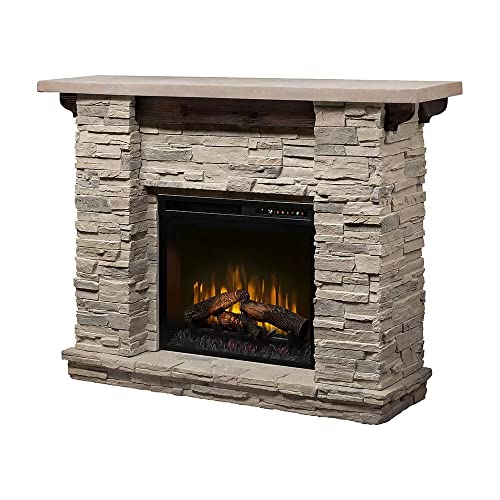
Strip the marketing away and an electric fireplace delivers three distinct goods, and a fair verdict has to price all three. The first is architectural: a focal point. Most modern rooms are arranged around a television or around nothing, and a fireplace — mantel, insert, stove, or linear panel — gives the room a centre that is not a screen. Furniture arranges itself better around it. Guests orient toward it. The room acquires the quality estate agents call a feature and families call the good end of the house. This good is delivered every hour of every day, lit or unlit, and for many households it is the largest part of the value, because it is the part no other appliance provides.
The second good is atmospheric, and it is delivered by the flame effect in both its modes. With heat, on winter evenings, the room gains the oldest signal of domestic comfort there is — a fire to sit by — with the labour, fuel, and risk of combustion entirely removed. Without heat, through the rest of the year, the flame continues as pure theatre: summer evenings, gatherings, the in-between weeks when the room wants a heart but not a heater. Owners consistently report that flame-only use outnumbers heating use across a year, which means the atmospheric good is not a bonus on the heating purchase; it is the main product, and the heater is the bonus. Any worth-it calculation that prices the unit as a heater alone has the product upside down.
The third good is thermal, and it must be described with the honesty this site insists on. An electric fireplace is a zone heater: it warms the room it sits in, delivers its comfort most directly to the people seated near it, and under a thermostat it holds that comfort steadily through an evening. Within that role it is genuinely valuable — it is the difference between a main room that is endured and one that is enjoyed, and it can let the rest of the home run cooler while the family is gathered in one place. Outside that role it is worthless, and the boundary is physical, not commercial: a wall outlet’s worth of heat, in one room. Households that buy the first two goods and use the third inside its boundary are the category’s satisfied majority. Households that buy the third good alone, at whole-house scale, are its disappointed minority — and the difference was never the product. It was the expectation, which is why this article spends so long on it.
The Real Costs Beyond Money
The price is the least interesting cost of ownership, and a worth-it verdict that stops there is incomplete. The first real cost is space and layout. A fireplace claims a wall or a floor patch and then, quietly, the room: seating turns toward it, traffic routes bend around it, the television negotiates with it. In a generous room that reorganisation is the product working as intended. In a small or awkward room it can be a tax paid daily, which is why format restraint — a stove instead of a package, a panel instead of a console — is a value decision and not merely a style one. The second cost is discipline. The unit is a heater, and it collects a heater’s rent forever: a cord that goes directly into a wall outlet and never through an extension cord or power strip; clearances kept clear of curtains, throws, and furniture for as long as the unit lives in the room; supervision while it heats; a switch-off rather than unattended running, in line with the manufacturer’s guidance. The discipline is light, but it is permanent, and households that resent permanent small disciplines should count that resentment as a cost before buying.
The third cost is running expense, and it belongs to the heater, not the flame. Flame-only evenings cost what a light display costs — very little. Heating evenings cost what electric heating costs in your area, for as many hours as the household runs it, and electric heat is rarely the cheapest fuel in the house. The zone logic can still win — one room warmed while the rest of the home stays cool is a real saving pattern — but it wins only when the household’s behaviour cooperates, which makes the running cost a prediction about your own habits rather than a property of the product. The fourth cost is eventual: appliances age. Fans tire, remotes vanish, models are discontinued, and a one-piece unit whose firebox fails can take the whole piece with it, while formats built around replaceable inserts let the furniture outlive the fire. None of these costs is hidden, and none is disqualifying. Together they describe the true shape of the commitment: not a price, but a decade-long arrangement between a household and an object — and worth-it questions are always, underneath, questions about whether that arrangement suits the household’s life.
Who It Pays Off For
The Household With a Dead Hearth
This is the category’s clearest yes. The room already has the architecture, the seating already faces the right wall, and the only missing element is a fire the building can no longer host — because the chimney is unsound, because burning is restricted, or because the household is finished with fuel and ash. An insert restores the room’s original purpose in an afternoon, at a fraction of the cost of chimney restoration, with no ongoing fuel or sweeping obligations. The value calculation is not even close: the alternative expenditures are a building project or a permanently blank wall, and against those, the insert’s price and discipline are trivial. If this is your household, the remaining questions are only about tier — which the flame-realism discussion in our electric fireplace reviews settles by viewing distance.
The Settled Household in a Featureless Main Room
The second clear yes is the family whose evenings reliably happen in one room that has never had a centre. For them the fireplace is not an appliance purchase but the completion of the room they live in, and its value compounds nightly: the gathering improves, the room photographs better, guests settle faster, and the zone warmth covers the hours they are actually there to feel it. The payback measure for this household is not energy arithmetic but evenings — and a product used most evenings, in some mode, for a decade, is cheap at any of the category’s tiers. The mantel package, the console, the linear panel, and the stove all serve this profile in different architectural dialects; the selection method in how to choose an electric fireplace picks the dialect.
The Household That Cannot or Will Not Burn
The third yes is defined by exclusion: renters whose leases forbid combustion, homes under burn restrictions, households with a member who cannot be around woodsmoke, families with toddlers and pets for whom an open flame is not a negotiable risk. For these households the electric fireplace is not the convenient alternative to a fire; it is the only fire available, and its value should be judged against absence rather than against a wood stove. Judged that way it is not merely worth it — it returns something the household had written off entirely, the gathering point around a glow, with a safety profile built for exactly their constraints: no flame, no sparks, no flue gases, and a heater’s manageable discipline in place of a fire’s considerable one.
Who Should Skip It
The Heat-First Buyer in a Cold House
If the honest problem is that the house is cold — failing system, poor insulation, a hard climate — an electric fireplace is the wrong purchase at any tier, because its thermal good is one room’s comfort and the problem is a building. The same money aimed at the actual problem — insulation, draught-proofing, heating repairs, or a serious room heater strategy of the kind surveyed in our guide to the best space heaters — returns warmth the fireplace cannot. This buyer is the category’s disappointed minority in waiting, and the kindest service this article can do them is refusal: fix the house first, and let a fireplace be a later pleasure rather than a present disappointment.
The Combustion Romantic
Some households love fire itself — the laying and lighting, the smell of woodsmoke on a coat, the sound of logs settling, the slow alchemy of fuel into ash. For them the electric version’s every virtue is a subtraction, and no flame tier closes a gap that is not visual but existential. This article will not argue them out of it, because they are right about their own experience. If the building allows a real fire, their money belongs to the hearth, the flue, and the woodpile. The electric fireplace is worth it only to households for whom the ritual was the price of the glow, never to those for whom the ritual was the point.
The Mobile Household
Short leases, imminent moves, rooms that re-purpose yearly, warmth needed in a different place each month — this household’s pattern defeats the product’s premise, which is a settled room and a permanent place. The freestanding stove softens the verdict, since it moves; but a household honest about its mobility will usually find its money better spent on the portable end of the comparison in our electric fireplace vs fireplace heater, keeping the fireplace as the purchase that celebrates the home they eventually settle in. Timing is a legitimate part of worth: the right product in the wrong chapter is the wrong product.
The Strengths and Trade-Offs of Owning One
Strengths of ownership
- A room completed: a focal point that organises furniture, evenings, and gatherings, delivered daily whether lit or not.
- A fire without a supply chain: no fuel, no flue, no ash, no sweeping — the ritual’s pleasure with the labour removed.
- Four-season usefulness: flame-only mode keeps the product earning its space in months when no heater should run.
Trade-offs of ownership
- Zone heat only: one room’s comfort from a wall outlet, forever bounded by that physics.
- A layout commitment and a heater’s permanent discipline: clearances, direct outlet connection, supervision.
- Running costs that follow electricity prices whenever the heater works, decided by the household’s own habits.
Alternatives to Consider
A worth-it verdict means little until the alternatives have had their hearing, and three deserve it. The first is the plain space heater: for a household whose need is warmth alone, it delivers the same zone heat with less money, less space, and no pretensions — and the fireplace’s entire premium, in that household, buys a flame they will not watch. The second is the fireplace heater, the portable middle: it keeps a modest flame, follows need around the house, and suits the mobile patterns the fireplace cannot; its full hearing is the head-to-head comparison already mentioned. The third is the real fire, restored: for the combustion romantic in a house that permits it, chimney work and a wood supply buy the genuine article, with its labour and its risks accepted as part of its meaning. Each alternative is the right answer for exactly the households this article has told to skip the electric fireplace, which is how a verdict earns confidence — not by defeating the alternatives, but by assigning each product to the household it serves. Representative forms of the electric option itself, for readers whose verdict is leaning yes, are the classes below.
Duraflame 3D Infrared Electric Fireplace Stove — The Lowest-Regret Yes
For households whose verdict is yes but whose certainty is young, the stove class is the safest form of the commitment: no installation, full portability, a convincing flame, and an exit — another room, another home, another owner — that costs nothing. Best for: first-time yes households. Not suited for: buyers certain enough to build in.

Dimplex Revillusion Electric Fireplace Insert — The Definitive Yes
For the dead-hearth household, the insert class is the purchase this article rates most clearly worth it in the whole category: a room’s original purpose restored, at the deepest level of illusion available, for a decade of evenings. Best for: owners of unused fireplaces. Not suited for: any room without the opening.
Touchstone Sideline Electric Fireplace — The Architectural Yes
For the media-room household, the linear class converts a wall from a screen’s backdrop into the room’s feature, and its worth is measured in the room’s transformation rather than in any appliance comparison. Best for: contemporary rooms being built or rebuilt. Not suited for: households in transition.
How to Get the Most Value If You Buy
For households whose verdict is yes, value is not finished at the purchase — it is compounded or leaked by habits, and the compounding habits are specific. Use the flame-only mode liberally: it is the cheapest ambience in the home, and every flame-only evening is value the heating-only calculation never counted. Run the heater by thermostat and timer rather than by hand, so the warmth is a background condition of the evening instead of a series of decisions. Place the unit once, correctly — warmth aimed at the seating, cord directly into the wall outlet, clearances generous — because a well-placed mid-tier unit outperforms a badly placed premium one every night of its life. Layer the room to keep what the heater gives: curtains drawn at dusk, a rug defining the seating zone, the door closed on the warmed room — the same layering logic our best blankets for living room coverage applies to textiles. Keep the ten-minute seasonal care — dusted intakes, a clean viewing panel, a supervised first heat run of the season — because flame crispness and airflow are the product’s visible quality, and both are maintained free. Give the remote a home. And keep the manual’s clearances and the manufacturer’s guidance as the house rules they are, because the safety discipline is not a tax on the value; it is part of what the household bought — a fire the whole family can use without a fire-keeper. Households that do these things report the category’s highest satisfaction, and notably, they report it about mid-tier units as often as premium ones — evidence that worth, in this category, is manufactured by fit and habit more than by tier. The full balance sheet behind that claim is set out in our electric fireplace pros and cons, and the product framework is in the electric fireplace buying guide.
One further habit deserves its own sentence because it protects all the others: keep the fireplace’s role in the room stable. Households that treat the unit as the room’s fixed centre — seating arranged to it, the television negotiated around it, its clear zone defended against the slow creep of storage and laundry and life — find that the product’s value steadies and even grows, because the room keeps paying the dividend the arrangement was designed for. Households that let the fireplace become a surface, a corner-filler, a thing pushed aside for projects, watch the value leak away without anything breaking. Nothing about the unit changed in either story. The arrangement did. Worth, once again, turns out to be something the household does — which is the most hopeful conclusion a worth-it article can offer, because it means the households who buy carefully and live deliberately with the product are not hoping to be repaid. They are repaying themselves, nightly, on a schedule they control.
The Decision Checklist
Answer honestly; count the yes answers. One: do your household’s evenings happen mainly in one room? Two: does that room lack a focal point, or have a dead fireplace at its centre? Three: is a real fire impractical, prohibited, unwanted, or more work than your life accommodates? Four: will the flame be used — lit, watched, enjoyed — most weeks of the year, including in its heat-free mode? Five: can the room give a unit its place, its direct wall-outlet connection, and its clearances without resentment? Six: is your warmth expectation honestly one room’s comfort, with the home’s main heating doing the rest? Seven: is the household settled enough that a piece of furniture-scale permanence is a pleasure rather than a risk? Five or more yes answers: buy, at the tier your closest seat demands, and expect the purchase to pay. Three or four: buy the flexible form — the freestanding stove — or pause for a season with a fireplace heater while the pattern clarifies. Two or fewer: skip it without regret, and spend the money on the alternative your answers pointed to. The checklist is not a sales device; it refuses as readily as it approves, which is exactly why its approvals can be trusted.
A word about the questions that most often get answered generously rather than honestly, because the checklist is only as truthful as its answers. Question four — will the flame actually be used — is the one households inflate, imagining a fireside self that their current evenings do not resemble; the corrective is to look at the last fortnight rather than the next year, and count the evenings the household genuinely spent in that room, in chairs, together. Question six — the warmth expectation — is the one households fudge in the other direction, telling themselves they understand zone heat while privately hoping for more; the corrective is to imagine the coldest week of last winter and ask whether one warm room inside it would have been enough, or merely a taunt. Answer those two questions from evidence and the checklist’s count becomes the most reliable prediction in this entire article — more reliable than any review, including the ones on this site, because it is built from the only data that ever decided the question: your own evenings, honestly counted.
The Arithmetic of Evenings
Since worth in this category is generated by use, it can be estimated with surprising honesty using one number: flame evenings per year. Count yours prospectively, the way the checklist counts answers. A household that gathers in its main room most nights, entertains monthly, and enjoys a fire’s presence across the shoulder seasons and into summer will log several hundred flame evenings a year between the heated and heat-free modes. Against that count, even a premium unit’s cost divides into a trivial sum per evening — less than the household spends on the lighting, the drinks, or the streaming subscriptions that accompany the same evenings — and the worth-it question answers itself arithmetically before it is ever argued aesthetically. A household that travels constantly, eats out, keeps its evenings in a study or a kitchen, or is buying for a room that hosts Christmas and little else will log a few dozen evenings, and against that count the same unit is an expensive ornament whose per-evening cost no flame quality can dilute. The arithmetic also explains the category’s most reliable satisfaction pattern: second purchases. Households that discover their true count was high buy again for another room without deliberation, because the first unit’s ledger is written in their own evenings. Households whose count was low never deliberate at all — the unit sits, and the lesson sits with it. Estimate your count before you buy, pessimistically, the way you would estimate attendance at any recurring event in your life. The number is the verdict in embryo, and everything else in this article — the profiles, the alternatives, the checklist — is that number wearing different clothes.
Worth It, Room by Room
The same fireplace returns different verdicts in different rooms of the same house, and walking the rooms exposes the logic cleanly. In the living room, the case is at its strongest: maximum occupancy, maximum evenings, a focal point’s full architectural effect, and warmth delivered to the household’s centre of gravity. In the main bedroom, the case is real but narrower — the pre-sleep hour of warmth and glow is genuinely valuable, the overnight hours are excluded by the discipline of switching the heater off before sleep, and the verdict depends on whether the household’s evenings actually include that room or merely end there. In the home office, the case is quietly excellent and frequently underestimated: one person, one room, long hours, a building otherwise unheated — the zone logic in its purest form, with the flame converting a workday’s endurance into something closer to a fireside shift. In the guest room, the case is about hospitality arithmetic: a dozen evenings a year, each one disproportionately memorable, in a room whose welcome is the product being bought — many households find a modest tier entirely sufficient here and the entry classes exist partly for them. In the dining room, the case is atmospheric only, and honest households admit the flame will be lit for occasions and ignored between them; a small, beautiful, flame-first unit is the proportionate answer. In a child’s room, the case should usually be declined: supervision discipline and sleeping hours make a heater the wrong resident, and the category’s glow is better borrowed from the living room the family shares. The walkthrough’s lesson generalises beyond this product: worth is a property of rooms and routines, never of objects — and the household that learns to ask “worth it where, and for whose evenings?” will make better decisions across its whole home, long after this particular question is settled.
What Owners Say a Year Later
The most trustworthy worth-it evidence is retrospective, and a year of ownership produces remarkably consistent testimony on both sides. Satisfied owners rarely lead with the flame’s realism or the heater’s strength, the two things they shopped for hardest. They lead with the room: it is finished now, it is where everyone ends up, the chairs have migrated, the evenings have a shape. They mention the flame-only mode with the surprise of people who discovered half their product after buying it. They mention guests. They mention, often, a specific relative — a parent who had given up fires, a child who reads by it — for whom the purchase turned out to have secretly been made. Their complaints are domestic and small: a remote that hides, dust on the logs, a wish that they had bought the next tier of flame for the chair that turned out to matter. Dissatisfied owners, with equal consistency, lead with the mismatch this article has catalogued: the house that stayed cold because the problem was the house, the flame that stayed unwatched because the room stayed unused, the unit that stayed in a box of a life because the household moved. Almost none of them describe a defective product. The year’s testimony, read whole, delivers the verdict this article has been building toward from its first paragraph: the fireplace does not determine its own worth. The household’s evenings do — and evenings, unlike specifications, can be known in advance by anyone willing to count them honestly.
The Second-Hand Angle: Worth It at Someone Else’s Tier
One route reshuffles the entire calculation, and a complete verdict should include it: buying used. The category’s durable formats — metal stoves above all, and furniture packages whose fireboxes are standard inserts — circulate in a healthy second-hand market, because the flame systems have no consumables and present used much as they presented new. For a household whose checklist count is borderline, a used mid-tier unit can convert a marginal verdict into a clear yes: the same evenings, the same room completed, at an entry-tier outlay, with the option to resell at little loss if the household’s pattern proves the pessimists right. The cautions are the heater’s cautions, doubled by an unknown history. Inspect the cord and plug as if they were the product — because electrically, they are. Run the unit supervised through full heat cycles before it earns an unattended moment, and apply the standing rules without exception: direct wall-outlet connection, clearances kept, no running while the household sleeps or is out. Confirm the manual is obtainable for the exact model, since its clearances are the law for that unit. And price in the remote: a missing one is a small, solvable cost on supported models and a daily irritation on orphans. Treated with that respect, the used route is not a compromise of the worth-it verdict. For the right household, it is the verdict’s most elegant form — all of the evenings, at a fraction of the commitment, with the category’s whole case proven in someone else’s living room first.
The Wider Ledger: Home, Household, and Planet
A complete worth-it accounting should acknowledge the entries households increasingly bring to the decision themselves. At the point of use, the electric fireplace is the cleanest fire a room can have: nothing burns, so nothing is emitted into the room or up a chimney that does not exist — no smoke over the neighbourhood on still evenings, no ash to dispose of, no fuel deliveries, no stored wood seasoning against the house. For households in smoke-control areas or under periodic burn restrictions, this is not an abstraction but the difference between having a fire and not having one. The wider footprint follows the household’s electricity supply, and households weigh that for themselves with their own supplier’s mix in view; the honest contribution this article can make is the usage point — a fireplace that lets a family heat one occupied room while the rest of the home runs cooler is a demand-reducing pattern, while one that adds heated hours to an already warm house is a demand-adding one, and the same product can be either depending on the habits around it. Within the home, the ledger has a social column that owners mention more than any other: the fireplace is the appliance most likely to be used by everyone, including the members of the household — grandparents, children under supervision, guests — who could not be given a real fire to run. A product whose benefits distribute across the whole household, rather than belonging to the person who bought it, earns its worth on a broader base than most purchases in the home. None of these entries decides a verdict alone. Together they explain why the category’s satisfied owners describe their purchase in terms that sound almost disproportionate to a heater with a light in it — because what they bought, and what this article has tried to price honestly from the first paragraph, was never only that.
The Break-Even Question: When a Electric fireplace Earns Its Space, and When It Honestly Does Not
Worth it is a personal verdict dressed as a product question. The same electric fireplace can be money well spent for one household and an expensive ornament for another, and the difference is almost never quality — it is frequency of use, fit with the space, and what it replaces. This section gives you a break-even way of thinking about the electric fireplace: a simple accounting of cost per use, space per benefit, and effort per result, plus the honest signs that your household should skip it, borrow it, or buy the simpler version instead. Run your own numbers through it before you decide.
The Arithmetic That Actually Matters
Start with cost per use. Take the full cost of owning the electric fireplace — purchase, any consumables, any accessories you genuinely need, and the space it occupies valued honestly — and divide it by a realistic count of uses in its first two years. Realistic is the key word: count the uses your calendar supports, not the uses your intentions promise in January. Then compare that figure with the alternatives you would actually use — hiring, borrowing, a service, or the simpler item you already own. A electric fireplace that wins that comparison on your real schedule is worth it almost regardless of its badge; one that only wins on an imagined schedule is not.
The Signs on Each Side of the Line
On the worth-it side: you already do the task or feel the gap weekly; you have measured the space and it fits with room to live around; someone besides the buyer will use it too; and you can name what it replaces or retires. On the skip-it side: the purchase is motivated by a rare event, a visitor, or a version of your routine you have never actually kept; the space only works if something else is moved into storage; or the honest plan is to change your habits first and buy later. Neither list is a judgement — households change, and a electric fireplace that fails the test this year may pass it easily after a move, a new job or a new family member.
Before you buy the electric fireplace, answer these five questions out loud or on paper:
- How many times did I genuinely need this in the last three months — not wished for it, needed it?
- What exactly does it replace, retire or stop me paying for, starting in its first month?
- Where does it live when idle, measured and checked, and what currently in that spot gets moved?
- Who else in the household will use it without being asked, and who will maintain it?
- If it stopped working in a year, would I replace it immediately, manage without, or feel quietly relieved?
Small households should weight compactness and easy storage more heavily, while large households should weight durability and simple operation, because the failure modes differ. If the electric fireplace will serve children or older relatives, test the key actions with the weakest grip and the shortest reach in the house in mind. Leave a little capacity unused — in size, storage or power — because a electric fireplace run permanently at its limit ages faster and annoys sooner than one with headroom. Notice which parts are replaceable and which are not; a electric fireplace whose wear parts can be swapped cheaply often outlasts a sealed design twice its price in spirit, if not in years. Consider the electric fireplace from the perspective of the person who cleans around it, because designs that trap dust, block access or demand special products quietly tax every week of ownership. Think about noise, light and heat as neighbours of the electric fireplace, not afterthoughts, since a choice that performs well but disturbs the room around it rarely stays popular for long. Remember that guests experience your electric fireplace without instructions, so anything that needs explaining, warning or demonstrating is worth simplifying before it is worth defending. Plan for the electric fireplace to be moved at least twice in its life — for cleaning, redecorating or a change of room — and favour designs that forgive being shifted, tilted or carried. Look at the edges and undersides when you judge build quality, because those are the places makers save money first and the places owners discover last. Ask how the electric fireplace behaves on your worst floor, wall or surface rather than your best one, since homes are uneven and listings are photographed in perfect rooms.
The last question is the sharpest: immediate replacement means the electric fireplace has become infrastructure in your home, and purchases like that are almost always worth it. Quiet relief means the opposite, however good the reviews were. Decide with your own arithmetic and your own answers, and whichever way the verdict falls you will have bought — or saved — with your eyes open, which is the only definition of value that survives contact with real life.
Frequently Asked Questions
Is an electric fireplace worth it for a small apartment?
Usually yes, and often it is the strongest case in the category. Apartments forbid combustion, restrict alterations, and concentrate life into one main room — the exact conditions the product was designed for. A freestanding stove or compact unit gives the room a focal point it almost certainly lacks, warms the space its occupants actually occupy, and leaves with the tenant when the lease ends. The conditions are the usual ones: the unit must plug directly into a wall outlet, its clearances must fit the room’s real furniture, and any lease clause about heaters must be honoured. Within those, the apartment household gets the category’s full value at its smallest scale. There is even a sense in which the small scale flatters the product: viewing distances are short, which suits mid-tier flames; rooms are single, which suits zone heat; and the focal-point effect in a small, previously featureless room is proportionally larger than in a house that already has architectural riches competing for the eye.
Does an electric fireplace add value to a home?
It adds the kind of value that is lived in rather than appraised. A finished focal point makes a room feel complete to everyone who enters it, including future buyers walking through — a mantel or insert in good order presents as a feature, never as an appliance. But no honest verdict should promise a financial return on the purchase, and this one does not. The return is measured in evenings: a room the household uses more, gathers in more, and enjoys more, for as long as they live there. Households that buy it as an investment in their own daily life are repaid; households that buy it as an investment in the property’s price are speculating, and should not.
Is it worth it if I already have central heating?
Yes — because the fireplace was never competing with the heating system. Central heating warms the building; the fireplace completes the room and concentrates comfort where the household sits. Many owners run their main system lower in the evening precisely because the fireplace’s zone warmth covers the occupied room, which is a legitimate pattern, but the core worth is the focal point and the flame, with the warmth as a genuine secondary good. If the room is already warm and already has a centre, the case weakens — the checklist’s second and fourth questions exist to catch exactly that household.
How long does an electric fireplace need to last to be worth it?
Less long than buyers fear, because the value is front-loaded into evenings rather than back-loaded into durability. A unit used most evenings reaches its payback in household terms — measured in gatherings improved, rooms completed, and cold corners civilised — within its first seasons, not its last. That said, the category’s better formats are built for a decade: light-based flames that ask nothing, furniture that outlasts its first firebox where inserts are replaceable, and makers who support their models with parts. Buy the format whose lifespan matches your horizon — a stove that can move and be resold, an insert whose surround can accept a successor — and the longevity question answers itself.
Is an electric fireplace worth it in a warm climate?
Surprisingly often, yes — because of the mode warm-climate buyers initially dismiss. The heater may run a handful of evenings a year, but the flame-only mode runs whenever the household wants its room to have a heart: evenings, gatherings, the mild months when a fire’s look is wanted and its heat would be absurd. A real fireplace in a warm climate is a dark hole for most of the year; an electric one is a feature in every month. The warm-climate verdict therefore hinges entirely on the atmospheric good — if the room wants a focal point, the purchase pays without the heater ever justifying itself; if it does not, no climate argument rescues it. Warm-climate buyers should simply run the checklist with the heating questions discounted and the atmosphere questions weighted double, and should favour the formats whose off-state and flame carry the purchase alone — a beautiful stove, a striking linear panel — since those are the goods their climate will actually let them collect.
What is the biggest reason people regret buying one?
Expectation mismatch, in two recurring forms. The first is thermal: a buyer who expected whole-home heat from a plug-in appliance discovers the zone limit in the first cold week and blames the product for a law of physics the listing let them ignore. The second is atmospheric: a buyer who purchased the entry tier for a main room discovers that a flame suggestion is not a fireside, and that the tier they saved on was the product they actually wanted. Both regrets are preventable before purchase — by the honesty about heat this article insists on, and by setting the flame standard from your real seat, the discipline our electric fireplace review applies to the category’s reference design. Regret, in this category, is rarely bad luck; it is a skipped question.
Bottom line. An electric fireplace is worth it when the household will live with it the way it is designed to be lived with: evenings in one room, a flame used in every season, warmth expected at the scale a wall outlet honestly provides, and a settled home ready to organise itself around a new centre. It is not worth it as a heating system, as a substitute for combustion’s ritual, or as furniture for a life in motion. The checklist above knows which household yours is. Trust its count, and whichever way it falls, you will have bought — or declined — the right product for the right reason. And if the count came out in favour and you are now standing where every satisfied owner once stood, between the decision and the delivery, take the article’s last piece of advice with you into the purchase: buy the format your room asks for, set the flame tier by your closest chair, place the unit once and correctly, plug it straight into the wall, and then stop evaluating it. The worth of an electric fireplace is not collected at the checkout. It is collected on the hundredth ordinary evening, when the room is warm, the fire is lit, nobody in the household remembers deciding any of it — and that, in the end, is what worth it means.