Disclosure: As an Amazon Associate, dailyhomedecorating.com earns from qualifying purchases. Links on this page are affiliate links; they cost you nothing extra. Prices and availability change often, so check the current Amazon listing before you buy.
Learning how to choose an electric fireplace is mostly a matter of sequencing. Buyers who struggle with the decision are almost never short of information — the listings provide too much of it, in the wrong order, weighted toward whatever photographs well. The method in this guide reverses the listing’s order. Room before product. Format before flame. Flame before features. Safety as a gate that every candidate must pass, not a section to skim at the end. Follow the steps in sequence and the market’s hundreds of models narrow themselves, step by step, until the choice is between two or three units that genuinely fit your home — at which point the decision stops being overwhelming and becomes a matter of taste, which is what it should have been all along. The short answer, for readers in a hurry: decide where the fire will live, choose the format that place allows, set your flame standard by the seat you will watch from, insist on a thermostat, a timer, and flame-only mode, verify that the unit can plug directly into a wall outlet with its clearances intact, and only then compare models and prices.
Key Takeaways
- Choose in sequence — room, format, flame, features — and let each step eliminate most of the market before the next begins.
- The format decision (stove, mantel package, wall-mounted, insert) is made by your building and your room, not by your taste.
- Your flame standard is set by your closest regular seat: the nearer and more oblique the viewing, the higher the flame tier you need.
- Heat expectations must be set qualitatively and honestly: one room’s comfort, delivered to the seating, never a whole home’s heating.
- The safety gate is absolute — a candidate that cannot plug directly into a wall outlet, or cannot keep its clearances in your room, is eliminated regardless of its other virtues.
- Measure three things before shopping: the space, the viewing distance, and the outlet position. Most returns are born from skipping one of them.
- Set your tier — entry for learning, mid for most main rooms, premium for close-watched fires — before the listings start negotiating, and let the tier discipline every later step.
- The return window is the final step of the method, not an admission of failure: judge the flame in your room, from your chair, and exchange a near-miss without self-negotiation.
In this guide
What You Need to Know Before Comparing
Three pieces of groundwork make every later step easier. The first is what an electric fireplace physically is: two independent systems in one cabinet — a light-based flame effect and an electric heater — sharing a plug. Because they are independent, the flame runs without heat, and that single fact reshapes the value calculation, the seasonal usefulness, and several of the steps below. The second is the heating reality. Every plug-in model lives under the same electrical ceiling, so no model heats a house and every model heats a room; models differ in how the warmth is delivered — fan-forced air that evens a room out, or infrared-leaning delivery that lands on people and furnishings first — and in how intelligently a thermostat manages it. Anyone who absorbs that sentence before shopping is immune to the category’s only systematic disappointment. The third is the safety frame, which is not a warning label but a set of placement facts: the unit plugs directly into a wall outlet and never through an extension cord or power strip, because a heater’s sustained draw can overheat them; it keeps the manufacturer’s clearances clear of curtains, throws, bedding, and furniture; its intake and outlet are never blocked or draped; and it is not left running unattended, with the manufacturer’s guidance governing overnight use. These facts eliminate positions, formats, and occasionally whole rooms before aesthetics enter the discussion — which is exactly when they should do their work. The category’s full framework, for readers who want it, is in our electric fireplace buying guide.
How to Choose an Electric Fireplace in 7 Steps
Step 1: Fix the Room and the Job
Every successful purchase in this category begins with a sentence the buyer can say out loud: the fire will live in this room, and its job is this. The job is always some blend of three elements — focal point, atmosphere, warmth — and the blend differs by household. A living room that lacks any feature wall wants the focal point first. A bedroom wants atmosphere and a pre-sleep warm-up. A home office wants warmth with atmosphere as a morale bonus. Write the blend down, because it arbitrates every later disagreement: when a beautiful unit fails the blend, the blend wins. This step also fixes the room’s hard facts. Measure the wall or floor the unit will occupy. Note the seating positions and the distance from the main seat to the fire’s future position. Note the doors, the draughts, the radiators or vents already serving the room, and the television’s claim on the same wall. Ten minutes with a tape measure at this step is worth more than ten hours of listing comparison later, because it converts the rest of the process from imagination into arithmetic.
Step 2: Let the Building Choose the Format
Format is the decision buyers most want to make by taste and must make by constraint. Work through the constraints in order. Is there an existing fireplace opening, unused or unusable? Then the format is an insert, and your remaining choices are tier and trim — measure the opening’s width, height, and depth, and check the firebox’s rear slope before looking at a single model. Is the home rented, or is alteration forbidden or unwise? Then the format is freestanding — a stove design or a self-contained mantel-look unit — because it installs by standing and leaves by being carried. Is the room contemporary and organised around a media wall you are building or rebuilding? Then the linear wall-mounted format enters, hung for simplicity or recessed for finish, with the understanding that recessing is a project and any hardwiring is an electrician’s work. Is the room a blank box that needs furniture as much as fire? Then a mantel package or a fireplace TV console solves both problems in one purchase, at the price of assembly and permanence. Notice what happened: for most households, the building and the lease chose the format, and taste was left with the enjoyable residue — style, finish, and tier. Buyers who reverse this, falling for a format their home cannot host, spend the rest of the process negotiating with reality.
Step 3: Set Your Flame Standard From Your Seat
Flame quality is the category’s great variable, and the correct standard is not “the best available” but “the best my seating requires”. Judge from the seat you will actually occupy. A household that watches from a sofa across the room, in the evening, with the flame as the room’s background, is honestly served by a good mid-tier effect — layered light over a moulded log set, dimmable, with a glowing ember bed. A household whose chairs gather close, or whose fireplace is the room’s main event with no television competing, needs the premium tier, where flames appear to rise through the logs and the illusion survives the side chair. A spare room or a first purchase can accept the entry tier’s pleasant suggestion with a clear conscience. Whichever standard you set, apply the five viewing checks to any candidate: from your distance, from the side, in daylight, switched off — because the unit is furniture for most of its hours — and watched for a full minute to catch the pattern’s rhythm. And confirm the two flame features that outlast every novelty: brightness adjustment, and flame-only mode, without which the unit is a winter appliance instead of a four-season piece of furniture.
Step 4: Set Honest Heat Expectations, Then Choose the Delivery
With the category’s ceiling understood — one room’s comfort from a wall outlet — the heat decision becomes a choice of character rather than of power. Choose infrared-leaning delivery if the priority is people feeling warm quickly where they sit; its radiant character reaches skin and upholstery before the room’s air has fully turned over, and it flatters the fireside fiction because real fires warm the same way. Choose fan-forced delivery if the priority is a room that evens out — a space where people sit in several places, or a work room where the far desk matters as much as the near chair. Either way, insist on a thermostat rather than bare heat levels: a thermostat holds a comfort level and cycles the heater intelligently, which reads as better warmth and lower waste, while fixed settings turn the household into the thermostat, toggling the unit by hand all evening. Position is part of this step, not an afterthought: the unit’s warmth should be aimed at the seating from the start, because no delivery style rescues a fireplace marooned facing a wall or an open doorway. Households comparing this product against the wider heating field will find the same zone logic applied in our guide to the best space heaters.
Step 5: Apply the Safety Gate
This step eliminates candidates, and it is not negotiable. For each model still on your list, answer four questions from the manufacturer’s own documentation. Can the unit’s cord reach a wall outlet directly from its intended position — with no extension cord, no power strip, no adapter, and no run beneath a rug or through a doorway? If not, the position or the model must change; there is no safe workaround, because heating appliances draw sustained current that cords and strips are not built to carry. Do the manufacturer’s stated clearances fit your room as it is actually furnished — curtains, throws, the sofa’s arm, the pet’s bed all counted honestly? Does the warm-air path stay unobstructed, with nothing draped or stored against the unit and the intake clear? And does the household accept the operating discipline — supervision while the heater runs, the unit switched off rather than left heating unattended, the manufacturer’s guidance followed for overnight use, children and pets supervised around the warm outlet? A candidate that fails any question is out, whatever its flame looks like. This gate is also the moment to check building-level constraints: lease clauses about heaters, condominium rules, and, for recessed or hardwired candidates, the electrician’s involvement the installation will need. It is worth saying plainly why this step sits in the middle of the method rather than at its end: buyers who fall in love first and check safety last experience the gate as a disappointment, and disappointment is a powerful negotiator — it is how extension cords get justified and clearances get rounded down. Applied at Step 5, before the final comparison has produced a favourite, the gate is simply information, and the models it eliminates are mourned by no one. Order, once again, is doing the work.
Step 6: Filter the Features to the Four That Matter
Feature lists are where budgets go to be distracted, so apply a ruthless filter. Four features earn their place on nearly every shortlist: a remote control that covers flame, heat, and timer; a thermostat, already insisted on in Step 4; a timer or automatic shut-off that lets evenings end themselves; and full manual controls on the unit, for the week the remote is lost. Everything beyond those four should have to argue for its place in your household’s actual life. App and voice control argue successfully in homes already run that way and fail in all others. Flame colour ranges argue successfully for households that demonstrably enjoy settings, and fail for the majority who set a natural flame once. Crackle sound divides households so sharply that it should be auditioned — in a video, at minimum — before it is paid for. Media choices in linear units, by contrast, are not features but the product’s appearance, and deserve real attention: logs for tradition, crystals and stone for contemporary rooms, driftwood for relaxed schemes. The discipline of this step is not minimalism; it is remembering that every feature is paid for, in money or in complexity, and that the features you use nightly are worth ten you use once.
Step 7: Compare the Survivors and Buy With the Return Window in Mind
After six steps, the market has usually narrowed to a handful of models that fit the room, the format, the flame standard, the heat character, the safety gate, and the feature filter. Now — and only now — compare them directly: build quality and materials, the off-state presence, the maker’s support and parts availability, owner feedback read with a classifier’s eye for product complaints over logistics complaints, and price, checked on the current listing at the moment of purchase. Then buy in a way that respects the one judgement no listing can make for you: flame realism in your room, in your light, from your chair. Read the return terms before ordering, set the unit up promptly when it arrives, and run the five viewing checks in the first evenings. A model that passes in your room is the right model, whatever any ranking says; a model that fails should go back while the window is open, without the household negotiating itself into keeping a disappointment. This is the step where our model-by-model electric fireplace reviews and the single-design depth of the electric fireplace review do their work, because the survivors of your steps are exactly the classes those reviews exist to separate.
Gear for This Guide: Representative Picks by Tier
The four designs below are the prose-only reference points for the steps above — one for each major path through the method. Compare current listings and check price on Amazon before buying.
Duraflame 3D Infrared Electric Fireplace Stove — The Freestanding Path
Where Step 2 lands renters and small rooms: a metal stove body, a three-dimensional flame, infrared-character warmth, and no installation. Best for: the format-flexible household. Not suited for: large rooms needing architecture. Its balance of every criterion is why it serves as this cluster’s reference design.

Dimplex Revillusion Electric Fireplace Insert — The Hearth Path
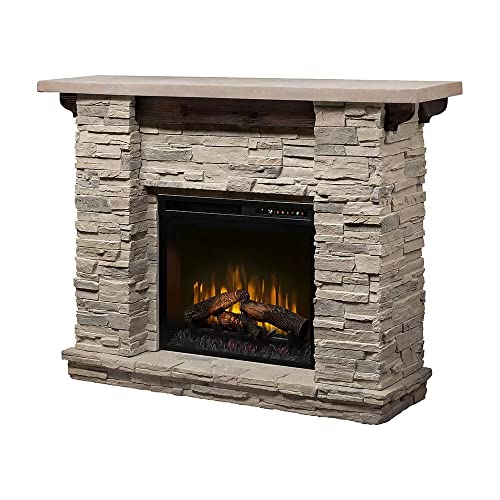
Where Step 2 lands owners of dead fireplaces, and where Step 3 lands the closest seats: the category’s deepest flame, inside the opening the house already has. Best for: realism-first hearth revival. Not suited for: any room without an opening to receive it.
Touchstone Sideline Electric Fireplace — The Media-Wall Path
Where Step 2 lands contemporary rooms: a wide flame ribbon, hung or recessed, designed around the screen wall. Best for: modern rooms and wide seating. Not suited for: traditional décor or walls that cannot be fixed to.
Costzon Freestanding Electric Fireplace — The Learning Path
Where the method lands a household still unsure of its own blend from Step 1: an entry-tier freestanding unit that teaches the family its habits at the lowest commitment. Best for: first purchases and spare rooms. Not suited for: households that already know they demand realism.
Common Mistakes
The category’s mistakes repeat so faithfully that they can be listed as a liturgy. Choosing by photograph instead of by room: the unit that glowed in a styled studio arrives in a real room with real light and real proportions, and the mismatch is blamed on the product. Skipping the measurements: inserts ordered before the opening was measured, mantel packages that swallow a small room, linear units bought for walls too narrow to hold them gracefully. Judging the flame from a listing video: shot in darkness, at the perfect angle, possibly enhanced — a test no living room will ever reproduce. Expecting whole-home heat: the one disappointment that is never the product’s fault, purchased by ignoring the electrical ceiling every plug-in appliance lives under. Bending the safety rules for placement: the extension cord “just until we rearrange”, the unit tucked against the curtain because the corner is perfect — compromises that convert a safe appliance into a hazard for the sake of a few feet. Ignoring the off state: a unit bought for its flame that spends its days as an ugly box the room must forgive. And finally, feature-chasing: paying for colours, sounds, and integrations the household will use once, while compromising on the thermostat, the flame depth, or the build that it would have used every day. Every one of these mistakes is a step skipped; the method exists precisely because the mistakes are so predictable. The category’s honest ledger, for readers who want the temperament behind the method, is in our electric fireplace pros and cons.
Pro Tips
Tape the outline before you buy: painter’s tape on the wall or floor, at the unit’s true dimensions, lived with for a day, prevents more size regret than any other act in this guide. Photograph your room at the hour you will use the fire, and judge candidate flame videos against that light rather than against a studio’s darkness. Read the manual before the listing’s summary — manuals are findable for reputable models, and the clearance figures, vent positions, and control lists in them are the truth the summary paraphrases. Give the remote a home on day one: a dish, a drawer, a spot beside the television remote — the smallest habit in this guide and the one with the highest satisfaction per second invested. Plan the room’s layers with the heater, not around it: a rug defining the seating zone, curtains drawn at dusk, the door closed on the warmed room — the layering logic our best rugs for fireplace notes describe for hearth areas applies to every format. And if two models survive every step and taste cannot separate them, choose the one whose maker sells replacement remotes and parts; a decade-long product should be backed like one.
Worked Examples: Three Buyers Through the Steps
The Renter With the Featureless Living Room
Step 1 fixes the job: focal point and atmosphere first, warmth a welcome third, in a rented flat whose living room is a white box. Step 2 eliminates inserts (no opening), wall units (no fixings without permission), and heavy packages (a lease with two years to run); freestanding survives. Step 3 sets the flame standard from a sofa two and a half metres away: mid-tier, three-dimensional, dimmable. Step 4 chooses infrared-leaning warmth for the people-first feel, with a thermostat. Step 5 confirms the stove’s cord reaches the wall outlet beside the intended corner directly, and that the corner’s clearances survive the room’s real furniture. Steps 6 and 7 filter to a complete remote and a timer, and the method lands exactly where the category’s centre of gravity sits — the Duraflame-class stove, bought with return terms read, tape outline tested, and a dish for the remote bought in the same order.
The Owner With the Sealed Chimney
Step 1: the job is restoration — a Victorian-style living room whose fireplace was sealed years ago, its chairs still facing the blank breast out of ancestral habit. Step 2 is decided by the building the moment the seal is opened and the opening measured: insert. Step 3 is demanding, because the household’s chairs sit close and the fire will be the room’s entertainment: premium flame standard. Step 4 takes whichever delivery the chosen insert offers, thermostat non-negotiable. Step 5 plans the cord’s discreet route to the room’s outlet and confirms nothing about the hearth arrangement violates clearances. The method lands on the Revillusion class — and the worked example’s lesson is that for this buyer, every step after Step 2 was a formality, because the house had already made the decision; the steps simply prevented the household from making a different, worse one. Whether the restoration is worth its premium is the question our is an electric fireplace worth it takes up directly.
The Family Building a Media Room
Step 1: the job is a wall that works twice — cinema by night, living room by day — with warmth for a basement-level space that runs cool. Step 2 offers the fork this guide described: recess a linear unit while the wall is open, or furnish with a fireplace console. The family prices the building work honestly, checks the lease-free permanence of their ownership, and chooses the recessed linear path. Step 3 sets the standard by the room’s width: a flame ribbon that serves a wide sofa, judged from the centre seat and the ends. Step 4 confirms front venting that respects the screen’s position under the manual’s clearances. Step 5 is the project’s spine — framing, clearances, and an electrician for the hardwired connection, all taken from the manufacturer’s instructions rather than from habit. The method lands on the Sideline class, installed once and correctly, and the family’s lesson is the mirror of the renter’s: permanence, chosen deliberately with every constraint priced, is not a risk but the entire point.
Before the Steps: Setting a Tier Without Naming a Price
One preliminary decision makes the steps run more smoothly, and it can be made without a single number: which tier of the category is this purchase? The entry tier exists for learning and for low-duty rooms — spare rooms, seasonal rooms, first experiments — and buying there deliberately, with expectations set to a pleasant flame suggestion and basic controls, is a rational strategy rather than a compromise. The mid tier is the category’s centre of gravity, where layered flames, real thermostats, complete remotes, and furniture-grade materials converge, and it is where most households’ money is best spent for a main room. The premium tier buys the last increments — flame depth that survives close inspection, architectural formats, the finest interiors — and it justifies itself only where the fire will be watched closely, often, and for years. Naming your tier before the steps begin protects the process twice over: it stops the listings from quietly re-tiering you upward with photography, and it stops false economy from re-tiering you downward into a main-room disappointment bought to save a sum the household would happily have spent. Tier is a statement about the room’s importance and the household’s standards, not about wealth, and the worked examples below show all three tiers chosen correctly by households that knew which purchase they were making.
The Delivery-Day Check: Judging Your Shortlist Winner at Home
The method’s final safeguard deserves its own walkthrough, because it is where theory meets the actual unit in the actual room. On delivery day, before packaging is discarded, place the unit exactly where it will live — not near it, not “for now” — and connect it the way it will be connected forever: its own cord, directly into the wall outlet, with clearances as the manual states them. Run the flame first, in the room’s ordinary daytime light, and look at it from the door; then dim the room toward evening and take your real seat. Apply the five checks slowly. Distance: does the effect hold from here, at the range your evenings actually happen? Side: walk to the oblique chair, the one a guest will take, and look again. Daylight: open the curtains and accept the flame’s daytime character, because it will spend half its lit life there. Off state: switch everything off and judge the object as furniture, since that is its majority condition. Loop: watch for one full minute, in silence, and let your eye report whether the pattern’s rhythm announces itself. Then run the heat through a full thermostat cycle while you are present: where does the warmth land, how does the fan sit under conversation, does the room’s comfort build the way Step 4 predicted? A unit that passes all of this in your room has passed the only examination that matters, and it should be kept with confidence. A unit that fails on flame or fit should be returned inside its window without apology or self-negotiation — the method anticipated this possibility, the terms were read in advance, and exchanging a near-miss for the right model is not a failure of the process. It is the process, working exactly as designed, one step beyond the shop.
Special Cases the Steps Handle Differently
Very small rooms. The method survives, but Step 1’s measurements become the whole decision. A small room forgives a modest flame window — the seat is close, which flatters mid-tier effects — and punishes furniture greed: a deep mantel package can consume the room’s circulation, while a stove or a slim wall unit keeps it. Clearances, honestly kept, may eliminate the largest formats before taste is consulted, and that is the gate working as intended. Small-room buyers should also weight fan character heavily, because the listener is always near, and should treat flame-only mode as essential, since small rooms overheat socially — a room full of guests needs the glow without the warmth.
Homes with toddlers and pets. The steps gain a placement overlay. Formats that put the heat source at the manufacturer’s mounted height, out of the toddler zone entirely, earn a genuine advantage in Step 2; freestanding formats earn a requirement that their clear zone survive the migration of play mats, pet beds, and toy creep — which means choosing the position for the household’s real traffic, not its tidiest hour. Supervision around any operating heater remains the rule, the viewing surfaces of this category are comparatively forgiving, and the absence of real flame, sparks, and flue gases is the reason these households are in this market at all. Step 5’s gate, applied with a family’s honesty, is what makes the category’s safety promise real rather than rhetorical.
Period and listed homes. Here the method’s sympathies reverse delightfully: the insert format, usually the constrained choice, becomes the liberating one, because it restores a hearth’s function without touching the building’s fabric, its chimney, or its permissions. Freestanding stoves run a close second for the same reason — presence without alteration. What these homes should avoid is the recessed project, where the installation’s appetite for the wall meets a building that must not be negotiated with. Flame standard, for period rooms, usually means the traditional end of every range: log media, firebrick-look interiors, and none of the linear contemporary vocabulary, however excellent it is elsewhere.
The second fireplace. Households adding a unit to another room should run the steps in miniature and then deliberately break one rule of novelty: choose the same family as the first unit where possible. Remotes, routines, thermostat habits, and care schedules transfer whole, and the household’s accumulated knowledge compounds instead of fragmenting. The exception is instructive — if the first purchase taught the household that its flame standard was set too low, the second unit is the place to correct it, in the room where the correction will be watched most.
When to Stop Researching
A method exists to end deliberation, not to extend it, and this category punishes over-research in a specific way: the differences between the final two or three survivors of the steps are smaller than the differences between any of them and the models the steps eliminated. Once a household has a room measured, a format fixed, a flame standard set from its own seat, a thermostat and timer and flame-only mode confirmed, the safety gate passed, and two or three reputable models standing, further comparison yields diminishing truth and rising doubt. The remaining differences — a trim profile, a remote’s layout, a maker’s styling handwriting — are taste, and taste does not improve with another week of tabs. There is also a seasonal reality: this is a product bought for winter evenings, and a month of deliberation in autumn is a month of fireside the household does not get back. The method’s promise is that a decision made through its steps can be trusted, because every consequential question was asked in the right order and answered from the household’s own facts rather than from a listing’s emphasis. Trust it, use the return window as the final empirical check it is designed to be, and then let the product stop being a research project and start being the fire. Households that have followed the sequence this far are, in our experience of the category, the ones whose reviews a year later are written in the past tense of doubt and the present tense of use — which is where every good purchase ends up, and where this guide is content to leave you.
The Whole Method on One Page
For readers who want the guide distilled to a checklist they can carry into a showroom or a listing page, here it is, in the order the steps demand. Room: name the room, name the job — focal point, atmosphere, warmth, in your household’s true proportions — and measure the space, the seating distance, and the outlet positions. Format: let the building decide — opening means insert, lease means freestanding, media wall means linear, blank room needing furniture means a package or console. Flame: set the standard from your closest regular seat, demand dimming and flame-only mode, and plan to judge with the five checks in your own light. Heat: expect one room’s comfort, choose the delivery character that suits your seating, and insist on a thermostat. Safety: the candidate’s own cord must reach a wall outlet directly, its manual’s clearances must fit your furnished room, its warm-air path must stay clear, and the household must accept supervision and switch-off discipline — any failure eliminates the candidate outright. Features: remote, thermostat, timer, and on-unit controls are the essential four; everything else must argue its way in. Survivors: compare build, off-state presence, maker support, and owner feedback that complains about products rather than parcels; read the return terms; buy; run the delivery-day check in the real position; keep or return without self-negotiation. That is the entire method, and it fits on an index card because the category, for all its hundreds of models, asks only seven questions. Households that answer them in order discover what the steps were designed to reveal: the choice was never really among hundreds of fireplaces. It was among two or three, and one of them was always yours.
Measure Twice, Order Once: A Hands-On Fit Check Before You Choose a Electric fireplace
Choosing a electric fireplace goes wrong far more often at the measuring stage than at the comparing stage. Listings are easy to browse; rooms are unforgiving. This section turns the advice elsewhere in the guide into a single hands-on session with a tape measure, a phone camera and twenty unhurried minutes. Work through it before you order, and you will eliminate the most common causes of returns in the seasonal & holiday category: the near-fit, the blocked door, the cable that does not reach, and the delivery that cannot get through the hallway.
Step One: Measure the Space, Then Measure the Journey
Measure the destination first — width, depth and height, at floor level and again higher up, because walls lean and skirting steals more room than people expect. Note sockets, vents, radiators, window swings and door arcs on the same sketch. Then measure the journey: every doorway, turn and stair the electric fireplace must pass through, boxed, on delivery day. A model that fits the room but not the route is a return waiting to happen. Photograph each measurement with the tape in frame; when you compare listings later, the photos end arguments that memory would lose.
Step Two: Mock It Up Before You Commit
Mark the footprint on the floor with painter’s tape, or build the volume from cardboard boxes, and live around the mock-up for a day. Open nearby doors and drawers against it, walk past it carrying something bulky, and sit or stand in your usual spot to check sightlines. For anything with a screen, flame, light or lid, check the viewing or working angle from where you will actually be, not from where the photograph was taken. This crude rehearsal catches proportion mistakes that no dimension table can, and it costs nothing but an evening.
Finish the fit check with these five confirmations before ordering your electric fireplace:
- The taped footprint leaves your main walking route clear even when doors, lids or drawers are fully open.
- Power, water, drainage or ventilation — whichever the design needs — is reachable without stretching cables or hoses across a walkway.
- The delivery route fits the boxed dimensions with room to spare at the tightest turn, not just at the doorways.
- Daylight and artificial light fall on the spot the way you expect, checked at the time of day you will use it most.
- Every regular user can reach, open, lift or operate the key parts from their natural standing or sitting position.
A tape measure, a spirit level and ten patient minutes prevent more electric fireplace regrets than any amount of comparison shopping after the fact. When a listing is vague about a dimension, material or included part that matters to you, treat the vagueness itself as information and look for a clearer seller. Photograph your room at the time of day you will use the electric fireplace most, and compare candidates against that light rather than against bright midday photographs. Small households should weight compactness and easy storage more heavily, while large households should weight durability and simple operation, because the failure modes differ. If the electric fireplace will serve children or older relatives, test the key actions with the weakest grip and the shortest reach in the house in mind. Leave a little capacity unused — in size, storage or power — because a electric fireplace run permanently at its limit ages faster and annoys sooner than one with headroom. Notice which parts are replaceable and which are not; a electric fireplace whose wear parts can be swapped cheaply often outlasts a sealed design twice its price in spirit, if not in years. Consider the electric fireplace from the perspective of the person who cleans around it, because designs that trap dust, block access or demand special products quietly tax every week of ownership. Think about noise, light and heat as neighbours of the electric fireplace, not afterthoughts, since a choice that performs well but disturbs the room around it rarely stays popular for long. Remember that guests experience your electric fireplace without instructions, so anything that needs explaining, warning or demonstrating is worth simplifying before it is worth defending. Plan for the electric fireplace to be moved at least twice in its life — for cleaning, redecorating or a change of room — and favour designs that forgive being shifted, tilted or carried. Look at the edges and undersides when you judge build quality, because those are the places makers save money first and the places owners discover last. Ask how the electric fireplace behaves on your worst floor, wall or surface rather than your best one, since homes are uneven and listings are photographed in perfect rooms. Keep the receipt, delivery note and a photograph of the label together, because warranty conversations go smoothly when dates and model details are at hand.
A electric fireplace chosen this way rarely surprises its owner, and that is the real goal: not the thrill of a bargain, but the quiet absence of regret. Keep the sketch and photographs with the receipt. If you ever add a matching piece, extend the setup, or move home, those twenty minutes of measurements become the most useful document you own for this category.
Frequently Asked Questions
What is the most important thing to decide first?
The room and the job, before any product is looked at. Fix where the fire will live and what blend of focal point, atmosphere, and warmth it is being bought for, and measure the space, the viewing distance, and the outlet position while you are there. That single step eliminates most of the market, converts the rest of the process into arithmetic, and prevents the category’s most common failure — a good product bought for the wrong room. Format comes second and is usually chosen by the building: an opening means an insert, a lease means freestanding, a media wall means linear. Buyers are often surprised by how little choosing remains after those two steps, and that surprise is the method’s signature: the overwhelm in this category was never a shortage of information, it was information arriving in the wrong order, and order is the one thing entirely within the buyer’s control.
How do I know which flame tier I need?
From your seat. Measure the distance from your main chair or sofa to the fire’s position and be honest about the viewing pattern. Across-the-room evening viewing, with the flame as background, is well served by mid-tier layered effects. Close seating, oblique chairs, or a fireplace that is the room’s main event calls for the premium tier’s depth. Spare rooms and first experiments can accept the entry tier knowingly. Whatever tier you choose, judge candidates with the five checks — distance, side angle, daylight, switched off, and a full minute’s watching — inside the return window, in your own room’s light. If it helps, recruit the household’s most sceptical member as the judge for the side-angle check: the person least inclined to believe in a light effect is the most reliable instrument in the category, and a flame that convinces them from the bad chair will convince anyone, from anywhere, for as long as you own it.
Can I use an extension cord if the outlet is in the wrong place?
No — treat this as the method’s one absolute. An electric fireplace is a heating appliance, and heating appliances draw sustained current that extension cords and power strips are not built to carry; they can overheat under loads that feel trivial with other devices. If the right position has no reachable wall outlet, the correct responses are to choose a different position, choose a format that fits the room’s outlets, or have an electrician install an outlet where the fireplace belongs. A cord-based workaround is not a compromise position; it is the hazard the rule exists to prevent, and any candidate that requires one has failed the safety gate.
Do I need a thermostat, or are heat settings enough?
Choose the thermostat. Fixed heat levels make the household do the regulating — the room overshoots, someone crosses it to switch the unit down or off, the room cools, and the cycle repeats all evening. A thermostat holds the comfort level you set and cycles the heater to maintain it, which feels better, wastes less, and turns the fireplace into set-and-forget furniture rather than a chore with a flame. On any model you are seriously considering, confirm the thermostat exists in the manufacturer’s own description, along with the timer and the flame-only mode; those three, plus a complete remote, are the control set that daily life actually uses.
What if I have a real fireplace that still works?
Then the choice is about pattern, not possibility. Households that burn real fires regularly and love the ritual gain least from an insert, though many still value an electric log set for the evenings when a real fire is too much work — the shoulder-season glow without the laying, lighting, and clearing. Households whose working fireplace is used twice a year, whose chimney costs are mounting, or whose members have tired of fuel and ash are the insert’s natural buyers: the hearth keeps its role and loses its labour. Be honest about which household yours has become, rather than the one it was when the fireplace last decided an evening.
How does choosing differ for a fireplace heater?
The method compresses. Format is given — portable — so the steps reduce to heat character, thermostat, the safety gate applied at every placement, and the honesty check that a heater is what the household wants. The fork between the two product families, and the households each suits, is worked through criterion by criterion in our comparison of the electric fireplace vs fireplace heater. Many households run the full method once for a fireplace in the main room and the compressed method later for a heater that follows need around the house — the two purchases are complements more often than rivals.
Bottom line. Choosing an electric fireplace is easy when the sequence is right: room and job first, format from the building, flame from your seat, heat with honest expectations, the safety gate applied without exception, features filtered to the four that matter, and the final comparison made among survivors with the return window as your laboratory. Follow the steps and the market’s noise falls away, leaving the two or three units your home was always going to choose between — and a decision you will still be pleased with on the hundredth evening, which is the only verdict that counts. One last encouragement for the household standing at the start of the process, tape measure in hand, wondering whether seven steps is a lot of ceremony for a fireplace: the steps take an afternoon in total, most of it measuring and thinking, and they purchase a decade of evenings. No other object in the home repays an afternoon’s method at that rate. Do the steps in order, trust the answers your own rooms give you, and then sit down in front of the result — in the chair the whole method was designed around — and press the button.