Disclosure: As an Amazon Associate, dailyhomedecorating.com earns from qualifying purchases. Links on this page are affiliate links; they cost you nothing extra. Prices and availability change often, so check the current Amazon listing before you buy.
This compost bin buying guide is written for households that want to stop sending vegetable peelings, coffee grounds and garden clippings to landfill without turning the kitchen into a science experiment. A compost bin is not one product but a family of them, running from a small lidded caddy that lives beside the chopping board to a rotating outdoor tumbler that processes a whole garden’s worth of material, and the buying mistakes almost always come from choosing the wrong member of that family for the space, the household and the climate you actually have. This guide works through the types first, then the criteria that separate a bin you will use daily from one that gets abandoned behind the shed, then a set of representative picks across the countertop and outdoor ranges, and finally the setup and hygiene habits that decide whether composting feels clean and easy or faintly unpleasant.
The single most useful idea in this guide is that composting is two jobs, not one. The first job is collection: gathering kitchen scraps tidily, without smell, without fruit flies, and without a dripping bag carried through the house several times a day. The second job is processing: giving those scraps air, moisture, carbon-rich material and time until microbes turn them into a dark, crumbly soil amendment. Countertop bins do the first job. Outdoor bins and tumblers do the second. Some households need only one of the two, because a municipal collection scheme or a garden heap handles the other half, but most home composters need both halves working together, and this guide treats them as a pair throughout.
Key Takeaways
- Decide the collection job and the processing job separately: a countertop caddy for scraps, an outdoor bin or tumbler for finishing them.
- Smell and fruit flies are hygiene problems, not compost problems — charcoal filters, a tight lid and regular washing solve them.
- Balance is qualitative: noticeably more dry browns than wet greens, added in layers, keeps a pile sweet and active.
- Never put meat, dairy or oils and fats into a residential bin; they cause odour, attract pests and slow everything down.
- Check the rules where you live before siting an outdoor bin, because some neighbourhoods and municipalities regulate placement and contents.
What a Compost Bin Does and the Main Types
A compost bin does not make compost by itself. It creates the conditions — containment, airflow, moisture retention and some insulation — in which bacteria, fungi and invertebrates break organic material down. Everything in this section follows from that: the best bin is the one whose conditions match your material and your willingness to manage them. A neglected premium tumbler produces a slimy mess, while a simple outdoor bin fed a sensible mix and turned occasionally produces excellent compost. Buy for the routine you will actually keep, not the routine you admire in principle.
Countertop Compost Caddies
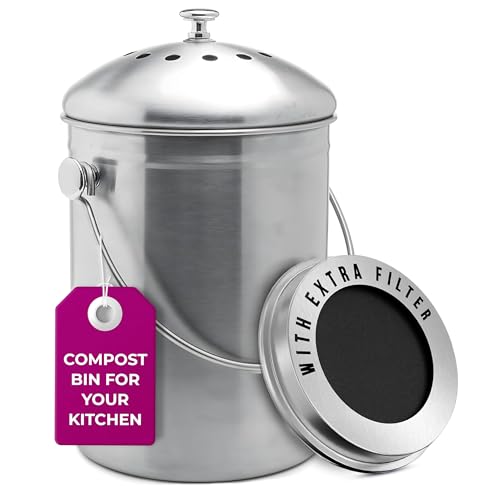
The countertop caddy is a small, lidded container that sits where food is prepared and collects scraps between trips outside. Its job is purely hygienic storage over a span of days. The features that matter are a lid that seals well enough to contain odour and exclude fruit flies, a charcoal filter in that lid to absorb the gases that build up between emptyings, a shape that rinses clean without trapped corners, and a handle or form that makes the trip to the outdoor bin or the collection caddy easy with one hand. Stainless steel versions wipe down beautifully and resist absorbing smells; moulded plastic and composite versions are lighter and often shaped to sit neatly against a splashback. None of them compost anything in a meaningful sense — material in a caddy is merely waiting — and that is fine, because waiting tidily is the entire point. Size a caddy to your cooking: a household that juices and prepares vegetables daily fills one quickly, while a small household that cooks from scratch twice a week can go smaller and empty less often than it fears, provided the lid and filter are doing their work.
Outdoor Static Bins
The classic outdoor bin is a stationary, usually bottomless or base-vented chamber placed on soil in a corner of the garden. You add material through the top, in layers, and harvest finished compost from a hatch at the base or by lifting the whole bin off the pile. Static bins are the forgiving option: they accept kitchen scraps (within the rules below), garden waste, shredded paper and leaves in whatever order life produces them, and they process slowly and steadily with very little intervention beyond occasional turning and moisture checks. Their weaknesses are speed and tidiness. Breakdown is slow, the pile is exposed to weather at the top unless lidded, and a badly balanced load can slump into a wet, airless mass that smells when disturbed. For households with a real garden producing real volumes of green waste, a static bin remains the workhorse, and many gardeners run two: one being filled, one finishing.
Compost Tumblers
A tumbler is a sealed drum mounted on a frame so it can be rotated. Turning the drum tumbles the contents, mixing greens and browns, redistributing moisture and introducing air in seconds rather than the minutes a fork takes in a static bin. The sealed drum also excludes rodents and keeps the process looking tidy, which matters in smaller gardens and in neighbourhoods where an open pile would draw complaints. Dual-chamber tumblers let one side finish while the other accepts fresh material, solving the tumbler’s structural problem: a single chamber cannot easily separate fresh scraps from finished compost, so batch discipline is required. Tumblers reward rhythm — small regular additions, a few turns several times a week, attention to moisture — and punish neglect, because a sealed drum of wet greens left unturned goes anaerobic faster than an open pile. They are also the type where build quality matters most: the drum, axle, frame and latches all work outdoors, under load, in all weather.
Where Worm and In-Ground Systems Fit
Two further options deserve a mention even though this guide’s picks concentrate on caddies, static bins and tumblers. Worm bins (vermicomposting) process kitchen scraps through composting worms in a tray system, suit apartments and small households, and produce a particularly fine output, but they are a pet-keeping commitment as much as a bin purchase, with their own rules about feeding and temperature. In-ground digesters and buried cone systems sit mostly below soil level and suit gardeners who mainly want disposal rather than harvestable compost. Both are legitimate; both are specialist enough that they deserve their own dedicated guides rather than a paragraph of shopping advice, and neither changes the criteria that follow for the mainstream types.
In this guide
Top Picks at a Glance
The table below previews the six representative picks reviewed in detail later in this guide. Tiers are qualitative on purpose: what matters is the match between the bin and your routine, and the current listing is where any purchase decision should be confirmed. Two picks cover the kitchen counter, four cover the garden, because that is where the real divergence in this category lives.
| Pick | Badge | Type | Tier | Best For |
|---|---|---|---|---|
| Joseph Joseph Totem | Best Integrated Kitchen System | Countertop and waste-station | Premium | Households wanting compost collection built into one tidy unit |
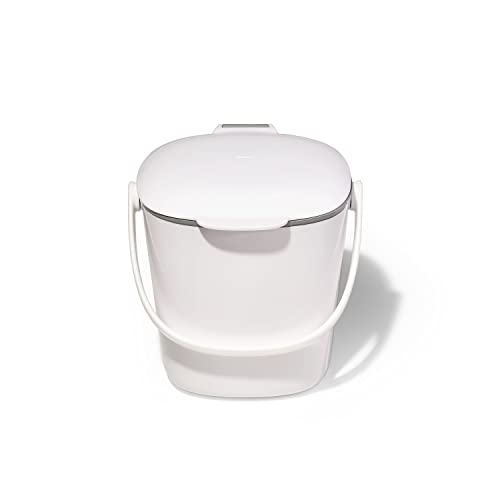
| OXO Good Grips Compost Bin | Best Everyday Caddy | Countertop caddy | Mid | Daily cooks who want a simple, washable scrap caddy |
| EPICA Stainless Steel Compost Bin | Best Classic Countertop Bin | Countertop bin with charcoal filter | Mid | Traditional lidded-bin buyers who prioritise odour control |
| FCMP Outdoor Tumbler | Best Outdoor Tumbler | Dual-chamber tumbler | Mid | Gardeners who want continuous composting in a sealed drum |
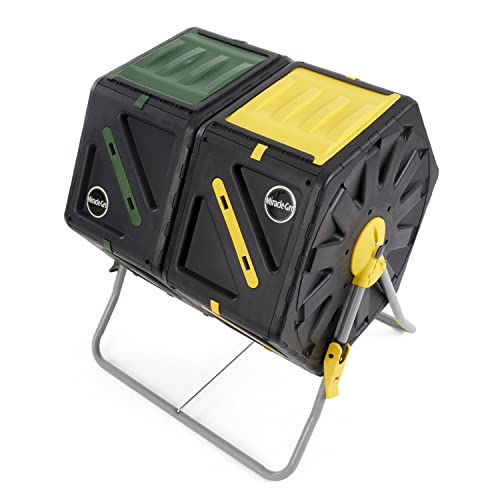
| Miracle-Gro Tumbler | Best Compact Tumbler | Single-chamber tumbler | Entry | Smaller gardens and first-time tumbler users |
| VIVOSUN Tumbler | Best Value Dual Chamber | Dual-chamber tumbler | Entry to mid | Buyers who want two chambers without a premium outlay |
Read the table as a map, not a ranking. The EPICA and the OXO solve the same kitchen job in different styles; the three tumblers solve the garden job at different scales and levels of finish. The Joseph Joseph Totem is the outlier: a waste station that treats compost collection as one stream among several, which suits some kitchens beautifully and others not at all. The detailed reviews after the criteria sections explain who should shortlist which, and the worked profiles translate the criteria into decisions.
How Much Capacity Do You Actually Need?
Capacity questions in composting are really frequency questions. On the countertop, the right size is the one that fills at roughly the pace of your trips outside: too small and you are carrying scraps out mid-recipe with wet hands, too large and scraps sit long enough for the filter and lid to be overwhelmed, which is when odour and fruit flies arrive. Households that cook vegetables daily usually do best with a caddy they empty every couple of days; smaller or less frequent cooking households can stretch a modest caddy across most of a week if they keep the lid closed and the contents dry-ish with a layer of shredded paper on top. Outdoors, capacity decides whether the system can absorb your garden’s peaks — the autumn leaf fall, the hedge-trimming weekend, the lawn’s first spring growth — without a backlog of bags waiting beside the bin. A tumbler processes in batches, so its useful capacity is one batch at a time; a static bin’s useful capacity is its whole volume, because fresh material can keep going on top while the base finishes. If your garden produces bulky browns in seasonal surges, favour the static bin or plan a separate leaf store; if your input is a steady stream of kitchen scraps and clippings, a tumbler batch rhythm fits naturally.
Countertop or Outdoor — or Both?
Start from where your scraps are produced and where they will finish. Apartment and townhouse households with a municipal organics collection often need only the caddy: the council or building scheme does the processing, and the buying decision is purely about hygienic storage between collections. Households composting at home need a processing bin outdoors, and then the question is whether they also need the caddy — and almost all of them do, because the alternative is an open bowl on the counter (fruit flies within days in warm weather) or constant trips outside with a handful of peelings. The honest exception is the household whose kitchen opens directly onto the garden a few steps from the bin; even there, a small caddy usually earns its counter space in winter and in the rain. Think of the caddy as the interface and the outdoor bin as the engine. Interfaces get chosen for hygiene, looks and one-handed convenience; engines get chosen for volume, build and how they handle turning. Budget accordingly: most households should put the larger share outdoors, where the working parts live, and treat the caddy as a modest, replaceable accessory — unless the kitchen is on show and the caddy will sit in sight all day, in which case appearance legitimately becomes a primary criterion.
How Will You Manage Smell and Fruit Flies?
This is the criterion that decides whether home composting survives contact with real life, so it gets its own section in every article in this cluster. The biology is simple: decomposing scraps release moisture and gases, and fruit flies breed in exposed fermenting material. The controls are equally simple, and they are all habits and fittings rather than chemicals. First, a lid that closes properly, kept closed. Second, a charcoal filter in the lid of the countertop bin, replaced when it stops absorbing — filters are consumables, and a saturated filter is the most common hidden cause of a caddy that suddenly smells. Third, regular washing: rinse the caddy at every emptying, wash it properly with hot soapy water on a regular cycle, and dry it before refilling, because the biofilm that builds on interior walls is what smells, not the scraps themselves. Fourth, dryness management: a handful of shredded paper, torn cardboard or dry leaves layered over wet scraps absorbs moisture, blocks flies from reaching the surface and starts the carbon balance early. Fifth, siting: a caddy kept beside a hot oven or in direct sun ferments faster and smells sooner, so a cool corner of the counter is a genuine feature of your kitchen, not an afterthought. Outdoors, the same logic applies at larger scale — a balanced, aerated pile smells earthy; a wet, sealed, unbalanced one smells like a swamp, and the fix is browns and turning, not perfume. Any bin whose design fights these five habits — a loose lid, no filter provision, corners you cannot clean, a drum you cannot open fully to wash — will eventually lose to them, whatever its other virtues.
How Much Turning and Attention Will You Give It?
Composting methods sit on a spectrum of attention. At one end, a static bin accepts material and asks for almost nothing: an occasional fork-through, a check that the pile is damp rather than wet or dusty, and patience measured in seasons. At the other end, a tumbler asks for small, frequent inputs — additions in balanced handfuls, a few rotations several times a week, moisture judged by eye and by hand — and returns finished compost noticeably faster, in a tidier, pest-excluded drum. Neither is better in the abstract. The question is which rhythm your household genuinely keeps. Be honest about weekends away, winter motivation and whose job turning actually is. A tumbler bought for a routine that collapses after a month produces a heavy drum of half-processed material that is harder to rescue than a neglected static pile, which can usually be revived by forking in dry browns and waiting. Also consider the physical side: rotating a loaded drum and forking a full static bin are both real work, differently distributed. Tumblers concentrate effort into short, frequent turns against a handle; static bins concentrate it into occasional, heavier digging sessions. Gardeners with limited strength often find the tumbler’s frequent-but-light pattern kinder, provided the drum’s rotation is genuinely smooth — one more reason build quality matters in that type.
What Should It Be Made From, and How Long Must It Last?
Materials divide by location. On the countertop, stainless steel is the benchmark for hygiene: it does not absorb odours, it tolerates hot soapy washing indefinitely, and it looks at home beside other kitchen steel — at the cost of showing fingerprints and costing more than plastic. Moulded plastics and composites are lighter, quieter to handle, often more sculptural in shape, and entirely adequate if the moulding is smooth and the lid mechanism is sound; their weakness is that scratched or textured interiors can hold biofilm and odour over time, which regular washing mitigates but does not always eliminate. Outdoors, the drum or body must survive ultraviolet light, frost, heat and the chemistry of an active pile. Thick, UV-stabilised moulded plastic dominates for good reason: it does not rust, it flexes rather than cracking under a shifting load, and it insulates modestly. Metal frames and axles are the tumbler’s weak points — look for coated or galvanised finishes and a design that keeps the load path simple — and latches, hinges and hatch mechanisms deserve the same scrutiny as the drum itself, because they are what your hands use weekly for years. For static bins, simpler is usually longer-lived: fewer moving parts, fewer failures. In both locations, spare-part thinking applies: charcoal filters for caddies are consumables you will reorder, so choosing a common format you can actually source is a quiet, practical virtue.
How to Prioritise by Use Case
Four household profiles cover most buying decisions in this category. The daily-cooking family kitchen produces a steady, generous stream of vegetable scraps and coffee grounds, has a garden of some size, and needs both halves of the system working hard: a generously sized, easily washed caddy with a good filter, and a dual-chamber tumbler or a static bin with real volume. Prioritise washability and lid quality indoors, and turning ease outdoors. The small-space household — flat, townhouse, balcony, municipal collection — needs the caddy alone, chosen almost entirely on hygiene and fit: it must seal, filter, wash and sit where the cook actually works. The keen gardener produces bulky, seasonal material and cares about output quality for beds and borders: a static bin (or two) is the natural engine, the caddy a simple workhorse, and the tumbler’s tidiness is worth less than raw capacity. The reluctant composter — motivated by waste reduction, wary of smell, mess and effort — should buy the most forgiving combination: a sealed, filtered caddy that makes the kitchen side effortless, and a tumbler whose closed drum keeps the garden side invisible, accepting slower or batch-based output as the price of a system they will actually keep using. Notice that each profile ranks the same criteria differently; that is why this guide refuses to crown a single winner.
The Picks in Detail
Each pick below is presented prose-first, as a representative of its type, with the slot where its verified purchase link will sit at publishing. Judge them against the criteria above rather than against each other in the abstract.
Joseph Joseph Totem — Best Integrated Kitchen System
The Totem treats kitchen waste as a set of streams — general waste, recycling and food scraps — stacked in one vertical unit, with the compost caddy as a removable element that lifts out for the trip to the garden bin. As a collection system it is genuinely elegant: one footprint, one place to stand while you sort, and a caddy that is small, lidded and designed to be carried and emptied often, which is exactly the rhythm that keeps countertop composting odour-free. The trade-offs are those of any integrated system. You are buying the whole station, so the outlay is premium-tier and the format commits you to its bags and its caddy size; a household that produces large volumes of scraps may find the caddy fills quickly, and the unit suits kitchens that can give it a permanent floor position near the prep area. Hygiene follows the same rules as any caddy: wash the inner caddy regularly, keep the lid closed, and do not let the elegance of the system persuade you to empty it less often than the contents require.
Best for: design-conscious kitchens wanting one tidy waste station with compost collection built in. Not suited for: high-volume scrap producers or anyone who only needs the compost function.

OXO Good Grips Compost Bin — Best Everyday Caddy
The OXO caddy is the straightforward answer to the collection job: a countertop container with a lid that stays open while you scrape a board into it and closes to contain the contents between tasks, a smooth interior that rinses and washes without fuss, and a form sized for the daily rhythm of a cooking household. Its virtue is the absence of friction — nothing about it needs learning, the lid behaviour suits one-handed cooking, and the whole thing can go through a proper wash as often as your routine demands, which is the real odour control in any caddy. It is a simpler proposition than filtered steel bins: it relies on regular emptying and washing rather than on a charcoal stage, so households that empty infrequently should either choose a filtered design or adopt the shredded-paper layer habit religiously. As with all caddies, it processes nothing; pair it with an outdoor bin, a tumbler or a collection scheme.
Best for: daily cooks who empty often and want the simplest washable caddy. Not suited for: households that empty weekly and need a charcoal filter to bridge the gap.

EPICA Stainless Steel Compost Bin — Best Classic Countertop Bin
The EPICA is the archetypal countertop compost bin: a stainless steel body, a fitted lid carrying a charcoal filter, and a handle for the trip outside. It is the pick for buyers who have already decided the caddy must manage odour actively because their emptying rhythm is measured in days rather than after every meal. The steel body supports the hygiene routine perfectly — hot soapy washes, thorough drying, no absorbed smells — and the filter handles the gases that build between trips, provided it is replaced when spent, which is the single maintenance task owners most often forget. The classic format’s compromises are counter space and pace: it occupies a permanent spot, and like every caddy it is a waiting room, not a processor, so scraps left beyond a sensible span will outstay the filter’s ability to help. Keep the rhythm, keep the filter fresh, wash on schedule, and this design quietly does its job for years.
Best for: households emptying every few days that want filtered, washable steel. Not suited for: very small counters or anyone expecting the bin itself to compost.
FCMP Outdoor Tumbler — Best Outdoor Tumbler
The FCMP is the reference design for the dual-chamber tumbler: two compartments in one rotating drum, so one batch can finish while the other is still accepting fresh scraps — the configuration that best matches how households actually produce material. The drum format brings the tumbler’s standard virtues: turning by rotation instead of forking, a sealed body that excludes rodents and keeps the process visually tidy, and aeration built into the routine. Its demands are the tumbler’s standard demands too. Feed it balanced handfuls — greens with browns, never a drum-load of wet grass alone — turn it several times a week, and judge moisture by the handful test: contents should feel like a wrung-out sponge, damp rather than dripping. Build quality at this tier is honest rather than luxurious, so treat the frame and latches with reasonable care and site the unit on a level base where a full drum can rotate freely. For the family-kitchen and keen-gardener profiles, this is the natural shortlist-topper outdoors.
Best for: households wanting continuous, tidy, rodent-excluded composting. Not suited for: bulk seasonal garden waste or a fill-and-forget routine.
Miracle-Gro Tumbler — Best Compact Tumbler
The Miracle-Gro tumbler brings the rotating-drum format down to a compact, single-chamber size aimed at smaller gardens and first-time composters. The appeal is accessibility: assembly and use are undemanding, the footprint suits a patio corner or a small yard, and the sealed drum keeps a modest batch of kitchen scraps and clippings processing tidily out of sight. The single chamber imposes batch discipline — fill it, then let that batch finish while fresh scraps wait elsewhere, which in practice means pairing it with a caddy that can hold a few days of material or accepting a slower rotation of batches. Capacity is the honest limitation: this is a kitchen-scrap-and-clippings machine, not a destination for hedge trimmings. For the small-space household that composts at home rather than through a collection scheme, it is a sensible, contained place to start, and many owners later add a static bin for bulk while keeping the tumbler for kitchen material.
Best for: small gardens, patios and beginners who want a contained start. Not suited for: large volumes or anyone unwilling to compost in batches.
VIVOSUN Tumbler — Best Value Dual Chamber
The VIVOSUN offers the dual-chamber layout — the configuration this guide recommends for most households — at an entry-to-mid tier, which makes it the value route into continuous tumbling. Two chambers, a rotating drum, aeration vents and a steel frame deliver the essential tumbler experience: balanced additions, frequent turns, sealed and tidy processing. The compromises at this tier are in finish and refinement rather than function: expect assembly to require patience, expect the drum’s fittings to reward careful handling, and check the unit over on arrival as you would any flat-packed garden equipment. Operationally it asks exactly what the FCMP asks — greens with browns, moisture like a wrung sponge, several turns a week — and returns the same category of result. For buyers whose decision is really “dual chamber, sensibly priced, from a garden brand,” it earns its place on the shortlist.
Best for: value-focused buyers who want the dual-chamber format. Not suited for: anyone expecting premium finish or who dislikes self-assembly.
First Setup and Care Essentials
Setup begins with siting. Place the outdoor bin or tumbler on level ground, ideally on soil for a static bin so organisms can move in and liquid can drain, within a hose’s reach for moisture management, close enough to the kitchen door that winter trips stay short, and in a spot that respects your neighbours and the rules where you live — check the rules where you live before you commit to a position, since some areas regulate how close to a boundary or dwelling an outdoor compost bin may sit, and some landlords and housing associations have their own conditions. Start the pile with a coarse, dry brown layer — twigs, shredded cardboard, dry leaves — to keep the base aerated, then alternate greens and browns as material arrives, keeping browns visibly in the majority. Greens are the wet, nitrogen-rich inputs: fruit and vegetable scraps, coffee grounds, fresh clippings. Browns are the dry, carbon-rich structure: leaves, straw, shredded paper and cardboard, wood chips. Keep meat, bones, dairy and anything cooked in oil or fat out of a residential system entirely; they smell, they attract pests, and they belong in a municipal scheme built to handle them. Indoors, set the caddy where prep happens, line its surface layer with shredded paper, wash it at every emptying with a proper hot soapy wash on a regular cycle, and put the charcoal filter’s replacement on your calendar rather than your memory. The first month sets the household’s habits; a clean, sweet-smelling first month is what turns composting from a trial into a routine.
Mistakes to Avoid
The common failures are few and predictable. Buying capacity for the garden you wish you had, rather than the waste you actually produce, leaves tumblers under-filled and piles too small to work well. Feeding greens alone — the grass-clippings mistake — produces a slimy, airless mass; the cure and the prevention are both browns, added generously. Letting the caddy become storage rather than a staging post defeats its lid and filter and invites fruit flies; empty, rinse, wash, dry, repeat. Forgetting the charcoal filter exists is the quiet version of the same mistake. Adding meat, dairy or oily cooked food “just this once” imports smell and pests that outlast the addition. Siting the outdoor bin in a frost pocket of permanent shade, or in a spot that floods, slows or sours the process for reasons that look like product faults but are placement faults. And finally, expecting any bin to compensate for an unbalanced, unturned, waterlogged load: the bin provides conditions, but the composter provides the balance. For the cluster’s full treatment of the trade-offs, see the honest pros and cons of owning a compost bin, and for a step-by-step decision method, how to choose a compost bin, step by step.
Compost Bin Buying Guide: Matching the Bin to Your Waste Stream
Before you finalise any shortlist, audit your own waste stream for a week — not from memory, which flatters and forgets, but by looking at what actually leaves your kitchen and garden. Most households discover their stream has a personality. Vegetable-heavy cooking produces wet, dense greens that need generous browns and a caddy with serious odour control. Coffee-and-tea households produce a steady, benign flow that almost any system handles gracefully. Gardens with lawns produce violent seasonal surges of clippings that will defeat a small tumbler in a single weekend unless they are mixed with stored leaves or shredded cardboard and added gradually. Households that entertain produce irregular peaks — the party-prep mountain of peelings — that argue for caddy capacity headroom. Write the audit down, because it converts this compost bin buying guide from general advice into your specification: your dominant input, your peak input, your available space indoors and out, your tolerance for turning and washing, and any siting limits from the rules where you live. Then re-read the picks table with that specification in hand. The right bin is the one whose strengths meet your stream’s demands and whose weaknesses land where your stream is forgiving.
One more matching exercise is worth doing: match the bin to the person, not just the waste. Composting systems are operated by whoever in the household actually cooks, gardens and takes things outside, and that person’s height, strength, schedule and squeamishness are design constraints as real as any dimension. A tumbler whose drum sits at a comfortable turning height for one gardener can be an awkward heave for another; a caddy that one cook finds trivially washable can be the chore another quietly stops doing, at which point hygiene — and with it the whole system’s smell and fruit-fly control — collapses. If two people share the work, both should be able to run every step: scrape, carry, empty, wash, turn, harvest. Where strength or mobility is limited, favour the designs that split effort into small, frequent, light actions over those that concentrate it into occasional heavy ones, and favour lids, latches and hatches that work with one hand or a gentle push. The best compost bin is the one its operator can run on a tired weekday in February, not the one that performed beautifully in the first enthusiastic fortnight of spring.
Before You Commit: A Hands-On Fit and Compatibility Check for Compost Bin
This section exists to treat this as the final check before money changes hands, the point where a shortlist stops being a list of features and becomes a decision about one specific home. It adds a layer that a feature list cannot give you, grounded in the garden & lawn context this compost bin will actually live in. Where this guide names examples such as Joseph Joseph Totem, OXO Good Grips Compost Bin, EPICA Stainless Steel Compost Bin, use them as test cases for the checks below rather than as shortcuts past them.
Build a simple decision checklist and score it in writing. Five lines are enough: fit in the space, fit with the routine, ease of cleaning or upkeep, quality of the parts that move or wear, and how the compost bin will be stored or will look when it is not the centre of attention. Score each contender quickly, then look only at the lowest scores, because purchases are usually ruined by their weakest point rather than saved by their strongest. If two options tie, choose the one whose weakness is cheapest or easiest to live with. This sounds mechanical, and it is meant to: a written checklist is the best defence against the very human habit of falling for the last photograph you looked at.
Finally, plan the first fortnight. Decide where the compost bin will live from day one, what it replaces, what accessory or companion it needs straight away and what small job you will use to learn its habits while returning it is still simple. Keep the packaging until that learning period is over, note anything that surprises you, and deal with a mismatch early rather than adapting yourself around a poor fit for years. The households that end up happiest with a compost bin are rarely the ones that researched longest; they are the ones that checked fit honestly, bought for the ordinary week, and paid attention during the first days instead of assuming the decision ended at checkout.
One more angle is worth your time: the second-order costs. A compost bin changes what happens around it. It can demand a different cleaning product, a new storage habit, a moved piece of furniture, a rearranged cupboard or a standing arrangement with the people you live with. List those knock-on effects before you buy and decide whether you accept them as part of the deal. Sometimes the answer is an easy yes, and the compost bin earns its place by improving the whole routine around it. Sometimes the honest answer is that the supporting changes are the real project, and the purchase should wait until you are ready for them. Either answer is useful; the only bad outcome is discovering the knock-on effects by accident, one irritation at a time, after the decision can no longer be revisited.
It also helps to separate the problems a compost bin can solve from the problems it merely moves. If the underlying difficulty is space, the answer may be a smaller format or a different location rather than a more elaborate model. If the difficulty is time, look for the option that removes steps rather than the one that performs each step slightly better. If the difficulty is that several people want different things, a compromise design that everyone rates as good enough will usually outlast a specialist design that one person loves and everyone else avoids. Naming the real problem in one sentence, out loud, before you order, is a surprisingly powerful filter, and many shoppers find that the sentence itself points at a different compost bin than the one they started out researching.
Start with the unglamorous measurements. For a compost bin, the numbers that decide satisfaction are rarely the headline ones in a listing; they are gate width, path slope, storage in a shed that is already full and how far the work really is from the nearest tap or socket. Write the real dimensions of your space down, including the awkward constraints you normally work around without thinking, and hold every contender up against that sheet rather than against a showroom photograph. Then walk the route the compost bin will take on delivery day and during normal use. A choice that fits on paper but fights you every time it is moved, opened, cleaned or stored will lose its shine quickly, however strong its other qualities look in a comparison table.
Next, rehearse the week, not the ideal day. Picture the compost bin inside a Saturday catch-up after two weeks of growth, a quick tidy before visitors, and the wet week when everything is heavier and muddier. Most disappointment comes from buying for the best-case scenario: the tidy version of the household, the motivated version of yourself, the weather or the guest list you hope for rather than the one you usually get. If the compost bin only makes sense when everything goes to plan, it is the wrong size, the wrong format or the wrong purchase for now. If it still looks useful on the tired, rushed, slightly chaotic version of the day, it has passed the most honest test there is, and the remaining questions are about detail rather than direction.
Pay close attention to the recurring friction points, because they compound. With a compost bin, owners tend to run into blades, lines and fittings wearing quietly, parts clogging mid-job, and instructions that assume a flat, empty garden that nobody actually has. None of these is dramatic on its own, and that is exactly why they get underestimated at buying time. Ask how the design you are considering handles each one: can the wearing part be replaced, can the awkward part be reached without tools, does the job take two minutes or twenty. A compost bin that makes its own upkeep easy gets maintained; one that makes upkeep a project gets neglected, and neglected products perform badly in ways that then get blamed on the original purchase.
Frequently Asked Questions
Do I need both a countertop caddy and an outdoor bin?
Most home composters do, because they solve different jobs: the caddy stores scraps hygienically in the kitchen, and the outdoor bin or tumbler actually processes them. If your area runs an organics collection, the caddy alone may be enough, since the scheme does the processing. If your kitchen opens straight onto the garden, you can manage without a caddy, but most households find even a small one transforms the daily experience, especially in wet weather and in fruit-fly season.
How do I stop a compost bin smelling?
Smell is almost always a hygiene or balance problem with a practical fix. Keep the caddy lid closed, replace its charcoal filter when it stops absorbing, wash the caddy regularly with hot soapy water and dry it before refilling, and layer shredded paper over wet scraps. Outdoors, add dry browns, turn for air, and keep the pile damp rather than wet. A well-run bin smells earthy; a persistent bad smell is information — too wet, too green, or something in it, like meat or oily food, that should not be there.
What should never go into a home compost bin?
Meat, bones, fish, dairy and anything cooked in oil or fat should stay out of residential bins and tumblers: they decompose slowly, smell strongly and attract pests. The same applies to pet waste from meat-eating animals, coal ash, and glossy or heavily coated paper. Fruit and vegetable scraps, coffee grounds and filters, plain bread and grains in modest amounts, eggshells, leaves, straw, shredded plain cardboard and untreated wood chips are the reliable inputs. When in doubt, leave it out — a pile forgives omissions far more readily than additions.
Tumbler or static bin — which is better?
Neither is universally better; they suit different inputs and temperaments. A tumbler processes kitchen scraps faster, excludes rodents and looks tidy, but works in batches and asks for frequent turning and balanced feeding. A static bin swallows bulky garden waste in volume, accepts material continuously and asks for little beyond patience, but works slowly and exposes the pile more to weather and wildlife. Many established gardeners end up with both: the tumbler for kitchen material, the static bin for the garden’s seasonal surges. Choose by your dominant input stream first.
Are there rules about where I can put a compost bin?
Often, yes, and they vary enough that this guide will not summarise them into a false universal. Some municipalities regulate siting near boundaries, watercourses or dwellings; some neighbourhoods and housing associations restrict visible bins; landlords may have conditions too. Check the rules where you live — your local authority’s website is the starting point — before you buy and site an outdoor bin. A sealed tumbler satisfies more of these regimes than an open pile, which is one practical reason tumblers suit smaller, more overlooked gardens.
How long before a bin produces usable compost?
It depends on the system, the mix and the season, and any honest answer is a range rather than a promise. An actively managed tumbler with a balanced load in warm weather works in a span of weeks to a few months; a static bin works across seasons, with finished material at the base while the top is still fresh. Cold weather slows everything, dryness stalls it, and an unbalanced load can sit almost unchanged. Your levers are balance, moisture, air and particle size — chop or shred inputs smaller and every system speeds up.
A Note on Seasons, Patience and Second Bins
Every compost system has a calendar. In warm months the biology runs fast, moisture evaporates quickly, and the main risks are drying out and fruit flies around the caddy. In cold months decomposition slows to a crawl, inputs accumulate faster than they shrink, and the main risks are a waterlogged pile and a household that loses faith precisely when the system needs steady, balanced feeding most. Plan for the calendar when you buy: a household that starts in spring gets encouraging early results from almost anything, while a household that starts in late autumn should choose capacity generously and judge the system in spring, not in January. Patience is also a sizing tool. Finished compost is ready when it is dark, crumbly and earthy and the original inputs are no longer recognisable — and harvesting too early, then blaming the bin for lumpy output, is a beginner pattern worth avoiding. Finally, consider the second-bin question honestly. Many satisfied composters end up with a small fleet — caddy, tumbler for kitchen material, static bin for garden bulk, perhaps a leaf store — not because the first purchase failed but because the system grew with their confidence. Buying a sound first bin that can later take a supporting role, rather than demanding one product do every job forever, is the experienced buyer’s move, and it is why the picks in this guide are framed as a system rather than a single crowned winner.
One final buying habit protects every other decision in this guide: purchase from the listing you have actually read, at the moment you are ready to set the system up, rather than stockpiling equipment for a future project. Compost gear bought for a someday garden tends to be sized for that imaginary garden, and the mismatch shows up as under-filled tumblers and caddies that never find their counter spot. Bought for this season’s real waste stream, the same products fit, fill and work — and a working first season, with a caddy that stays sweet and a first finished batch that goes on real beds, is worth more to a household’s composting future than any specification. Set the system up within days of delivery, run the first month deliberately, and let the equipment prove itself in the routine it was bought for.
Related Guides
Within this cluster, the single-product deep dive is at our full compost bin review, the head-to-head shortlist treatment is at compost bin reviews compared, and the value question is tackled at is a compost bin worth it. For the wider garden system your bin feeds, see the best compost bins already tested on this site, raised garden beds that use your finished compost, soil mixes for raised vegetable beds and rain barrels for garden watering.