Disclosure: As an Amazon Associate, dailyhomedecorating.com earns from qualifying purchases. Links on this page are affiliate links; they cost you nothing extra. Prices and availability change often, so check the current Amazon listing before you buy.
This charcoal grill buying guide is written for one reader: the person standing in a shop, or scrolling a listing, who wants to get this purchase right the first time.
Key Takeaways
- Style first, size second: kettle, kamado, barrel and portable grills cook differently, not just bigger or smaller.
- Vent design and ash clearing decide how easy the grill is to live with every week.
- Buy for the crowd you feed most often, not the biggest party of the year.
- Established designs win on replacement parts, covers and accessories years later.
If you are researching a charcoal grill buying guide for the first time, the good news is that charcoal grilling is simpler than its reputation suggests — and the hard part is not learning to cook, it is choosing the right style of grill for your space, your patience and the food you actually make. This charcoal grill buying guide walks through the types, the features that genuinely matter, the ones that do not, and how to match a grill to your household before you spend anything.
Charcoal’s appeal is flavour and versatility at a modest cost. The trade is your time: you light a fire, manage it and clean up ash. Everything in this guide is aimed at one question — which grill makes that trade feel worthwhile for you, week after week, rather than impressive for one weekend and abandoned by autumn.
In this guide
What a Charcoal Grill Does and the Main Types
A charcoal grill cooks with the radiant and convective heat of burning charcoal under a grate, with airflow — controlled by vents — setting the temperature. That one mechanism sears steaks at fierce heat, roasts a chicken gently with the lid down, and, with the coals banked to one side, smokes ribs low and slow. The types below differ in how well they do each of those jobs and how much attention they demand while doing them.
Kettle Grills
The kettle is the default recommendation for most households, and for good reason. Its round bowl, domed lid and simple vent system handle direct grilling brilliantly and indirect cooking well, parts are everywhere, and the design has been refined for decades. If you want one grill that does almost everything competently while you learn, start here and only move away from it for a specific reason.
Kamado-Style Grills
Kamados are insulated, egg-shaped cookers that hold heat superbly and sip charcoal. They excel at low-and-slow smoking and at very high searing temperatures, and they shrug off cold, windy weather that would fight a thin steel grill. The costs are weight, a higher tier in the range, and a smaller cooking area for the footprint. Choose a kamado when smoking and temperature stability matter more to you than maximum grate space.
Barrel and Offset-Style Grills
Barrel grills offer a long rectangular grate that suits big batches and whole fish, and offset designs add a separate firebox for smoking. They shine when you cook for crowds. They are also hungrier for fuel, leakier around lids and doors in entry-level versions, and need more attention to hold a steady temperature. Buy one for capacity, with your eyes open about the extra management it asks for.
Portable and Tabletop Grills
Small portable kettles and tabletop models serve balconies, picnics, camping and tailgating, and they make a sensible second grill alongside a main one. They cook for two to four people happily and store in a fraction of the space. What they cannot do is feed a party or run a long indirect cook comfortably — judge them as specialists, and see our notes on smaller tabletop grills for tight spaces if portability is your priority.
Charcoal Grill Buying Guide: Top Picks at a Glance
These are the reference points for each role. Treat the badges as jobs, not rankings — the best grill here is the one whose job matches your cooking.
Weber Original Kettle — Best Overall
The Weber Original Kettle is the classic kettle that most home grillers learn on. Treat this as a starting point rather than a verdict: what matters is how its size, vent layout and cooking style line up with the way you actually cook outdoors. If it earns a place on your shortlist, check price on Amazon and compare the current listing details against the checklist in this guide before you decide.
Best for: households whose cooking matches the role described above. Not suited for: anyone whose space, fuel preference or typical crowd size points to a different style entirely.

Weber Performer — Best for Frequent Cooks
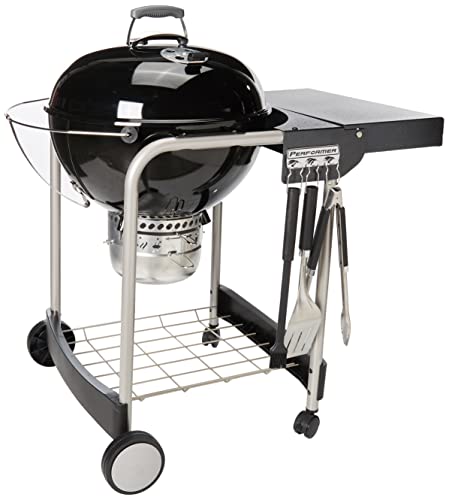
The Weber Performer is a kettle on a cart with a work table for people who grill often. Treat this as a starting point rather than a verdict: what matters is how its size, vent layout and cooking style line up with the way you actually cook outdoors. If it earns a place on your shortlist, check price on Amazon and compare the current listing details against the checklist in this guide before you decide.
Best for: households whose cooking matches the role described above. Not suited for: anyone whose space, fuel preference or typical crowd size points to a different style entirely.

Char-Griller Akorn Kamado — Best Kamado Style
The Char-Griller Akorn Kamado is an insulated kamado-style cooker for low-and-slow and high-heat searing. Treat this as a starting point rather than a verdict: what matters is how its size, vent layout and cooking style line up with the way you actually cook outdoors. If it earns a place on your shortlist, check price on Amazon and compare the current listing details against the checklist in this guide before you decide.
Best for: households whose cooking matches the role described above. Not suited for: anyone whose space, fuel preference or typical crowd size points to a different style entirely.

Dyna-Glo — Best for Crowds
The Dyna-Glo is a larger barrel-style option for households that cook for a crowd. Treat this as a starting point rather than a verdict: what matters is how its size, vent layout and cooking style line up with the way you actually cook outdoors. If it earns a place on your shortlist, check price on Amazon and compare the current listing details against the checklist in this guide before you decide.
Best for: households whose cooking matches the role described above. Not suited for: anyone whose space, fuel preference or typical crowd size points to a different style entirely.
PK360 — Best Premium Control
The PK360 is a cast-aluminum grill and smoker built for precise two-zone control. Treat this as a starting point rather than a verdict: what matters is how its size, vent layout and cooking style line up with the way you actually cook outdoors. If it earns a place on your shortlist, check price on Amazon and compare the current listing details against the checklist in this guide before you decide.
Best for: households whose cooking matches the role described above. Not suited for: anyone whose space, fuel preference or typical crowd size points to a different style entirely.
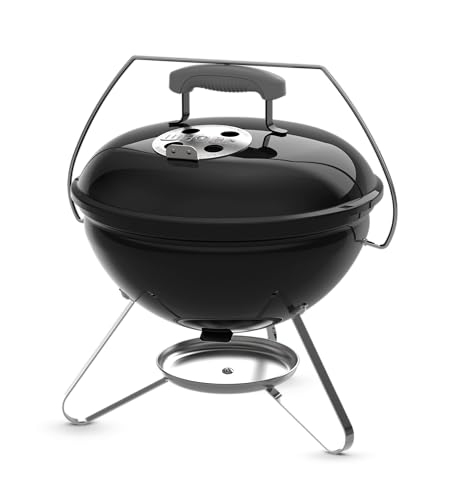
Weber Smokey Joe — Best Portable
The Weber Smokey Joe is a compact portable kettle for balconies, picnics and tailgates. Treat this as a starting point rather than a verdict: what matters is how its size, vent layout and cooking style line up with the way you actually cook outdoors. If it earns a place on your shortlist, check price on Amazon and compare the current listing details against the checklist in this guide before you decide.
Best for: households whose cooking matches the role described above. Not suited for: anyone whose space, fuel preference or typical crowd size points to a different style entirely.
How Much Cooking Space Do You Actually Need?
Manufacturers quote grate area, but the useful question is how many people you feed on an ordinary weekend. A mid-size kettle handles burgers for a family and a couple of side dishes at once; regular entertainers should step up in size or choose a shape that fits long items. Remember that two-zone cooking effectively reserves part of the grate as a cool zone, so a grill that looks just big enough on paper feels small in practice. Size for your typical cook plus a little headroom, and handle the once-a-year crowd with batches or a portable second grill.
How Will You Control the Heat?
Vents are your thermostat. The bottom vents feed the fire oxygen and have the biggest effect on temperature; the lid vent draws heat and smoke across the food and fine-tunes things. Small adjustments matter: open the bottom vents a little more to raise the heat, close them partway to calm it down, and give every change ten to fifteen minutes to settle before you adjust again. Chasing the temperature with constant fiddling is the fastest way to overshoot in both directions.
For low-and-slow cooking, you are asking a small fire to burn for hours, so start with fewer lit coals than you think you need and let the vents do the work. A snake or ring of unlit briquettes with a few lit ones at one end burns slowly along its length and is the classic kettle method for ribs and shoulders. Keep the lid on and resist peeking: every lift dumps the heat you spent twenty minutes building and adds time to the cook.
Wind changes everything and fools beginners into blaming the grill. A breeze forces extra air through the vents and can push a settled fire much hotter, while also blowing heat away from the lid. Position the grill so the wind is not blasting straight into the bottom vents, expect to run the vents a little more closed on windy days, and judge the fire by how the food is cooking and by a thermometer, not by how the coals look through the grate.
A simple thermometer habit separates guesswork from control. The dial in many lids sits well above the grate and reads the air near the top of the grill, not the temperature your food experiences. A probe at grate level, or an instant-read thermometer used when you check the food, tells the truth. You do not need a complicated setup — you need one reading you trust, taken in the same place each time, so your adjustments mean something from one cook to the next.
What Is the Grill Made From — and Why Does It Matter?
Porcelain-enamelled steel is the mainstream standard: it resists rust, cleans easily and keeps its finish for years if you avoid chipping it. Cast aluminium, used by premium designs, never rusts and holds heat evenly, at a higher tier. Plain thin steel is the false economy of charcoal grills — it flexes, rusts at the seams and loses heat, making temperature control harder precisely when a beginner needs it easier. Whatever the body, look at the cooking grate: plated steel is serviceable, heavier steel or stainless holds heat better and lasts longer, and hinged sections that let you add charcoal mid-cook are genuinely useful for long sessions.
How Easy Is It to Clean and Move?
Clean the grate while it is still warm after cooking, when residue brushes off easily, rather than the next day when it has hardened. A good brush or grate scraper used for a minute at the end of each cook prevents the build-up that makes food stick and taste stale. Before the next cook, preheat the grate fully and brush again; heat does most of the sanitising work, and a clean, hot, lightly oiled grate is the simplest non-stick system there is.
Ash management is routine maintenance, not an occasional chore. Ash left sitting in the bowl absorbs moisture from the air, forms a corrosive paste against the metal and chokes airflow on your next cook. Once ash is completely cold, empty it regularly, wipe the bowl, and check that the ash catcher and vent mechanism still move freely. Grills with one-touch sweeping systems make this a ten-second job, which is exactly why that feature is worth having.
Protect the outside and the grill lasts years longer. A fitted cover keeps rain off the lid, vents and moving parts, and storing the grill under some shelter — a garage corner or under an eave, only once fully cold — slows rust further. Once or twice a season, check bolts, handles, wheels and the grate itself for rust or wear, tighten what has loosened, and touch up small chips in enamel before they spread. Charcoal grills have few parts, and nearly all of them are replaceable.
Know when a part is done. A cooking grate eaten through by rust, a vent blade bent so it no longer seals, or legs that wobble despite tightening are safety and performance problems, not character. Replacement grates, handles and ash catchers are widely available for mainstream models, which is a quiet advantage of buying an established design: the grill you maintain properly can stay in service far longer than a cheaper, unsupported one that you have to replace whole.
Two practical details separate pleasant ownership from quiet resentment. The first is ash removal: an enclosed ash catcher with a sweeping mechanism turns a dusty chore into seconds, while an open tray or a bowl you must scoop will eventually be neglected, and neglected ash corrodes the bowl. The second is protection and storage — a grill that lives outdoors needs a cover, so read up on protecting your grill between cooks with a fitted cover and plan where the grill will stand, on what surface, before it arrives; a mat such as those in our guide to protecting your deck or patio surface under the grill saves decking and paving from heat and grease marks.
How to Prioritise by Use Case
The weeknight family cook wants fast lighting, easy ash clearing and enough grate for dinner plus sides: a mid-size kettle with a good ash system is the sweet spot. The weekend smoker should weight insulation, vent precision and fuel efficiency — kamado territory, or a kettle with a proven indirect setup. The entertainer needs grate area and a work surface; a cart-style kettle or barrel earns its footprint. The small-space cook should measure the balcony or patio honestly and look at portable and tabletop options first, checking any building rules about charcoal before buying.
First Setup and Care Essentials
Set the grill on a flat, stable, non-combustible surface outdoors, well away from the house, eaves, fences, dry leaves and anything else that can catch. A charcoal grill throws sparks when you dump a chimney or stir the coals, and radiant heat alone can scorch siding or melt vinyl if the grill sits too close. Give it generous clearance on every side, keep children and pets out of the cooking zone, and never move a lit grill to chase shade or escape a breeze.
Never use a charcoal grill inside a house, garage, tent or any enclosed or partly enclosed space. Burning charcoal produces carbon monoxide, an odourless gas that can build up to dangerous levels without any warning smell. That rule also applies after cooking: a grill that looks finished can still be giving off carbon monoxide, so let it cool completely outdoors where it cooked, and never bring it inside to finish cooling or to store it while the coals are still warm.
Briquettes are the predictable choice for most home cooks. They are uniform in size, light evenly and burn at a steady pace, which makes learning temperature control much easier. Lump charcoal is irregular pieces of real wood; it lights fast, burns hotter and responds quickly when you open the vents, but its size varies from bag to bag, so heat is less even. Many experienced grillers keep both: briquettes for long, steady cooks and lump for quick, hot searing sessions.
How much charcoal you use is a temperature decision, not a habit. A full chimney gives you a hot fire for searing and for cooking larger loads; half a chimney suits a smaller meal or a gentler fire. Spreading the coals in a single even layer gives direct heat across the grate, while banking them to one side creates the two-zone setup that makes charcoal cooking forgiving: a hot zone for searing and a cooler zone where food can finish gently or wait out a flare-up.
Mistakes to Avoid
The most common beginner mistake is cooking over coals that are not ready. Food that goes on over black, flaming, smoking charcoal picks up harsh flavours and cooks unevenly, because the fire is still climbing. Wait for the ash-grey stage, when the flames have died and the heat is steady. The second most common mistake is the opposite impatience: spreading too few coals for the job, then wondering why nothing sears. Match the amount of charcoal to the cook, not to optimism.
Lighter fluid deserves its poor reputation. It can leave a chemical taste on food, it encourages dangerous flare-ups when people add more to a slow fire, and it is simply unnecessary when a chimney starter exists. If you have inherited the lighter-fluid habit, the chimney is the upgrade that changes charcoal cooking from a faff into a routine: light it, wait, dump it, cook. No smell, no taste, no singed eyebrows, and a fire that is ready at a predictable time.
Overcrowding the grate ruins more meals than bad equipment does. Food packed edge to edge steams instead of searing, drips fat everywhere at once and leaves you no cool zone to retreat to. Cook in batches if you need to, keep a clear indirect area as your safety valve, and remember that food coming off in waves, properly cooked, beats a whole grate of food that is burnt outside and raw in the middle because there was nowhere sensible to move it.
Skipping the rest is a quiet way to undo good cooking. Meat that rests keeps its juices; meat cut the second it leaves the grill floods the board with them. Tent larger cuts loosely and give them real time — small items need a few minutes, big roasts much longer. Use the resting window to finish vegetables, warm bread on the cooling grate and get everything else to the table, so the rest becomes part of the plan rather than a delay.
Finally, budget with your eyes open. The grill is the start, not the whole purchase: a chimney starter, a cover, decent tongs and gloves such as those covered in our guide to heat-resistant gloves for handling hot grates and chimneys, and a brush like the ones in our roundup of choosing a safe grill brush and keeping grates clean are the kit that makes ownership pleasant. None of it needs to be fancy, and all of it together matters more to your results than stepping up one grill tier. For the balanced verdict, read our take on charcoal grill pros and cons, and if you are still deciding whether charcoal suits you at all, is a charcoal grill worth it is the honest place to start.
A Closer Look at Fuel: Briquettes, Lump and Your First Season
Your grill choice and your fuel choice interact more than most guides admit, so settle the fuel question while you are still comparing grills. Briquettes burn steadily and predictably, which flatters beginners and suits long cooks; they also produce more ash, which is where a good ash system earns its keep. Lump charcoal lights faster, burns hotter and leaves less ash, but its irregular pieces make an even bed harder to arrange in a wide bowl. A kettle handles both gracefully. A kamado, with its deep, narrow firebox, is at its best with lump. A barrel burning for a crowd will eat briquettes by the bagful and reward you for choosing a model whose grate and ash pan make refuelling painless. None of this should scare you off any style — it should simply be priced into the decision, because the grill you buy is the grill your fuel habits will live with.
Think, too, about where charcoal will live in your home. A household that grills weekly goes through bags steadily, and bags are bulky, dusty and ruined by damp. A dry corner of a garage, a lidded storage bin on a sheltered patio, or a cupboard near the back door all work; a leaky shed does not. If storage is genuinely tight, that is an argument for a smaller grill and smaller, more frequent fuel purchases, and one more reason the portable and kettle formats suit compact homes better than a barrel that expects to be fed in bulk. It sounds mundane, and it is — but mundane logistics, repeated weekly, are exactly what decide whether a grill gets used or quietly becomes garden furniture.
Finally, consider the first season as part of the purchase. Your first cooks will run hot, or cool, or smoky, and that is normal; the grill is not failing, you are calibrating. Budget your expectations accordingly: simple food first, ambitious projects once you know your fire. The buyers who love their grills a year later are almost never the ones who bought the most features. They are the ones whose grill matched their space and habits, and who cooked on it often enough in the first two months for the routines — lighting, vents, ash, cover — to become automatic. Choose for that outcome and the buying decision has done its job.
Reading Specification Sheets Without Being Fooled
Specification sheets reward scepticism. Cooking area is quoted in ways that flatter: warming racks counted as cooking space, odd shapes measured generously. Compare the main grate only, and picture your actual food on it — a spatchcocked chicken, a rack of ribs, a dozen burgers — rather than trusting a number. Weight is a more honest figure than most: heavier grills generally carry thicker metal, sturdier grates and better hardware, though insulation complicates the comparison for kamados. Warranty length on the bowl and lid tells you what the manufacturer expects its enamel to survive, and is worth more than a long list of included accessories, most of which you would replace with better individual tools anyway.
Temperature gauges deserve a specific warning. A lid thermometer is a trend indicator, not a measurement, and its presence or absence should never swing a purchase. Likewise, treat claims about maximum temperature and cooking speed as marketing weather rather than climate: any charcoal grill with enough fuel and air will sear fiercely, and the differences that matter — how steadily it holds a low temperature, how gracefully it recovers after the lid opens — are found in owner reports over months, not in a feature list. Read reviews for the words ‘after six months’ and weight them above everything written on unboxing day.
One more sheet-reading habit: check the replacement parts list for the exact model before you buy it. If grates, ash catchers, handles, hinges and vent parts are listed, priced and orderable, you are looking at a product designed to be maintained. If the parts page is empty or generic, the manufacturer expects the grill to be replaced whole — and you should price it as a disposable, however solid it looks in photographs. This single check predicts ownership satisfaction better than almost any other research you can do in ten minutes.
Accessories: What to Buy Now, Later and Never
Buy now: the chimney starter, without which charcoal cooking is genuinely more frustrating; a thermometer you trust; long tongs and a wide spatula; heat-resistant gloves; a brush or scraper matched to your grate; and a fitted cover if the grill lives outside. That kit is the difference between a grill that feels equipped and one that feels like a project, and it should be in the basket — and the budget — alongside the grill itself, not discovered as a series of annoyed purchases over the following month.
Buy later, when your cooking asks for it: a hinged or raised second rack if you regularly run out of room; a rotisserie if roasts are your passion; a pizza stone or steel if your household will genuinely make pizza night a habit; a plancha plate if smashed burgers and breakfast cooks appeal. Each of these is excellent for the cook who wants it and clutter for the cook who does not, and a season of cooking will tell you which you are far more reliably than any recommendation can. The second season is the right time to accessorise, with evidence.
Probably never: gadget bundles of a dozen flimsy tools in a shiny case, novelty-shaped presses and moulds, and any electronic extra that promises to make a charcoal grill behave like an oven with a timer. Charcoal’s virtue is that the system is simple and you are the control loop. Accessories that respect that — better steel, better information, better protection — earn their place. Accessories that fight it end up in the back of a drawer, and the money is better kept for charcoal, good meat and the occasional replacement grate.
Hosting With a Charcoal Grill: Planning the Cook Backwards
Most buying guides stop at the purchase, but the grill you choose will be judged at your table, so it is worth picturing the full arc of a hosted cook before you decide. Work backwards from the moment people eat. Food rests while sides finish; before that comes the main cook, which for a mixed grill of chicken, sausages and vegetables means a two-zone fire with a hot side for colour and a cool side for finishing. Before that, the lighting: a chimney lit half an hour before the first food, in a spot where sparks and smoke will not trouble anyone. A grill that supports that arc — enough grate for two zones, a lid that holds heat while you mingle, an ash system that will not demand attention mid-evening — is the grill that makes hosting feel easy, and it is worth more than a longer feature list on a grill that fights the schedule.
Capacity, in this light, is really about sequencing. The question is not whether everything fits at once — it rarely should — but whether the grill lets you cook in waves without the fire dying between them or the cook disappearing for an hour. Hinged grates that admit more charcoal, lids that keep finished food warm at the edge, and a work surface for resting trays all serve the sequence. When you compare models, narrate a real party through each one: eight guests, mixed appetites, one cook who also wants a drink and a conversation. The grill that keeps that cook in the party is the right purchase, and you will know it by how little improvisation the story required.
After the guests leave comes the part of hosting nobody photographs: the cool-down, the ash, the cover. This, too, belongs in the buying decision, because a grill that is pleasant to put away gets put away properly, and a grill that is a faff gets left — full of ash, open to the weather, ageing a month in a weekend. Read the cleaning sections of this guide again with the end of a long evening in mind. The best grill in this entire category is not the one with the finest enamel or the cleverest vent. It is the one whose whole life cycle — light, cook, host, clean, cover — fits the household that owns it. Buy that one.
Two-Zone Cooking, Explained for Buyers
Two-zone cooking is the technique this entire purchase should be planned around, so it deserves plain explanation before you compare a single model. You bank the lit coals to one side of the bowl and leave the other side empty. Food starts over the coals for colour and crust, then moves to the empty side to finish gently under the lid, safe from flare-ups and free to cook through without burning. A roast lives its whole life on the cool side, with the fire beside it rather than beneath it. A pan of vegetables can sit half on and half off, giving you two temperatures at once. The technique is free, it works on any charcoal grill, and it is the reason charcoal cooking is far more forgiving than its reputation suggests.
What two-zone cooking demands from the grill itself is modest but specific. The grate must be big enough that reserving a coal-free zone still leaves a useful cooking area, which is the practical reason this guide keeps steering family buyers toward mid-size models. The lid must seat well, because the cool zone works by trapped, circulating heat rather than direct flame. And a hinged grate or a charcoal basket system makes arranging and adjusting the fire cleaner, though neither is essential. When a listing boasts about its grate area, translate it through this technique: subtract the cool zone you will actually keep, and judge what remains against your typical dinner.
Beginners sometimes ask why they cannot simply spread fewer coals everywhere and cook gently. They can, for some food — but a thin, spread fire gives neither a proper sear nor a safe haven, and it fades quickly. The two-zone fire gives you both extremes at once and lasts longer, because a banked pile of coals burns in a controlled, concentrated way. Learn this one arrangement and you have learned the operating system of every charcoal grill in this guide; every other technique — smoking setups, reverse searing, ember cooking — is a variation on where the fire sits relative to the food.
What the First Month of Ownership Looks Like
Week one is assembly, a curing burn with no food, and one simple cook — sausages or burgers — chosen to be unlosable. Week two is the first chicken, indirect, where the lid and vents do the work and you learn how little attention a settled fire needs. Week three is where most owners try something ambitious, often ribs, and learn the most from the cook that wobbles: a temperature that ran away, a fire that needed feeding, a finish time that slipped. Week four is the quiet revelation: you light the chimney without thinking, set the vents from memory, and realise the grill has stopped being equipment you operate and become a place you cook. Budget your patience for exactly that arc, and buy the grill that supports it — steady vents, honest ash handling, parts you will never think about because they simply work.
A Final Word on Confidence
Every section of this guide has really been about one thing: removing the fear that you will choose wrong. That fear is understandable — a grill is a bulky, visible, years-long purchase — but it is out of proportion to the risk, because the category is mature, the mainstream designs are all genuinely competent, and the differences between good grills are smaller than the differences between a grill that fits your life and one that does not. If you have measured your space, named your menu, sized for your typical cook, and checked the vents, ash system and parts list on your finalist, then you have done the work that separates a good purchase from a lucky one, and what remains is not risk but preference. Choose the one you like the look and feel of, the one whose lid and handles pleased your hands, because that small affection is not frivolous: it is the thing that will make you walk out to the grill on an ordinary Tuesday in October, three years from now, and light it gladly. Buy that grill, buy the chimney and the cover with it, and let the first season teach you the rest — it will, and quickly, and deliciously.
One last practical promise before the questions below: whatever you choose, your first five cooks matter more than your first five hundred pounds of research. Cook simple food, keep notes on vent settings and timings, forgive the wobbles, and let the grill become familiar. Familiarity is the feature no manufacturer can sell you and the one every happy owner actually owns. The guide has done its work if it has put a well-built, well-fitting grill in your garden and the confidence in your hands to light it this weekend. Everything after that is cooking — and cooking, unlike shopping, only gets better the more of it you do.
Keep this page bookmarked for the day the box arrives, because the choosing is only half the craft. The other half — the first fire, the first chicken, the first time the vents do exactly what you predicted — is waiting in the companion guides linked throughout this one, and they were written to be read with charcoal on your hands. Good luck, good weather, and good cooking: the grill you chose well is about to become the hardest-working object in your garden.
Before You Commit: A Hands-On Fit and Compatibility Check for Charcoal Grill
This section exists to treat this as the final check before money changes hands, the point where a shortlist stops being a list of features and becomes a decision about one specific home. It adds a layer that a feature list cannot give you, grounded in the patio & outdoor living context this charcoal grill will actually live in. Where this guide names examples such as Weber Original Kettle, Weber Performer, PK360, use them as test cases for the checks below rather than as shortcuts past them.
Consider the edge cases that sit just outside normal use, because a charcoal grill will meet all of them eventually. The unusually large load, the unusually small task, the day you are in a hurry, the day something else in the room is broken and this has to cover for it. Versatility is not about a long feature list; it is about behaving predictably when conditions are imperfect. Where a design offers settings, modes, attachments or configurations, ask what each one is actually for in your home, and be suspicious of flexibility you cannot attach to a real occasion. One well-judged configuration used weekly beats five clever ones used once, and the honest charcoal grill for your home is the one whose strengths line up with your most frequent edge case, not your rarest.
Build a simple decision checklist and score it in writing. Five lines are enough: fit in the space, fit with the routine, ease of cleaning or upkeep, quality of the parts that move or wear, and how the charcoal grill will be stored or will look when it is not the centre of attention. Score each contender quickly, then look only at the lowest scores, because purchases are usually ruined by their weakest point rather than saved by their strongest. If two options tie, choose the one whose weakness is cheapest or easiest to live with. This sounds mechanical, and it is meant to: a written checklist is the best defence against the very human habit of falling for the last photograph you looked at.
Finally, plan the first fortnight. Decide where the charcoal grill will live from day one, what it replaces, what accessory or companion it needs straight away and what small job you will use to learn its habits while returning it is still simple. Keep the packaging until that learning period is over, note anything that surprises you, and deal with a mismatch early rather than adapting yourself around a poor fit for years. The households that end up happiest with a charcoal grill are rarely the ones that researched longest; they are the ones that checked fit honestly, bought for the ordinary week, and paid attention during the first days instead of assuming the decision ended at checkout.
One more angle is worth your time: the second-order costs. A charcoal grill changes what happens around it. It can demand a different cleaning product, a new storage habit, a moved piece of furniture, a rearranged cupboard or a standing arrangement with the people you live with. List those knock-on effects before you buy and decide whether you accept them as part of the deal. Sometimes the answer is an easy yes, and the charcoal grill earns its place by improving the whole routine around it. Sometimes the honest answer is that the supporting changes are the real project, and the purchase should wait until you are ready for them. Either answer is useful; the only bad outcome is discovering the knock-on effects by accident, one irritation at a time, after the decision can no longer be revisited.
It also helps to separate the problems a charcoal grill can solve from the problems it merely moves. If the underlying difficulty is space, the answer may be a smaller format or a different location rather than a more elaborate model. If the difficulty is time, look for the option that removes steps rather than the one that performs each step slightly better. If the difficulty is that several people want different things, a compromise design that everyone rates as good enough will usually outlast a specialist design that one person loves and everyone else avoids. Naming the real problem in one sentence, out loud, before you order, is a surprisingly powerful filter, and many shoppers find that the sentence itself points at a different charcoal grill than the one they started out researching.
Start with the unglamorous measurements. For a charcoal grill, the numbers that decide satisfaction are rarely the headline ones in a listing; they are ground level, exposure to wind and rain, clearance from walls and planting, and where the item will actually live in winter. Write the real dimensions of your space down, including the awkward constraints you normally work around without thinking, and hold every contender up against that sheet rather than against a showroom photograph. Then walk the route the charcoal grill will take on delivery day and during normal use. A choice that fits on paper but fights you every time it is moved, opened, cleaned or stored will lose its shine quickly, however strong its other qualities look in a comparison table.
Next, rehearse the week, not the ideal day. Picture the charcoal grill inside a long summer evening with friends, a quick weeknight session for two, and the first cold snap that tests every cover and joint. Most disappointment comes from buying for the best-case scenario: the tidy version of the household, the motivated version of yourself, the weather or the guest list you hope for rather than the one you usually get. If the charcoal grill only makes sense when everything goes to plan, it is the wrong size, the wrong format or the wrong purchase for now. If it still looks useful on the tired, rushed, slightly chaotic version of the day, it has passed the most honest test there is, and the remaining questions are about detail rather than direction.
Frequently Asked Questions
What size charcoal grill should a beginner buy?
A mid-size kettle is the safest first purchase for most households. It is big enough for family dinners and two-zone cooking, small enough to heat quickly and store easily, and supported by every accessory and replacement part you might want. Go bigger only if you regularly cook for large groups, and smaller only if space or portability genuinely forces the choice.
Is a kamado worth choosing over a kettle?
It depends on how you cook. A kamado holds low temperatures with less attention and uses less charcoal, which pays off if you smoke food often or cook outdoors all year. For mostly burgers, steaks and chicken, a kettle delivers the same weeknight results in a lighter, simpler package. Choose the kamado for its strengths, not as a general upgrade.
Do I need a chimney starter?
In practice, yes — it is the single accessory that changes charcoal cooking the most. A chimney lights coals evenly, needs no lighter fluid, and gives you a fire that is ready at a predictable time. It costs little, lasts for years and removes the main frustration beginners associate with charcoal. Buy one with the grill, not after a month of struggling without it.
How long should a charcoal grill last?
A well-made enamelled or aluminium grill, kept covered and emptied of ash, should serve for many years, with grates and small parts replaced as they wear. Thin, uncoated steel grills age fastest, especially left uncovered outdoors. Longevity is mostly maintenance: ash out, cover on, bolts checked once a season, and chips in the enamel touched up before rust takes hold.
Can I smoke meat on a regular charcoal grill?
Yes. Bank the coals to one side, put a drip pan under the food, add a small amount of wood for smoke, and manage the vents for a low, steady temperature. A kettle handles ribs and shoulders well with this setup. A dedicated smoker or kamado makes long cooks easier and more fuel-efficient, but it is a convenience upgrade, not a requirement for good smoked food.
What should I check before buying for a small patio or balcony?
Measure the space, confirm the grill fits with safe clearance from walls and anything flammable, and check any building or tenancy rules about charcoal — some balconies prohibit it. Then favour compact kettles or tabletop models, plan where hot ash will cool, and make sure there is a sensible storage spot for the grill and its charcoal.
Related Guides
Keep exploring with these guides from the same collection: charcoal grill pros and cons; charcoal grill review; charcoal grill reviews; charcoal grill vs pellet grill; protecting your grill between cooks with a fitted cover; building a simple, useful grill tool set.