Disclosure: As an Amazon Associate, dailyhomedecorating.com earns from qualifying purchases. Links on this page are affiliate links; they cost you nothing extra. Prices and availability change often, so check the current Amazon listing before you buy.
Key Takeaways
- Charcoal wins on searing heat, flavour intensity, simplicity and entry cost.
- Pellet wins on hands-off temperature holding and convenience for long cooks.
- Running a pellet grill needs electricity and dry pellet storage; charcoal needs neither.
- Many households end up happiest with charcoal for grilling and pellets for smoking — or charcoal alone.
The charcoal grill vs pellet grill question is the defining choice in modern outdoor cooking, because the two fuels ask opposite things of you. Charcoal asks for your attention and repays it with heat and flavour. Pellets ask for your money and repay it with automation. This charcoal grill vs pellet grill comparison works through each criterion honestly, so you can decide which repayment suits your cooking life.
Quick verdict: choose charcoal if you grill more than you smoke, love a hard sear, and enjoy running the fire yourself. Choose pellet if long, unattended cooks are your main event and you want to set a temperature and walk away. Everything below is the evidence for that summary.
In this guide
Charcoal Grill vs Pellet Grill: Side-by-Side
| Criterion | Charcoal Grill | Pellet Grill |
|---|---|---|
| Heat for searing | Very high, direct radiant heat | Moderate; indirect heat, searing varies by model |
| Flavour | Strong classic grill smoke | Milder, cleaner wood smoke |
| Temperature control | Manual, via vents and fuel | Automatic, thermostat-held |
| Long cooks | Possible with attention and refuelling | Excellent; hopper feeds for hours |
| Running needs | Charcoal only | Pellets plus mains electricity |
| Maintenance | Ash out, grate cleaned | Ash vacuumed, firepot and grease managed, parts serviced |
| Portability | Excellent in small models | Limited; heavy and power-dependent |
Heat and Searing
Charcoal’s home ground. A bed of coals radiates directly onto food a few centimetres away, producing crust and char that indirect systems imitate with difficulty. Pellet grills cook with indirect, fan-driven heat — superb for even roasting, but the fire never touches the food, and searing depends on special grates, higher settings or finishing moves. If steakhouse crust is your benchmark, this criterion is not close. Verdict: charcoal, clearly.
Flavour
Both cook with real fire, but the smoke differs. Charcoal combines wood smoke with the flavour of drippings vaporising on coals — the classic grilled taste, assertive and savoury. Pellets burn cleanly and give a lighter, sweeter smoke that suits people who find charcoal too strong, and pellet flavour varies with the wood blend you feed it. Neither is objectively better; they are different registers, and your palate is the judge. Verdict: charcoal for intensity, pellet for subtlety.
Temperature Control and Effort
Vents are your thermostat. The bottom vents feed the fire oxygen and have the biggest effect on temperature; the lid vent draws heat and smoke across the food and fine-tunes things. Small adjustments matter: open the bottom vents a little more to raise the heat, close them partway to calm it down, and give every change ten to fifteen minutes to settle before you adjust again. Chasing the temperature with constant fiddling is the fastest way to overshoot in both directions.
For low-and-slow cooking, you are asking a small fire to burn for hours, so start with fewer lit coals than you think you need and let the vents do the work. A snake or ring of unlit briquettes with a few lit ones at one end burns slowly along its length and is the classic kettle method for ribs and shoulders. Keep the lid on and resist peeking: every lift dumps the heat you spent twenty minutes building and adds time to the cook.
A pellet grill replaces all of that with a controller: set the temperature, and an auger feeds pellets to hold it, within a modest swing, for hours. For an overnight brisket or a hands-busy party day, that automation is transformative. The charcoal cook trades that ease for engagement — and, fans would add, for understanding. Verdict: pellet, clearly, on effort; charcoal on involvement.
Long Cooks and Smoking
Low-and-slow barbecue — ribs, pork shoulder, brisket-style cuts — is entirely possible on a standard charcoal grill with indirect heat, a drip pan and a steady small fire. It asks more of you than a dedicated smoker does: you will add fuel, watch vents and accept some temperature drift. But the results convince many people that one versatile grill covers both weeknight searing and weekend projects, which is exactly the question a buyer should settle before paying for a second, specialised cooker.
The pellet grill was designed for exactly this job and does it with less fuel management, less temperature drift and far less of your evening. If smoking is occasional, charcoal’s method is plenty; if it is your main style, the pellet’s advantage compounds over every cook. Verdict: pellet for frequent smokers, charcoal sufficient for occasional ones.
Costs, Fuel and Running
Charcoal grills occupy lower tiers than comparable pellet grills, use a fuel sold everywhere, and have almost nothing to service. Pellet grills cost more to buy, consume pellets steadily, draw electricity throughout the cook, and contain motors, fans and controllers that eventually need attention. Neither is ruinous; the shapes of the spending differ — charcoal spreads small costs over time, pellets concentrate them up front and in parts. Judge by total cost over your expected years of ownership, not the ticket on day one. Verdict: charcoal on simplicity and entry cost.
Space, Power and Practicalities
Set the grill on a flat, stable, non-combustible surface outdoors, well away from the house, eaves, fences, dry leaves and anything else that can catch. A charcoal grill throws sparks when you dump a chimney or stir the coals, and radiant heat alone can scorch siding or melt vinyl if the grill sits too close. Give it generous clearance on every side, keep children and pets out of the cooking zone, and never move a lit grill to chase shade or escape a breeze.
Never use a charcoal grill inside a house, garage, tent or any enclosed or partly enclosed space. Burning charcoal produces carbon monoxide, an odourless gas that can build up to dangerous levels without any warning smell. That rule also applies after cooking: a grill that looks finished can still be giving off carbon monoxide, so let it cool completely outdoors where it cooked, and never bring it inside to finish cooling or to store it while the coals are still warm.
Practicalities quietly decide many purchases. A pellet grill needs a power outlet, shelter for its electronics and dry storage for pellets; it is heavy and stays where it is put. A charcoal grill needs a safe patch of ground — protected, ideally, by one of the surfaces in our guide to protecting your deck or patio surface under the grill — and nothing else, and small models travel to parks and campsites. Apartment rules may ban charcoal outright, which settles the question before it starts; check first, as we advise in the charcoal grill buying guide.
Strengths and Trade-Offs of Each Side
Charcoal — strengths: searing heat, bold flavour, mechanical simplicity. Charcoal — trade-offs: manual control, ash and mess, lighting time. Pellet — strengths: automatic temperature holding, gentle even heat, superb long cooks. Pellet — trade-offs: weaker sear, electricity dependence, mechanical complexity and cost.
Who Each Option Suits and Who Should Skip Each
Charcoal suits the engaged cook: weeknight grilling, weekend projects, flavour-first priorities, smaller budgets and smaller spaces. Skip charcoal if you want to press a button and host the party instead of the fire. Pellet suits the low-and-slow enthusiast, the busy host and the precision-minded cook. Skip pellet if searing is your religion, if your space lacks power and shelter, or if you dislike maintaining machines. Our charcoal grill pros and cons breakdown and the value analysis in is a charcoal grill worth it fill in the charcoal side of the picture.
How to Decide
Ask four questions. What do I cook most — grilled food fast and hot, or smoked food long and slow? How do I want to spend the cook — at the grill, or away from it? What does my space allow — power, shelter, charcoal rules? And what is my honest budget across five years, fuel and parts included? Three answers pointing one way settle it. A split decision usually means charcoal first: it is the cheaper, simpler way to learn what your outdoor cooking actually looks like, and a pellet grill remains available later with that knowledge in hand.
Where to Buy: Representative Models
Weber Original Kettle — Best Overall
The Weber Original Kettle is the classic kettle that most home grillers learn on. Treat this as a starting point rather than a verdict: what matters is how its size, vent layout and cooking style line up with the way you actually cook outdoors. If it earns a place on your shortlist, check price on Amazon and compare the current listing details against the checklist in this guide before you decide.
Best for: households whose cooking matches the role described above. Not suited for: anyone whose space, fuel preference or typical crowd size points to a different style entirely.

Char-Griller Akorn Kamado — Best Kamado Style
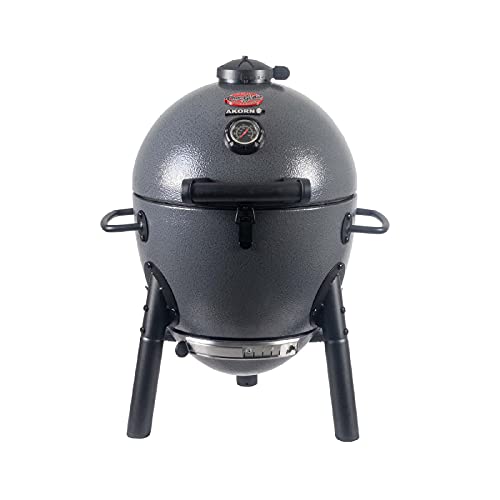
The Char-Griller Akorn Kamado is an insulated kamado-style cooker for low-and-slow and high-heat searing. Treat this as a starting point rather than a verdict: what matters is how its size, vent layout and cooking style line up with the way you actually cook outdoors. If it earns a place on your shortlist, check price on Amazon and compare the current listing details against the checklist in this guide before you decide.
Best for: households whose cooking matches the role described above. Not suited for: anyone whose space, fuel preference or typical crowd size points to a different style entirely.
PK360 — Best Premium Control
The PK360 is a cast-aluminum grill and smoker built for precise two-zone control. Treat this as a starting point rather than a verdict: what matters is how its size, vent layout and cooking style line up with the way you actually cook outdoors. If it earns a place on your shortlist, check price on Amazon and compare the current listing details against the checklist in this guide before you decide.
Best for: households whose cooking matches the role described above. Not suited for: anyone whose space, fuel preference or typical crowd size points to a different style entirely.
Whichever side you choose, the supporting kit overlaps almost completely — tongs, thermometer, gloves and a brush, as gathered in our guide to building a simple, useful grill tool set. Buy the cooker for your cooking, then kit it out once, properly.
Final Recommendation by Use Case
For grilling-first households: charcoal, without much hesitation. For smoking-first households with the budget and the space: pellet, and enjoy the automation. For the undecided: start with a good kettle, cook on it for a season, and let your own habits — not a showroom — tell you whether a second, automated cooker would earn its place.
A Week With Each: How the Difference Actually Feels
Specifications flatten this comparison, so run it as a diary instead. Monday, quick sausages after work: the pellet grill is cooking while the charcoal is still in its chimney, and by the time charcoal is ready the pellet meal is nearly done — point to pellets, and it is the point they score most often. Wednesday, burgers for friends who drift around the garden: the charcoal grill becomes the gathering place, the cook is part of the party, and the crust on the burgers starts conversations — point to charcoal. Saturday, a long pork shoulder: the pellet grill is loaded in the morning and largely ignored until afternoon, freeing the whole day; the charcoal version is better flavoured, say most tasters, but it has also consumed the cook’s attention in hourly instalments — points both ways, and your Saturday priorities decide which counts.
Sunday, steaks to finish the week: charcoal, and it is not close. The sear, the smoke, the sense of occasion — this is the cook pellet owners most often admit to envying, and the reason so many pellet households eventually add a small kettle beside the big automated cooker. Read the diary honestly and a pattern emerges that no table captures: pellets win the weeknights on convenience, charcoal wins the weekends on experience, and smoking splits by how much of yourself you want to spend. Households that cook outdoors mostly at weekends should weight the diary accordingly; households grilling four weeknights a week should weight it the other way.
There is also the question of failure modes, which a week of ordinary use hides and a year reveals. A charcoal grill fails gently: a worn grate, a stiff vent, a tired handle — each announced slowly, each fixed cheaply, none cancelling dinner. A pellet grill fails electrically or mechanically, sometimes mid-cook, and the fix may mean parts, waiting and a service conversation. That is not a reason to avoid pellets — their owners accept the trade knowingly — but it belongs in the comparison, because reliability over years is part of what you are buying with either fuel.
Fuel, Storage and the Logistics Nobody Mentions
Charcoal is sold everywhere, keeps indefinitely if dry, and asks only for a lidded bin in a dry corner. Pellets are also widely available, but they are ruined by moisture more completely — a damp bag swells and will not feed — and committed pellet cooks tend to store several bags of different woods, which is its own small warehouse. Both fuels reward buying ahead; both punish the mid-cook discovery that the bag is empty. The pellet grill adds one more logistical line: electricity. An outdoor socket within cable reach, in all weathers, for the whole cook, is a genuine requirement, and it fixes the grill’s position in the garden in a way charcoal never demands.
Cleaning logistics differ in texture rather than amount. Charcoal asks for ash removal and grate brushing — dusty, simple, tool-light. Pellet asks for ash vacuuming from the firepot, grease management, and periodic attention to the auger and burn area — cleaner to the touch, but more procedural, and skipping it has mechanical consequences rather than merely culinary ones. Neither routine is heavy; they suit different temperaments. People who like maintaining a simple tool lean charcoal. People who are diligent with appliances and unbothered by a manual lean pellet.
And there is the matter of what each grill does to your garden. Charcoal produces sparks at lighting and dumping, needs clearance and a heat-proof standing surface, and perfumes the neighbourhood with smoke that most people love and a few do not. Pellet grills smoke most at start-up, sit like appliances, and ask for shelter over their electronics. Close neighbours, small gardens and strict rules can tilt this comparison before flavour is ever discussed — which is why the practical sections of this guide come before the verdict, not after it.
Two Owners, Two Years On: A Follow-Up
Comparisons are usually written at purchase, when both sides are still promises. It is more useful to revisit two typical owners two years in. The charcoal owner has spent modestly and steadily: bags of fuel, one replacement grate, a cover that has done its work. Their grill looks seasoned rather than new, their fire skills are now instinct, and their cooking has widened — they smoke occasionally, sear confidently and host without thinking about the equipment at all. Their complaints are small and familiar: the wet evening lighting took forever, the ash after a big party. Nothing in two years has surprised them, and that absence of surprise is itself the charcoal ownership experience in one line.
The pellet owner has spent more, in larger steps: the grill itself, a steady flow of pellets in several woods, a cover, and — in the second year, commonly — some attention to the machine: a thorough deep clean, perhaps a temperature probe replaced, perhaps a part ordered and fitted. Their cooking has widened differently: long smokes are routine, weeknight cooks are genuinely easy, and they host larger groups with less personal effort than the charcoal owner spends. Their complaints are the mirror image: a steak night that left them wanting more crust, a damp pellet scare, the low-level awareness that the grill is a machine with a lifespan. Nothing has surprised them either, because both owners, in this telling, bought with their eyes open — which is the entire purpose of a comparison like this one.
The follow-up reveals the deepest difference, and it is not about food at all. The charcoal owner’s relationship is with a craft; the pellet owner’s is with a capability. Crafts reward practice and forgive neglect poorly in the moment but well over time. Capabilities reward purchase and forgive inattention, until the day they need servicing. Neither relationship is superior — but they suit different personalities, and personality, honestly assessed, predicts satisfaction with either grill better than any specification in the table at the top of this page. Choose the relationship you will enjoy maintaining.
Edge Cases That Break the Tie
Cold climates. Insulation and automation pull in opposite directions here. A pellet grill’s controller compensates for cold by feeding more fuel, and works well if its pellets stay dry and its electronics stay sheltered. An uninsulated charcoal grill burns more fuel and demands more vent attention in the cold, while an insulated kamado barely notices winter at all. If you grill through winter weekly, the kamado quietly wins this whole comparison for the charcoal side; if winter grilling is occasional, either fuel serves, and the tie returns to the main criteria.
Very small spaces. Charcoal wins outright where pellets cannot play: a compact kettle needs no power, no shelter for electronics and no pellet store, and it moves to a park when the garden feels small. The pellet grill’s footprint, weight and power lead make it a considered installation, not a flexible one. Large, frequent smoking. The tie breaks the other way: hopper capacity and automatic feeding turn a twelve-hour cook from a commitment into a errand, and households smoking weekly at volume will feel charcoal’s attention cost at full weight. Edge cases matter because most households are one — find yours in this list before you default to the middle of the table.
Power reliability and off-grid cooking. Storms, rural supplies, campsites and allotments all share one feature: electricity cannot be assumed. Charcoal does not care. For households whose outdoor cooking happens away from a socket — or who simply value a cooker that works when nothing else does — this edge case is not an edge at all but the whole argument, and it is one the pellet side, to its credit, has never claimed to answer.
The Learning Curve, Compared Honestly
Pellet grills are routinely described as effortless, and on day one they are: fill, set, cook. But effortlessness has a syllabus of its own that arrives later — pellet quality and storage, firepot cleaning, grease management, auger jams, the behaviour of the controller in wind and cold, and the troubleshooting of a machine that can decline to light on the morning of a big cook. None of it is hard, all of it is real, and owners who expected a kitchen appliance sometimes resent discovering they bought a small industrial process. The fair statement is that pellet cooking front-loads its ease and back-loads its learning, while charcoal does the precise opposite.
Charcoal’s first month is its hardest: fires run hot, then cool, then smoky, and the new cook blames the grill, the fuel and themselves in rotation. Then the curve flattens, suddenly and permanently, because the variables are few and the feedback is immediate — you can see the fire you are managing. Owners describe the same moment in the same words: it just clicked. From then on, charcoal asks less learning of its owner than any powered system asks over its lifetime, because there is nothing left to learn except recipes. When comparing the two, compare whole curves, not first days — unless your household genuinely needs day-one ease above all, in which case the pellet’s front-loaded ease is a legitimate, decisive argument and should be honoured as one.
What Happens When Something Goes Wrong Mid-Cook
Failure behaviour separates the two fuels more starkly than any success story. On charcoal, mid-cook problems are visible and physical: a fire fading (add coals, open vents), a fire raging (close down, move food to the cool zone), a flare-up (lid on, patience). The cook can see the problem, reach the cause and fix it with hands and judgement, and dinner survives almost every mishap short of rain on an unlit chimney. The failure modes are analog, gradual and forgiving — the same qualities that make the system feel old-fashioned are the ones that make it resilient.
On a pellet grill, mid-cook problems are systemic: a flameout from an empty hopper or a jammed auger, a power cut, a controller fault, a grease fire in a neglected trap. Several are preventable with the maintenance the manual prescribes, and modern controllers recover gracefully from some of them — but when a pellet grill stops, it stops as a machine stops, and the cook’s options narrow to troubleshooting or transferring the food to an oven. Experienced pellet owners manage this with hopper discipline and cleaning routines, and it rarely troubles them. But a buyer choosing between the fuels should know which kind of problem they would rather have at six o’clock with guests arriving at seven: a fire to coax, or a machine to diagnose.
The Verdict for Mixed Households
Many real households contain both kinds of cook — one who would tend a fire happily, one who wants dinner without ceremony — and for them the comparison resolves differently. The common settlements are three. Charcoal only, with the keen cook owning grill duty entirely and happily; this works when that arrangement is chosen, not defaulted into resentment. Pellet only, with the keen cook scratching the fire itch on camping trips and friends’ kettles. Or the two-grill garden, which sounds extravagant and is often the cheapest peace treaty in outdoor cooking: a modest kettle beside the pellet grill, each doing what it does best, neither asked to be what it is not. If your household is arguing about this comparison, it is probably describing the third settlement. Price it honestly before dismissing it — a basic kettle costs less than a season of compromising.
Resale, Lifespan and the Shape of Ownership
Ownership has a tail, and the two fuels’ tails differ as much as their beginnings. A charcoal kettle enters a long, flat maturity: years in which it needs nothing but fuel and small parts, holds a healthy second-hand value because a buyer can inspect everything that matters in two minutes, and can be handed down, sold on or donated with its usefulness intact. Its end, when it finally comes, is usually a single structural failure after a decade or more — a clear, almost courteous conclusion. A pellet grill’s life is more like a car’s: strong early years, a middle age of consumables and occasional parts, and a late-life calculation in which the cost of a controller or motor is weighed against the value of the whole, with electronics obsolescence quietly shortening the horizon regardless of how sound the steel remains.
Neither shape is a scandal; they are simply different contracts. The charcoal contract says: maintain me lightly and I will outlast your patience. The pellet contract says: maintain me properly and I will save your attention for as long as my systems are supported. Households that keep equipment for decades will feel the first contract as a profound advantage, and it is the reason so many twenty-year-old kettles are still cooking while their owners’ other appliances have turned over three times. Households that replace equipment on a shorter rhythm anyway will barely notice the difference, and for them the pellet’s convenience years may be worth more than longevity they will never use. As ever in this comparison, the honest answer is biographical before it is technical.
If You Still Cannot Decide: The Two Experiments
Two cheap experiments settle what argument cannot. First, eat deliberately: find two occasions — a friend’s kettle, a barbecue joint cooking over charcoal, a pellet-owning neighbour’s brisket — and taste the same kind of food from both fires within a short span, paying attention to the sear, the smoke and your own unforced preference. Palates are data, and yours outranks every reviewer. Second, borrow time: spend one evening cooking alongside a charcoal owner, doing the lighting and the ash yourself, and one evening beside a pellet owner doing the loading and the cleaning. You are not testing the grills in these experiments. You are testing yourself — your patience, your pleasure, your tolerance for ash and for manuals — and yourself is the variable this entire comparison has been trying to measure.
Run both experiments and most people stop being undecided, because the answer was never hiding in a specification. It was hiding in whether your shoulders dropped happily when you took the tongs, or when you pressed the button and walked away to join the party. Both of those people are right. Buy the grill for the one you turned out to be, and this comparison will have done the only job it ever really had.
Smoke, Neighbours and the Social Contract
Both grills smoke, but they smoke differently, and in close housing the difference is social as much as technical. A charcoal grill produces its boldest smoke at lighting, a visible plume for the first minutes that settles into the thin, appetising haze of a working fire; lump charcoal keeps that start-up cleaner than briquettes, and a chimney keeps it cleaner than fluid ever did. A pellet grill smokes most at ignition too, then runs remarkably clean at cooking temperatures, with its heaviest smoke appearing at the low settings smokers favour. Neither is a nuisance by design, and both become one in thoughtless hands — the late-night lighting, the unattended flare-up, the wind carrying a long smoke session across a row of open windows. The social contract is the same for both fuels: cook considerately, warn the neighbours you like, and share the results occasionally, which has settled more smoke disputes than any technology.
The Hybrid Answer, Priced and Judged
Because it keeps surfacing in real households, the two-grill settlement deserves a straight assessment rather than a raised eyebrow. Its logic is sound: each fuel does the work it is best at, the pellet carrying weeknights and long smokes, the kettle carrying searing, gatherings and every cook where the fire itself is the point. Its costs are equally plain: two footprints, two covers, two cleaning routines, two fuel stores — a garden and a household must genuinely have room for the arrangement, in space and in temperament. Judged coldly, it suits larger households that cook outdoors several times a week across all styles; it is surplus for the household grilling twice a month, which should choose one fuel, choose it well, and let mastery do the work that a second machine would only imitate. The comparison’s final wisdom is that completeness is not the goal. A single grill, perfectly matched and constantly used, beats a fleet — in flavour, in value, and in the only metric that finally matters, which is how often your household eats outside, happily, together.
And Finally: The Taste Test You Can Run This Weekend
If this comparison has a practical ending, it is an invitation rather than a verdict. This weekend, cook one simple thing — a chicken thigh, a burger, a thick slice of aubergine — over charcoal, slowly and attentively, and eat it outside where it was cooked. Notice the crust, the smoke, the way the process felt in your hands and in your shoulders. Then, when the chance comes, eat the same thing from a pellet grill and notice the same things. Your notes from those two meals will be worth more than this entire page, because they will be written in your own preferences rather than in ours. We have given you the criteria, the costs, the failure modes and the fine print. The last datum, the one that tips the scale, can only be gathered at a table, with people you like, eating food you cooked over a fire you chose. Go and gather it.
A Note on Renting, Borrowing and Tasting Before You Commit
One advantage of this comparison’s popularity is that both grills are everywhere, which makes pre-purchase research unusually empirical. Borrow a kettle for a weekend — they are light, forgiving of transport and owned by seemingly every third household. Eat at the pellet owner’s table and ask the unglamorous questions while the brisket rests: what broke, what do the pellets cost you in a season, what would you not buy again. Retailers’ demonstration days, where they exist, let you watch both fires managed by people who did not read the manual that morning. Every hour of this kind of research is worth a day of reading, including the day spent on this page, because the comparison’s deciding variables — your palate, your patience, your garden, your people — cannot be downloaded. They can only be met, in person, preferably with lunch involved.
One dimension this comparison has touched only lightly deserves its own moment before the verdict, because for a growing number of buyers it is the deciding one: repairability as a philosophy. The charcoal grill embodies an older idea of ownership — that a thing should be understandable by its owner, openable without permission, and fixable with parts that outlive the fashion cycle. The pellet grill embodies the modern appliance idea — sealed systems, electronic control, manufacturer servicing — with all the convenience and all the dependency that philosophy carries. Neither philosophy is a trick or a trap; they are genuine worldviews about how objects should behave in a life. But they predict satisfaction powerfully. The owner who delights in understanding their tools will feel at home with charcoal in a way no feature list can produce, and the owner who wants technology to recede will feel the same about pellets. If every other criterion in this long comparison has left you tied, break the tie here, on philosophy, and you will rarely regret it.
History offers a useful perspective to close on. Pellet grills are the younger technology by generations, and they earned their place the honest way, by solving a real problem: the labour of the long cook. Charcoal’s survival alongside them is not nostalgia or inertia; it is the market reporting, year after year, that the problem pellets solve is not the only problem cooks have. Some cooks want the fire itself. Some want the fire handled. The healthiest outcome for outdoor cooking is that both technologies thrive, each keeping the other honest — pellets reminding charcoal owners that convenience is a virtue, charcoal reminding pellet owners that involvement is one too. Your garden needs only one of them. Choose the one whose reminder you would rather live with.
A practical footnote for the household that chooses charcoal and later feels the pull of automation: you are not locked in, and the path between the fuels runs both ways without shame. Kettles have been joined by pellet grills, and pellet grills by kettles, in gardens everywhere, and each arrival taught its owner something true about their own cooking. The comparison matters at the moment of purchase; after that, what matters is the cooking. Make the choice this page has prepared you for, make it completely, and let the next comparison you read be about sauces.
If a single sentence must carry the whole comparison for the reader who has scrolled to the end, let it be this one: buy charcoal for the cooking, buy pellets for the convenience, and distrust any voice — including, at the limit, this one — that tells you the other side’s reason is not a real reason. Flavour is real. Time is real. The gardens that flourish are the ones whose owners weighed both in the currency of their own lives and chose without apology. Whichever grill is standing in yours next summer, seasoned or humming, may it be lit often, cleaned willingly and surrounded by people who are glad it is there. That outcome, and not the fuel, is what winning this comparison actually looks like.
A last word on timing the purchase itself, whichever way you decide. Both categories are seasonal, and the household that has done its thinking in advance can buy calmly when ranges turn over, rather than desperately on the first hot weekend when every other undecided household is shopping too. Decide in the cool of the year, buy when the moment is kind, and spend the season that follows cooking instead of comparing. The comparison will keep — it has kept for decades of summers, in gardens on both sides of the argument, all of them smelling wonderful.
Questions follow below, and they are the ones real buyers ask at the point of decision rather than the ones brochures prefer to answer. If yours is not among them, the chances are strong that the deciding section above has already answered it in passing — because in a comparison this close, the answer is rarely missing. It is usually just waiting to be recognised as yours.
Deciding at the Margin: Charcoal Grill When Pellet Grill Almost Wins
This section exists to focus on the marginal cases, the households that could happily live with either option, because that is where a comparison earns its keep. It adds a layer that a feature list cannot give you, grounded in the patio & outdoor living context this charcoal grill will actually live in. Where this guide names examples such as Weber Original Kettle, PK360, use them as test cases for the checks below rather than as shortcuts past them.
Use the listings as a checklist rather than as entertainment. For each charcoal grill you shortlist, note the exact variant, the included parts, what is sold separately, and which photographs show the item in a setting like yours rather than in a studio. If a model named elsewhere in this guide catches your eye, treat it as a worked example for this process: run it through the same measurements, the same weekly rehearsal and the same friction list before letting familiarity turn into preference. Consistency is the whole trick. Shoppers go wrong not by choosing the objectively weaker charcoal grill, but by judging one contender on features, the next on looks and the third on a single enthusiastic anecdote.
Think about who else has a vote. A charcoal grill is usually shared, moved, cleaned or complained about by more than one person, and the second user’s priorities are often the ones that surface after the return window closes. Check height, weight, reach, noise, heat, sharp edges or sheer visual presence, whichever apply, against the smallest, oldest or least enthusiastic person who will live with it. If you are buying for a household that includes children, pets, elderly relatives or lodgers, run the clumsy scenario too: the spill, the knock, the curious tug, the door left open. A robust charcoal grill choice survives other people; a fragile one only survives its buyer.
Consider the edge cases that sit just outside normal use, because a charcoal grill will meet all of them eventually. The unusually large load, the unusually small task, the day you are in a hurry, the day something else in the room is broken and this has to cover for it. Versatility is not about a long feature list; it is about behaving predictably when conditions are imperfect. Where a design offers settings, modes, attachments or configurations, ask what each one is actually for in your home, and be suspicious of flexibility you cannot attach to a real occasion. One well-judged configuration used weekly beats five clever ones used once, and the honest charcoal grill for your home is the one whose strengths line up with your most frequent edge case, not your rarest.
Build a simple decision checklist and score it in writing. Five lines are enough: fit in the space, fit with the routine, ease of cleaning or upkeep, quality of the parts that move or wear, and how the charcoal grill will be stored or will look when it is not the centre of attention. Score each contender quickly, then look only at the lowest scores, because purchases are usually ruined by their weakest point rather than saved by their strongest. If two options tie, choose the one whose weakness is cheapest or easiest to live with. This sounds mechanical, and it is meant to: a written checklist is the best defence against the very human habit of falling for the last photograph you looked at.
Finally, plan the first fortnight. Decide where the charcoal grill will live from day one, what it replaces, what accessory or companion it needs straight away and what small job you will use to learn its habits while returning it is still simple. Keep the packaging until that learning period is over, note anything that surprises you, and deal with a mismatch early rather than adapting yourself around a poor fit for years. The households that end up happiest with a charcoal grill are rarely the ones that researched longest; they are the ones that checked fit honestly, bought for the ordinary week, and paid attention during the first days instead of assuming the decision ended at checkout.
One more angle is worth your time: the second-order costs. A charcoal grill changes what happens around it. It can demand a different cleaning product, a new storage habit, a moved piece of furniture, a rearranged cupboard or a standing arrangement with the people you live with. List those knock-on effects before you buy and decide whether you accept them as part of the deal. Sometimes the answer is an easy yes, and the charcoal grill earns its place by improving the whole routine around it. Sometimes the honest answer is that the supporting changes are the real project, and the purchase should wait until you are ready for them. Either answer is useful; the only bad outcome is discovering the knock-on effects by accident, one irritation at a time, after the decision can no longer be revisited.
It also helps to separate the problems a charcoal grill can solve from the problems it merely moves. If the underlying difficulty is space, the answer may be a smaller format or a different location rather than a more elaborate model. If the difficulty is time, look for the option that removes steps rather than the one that performs each step slightly better. If the difficulty is that several people want different things, a compromise design that everyone rates as good enough will usually outlast a specialist design that one person loves and everyone else avoids. Naming the real problem in one sentence, out loud, before you order, is a surprisingly powerful filter, and many shoppers find that the sentence itself points at a different charcoal grill than the one they started out researching.
Start with the unglamorous measurements. For a charcoal grill, the numbers that decide satisfaction are rarely the headline ones in a listing; they are ground level, exposure to wind and rain, clearance from walls and planting, and where the item will actually live in winter. Write the real dimensions of your space down, including the awkward constraints you normally work around without thinking, and hold every contender up against that sheet rather than against a showroom photograph. Then walk the route the charcoal grill will take on delivery day and during normal use. A choice that fits on paper but fights you every time it is moved, opened, cleaned or stored will lose its shine quickly, however strong its other qualities look in a comparison table.
Frequently Asked Questions
Which tastes better, charcoal or pellet?
They taste different rather than better or worse. Charcoal gives the stronger, classic grilled flavour, boosted by drippings vaporising on the coals. Pellets give a cleaner, milder wood smoke. Most people who love traditional barbecue flavour lean charcoal; those who find it overpowering often prefer pellets. If you can, eat food from both before committing — palate settles this faster than argument.
Can a pellet grill sear a steak properly?
It can cook a very good steak, but the sear is its weakest suit because the heat is indirect. High settings, preheated cast-iron or sear grates, and finishing techniques all help, and some models add direct-flame features. A charcoal fire still produces the deepest crust with the least fuss. If steakhouse searing is your main event, weight this heavily.
Which is cheaper to own over five years?
Charcoal, in most realistic patterns. The grill itself sits at a lower tier, fuel is inexpensive and widely available, and there are almost no service parts. A pellet grill costs more up front, uses pellets steadily and may need a fan, motor or controller over its life. Heavy smoking use narrows the gap, because charcoal’s fuel use rises on long cooks, but charcoal still usually wins the total.
Which is better for beginners?
It depends what the beginner wants to learn. A pellet grill is easier on day one — set the temperature and cook. A charcoal grill teaches fire craft quickly and forgives through two-zone cooking, and most beginners are competent within a few sessions. Choose pellet for instant ease; choose charcoal if you want skills that transfer to every fire you will ever cook on.
Do pellet grills work without electricity?
No. The auger, fan and controller all need power, so a pellet grill needs a mains outlet or a suitable power source, and an outage mid-cook stops the fire. A charcoal grill needs nothing but charcoal and a match, which is why charcoal remains the default for camping, tailgating and cooking anywhere away from the house.
Related Guides
Keep exploring with these guides from the same collection: charcoal grill buying guide; charcoal grill pros and cons; charcoal grill review; charcoal grill reviews; protecting your deck or patio surface under the grill; building a simple, useful grill tool set.