Disclosure: As an Amazon Associate, dailyhomedecorating.com earns from qualifying purchases. Links on this page are affiliate links; they cost you nothing extra. Prices and availability change often, so check the current Amazon listing before you buy.
Every bookshelf buying guide should start with one honest observation: a bookshelf is one of the simplest pieces of furniture you will ever buy, and one of the easiest to buy wrong. The frame is basic, the shelves are flat, and yet the difference between a bookshelf that serves a room for a decade and one that sags, wobbles, or gets donated within a year comes down to a handful of decisions made before you order. How tall should it be? How much weight will each shelf really hold? Does the back panel matter? Should the shelves adjust? This guide walks through every one of those decisions in plain language, then points you to the styles and models that fit the way most households actually live with their books.
A bookshelf does three jobs at once. It stores books, obviously, but in most living rooms it also displays the objects that make a room feel personal — framed photos, plants, ceramics, board games, a record player — and it organises the visual chaos of a household into something that looks deliberate. Buy for only the first job and you may end up with a purely functional tower that fights your décor. Buy for only the second and you may end up with a pretty frame that bows under a real book collection. The sections below keep all three jobs in view.
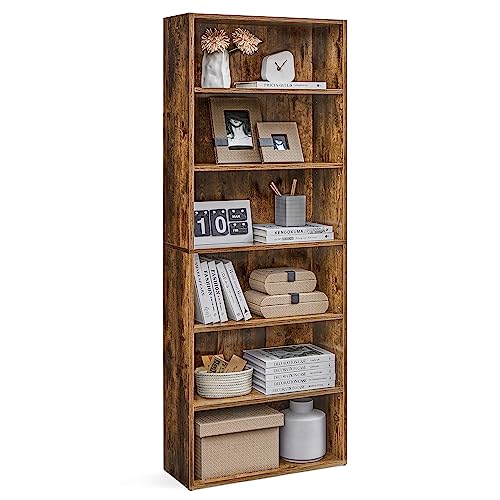
Key Takeaways
- Measure your wall and ceiling first. Height is the single most common buying mistake, and a shelf that is two inches too tall for a sloped ceiling or a low bulkhead is a return waiting to happen.
- Shelf material and thickness decide real-world capacity. Long spans of thin engineered board sag under hardcovers; shorter spans, thicker boards, and a fixed middle shelf all resist sag.
- Adjustable shelves matter more than shelf count. A tall shelf for art books and a short shelf for paperbacks beats six identical gaps.
- Every tall bookshelf needs a wall anchor. Books are heavy, the load sits high, and tipping is a genuine household hazard — plan the anchor before the shelf arrives.
- Match the style to the room’s job: open frames feel light in small rooms, backed bookcases feel substantial in libraries and offices, ladder shelves suit display more than dense storage.
In this guide
What a Bookshelf Does and the Main Types
At its simplest, a bookshelf is a set of horizontal surfaces held at useful heights inside a frame. Everything else — the back panel, the doors, the ladder lean, the cube grid — is a variation on how those surfaces are supported and how the piece meets the wall. Understanding the main types first makes every later decision easier, because capacity, stability, and assembly effort all follow from the type you choose. If you want a deeper comparison of the two most-confused terms in this category, our companion piece bookcase vs bookshelf, side by side untangles where one ends and the other begins.
Standard Open-Frame Bookshelves
The standard bookshelf is a rectangular frame — two sides, a top, and a run of shelves — usually with an open or thin-panel back. It is the best-selling form because it balances capacity, price tier, and assembly simplicity. Open-frame designs in metal and engineered wood dominate the entry and mid tiers: they ship flat, bolt together with cam locks or hex bolts, and hold a respectable mixed load of books and décor. Their weakness is lateral stiffness; a tall, narrow open frame relies on its back panel or a wall anchor to stop side-to-side racking. Choose this type when you want maximum shelf metres per wall metre and a look that disappears behind what you put on it.
Ladder Bookshelves
A ladder bookshelf leans against the wall, with shelves that are deep at the bottom and shallower toward the top, like the rungs of a ladder widening as they descend. The silhouette is light and architectural, which is why ladder shelves appear in so many living-room and bedroom photos. The trade-off is capacity: the shallow top shelves suit paperbacks, plants, and framed prints rather than encyclopaedias, and the leaning format absolutely requires wall fixing at the top. Ladder shelves are display furniture first and book storage second. If your collection is mostly décor with a supporting cast of books, the ladder form serves it beautifully; if you own rows of heavy hardcovers, look elsewhere.
Cube and Grid Bookshelves
Cube storage divides the frame into a grid of square compartments. The grid is inherently stiff — every divider is also a structural brace — so cube units feel solid and resist racking better than open frames of similar size. Cubes swallow fabric bins, vinyl records, board games, and children’s books with equal ease, and many units can stand vertically or horizontally, which makes them the most reconfigurable type in the category. The compromise is book fit: fixed cube dimensions waste space on short paperbacks and can be too small for tall art books. Households with mixed clutter rather than a pure book collection usually find cubes the most forgiving choice.
Corner Bookshelves
Corner units are shaped — triangular, quarter-round, or L-wrapped — to occupy the dead angle where two walls meet. They rarely hold the most books, but they convert genuinely wasted space into storage, which in a small apartment can matter more than raw capacity. Tiered corner shelves with graduated shelves work well for plants and display; full-height corner bookcases with proper shelf depth handle real book loads. Check the depth of the corner shelves carefully: many decorative corner stands have shelves too shallow for anything but a mug and a small plant.
Bookcases With Backs, Doors, and Cabinets
The traditional bookcase adds a full back panel and sometimes doors or a lower cabinet to the basic frame. The back panel is not cosmetic: screwed or nailed across the frame, it transforms stiffness, stops books sliding through, and gives the piece a finished, furniture-like presence from every angle. Doors hide clutter and protect contents from dust and sunlight; a lower cabinet swallows the unsightly overflow — cables, games, paperwork — that open shelves display whether you want them to or not. This is the type to choose for a home library, a study, or any room where the shelf will be seen from the side or the back. Our dedicated guide goes deeper: the full bookcase buying guide.
Low and Horizontal Bookshelves
Not every bookshelf reaches for the ceiling. Low, wide units — two or three shelves high — run under windows, along sofa backs, and beneath wall-mounted televisions. They hold less, but they keep books at seated eye level, provide a display surface on top, and carry zero tipping anxiety once anchored. In children’s rooms, low shelves are the safest and most usable form: a child can reach every book, and the centre of gravity stays near the floor. If you are furnishing a reading corner, pair a low shelf with a comfortable chair — the combinations in chairs made for long reading sessions show what works.
Bookshelf Buying Guide: Top Picks at a Glance
The table below previews the models examined in detail later in this guide. Because this category rewards fit over raw specification, each pick is labelled with the job it does best rather than a single overall ranking. Prices in this category move constantly, so every linked listing should be checked on Amazon at the time you buy; the tier column gives you the honest positioning — entry, mid, or premium — so you can shortlist by budget band without chasing numbers that will change next week.
| Pick | Badge | Type | Tier | Best for |
|---|---|---|---|---|
| VASAGLE 6-Tier Bookshelf | Best Overall | Open frame, steel and board | Mid | Living rooms that mix books and display |
| Sauder 5-Shelf Bookcase | Best Traditional | Backed bookcase, adjustable shelves | Mid | Home libraries and offices |
| Furinno Turn-N-Tube 5-Tier | Best Budget | Tool-free tube frame | Entry | Rentals, dorms, first apartments |
| IRIS USA 3-Shelf Wide Bookshelf | Best for Kids’ Rooms | Low, wide, rounded shelves | Entry | Children’s books and toy rotation |
| Nathan James Theo Ladder Bookcase | Best for Display | Leaning ladder | Mid | Décor-led corners and bedrooms |
| Tribesigns 5-Tier Industrial Bookcase | Best Heavy-Duty Look | Open industrial frame | Mid | Lofts, studies, plant-and-book walls |
None of these is the right answer for every room. The criteria sections that follow explain how to read your own space, collection, and household, so that by the time you reach the mini-reviews you will already know which two or three rows of that table deserve your attention.
How Much Storage Capacity Do You Actually Need?
Capacity is where buyers most often guess — and guess wrong in both directions. The reliable way to size a bookshelf is to measure your books, not your wall. Take the books you genuinely intend to shelve, stand them together on a table or along a floorboard, and measure the total run length. A shelf metre of mixed paperbacks and hardcovers holds a surprising amount, but collections grow: leave roughly a quarter of your total shelf length empty at purchase time, and you will not be shopping again in eighteen months.
Depth matters as much as length. Most trade hardcovers and paperbacks sit comfortably on shelves around ten to twelve inches deep. Shallower shelves — eight inches or less — force books to the very edge and make the shelf useless for storage boxes, board games, or a small speaker. Deeper shelves, fourteen inches and beyond, invite double-stacking and hidden clutter. For a mixed living-room load, a depth in the ten-to-twelve range is the sweet spot, and it is one reason standard frames outsell both the very shallow ladder tops and the very deep cabinet styles.
Weight capacity per shelf is the figure buyers rarely check and most need to. A full shelf of hardcover books is heavy — a metre of dense hardcovers can weigh as much as a grown adult’s suitcase allowance several times over. Manufacturers state per-shelf limits, and they vary enormously between a thin board spanning a wide frame and a thick board spanning a narrow one. The practical rules: shorter spans carry more, fixed shelves carry more than adjustable ones on pins, and the bottom shelf — supported closest to the floor — should always take your heaviest row. Load atlases, cookbooks, and bound reference sets low; save the top shelves for paperbacks and lighter display pieces. If you are comparing raw capacity claims across brands, the roundup in our hands-on bookshelf reviews shows how the main contenders differ in construction.
How Tall and Wide Should a Bookshelf Be?
Start with the ceiling, not the catalogue. Measure floor to ceiling at the exact spot the shelf will stand — ceilings and floors both slope more often than people expect, especially in older houses — and leave at least a couple of inches of clearance so the assembled unit can be tilted upright during installation without scraping. Most freestanding bookshelves fall between roughly five and six and a half feet tall; taller library-style units exist but demand anchoring without exception and a step stool for the top shelf.
Width interacts with sag. A single wide unit with long unsupported shelves will bow sooner than two narrower units side by side, even at the same board thickness, because span is the enemy of stiffness. If you need a long run of shelving, consider two medium frames with a shared look instead of one very wide frame — you gain a fixed middle support, easier delivery, and the option to split the pair later if you move. Width also decides whether the shelf can get into the room at all: flat-pack panels are forgiving, but pre-assembled or wide framed units need a clear path through doors and around stair turns.
Finally, think about reach. The top shelf of a tall unit is display territory — objects you look at, not books you pull down weekly. If your everyday reading rotation must live on the shelf, keep the working shelves between knee and shoulder height and let the top shelf carry plants, ceramics, and the books you love owning more than opening. A tall shelf bought for a short household’s daily books is a quiet daily frustration; the honest fix is a mid-height unit or a sturdy step stool kept nearby.
Which Materials Hold Up Best?
Solid wood is the traditional answer, and a well-made solid wood shelf remains the benchmark for stiffness and repairability — scratches sand out, joints can be re-glued, and the piece ages gracefully. It is also the heaviest and sits in the premium tier, which is why most of the market is engineered wood: particleboard or MDF cores with a laminate or veneer finish. Modern engineered boards are far better than their reputation, provided the board is thick enough and the span modest. The failure mode to avoid is the very thin board on a wide span — it will creep into a visible bow under hardcovers within a couple of years, and no amount of flipping the shelf fully restores it.
Metal frames — usually steel tube or flat bar — paired with board shelves are the other mainstream construction, and they earn their popularity. Steel side frames resist racking, the industrial look suits lofts and modern rooms, and the open structure keeps the piece visually light. Check the shelf boards on metal-frame units as carefully as on all-wood ones: the frame may be strong while the boards remain the weak link. Plastic and resin shelving, common in low wide units for children, is light, washable, and free of sharp corners, but it flexes under serious book weight and belongs under paperbacks and toys rather than a hardcover collection.
Finish decides maintenance. Laminates wipe clean and shrug off the ring from a coffee mug; real veneers look richer but mark more easily and dislike standing water. In a sunny room, darker finishes fade unevenly where books shield them — a cosmetic issue only, but one worth knowing before you commit a walnut-toned shelf to a south-facing wall. Whatever the material, the back panel deserves a look: a thin hardboard back nailed on is adequate, a panel that screws into the frame adds real rigidity, and a fully open back demands the wall anchor do all the anti-racking work.
How Important Are Adjustable Shelves?
More important than almost any other feature, because books are not one height. A typical mixed collection includes mass-market paperbacks, taller trade paperbacks, hardcovers, and a few oversized art or cookery books that defeat any fixed spacing. Adjustable shelves on metal pins let you set two generous gaps for the tall formats and compress the rest, effectively gaining a shelf’s worth of usable space compared with a fixed layout of identical gaps. When you inspect a unit, check the pin holes: closely spaced holes down the full height of the sides give real flexibility; a few token holes near the middle give almost none.
One shelf in most designs is fixed — usually the middle or bottom shelf — because it braces the frame. That is normal and desirable; the fixed shelf is also your strongest, so plan the heaviest load there or directly below it. Count the adjustable shelves you actually get, not the total shelf count in the product name: a “five-shelf” unit might mean five levels including the fixed one and the top surface. Also confirm whether extra shelves can be bought later. Collections grow unevenly, and a spare shelf added in year three is cheaper than a second unit.
How Will You Keep It From Tipping Over?
A loaded bookshelf is a tall, narrow, top-heavy object, and tipping is the one genuine safety hazard in this category. The fix is simple and non-negotiable: anchor the unit to the wall. Most reputable bookshelves include an anti-tip strap or bracket in the box. The strap must reach a wall stud, or a proper hollow-wall anchor rated for the load — a screw into bare plasterboard alone is not an anchor. Position the shelf, mark the strap point, find the stud with a stud finder, and fix it before you load a single book. Our step-by-step walkthrough covers the whole process: how to install a bookshelf safely.
Households with small children should treat anchoring as urgent rather than eventual. Children climb shelves to reach a tempting top-shelf object, and a shelf that feels rock-solid to an adult’s push test can still pull over under a climbing child’s shifting weight. Keep tempting objects off the top shelves in children’s rooms, load the bottom heaviest, and prefer low wide units there entirely. Renters who cannot drill should look for furniture straps that work with heavy-duty adhesive pads as a lesser alternative, choose lower and wider formats, and never place a tall narrow unit where a child plays unsupervised.
How to Prioritise by Use Case
The Family Living Room
Prioritise stiffness, anchoring, and a finish that wipes clean. The living-room shelf holds the household’s shared books, games, and display pieces, gets bumped by vacuums and children, and anchors the room visually. A mid-tier open frame or backed bookcase around five to six feet tall, with at least three adjustable shelves, covers nearly every family. Leave one cube or shelf deliberately half-empty for the rotating clutter of real life. Pair the shelf with the room’s other anchors — the rug and seating — rather than matching it in isolation; rugs that ground a living room layout helps coordinate the floor side of the picture.
The Small Apartment
Prioritise footprint and vertical reach. When floor space is the scarce resource, a tall narrow unit or a corner shelf converts wall into storage without eating the room. Measure the delivery path as carefully as the wall. Ladder shelves and slim open frames keep the room feeling light; avoid deep cabinets that project into walkways. Purpose-built roundups like bookcases sized for small spaces collect the compact end of the market if your wall is truly tight.
The Home Office and Study
Prioritise capacity and shelf adjustability. Reference books, binders, and files are tall and heavy; you want thick boards, short spans, and a fixed shelf low in the frame for the heaviest row. A backed bookcase reads as furniture from the doorway and hides the cable-and-paper chaos behind doors if you choose a cabinet base. Two matching units flanking a desk give a library wall for less than a built-in, and can move house with you — the central argument in is a bookshelf worth it for a home office.
The Child’s Bedroom
Prioritise low height, rounded edges, and washable surfaces. Forward-facing displays and low open shelves let small children choose their own bedtime books, which matters more for reading habits than capacity does. Keep the unit wide rather than tall, anchor it anyway, and expect to re-purpose it within a few years — today’s picture-book shelf is tomorrow’s toy and game storage, so a neutral finish outlasts a themed one.
The Top Picks in Detail

VASAGLE 6-Tier Bookshelf — Best Overall
The VASAGLE 6-tier pairs a steel frame with wood-look boards in the industrial style that currently dominates living-room shelving, and it earns the overall slot by doing nothing badly. Six levels give genuine separation — books low, display high — and the open frame keeps a small room feeling unboxed. The boards sit in the frame rather than spanning a wide cabinet, which keeps spans short and sag at bay for typical mixed loads. Assembly is a bolt-together job with clear sequencing, and the adjustable feet help on uneven floors.
Best for: living rooms mixing a real book collection with display. Not suited for: buyers who want a backed, furniture-formal look, or a full wall of heavy hardcovers on every level — check price on Amazon and confirm the current shelf configuration before ordering.

Sauder 5-Shelf Bookcase — Best Traditional
Sauder’s five-shelf bookcase is the classic backed design: engineered wood, a full back panel, and adjustable shelves that swallow binders and tall hardcovers without complaint. It reads as proper furniture, which is why it anchors so many home offices and studies. The back panel adds the rigidity open frames lack, and the enclosed sides keep book rows tidy from every viewing angle. Assembly is the familiar cam-lock process — allow a unhurried hour and a second pair of hands for standing it upright.
Best for: home libraries, studies, and anyone who dislikes the open industrial look. Not suited for: frequent movers — backed bookcases are heavier and less forgiving of repeated disassembly. Check price on Amazon for the current finish options.
Furinno Turn-N-Tube 5-Tier Bookshelf — Best Budget
The Turn-N-Tube design replaces screws with threaded plastic tubes that twist the shelves together by hand, which makes this the fastest assembly in the category and a favourite for dorms and first rentals. The honest trade-off is load: the boards and tube joints suit paperbacks, décor, and lighter mixed use rather than a hardcover library, and the unit should be treated as light-duty furniture. Within that honest brief, it is excellent — light to move, kind to deposit-sensitive rentals, and cheap enough in tier terms to replace rather than repair.
Best for: students, renters, and light collections. Not suited for: dense hardcover rows or households expecting a decade of heavy service. Check price on Amazon.

IRIS USA 3-Shelf Wide Bookshelf — Best for Kids’ Rooms
IRIS USA’s low, wide three-shelf unit is built from moulded plastic with rounded profiles, and it is the rare bookshelf a toddler can use entirely unaided. The shelves are sized for picture books and small bins, the whole piece wipes clean after the inevitable juice incident, and its low centre of gravity removes most tipping worry — anchor it anyway. Adults should not expect it to moonlight as a serious bookcase; it is a children’s organiser that happens to hold books very well.
Best for: nurseries, playrooms, and early readers. Not suited for: adult collections or display-led living rooms. Check price on Amazon for colour options.
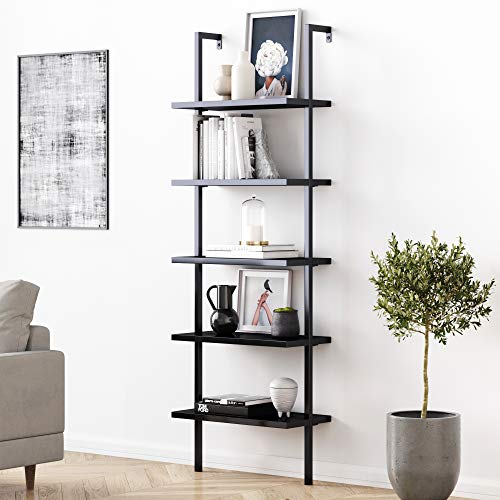
Nathan James Theo Ladder Bookcase — Best for Display
The Theo leans a slim ladder profile against the wall with graduated shelf depths — generous at the base, shallow at the top — and a metal-and-wood finish that photographs as well as it functions. It is display furniture: plants, framed prints, a small speaker, and a curated row of books look intentional on it. The top shelves will not take oversized volumes, and the lean makes wall fixing mandatory rather than advisory. Bought with clear eyes, it is one of the most room-flattering shelves in the mid tier.
Best for: décor-led corners, bedrooms, and entryways. Not suited for: bulk book storage. Check price on Amazon.

Tribesigns 5-Tier Industrial Bookcase — Best Heavy-Duty Look
Tribesigns builds its five-tier around a chunkier steel frame with X-bracing at the back, which visibly stiffens the structure and suits the loft-and-study aesthetic. The open shelves run deep enough for storage baskets and larger volumes, and the bracing makes it a confident home for a plant-and-book wall. It is still an open frame — books need ends or bookends at row edges — and the industrial styling will fight a very traditional room. For modern and transitional spaces it is a strong mid-tier anchor; the balanced assessment of the style’s compromises is in bookshelf pros and cons, honestly weighed.
Best for: lofts, studies, and display walls with substance. Not suited for: formal traditional rooms. Check price on Amazon.
How to Read a Bookshelf Listing Without Being Fooled
Product listings in this category are not dishonest so much as optimistic, and knowing where the optimism hides saves returns. Start with the shelf count in the product name. A “six-tier” or “six-shelf” unit usually counts every horizontal surface including the top of the frame and the floor-level base; the number of shelves you can actually adjust or fill in the middle is smaller. Neither figure is a lie, but plan your storage around the lower one.
Dimensions deserve the same scepticism. The stated height is the frame’s full height, but the usable top shelf sits below the top rail, and the stated depth is the frame depth at its widest point — often the base — while upper shelves on ladder and tapered designs are shallower. When a listing gives one depth number for a graduated design, assume it describes the bottom shelf and hunt the description or diagram for the top shelf’s real depth. Similarly, “holds up to” weight claims sometimes describe the whole unit’s total rather than a single shelf; the per-shelf figure is the one that predicts sag, and reputable listings state it separately for the model.
Photographs flatter scale. A bookshelf styled in a bright loft with a handful of art books and a trailing plant is showing you a mood, not a load test. Look for the photograph or diagram that shows the unit fully loaded with ordinary books, and for scale references — a standard door frame in shot is roughly a known height, and a shelf that reaches only partway up it is shorter than the styling suggests. Finish names are the last trap: “walnut,” “oak,” and “marble” in this price territory describe printed or laminated finishes, not the solid material. That is fine — modern laminates are durable and consistent — but expect a printed grain to repeat and to look flatter in raking light than solid timber does.
Style, Finish, and Fitting the Room
A bookshelf usually covers more wall than any other single piece except the sofa, so its finish does real decorative work. The safe approach is tonal rather than identical matching: pick a shelf finish in the same temperature family as your existing furniture — warm with warm, cool with cool — and let it differ in depth or sheen. Exact-match attempts between different manufacturers almost always miss by half a shade and look like a mistake, while a deliberate contrast — black steel against pale walls, light oak against a deep-coloured sofa — looks like a decision. The coordinated end of the market is surveyed in bookcases styled for modern homes.
Visual weight matters as much as colour. Open frames and ladder shelves let wall colour and light pass through, so a small or dark room keeps its sense of space; backed bookcases read as solid architecture and suit larger rooms or walls that need presence. In a narrow room, run shelves on the short wall to widen the perceived proportions; in a long room, a low horizontal unit along the long wall avoids the corridor effect that two tall towers would create.
Styling the shelves themselves follows a few forgiving rules. Group books in runs broken by horizontal stacks, which double as bookends and display plinths. Leave roughly a third of the total shelf length unfilled — negative space is what separates a styled shelf from a storage problem. Put the largest, heaviest visual objects low and the lightest high, both for stability and because the eye reads a shelf bottom-up. Plants belong where their watering will not drip onto books below; trailing plants on the top shelf solve this elegantly. And light the shelf if you can: a small lamp on a middle shelf or a picture light above transforms a bookcase from storage into the room’s evening focal point, especially alongside the seating in sofas that anchor a long living room.
First Setup and Care Essentials
Assembly goes better with three small disciplines. First, build the unit in the room it will live in, lying flat on a rug or the flattened shipping box so the finish survives contact with the floor. Second, tighten fixings in sequence and only fully torque them once the frame is square — a frame tightened crooked stays crooked, and doors and shelves inherit the error. Third, anchor before loading, every time; a loaded shelf is far harder to shift the final inch against the wall.
Once loaded, distribute weight like you mean it: heaviest books on the bottom shelf and the fixed shelf, rows centred rather than shoved to one side, and nothing heavy cantilevered on the very top. Dust shelves from the top down with a dry or barely damp cloth; laminate finishes tolerate a mild cleaner, veneers prefer a dry cloth and coasters under plants. Every year or so, check the anchor strap for tension and re-tighten any cam locks that have relaxed — furniture that carries this much weight deserves the same annual once-over you would give a bicycle. If the piece will sit on carpet, expect it to settle; re-level the feet after the first fortnight.
Mistakes to Avoid
The classic mistake is measuring the wall but not the ceiling, the skirting board, or the delivery route — a bookshelf must fit all four. Next comes overloading the top shelves because they are the emptiest, which raises the centre of gravity exactly where you least want it. Buyers also routinely choose depth by eye and discover their storage boxes overhang or their books drown in a too-deep shelf; measure your largest intended item. Skipping the wall anchor “because it feels solid” is the mistake with real consequences, covered above. Finally, avoid matching a shelf to a photograph rather than to your collection: count your actual shelf metres, be honest about how much is display and how much is dense storage, and let the arithmetic choose the type. A single-brand deep dive can help calibrate expectations — see our full bookshelf review — and the wider market scan in the best bookshelves for every room rounds out the picture.
Planning a Whole Wall of Shelving
Many buyers eventually graduate from one bookshelf to a run of them, and planning for that day at the first purchase saves money and mismatched finishes later. If a full library wall is even a possibility, buy from a product family rather than a one-off design: manufacturers keep popular frames in production across several sizes, so a matching second and third unit can join the first when the collection demands it. Buy the tallest and widest unit your current wall takes, place it at one end of the eventual run rather than centred, and leave the expansion direction clear of radiators, sockets you need daily, and door swings.
A run of identical units reads as built-in furniture when you close the gaps: align the tops precisely with adjustable feet, butt the frames tightly, and consider a continuous pelmet or a row of identical storage boxes along the top to hide the seams. Mixed heights can work too — a tall unit flanked by low ones makes a stepped library that suits sloped ceilings — but mixed depths almost never look intentional, so keep the front faces flush. Leave one section of any long run deliberately lighter: a reading chair pulled up to a low section, a lamp, and a small side table turn a storage wall into a destination within the room, which is the entire point of owning books at home. The seating that completes that corner is covered in lounge chairs built for reading.
Electrical planning is the unglamorous detail that separates a good shelving wall from an annoying one. Shelf runs cover wall sockets; decide before installation which sockets the shelf will hide and which must stay reachable, and route a single extension lead to an accessible point rather than daisy-chaining behind loaded shelves. If you plan shelf lighting, battery-powered lights avoid the cable problem entirely and can be added at any stage. Finally, photograph the wall before the shelves go up if your pipes or cables run through it — future-you, drill in hand for the anchor fixings, will be grateful.
A Word on Second-Hand and Vintage Bookshelves
The used market deserves a mention in any honest buying guide, because solid wood bookshelves are among the best second-hand buys in furniture: they have no mechanisms to wear out, their failure modes are visible at a glance, and older solid pieces often outclass new engineered ones at the same tier. Inspect a used shelf the way you would inspect the new ones in this guide — sight along each shelf for bow, push the frame sideways to feel for rack, check the back panel’s fixings, and smell the interior for the mustiness that betrays damp storage, which books will absorb within weeks. Measure it in the seller’s hallway, not from the listing, and confirm it fits your car or delivery route before money changes hands. A sound vintage shelf plus a fresh wall anchor is frequently the best-value route to a real library; a bowed one is firewood at any price.
One caution applies to older painted furniture in particular: paint on pre-modern pieces can contain lead, so a flaking painted shelf destined for a child’s room should be professionally stripped and refinished or passed over entirely. Unpainted timber and sound modern laminates carry no such concern. Beyond that caution, buy used with confidence — and spend the savings on the books.
Putting the Shortlist to Work: A First-Month Reality Check for Your Bookshelf
A buying guide can rank features, but a bookshelf only proves itself once it is living in your living room furniture routine. The first month is the honest test period: the novelty fades, the daily habits settle in, and the small mismatches between a listing photo and your room become impossible to ignore. Use the weeks after delivery as a structured trial rather than a victory lap. Keep the packaging until you have lived with the bookshelf through ordinary weekdays and one busy weekend, because the two situations stress very different qualities. What follows is a practical way to judge whether the model you chose is genuinely right, and what to adjust while adjusting is still easy.
Week One: Fit, Clearance and the Walk-Past Test
Start with movement. Walk the routes you actually use — carrying laundry, a tray, a vacuum, or shopping bags — and notice whether the bookshelf narrows any of them. Open every door, drawer, lid or panel to its full travel and check it against walls, skirting and neighbouring furniture. Sit or stand where you will normally use it and look at it from that height, not from the doorway: proportions that looked balanced in a listing can feel top-heavy or lost once your eye level changes. If something feels awkward now, it will not improve with familiarity; small placement changes made in week one are far easier than returns made in month three.
Weeks Two to Four: Load It the Way You Really Live
Most bookshelf disappointments come from a gap between the staged use in photographs and the untidy reality of a working home. So load it honestly. Put the heavy, awkward, everyday items in first, not the photogenic ones, and leave it that way for a fortnight. Watch for the early warning signs that matter: flexing, wobbling, sticking, fading, lingering odours, or parts that need constant re-adjusting. Note which features you reach for daily and which you have not touched at all, because that pattern tells you what to prioritise — and what to ignore — if you ever buy a second one for another room.
Before the trial month ends, run through this short decision checklist for your bookshelf:
- Photograph the bookshelf in place from the doorway and from your usual seat, and judge the proportions from the pictures rather than from memory.
- Check every fixing, joint and moving part once by hand, and tighten or adjust anything that has settled after the first days of use.
- Move one item you use every day to the most reachable position, and one rarely used item to the least reachable, then see whether the layout still makes sense.
- Clean the bookshelf once using only the method the maker recommends, and note how long it honestly takes you.
- Write down the single change you would make if you bought again — size, finish, layout or configuration — while the reasoning is still fresh.
Ask how the bookshelf behaves on your worst floor, wall or surface rather than your best one, since homes are uneven and listings are photographed in perfect rooms. Keep the receipt, delivery note and a photograph of the label together, because warranty conversations go smoothly when dates and model details are at hand. If two people in the household disagree about the bookshelf, let the person who will use or maintain it most have the deciding vote on practical questions. Beware of buying for the household you hope to become; the bookshelf that serves the household you already are will be used this week, not someday. A tape measure, a spirit level and ten patient minutes prevent more bookshelf regrets than any amount of comparison shopping after the fact. When a listing is vague about a dimension, material or included part that matters to you, treat the vagueness itself as information and look for a clearer seller. Photograph your room at the time of day you will use the bookshelf most, and compare candidates against that light rather than against bright midday photographs. Small households should weight compactness and easy storage more heavily, while large households should weight durability and simple operation, because the failure modes differ. If the bookshelf will serve children or older relatives, test the key actions with the weakest grip and the shortest reach in the house in mind. Leave a little capacity unused — in size, storage or power — because a bookshelf run permanently at its limit ages faster and annoys sooner than one with headroom. Consider the bookshelf from the perspective of the person who cleans around it, because designs that trap dust, block access or demand special products quietly tax every week of ownership.
If the bookshelf passes the month with only minor grumbles, you have bought well, and the remaining niggles are usually arrangement problems rather than product problems. If it fails on fit or on daily friction, act while the return window is open instead of hoping the irritation will fade. Either way, the trial turns a hopeful purchase into a known quantity, and that knowledge is what makes the next living room furniture decision faster and calmer.
Frequently Asked Questions
What is the difference between a bookshelf and a bookcase?
In everyday retail language the terms overlap almost completely, and many products are listed under both. Where a distinction is drawn, a bookcase is the more enclosed, furniture-like piece — full back, framed sides, often doors — while a bookshelf is the more open frame. Practically, shop by construction rather than by name: check for a back panel, shelf thickness, and adjustability, and you will know what you are getting regardless of the label on the box.
How much weight can a typical bookshelf shelf hold?
It varies widely with board thickness and span, which is why the manufacturer’s stated per-shelf limit for the specific model is the only figure worth trusting. As a working approach rather than a specification: keep dense hardcover rows on the bottom and fixed shelves, spread heavy sets across two shelves instead of filling one to the ends, and treat any visible bow as a signal to redistribute immediately. A shelf that has begun to sag will not recover under continued load.
Does a bookshelf really need to be anchored if it feels stable?
Yes. A push test by an adult measures static stability; tipping incidents involve dynamic loads — a child climbing, a toddler pulling up on a shelf edge, an earthquake tremor, a vacuum cleaner catching a foot. The anchor strap costs minutes to fit and is included with most reputable units. Anchor into a stud or a properly rated hollow-wall fixing, and re-check the tension whenever you move or reload the shelf.
What depth of shelf do most books need?
Most paperbacks and standard hardcovers sit happily on shelves around ten to twelve inches deep, with the spine near the front edge for easy browsing. Art books, atlases, and storage boxes may need more; measure your largest format before buying. Very deep shelves tempt double rows, and the hidden back row is where books go to be forgotten — if you need the depth for boxes, reserve shallow units for the books themselves.
Are adjustable shelves worth prioritising?
For any mixed collection, yes. Book heights vary by several inches between formats, and fixed equal gaps waste the difference on every shelf. Adjustable shelves let you run two tall gaps and compress the rest, often fitting an extra row’s worth of books into the same frame. Check that the pin holes run the full height of the sides and that the unit includes enough shelf boards — and ideally that spare boards can be ordered later.
Can a bookshelf work in a room other than a living room or office?
Absolutely. Low wide shelves organise entryways and landings, slim towers fit bathroom linen and towels where humidity-resistant finishes are chosen, and kitchen shelves hold cookbooks and stoneware within reach of the cook. The rules travel with the furniture: anchor tall units, load heavy items low, and match the finish to the room’s moisture and traffic. A bookshelf is simply organised vertical storage; every room in the house has something that needs it.
Related Guides
Keep exploring this cluster: reader-focused bookshelf reviews compared, is a bookshelf worth it, and the best bookshelves for every room.


