Affiliate disclosure: Daily Home Decorating participates in the Amazon Associates program and may earn from qualifying purchases through links in this guide, at no extra cost to you. Product images and listings below were retrieved through Amazon Creators API. We have not physically tested the products. Verify dimensions, configuration, delivery, and return terms on the current product page before ordering.
The best sofas for a long living room make the room feel connected without turning it into a narrow corridor. A sofa that is too small can look lost against a long wall, while an oversized sectional can block the route from one end of the room to the other. The right choice depends on the room’s width, the location of doors and windows, and whether you want one conversation area or several zones.
Start by deciding how you use the room. A family that watches TV may want a main sofa facing the screen. A room used for conversation may work better with seating facing each other. A long living and dining room may need a sofa to define the lounge area while preserving access to the table. This guide covers sizing, layouts, sofa shapes, rugs, lighting, and common mistakes, with current product listings you can inspect for dimensions.
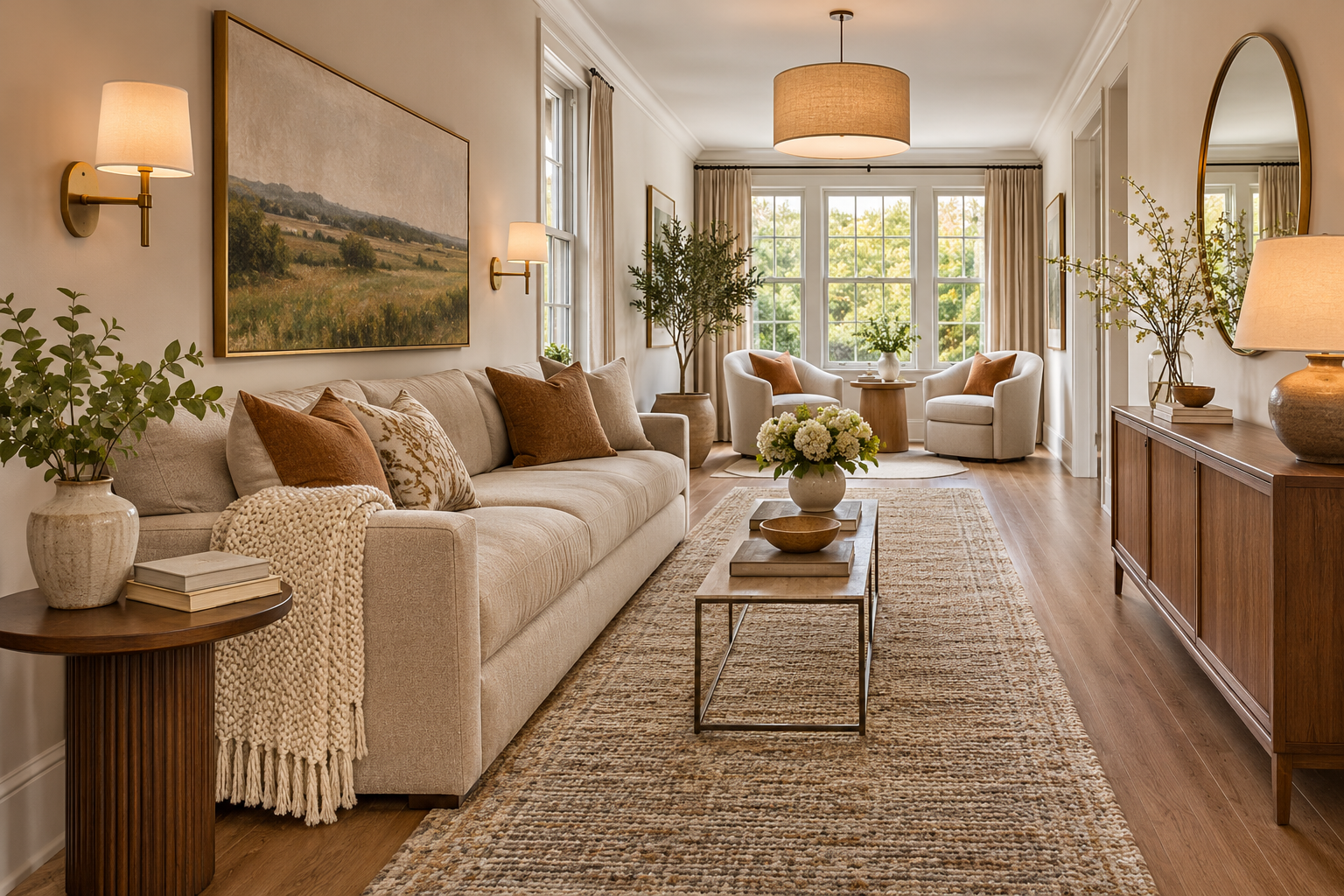
Measure the room and mark the traffic route
Measure the full length and width, then record the position of doors, windows, radiators, vents, fireplaces, built-ins, and outlets. Note which doors swing into the room and where people naturally walk from one end to the other. The floor plan should include the dining area or entry if the living room is open concept. A long room often has more than one circulation route, and the sofa should not force everyone through a narrow gap.
Mark the sofa’s footprint with painter’s tape before shopping. Include the arms and any chaise, not just the seat length. Then mark the space for a coffee table, side tables, and chairs. Walk through the room as if carrying a laundry basket or serving tray. If the path feels awkward with tape on the floor, it will not improve when a full-size sofa arrives.
Measure the delivery route as well as the room. Record doorway widths, hallway turns, stair landings, and ceiling height. Ask for the sofa’s boxed dimensions and whether its legs, arms, or back detach. A sectional may arrive in multiple packages, but each piece still needs to pass the narrowest turn. Check delivery and return terms before buying large furniture.
Identify whether the room is long and narrow or simply long
A long, narrow room has limited width and needs a layout that protects the walkway. A long but wide room can support a larger sectional or two seating groups. These shapes may look similar in a listing photograph but require different furniture. Measure the width at several points, especially if the room has a bay, a fireplace projection, or a doorway that narrows one end.
In a narrow room, a straight sofa may preserve more open floor than an L-shaped sectional. A chaise can work if it extends away from the main path. In a wide room, a sectional can anchor a larger conversation area, but it should not isolate the seating from the rest of the space. The room’s width determines whether the sofa has room to breathe.
Look at ceiling height and window placement too. A low-backed sofa can preserve a view across the room, while a high back may feel imposing in a narrow passage. Avoid placing tall furniture in front of windows if it blocks light or access. The goal is to scale the sofa to both the floor dimensions and the visual height of the room.
Choose a layout before choosing a sofa shape
One long seating zone
A single seating area is often the simplest plan. Place the sofa along a long wall or opposite a focal point, then add one or two chairs to create conversation. This works when the room is used mainly for relaxing or watching television. Keep the coffee table within reach but leave enough space to move around it.
Two connected zones
A long room can support a conversation area at one end and a reading, game, or dining zone at the other. Use a rug, lighting, or a console table to show where one function ends and the next begins. Avoid creating a physical barrier across the walkway. The sofa can help define the lounge area if its back faces the secondary zone, but check that the room still feels open.
Facing sofas
Two sofas facing each other can make a long room feel balanced and encourage conversation. This works best when the room has enough width for a table and a clear route around the seating. In a narrower room, a sofa paired with chairs can provide a similar conversational arrangement with less visual weight.
Sectional with a chaise
An L-shaped sectional can use a corner and define the lounge area, but its chaise direction matters. Confirm whether the chaise is left- or right-facing as viewed from the front and whether the model is reversible. Check that the chaise does not intrude into the main walkway or block access to a door. A modular sofa may offer flexibility, but verify the connector system and final dimensions.
Three API-listed sofa examples
The examples below show current marketplace listings for modular, deep-seat configurations. They are not tested picks or universal recommendations. Their size and shape may suit a wide long room but be too large for a narrow one. Confirm the exact model, dimensions, modules, fabric, and delivery route on the live product page.
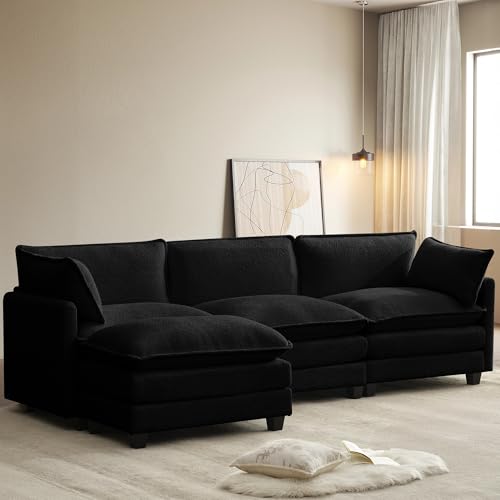
This listing describes a modular sectional with a movable ottoman. Check whether the displayed layout is the one included and confirm each piece’s measurements. A movable ottoman can sometimes adapt to a long room, but it should not be used in a way that blocks the main path. Ask whether the modules can be rearranged and how they connect.

This example is presented as an L-shaped modular sectional with a chaise. The chaise side and total width should be checked against the floor plan before ordering. A long room may have a doorway or radiator near one end, so compare the full footprint with the location of fixed features rather than deciding by the room’s overall length alone.

This oversized U-shaped example could suit a wide room with a large seating group, but it may be unsuitable in a narrow living room. Compare the actual package sizes, module layout, and assembled footprint with the clear width available. If the plan leaves only a tight aisle, consider a smaller straight sofa and separate chairs instead.
Scale the sofa to the room
Room scale is about more than the sofa’s total length. Seat depth, arm width, back height, leg visibility, and visual mass affect how much space it seems to occupy. A deep, low sectional can feel comfortable but dominate a narrow room. A sofa with exposed legs can leave more visible floor and feel lighter. Compare the product dimensions with furniture already in the room.
Use the sofa’s width and depth to plan the surrounding furniture. A long sofa may need a longer rug and appropriately sized coffee table, but the table should not span the entire room. Multiple smaller tables can be easier to move around. Keep side tables beside seats where people can reach them without stretching across the sofa.
If the room feels too long after placing the sofa, avoid solving the problem by pushing all furniture against the walls. Floating the sofa slightly away from a wall can create a more defined zone, provided the walkway behind it remains clear. A narrow console table may add a useful surface and mark the transition to another area.
Decide where the sofa should face
Choose the room’s main focal point: a television, fireplace, window, or conversation area. The sofa should support the activity without blocking natural light or a needed route. In a TV room, check the screen’s viewing angle from the seats and keep the television at a comfortable height. For conversation, turn at least part of the seating toward people rather than lining every seat in one direction.
If the room has two focal points, such as a fireplace and a television on different walls, decide which one matters most before purchasing a sectional. A swivel chair or movable ottoman can make the room more flexible. Avoid buying a sofa with a fixed chaise that points away from the primary focal point unless the rest of the layout compensates.
Use rugs to define the lounge area
A rug can make a long room feel organized by defining the sofa zone. Choose a size that allows the front sofa legs and, ideally, the front legs of chairs to sit on the rug. A small rug floating under the coffee table can make the seating look disconnected. In a very long space, one large rug may anchor the primary area while a second rug defines a dining or reading zone.
Use color and pattern to connect the sofa to the rest of the room. A patterned rug can bring together wall color, cushions, and upholstery. In a narrow space, a rug’s pattern direction may visually emphasize length or width; choose the effect that suits the room rather than assuming there is one universal trick. Check pile height and door clearance before buying.
For more rug planning, see our living room rug guide and our guides to rugs for blue sofas and rug colors for a light gray sofa. Confirm the current dimensions and return terms for any rug you order.
Lighting helps break up a long space
Use several light sources rather than relying on one ceiling fixture at the center of a long room. A floor lamp near a reading seat and a table lamp near the sofa can create separate areas. Keep lamp bases outside the main walking path and route cords securely. If the sofa floats, use a lamp with a stable base behind it only when the cord can reach an outlet safely.
Natural light also influences sofa placement. Do not block windows with a deep back unless the room layout requires it. Sunlight can fade upholstery over time; check the maker’s care advice and use window coverings where needed. A long sofa placed across a window may restrict opening the window or cleaning it, so measure before settling on that arrangement.
Choose upholstery and cushions for real use
Consider how the sofa will be used and cleaned. Tightly woven upholstery may be easier to vacuum than textured fabrics with deep loops. Removable cushion covers can help with care if the maker confirms they are washable. Ask about cleaning codes and replacement parts before ordering. A fabric described as easy-care may still have specific restrictions.
Seat firmness and cushion depth vary. If possible, try the sofa or compare its seat measurements with one you find comfortable. Deep seats can suit lounging, but they may be less practical for a quick conversation area or for shorter users. Add loose cushions only if they do not crowd the seat or create clutter in the walkway.
Color should work with the room’s light and proportions. A large dark sofa may visually anchor the far end of a long room, while a lighter sofa can preserve an airy look. But fabric color is not a substitute for correct scale. Review swatches when available because images can shift color on different screens.
Arrange furniture around doors and fixed features
Doorways and windows often determine the best sofa position. Avoid placing the sofa where a door hits its arm or where an open window becomes difficult to reach. Keep radiators, vents, and fireplace access clear according to the manufacturer’s instructions. If a long room has a central doorway, consider a sofa that sits to one side and leaves an obvious route through the space.
For a room that opens to a kitchen or dining area, use the sofa back to define the lounge without turning it into a barrier. Keep enough room for chairs to pull out and for people to pass behind the seating. A slim sofa table can help organize the transition but should not make the walkway too narrow.
Place end tables and floor lamps only after the sofa is in its final position. A table should be reachable from a seat and should not interfere with a door swing. If you have children or pets, prefer stable tables with clear paths around them. Test the room at night, when people may walk through without full daylight.
What to do when the room is exceptionally long
Very long rooms may benefit from multiple functions: a main seating area, a reading corner, or a small workspace. Use consistent colors and materials to connect the zones. A secondary chair, console, bookcase, or low cabinet can help fill visual space without adding another full sofa. Leave a clear passage between zones.
Two sofas can work when the room is wide enough and the household regularly needs the seats. They can face each other or sit at right angles around a focal point. Measure the gap between them and the coffee table. If the room is narrow, a sofa plus one or two chairs is usually easier to navigate and reconfigure.
Do not buy extra seating merely to fill the length. Empty space can make a room feel open and useful. A single sofa paired with a rug, lighting, and a chair may work better than a wall-to-wall sectional. Choose based on how people move and gather.
Delivery and assembly for large modular sofas
Modular furniture can arrive in multiple boxes. Confirm how many packages there are and whether the seller offers room-of-choice delivery. Measure each stair turn and doorway, not only the overall entrance width. Verify whether modules connect with clips or brackets and whether any tools are included. Follow the assembly instructions and do not substitute hardware.
Keep the packaging until the sofa is assembled and inspected, if the seller’s return process permits. Check all pieces for damage, missing parts, or fabric defects before the delivery window closes. If a component is wrong, photograph it and contact the seller promptly. Store the product page and order record with the model name.
Some modular sofas arrive compressed or require time to regain shape. Follow the product’s instructions for unpacking and use. Do not judge the final fit by a photo of a different configuration. Assemble the modules in the intended layout and recheck the traffic path before deciding where to place lamps or tables.
Common mistakes in long living rooms
- Choosing a sectional based on the room’s length while ignoring its limited width.
- Leaving a narrow corridor behind or beside the sofa.
- Blocking a doorway, window, vent, or radiator with the back or chaise.
- Buying a small rug that disconnects the seating zone.
- Placing every piece against a wall without defining a conversation area.
- Ignoring package dimensions and delivery turns.
- Ordering a fixed chaise orientation without checking the floor plan.
- Adding furniture to fill empty length instead of keeping useful open space.
These mistakes are easier to prevent with a floor plan and tape outline than after delivery. Walk the route, mark the full dimensions, and test the intended seating arrangement before ordering. Consider door swings and fixed features at the same time as sofa size.
Related room-planning guides
For a specific corner arrangement, see our guide to two sofas around a corner fireplace. If you are choosing a table for a curved sofa, read our slightly curved sofa coffee table guide. These pages address separate layouts; measure your room and furniture before deciding.
Final checklist
Measure the room, delivery path, sofa footprint, and any chaise or modular configuration. Choose the main activity and focal point, mark the circulation path, and place the sofa before adding tables or chairs. Confirm that doors and windows open, fixed features remain accessible, and the rug size suits the seating area. Verify the seller’s delivery, return, and care terms before ordering.
The best sofa for a long living room is the one that fits its width as well as its length. A straight sofa, sectional, or two-piece arrangement can all work if the layout supports clear movement and comfortable use. A measured plan helps you choose scale, shape, and orientation with confidence while keeping the room open and connected.
Use the room’s center line carefully
A long room can feel more balanced when the seating arrangement relates to its center line, but the sofa does not always need to sit exactly in the middle. A fireplace, bay window, or off-center door may shift the best position. Use the largest fixed feature as a reference, then keep enough space on both sides for movement. If the room connects to another space, prioritize a clear route over perfect symmetry.
For a floating sofa, check the back view and consider whether a console table would be useful. Choose a narrow table that does not reduce the walkway. Keep decorative objects low enough that they do not obstruct conversation or the view across the room. If the sofa is against a wall, art or a pair of lamps can help the long wall feel intentional without adding more bulky furniture.
Make a sample plan with the furniture you already own
Before buying a new sofa, draw the current furniture to scale or use measured tape outlines. Try moving an existing chair to the opposite end of the room and see whether it creates a useful second zone. A side table or floor lamp can change the feel of the layout without a major purchase. This experiment helps distinguish a problem of sofa size from a problem of placement.
If you are replacing only the sofa, measure the old one and compare it with the new model. A difference of a few inches can affect a doorway, table gap, or route behind the sofa. Record the exact dimensions in your notes and include the chaise or arm projections. The product page should be checked again before checkout in case the selected size is different from the first configuration shown.
Think about cleaning access
A long sofa can make it harder to clean the floor behind it. If possible, choose a model with legs that allow a vacuum attachment to reach underneath, or leave enough room to move it during cleaning. Modular pieces may be easier to shift one at a time, but only if the connectors are designed for regular rearrangement. Ask the maker whether moving the modules affects the frame or warranty.
Keep floor lamps, baskets, and cords where they can be moved without lifting the sofa. In homes with pets, check the space under the sofa for toys and hair. A layout that is easy to maintain will remain more comfortable than one that looks perfect but traps dust behind large furniture.