Disclosure: As an Amazon Associate, dailyhomedecorating.com earns from qualifying purchases. Links on this page are affiliate links; they cost you nothing extra. Prices and availability change often, so check the current Amazon listing before you buy.
Any honest look at bookshelf pros and cons has to admit something the furniture industry rarely says out loud: a bookshelf is a wonderful piece of furniture for the household that reads, collects, and stays put — and a quietly burdensome one for the household that does none of those things. The same open shelves that make a living room feel like a library make a minimalist apartment feel like a warehouse. The same tall frame that stores a decade of reading becomes, on moving day, the heaviest and most awkward object you own. This article weighs both sides properly: the genuine advantages, the genuine drawbacks, and — most usefully — what those trade-offs mean for specific kinds of households, so you can decide with your eyes open.
The short verdict first. A bookshelf is worth its floor space if you own, or realistically will own, enough books and display-worthy objects to fill at least two-thirds of it, if your household includes readers who browse physically, and if the unit will be anchored and loaded properly. It is a poor buy if your reading is mostly digital, if you move home frequently, or if the shelf would be bought to fill a wall rather than to serve a collection. Everything below expands those sentences into evidence.
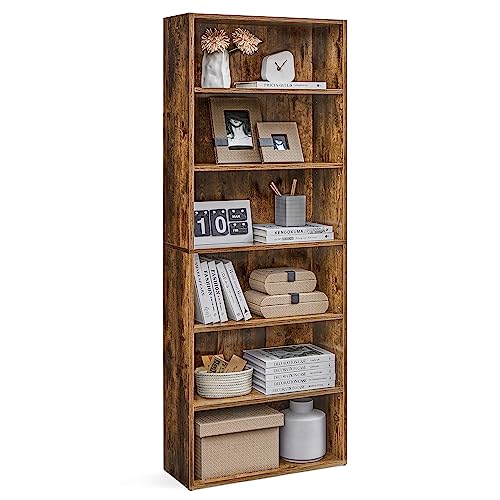
Key Takeaways
- The biggest pro is behavioural, not decorative: visible books get read, browsed, lent, and talked about; boxed books do not.
- The biggest con is commitment: a loaded bookshelf claims wall, floor, and moving-day effort for years, and an unanchored one is a genuine safety risk.
- Sagging, dust, and fading are real but manageable drawbacks — shelf span, load placement, and placement away from harsh sun control all three.
- Open shelves display your life beautifully and expose your clutter mercilessly; households differ in which of those they have more of.
- The trade-offs flip by life stage: students and renters feel the cons most, settled readers and families feel the pros most.
In this guide
Bookshelf Pros and Cons: The Short Version
| Pros | Cons |
|---|---|
| Books stay visible, reachable, and read | Claims permanent floor and wall space |
| Vertical storage multiplies a small room’s capacity | Shelves can sag under heavy hardcover loads |
| Displays the objects that make a room personal | Open shelves collect dust and expose clutter |
| One purchase organises a whole category of belongings | Tall units must be anchored; tipping is a real hazard |
| Adaptable: books today, games, vinyl, and storage tomorrow | Heavy and awkward to move once loaded |
| Cheaper per stored book than almost any alternative | Sunlight fades spines and finishes unevenly |
That table is the skeleton. The sections below put flesh on each line, because a pro that matters enormously to one household is trivia to another — and the same is true of every con.
The Pros
Visible Books Actually Get Read
This is the deepest advantage and the one buyers underestimate. Reading is heavily cued by environment: a book whose spine you pass twenty times a day gets picked up; the same book in a storage box in a cupboard effectively leaves your life. Households with open shelving browse more, re-read favourites, lend to visitors, and — parents notice this most — raise children who treat books as furniture-level normal rather than as school equipment. A low shelf a toddler can reach unaided is a literacy intervention disguised as furniture. No e-reader library, however large, produces this effect, because none of it is visible. If your household values reading as a daily habit rather than a holiday activity, this single pro may outweigh every con in this article combined.
Vertical Storage Multiplies a Room
Floor space is the scarcest resource in most homes, and a bookshelf is one of the few pieces of furniture that trades almost none of it for a great deal of storage. A unit a foot deep and three feet wide holds, across five or six shelves, the contents of several storage boxes — while occupying a strip of floor most rooms can spare along a wall. In small apartments this arithmetic is transformative: the wall above skirting-board level is otherwise dead space, and a tall shelf converts it into the room’s library, display cabinet, and overflow storage in one footprint. The capacity-per-square-foot of a bookshelf beats sideboards, trunks, and under-bed boxes comfortably, which is why small-space roundups like bookcases sized for small spaces lead with tall slim frames.
It Makes a Room Feel Like Someone Lives There
Interior stylists reach for bookshelves because books and objects carry colour, texture, and biography in a way no other furnishing does. A shelf of real, owned books tells a visitor what the household cares about; a shelf mixed with plants, ceramics, photographs, and a lamp is the fastest route to a room that feels finished rather than staged. This is not a trivial benefit. The living room is where households spend their waking hours, and the difference between a room that reflects its occupants and a room that could be a furniture showroom is, very often, exactly one well-filled bookshelf. Even the styling rules work in the owner’s favour: the “leave a third empty” guideline means a half-started collection already looks deliberate.
One Purchase Organises a Whole Category
Books have a way of colonising a home — bedside piles, kitchen stacks, the leaning tower beside the sofa — when they have no single home. A bookshelf ends the diaspora. Everything with a spine goes to one address, which makes finding, lending, and tidying dramatically easier, and gives the household a natural capacity governor: when the shelf is full, the one-in-one-out conversation happens by itself. The organisational benefit extends beyond books, because the same shelves absorb board games, vinyl, photo albums, and the household’s display objects, retiring a whole category of scattered storage in a single purchase. For readers still deciding where the shelf fits their wider storage picture, the bookshelf buying guide maps types to rooms.
It Adapts as Your Life Changes
Few furniture purchases stay relevant across as many life stages. The shelf that holds a student’s textbooks becomes the young professional’s paperback-and-plants display, the family’s board-game and picture-book station, and eventually the grandparent’s curated library of keepers. The furniture itself does not change; the loading does. Cube and open-frame designs adapt furthest, since their compartments accept bins, baskets, and electronics as readily as books. This adaptability is a financial pro as much as a practical one: a bookshelf bought in the entry or mid tier and used for fifteen years across four roles costs less per year of service than almost anything else in the room.
Cost per Book Stored Is Very Low
Measured against the alternatives — storage units, extra rooms, built-in joinery — a freestanding bookshelf stores a book collection for a remarkably small outlay, especially in the entry and mid tiers where most of the market sits. Built-in shelving looks wonderful and costs, in joinery terms, an order of magnitude more for the same shelf metres, while also being unrecoverable when you move. A freestanding unit keeps the option value: it can be sold, gifted, moved to another room, or taken to the next home. Buyers weighing the pure value equation in depth will find the full argument in is a bookshelf worth it.
It Clears Every Other Surface in the House
An underappreciated pro is what a bookshelf does to the rest of the home. Books, games, and display objects that lack a dedicated home migrate — to the dining table, the kitchen counter, the stairs, the spare bed. One adequately sized bookshelf reverses the migration. Households consistently report that the shelf’s arrival tidies rooms it does not even stand in, because the household finally has an answer to the question “where does this live?” That systemic tidiness is worth real money and real calm, and no storage box in a cupboard produces it, because a destination nobody sees is a destination nobody uses.
It Holds Its Value and Hands Down Well
Well-made bookshelves are among the most durable goods a household buys, and the second-hand market knows it: solid, square, unbowed shelves sell readily and gift gracefully, because every household has the same storage problem. Even mid-tier engineered units in good condition find second lives in student houses and first flats. Compare that trajectory with most flat-pack categories — wardrobes and desks rarely survive two moves gracefully — and the bookshelf’s simple, mechanism-free construction looks like what it is: a genuinely long-lived asset rather than a consumable.
The Cons
It Claims Space Permanently
The mirror image of the vertical-storage pro is that a bookshelf’s claim on a room is total and long-term. It occupies its wall strip every day, dictates where other furniture can go, blocks a socket or two, and — because it is heavy once loaded — tends to stay exactly where it was first placed for years. In a small or multi-purpose room, that permanence has an opportunity cost: the wall that holds the bookshelf cannot hold the desk, the daybed, or the children’s play kitchen when life changes. Households in compact homes should treat the footprint decision with the seriousness of a renovation, because functionally that is what it is. Measure, tape the outline on the floor, and live with the tape for a week before ordering.
Shelves Sag Under Real Book Weight
Books are deceptively heavy, and the physics of a loaded shelf are unforgiving: a long span of thin board under a full row of hardcovers will creep into a bow that no amount of shelf-flipping fully reverses. Sag is the most common long-term failure in the category, and it is a con of cheap construction rather than of bookshelves in principle — thick boards, short spans, and a fixed middle shelf resist it for decades. But the honest con stands for the entry tier especially: a light-duty shelf loaded like a library shelf will deform, and the deformation is effectively permanent. The mitigation is buying discipline — match the unit’s construction to your heaviest row, and load dense sets low and centred — which our hands-on bookshelf review examines model by model.
Open Shelves Collect Dust and Show Everything
An open bookshelf is a dust display system that also holds books. Every shelf surface, and the top of every row of books, gathers dust at the rate your home’s air supplies it, and the only cure is regular wiping — books out, shelf wiped, books back — several times a year. Households with allergies feel this con more than most. Just as honestly, open shelves hide nothing: the tatty paperbacks, the board game boxes, the cable-and-charger tangle all sit in public view. Owners who love the styled look must curate continuously, and owners who do not curate get the warehouse look instead. Backed and doored bookcases soften both halves of this con, which is one reason the comparison in bookcase vs bookshelf matters.
Tipping Is a Real Hazard That Demands a Fix
A tall, loaded bookshelf has a high centre of gravity on a narrow base, and it can be pulled over — by a climbing child, a toddler hauling themselves up on a shelf edge, or a determined pet. This is the one con with safety consequences, and it converts into a firm obligation: the unit must be anchored to a wall stud or a properly rated fixing, as covered step by step in how to install a bookshelf safely. Anchoring is quick and cheap, but it is not optional, and it complicates the renter’s life — if your lease forbids drilling entirely, your honest options narrow to low, wide units and furniture straps, or to not buying a tall shelf at all. Treat any product sold without an anti-tip kit as a product with a hidden extra cost.
Moving a Loaded Bookshelf Is Genuinely Awful
Every bookshelf owner eventually faces the move, and it is the con that frequent movers cite first. The books alone fill box after heavy box; the unit itself is bulky, sometimes too large for a new home’s doorways or stair turns; flat-pack frames tolerate only a limited number of disassembly cycles before cam locks loosen and holes wallow out. If your life involves a move every year or two, the pros of a big shelf shrink fast and the cons compound — this is the profile for whom a small, light, honestly light-duty unit, or even a deliberate no-shelf policy with a compact e-reader library, is the rational choice. Settled households can discount this con almost to zero; mobile ones should weight it heavily.
Sunlight Fades Spines and Finishes
Place a bookshelf in strong direct sun and two slow things happen: book spines fade — unevenly, because the books shield each other in stripes — and the shelf’s own finish fades where it is exposed while staying rich where books cover it, leaving ghost rectangles when you rearrange. Neither harms function, and many readers find a sun-softened shelf charming, but collectors and the décor-minded should count it a real con. The fixes are placement (a north-facing or shaded wall), curtains or film on the offending window, or simply accepting patina as the price of a bright room. It is a manageable con — but an unmanageable surprise if nobody warned you.
Assembly Is a Real Afternoon of Your Life
Most bookshelves in the entry and mid tiers arrive flat-packed, and the honest cost includes the assembly: an hour or two of cam locks, dowels, and instruction diagrams, ideally with a second person for the standing-up moment. A frame assembled slightly out of square stays out of square, and the error shows in every shelf line. This is a one-time con, and millions manage it happily, but buyers who hate flat-pack on principle should budget for the premium tier’s simpler assemblies or for a handyman — pretending the afternoon does not exist is how shelves end up half-built in hallways. The process itself, including the safety-critical anchoring at the end, is walked through in the full installation walkthrough.
What the Trade-Offs Mean for You
For the settled reading household, the pros dominate and it is not close. Visibility drives reading, the collection needs a permanent home, the anchoring is a one-time twenty minutes, and the dusting is a fair price for a room that feels like yours. Buy the best-constructed shelf your tier allows, load it properly, and the cons reduce to a twice-yearly dust and a note in the moving plan.
For the small-apartment dweller, the trade-off is sharpest. The vertical-storage pro is worth the most exactly where the space-claim con bites hardest. The resolution is selection, not abstinence: choose tall and narrow over low and wide, prefer open frames that keep the room feeling unboxed, and size honestly — a shelf that fits the collection you have plus a quarter, not the collection you fantasise about. Compact options are gathered in bookshelves chosen for smaller rooms.
For parents of small children, the equation runs through safety and access simultaneously. The pro — children who can reach books read more — argues for low, wide, forward-friendly shelving in the child’s room; the con — climbing and tipping — argues for anchoring everything and keeping tempting objects off high shelves. Both can be satisfied at once, and should be: low units for the children, anchored tall units for the adults, nothing climbable unanchored anywhere.
For the frequent mover and the committed minimalist, the cons win, and this article will not pretend otherwise. A shelf is a bet on staying put and accumulating; if your life is organised around the opposite principles, the honest recommendation is a small light-duty unit for the few physical books you truly keep, or none at all. Furniture should serve the life you have, not the life in a catalogue photograph.
The Pros and Cons, Room by Room
Living room. The pros peak here: display, organisation, and the library effect all serve the room households live in most. The cons are the dust on open shelves and the layout commitment. Verdict: the strongest case in the house; choose the style by how much you want to display versus hide.
Bedroom. A modest shelf keeps the reading pile civilised and the morning routine calm, but dust argues against a large open unit where you sleep, and a tall unit in a small bedroom can loom. A low or mid-height shelf, or an enclosed bookcase, balances the room. Coordinate with the bed and rug rather than crowding all three; rugs that work under living and sleeping layouts covers the floor side.
Home office. Capacity and adjustability dominate; the con list shrinks to moving day. Reference loads are the heaviest in domestic life, so construction quality matters more here than anywhere — this is the room where the sag con is earned or avoided. A backed bookcase also tidies the video-call background, a modern pro no pre-remote-work guide ever listed.
Child’s room. The access pro is at its most valuable and the safety con at its most serious. Low, wide, anchored, rounded — the specification writes itself. Expect the contents to rotate from picture books to games to school texts; the shelf that survives childhood intact has earned its place in the family.
Hallway and landing. Slim shelves colonise otherwise dead space beautifully, and the cons are mostly about clearance: keep walkways genuinely clear, anchor anything tall in a traffic path, and remember that hallways are where moving-day bumps happen. A shallow display shelf here is often the highest-value square foot of storage in the home.
A Closer Look at the Three Cons People Worry About Most
Sagging, Examined Properly
Sag is the con with the most folklore around it, so it deserves precision. A shelf bows because a distributed load bends the board, and the amount of bend grows dramatically with span — double the span and the same load produces many times the deflection — while shrinking just as dramatically with board thickness. This is why two shelves with identical marketing can age completely differently: the one with shorter spans and thicker boards is playing a different physical game. Creep makes it worse over time, as the material slowly continues to deform under a load it initially held, which is why a shelf can look fine in month one and tired in year three. The practical conclusions are three. Buy span and thickness, not shelf count. Put the fixed shelf — the one that cannot be moved — in charge of your heaviest category. And rotate your thinking about the top of the unit: the highest shelves should carry the lightest loads in the house, which happily coincides with what looks best.
Dust, Examined Properly
Dust is mostly skin cells, textile fibres, and outdoor particles riding your home’s air currents, and horizontal surfaces at rest collect it in proportion to how undisturbed the air above them is — which is to say, bookshelves collect it exactly as fast as every other surface you own, but they present far more surface and far more small objects to clean around. The honest mitigation ladder runs: position the shelf away from the home’s dustiest air paths (the front door’s draught line, the tumble dryer’s room); keep a small hand duster in the room so the monthly surface pass takes two minutes rather than becoming a project; and do the full unload twice a year, timed to something memorable. Households for whom even that rhythm is unrealistic should weight the enclosed bookcase far higher — doors convert the dust con from a recurring chore into an occasional one, and for allergy sufferers that difference is the whole decision.
Fading, Examined Properly
Ultraviolet light breaks down the dyes in book cloth, paper, and furniture finishes, and it does so cumulatively and irreversibly. The striped, ghosted fading described earlier is simply the visible record of which surfaces the sun reached. What surprises owners is the speed difference between direct sun through glass — still potent — and bright indirect light, which is comparatively gentle. The decision framework is simple: if the only available wall takes hours of direct sun, either treat the window, choose the shelf and the books you place there with fading accepted, or put the shelf’s most valued contents in an enclosed case elsewhere and let the sunny shelf hold plants and ceramics, which the sun improves rather than damages. Collectors of genuinely valuable editions should treat direct sun as disqualifying for that wall, full stop.
Bookshelf Pros and Cons for Serious Readers and Collectors
Heavy readers live at the extremes of every trade-off in this article, so they deserve their own weighing. The pros intensify: a serious collection without proper shelving is not a collection at all but a hoarding problem, and the organisational pro — every book findable, lendable, and browsable — is the difference between a library and a pile. Capacity planning also stops being guesswork: collectors should size for the collection plus half again, because acquisition outpaces intention with metronomic reliability, and a second matching unit bought early beats a mismatched one bought late.
The cons intensify too. Sag threatens real value when the books are heavy art volumes; dust and light threaten real value when editions are old or fine; and the moving con becomes a logistics exercise involving many boxes and genuine anxiety. The collector’s answers are consistent with everything above, just stricter: construction quality first even at a higher tier, enclosed or glazed storage for the most valuable shelves, the shaded wall without negotiation, and an anchor fitted the day the unit stands up. Readers building toward that standard will find the model-level detail in bookshelf reviews for committed readers and the seating that completes a reading room in chairs for reading, chosen properly.
Four Myths Worth Retiring
“Bookshelves are only for people with hundreds of books.” A two-shelf unit organising thirty books, a plant, and the household’s games is fully earning its footprint. The category scales down as gracefully as it scales up; the pro list applies at any size where the contents are genuinely used.
“Taller is always better value.” Height buys capacity only if the top shelves remain usable and the unit can be anchored. An unanchorable tall shelf in a rental is worse than a mid-height one, and a top shelf nobody can reach without a stool stores only display — which a shorter, better-proportioned unit often does more elegantly.
“You can anchor it later, once you see where it settles.” Later has a way of never arriving, and the interval between assembly and anchoring is precisely when a new, tempting, climbable object stands in the home of the people most at risk. Anchor on assembly day; moving an anchored shelf later is a five-minute job, not an argument.
“Engineered wood always sags, so only solid wood is worth buying.” Construction geometry — span and thickness — predicts sag far better than material category. A thick engineered board on a short span will outlast a thin solid board on a long one. Judge the specific unit’s construction, not the material’s reputation.
What Owners Typically Report After the First Year
Patterns repeat so reliably across households that they are worth stating as expectations. First, almost nobody regrets buying one size larger than the collection they had; almost everybody who bought exactly to size regrets it within two years, because collections grow and a shelf at one hundred percent capacity looks and functions worse than the same shelf at seventy. Second, the styling settles: the carefully arranged first loading gives way within months to a lived-in arrangement that owners consistently prefer, because it reflects actual use. Third, the dust chore turns out smaller than feared for open shelves in living rooms and larger than feared in bedrooms, which is why so many households end up migrating big open units out of sleeping rooms over time.
Fourth, anchoring anxiety inverts: owners who anchored on day one report forgetting the strap exists, while owners who deferred it report a low-grade worry that surfaces every time a child visits. Fifth — and this one surprises people — the shelf becomes the room’s reference point: pictures get hung relative to it, furniture arranged around it, and when it is eventually replaced, the room feels unfinished until the new one is loaded. Furniture that organises both objects and space earns a permanence that its footprint alone does not explain. That is the pro list, experienced from the inside.
A Pre-Purchase Checklist That Settles the Argument
If you are still torn after the pros and cons, answer these six questions honestly; the pattern of answers decides better than any further deliberation. One: can you name, right now, the books and objects that will fill at least two-thirds of the shelf? Two: is there a wall where it can stand for years, anchored, out of direct harsh sun? Three: does your household include readers — or children becoming readers — who will browse it weekly? Four: is your next likely move more than two years away, or is the unit small and light enough to move cheerfully? Five: are you willing to dust it monthly and unload it twice a year? Six: does the room actually lack storage, or are you buying to fill a wall that a plant and a picture would fill better? Four or more confident yeses: buy, and buy the best construction your tier allows. Three or fewer: solve the wall differently and revisit when the answers change.
Notice what the checklist does not ask: it does not ask which finish matches your sofa, which style is fashionable this year, or which model a friend bought. Those questions feel like the substance of the decision and are actually its decoration. The pros and cons that determine whether you love or resent this furniture in year five are all in the six questions above — fit, anchoring, use, stability of life, maintenance willingness, and genuine need. Answer them and the finish can be chosen in five happy minutes at the end.
How the Alternatives Compare
| Option | Where it beats a bookshelf | Where a bookshelf beats it |
|---|---|---|
| Backed bookcase | Dust protection, formal look, hides clutter | Lighter visual weight, easier to move, lower tiers |
| Cube storage unit | Bins and mixed clutter, reconfigurable | Tall books, shelf adjustability, book capacity |
| Floating wall shelves | No floor footprint at all | Load capacity, total storage, no wall full of fixings |
| Storage boxes and cupboards | Everything hidden, stackable | Visibility — boxed books stop being read |
| Built-in joinery | Perfect fit, architectural finish | Tier, portability, reversibility |
The pattern in the table is consistent: alternatives beat the bookshelf on hiding, fitting, or footprint, and the bookshelf beats them on the combination of visibility, capacity, and adaptability. Your household’s position on the visibility question — are your books a living part of the room or storage to be concealed? — decides most of the comparison before specifications enter it. Readers who lean toward the enclosed option should read the dedicated treatment in bookcase pros and cons in full.
How to Buy Smart
If the pros have won your household’s argument, buy in a way that pre-empts the cons. Choose construction before finish: board thickness, span length, and a fixed bracing shelf determine whether the unit sags in year six, while the finish determines only whether it photographs well in week one. Prefer adjustable shelves with pin holes running the full height of the sides, since flexibility is the feature you will use most and miss most. Confirm the anti-tip kit is in the box and that your wall — stud or masonry — can take the fixing; renters should confirm the landlord’s position before, not after, delivery.
Three representative models show how the trade-offs land at different tiers. None is linked here with a fixed price, because prices in this category move constantly — check price on Amazon for each at the moment you shop.

VASAGLE 6-Tier Bookshelf
The steel-and-board open frame is the balanced middle of the category: short spans and a rigid frame answer the sag con, six tiers answer the capacity pro, and the open structure keeps the space-claim con feeling lighter than its footprint. It still needs anchoring and dusting like any open shelf — the cons are managed here, not abolished. Check price on Amazon.

Sauder 5-Shelf Bookcase
The backed Sauder answers the dust-and-clutter cons with a full back panel and an enclosed, furniture-like form, and its adjustable shelves serve tall formats well. In exchange it claims its space more assertively and moves house less happily than an open frame — the trade-offs made visible in a single product. Check price on Amazon.
Furinno Turn-N-Tube 5-Tier Bookshelf
The tool-free Furinno minimises the moving and commitment cons — it assembles by hand, weighs little, and suits rentals and short stays — by accepting the sag con in full: this is light-duty furniture for paperbacks and display, and loading it like a library shelf is how shelves get bowed. Bought for the job it is actually built for, it is an honest entry-tier answer. Check price on Amazon.
Setup and Care That Reduce the Cons
Most cons shrink with three habits. First, anchor properly and load bottom-heavy from day one: heaviest rows on the lowest and fixed shelves, nothing dense above shoulder height. This addresses tipping, reduces the bending moment that drives sag, and makes the shelf feel planted rather than perched. Second, place with the sun in mind — a shaded wall or a window treatment preserves spines and finish, and costs nothing at setup time. Third, adopt a light maintenance rhythm: a monthly surface dust, a twice-yearly full unload-and-wipe, and an annual check of anchor tension and fixing tightness. Fifteen minutes twice a year is the entire maintenance budget of a well-chosen shelf, and it converts the dust con from a creeping embarrassment into a non-issue.
Loading technique matters more than most owners realise. Books should stand snug but not jammed — a row packed tight enough to need force will damage spines on removal and pushes sideways pressure into the frame. Leave the deliberate third of space the stylists recommend, use horizontal stacks as bookends at row ends, and keep the heaviest single items — atlases, bound sets, stoneware — directly over the frame’s uprights where the structure is strongest. If a shelf does begin to bow, act early: unload it, flip the board if the design allows, and reload it lighter and lower in the unit. Early bows partially recover; neglected ones set permanently.
The Ownership Costs Nobody Lists
Beyond the purchase tier, a bookshelf carries a small tail of ownership costs worth weighing on the con side of the ledger — none large, all real. There is the anchor hardware if the included kit does not suit your wall, and a stud finder if you do not own one. There is the step stool a tall unit quietly makes necessary. There are the bookends, baskets, and storage boxes that open shelves invite, because a shelf bought is a shelf that wants dressing. There is the moving cost, counted in boxes, tape, and possibly a larger van. And there is the opportunity cost of the wall itself in a small home, already counted among the cons but worth repeating in money-adjacent terms: in a compact flat, that wall strip is among the most valuable territory you own.
Set against that tail, the pro side has its own quiet savings. A shelf that organises a category ends the drip of small storage purchases — the extra baskets, the bedside stack table, the storage-unit months — that households without a book home accumulate. It also protects the books themselves: upright, dry, ventilated storage extends the life of a collection compared with boxes in a damp garage, and replacing a warped paperback library costs more than shelving it properly in the first place. The ledger, honestly kept, favours the shelf for any household that will actually fill it — and punishes only the shelf bought as decoration for a collection that does not exist.
Bottom Line
The pros and cons of a bookshelf are not really properties of the furniture — they are properties of the match between the furniture and the household. For readers who stay put, the pros are large, daily, and compounding, and the cons are a short list of manageable chores. For movers, minimalists, and the mostly-digital, the same object is mostly burden. Decide which household you are — honestly, not aspirationally — and the buying decision makes itself. One last practical note: if you do buy, buy once and buy well. The mid tier is where construction quality per unit of money spent peaks in this category, and a shelf that survives two decades of loading will never appear on any honest list of purchase regrets. If you are in the first group, the companion pieces will help you execute: choosing the right model step by step covers the close cousin, and bookshelf reviews across the main styles compares the current field.
Living With the Trade-Offs: How the Bookshelf Balance Plays Out Over a Season
A pros and cons list is a snapshot, but a bookshelf is a long-term housemate. Advantages that look decisive on paper can shrink once the seasons turn, and drawbacks that seem minor in a showroom can grow teeth in February or during a busy holiday week. The fairest way to weigh a bookshelf is to follow one full season of ordinary use and ask how each side of the ledger behaves when the weather, the light and the household routine all change. This section does exactly that, so the balance you act on reflects lived experience rather than first impressions.
When the Advantages Grow — and When They Fade
The strengths of a good bookshelf tend to compound quietly. A design that saves steps, stores more, or cleans easily gives that benefit back every single day, and over a season those small repayments add up to the real value of the purchase. By contrast, advantages based on novelty — an unusual finish, a fashionable shape, a feature you showed to guests twice — fade within weeks. When you re-read any pros list, sort each point into one of those two families: daily-compounding benefits deserve heavy weight, while novelty benefits deserve almost none, however attractive they looked at the point of ordering.
When the Drawbacks Bite Hardest
Weaknesses in a bookshelf rarely bite at random; they bite at predictable pressure points. Guests arriving, a seasonal deep clean, a heatwave, a power cut, a house move, or a child or pet entering a new stage will each stress a different limitation. Think through those moments for the bookshelf you are considering and ask whether the drawback is an occasional annoyance you can plan around or a recurring friction you will meet every week. An occasional annoyance is a fair price for a strong advantage elsewhere; a weekly friction almost never is, and it is the single most common reason owners replace a bookshelf long before it wears out.
Use these seasonal pressure tests to judge the trade-offs in any bookshelf:
- Picture the bookshelf during your busiest week of the year and decide whether its main drawback would matter more, less, or about the same.
- Picture it during the opposite season from now — high summer if it is winter, the dark months if it is spring — and re-check light, heat, moisture and ventilation around it.
- Ask who else in the household touches the bookshelf most, and weigh the cons from their height, strength and habits rather than your own.
- Separate the drawbacks you can fix with an accessory or a habit change from the ones built into the design itself.
- Give the bookshelf a simple verdict for each season rather than one verdict for the year, and only buy when it passes the seasons you care about most.
Consider the bookshelf from the perspective of the person who cleans around it, because designs that trap dust, block access or demand special products quietly tax every week of ownership. Think about noise, light and heat as neighbours of the bookshelf, not afterthoughts, since a choice that performs well but disturbs the room around it rarely stays popular for long. Remember that guests experience your bookshelf without instructions, so anything that needs explaining, warning or demonstrating is worth simplifying before it is worth defending. Plan for the bookshelf to be moved at least twice in its life — for cleaning, redecorating or a change of room — and favour designs that forgive being shifted, tilted or carried. Look at the edges and undersides when you judge build quality, because those are the places makers save money first and the places owners discover last. Ask how the bookshelf behaves on your worst floor, wall or surface rather than your best one, since homes are uneven and listings are photographed in perfect rooms. Keep the receipt, delivery note and a photograph of the label together, because warranty conversations go smoothly when dates and model details are at hand. If two people in the household disagree about the bookshelf, let the person who will use or maintain it most have the deciding vote on practical questions. Beware of buying for the household you hope to become; the bookshelf that serves the household you already are will be used this week, not someday. A tape measure, a spirit level and ten patient minutes prevent more bookshelf regrets than any amount of comparison shopping after the fact. When a listing is vague about a dimension, material or included part that matters to you, treat the vagueness itself as information and look for a clearer seller.
Judged across a season, most bookshelf choices become clearer, not harder. The right model is rarely the one with the longest pros list; it is the one whose drawbacks land in the moments you can tolerate and whose strengths land in the moments you repeat every day. Hold any candidate up against your own calendar before you commit, and the pros and cons stop being abstract and start being a forecast you can trust.
Frequently Asked Questions
What is the biggest disadvantage of a bookshelf?
For most households it is the permanent claim on space: a loaded bookshelf fixes a room’s layout for years and is heavy to move when life changes. The most serious disadvantage, though, is safety — an unanchored tall unit can tip, particularly with climbing children in the house. Both disadvantages are manageable: measure and plan the footprint before buying, and anchor the unit to a stud on the day it is assembled.
Do bookshelves damage books?
A bookshelf itself does not damage books; environment and loading do. Direct sunlight fades spines, damp rooms invite mould, and rows jammed too tightly stress spines when books are pulled out. A shelf placed on a dry, shaded wall, loaded snugly rather than forcibly, is actually the best common storage for books — upright, ventilated, and visible enough that problems get noticed early rather than after a season in a sealed box.
Are open bookshelves a bad idea with allergies?
They require more diligence, not avoidance. Open shelves and book tops gather dust, so allergy households should dust surfaces monthly, do the full unload-and-wipe twice a year, and consider a backed bookcase with doors for the bedroom, where exposure is longest. Keeping the shelf out of the bedroom entirely is another reasonable pattern: living-room shelving carries the collection while the sleeping space stays low-dust.
How long should a decent bookshelf last?
A well-constructed unit — thick boards, sensible spans, a braced frame — should serve for decades, and solid wood examples routinely outlast their first owners. Light-duty entry-tier units are realistically a few years of service, especially if moved or overloaded. Longevity is mostly decided at purchase by construction and then protected by loading: heavy rows low, spans respected, anchor fitted so the frame is never stressed by a near-tip.
Is a bookshelf or a bookcase better?
Neither is better in the abstract. Choose the open bookshelf for visual lightness, easier moving, and lower tiers; choose the backed bookcase for dust protection, a formal furniture presence, and hiding mixed clutter behind a panel or doors. Many households end up with both — open shelves where display matters, an enclosed case where storage matters — which is a perfectly coherent answer rather than indecision.
Can a bookshelf work if I mostly read e-books?
It can, but buy it as display and storage furniture rather than as a library. A mostly-digital reader’s shelf will hold a smaller keeper collection plus plants, objects, games, and the household’s physical media — size it for that honest load, which usually means a smaller unit than a print reader needs. If even that load does not exist in your home, the pros in this article do not apply to you, and the space is better spent elsewhere.
Related Guides
Continue with the complete bookshelf buying guide, a single bookshelf reviewed in depth, and whether a bookshelf is worth it for your household.


