Disclosure: As an Amazon Associate, dailyhomedecorating.com earns from qualifying purchases. Links on this page are affiliate links; they cost you nothing extra. Prices and availability change often, so check the current Amazon listing before you buy.
Settling the portable vs window ac question starts with one honest admission: both machines use the same refrigeration cycle, yet they deliver that cooling in completely different ways, and the difference shows up in your electricity use, your noise level, and whether you can still open the window on a mild evening. A window unit parks its hot half outside the glass, while a portable unit keeps the whole machine indoors and pushes heat out through a hose. That single design choice explains almost everything that follows in this comparison, from efficiency gaps to installation headaches.
Renters usually meet this debate first, because a landlord who forbids window units leaves the portable as the only compressor-based option. Homeowners meet it later, often when a bedroom sits far from the central ductwork or a home office turns into a sauna every afternoon. In both cases the wrong purchase is expensive to live with: an undersized portable cycling all day in a sunny room, or a window unit bought for a casement window it physically cannot fit. This guide works through the physics, the sizing maths, and the day-to-day ownership details so the choice rests on your room rather than on marketing claims.
Below you will find two verified portable models and two verified window models, each linked to its current Amazon listing, followed by criterion-by-criterion verdicts, a sizing walkthrough, installation steps for both formats, and the mistakes that send the most units back to the retailer. Nothing here depends on a single headline BTU figure, because as you will see, the number printed on a portable box and the number printed on a window box do not mean quite the same thing in practice.
There is also a timing trap worth naming at the outset. Households tend to shop for cooling during the first heatwave, when shelves are picked over, delivery slots stretch, and the temptation is to grab whatever carries a big number on the box. Reading a comparison like this one in a cool hour, measuring your window, and checking your lease wording before the heat arrives is worth more than any single feature discussed below, because the best machine is the one that fits your room, your window, and your tenancy — installed before you desperately need it.
Key takeaways
- Window units cool a given room with noticeably less electricity than portables of similar headline size.
- Portables win when windows slide sideways, crank outward, or are off-limits under a rental agreement.
- Dual-hose and dual-inverter portables close much of the efficiency gap, at a higher tier.
- Sizing by the DOE SACC figure, not the older ASHRAE figure, prevents the classic undercooling disappointment.
- Either format fails in a room with heavy sun load unless shading and sealing come first.
In this guide
Quick picks: Portable Vs Window Ac
The four machines below split evenly between the two camps, and each was confirmed against its Amazon listing before being included. The LG represents the strongest portable design currently mainstream, the BLACK+DECKER shows what the mainstream single-hose portable really offers, the Midea U demonstrates why window units have pulled ahead on noise, and the GE covers the straightforward traditional window format with smart controls. Read the quick notes, then the full reviews further down, before deciding which camp deserves your money.
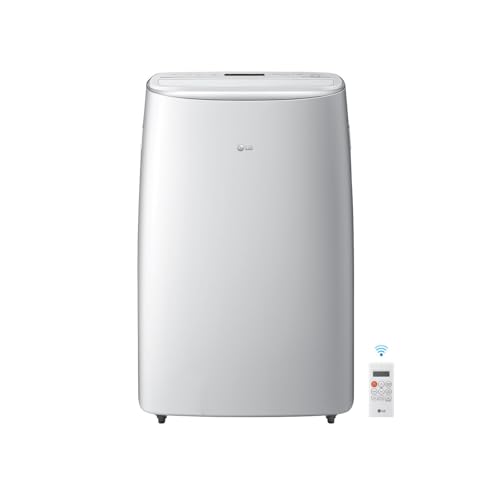
- LG 10,000 BTU Dual Inverter Portable Air Conditioner — the portable to choose when a window unit is genuinely impossible and the room is a bedroom or office up to roughly 500 square feet. Check price on Amazon
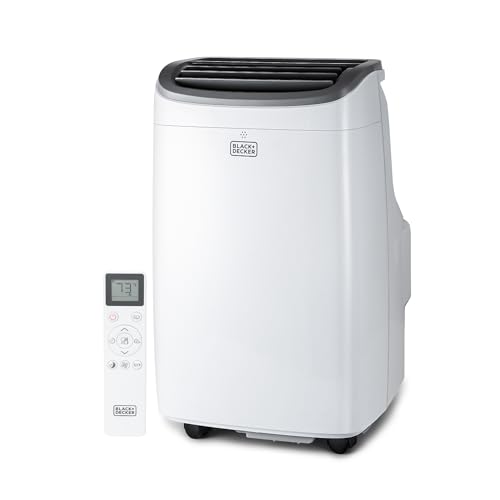
- BLACK+DECKER 10,000 BTU Portable Air Conditioner (BPACT10WT) — a widely sold single-hose portable whose listing states its 5,500 BTU SACC figure openly, which makes it a useful reality check on portable sizing. Check price on Amazon
- Midea 10,000 BTU U-Shaped Window Air Conditioner — an inverter window unit whose U-shaped body lets the sash close into the unit, cutting noise and keeping the window usable. Check price on Amazon
- GE 10,000 BTU Wi-Fi Window Air Conditioner — a conventional window box from a long-running appliance brand, with Wi-Fi control and an install kit aimed at medium rooms. Check price on Amazon
Notice what the quick list cannot tell you: how these machines behave at 2 a.m., how much of your window each one steals, and what a season of daily running does to a utility bill. Those ownership questions, rather than showroom specifications, decide most returns, so the detailed reviews and the head-to-head sections below dwell on them deliberately. If you already know your window type and your lease terms, you can skim straight to the criterion verdicts and then confirm sizing in the buying guide.
One more framing point before the details: this comparison treats cooling as the job, but both formats also move air and remove some moisture, and for some households the dehumidifying side effect matters as much as the temperature drop. A sticky room at a moderate temperature can feel worse than a dry room a degree warmer, which is why the sections below return to humidity repeatedly. Keep your own climate in mind as you read — a reader in Phoenix and a reader in coastal Maine are, in effect, shopping for different machines that happen to share a name.
The four machines in detail
A note on how to read the capacity figures quoted in these reviews, because confusion here poisons every later decision. Window units are sold on a single standard rating that reflects delivered cooling reasonably faithfully. Portables carry two figures — the older, larger ASHRAE number and the smaller, Department of Energy SACC number — and only the second predicts what a room will feel like. Where a maker’s listing states a room-size ceiling, this guide reports it as the maker states it, but the sizing section further down translates those ceilings into the more conservative planning figures you should actually build a purchase around.
Each review below follows the same pattern — what the design does well, where it compromises, and the household it suits — so you can compare across the format divide fairly. Prices move with the season, so every pick links out with a check-price prompt rather than a figure printed here that would be stale within weeks.

LG 10,000 BTU Dual Inverter Portable Air Conditioner
Strongest portable pick — dual inverter, app control
Most portable air conditioners switch their compressor fully on or fully off, which is why they sound busy and why the room temperature swings. This LG instead uses a dual inverter compressor that throttles up and down, so once the room reaches the set point the machine settles into a quieter, steadier hum instead of clunking through cycles. Owners notice the difference most at night, when a conventional portable’s restart can be enough to wake a light sleeper sharing the room.
The listing rates it for rooms up to 500 square feet on the older measurement convention, so treat that ceiling generously and expect comfortable cooling in a mid-sized bedroom, a living room corner, or a combined kitchen and dining space rather than a sprawling open plan. Wi-Fi control through LG’s app means the machine can start cooling before you get home, and the included window kit suits standard sliding or double-hung windows. It remains a single-hose design, so it cannot fully escape the negative-pressure drawback described later, but within the portable category this is the benchmark the others are judged against.
Ownership details round out the picture. The exhaust hose and window slider kit pack away into a cupboard over winter, the castors make the machine genuinely movable by one adult on hard floors, and the washable intake filter rinses clean under a tap. What you give up versus the window camp is a patch of floor and a measure of quiet; what you gain is a machine that can follow a household from a rented flat to the next one without ever asking permission from a landlord, a building manager, or a window frame.
At a glance
- Format: floor-standing portable, single exhaust hose
- Maker rating: rooms up to 500 sq. ft.
- Compressor: dual inverter, variable speed
- Controls: remote, on-unit panel, Wi-Fi app
- Extras: 24-hour timer, three fan speeds
Strengths
- Inverter compressor runs steadier and quieter than on-off rivals
- App control suits pre-cooling a bedroom before bedtime
- Rolls between rooms on castors when needs change
Trade-offs
- Single hose still draws replacement air from door gaps
- Heavier than basic portables, so stairs are a two-person job
- Premium tier compared with simpler portable models
Best for: a renter or casement-window household wanting the calmest portable cooling available for one main room.
Not suited for: anyone who can fit a window unit and cares most about running costs.

BLACK+DECKER 10,000 BTU Portable Air Conditioner (BPACT10WT)
Mainstream portable — honest SACC figure printed in the listing
This BLACK+DECKER is the sort of portable that fills spare bedrooms and student flats every summer, and its listing is unusually instructive: alongside the headline 10,000 BTU figure it prints a 5,500 BTU SACC rating, the Department of Energy measure that accounts for the heat a single-hose machine leaks back into the room. That gap is not a defect of this particular model; it is the physics of the format, and seeing both numbers side by side teaches you how to shop for any portable with your eyes open.
As a 3-in-1 machine it cools, fans, and dehumidifies, and the Follow Me remote senses temperature where you sit rather than where the unit stands, which corrects the common problem of a portable satisfying its own thermostat while the bed across the room stays warm. Expect it to take the edge off a modest bedroom or study rather than conquer a sun-baked lounge, and expect to empty or drain condensate in humid weather. Judged as an honest, widely available stopgap for rooms that cannot host a window unit, it earns its place here; judged against window efficiency, it shows exactly why the window camp wins on running cost.
A word about realistic expectations for this class of machine, because most disappointment is born here rather than in any factory fault. In a shaded bedroom of modest size, run from early evening, it will hold a comfortable sleeping temperature and take the damp edge off the air. Asked to rescue a west-facing lounge at four in the afternoon after a day of full sun, it will run flat out and merely moderate the room. Neither outcome reflects a broken unit; both reflect the honest capacity printed in its SACC figure, which is why this guide keeps returning to that number.
At a glance
- Format: floor-standing portable, single exhaust hose
- Maker rating: rooms up to 450 sq. ft.; 5,500 BTU SACC
- Modes: cool, fan, dehumidify
- Controls: remote with Follow Me temperature sensing
- Power: standard household outlet, 115V class
Strengths
- SACC figure stated openly, aiding honest comparisons
- Follow Me remote measures temperature at your chair
- Three modes cover muggy days that need drying more than chilling
Trade-offs
- Real-world cooling capacity is the lowest in this line-up
- Single-hose layout pulls warm air in from adjoining spaces
- Bucket or drain management needed in sticky weather
Best for: a small bedroom, dorm room, or study where a window unit is banned and expectations are set by the SACC number.
Not suited for: a large, sunny living space that needs decisive all-day cooling.

Midea 10,000 BTU U-Shaped Window Air Conditioner
Window-side standout — the window still opens with it installed
The Midea U rewrites the oldest complaint about window air conditioners, which is that installing one sacrifices the window for the whole season. Its body is shaped like an inverted U: the noisy compressor side hangs outside, the quiet fan side sits inside, and the window sash drops into the channel between them. That closed sash blocks a surprising amount of compressor noise, and on a cool morning you can raise the window for fresh air without removing anything, something no conventional window unit and no portable hose arrangement can offer.
Inverter control lets the compressor loiter at low speed once the room is cool, trimming electricity use compared with fixed-speed rivals, and the listing’s Alexa and Google Assistant support covers voice and app scheduling. The maker rates it for rooms up to 450 square feet, and because a window unit exhausts its heat directly outside with no hose penalty, that rating behaves much more like the cooling you actually feel. Installation uses a bracket rather than balancing the chassis on the sill, which takes a little longer the first time but leaves the unit notably more secure through storm season.
Practicalities are refreshingly plain. The bracket arrives as part of the package, the window needs to be a double-hung design within the width range the maker specifies, and once the sash is seated in the channel the whole assembly feels planted rather than perched. Owners upgrading from an older window box tend to remark on two things in the first week: how much less the room’s soundtrack intrudes on television dialogue, and how strange it feels to open the window on a mild morning without a removal project.
At a glance
- Format: U-shaped window unit, inverter compressor
- Maker rating: rooms up to 450 sq. ft.
- Controls: remote, app, Alexa and Google Assistant voice
- Window: sash closes into the body; window can still open
- Install: support bracket included in the design approach
Strengths
- Closed sash muffles compressor noise for bedrooms
- Window remains openable for fresh-air days
- Inverter running trims energy use at part load
Trade-offs
- Needs a compatible double-hung window and careful bracket fitting
- Costs more than a basic fixed-speed window box
- Heavier lift during the once-a-year installation
Best for: a homeowner or long-term tenant whose main room doubles as a bedroom and who hates fan noise.
Not suited for: sliding or casement windows, which cannot accept the U profile.

GE 10,000 BTU Wi-Fi Window Air Conditioner
Traditional window format — app control, straightforward install kit
Not everyone wants a novel form factor; some households simply want the familiar window box, fitted in an hour, from a brand whose service network exists in every state. This GE answers that brief. It follows the classic layout — chassis in the window, accordion side panels filling the gaps, controls on the front and on a remote — and adds Wi-Fi so the app can start cooling while you are still commuting, or shut the unit down when a forgotten departure leaves it chilling an empty flat.
The maker positions it for medium rooms, and in that setting a window unit’s direct exhaust gives it a clear efficiency edge over any portable of similar headline rating: the heat leaves through the back of the chassis without warming the room through a hose or dragging replacement air under the door. The included easy-install kit covers the standard double-hung scenario, though you should still foam-seal the side panels and check the sill pitch so condensate drains outward. As the representative of the traditional approach in this comparison, it makes the window camp’s core argument plainly: simplest path, lowest running cost, provided your window accepts it.
Day to day, this is the window unit for people who do not want a relationship with their window unit. Set the schedule in the app, rinse the filter when reminded, and the machine handles the rest, including an energy-saving mode that lets the fan rest once the set temperature is reached. Its compromises are the traditional ones of its format — the window is occupied, the view is halved, and installation day involves a lift that is better done by two people — but within those known limits it is a settled, serviceable, unglamorous appliance in the best sense.
At a glance
- Format: conventional window box
- Maker rating: medium rooms
- Controls: remote and smartphone app over Wi-Fi
- Install: easy install kit for standard windows
- Modes: cooling with fan speeds and energy-saving behaviour
Strengths
- Proven layout that any local technician understands
- App scheduling prevents cooling empty rooms
- Direct exhaust keeps real efficiency ahead of portables
Trade-offs
- Window is blocked for the season once fitted
- Side-panel gaps need extra foam sealing against insects
- Fixed-speed running is less hushed than inverter designs
Best for: a first window-unit purchase for a living room or large bedroom with a standard double-hung window.
Not suited for: renters whose lease forbids anything mounted in the window frame.
Portable vs Window Ac, criterion by criterion
Cooling efficiency and running cost
A window unit spends the season with its condenser outside the building envelope, shedding heat straight into the open air. A portable must push that same heat along a corrugated hose that radiates warmth back into the room, and a single-hose model creates slight negative pressure, so warm air from the hallway, attic hatch, and door gaps constantly replaces the air you just cooled. The Department of Energy’s SACC adjustment exists precisely to price in those losses, which is why a portable’s honest capacity can read barely half its headline figure while a window unit’s rating needs no such discount.
Across a summer of daily use, that physics becomes money. Two rooms held at the same temperature, one by each format, will show the portable drawing more electricity for more hours, because its compressor fights heat the machine itself reintroduces. Dual-inverter portables narrow the gap by running gently instead of cycling, and window inverter models widen their lead the same way, so the fairest summary is this: the best portable roughly matches a basic window unit on bills, and never beats a good one. Verdict on efficiency: window, clearly. Anyone renting should still check the lease before treating that verdict as a shopping instruction, because an efficient machine you must remove in July cools nothing at all.
Noise inside the room
Every part of a portable sits inside with you — compressor, both fans, and the condensate pump if fitted — so even a well-damped portable produces a conversation-level hum a metre from the bed. A window unit parks its compressor outside the glass, and a U-shaped design adds the closed sash as a sound barrier, which is why bedroom buyers consistently rate window machines as easier to sleep beside. The exception is an old, loose window installation that rattles in its frame; foam tape and a firm bracket cure most of that.
If the machine must live in a home office, consider where you sit relative to it. A portable can be wheeled to the far corner and its hose stretched, trading a little efficiency for distance, while a window unit’s position is fixed by the window itself. Verdict on noise: window for bedrooms, portable only where its placement flexibility genuinely helps. Light sleepers should also remember that perceived noise rises as a room cools and stills at night; a machine that seems perfectly acceptable at noon in a busy household can dominate a silent bedroom at midnight. If you are buying primarily for sleep, weight this criterion above almost every other, and favour the designs — closed-sash window units and inverter portables — that were engineered around it.
Installation, windows, and leases
A portable asks for a window only as a venting point: a plastic slider kit fills part of the opening, the hose clicks in, and the whole arrangement can be removed in minutes when the landlord inspects or the season ends. That reversibility is its superpower, and it works with sliding and casement windows that no window unit can use. The costs are floor space, a warm hose crossing the room, and a window that no longer opens fully while the kit is fitted.
A window unit is a semi-permanent installation: lifting, levelling, bracketing, sealing. Done well it disappears into the background for months; done badly it drips inward, vibrates, or in the worst case falls. Many leases and most historic-district rules ban it outright. Verdict on installation: portable for renters and odd windows, window for anyone settled who can do the job properly once.
Space, looks, and everyday living
A portable occupies roughly a square foot and a half of floor, needs clearance around its intake, and announces itself visually in a way a window box, half-hidden by curtains, does not. In a studio flat that floor patch competes with the desk chair and the laundry rack. On the other hand, the portable follows you: bedroom by night, office by day, spare room when guests arrive, provided each room has a ventable window and you accept the hose shuffle.
Window units free the floor entirely and leave the room’s layout alone, but they consume the window’s light and view at exactly the season when both are most wanted — U-shaped models being the honourable exception that preserves opening and much of the view. Verdict on living with it: window for a fixed main room, portable for multi-room nomads.
Sizing the room before choosing a format
Start with floor area, then adjust honestly. A shaded north-facing bedroom behaves like a smaller room; a south-facing kitchen with a dark roof above it behaves like a larger one. Add capacity for high ceilings, for more than two regular occupants, and for heat sources such as gaming PCs, ovens, or a wall of west-facing glass. Portable buyers must then shop by the SACC figure against that adjusted area, because the ASHRAE headline overstates what the room will feel; window buyers can shop by the standard rating with far less correction.
Oversizing is its own failure mode in both formats. A too-large fixed-speed unit blasts the room cold, satisfies its thermostat, and shuts off before wringing out humidity, leaving the air chilly and clammy and the sheets faintly damp. Inverter machines forgive oversizing better because they can idle at low output, which is one more reason the LG portable and the Midea window unit anchor their respective camps in the picks above. When torn between two sizes, the smaller inverter usually serves a bedroom better than the larger fixed-speed box.
Renters in older buildings should also check the electrical side before choosing. A portable on a shared circuit with a microwave or a hair dryer will find the breaker sooner or later, and long extension cords are not an acceptable answer for a compressor appliance. Window units of this size class draw similar current, so the check applies to both camps: one reasonably clear circuit per machine, and no power strips in between. Finally, measure the window before falling for any model, in either camp. For a window unit you need the opening width, the sash travel, and the frame depth; for a portable kit you need the same width plus a check that the slider panel can be trimmed to fit. Ten minutes with a tape measure in March prevents the particular misery of a machine that almost fits, discovered on the hottest Saturday of the year with the box already open.
How to install each format well
Fitting a portable so it actually cools
Place the unit on a level floor close to the window, keeping the exhaust hose as short and straight as the room allows; every extra bend and every metre of hose adds radiant heat and back-pressure. Seal the window kit with the foam strips provided, then add tape at the edges, because the gap between slider and frame is where much of the cooled air escapes. Keep the intake filters clean from day one — a portable already works at an efficiency disadvantage, and a clogged filter deepens it within weeks.
Decide the condensate plan before the first humid night. Some models evaporate most moisture into the exhaust stream, but in sticky climates the internal tank still fills and the machine stops at the worst moment. A low-profile drain hose to a nearby container, or a condensate pump where fitted, turns a 3 a.m. shutoff into a non-event. Finally, close the door of the room being cooled and shade its windows; a portable asked to cool an open-plan flow-through space will run all day and satisfy nobody.
Fitting a window unit so it stays quiet and dry
Begin with the bracket or support the maker specifies, set so the chassis pitches very slightly toward the outdoors; that tilt is what sends condensate to the exterior drain instead of across your sill. Foam-seal the accordion panels on both sides, then add a strip of insulation foam along the top rail where the sash meets the unit — that joint is the main highway for insects and hot air alike. Once powered, run the fan alone for a minute and listen: a rattle at this stage is a loose panel or an unseated chassis, far easier to fix now than in August.
Through the season, treat the window unit as fixed infrastructure. Rinse its filter monthly, keep curtains from blocking its intake, and check the exterior fins after storms for leaf litter. At season’s end, either cover it in place with a fitted exterior cover or remove, clean, and store it upright indoors; tipping a stored unit on its side invites compressor oil to wander where it should not. The household that installs carefully once tends to forget the machine exists, which is the highest praise this category offers.
Mistakes that sour people on both formats
The most common portable mistake is shopping by the big number on the box, installing the machine in a room sized for that fantasy figure, and concluding that portables do not work. They work within their honest SACC capacity; the mismatch is in the arithmetic, not the machine. The second mistake is venting into an attic, a suspended ceiling, or a closed adjoining room, which simply relocates the heat and humidity where they cause slower, more expensive damage.
Window buyers most often err on support and sealing: a heavy chassis balanced on a rotting sill, or panels left ungasketed so the unit cools the neighbourhood through the gaps. Renters err differently, by assuming a window unit is fine because it is common; one lease clause or one homeowners’ association letter can force a mid-summer removal, which is precisely the scenario the portable exists to prevent. Both camps share one final mistake — ignoring humidity. In a muggy climate a slightly smaller unit that runs longer will leave the room feeling better than a brute that chills and stops. A further shared mistake is neglecting the room itself: blackout blinds left open, a south-facing window unshaded, a ceiling fan switched off that could have spread the cooled air and let the thermostat rest a degree higher. Cooling equipment works on the room you give it, and the cheapest capacity upgrade available to either format is a shaded, sealed, sensibly furnished space.
A season of ownership, week by week
The first week with either format is mostly calibration. You learn where the portable’s hose wants to kink, which window-unit fan speed you can sleep through, and how far ahead of bedtime the room needs the machine started. Households that keep a simple note of settings and outdoor temperatures during this week dial in comfort faster than those who fiddle randomly, and they also spot installation faults — a weeping window seal, a portable tank filling suspiciously fast — while the fix is still a five-minute job rather than a warranty claim.
By midsummer the differences become habits. The window household barely thinks about cooling at all: the machine is furniture, the filter gets rinsed when the indicator or the calendar says so, and the room simply holds its temperature. The portable household develops rituals instead — wheeling the unit to the bedroom in the evening, checking the tank on humid nights, cracking the door just enough for the cat. Neither life is miserable, but one is noticeably more automatic, and that difference in daily friction is what owners talk about when the season ends.
Shoulder season is where the portable claws back some pride. On the first cool September morning the portable is drained, wiped, and standing in a cupboard by lunchtime, its window fully restored, while the window unit either stays in place as a draught risk to be covered or demands the heavy lift of removal and storage. Renters who move frequently feel this advantage every single year. The honest season-long verdict is therefore not that one format wins, but that the window unit wins the hot weeks and the portable wins the transitions — and your climate decides which set of weeks dominates your year.
Storage deserves one caution that applies to both camps. Never put a machine away damp: run fan-only mode for an hour, empty and wipe every tank and tray, and let filters dry fully before bagging them. Mould established over winter announces itself in the first June run as a sour smell that is far harder to evict than to prevent. Window units stored in place should be covered outside, not sealed inside with plastic, which traps condensation against the coils.
Two worked examples: the rental bedroom and the family lounge
Consider a rented bedroom of about 180 square feet with a horizontal sliding window and a lease that bans window installations. The realistic shortlist is portable-only, and the sizing maths should start from SACC: a machine honestly rated around the room’s requirement, placed with a short hose run to the slider kit, will hold the room comfortably through ordinary summer nights. The LG dual inverter suits this room if the budget stretches, because its low-speed running is the difference between sleeping through the night and waking at every compressor start; a mainstream model like the BLACK+DECKER suits it if the room is shaded and expectations stay modest.
Now consider a family lounge of about 400 square feet, owned rather than rented, with a sound double-hung window and children who treat the floor as their territory. Here the window format’s case is overwhelming: no floor footprint to trip over, no hose for a toddler to pull loose, no tank to empty, and a season of lower bills. The Midea U preserves the window’s daylight and opening, which matters in the room where the family spends its evenings; the GE covers the same ground in the traditional layout. The portable would work here, but it would work harder, louder, and at higher cost, forever — a poor trade for a one-time installation effort.
A third scenario deserves a sentence of its own: the garden office or converted garage, where no window unit can be fitted because the only opening is a door, and building rules forbid new wall penetrations. A portable vented through a door kit, or through a small purpose-cut vent panel that a landlord approves, is often the only compressor cooling available at all. In outbuildings like these the format debate ends before it begins, and the buying questions narrow to sizing, noise at desk distance, and how condensate will be handled on a floor with no drain.
Running costs, filters, and the bills nobody mentions
Purchase price is the smallest part of either format’s true cost, and the difference between the camps grows with every hour of runtime. Electricity dominates: a machine that draws more power for more hours to hold the same temperature will quietly outspend its purchase saving within a couple of hard summers, which is why the efficiency verdict earlier in this guide matters more than any showroom discount. Households on time-of-use tariffs feel this sharpest, since peak afternoon hours are exactly when a struggling portable runs hardest; pre-cooling the room before the peak window, then letting an efficient machine merely hold the temperature, is the single most effective bill habit in either format.
Consumables are modest but real. Filters in both formats are usually washable and last for years if rinsed rather than scrubbed, but the portable’s window slider foam, hose insulation, and condensate tubing age in sunlight and want replacing every few seasons. Window units ask for little beyond an exterior cover and the occasional fin comb, though a professional end-of-season service, if you choose one, narrows the portability advantage in the other direction. Budget a small annual sum for either camp and neither will surprise you; budget nothing and the portable, with more perishable accessories, surprises first.
There is also a cost paid in comfort rather than currency when a machine is undersized: sleep lost to a warm bedroom, afternoons surrendered in a home office, tempers shortened in a sticky lounge. Those costs never appear in a comparison table, yet they are the ones that drive the returns queue every July. Sizing honestly, sealing carefully, and choosing the format your building actually permits are worth more than the gap between any two models in this guide — a truth that holds whichever camp you finally join.
Air quality, humidity, and health-adjacent comforts
Neither machine in this comparison is an air purifier, and it is worth being precise about what each does to indoor air. Both pass room air through a washable mesh filter that catches lint, hair, and coarse dust — enough to protect the coils, not enough to meaningfully clean the air you breathe. The window unit exchanges nothing with outdoors in most designs, while the single-hose portable, through its negative pressure, steadily pulls in unfiltered air from every gap in the building, which in pollen season or wildfire smoke can make a sensitive sleeper’s night worse even as the temperature improves.
Humidity handling differs in feel more than in specification. Both formats wring moisture from the air as a by-product of cooling, and both leave a properly sized room drier and more comfortable. The portable’s condensate has to go somewhere you manage — a tank, a hose, a pump — while the window unit simply drips outside, which is one less chore and one less failure mode at 3 a.m. Households in genuinely humid climates sometimes pair either machine with a dedicated dehumidifier in the shoulder seasons, when the air is damp but not hot enough to justify cooling at all.
If someone in the household lives with asthma or significant allergies, treat cooling and air cleaning as two separate purchases with two separate jobs, and let each do the work it is designed for. The guides linked at the end of this article cover purifier sizing for bedrooms and living rooms; the short version is that a sealed, window-cooled room plus a right-sized purifier is the combination that sensitive sleepers consistently report the most relief from, while the portable’s infiltration habit makes it the weaker foundation for that pairing.
Final recommendation
If your window is a standard double-hung, your tenure is secure, and the room is a fixed bedroom or living space, choose the window format and stop second-guessing: the Midea U if noise matters, the GE if you want the conventional route. The efficiency advantage compounds every single day of the season, and no portable feature list erases it.
If any of those conditions fails — casement or sliding windows, a strict lease, a historic facade, or a need to move cooling between rooms — the portable is not a compromise but the correct tool, and the LG dual inverter is the version of it least likely to disappoint. Set expectations by the SACC figure, seal the kit properly, and the machine will do steady, honest work all summer. One last tiebreaker for households still split down the middle: buy for the room where you sleep. Daytime discomfort is an inconvenience you can escape by moving; nighttime discomfort follows you, compounds across a heatwave, and colours how the whole summer feels in memory. Whichever format keeps the bedroom reliably cool and quiet, within the rules of your building, is the format that will earn its place — and the other room can make do with a fan, a shaded window, and the borrowed hour of cooling before bed.
Frequently asked questions
Can a portable ever match a window unit on efficiency?
Only in narrow circumstances: a dual-hose or inverter portable in a mild climate, run for a few hours in the evening, can cost about the same to operate as an older fixed-speed window unit doing the same shift. Across a full hot season in a demanding climate, the window format’s structural advantages — heat rejected directly outdoors, no hose radiating into the room, no negative-pressure infiltration — keep it ahead. The gap is physics, not brand quality, which is why it persists across every maker in the category. Shoppers sometimes hope a premium badge repeals this arithmetic; it does not, though premium engineering can shrink the penalty. Spend extra on a portable for quiet and controls, by all means — just do not expect the spending to buy window-class efficiency.
Why does my portable show two different BTU numbers?
The larger figure follows the older ASHRAE test, which measured the machine’s raw refrigeration capacity under laboratory conditions. The smaller SACC figure, from the Department of Energy’s newer method, subtracts the real-world penalties of hose heat and infiltrating warm air. For room sizing, trust SACC; the BLACK+DECKER listing in this guide prints both numbers, which makes it a handy reference when comparing any portable against a rival that advertises only the flattering one. When a listing shows no SACC figure at all, treat that silence as information. Reputable makers publish it, and its absence usually means the number would not flatter the machine. A quick search of the model number against the Department of Energy’s product database settles the question before money changes hands.
Will a window unit damage my window frame?
A properly bracketed installation should not. Damage stories usually trace back to screws driven into vinyl frames without thought, sills left to soak in misdirected condensate, or units heavy enough to need exterior support that never got it. Renters should photograph the frame before installation and keep the removed sash hardware labelled; owners of older wooden sills should check for rot first, since a soft sill is a support problem waiting for a hot day. Landlords who do allow window units often require exactly this kind of care in writing: professional installation, or at minimum a bracket, drip protection for the facade below, and removal at lease end. Getting that permission in writing protects your deposit far better than a verbal nod from a letting agent in June.
Can I run a portable without the window kit?
Not in any way that cools the room. The hose must exhaust outdoors; venting into the room, a wardrobe, or a hallway returns the heat plus the compressor’s own warmth to your living space, leaving you worse off than a simple fan. Where no window can accept even a slim kit, the honest alternatives are the evaporative coolers discussed in our ventless-cooling guide, which suit dry climates, or a through-wall or mini-split installation for owners ready to commit. Door kits exist for sliding patio doors and can rescue some rooms, though they sacrifice the door’s use while fitted and seal less perfectly than window kits. Whatever the route, the exhaust air needs a genuine path outdoors; there is no filter, coil, or clever accessory that lets a compressor machine dump its heat into the same room it is cooling.
Which format is better for a home office on video calls?
The window format, if the window sits behind or beside your desk rather than directly at your shoulder. Its compressor noise stays outside the glass, and a U-shaped model’s closed sash muffles it further, so callers hear you rather than the machine. A portable in the same room places its full mechanical soundtrack next to your microphone; moving it to the far corner and running it hard before the call, then coasting on fan-only during the call, is the usual workaround. Headphones with a decent microphone solve the problem for some remote workers, but they are a workaround for a placement issue, not a fix. If your income depends on sounding clear on calls all summer, weight this criterion heavily — it is the one most often underestimated by people who compared machines in a quiet showroom rather than in a working room.
How long should either type last?
With filters cleaned monthly and coils kept reasonably clear, a decade of seasonal service is a realistic hope for a well-kept unit of either format, though portables tend to age faster because their hoses crack, their castors loosen, and their internal tanks grow slime if stored damp. Storing any machine clean, dry, and upright, and running it briefly at the start of each season before the heat arrives, does more for longevity than any extended warranty paperwork. Keep the purchase paperwork and a photograph of the model plate in the same folder as your lease or home documents. If a compressor fails inside its warranty period, the model and serial details on that plate are what the service line will ask for first, and they are much easier to read in a photograph than by torchlight behind a installed machine in a heatwave.