Disclosure: As an Amazon Associate, dailyhomedecorating.com earns from qualifying purchases. Links on this page are affiliate links; they cost you nothing extra. Prices and availability change often, so check the current Amazon listing before you buy.
An oransi mod review has to begin by separating two machines that share most of a name. The original Oransi Mod was the design-led purifier that introduced a wide audience to this Virginia maker: a rounded, furniture-friendly tower at a moment when serious purifiers mostly looked like office equipment. When we checked Amazon’s product data for this review, the original Mod unit itself did not come back — only replacement filters for the Mod line appeared. What did come back, verified and current, is the mod+: the line’s present flagship and the original’s natural successor in the range, alongside the newer AirMend models that now carry the maker’s domestic ambitions. So this article does both jobs honestly. It reviews the original Mod as the design it was and the ownership proposition it remains for the many households that own one, and it reviews the machines you can actually buy today — the mod+ first, then the AirMend 270HB and 150HB — as the successors a Mod shopper should be comparing.
That structure is not a dodge; it is the accurate map of the market. A reader searching this name today is one of three people: an owner keeping a Mod alive, a shopper who fell for the Mod’s design and wants its current equivalent, or a researcher tracing the line’s history before buying its flagship. Each of them is served below, in that order of honesty: what the original is, what replaced it, and how to choose between the successors.
Oransi Mod Review: The Original Machine, On the Record
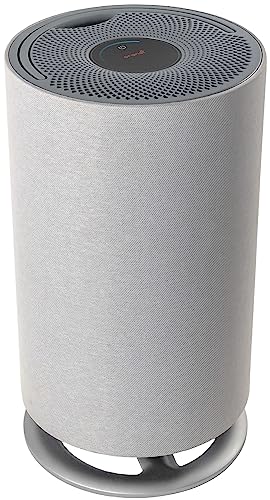
The Mod mattered because it challenged an assumption. When it appeared, the received wisdom held that a purifier with genuine capacity had to look industrial, and that a purifier styled for a living room had to be a toy. Oransi — a company whose credibility came from machines placed in schools and offices — built the Mod to refute both halves: a substantial filter and a capable fan inside a cabinet with curved lines and a domestic finish, controlled simply, and priced as a serious appliance rather than as decor. Owners bought it for open living spaces and larger bedrooms, and a good many of those machines are still running, which is precisely why its replacement filters continue to circulate through retail channels today.
What cannot be done responsibly is to present the original Mod as a current purchase with current specifications. Its unit listing’s absence from the retailer’s data means its present-day price, availability, and exact configuration cannot be verified from the channel this review uses, and hardware revisions across a long product life make even its historical specifications a moving target. Owners should therefore treat this section as the record of what the machine is and how to keep it, and shoppers should treat the mod+ sections that follow as the purchasable present. The Mod’s design legacy, meanwhile, is visible in everything Oransi sells now: the AirMend line’s domestic styling is the Mod’s idea, matured.
In this guide
Key Takeaways
- The original Oransi Mod unit was not returned by Amazon’s product data; only its replacement filters appear, so the original is covered as prose, not as a purchasable pick.
- The mod+ is the current flagship and successor in the line, verified with a live listing, and it is the machine a Mod shopper should evaluate first.
- The AirMend 270HB and 150HB give the same maker coverage for living rooms and bedrooms respectively.
- Existing Mod owners should secure spare filters by part number while they circulate freely.
- The Mod’s historical contribution — serious filtration in a domestic design — now defines the maker’s whole domestic range.
The Purchasable Range at a Glance
| Machine | Relationship to the Mod | Territory | Filter story |
|---|---|---|---|
| Oransi mod+ | Current flagship and successor | Extra-large rooms | Three-stage with carbon, per its listing |
| AirMend 270HB | Current line, largest size | Main living rooms | AirMend multi-stage design |
| AirMend 150HB | Current line, smallest size | Bedrooms and offices | AirMend multi-stage design |
Read the table as a family tree with a missing patriarch. The original Mod established the idea; the mod+ inherited the flagship role and scaled it up; the AirMend models inherited the domestic design language and organised it into sizes. A shopper loyal to the Mod’s idea is not being redirected to strangers in the sections below — they are being introduced to its descendants, each verified against a live listing with official imagery.
How This Review Handles an Unlisted Subject
The method deserves one explicit paragraph, because it governs several reviews in this series. Products are linked only when the retailer’s own product data returns them with an exact title and an official image; that rule is what allows a reader to trust every buying link on the page. A subject that fails that check is not invented into compliance. It is discussed in prose, with the gap stated plainly, and the article’s linked recommendations are drawn from verified listings and framed accurately — here, as successors and alternatives rather than as the subject itself. The original Mod is the subject of this review’s history and ownership sections; the mod+ and the AirMend pair are its linked present. No sentence in this article pretends otherwise.

Oransi mod+: The Successor and Current Flagship
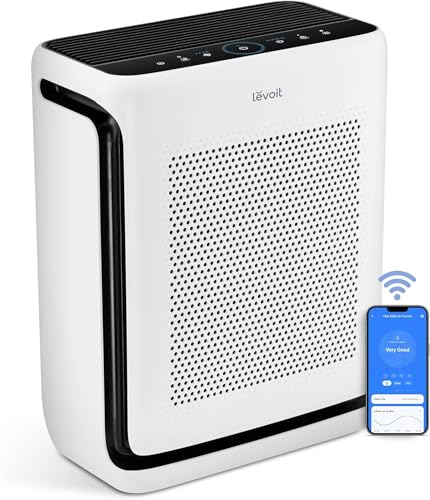
Badge: the Mod’s line, continued at larger scale. The mod+ takes the proposition the original Mod pioneered — a serious Oransi filter in a machine a household can live with — and aims it at extra-large rooms. Its listing describes a three-stage filter with carbon, positioned for wildfire smoke, allergies, pets, and birds. Where the original Mod’s achievement was making capacity presentable, the mod+’s is making capacity sufficient: enough airflow and filter volume to govern spaces that defeat ordinary large-room machines.
Relationship: current flagship and successor to the original Mod line. Territory: extra-large rooms per the listing. Filtration: three-stage filter with carbon per the listing. Positioning: wildfire smoke, allergies, pets, and birds.
Strengths
- Genuine extra-large capacity, with the headroom to hold big spaces at sustainable speeds.
- The carbon stage answers smoke and odour loads that the original Mod’s generation handled less completely.
- It inherits a specialist maker’s filter supply and support, the ownership backbone of the whole line.
Trade-offs
- It is a larger, more appliance-like presence than the design-first original that many shoppers came looking for.
- Its price and filter costs sit at the top of the maker’s range, wasted on ordinary rooms.
- Buyers who loved the Mod specifically for its looks should expect a more functional aesthetic here.
The honest way to frame the succession is that the mod+ kept the original’s seriousness and traded some of its charm for scale. That trade will suit the household whose room genuinely needs the capacity, and it explains why Oransi simultaneously developed the AirMend line: the Mod’s design idea needed a home at ordinary sizes, and the AirMend range is that home. A shopper who came for the original’s blend of looks and competence at living-room scale should therefore read the AirMend sections below as the true continuation of their search, with the mod+ reserved for the rooms whose measurements demand a flagship.
Best for: extra-large rooms, smoke regions, and heavy pet households wanting the line’s flagship. Not suited for: ordinary rooms or design-first shoppers. Check price on Amazon

AirMend 270HB: The Living-Room Heir
Badge: the Mod’s idea at main-room scale. If the original Mod’s natural habitat was the living room, the 270HB is its closest living relative. The largest AirMend carries the family’s design — domestic, rounded, made to sit among furniture — into the main shared space with airflow scaled for it. For the shopper whose mental picture is a Mod in a living room, this is the machine that picture resolves into today.
Relationship: current AirMend line, largest size. Territory: main living rooms. Filtration: the AirMend line’s multi-stage arrangement, built around a HEPA stage.
Strengths
- Living-room capacity inside the design language the Mod established for the brand.
- Headroom over smaller models lets it hold a busy room below its loudest speeds.
- It anchors a same-maker household alongside the smaller AirMend sizes.
Trade-offs
- Extra-large or open-plan spaces still belong to the mod+ above it.
- It is a substantial cabinet for a small flat’s living corner.
- Smoke-focused households should weigh the mod+’s carbon-forward design against it.
The 270HB is where this review expects most Mod loyalists to land, and the reasoning is biographical rather than technical. The original Mod was bought by people who wanted one good machine in the room where life happens, from a maker they trusted, in a cabinet they did not have to apologise for. Every term of that sentence describes the 270HB’s brief in the current range. Buy it for the main room, pair it later with its smaller sibling for the bedroom if the household grows into the idea, and the Mod’s original promise has been kept by its descendants.
Best for: main living rooms and Mod loyalists furnishing at ordinary scale. Not suited for: extra-large open-plan spaces. Check price on Amazon

AirMend 150HB: The Bedroom Heir
Badge: the line’s design at personal scale. The smallest AirMend completes the succession story by covering the room the original Mod was often oversized for. Bedrooms, nurseries, and home offices need steady, quiet, all-night cleaning in a cabinet that respects small rooms, and the 150HB is the current range’s answer, carrying the same design family and filtration philosophy down to personal scale.
Relationship: current AirMend line, smallest size. Territory: bedrooms, offices, and nurseries. Filtration: multi-stage AirMend filtration centred on HEPA media.
Strengths
- Right-sized for closed bedrooms, where its effective speeds stay in the quiet range.
- Shares the family’s design and controls, so it pairs coherently with a larger sibling.
- Its filter is the range’s most economical consumable.
Trade-offs
- It cannot serve a living room, and assigning it one repeats the category’s commonest sizing error.
- Households wanting a single machine for a whole flat should size up to the 270HB or beyond.
- Its virtues are steadiness rather than spectacle, which showroom shoppers may underrate.
Consider the 150HB the succession’s quiet completion. The Mod proved a serious maker could design for the home; the AirMend range proves the design scales from the bedroom to the living room without changing its character. A household that starts here, in the room where air quality is felt most intimately across the night, is starting the Oransi relationship at its most persuasive point.
Best for: bedrooms, nurseries, and offices. Not suited for: living rooms or open spaces. Check price on Amazon
For Owners of the Original Mod: Keeping the Machine in Service
Owners are this article’s second audience, and their needs are concrete. The Mod’s filters appearing in current retail search results is the single most important fact for an owner, because a purifier’s lifespan is its consumable’s lifespan. Buy filters by the exact part number from the machine’s documentation or the cartridge itself, not by the model name alone, since the Mod family’s filters span variants. Hold one spare beyond the installed cartridge; the discipline costs little and converts any future scarcity from a crisis into an errand. Maintain the machine by the category’s universal principles, which no brand change can repeal: keep the intake clear, attend to the first stage or pre-filter area on a regular cycle, replace the main cartridge when the machine’s indicator or a tired smell says so, and run the unit steadily rather than in occasional bursts, since air cleaning accumulates across hours. If the machine eventually fails mechanically, its natural replacements are the subjects of this review’s linked sections, and an owner replacing a Mod in a living room should start with the AirMend 270HB, while an owner whose room has grown — or whose region’s smoke seasons have — should start with the mod+.
Choosing Among the Successors
The decision tree for a Mod shopper is refreshingly short, because the current range is organised by the same variable the original purchase was: the room. Measure the space the machine will serve, in floor area and, for tall or open spaces, in volume. A bedroom, nursery, or office selects the 150HB. A main living room of ordinary proportions selects the 270HB. An extra-large or open-plan space, or a household whose brief is led by wildfire smoke or a heavy animal load, selects the mod+. Then apply the headroom rule that governs the whole category: between two adjacent sizes for a borderline room, take the larger, because a machine living in its middle speeds is quieter, cheaper to run, and kinder to its filters than a machine living at its ceiling. Finally, price the cartridge for the model you have chosen and write its part number down before the machine arrives, so ownership begins organised. That is the entire method, and it will still be the method when the range is next revised, because it depends on rooms and physics rather than on any particular model year.
Setup Guidance for the Current Range
Whichever successor you buy, its first week follows the pattern this category rewards. Unpack in the room of service, remove all transit wrapping from the filter before the first run, and position the machine on the room’s natural air path with clearance at the intake — not wedged behind the sofa whose back it will diligently clean instead of the room. Run it continuously for several days while the room’s standing particle load settles, then establish the household pattern: steady and low where people sleep, responsive where people live. Learn the machine’s speeds by ear in the first evenings, identifying the setting the household can sleep beside and the setting it can converse beside, because those two settings are the machine’s real specifications for your home whatever any sheet says. Set the filter calendar on the day of installation, with the part number recorded, and the ownership will proceed the way this maker’s machines are designed to proceed: quietly, for years, with the air handled.
Mistakes Specific to a Succession Purchase
The first mistake is hunting the original Mod through obscure channels at any price, paying a scarcity premium for a machine whose support tail is shorter than its successors’ and whose exact revision cannot be verified. The second is assuming the flagship successor must be the original’s replacement, when the mod+ serves a larger territory than the Mod typically did and the AirMend 270HB is usually the truer heir. The third is buying by nostalgia for a cabinet shape while ignoring the room measurement, a error the original Mod’s own design intelligence would have argued against. The fourth, for owners, is failing to stock the spare filter while the stocking is easy. The fifth is treating a purifier succession as a downgrade in principle: the current range exists because the maker kept developing, and its machines carry the original’s idea with better filtration economics and clearer sizing than the pioneer enjoyed.
Final Recommendation
The original Oransi Mod earns its place in this review as a genuinely influential machine whose owners should keep it filtered and running as long as its consumables circulate. As a purchase today, its line continues in verified form: the mod+ for extra-large rooms and smoke-led briefs, the AirMend 270HB for the main living room the Mod once served, and the AirMend 150HB for the bedroom. Choose by the room, keep the filter ahead of the machine, and the succession will feel less like a replacement than like the same idea, continued by the same maker, at the size your home actually needs.
The Mod in Its Era: What the Market Looked Like Then
To appreciate the original machine, recall the shelf it appeared on. The serious end of the purifier market at the time was dominated by rectangular towers and cylindrical canisters designed with an engineer’s indifference to the rooms they would occupy, sold on CADR figures to buyers who had done their homework. The decorative end was dominated by small, styled objects whose filters were too small to matter, sold on appearance to buyers who had not. The Mod’s wager was that a large, underserved middle existed: households that had done enough homework to want real filtration and had enough design sense to refuse a filing cabinet in the corner of the living room. History ratified the wager. The category’s centre of gravity moved toward exactly that middle over the following years, with maker after maker releasing machines that paired credible filter volumes with cabinets intended to be looked at. Oransi’s own trajectory tells the same story internally: the AirMend range is the wager systematised into sizes, and the mod+ is the wager scaled to the largest rooms. A review of the Mod is therefore partly a review of the moment the category grew up, and the machine’s owners own a piece of that moment that still, in many homes, cleans air every day.
Design Versus Specification: The Argument the Mod Started
The Mod also started an argument the category has never finished, about whether a purifier’s design is a legitimate engineering input or a tax on its performance. The purist position holds that every unit of cost and volume spent on appearance is stolen from the filter. The Mod’s implicit answer, which this review endorses, is that a purifier’s performance is its performance in a home, and a home is not a laboratory: a machine that is resented gets moved to a worse position, run at lower speeds, or exiled entirely, and its specification sheet does not follow it into exile. A cabinet the household is content to place on the room’s air path, in the main living space, running steadily, outperforms a superior specification sulking in a spare room. That is not an argument for style over substance; the Mod carried substance in full. It is an argument that placement and usage are components of performance, and design is what secures them. The current range inherits the conclusion: the AirMend machines are styled because styled machines get placed well and run constantly, and the mod+ accepts a more functional appearance precisely because its rooms are large enough that placement is rarely a negotiation.
The Owner’s Decade: What Long Service With the Mod Teaches
Households that have run a Mod for years have, usually without noticing, completed an education in air cleaning that new buyers pay tuition for. They have learned their home’s seasons — which months load the filter, which events spike the room, which speed the household sleeps through — and they have learned the machine’s own rhythms of maintenance. That education is the strongest argument for replacing a dead Mod from within the same maker’s range: the knowledge transfers. The room measurements are already taken, the placement is already proven, the filter calendar is already a habit, and the successor machine slots into a system that works rather than starting a new experiment. It is also an argument for the unglamorous owner disciplines this article keeps recommending, because the households that practised them are the ones whose machines lasted long enough to need successors rather than rescues. If your Mod is among them, its replacement decision is the reward for a decade of doing ownership properly.
Frequently Asked Questions
Can I still buy the original Oransi Mod?
Not through a listing this review could verify. Amazon’s product data returned only replacement filters for the Mod line when checked, which usually means the unit is sold through other channels, sold intermittently, or being succeeded by the current range. If you find a unit offered elsewhere, verify the exact model revision, the filter part number it uses, and the seller’s return terms in writing before paying, and compare the total against the mod+ and AirMend listings, which can be verified completely.
Is the mod+ the same machine as the Mod?
No, and the distinction matters for expectations. The mod+ is the current flagship of the same maker’s line — a larger machine for extra-large rooms with a three-stage filter including carbon, per its listing. It succeeds the Mod in the range’s hierarchy rather than replicating it. Shoppers who want the original’s proposition at living-room scale will usually find the AirMend 270HB the closer match in spirit and size.
Are Mod replacement filters still available?
Filters for the Mod line appear in current retail search results, which is encouraging for owners. Buy by the exact part number from your manual or cartridge, because the family’s variants are not interchangeable, and consider holding a spare: for any machine whose unit listing has gone quiet, the consumable’s availability is the true measure of its remaining lifespan, and a spare in the cupboard is cheap insurance against a future shortage.
Which current Oransi should a Mod owner buy when the machine dies?
Match the room the Mod served. A living room of ordinary size points to the AirMend 270HB, the current line’s largest size and the original’s natural heir. A bedroom posting points to the 150HB. If the household’s circumstances have changed — a move to an open-plan home, a new wood stove, a region’s worsening smoke seasons, more animals — the mod+ becomes the considered answer rather than the extravagant one.
Why did the Mod’s design matter so much?
Because it arrived when serious purification and domestic design were assumed to be opposites, and it demonstrated — from a maker with institutional credibility — that a machine could carry a substantial filter and still belong in a furnished room. That demonstration rearranged the category’s expectations, and the current Oransi range, with the AirMend line’s styled cabinets, is the direct descendant of the argument the Mod made. Many rival machines with rounded corners and furniture finishes are its indirect descendants.
How do I know which size of the current range my room needs?
Measure the room and be honest about its openings. A closed bedroom or office is the smallest AirMend’s territory; a main living room is the largest AirMend’s; a space that merges with other spaces through wide openings, or carries an unusual ceiling height, should be assessed by volume and will often belong to the mod+. When the measurement lands between sizes, choose the larger: the headroom expresses itself as quieter running and longer filter life every day of the machine’s service.
Second-Hand Mods: A Buyer’s Caution
Because the original machine was well made and well liked, a second-hand market in Mods exists, and it deserves the same clear-eyed treatment as the new market. A used Mod can be a rational purchase — the hardware is durable and the design has aged gracefully — provided three verifications are made. First, the filter: confirm the exact cartridge the unit uses is obtainable today at a sane price, because a used purifier without a sourceable filter is a fan in a handsome cabinet. Second, the fan and controls: run the machine through every speed, listen for bearing noise that was not in the design, and confirm the controls respond as they should, since electronics are the ageing component in any purifier of its era. Third, the history: a machine from a smoking household carries its past in its filter compartment and its carbon stage, and should be priced as needing an immediate full cartridge change. Make those checks, add the cost of a fresh filter to the price, and compare the total honestly against the verified successors in this article. Sometimes the used machine wins that comparison and deserves to. Sometimes the comparison reveals that the successor’s warranty, fresh filter, and certain support are worth their premium. Either outcome is a good purchase, because it was made with the evidence in front of the buyer.
What the Succession Tells Us About Buying Appliances Generally
Step back once more and the Mod’s story becomes a template for every appliance category in the connected era. A well-regarded product is succeeded; its consumables linger; its owners face a choice between loyalty to a specific object and loyalty to the idea the object embodied. The template’s lesson is that the idea is the durable asset. The Mod’s idea — serious filtration, honestly sized, in a cabinet a home can live with, from a maker that supports its filters — is fully alive in the current range, and a buyer who purchases the idea through its current machines loses nothing that mattered about the original. The buyer who purchases the object, through whatever channel still offers it, acquires the idea in its most fragile available form. Reviews exist to make that distinction visible at the moment of decision, and it is why this article has insisted, from its first paragraph, on separating the machine that was from the machines that are.
Placing a Successor in the Room the Mod Taught You
One practical inheritance deserves its own section: the room itself. A household replacing a Mod already knows where purifiers work in its home — which corner sits on the air path, which position the household objects to, which outlet is free — and that knowledge should be spent deliberately on the successor. Begin the new machine in the Mod’s proven position, because the room’s air has not changed its habits just because the cabinet has. Then, after a fortnight, allow yourself one experiment: move the successor to the position you always suspected might be better and compare the room across a week of ordinary life. Successor machines differ in intake geometry from the original, and a position that was second-best for the Mod is occasionally best for its heir. The experiment costs nothing and occasionally buys real performance. What should not change is the discipline around the position — clearance kept, intake unblocked, the machine on the circuit rather than in the alcove — because those are the terms on which any purifier in this family earns its specifications.
The Economics of Loyalty: Filters, Spares, and Timing
Loyalty to a maker’s range is often discussed as sentiment, but in this category it is arithmetic. A household standardised on one maker stocks one family’s cartridges, learns one control logic, and deals with one support organisation; every one of those simplifications has a cash and time value that compounds across years and across rooms. The Mod’s owners hold an additional asset: a machine still in service whose remaining life can be extended cheaply with a spare filter bought while supply is easy, deferring the successor purchase to a moment of the household’s choosing rather than the market’s. Timing, in fact, is the owner’s quiet superpower. A successor bought calmly — during a promotion, ahead of a season, with the old machine still running as a bridge — is a better purchase than the identical successor bought in a panic during a smoke week with the old machine dead. The Mod’s long service gives its owners that calm if they use it: keep the spare filter in the cupboard, watch the machine’s health honestly, and let the succession happen on your schedule. That is the final lesson the original machine teaches, and it is worth the whole price of the review.
How to Talk to Support About a Legacy Machine
Owners of succeeded models sometimes hesitate to contact a maker, assuming the conversation will be a sales pitch for the replacement. With a specialist maker, it is usually the opposite: support organisations keep their deepest knowledge on the machines that built the brand, and a Mod owner who calls with a model number, a purchase era, and a specific symptom is giving that organisation exactly the conversation it is best at. Prepare for it as you would for any good technical call. Note the machine’s exact model and any revision marks from its label, describe the symptom in terms of when it occurs and what changed before it began, and have the filter’s part number and age ready, since a surprising share of legacy-machine complaints are consumable complaints wearing a disguise. If the answer does turn out to be succession, you will make the decision with the maker’s own account of the current range’s fit for your room, which is a better briefing than any advertisement. And if the answer is a part, a cleaning procedure, or a filter, the Mod’s service continues — which was the point of buying from a specialist in the first place.
The Mod’s Rooms: Where the Original Earned Its Reputation
It is worth recording the postings where the original machine built its name, because they predict where its successors will be happiest. The first was the design-conscious living room of a flat or a smaller house, where a single machine had to be both the air strategy and a piece of the room’s furniture, and where the Mod’s cabinet was the first serious filter many such rooms had ever been willing to host. The second was the larger bedroom of a light sleeper with standards — a room that needed real capacity through the night and would not tolerate an appliance’s looks or voice at the bedside. The third was the home office of the specification reader, the buyer who had compared CADR tables for a week and then chosen, with some surprise at themselves, the machine that also looked like it belonged among bookshelves. Each of those postings maps cleanly onto the current range: the living room to the 270HB, the bedroom to the 150HB, and the specification reader’s office to whichever AirMend the room’s measurement selects, with the mod+ waiting for the households whose postings have grown grander since. A product line that can narrate its own customers’ lives back to them that accurately is a line that was designed by listening, which may be the Mod’s most durable legacy of all.
Reading Any Maker’s Range the Way This One Was Read
The method used on Oransi’s succession in this article generalises, and readers facing another maker’s revised range can reuse it intact. Identify the subject’s status first: purchasable and verifiable, purchasable elsewhere, or succeeded. Identify the successor by the maker’s own range structure rather than by name similarity, since names are marketing and range positions are facts. Map the old machine’s postings — the rooms and households it served — onto the new range’s sizes, because continuity of posting is a better guide than continuity of branding. Price the consumables for every candidate from live listings, and let the support tail arbitrate close contests. Finally, treat the original’s owners as a source of evidence rather than as an audience for nostalgia: a decade of their maintenance experience is the best available forecast of the successor’s ownership. Applied to the Mod, that method produced the recommendations in this review. Applied elsewhere, it will produce recommendations a reader can defend to themselves in year three, which is when purchase decisions are actually judged.
A closing word for the owner who has read this far with a working Mod in the next room. Nothing in this review asks you to replace it. The successors exist for the day the machine or its filters give out, and the most useful action available to you today is also the smallest: order the spare filter, write its part number in the household records, and let a good machine continue its service with its future secured. When the succession eventually comes, it will come on your terms, into a room whose air you already understand — which is the best ending any appliance story gets.
The Filter Question, Once More, With Feeling
Every thread in this review returns to the filter, so give it a final, direct treatment. A purifier is two purchases wearing one box: the machine, bought once, and the filtration, bought forever. The Mod’s story illustrates both halves — the machine was good enough to be succeeded rather than forgotten, and its filters are the thread by which its remaining service hangs. For the successors, the same arithmetic applies in a happier tense: their cartridges are current products with listings of their own, and a buyer can verify the second purchase before committing to the first. Make that verification a ritual for every purifier you ever buy. Find the cartridge’s own page, note its price and its stated life, multiply across the years you intend to keep the machine, and only then compare machines on their totals. The Mod’s owners learned that arithmetic from the far side; its successors’ buyers can learn it from the near side, which is cheaper.
What Has Not Changed Across the Succession
For all the revision, the continuities in this line are the story’s point. The maker’s identity is unchanged: a specialist, American-based, whose credibility was earned in rooms where air quality is specified rather than hoped for. The filtration philosophy is unchanged: staged media, honestly sized, with the fan and the filter treated as the product and everything else as support. The sizing logic is unchanged, merely clarified: the Mod’s single size has become a ladder of sizes because households kept asking the same machine to serve different rooms. And the ownership contract is unchanged: the maker sells the cartridge as a standing product, supports the machine as a long-term tenant of the home, and expects the relationship to be measured in years. A shopper who trusted the Mod for those continuities can trust its successors for the identical list, which is as much as any succession can honestly promise — and, in a market of annual reinventions, it is a great deal.
One more audience deserves a sentence: the reader researching the Mod because a friend recommended it by name, unaware of the succession. Your friend’s recommendation was sound when it was formed and remains sound in substance; it simply needs translating into the current catalogue, which is what the linked sections of this review are for. Buy the successor that fits your room, and you will have honoured the recommendation more faithfully than by hunting the original name through the internet’s remaining corners.
Documentation Habits for Any Long-Lived Appliance
The Mod’s owners who fare best share a habit that costs nothing and pays out for a decade: they keep the machine’s paper. Not the box, and not the marketing leaflet, but the four facts that govern the appliance’s future — the exact model and revision, the filter’s part number, the purchase date and channel, and the maker’s support contact. Kept together, those four facts turn every future interaction, from a cartridge order to a support call to a successor decision, into a five-minute errand. Kept nowhere, they turn the same interactions into archaeology. The habit generalises across the house: the boiler, the vacuum, the water filter, and the purifier all age into questions that only their paper can answer. If this review sends a Mod owner to a drawer to write down four facts, it will have done that household more lasting good than any verdict about any machine in it.
And the shopper’s version of the same habit begins at the moment of purchase rather than years into it. Save the successor’s listing details, its cartridge page, and its receipt together on the day it arrives, and the machine begins its life already documented — a small act of administration that future-you, standing in a parts aisle or on a support call in year six, will recognise as the most valuable paragraph in this entire review.
A Short Appreciation, and a Standard
Reviews are not usually in the appreciation business, but a machine that rearranged its category’s expectations and is still, in thousands of homes, quietly doing its job has earned a paragraph of it. The Mod demonstrated that households did not have to choose between air they could trust and rooms they could love, and every styled, serious purifier sold since — including its own maker’s — walks through the door it opened. The standard it set is the standard this review has applied to its successors: filtration first, sizing honest, design in service of placement, and a maker that answers for its filters. That the successors meet that standard is why this article can recommend them without asterisks. That the original set it is why the article exists at all.
Practical Next Steps, by Reader
End with itineraries, since this article has served three audiences and owes each a short one. Owners: find the cartridge’s part number tonight, order the spare this week, and add the machine’s four facts to the household records; then forget this article until the machine gives you a reason to return to it. Shoppers who came for the original: measure your room, choose between the 270HB, the 150HB, and the mod+ by that measurement, verify the cartridge page for your choice, and buy the successor with the same confidence your research in the original justified. Researchers: note the pattern — a design-led pioneer, a sized range as its systematisation, a flagship as its scaling — because you will meet that pattern again in category after category, and recognising it early is most of what product literacy is.
Whichever itinerary is yours, the destination is the same one the original machine was bought for: a room whose air is handled, by a machine the household is content to live beside, from a maker that will still be selling its filter when the next one is due. The name on the cabinet has evolved. The destination has not.
Why This Review Links Successors Instead of the Subject
A final methodological note, because readers deserve to know how the page they are reading makes its decisions. Review sites earn money when readers buy through their links, which creates an obvious temptation to link whatever is being searched for, available or not. This article refuses that temptation in a specific, checkable way: its buying links point only to machines the retailer’s own data verified, and the unverifiable subject is carried in prose with its status stated in the opening paragraphs. The cost of that refusal is real — a reader determined to buy an original Mod today will buy it somewhere else — and the benefit is the only asset a review site actually has, which is that its links can be trusted to land on the product described, at a listing that exists, with the specifications the article discussed. Hold every review you read to that standard, and the ones that meet it will identify themselves quickly.
And with that, the review closes where the machine began: in a furnished room, with the air being handled by something the household chose on purpose. Whether that something is an original Mod in its second decade or a successor in its first month, the choice — informed, sized, and documented — is the part that was always yours.
A Note on Names: Mod, mod+, and the Confusion Between Them
Search engines and marketplaces treat Mod and mod+ as near-identical strings, and the confusion between them has practical consequences worth a short section. A listing for the flagship may surface for the original’s search and vice versa; a filter described for one may be bought for the other by a hurried owner; a review written about one is routinely read as a review of the other. The defences are the ones this article has modelled throughout: read the full model name on the listing rather than the search snippet, match filter part numbers character by character, and treat any page that uses the two names interchangeably as a page whose other claims deserve suspicion. Oransi’s naming made the confusion likely; the reader’s precision makes it harmless.
Precision about names extends to the household’s own records, incidentally: write the full model designation, including its suffix, in the appliance file, because the family member who orders a cartridge in five years will search by whatever the record says, and a record that says only the short name invites exactly the mismatch this section warns against.
That discipline — exact names, exact numbers, evidence before enthusiasm — is the thread that runs from the Mod’s own engineering through this review’s method to the reader’s next purchase, whatever it turns out to be. Keep hold of it and the succession question, here and everywhere else, mostly answers itself.
How Successor Products Should Be Judged
The Mod’s story generalises, and a short framework for judging any successor product may serve readers beyond this brand. Ask first what the successor kept: the mod plus kept the original’s essential proposition — compact, quiet, desktop-scale purification — which is the strongest evidence that the maker’s engineers understood their own product. Ask second what it changed, and whether the changes answer the original’s documented weaknesses rather than the marketing department’s appetite for novelty. Ask third whether the original’s owners are carried or abandoned — whether filters, parts, and support continue to flow to the machine already in homes. A successor that keeps the proposition, answers the weaknesses, and carries the owners is an upgrade in the honest sense, and the mod plus, on the evidence available to this article, meets that standard. A successor that merely renames, reprices, and orphans is a relaunch, and readers who learn to tell the two apart will spend better across every category this site covers.
Related Guides
the flagship successor reviewed in depth the AirMend family sized and reviewed large-room purifiers compared bedroom machines that run quietly HEPA purifiers ranked whole-home air planning another subject with a quiet listing