Disclosure: As an Amazon Associate, dailyhomedecorating.com earns from qualifying purchases. Links on this page are affiliate links; they cost you nothing extra. Prices and availability change often, so check the current Amazon listing before you buy.
Searches for the okaysou airmax 10l pro usually come from a particular kind of shopper: someone who has read that this compact purifier punches above its size, who likes its plainspoken design, and who now wants a straight answer about whether to buy one. The straight answer has to start with availability, because when we checked Amazon’s product data for this guide, the AirMax 10L Pro itself did not come back. Neither did the Aiibot A300, the sibling machine built on the same platform. What the catalogue returned for both names was replacement filters — evidence that the machines have an installed base of owners, but not a currently verifiable listing for the unit itself, with the specifications and imagery a responsible review needs.
That shapes this article in the same way an honest shopkeeper would shape the conversation. The Okaysou machine gets a full discussion of what it is, what its owners bought it for, and what questions its current listing status raises. Then three alternatives you can verify and buy today get the detailed treatment: Levoit’s Core 200S, a smart compact purifier with voice control; the Hathaspace HSP001, a long-established room purifier with a devoted following; and Levoit’s Vital 200S, the larger, sensor-equipped sibling for bigger rooms. If the Okaysou reappears through a channel you trust, the middle sections of this page will help you judge it. If you need a purifier this week, the three machines below are the ones standing on verifiable ground.
Okaysou Airmax 10l Pro: The Machine and Its Situation
The AirMax 10L Pro built its reputation in the compact end of the market, where it competed as a straightforward HEPA purifier for bedrooms and small living spaces: a tower-format machine, a multi-stage filter, and a brand presentation that leaned on simplicity rather than on app dashboards. Okaysou sold a family of these machines under the AirMax name at different capacities, and the 10L Pro sat toward the capable end of that family, aimed at owners who wanted more coverage than a desktop unit without stepping up to a full-size floor machine. Owners bought it for the usual compact-purifier reasons — a child’s bedroom, a home office, a flat where one machine gets carried between rooms — and the filter listings that still circulate today exist because those owners still need consumables.
Here is what cannot currently be confirmed through the retailer’s own data, and it mirrors the questions any buyer should ask. The unit’s exact coverage figure, its noise at each speed, its filter architecture in the manufacturer’s own words, and its current pricing are all unverifiable from a live listing, because there is no live unit listing in the catalogue we checked. Replacement filters surfacing in search results confirm the platform existed and was sold; they do not confirm that new units are presently stocked, supported, or identical in specification to the ones earlier reviews described. Small purifier brands revise hardware quietly, and a review written against a 2021 unit may describe a subtly different machine from one sold under the same name later. None of this makes the 10L Pro a bad purifier. It makes it an unverifiable one at the moment of writing, and the distinction is the entire editorial policy of this page: we link what we can check, and we discuss the rest as discussion.
In this guide
Key Takeaways
- The AirMax 10L Pro unit was not returned by Amazon’s product data; only its replacement filters appear, so the unit is treated as prose-only in this guide.
- The machine’s appeal was always compact, simple, sensibly priced HEPA cleaning for bedrooms and small living spaces.
- Filter availability today is a good sign for existing owners and an incomplete answer for new buyers.
- Three verified alternatives cover the same jobs: a smart Levoit compact, the established Hathaspace HSP001, and the larger Levoit Vital 200S.
- Anyone who finds the Okaysou listed elsewhere should confirm the filter part number and the seller’s warranty before paying.
The Verified Alternatives at a Glance
| Machine | Format | Defining feature from its listing | Room it suits |
|---|---|---|---|
| Levoit Core 200S | Compact smart tower | Smart and voice control, three-in-one filter | Bedrooms, dorms, offices |
| Hathaspace HSP001 | Room purifier | True HEPA, coverage up to 700 square feet | Living rooms, larger bedrooms |
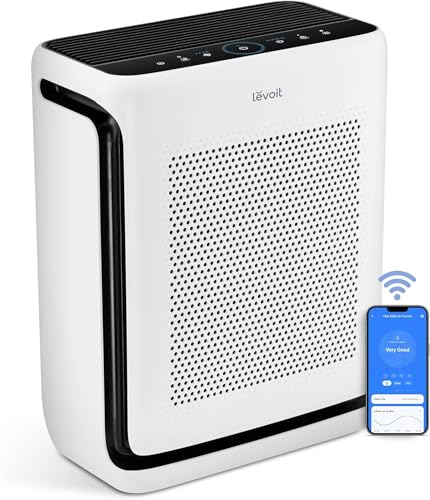
| Levoit Vital 200S | Large-room tower | Air quality monitor, coverage up to 1,875 square feet | Open spaces, pet households |
Read the table as a ladder. The Core 200S matches the Okaysou’s intended habitat most closely, adding connected controls the Okaysou never emphasised. The HSP001 steps up in coverage while staying in the same straightforward, no-app philosophy the Okaysou represented. The Vital 200S steps up again into genuine large-room territory with a sensor-driven automatic mode. A shopper who arrived wanting the 10L Pro’s size and simplicity will find their answer on one of those three rungs, and the reviews below are written to help them choose the rung rather than merely admire the ladder.
How These Alternatives Were Selected
Selection followed the same evidence rule applied throughout this series. Each machine needed a current Amazon listing retrieved through the retailer’s product data, carrying an exact model title and an official image, so that everything said about it here can be traced to a listing a reader can open. Each also needed to plausibly serve a household that had been shopping for the Okaysou, which meant honest compact-to-large coverage, HEPA filtration as the core technology, and a manufacturer with replacement filters in active circulation. Machines that failed the verification pass were excluded however attractive their marketing looked, and the Okaysou itself was excluded from linking for exactly that reason, while remaining the article’s subject in prose. That asymmetry is deliberate and, we would argue, the only defensible way to write about a product whose listing has gone quiet.

Levoit Core 200S: The Smart Compact
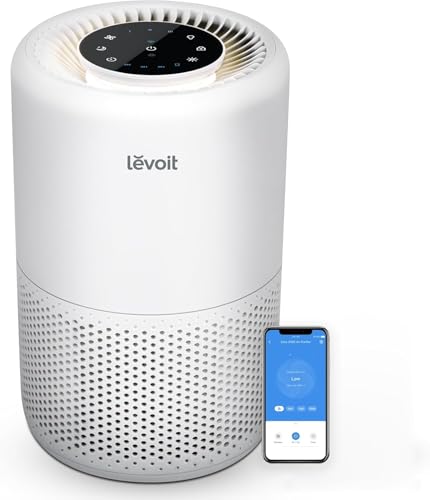
Badge: the closest verified match to the Okaysou’s job. The Core 200S occupies the same domestic niche the AirMax 10L Pro was sold into — bedrooms, dorm rooms, home offices — and equips it with the connected features the Okaysou largely skipped. Its listing describes a three-in-one filter with a HEPA sleep mode, smart controls, and voice assistant compatibility, in a compact white tower that disappears into a room’s corner the way this class of machine should. For a buyer who liked the Okaysou’s size but lives in 2026’s connected home, this is the natural landing place.
Filtration: the listing describes a three-in-one filter and a HEPA sleep mode. Controls: smart app and voice control per the listing. Positioning: pollen, pollutants, smoke, dander, dust, and pet hair. Colour: white.
Strengths
- Voice and app control suit a bedroom machine you want to adjust without crossing the room at midnight.
- The sleep mode is engineered for the room this machine will actually live in, not borrowed from a larger model.
- Levoit’s filter ecosystem is deep and current, so consumables are a routine order rather than a search expedition.
Trade-offs
- Compact coverage is compact: this is a one-room machine and will not rescue a whole flat.
- The connected features assume a household comfortable pairing devices to a home network.
- Its three-in-one cartridge bundles the stages, so you replace the whole filter rather than individual elements.
Picture the Core 200S where the Okaysou would have gone: on the floor beside a desk, or in the corner of a bedroom where a partner’s light sleeping sets the noise budget. Its working life is mostly nocturnal and mostly quiet, punctuated by pollen days when the app earns its place by letting you run the machine harder before bedtime and settle it down as you settle. Owners migrating from an Okaysou will notice the philosophy shift immediately — less appliance, more device — and most will count it an upgrade, while a minority who valued the Okaysou’s refusal to have an app will prefer the Hathaspace below. Both reactions are coherent; the machines genuinely differ in temperament.
Best for: bedrooms, dorms, and offices in connected homes. Not suited for: whole-flat coverage or app-averse buyers. Check price on Amazon

Hathaspace HSP001: The Established Room Purifier
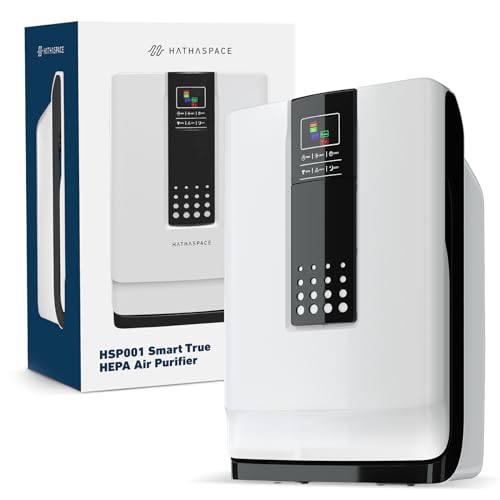
Badge: the verified alternative in the Okaysou’s own philosophy. The HSP001 has been a fixture of this category for years, and its listing makes the classic pitch in classic terms: true HEPA filtration, removal of the overwhelming majority of dust, smoke, dander, and odours, and coverage up to seven hundred square feet. No app theatre, no voice control — a substantial filter, a capable fan, and a control scheme you can operate in the dark. Shoppers who were drawn to Okaysou’s plainspoken style will feel recognised by this machine.
Filtration: true HEPA per the listing. Coverage claim: up to 700 square feet. Positioning: dust, smoke, pet dander, and odours. Philosophy: multi-stage filtration without connected features.
Strengths
- Coverage reaches into genuine living-room territory while the footprint stays manageable.
- A multi-stage filter with a real carbon presence addresses odours as well as particles.
- Its long presence in the market means filters, advice, and owner experience are easy to find.
Trade-offs
- No app or voice control, which connected households may read as a missing feature rather than a virtue.
- It is a larger physical presence than the compact Levoit, and its styling is functional rather than decorative.
- Without a sensor-driven auto mode, correct usage depends on the owner choosing speeds sensibly.
The HSP001 is the machine in this article most likely to be bought twice by the same household — once for the living room, then again for a bedroom after the first proves itself — because its appeal is cumulative rather than spectacular. It also makes a pointed comparison with the Okaysou situation: this is what a compact-room purifier looks like when its listing, filters, and maker are all presently accounted for. A buyer cross-shopping the two names should notice that the Hathaspace asks for no faith at all, and in a category where the product is invisible air, the absence of required faith is a feature with real cash value.
Best for: living rooms and larger bedrooms, especially pet homes that value simplicity. Not suited for: smart-home completists. Check price on Amazon

Levoit Vital 200S: The Step Up to Large Rooms
Badge: the verified alternative for buyers whose room outgrew compact machines. Some Okaysou shoppers were never really compact shoppers; they were large-room shoppers seduced by a compact machine’s price. The Vital 200S answers their actual problem. Its listing describes coverage up to 1,875 square feet, an air quality monitor driving automatic behaviour, a quiet sleep mode rated by the maker for bedroom use, and filtration aimed at allergens, pet hair, and dander. It is a bigger, more capable appliance in every dimension, and it reframes the purchase from making do to sizing correctly.
Filtration: HEPA with sleep mode per the listing. Coverage claim: rooms up to 1,875 square feet. Controls: smart monitor with automatic adjustment per the listing. Positioning: allergies, pet hair, and dander in large rooms.
Strengths
- The sensor and automatic mode deliver correct speeds without the owner managing the machine daily.
- Coverage headroom means it achieves large-room results without living at its loudest setting.
- Bedroom manners are engineered in, with a sleep mode quiet enough for the room it may serve at night.
Trade-offs
- It is physically and financially a step up from the compact class the Okaysou inhabited.
- A small bedroom will never use its capacity, making it an extravagant answer to a modest question.
- Its filter is a larger consumable, and its replacement cost should be checked before the purchase feels final.
Choose the Vital 200S when the honest measurement of your room says the compact class was a compromise. Open-plan spaces, primary bedrooms with an ensuite’s worth of volume, and pet households whose main living area carries the whole family’s air all belong to this machine. Its automatic behaviour is the feature owners mention after a month, because a purifier that reacts to the cooking event or the dog’s entrance by itself is a purifier that is actually used at the right speed most of the time, and used correctly beats powerful in this category every day of the week.
Best for: large rooms, open-plan spaces, and pet households wanting automatic operation. Not suited for: small rooms or minimal budgets. Check price on Amazon
What Compact Purifiers Can and Cannot Do
The Okaysou’s class deserves a clear-eyed paragraph, because disappointment with compact purifiers is usually a sizing error wearing a quality complaint’s clothes. A compact machine moves a modest volume of air per hour, which is entirely sufficient for a closed bedroom across a night and entirely insufficient for an open-plan floor across an afternoon. It cleans the room it is in, not the home it is in, and its effect decays with every doorway between it and the air you are breathing. Within its room, patience is the operating principle: particles are removed across repeated passes over hours, not in a single dramatic cycle, so the correct pattern is continuous low-speed running rather than occasional turbo blasts. Noise sets the practical ceiling on all of this. A compact purifier’s highest speed is often louder than a household will tolerate in a bedroom, which means its honest working coverage is the coverage it achieves at the speed people actually leave it on. Judge every machine in this class, the Okaysou included, by that honest figure and the category suddenly becomes easy to shop: measure the room, choose the machine whose comfortable-speed coverage matches it, and let the turbo numbers entertain somebody else.
Buying Guidance for This End of the Market
Begin with the room measurement you have been avoiding. Multiply length by width, note the ceiling height if it is unusual, and be honest about whether doors stand open, because an open door merges your room with the next one for air purposes. Next, decide your relationship with connected features before you look at models, since that single preference divides this article’s alternatives cleanly: the Levoits assume a phone is a remote control for life, while the Hathaspace assumes a hand is. Then investigate the filter for each candidate as a separate purchase — its price, its stated life, and whether it is in stock today — and add a year of filters to each machine’s price before comparing totals. Small purifiers are cheap to buy and surprisingly variable to run, and the machine with the gentle purchase price occasionally carries the rudest consumable bill. Finally, weigh the listing’s own confidence. A maker that publishes its coverage basis, names its filter stages, and sells its replacements beside the machine is making checkable promises. A listing that offers adjectives instead of figures is asking to be believed, and in this category belief is not a filtration technology.
For the Okaysou specifically, add one more step if you find it through another channel: confirm that the filter sold for the current unit matches the filter your research described, and that the seller’s return route exists in writing. Small brands’ listings change hands and change contents, and the buyer who verifies the consumable and the return path has neutralised the two risks that actually bite owners of quiet-listing machines.
Setup and Daily Use, Whichever Machine You Choose
Unbox the purifier in the room it will serve and strip every piece of transit packaging from the filter before the first run; compact machines ship with their cartridges bagged, and a unit run with the bag in place will move air enthusiastically while filtering none of it. Position the machine where air can reach it — a hand’s breadth from the wall at minimum, out from behind curtains and sofa arms — and near the room’s main source if one exists, which in a bedroom is often simply the door. Run it continuously for the first week while the room’s accumulated load comes down, then settle into the pattern your household will actually keep: low and constant in sleeping rooms, automatic or scheduled in living spaces. Vacuum or rinse the pre-filter on the maker’s schedule if the design allows it, because a choked pre-filter quietly taxes every claim the machine makes downstream. When the filter indicator speaks, believe it approximately and your own nose completely; a machine that smells tired is tired, whatever the calendar says. Keep the manual’s filter part number photographed on your phone, because the day a filter is needed is never the day you want to begin researching which one it is.
Mistakes That Follow Compact Purifiers Home
Undersizing is the original sin of this category: a machine bought for a bedroom gets assigned to a living room, works heroically, changes little, and collects a disappointed review that belongs to the tape measure. The second mistake is burst usage, running the purifier for an hour before guests arrive and expecting a cleaned room, when the technology works cumulatively across a day. The third is filter neglect, stretching a cartridge far beyond its service life until the machine is recirculating dust it can no longer hold and calling the result a product failure. The fourth is placement theatre, hiding the unit behind furniture for the photograph and starving it of the airflow it exists to process. The fifth, specific to machines like the Okaysou whose listings go quiet, is buying the unit without securing the consumable: a spare filter bought alongside the machine converts a future availability problem into a non-event. Each of these mistakes is cheap to avoid and expensive to learn, which is the usual arrangement.
Final Recommendation
The Okaysou AirMax 10L Pro remains a machine we can discuss but cannot currently send you to with a verified listing, and that status, rather than any flaw in its design, is what a buyer must weigh. If you find it stocked by a seller who can show you the filter, the specifications, and a return path in writing, judge it by the framework in this article and it may serve a small room perfectly well. If you need a purifier now, the Levoit Core 200S takes over the Okaysou’s exact job with connected controls and a live, checkable listing; the Hathaspace HSP001 serves the same plainspoken philosophy with more coverage behind it; and the Levoit Vital 200S is the correct answer for everyone who was quietly hoping a compact machine would clean a large room. Buy the machine whose evidence you can inspect, size it to the room you measured, and keep its filter in stock — the rest of this category is commentary.
The Compact-Purifier Market the Okaysou Competed In
To understand the AirMax 10L Pro’s appeal, it helps to see the shelf it sat on. The compact HEPA market divides roughly into three temperaments. There are the connected compacts, led by designs like the Core 200S in this article, which treat the purifier as a node in the smart home and compete on sensors, applications, and voice assistants. There are the filtration traditionalists, represented here by Hathaspace, which compete on the size and honesty of the filter stack and regard connectivity as a distraction from the one job. And there were the value minimalists, Okaysou among them, which competed by stripping the proposition to its essentials — a competent HEPA tower, a fair price, a short feature list — and trusting that many buyers prefer an appliance that asks nothing of them. Each temperament has produced genuinely good machines, and each has produced disappointments when a buyer from one camp accidentally purchased from another. The smart-home buyer who chose a minimalist machine felt underserved by its silence; the simplicity buyer who chose a connected machine felt nagged by its application. Much of what looks like product quality in this category is actually temperament matching, which is why this article keeps returning to the question of how you want to live with the machine rather than merely what the machine can do.
The value-minimalist camp is also the most volatile, because thin margins and marketplace selling make its brands the likeliest to pause, pivot, or go quiet — exactly the situation this article documents with the Okaysou. That volatility is not a reason to scorn the camp; some of its machines have served households faithfully for years. It is a reason to buy from it with your eyes open: secure the spare filter at purchase, keep the documentation, and treat the machine’s price advantage as partial compensation for a shorter support horizon. Bought that way, a minimalist purifier is a rational gamble. Bought casually, it is how households end up owning an orphaned appliance and a story they tell in review sections.
Filter Economics: The Second Price Tag
Every purifier in this article carries two prices, and only one of them is visible at checkout. The second price is the annual cost of keeping the machine filtering, and in the compact class it varies enough to reverse a purchase decision. A three-in-one cartridge design, like the Levoits use, replaces every stage at once: simple, predictable, and occasionally wasteful when the carbon stage tires before the HEPA element does. A multi-stage design with separate elements, the traditionalist pattern, lets you replace stages on their own schedules, which can be cheaper across a year and fussier across an evening. Neither system is automatically the economical one; the arithmetic depends on the cartridge prices and the household’s air. A pet-heavy home loads pre-filters and carbon quickly, while a clean, pet-free flat sips at its filters, so the same machine can be a bargain in one postcode and a subscription in another. The discipline this article recommends is unglamorous and decisive: before buying any machine here, price its filter, multiply by the replacements your household’s air will plausibly consume in a year, and compare machines on the sum. For the Okaysou, that discipline has a sharper edge, because the filter is presently easier to verify than the machine — a fact owners can exploit by stocking ahead and shoppers should treat as the purchase’s central question.
Three Rooms, Three Decisions
The nursery-adjacent bedroom. The requirements are quiet, safety of routine, and air that gets cleaned while a light sleeper objects to everything. The Core 200S fits this room’s life: a sleep mode designed for bedrooms, controls you can operate from a phone in the dark without crossing a creaking floor, and a footprint that tucks beside a wardrobe. An Okaysou owner replacing a failed unit for this room will find the transition painless and the midnight control genuinely useful.
The rented flat’s only living space. Renters need a machine that covers the room where life happens, moves house without drama, and does not ask for installation. The Hathaspace’s coverage headroom suits the larger end of rental living rooms, and its appliance simplicity suits a household that may hand the machine to a flatmate’s care without a tutorial. This is also the room where undersizing bites hardest, because the living space in a small flat does the work of three rooms in a house.
The home office that doubles as a guest room. Daytime, this room wants a machine that handles dust and the closed-door stuffiness of video calls; at night, occasionally, it wants bedroom manners for a guest. Either Levoit serves, with the Vital earning its premium only if the room is genuinely large. The office is also where a purifier’s sensor display becomes a small daily pleasure, a visible answer to the question of whether the closed door is costing you air quality while you work.
Frequently Asked Questions
Is the Okaysou AirMax 10L Pro discontinued?
That conclusion goes further than the evidence allows. What can be said is that the unit did not appear in Amazon’s product data when checked for this guide, while its replacement filters did. Brands pause listings, shift channels, sell through their own stores, or wind down models without announcements, and each possibility looks identical from a search box. If owning this exact machine matters to you, the manufacturer’s own storefront is the place to ask the question, and their answer about filter supply matters more than their answer about the unit.
Can I still get filters if I already own the Okaysou?
The presence of replacement filters in current search results is genuinely encouraging for owners, because it means the consumable is still circulating through retail channels. Buy by the exact part number from your manual or the cartridge itself rather than by the machine’s name alone, since the AirMax family spans several models whose filters are not interchangeable. Owners would also be prudent to hold one spare filter beyond their immediate need, converting a future shortage from an emergency into a shopping errand.
Which alternative is closest to the Okaysou in spirit?
It depends which part of the spirit you mean. For size and room, the Levoit Core 200S works the same bedrooms and offices, though it adds the app and voice control the Okaysou mostly declined. For philosophy — a purifier as a simple appliance with a serious filter and no connected theatre — the Hathaspace HSP001 is the closer relative, and it brings more coverage with it. Owners replacing a dead Okaysou usually know within a sentence which of those two temperaments they are shopping for.
How large a room can a compact purifier honestly serve?
Work from the speed you will tolerate rather than the speed on the box. A compact machine running quietly overnight can keep a typical bedroom’s air turning over at a useful rate, which is the job this class was built for. Ask it to serve a space several times that size and its effect thins toward the decorative, not because the filter stopped working but because the room’s air volume outruns the fan. The Vital 200S in this article exists precisely for households whose measurement lands beyond the compact class’s honest reach.
Do I need the air quality sensor and automatic mode?
Need is too strong, but the feature earns its place in lived experience. Air loads arrive in events — cooking, vacuuming, a pet’s entrance, a window opened onto a pollinated street — and a sensor-driven machine answers events while they are happening instead of at whatever fixed speed you chose that morning. Households that are home and attentive can replicate most of the benefit manually. Households that are busy, out, or asleep for most of the machine’s working day will find automatic operation is the difference between a purifier that is used well and one that is merely used.
What should I check first if my purifier seems to do nothing?
Check the filter’s transit packaging, because a cartridge still sealed in its shipping bag is the most common cause of a purifier that blows air and changes nothing, and it embarrasses somebody in every support forum in this category. After that, check placement for starved airflow, check the pre-filter for a mat of hair and lint, and give the machine a full day of continuous running in the closed room before judging it, since the technology’s effects accumulate across hours rather than announcing themselves in minutes.
Noise, Sleep, and the Honest Speed
Compact purifiers live or die by a number their marketing rarely headlines: the noise they make at the speed a household can actually sleep beside. Fan noise rises steeply with speed, and the difference between a machine’s whisper setting and its working setting is the difference between a bedroom appliance and a corridor appliance. When you evaluate any candidate in this article’s class, translate its specifications into a nightly scene. The machine will sit a few metres from a pillow, in a room that goes quiet enough for a refrigerator’s hum to register, and it will run there for eight hours. If its middle speed is acceptable in that scene, its coverage at that speed is its real coverage, and the comparison between machines should be conducted entirely at that setting. This is also why sleep modes matter beyond their decibel figures: a well-designed sleep setting often dims displays and steadies the fan at a constant, predictable level, because a fan that hunts up and down in the night wakes light sleepers more reliably than a fan that simply hums. The Levoits in this article build their bedroom cases on exactly that steadiness. The Hathaspace answers with simplicity: fewer modes, each of them honest, and an owner who learns which one the bedroom tolerates. The Okaysou competed in this same nightly arena, and any owner evaluating theirs should judge it by the same scene rather than by its daytime performance, because the night shift is where compact purifiers earn their wages.
What Owners of Quiet-Listing Machines Should Do Differently
Owning a machine whose listing has gone quiet is not a crisis, but it rewards a slightly different ownership style, and Okaysou owners in particular can act on several of these points today. Keep the consumable ahead of the machine: hold a spare filter, know its part number, and know a second source for it beyond the first listing you found. Keep the paper: the manual, the receipt, and a photograph of the rating label together outlast any website. Learn the machine’s maintenance by its generic principles rather than by brand support — pre-filter hygiene, cartridge replacement by indicator and by nose, exterior vents kept clear — because those principles transfer even when a help desk does not answer. And resist the urge to replace a working machine out of listing anxiety alone. A purifier that is cleaning your bedroom’s air tonight is delivering the entire value proposition of its category; the uncertainty attaches to its future consumables, which the spare-filter discipline directly addresses. Should the machine eventually fail beyond a filter’s remedy, the alternatives reviewed in this article will be waiting, and you will buy their replacement with a clearer sense of your room, your noise tolerance, and your temperament than any first-time shopper brings to the category.
Reading a Purifier Listing Like an Engineer
Since this article’s subject demonstrates what happens when listings go quiet, it is a good place to teach the reading skill that protects buyers everywhere else in the category. A purifier listing contains three layers, and they deserve three different levels of trust. The title is the maker’s sworn statement, compressed: the claims placed there — the filtration type, the coverage figure, the control features — are the ones the maker expects to be held to, and all three alternatives in this article put their essential facts in their titles, which is part of why they passed verification so cleanly. The specification table is the second layer, where coverage basis, dimensions, and filter details should appear in numbers rather than adjectives; a listing whose specifications merely repeat its marketing has told you its priorities. The third layer is the photographic and lifestyle material, which is evidence of exactly one thing, that the machine photographs well, and should be weighted accordingly. Apply the three-layer reading to any purifier, and a pattern emerges that predicts ownership satisfaction better than any score: machines whose titles and specifications agree with each other, whose filters are sold in the open, and whose makers describe limits as willingly as strengths are machines built by people who expect to be checked. The Okaysou’s current situation is, in the end, simply the limiting case of that pattern — a machine that cannot presently be checked at all — and the framework that detects it will serve you on every future listing in this category and beyond it.
The Three Alternatives, Argued Against Each Other
Suppose the Okaysou question is settled — you are buying one of the verified three — and the remaining problem is choosing among them without a showroom. Argue it by elimination. If the room is a bedroom, a dorm, or an office, and its door closes at night, the Vital is more machine than the room can use and the contest narrows to two. Between the Core 200S and the Hathaspace, ask how the machine will be controlled at 11 p.m. by a tired person: by voice from the pillow, or by a hand that prefers a dial it can find in the dark? That single scene decides more honestly than any specification table, because it is the scene the machine will actually live in, repeated hundreds of times. If the room is a living space where several people and possibly animals spend the day, eliminate in the other direction: the compact Levoit is outmatched by the volume, and the argument becomes the Hathaspace’s coverage and simplicity against the Vital’s coverage and automation. Here the deciding scene is a cooking evening with the dog asleep under the table. The Hathaspace asks somebody to notice the air and turn a control; the Vital notices by itself. Households that cook daily and entertain often should pay for the noticing. Households in calm, predictable air can keep the money and the simpler machine. Notice what never decides these arguments: the headline coverage figure, the colour, or the shape of the display. The machines are separated by temperament and by honest room size, and a buyer who names those two things accurately will choose correctly from this trio almost every time.
A Compact Purifier Year, Season by Season
Compact machines lead seasonal lives just as large ones do, scaled to their rooms. In pollen season the bedroom machine becomes the household’s most valued appliance, and its correct pattern is relentless: windows closed during the high-count hours, the machine running before bedtime so the room is settled by the time heads reach pillows, and bedding treated as part of the system since fabric carries pollen indoors on sleeves and hair. In summer the compact machine’s enemy is heat-driven behaviour — windows open all night in homes without cooling — and the honest advice is that a purifier and an open window are opponents, with the window winning while it is open and the purifier restoring the room after it closes. Autumn suits compact machines best: closed windows, moderate loads, and long quiet nights of steady work. Winter concentrates the household’s own emissions in sealed rooms, and a bedroom machine running through the night is doing its most invisible and arguably most valuable work of the year, cycling the air of the room where its owners spend a third of their lives breathing deeply. Across all four seasons the constant is the filter’s slow loading, which is why the spare-filter discipline argued elsewhere in this article is not fussiness but the difference between a machine that performs in its second pollen season and one that merely hums through it.
When the Answer Is to Keep What You Have
A final possibility deserves airtime in any honest buying guide: the reader who arrived here researching a replacement may not need one yet. If your existing compact purifier — an Okaysou or anything else — is running, filtering, and accepting new cartridges, the rational purchase is often the cartridge rather than the machine. Purifiers are not like phones; their core technology improves incrementally, and a five-year-old HEPA tower with a fresh filter cleans its room to a standard its owner would struggle to distinguish from a new model’s in ordinary life. The triggers that genuinely justify replacement are specific: a failed motor or control board, a filter that can no longer be sourced, a room change that leaves the machine undersized, or a noise change that signals bearing wear and exiles the unit from the bedroom it serves. Absent one of those triggers, spend the smaller money, keep the machine you understand, and revisit this comparison when a trigger fires. If one already has, the three verified alternatives above are arranged so that the decision takes minutes: match the room, choose the temperament, check the filter price, and buy with the paper trail intact.
There is a broader lesson in this machine’s quiet listing that applies to every small appliance in the smart-home era, and it is worth stating plainly before the links. The products most likely to strand their owners are not the worst products; they are the products whose makers are smallest relative to their installed base, whatever the quality of the hardware. The defence is never cynicism — plenty of small brands serve their owners beautifully for years — but documentation and consumables, the two forms of insurance a buyer can purchase cheaply on day one. A household that buys any compact purifier with a spare filter in the cupboard and the paperwork in a drawer has made itself nearly proof against the market’s weather. A household that buys the same machine bare has accepted a small, unpriced risk that only becomes visible when it rains. This article’s subject happens to be the case study; the habit it teaches is the actual product being offered here, and it transfers intact to blenders, humidifiers, robot vacuums, and every other category where a filter, a belt, or a battery stands between a good machine and a useless one.
A Note on Gifts and Second-Hand Machines
Compact purifiers change hands often — gifted to students, passed to relatives, sold when households upgrade — and the Okaysou’s situation makes it a useful example for handling any second-hand machine carefully. If you receive one, begin by identifying the exact model from its rating label rather than from the giver’s memory, then confirm the filter part number against that label before ordering anything. Run the machine empty of its old filter first and inspect the compartment; a machine that has served a smoking or heavy-pet household may carry a loaded cartridge whose remaining life is zero regardless of appearances. Budget the first replacement filter into the gift’s true cost, and treat a machine whose filter cannot be sourced as a fan with a past rather than as a purifier with a future. None of this diminishes the generosity of the hand-me-down; it simply prices it honestly, and a documented, freshly filtered second-hand purifier will outperform a neglected new one in the only comparison that matters, which is the air in the room tonight.
And if you are the giver rather than the receiver, one courtesy multiplies the value of the machine you pass along: include the spare filter if you have one, write the part number and the purchase year on a card, and say plainly what room the machine served and how it behaved. That card is the paper trail this article keeps recommending, transferred with the hardware, and it turns a hand-me-down into a maintained appliance instead of a mystery with a cord.
How This Guide Will Treat the Okaysou Going Forward
Products with quiet listings occasionally return to the light, and this guide’s position on the AirMax 10L Pro is written to be revisable rather than stubborn. If a verifiable unit listing reappears with specifications and imagery that can be checked, the machine earns the same detailed treatment the three alternatives received here, judged on its coverage basis, its filter architecture, its noise at working speeds, and its consumable pricing against the same rivals. If the brand’s own storefront becomes the stable channel, with filters and documentation maintained in the open, that too changes the calculus for a direct purchase even without a marketplace listing. What will not change is the standard itself, because the standard is the reason this article exists in its current shape: link what can be verified, discuss the rest as discussion, and never let a search ranking’s appetite for certainty manufacture specifications that nobody has confirmed. Readers who hold every buying guide to that rule will find the whole category — and most others — easier to shop than they were before.
One last encouragement for the shopper who feels this category has become homework: the measurement, the filter check, and the temperament question together take less time than returning a wrong machine, and they only need to be learned once. Every purifier you buy after this one will be bought faster and better, which is the real return on the minutes this article has asked of you.
A Word About Coverage Numbers and Kitchen Geometry
Every machine in this article quotes a coverage area, and kitchen buyers should apply a discount the listings cannot apply for them. A purifier’s rating assumes a room it can circulate, and a kitchen is the least circulable room in the home: cabinets break its air into pockets, the range hood exiles a share of whatever the purifier cleans, and the cooking that makes the room need cleaning also makes its air move in ways no rating models. Treat the quoted figure as the machine’s ceiling in a kind room, and choose the model whose rating clears your kitchen’s measured area with room to spare — which, for most family kitchens, is the arithmetic that moved this article’s recommendation toward the Vital 200S’s headroom in the first place. Measure the room before the purchase, including the dining space it opens into, because open-plan cooking and eating areas are one air volume wearing two names, and the purifier must serve both.
Related Guides
compact purifiers for desks and small rooms bedroom machines that stay quiet HEPA filtration explained through top picks purifiers for pet households the larger Levoit sibling reviewed Oransi’s compact line reviewed when a subject cannot be verified