Disclosure: As an Amazon Associate, dailyhomedecorating.com earns from qualifying purchases. Links on this page are affiliate links; they cost you nothing extra. Prices and availability change often, so check the current Amazon listing before you buy.
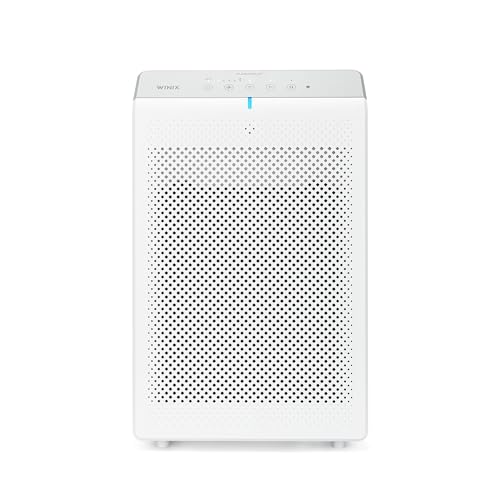
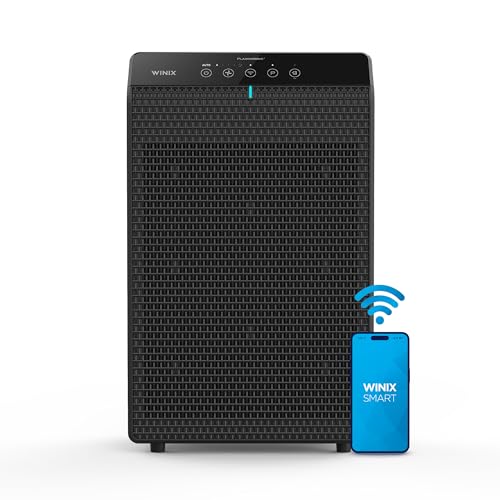
There is a household that runs its lights, locks, thermostat, and robot vacuum from a phone, and the winix 5530 review is written for the moment that household turns to its air. The 5530 is Winix’s app-control flagship in the large-room line: a listing that claims 1,882 square feet of air turned over within the hour, true HEPA filtration behind a carbon filter weighted to deodorization, an auto mode, and — in the manufacturer’s own titling — descent from the new generation of the 5500-2, with app control as its headline. This review examines what remote operation genuinely adds to a purifier’s life: schedules written against the household’s routines, a machine that can be run hard during a smoke event from a hundred miles away, filter awareness that lives where the household’s attention already lives. It also keeps the honest counterweight in view — that underneath the connectivity sits the same filtration recipe as its siblings, that the onboard panel remains complete for the app-free, and that the choice among the three current Winixes is a choice about where a household keeps its attention.
Key Takeaways
- The WINIX 5530 is a verified current model whose headline is app control, over the line’s shared filtration: true HEPA plus a high deodorization carbon filter.
- Winix titles it a new generation of the 5500-2, and it inherits that model’s brief: large rooms, with the carbon stage weighted toward odor duty.
- Scheduling is the app feature with daily value: the purifier can be programmed against cooking hours, bedtimes, workdays, and smoke events.
- Choose the 5530 for remote management; choose the 5510 for the balanced set, or the 5520 if the feedback should live on the machine as an air quality monitor.
- The panel on the machine remains fully functional — app control is an addition to the appliance, not a replacement for it.

In this guide
Winix 5530 Review: The Purifier as a Managed Service
The filtration deserves first mention because it is the part that cannot be updated later. The 5530 draws room air through its pre-filter into the family’s standard working stack — a high deodorization carbon stage for gases and odors, a true HEPA element for the fine particle load, and the PlasmaWave ionization stage on its switch — and its listing names the household targets plainly: pet allergens and smoke among them, in rooms up to its stated 1,882-square-foot hourly class. None of that is unique to the 5530, and this review insists on the point because it disciplines the purchase: you are not buying better filtering than the 5510 or 5520 offer, you are buying a different relationship with the same filtering. The relationship is the product. Where a panel-only purifier is an appliance you visit, the 5530 is an appliance that reports to a device already in your pocket — its schedule editable from the sofa, its state checkable from the office, its filter’s patience visible without a trip to the corner it lives in.
That relationship earns its keep in patterns a panel cannot perform. A schedule can raise the machine against the cooking hour every weekday without a human remembering, and lower it for the night’s quiet shift. A remote start can answer a smoke alert while the household is at work, so the evening’s homecoming is to a defended house. A filter notification arrives where notifications are actually read. And the auto mode underneath it all keeps the local intelligence local: the sensor still runs the room in real time, with the app as its editor rather than its operator. Owners of connected homes will recognize the pattern from their thermostats — the device is autonomous, the human is supervisory — and will correctly judge the 5530 as the Winix that speaks that language natively.
Mini spec box — WINIX 5530
- Coverage: big rooms — up to 1,882 sq ft of air in an hour, by the manufacturer’s figure
- Filtration: the path runs pre-filter first, then a carbon stage weighted to deodorization, then true HEPA, with the switchable PlasmaWave stage last
- Controls: app control (scheduling, remote operation, filter awareness), auto mode, onboard panel
- Listed targets: pet allergens, smoke, household odors
- Lineage: titled a new generation of the 5500-2
Strengths
- Scheduling against real routines — the purifier works the household’s calendar, not just its air.
- Remote management during smoke events, travel, and long workdays protects rooms nobody is standing in.
- The full family filtration recipe underneath, with the panel intact for guests, grandparents, and app skeptics.
Trade-offs
- The whole connected layer presumes home Wi-Fi and an owner who genuinely likes steering appliances from a phone screen.
- No on-device air quality monitor of the 5520’s kind; feedback travels to the app instead of glowing in the room.
- App ecosystems live on their makers’ timelines — a long-ownership consideration the panel-only ancestors never raised.
Best for: connected households, commuters, frequent travelers, and second-room management from afar. Not suited for: the proudly offline, or buyers who want their feedback on the machine’s face rather than in their pocket.
The siblings, from the connected household’s side

WINIX 5510 — app support without the commitment
Badge: Best for the balanced household
The 5510 — the same hourly air volume, the same filtration pairing, the same 5500-2 lineage — offers app support where the 5530 offers app control, a distinction of emphasis that maps onto households precisely. The 5510’s connected layer is for checking and light scheduling; the machine’s center of gravity stays in the room. Families whose phone already runs three dozen domestic dashboards and wants one fewer will find the 5510’s lighter touch the wiser buy, and its dedicated review at Winix 5510 review makes that case completely. The filtration, it must be repeated, does not change between the two — only the household’s posture toward its phone does.
Mini spec box — WINIX 5510
- Coverage as listed: big rooms — 1,881 sq ft of air within the hour by the maker’s measure
- Filters: true HEPA and a carbon stage of the high-deodorization kind, PlasmaWave family
- Controls in brief: auto running with app support behind it, panel on the unit
- Standing in the line: Winix’s titled new generation of the 5500-2
Strengths
- The balanced set: connectivity available, never obligatory.
- Identical filtration substance to the flagship.
- Suits households that want the option without the lifestyle.
Trade-offs
- Remote management is lighter than the 5530’s.
- No on-device monitor.
- Otherwise a near-twin separated by philosophy.
Best for: most family living rooms. Not suited for: owners who will genuinely run the purifier remotely every week.
WINIX 5520 — the feedback stays in the room
Badge: Best for in-room evidence
The 5520 matches the coverage and filtration and spends its differentiation on an air quality monitor built into the machine, reporting the room’s condition on the device itself. Against the 5530 the contrast is philosophical: information in the room, shared by everyone in it, versus information in the owner’s pocket, available from anywhere. A household that is home, attentive, and managing a season will often prefer the 5520’s testimony; a household that is away and supervisory will prefer the 5530’s reach — and its full argument is made in Winix 5520 review. Neither is the “advanced” choice; they are answers to different questions about where a family keeps its attention.
Mini spec box — WINIX 5520
- Coverage as listed: big rooms — 1,882 sq ft of air within the hour by the maker’s measure
- Filters: true HEPA and a carbon stage of the high-deodorization kind, PlasmaWave family
- What sets it apart: its air quality monitor reports from the device
- Controls in brief: auto mode worked from the onboard panel
Strengths
- Evidence at a glance, in the room, for every occupant.
- The shared filtration core.
- No account required for its headline feature.
Trade-offs
- Nothing reaches the owner who is away.
- A display’s glow is a bedroom consideration.
- Scheduling depth is the 5530’s territory, not this model’s.
Best for: measurement-minded households that are home to read the evidence. Not suited for: remote managers and frequent travelers.
How do you build a 5530 schedule that earns its keep?
Start from the household’s actual calendar
The schedules that survive are written against real routines, not aspirations. Map the week’s fixed points — the wake-up hour, the cooking hour, the bedtime, the empty workday, the pet’s alone time — and give the purifier a posture for each: a pre-wake freshening in the bedroom deployment, a working shift across dinner, a gentle night mode, a low-and-steady absence setting that keeps the house from marinating in its own stillness. Three or four honest blocks beat a dozen fussy ones, because a schedule the owner cannot remember is a schedule that will be overridden into oblivion.
Let auto mode referee inside the schedule
The mature configuration is schedule as frame, sensor as referee: the calendar sets the machine’s shifts, and auto mode modulates within them when the room’s events disagree with the plan — the unexpected frying session, the door left open to a dusty street, the guest with the dog. Owners who force fixed speeds around the clock spend the machine’s intelligence for nothing; owners who let the sensor arbitrate get both the routine and the responsiveness.
Program the exceptions before they happen
The schedule’s finest hour is the one written in advance for the predictable emergencies: the smoke-season posture (sealed house, assertive speeds, bedroom priority), the guests-coming routine (a pre-clearing of the living room before the doorbell), the travel setting (steady low work, remote check-ins, a filter status glance from the road). Writing these while calm, in spring, is the difference between a connected appliance and a merely connectable one — and it is the specific discipline this model rewards more than any other in the line.
Remote management in the real world: three scenes
The smoke alert at the office
A regional fire makes the afternoon’s news while the household is at work and the house sits empty in thickening air. The panel-era answer was to come home to a house that had been breathing it all day. The 5530’s answer is a phone: speeds raised from the desk, the bedroom prioritized, the homecoming made to a defended interior — and the filter inspected that weekend with the seriousness a smoke week deserves. This single scene, repeated across fire-prone regions every summer, is the app-control case in its strongest form.
The second home and the rental
Properties that stand empty between visits accumulate the still-air smells of vacancy, and a purifier that can be started a day before arrival — and checked without a neighbor’s favor — changes the first hour of every visit. Landlords should note the dual nature: the app serves the owner, while the panel serves the tenant, and a machine that can be both is a rare furnishing. The caveat is connectivity discipline: the property’s Wi-Fi becomes part of the appliance, and a router change is now a purifier event.
The allergic teenager’s bedroom, supervised kindly
A parent managing a child’s allergy season gains a supervisor’s view without entering the room: the purifier’s schedule held against school nights, its state checkable during a high-count week, its filter’s patience known before it becomes the explanation for a bad night. The technology’s role here is modest and should stay so — comfort and cleanliness, supervised — with the condition itself in the clinician’s hands, a boundary this series observes in every review including the lineage’s own story in Winix 5500-2 review.
The honest ledger: what app control costs
Connectivity is not free, and a review that only itemized its benefits would be a brochure. The costs are these. Setup day includes pairing, permissions, and the small diplomacy of another account. The household’s Wi-Fi becomes load-bearing: a changed password or a replaced router is now an appliance event, and a network outage demotes the flagship to its panel — gracefully, but demoted. Software lives on the maker’s schedule, with updates that mostly help and occasionally rearrange. Privacy is a legitimate line item: a connected purifier reports usage to a cloud, a fact households weigh differently and are entitled to weigh either way, with the panel as the permanent opt-out that keeps the machine fully itself offline. Set against the benefits — scheduling, remote defense, filter awareness — most connected households pay these costs gladly, and the rest have two excellent siblings. The 5530 does not need to win every household; it needs to win the ones whose lives are already mediated by a phone, and for them its ledger balances easily.
Filter economics under remote management
The 5530 consumes the family’s standard matched pack, on the rhythm its siblings know — roughly annual in a typical home, sooner under smoke and pet load — but remote ownership changes the discipline’s texture in two ways. The gain is awareness: filter status surfaces where the household’s attention already is, so the change is less often forgotten into the carbon’s silent resignation. The risk is a subtler one: an owner who manages by notification may stop performing the physical rituals — the pre-filter’s cleaning, the intake’s dusting, the placement’s occasional audit — that no sensor reports. The mature 5530 household keeps both ledgers: the app for the calendar, the hands for the machine. Budgeted honestly, the three-year cost of the flagship is its siblings’ cost plus nothing but the household’s connectivity habits, which makes the purchase decision refreshingly pure: you are choosing an interface, and interfaces should be chosen by the life they will be lived in.
Mistakes connected-purifier owners make
The first is scheduling against an imaginary life — elaborate routines for a household that actually keeps irregular hours — until the overrides pile up and the feature is abandoned; write the calendar you have. The second is treating the app as the appliance and never teaching the panel to the rest of the household, stranding guests and grandparents before a machine they cannot operate. The third is notification blindness: filter alerts acknowledged into oblivion while the carbon quietly retires. The fourth is networking neglect — the router upgraded, the purifier silently offline for a season, its flagship features on a holiday no one approved. The fifth is expecting connectivity to compensate for placement: an app cannot move air around a sofa, and a connected tower in a dead corner is a well-informed failure. Avoid the five and the 5530’s connected life is all benefit — a purifier that is managed the way modern households manage everything else they value.
Setup day for a connected purifier, done once and done right
The physical hour
Begin offline, the way every purifier in this series begins: filter pack unwrapped and seated, tower stationed in the room’s living zone with intake clearance, a first run at purposeful speed while the household listens to the machine it actually bought. Placement is destiny for the filtration, and no app screen should be opened until the appliance underneath it is honestly installed — a connected tower in a dead corner is merely a well-reported disappointment.
The digital half hour
Pair the app on the home’s stable network, name the machine by its room (future-you, managing two, will be grateful), and set the two configurations that matter on day one: the household’s PlasmaWave preference and the first honest schedule. Teach the panel to every other member of the household in the same sitting — sixty seconds each — so the appliance never has a single point of human failure. Then put the phone away and let the machine have its first unobserved evening; a connected purifier’s honeymoon should end with the owner forgetting it, which is the state its design exists to produce.
The first month of supervision
Supervise lightly and adjust once. Check the app’s filter and state views weekly until they bore you — boredom is the signal that the system is working — and revise the schedule exactly once, at the month’s turn, against the life the household actually lived rather than the one imagined at setup. Households that iterate endlessly teach the machine chaos; households that set, observe, and adjust once own a managed service.
A year under management: the 5530’s seasons
Spring is the pollen campaign: schedules tightened around the bedroom, the machine pre-clearing the night room before bedtime, its state checked on the high-count mornings from the kitchen table. Summer is the smoke watch in the regions that now keep one: the app becomes the household’s perimeter defense, speeds raised from wherever the family is, the homecoming defended in advance, the filters audited after each event with a seriousness the panel era handled by calendar and hope. Autumn is the audit season — the pack’s year reviewed against the app’s own record, the change made before the windows close, the schedule rewritten for the indoor months when cooking and occupancy load the air. Winter is the quiet administration: low steady work, holiday-guest routines written for the visiting weeks, the machine as unremarkable as central heating. Across all four, the pattern this review keeps naming holds: the filtration does the work, the connectivity does the remembering, and the household does progressively less of either — which is the entire promise of a managed appliance, kept.
The privacy and longevity conversation, taken seriously
Two objections follow every connected appliance, and the 5530 deserves to meet them head-on rather than in a footnote. The first is data: a cloud-connected purifier necessarily reports operational information — run states, schedules, filter life — to function as advertised, and households differ in their comfort with that trade. The honest framing is proportionality: the data is appliance telemetry, the benefit is the remote layer itself, and the exit is real, because the machine remains wholly functional at its panel with the network forgotten. A household that weighs the trade and declines it has lost nothing but garnish, and this review counts that exit’s existence as a point in the model’s favor rather than a caveat against it. The second objection is longevity: apps are redesigned, services are consolidated, and a ten-year appliance will outlive several software eras. The mitigation is the same fact — the purifier’s core life is panel-and-sensor local, so even a pessimistic software future demotes the 5530 to the functional level of its ancestors, which this series has spent thousands of words praising. Buy the connected layer for the years it will certainly serve, on a machine whose unconnected floor is high, and the longevity objection dissolves into a pricing question the household can answer for itself.
Who should skip the 5530?
The offline household, proudly and completely, for whom every connected feature is a cost with no offsetting benefit — the 5510 run from its panel is their machine in spirit, whichever badge they buy. The small-room household, for whom any of these large towers is the wrong class and the compact end of the Winix family is the right address. The household in a connectivity-poor property — the rural house whose network is a rumor, the thick-walled building where the purifier’s corner is a dead zone — where the flagship’s headline would be a standing frustration. And the single-room minimalist who wants exactly one appliance layer between them and their air. Everyone else — the schedulers, the travelers, the supervisors, the smart-home fluent — is this model’s natural citizen, and for them the skip list reads as a description of other people’s lives.
Two 5530s and a router: the multi-machine connected home
The natural endpoint of a successful first 5530 is a second managed room, and the connected model changes the multi-machine calculus in ways worth planning for. Naming and grouping become real decisions: machines identified by room, schedules coordinated so the bedroom’s night shift and the living room’s day shift hand the house between them, filter changes batched into a single household ritual the app makes visible in one place. The bedroom-first sequence this series recommends holds — the eight-hour room earns the first machine — but the second purchase is where the app layer compounds, because supervision scales in a way panel-visiting never does: two towers are twice the trips, but one glance. Households planning the pair should also plan the network for it, since the router is now infrastructure for a small fleet; and should resist the completionist urge to connect rooms that do not need managing, where a simpler sibling or a compact model serves in silence. A fleet of two, honestly placed and jointly scheduled, is most homes’ correct answer — and the 5530 is the only model in the line designed to be a fleet’s flagship.
The evidence note, connected edition
This review’s claims about the 5530 rest on its verified listing — app control in its title, the coverage and filtration as specified, the official image — and its ownership narrative rests on what scheduling and remote operation make possible for any well-built connected purifier, described as patterns rather than as measurements. No laboratory figures have been invented for the machine, and its app has not been credited with features beyond its control positioning. That restraint matters doubly for connected products, whose marketing vocabularies inflate fastest; a reader who finishes this review knowing exactly what the 5530 verifiably is — the family’s filtration, remotely managed — has been given the only kind of confidence worth buying on.
Why not just put a simpler purifier on a smart plug?
Every connected-appliance review owes the reader this comparison, because the smart plug is the budget rival to every smart feature ever sold. A plug can power a dumb purifier on a schedule, and for a machine with a mechanical switch that resumes its last state, that is genuinely most of a timer. What the plug cannot do defines the 5530’s territory: it cannot change speeds against the day’s shape, cannot report the machine’s state or its filter’s patience, cannot be overridden gracefully by the person standing in the room, and it cuts power the crude way to a machine that may prefer a gentler shutdown. Most modern purifiers, with electronic controls that wake in standby rather than in motion, defeat the plug entirely — the schedule fires, the machine sits dark, the room stays dirty. The honest verdict is that the plug is a fine hack for the right old appliance and a false economy against a purifier designed for management: the 5530’s integration is not a timer with better marketing but a supervisory layer the plug cannot imitate. Households whose existing purifier is mechanical and healthy should absolutely keep it and buy the plug; households buying new should not build their strategy around a workaround.
A commuter’s week with the 5530: five short entries
Monday: the schedule wakes the bedroom machine before the alarm, and the week’s first fact is that the room was ready before its owner was. Tuesday: a late meeting runs into the cooking hour the purifier was programmed for; nobody is home to cook, the app accepts the correction from a train, and the schedule’s flexibility stops being a feature list and becomes a courtesy. Wednesday: the regional air degrades by noon, the phone carries the news, and the house is defended by three in the afternoon — the scene this model was born for, performed without drama. Thursday: a filter notification arrives during a commute and is acted on from the same seat, the pack ordered before the current one’s patience becomes the weekend’s problem. Friday: guests, and the living room is pre-cleared on a one-off routine written in ninety seconds, after which the owner does the most connected thing of all — puts the phone away and lets the machines host. Five days, five small competencies, none of them available to the panel alone: that is the app-control case, not as a promise but as a diary.
Energy under management: the schedule as an efficiency instrument
A scheduled purifier is, among other things, an energy policy, and the 5530’s owners collect a quiet dividend the panel era could not offer. Fan energy follows speed, and speed in an unmanaged house follows anxiety — machines left at purposeful settings around the clock because no one remembers to lower them, or switched off entirely and then run heroically. A schedule replaces both failure modes with a curve matched to need: assertive when the house is cooking and gathering, gentle when it is sleeping, minimal when it is empty but not abandoned. Auto mode refines the curve in real time, so the calendar sets the budget and the sensor spends it. The savings against an unmanaged tower are not theatrical, but they are systematic, and they arrive with the comfort dividend of a machine that is quiet when the house is quiet — the property that, more than any watt figure, decides whether a purifier is still employed in year three. Managed machines stay plugged in; plugged-in machines are the only ones that clean air.
The decision, compressed to a household interview
Three questions, answered honestly, settle the 5530 for any household still deliberating. Do you already run two or more domestic systems from your phone — heating, lighting, security, a vacuum — and find it natural rather than burdensome? If the household’s infrastructure is already supervised, the purifier’s absence from that supervision is the anomaly the 5530 corrects. Are you regularly away from the room the purifier serves during the hours its work matters — at work during smoke season, traveling during pollen season, managing a second property at all? Absence is the app layer’s home ground. And will the schedule actually be written — does this household program its thermostat, its calendar, its coffee maker — or will the feature be admired for a week and abandoned to auto mode? Auto mode alone is a fine life, but it is the 5510’s life at a lower commitment. Three yeses buy the flagship with confidence; a pattern of noes is not a failure of discernment but a correct self-diagnosis, and the line’s other two models exist to honor it.
What the 5530 teaches about the category’s direction
End the analysis where the model points. The purifier category spent a decade competing on filtration claims that converged — everyone’s media got honest, everyone’s coverage got large — and the frontier moved to the layer the 5530 represents: not what the machine does to air, but how the machine fits a life. Scheduling, supervision, and filter awareness are unglamorous software virtues, and they decide satisfaction in year two more reliably than any marginal media improvement, because the purifier that is remembered, placed, and fed is the purifier that performs. Winix’s particular implementation earns this review’s respect for what it refuses to do: it does not connected-wash a weak filter, it does not lock the appliance behind the app, and it does not pretend the phone is the product. The 5530 is a filtration appliance with a management layer, in that order — and in a category filling with the reverse arrangement, that order is the review.
Troubleshooting the connected life
The connected purifier’s complaint list adds a digital page to the family’s usual one, and both pages are short. If the app cannot find the machine, the suspects are the network’s band and password, the router’s recent changes, and the pairing ritual performed in haste — in that order, with the panel carrying the household throughout. If schedules fire at odd hours, a time-zone or daylight-saving setting is confessing somewhere in the chain, and the fix is a setting, not a service call. If the machine seems less responsive than its siblings at the panel, it is not: the local controls are the appliance, and any perceived lag lives in the phone’s round trip, which is why in-room adjustments belong to the panel by design. And the family’s classic complaints retain their classic cures — the wrapped pack, the matted pre-filter, the spent carbon, the corner placement — because connectivity changes none of the physics. Owners who troubleshoot in that order, physical before digital, will find the 5530 as undramatic to maintain as its ancestors, with a help desk of one extra page.
The pet household, remotely considered
One constituency deserves a final, specific word, because its routines are the schedule’s natural poetry: the pet household that empties by day. The animals stay; the air’s insults accumulate on animal time — the midday shake, the litter box’s unsupervised hours, the dander economy of a closed house — while the owners, in the panel era, could only return to whatever the day had made. A 5530 in that house works the absence shift deliberately: a purposeful midday cycle written into the schedule, a check-in available to the genuinely curious, and a homecoming hour pre-cleared so the door opens on the house as its owners wish it were. The filtration underneath is doing the same work its siblings do in pet homes everywhere — HEPA for the dander, carbon for the biography — and the pre-filter still wants its rinses on the shedding calendar. What the app adds is timing, and in a house whose occupants cannot operate a panel — being, in the main, a dog — timing supplied from afar is not a luxury. It is the whole shift, covered.
The shortest version, for the reader at the register
The Winix 5530 is the large-room Winix — the family’s true HEPA and deodorizing carbon recipe, the 5500-2’s odor lineage, coverage in the standard class — with the purifier’s management moved into an app: schedules against real routines, remote defense of empty houses, filter awareness where attention lives. Its siblings are the same filters wearing different interfaces, the balanced 5510 and the self-reporting 5520, and no household can choose wrongly among them on filtration. Choose the 5530 if your household supervises its home from a phone and is regularly somewhere the purifier is not. That sentence, plus a placement with clearance and a pack changed on time, is the entire purchase — and it is a good one.
Before the box arrives: preparing a home for a managed purifier
A short preparation list closes the practical review. Survey the tower’s station and clear it, with the router’s honest range in mind as well as the air’s — the one corner in the house that is both a circulation crossroads and a Wi-Fi dead zone is a riddle to solve before delivery, by placement or by a mesh node, not after. Decide the account holder in households with several adults, since one person’s phone will be the appliance’s first home, and decide it by who actually manages the home’s other systems. Pencil the filter’s first anniversary into the household calendar now, while the intention is fresh, as a backstop to the app’s own awareness. Agree the PlasmaWave setting as a household, so setup day executes rather than debates. And plan the panel lesson — the sixty-second tour for everyone who will ever stand in front of the machine — as part of installation, because a managed purifier with an illiterate household is a monarchy, and appliances should be democracies. Preparation of this order takes twenty minutes and returns it across a decade.
And a word for the household’s second adult
Connected appliances are usually bought by the household’s technologist and lived with by everyone else, and the 5530’s review should close its practical business by speaking to the person who did not choose it. Your experience of this machine, if the setup advice in these pages is followed, will be almost entirely analog: a panel that does everything, a tower that is quiet when the house is quiet, air that is managed without your management. The app exists on someone else’s phone the way the thermostat’s schedule exists in someone else’s head — as infrastructure you benefit from and may ignore. If you ever want in, the pairing is a five-minute courtesy; if you never do, nothing about your purifier is diminished. Appliances that respect both the connected and the unconnected members of a household are rarer than the marketing suggests, and the Winix line’s insistence on a complete panel — in its flagship, in its connected generation — is the design decision this review most hopes its rivals copy.
Postscript: what “managed” should mean
The word managed has been this review’s refrain, and it deserves a precise definition at the end, because the industry’s version of it keeps inflating. A managed purifier, in the sense the 5530 earns, is not a purifier with a radio in it. It is a purifier whose state is knowable without a visit, whose routine is writable against a life, whose consumable announces itself where attention lives, and whose local intelligence — the sensor, the auto mode, the panel — remains sovereign when the network is silent. By that definition the 5530 is the most completely managed machine in its line, and also, not coincidentally, the one whose management can be most completely declined without loss. That paradox is the flagship’s character in a sentence, and it is why this long review ends where it began: the filtration is the appliance, the app is its editor, and the household — connected or not — remains the author.
The last practical section: insuring the investment
A flagship purifier is a decade-scale purchase, and a few unglamorous acts insure it. Keep the manual and the purchase record where the household keeps such things, because filter part numbers and warranty terms are future arguments settled by paper. Photograph the rating label on day one, as this series advises for every appliance with a consumable. Register the product if the maker offers it, on the household’s most durable email address rather than a disposable one. Keep the box until the first filter change has passed — the machine that survives its first pack change in your home is the machine you are keeping — and note the router’s credentials wherever the household’s infrastructure facts live, since the purifier is now part of that infrastructure. None of it is glamorous, and all of it separates a flagship that is owned from one that is merely possessed. The 5530, supervised from a phone and serviced from a calendar, rewards exactly this species of owner: the one who treats a good machine as a small system, and keeps the system.
Envoi: the purifier that reports for duty
Every generation of this Winix family has had a temperament: the ancestors were steadfast, the balanced sibling is serene, the monitor model is curious — and the 5530 is dutiful. It reports, it remembers, it keeps the schedule it was given and asks, politely and in writing, for its filter when the filter is due. Households that run their lives in the open, on calendars and dashboards, will recognize a kindred appliance; households that don’t will find its virtues easy to leave in the box the app came in, at no cost to the filtration beneath. Either way, the machine in the corner is the same honest tower its lineage promises — and if it occasionally glows with a notification, that is not the appliance showing off. That is the appliance, in the newest dialect of an old family’s language, saying the air is handled.
A final comparison the listings will not make for you
Shoppers comparing the 5530 against connected rivals from other brands should hold the comparison to this series’ order of operations, because connectivity makes listings louder and evidence quieter. Filtration first: media classes, carbon specified as a stage rather than a scent, pack price and availability across years. Local sovereignty second: does the rival remain a complete appliance at its panel, offline, forever — or does its intelligence live in a cloud the household rents? Information third: where does the machine’s knowledge of itself reach the owner, and in what form? And consumable faith last: is the maker still feeding the models it sold five years ago? The 5530 was not chosen for this review’s flagship treatment by accident; it survives that order of operations in a category where many connected machines are software in search of a filter. Run any rival through the same four gates and the purchase, whichever way it lands, will have been made on the evidence — which is all this long review has ever asked.
One more household: the shift worker’s
A final constituency, because its schedule is the schedule feature’s sternest test and sweetest victory: the household that sleeps in shifts. Nurses, drivers, bakers, and everyone whose bedroom must be a night room at noon invert every default a purifier ships with, and a panel-era machine serves them only as well as their own groggy discipline allows. The 5530’s calendar does not care what the hours are called: the bedroom’s quiet shift can be written for ten in the morning, its freshening for the hour before the shift-worker’s wake, its assertive cycle for the household’s true evening whenever that falls. In a home where the clock is a negotiation, an appliance that takes its orders in writing — and keeps them without being asked twice — is not a convenience. It is respect, delivered by schedule.
Frequently Asked Questions About the Winix 5530
What can I actually do from the 5530’s app?
The app layer provides remote control of the purifier’s operation — power and speeds — along with scheduling and filter-life awareness, per the model’s app-control positioning. The daily-value features are the schedule written against the household’s routines and the ability to run or check the machine from away: during smoke events, travel, and long workdays. The onboard panel and auto mode remain fully functional without the app, so connectivity is an editor of the appliance’s life, not its lifeline.
Is the 5530’s filtration better than the 5510’s or 5520’s?
No — the three share the family’s filtration recipe of true HEPA plus a high deodorization carbon filter, in the same large-room coverage class. The 5530’s premium buys control architecture, not cleaning power. That is precisely why this review frames the choice as an interface decision: households should pick the information-and-control style they will actually use, secure that the filters underneath are equals.
Does the 5530 work if my Wi-Fi goes down?
Yes. The purifier is a complete appliance at its panel, and auto mode continues to run the room from its sensor without any connection. An outage suspends the remote layer — schedules held in the cloud and phone control — until the network returns, which is an argument for teaching every household member the panel on day one, and for treating the router as part of the appliance’s infrastructure.
5530 or 5520 — app or monitor?
Decide by where the household is when it wants to know. The 5530 informs and obeys the owner anywhere; the 5520 informs everyone in the room at a glance. Travelers, commuters, and second-property owners belong to the 5530; home-centered, measurement-minded households belong to the 5520. The technology under both — including the PlasmaWave stage explained in what is PlasmaWave technology — is the family’s shared platform.
How does scheduling help with odors specifically?
Odors in most homes arrive on a timetable — cooking hours, the pet’s evening, the wood stove’s lighting — and a schedule lets the purifier meet them at strength rather than discovering them afterward. A working shift across the dinner hours with an auto-mode tail is the canonical pattern, and it spends the carbon stage’s life where the load actually is. The odor-first heritage of the line is the subject of the 5500-2 review linked earlier, and carbon-focused shoppers may also value best air purifiers for odors.
What happens to my schedules if I replace my router?
Expect to re-pair the purifier to the new network, as with any connected appliance; the machine’s panel operation is unaffected in the meantime. Households that change routers rarely will never notice this cost; households that tinker with networks should weigh it honestly against the remote benefits — and should keep the household’s panel literacy current either way.
The verdict on the Winix 5530
The 5530 is the Winix line’s answer to a fair question: if the household’s attention already lives in a phone, why should its air be managed anywhere else? Its filtration is the family’s proven recipe, its lineage is the odor-fighter’s, and its app control converts the purifier from a visited appliance into a supervised service — scheduled against real life, defensible from a distance, and honest about its filter’s remaining patience. Households that will not use a phone for their purifier have two fine siblings and this review’s blessing. Households that will should buy the 5530 without a backward glance: it is the same honest Winix, finally speaking the household’s native language.
The review can end its argument with the observation that the 5530’s owners tend to describe it in the vocabulary of staff rather than of gadgets — it keeps the schedule, it reports, it asks for what it needs — and that vocabulary is the sound of an appliance that has been successfully delegated to. Delegation is the scarcest resource in a household, scarcer than money or square footage, and any machine that returns an hour of attention a week to the people who bought it has paid a dividend no spec sheet lists.
One closing thought belongs to the fence-sitters, because this model’s decision is unusually reversible in spirit.
The 5530 bought and never connected is a 5510 in daily life — panel, sensor, filters, all present — so the risk of choosing the flagship wrongly is bounded by a feature unused, not by an appliance misbought. The reverse is not true: the household that buys the quieter sibling and discovers, in its first smoke week spent at the office, that it wanted supervision all along has bought the wrong machine in a way no setting can cure. When the interview in this review leaves a household genuinely torn, that asymmetry is the tiebreaker this reviewer offers: choose the machine whose ceiling you might grow into, on a line whose floor — honest filtration, honestly priced — every model shares.