Disclosure: As an Amazon Associate, dailyhomedecorating.com earns from qualifying purchases. Links on this page are affiliate links; they cost you nothing extra. Prices and availability change often, so check the current Amazon listing before you buy.
Most air purifiers are bought for dust and pollen, but a stubborn slice of households shops with its nose, and a winix 5500 2 review is where those shoppers traditionally land. The 5500-2 was Winix’s odor-fighter: a large-room PlasmaWave tower whose Filter H pack put unusual weight on the carbon side of the stack, aimed at the homes where the problem is not what you can see floating in a sunbeam but what greets you at the door — last night’s fish, the dog’s favorite corner, a smoker’s balcony drifting in, a kitchen that shares its air with the sofa. This review covers the machine on its own terms, explains its place beside its sibling the 5300-2, and is candid about its present-day position: the 5500-2 unit itself no longer surfaces in current catalog verification — its genuine Filter H replacements do — while Winix has titled its current 5510 and 5530, verified below, as nothing less than the new generation of the 5500-2. If you own one, this is your maintenance and succession guide. If you came to buy one, this is where its inheritance lives.
Key Takeaways
- The Winix 5500-2 is a large-room tower purifier distinguished by its odor emphasis: the Filter H pack pairs true HEPA filtration with a carbon stage built for deodorizing duty.
- Current catalog verification returns the 5500-2’s genuine 116130 Filter H replacements rather than the unit, so the machine is reviewed in prose and its owners are served by the genuine filter supply.
- Winix explicitly titles the 5510 and 5530 as the “New Generation of 5500-2” — with app support and app control respectively — and the monitor-equipped 5520 completes the current large-room line, all verified below.
- Odor control is a consumable discipline: carbon saturates, and the household that replaces on schedule keeps the performance the 5500-2 was bought for.
- New buyers with odor problems should start from the successors’ high deodorization carbon filters and choose by control style.
In this guide
Winix 5500-2 Review: The Deodorizer of the Family
To place the 5500-2 correctly, picture its design brief. Winix already had a large-room tower in the 5300-2; the 5500-2 took the same tall architecture — washable pre-filter up front, a combined filter pack behind it, PlasmaWave ionization on a switch, straightforward physical controls — and rebalanced the pack toward gases. The resulting Filter H combination married the true HEPA element that handles particles to a carbon stage specified for odor work, because the household this machine courted had a different enemy list: cooking smells that outstay the meal, pet odor that no amount of vacuuming reaches, tobacco drift, the mustiness of a house that is closed up all winter. Particles are a filtration problem with a clean answer; odors are an adsorption problem with a consumable one, and the 5500-2 was built by people who understood the difference.
Living with it, owners describe a machine whose victories are registered by the nose at the threshold. The pre-filter — washable, as in its sibling — catches the hair and lint that pet households generate in industrial quantities, protecting the pack. The pack itself does the double duty, and PlasmaWave rides along as the switchable supplement Winix fits across the line. The controls need no phone and no account, the fan has the speeds a large room requires including a turbo for the post-cooking hour, and the whole appliance has the set-and-forget temperament that a deodorizing appliance must have, because odor is a background condition and its remedy has to be a background appliance. Where the 5300-2 became the family’s default, the 5500-2 became the recommendation with a footnote: same household, smellier problems.
Mini spec box — Winix 5500-2 (subject, prose-only)
- Format: large-room tower purifier, PlasmaWave line
- Filtration: washable pre-filter; Filter H pack (true HEPA + odor-weighted carbon stage); PlasmaWave, switchable
- Replacement filter: genuine Winix 116130 Filter H
- Controls: onboard panel — fan speeds including turbo, timer, PlasmaWave switch, filter indicator; no app
- Availability note: the unit itself did not appear in this site’s most recent catalog check; genuine Filter H packs are the owner’s supply line
Strengths
- Odor-first filter specification in a full-size HEPA tower — the combination its target households actually need, in one pack.
- Washable pre-filter and a single matched replacement pack keep the maintenance story simple enough to actually happen.
- Physical, account-free controls suit a utility appliance that should serve the whole household, guests included.
Trade-offs
- Carbon is a consumable with a appetite: odor-heavy homes spend the pack faster, and a neglected change quietly converts the machine into a particle-only purifier.
- No sensor display or app in a generation that predates them; the machine cannot show you the air it is treating.
- The unit itself is no longer the listable product, so its story for new buyers is told entirely through its successors.
Best for: existing owners in odor-burdened homes — cooking-heavy, pet-rich, smoke-adjacent — who should keep it on genuine Filter H packs. Not suited for: a fresh purchase today, or households wanting app scheduling and air quality feedback, which the successor generation below supplies.
5500-2 or 5300-2: how did the siblings divide the world?
The question defined a thousand forum threads in the models’ prime, and the answer is simpler than the threads suggested. The two machines share architecture, era, and philosophy; they differ in the pack’s emphasis and the filter each consumes. The 5300-2 with Filter A was the generalist’s large-room Winix. The 5500-2 with Filter H was the same idea tuned toward odor, for the households whose complaints were measured in smells rather than in dust. Cross-shopping them today matters mostly to owners identifying their own machine and its correct genuine pack — Filter A and Filter H are not interchangeable, and the model number on the rating label is the authority — and to readers of the successor story, since Winix chose the 5500-2’s name, not the 5300-2’s, to carry into the current generation’s titles. That choice is a small historical verdict in itself: the odor-fighter’s brief turned out to be the one the future wanted.
The New Generation of the 5500-2: Verified Successors

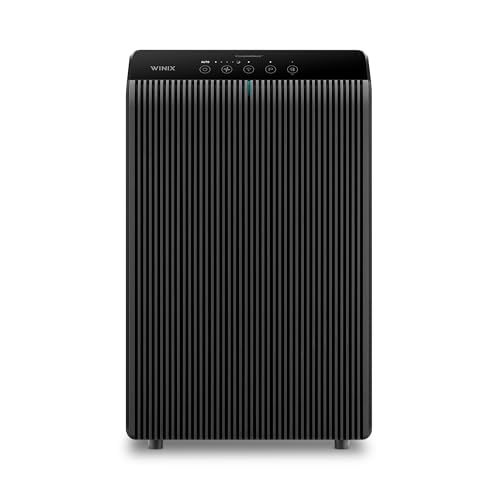
WINIX 5510 — the named heir, with app support
Badge: Best successor for most 5500-2 households
Winix does not leave the succession to inference: the 5510’s listing titles it the new generation of the 5500-2 with app support, and specifies the brief in the same breath — large rooms up to 1,881 square feet in one hour, true HEPA, a high deodorization carbon filter, and auto mode, aimed at pet allergens and smoke among its listed targets. Read that as the 5500-2’s design brief restated in current language: the deodorizing carbon is still headline equipment, the HEPA is still true, the room is still large — and around that continuity sit the additions a decade demanded, sensor-driven auto operation and an app that carries scheduling and filter awareness into the owner’s pocket. For a 5500-2 household replacing its machine, the 5510 is not merely a successor; it is the same purchasing decision, made again in the present tense.
Mini spec box — WINIX 5510
- Rated coverage (maker’s figure): rooms up to 1,881 sq ft of air turned over within the hour
- Filter stack: a high-deodorization carbon stage working with true HEPA, in Winix’s PlasmaWave family
- Running it: app-supported auto mode, with the machine’s own panel for local control
- Pedigree: Winix sells it under a “New Generation of 5500-2” title
Strengths
- The high deodorization carbon filter keeps odor duty at the center, where 5500-2 owners insist it belongs.
- Auto mode reads the room and answers events — a cooking hour, a door left open — without being asked.
- App support modernizes scheduling and filter tracking while onboard controls remain for everyone else.
Trade-offs
- The app layer is one more account in a household that may have valued the old machine’s independence.
- Its filter packs are a new consumable line to budget, distinct from Filter H.
- Very large open plans may still want a second machine rather than a hero.
Best for: 5500-2 owners replacing their machine and odor-focused new buyers who want the balanced modern Winix. Not suited for: households whose first priority is the on-device air quality display — that is the 5520’s brief.

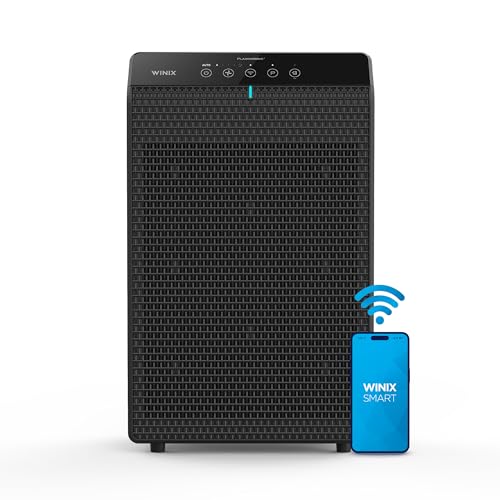
WINIX 5530 — the named heir, with app control
Badge: Best successor for schedule-driven homes
The 5530 shares the 5510’s lineage — its title likewise names it a new generation of the 5500-2 — and its coverage claim of large rooms up to 1,882 square feet in one hour, its true HEPA and high deodorization carbon filtration, and its auto mode. Its distinguishing emphasis is app control: where the 5510 supports the app, the 5530 headlines it. The difference sounds like marketing until you map it onto a household: the home that runs on routines — purifier scheduled against the cooking hour, checked during a smoke event from across town, pre-run before the allergic teenager gets home from school — feels that emphasis daily. Odor households are often routine households, because smells arrive on schedules (dinner, the dog’s evening, the wood stove’s lighting), and a purifier that can be programmed against the calendar of smells is the 5500-2’s idea completed.
Mini spec box — WINIX 5530
- Rated coverage (maker’s figure): rooms up to 1,882 sq ft of air turned over within the hour
- Filter stack: a high-deodorization carbon stage working with true HEPA, in Winix’s PlasmaWave family
- Running it: full app control over an auto mode, panel on the unit as well
- Pedigree: Winix sells it under a “New Generation of 5500-2” title
Strengths
- Scheduling against predictable odor events is a genuine capability upgrade over a timer dial.
- Remote operation during smoke episodes and allergy peaks, when the household is away, protects the homecoming.
- The filtration core is the verified family recipe — deodorizing carbon plus true HEPA.
Trade-offs
- Full value depends on home Wi-Fi and an owner who enjoys running appliances from a phone.
- Functionally overlaps its sibling 5510; choosing between them is a controls decision, not a cleaning decision.
- App ecosystems age on their own schedule, a consideration the app-free 5500-2 never raised.
Best for: routine-driven, connected households inheriting the 5500-2’s odor brief. Not suited for: buyers who want their purifier to have no relationship with their phone at all.
WINIX 5520 — the sibling with the air quality monitor
Badge: Best for households that want to see the air
The 5520 is not titled a 5500-2 successor, and this review does not pretend otherwise; it is the current line’s large-room sibling, specified for rooms up to 1,882 square feet in one hour with the same true HEPA and high deodorization carbon pairing and auto mode, distinguished by its built-in air quality monitor. It earns its place in a 5500-2 review because odor households are often measurement households in disguise: the cook who wants to watch the room register a frying session and clear it, the pet owner curious whether the litter corner shows up in the data. The 5520 turns the purifier from a faith appliance into an instrument, and for some 5500-2 heirs that visibility will matter more than app plumbing.
Mini spec box — WINIX 5520
- Rated coverage (maker’s figure): rooms up to 1,882 sq ft of air turned over within the hour
- Filter stack: a high-deodorization carbon stage working with true HEPA, in Winix’s PlasmaWave family
- Signature extra: an air quality monitor that reports on the device itself
- Running it: auto mode from the onboard panel
Strengths
- The monitor closes the feedback loop: events register, auto mode responds, recovery is visible.
- Identical filtration substance to its titled-successor siblings.
- Excellent teacher of household habits — which doors, which hours, which filter timing actually matter.
Trade-offs
- The display describes air at the machine’s location, a truth big rooms must interpret with care.
- Buyers wanting the deepest app integration should compare the 5530’s control emphasis.
- A glowing display is a design presence in a dark bedroom that some households will vote against.
Best for: data-curious odor households and allergy-season managers. Not suited for: purists who want the purifier invisible in every sense.
Odor science for owners: why carbon discipline is the whole game
Everything distinctive about the 5500-2 flows from one physical fact: odor molecules are gases, and gases are not filtered — they are adsorbed. Activated carbon presents an immense internal surface, treated to attract and hold gas molecules as air passes, and a carbon stage’s life is the story of that surface filling up. Three ownership consequences follow, and 5500-2 households ignore each at the price of the machine’s reputation. First, saturation is silent: the fan sounds the same, the lights look the same, and the first symptom is the smell that used to clear by morning still present at lunch — which is why the calendar and the indicator, not the nose’s optimism, should schedule Filter H changes. Second, load is destiny: a household frying nightly, hosting a large dog, or living downwind of a smoker’s porch spends carbon at a rate the packaging’s gentle estimate never imagined, and honest owners shorten the interval accordingly. Third, sources outrank stages: no carbon bed, however fresh, defeats an unmanaged source, so the litter box’s schedule, the range hood’s use, and the trash’s exit route are part of the purifier’s performance whether they appear on its box or not. The 5500-2 was always a system — machine plus habits — and its successors inherit the same physics under newer plastic.
How do you run a 5500-2 household at its best?
Feed it on schedule
Replace Filter H with the genuine 116130 pack when the indicator calls or your household’s odor load says sooner, and mark the date on the pack. Between changes, rinse the washable pre-filter monthly in pet homes — hair is the silent tax on every stage behind it.
Place it where smells are born, within reason
The tower belongs in the living zone near — not inside — the odor geography: the room the kitchen opens into, the hallway the dog owns, at a respectful distance from the stove’s grease plume. Give its intakes clearance and its outlet a circulation path, and let it work the room’s whole air over hours.
Use turbo like a tool, not a lifestyle
The hour after serious cooking, a smoking visitor’s departure, or a pet accident is turbo’s moment; the rest of life is a steady middle speed. Households that run events deliberately and background quietly get both the performance and the peace, and their carbon lasts closer to its rated life because the machine is not fighting yesterday’s backlog at full song.
Close the loop on sources
Pair the purifier with the unglamorous allies: a range hood actually vented and actually used, litter changed on the animal’s schedule rather than the human’s, soft furnishings washed before they become reservoirs. The 5500-2 treats air; these habits treat causes, and odor is one of the problems where causes win. Readers building an odor strategy from scratch will find the wider category view in best air purifiers for odors worth the detour, and the technology under the hood is explained in what is PlasmaWave technology.
When should a 5500-2 owner move on?
The honest triggers mirror any durable appliance’s. A fan that grows rough or loud after cleaning is announcing the end of the machine’s mechanical life, and no filter pack redeems it. A household whose needs have become informational — wanting the air displayed, the schedule app-driven, the smoke event answered from away — has outgrown the model’s generation rather than the model, and the succession to a 5510 or 5530 is then a genuine upgrade in kind, carrying Winix’s own “new generation” blessing. A home that has changed scale — a move, an extension, a second living zone — may keep the veteran and add a sibling instead of replacing, the pattern explored for its sister model in Winix 5300-2 review. What should not trigger replacement is a fresh filter’s price in a grumpy moment: the pack is the machine’s fuel, priced into its honest cost from the first day, and a 5500-2 on a new Filter H is, for odor duty, still a thoroughly modern appliance wearing older clothes.
Mistakes that follow the 5500-2 around
The first is the stretched filter: carbon run a season past its life while the owner praises a machine that has quietly resigned from odor duty. The second is the wrong pack — Filter A and Filter H belong to different siblings, and a bargain substitute that fits loosely leaks around its seals the particles and gases it claims to catch. The third is placement beside the stove, where cooking grease coats the intake and the pre-filter becomes a fryer accessory. The fourth is expecting the purifier to forgive an unmanaged source indefinitely; it is a treatment, not an indulgence. The fifth is buying the successor for the app and never opening it, when the household’s real want was the 5520’s monitor all along — a mistake this review’s structure exists to prevent. Avoid the five and the 5500-2 story, in either generation, stays the story its owners tell with satisfaction.
A week of dinners: the 5500-2 against a cooking-heavy household
Odor machines should be reviewed against odor lives, so consider the week the 5500-2 was built for. Monday is a stir-fry — high heat, aromatics, oil that aerosolizes and travels — and the machine’s evening is a turbo hour followed by a long middle-speed tail, with the test administered at Tuesday’s breakfast: does the kitchen still announce itself? Tuesday brings a simmered sauce, gentler but longer, the kind of low-grade emission that tests carbon rather than fan speed. Wednesday is fish, the household final exam, where the honest answer involves the range hood, a window cracked despite the purifier, and the machine running the night shift in the living zone. Thursday the dog comes home from a wet walk smelling of everything he found, and the pre-filter earns its washable keep while the carbon handles the atmosphere. Friday is guests, candles, a roast, and the social pressure of a front door that opens onto the whole week’s evidence. A 5500-2 on a healthy Filter H, placed and run as this review describes, passes that week the way its owners describe: not by making cooking odorless — no purifier does — but by keeping each day from becoming the next day’s inheritance. That compounding, the refusal of smells to accumulate, is the actual product being sold in an odor purifier, and it is why the carbon’s condition, not the fan’s noise, is the specification that decides satisfaction.
The hard cases: tobacco drift and wood smoke
Two odor sources deserve sterner paragraphs. Tobacco smoke is a combined assault — fine particles the HEPA stage can catch, plus a gas load that soaks into furnishings and re-emits for weeks — and a purifier in a smoking household is a mitigation, not an absolution: it will improve the air of a room measurably and spare the non-smoking rooms some of the drift, while the reservoirs in curtains and upholstery keep their own counsel. Households dealing with a neighbor’s drift through shared walls face the fairer fight, and there the 5500-2 pattern — sealed room, fresh carbon, steady running — is close to the whole available answer short of sealing the building itself. Wood smoke, whether from a household stove or a wildfire’s regional visit, splits similarly: particles are the emergency and belong to the HEPA stage and closed windows; the lingering smell is carbon’s long tail, and a smoke season can consume a pack that a gentle year would have spared. In both hard cases the successor generation’s contributions are practical rather than magical — the 5520’s monitor shows the event and the recovery, the 5530’s app lets the machine be run hard from wherever the household has retreated to — and the discipline underneath remains the 5500-2’s own: fresh media, sealed rooms, sources respected.
What “high deodorization carbon” means in the successor line
The phrase appears in the verified titles of all three current models, and 5500-2 owners are entitled to ask whether it is continuity or costume. The honest reading is continuity of intent, stated in the manufacturer’s own specification language: the current packs, like Filter H before them, pair the true HEPA element with a carbon stage specified beyond a token sheet — carbon being the component whose quantity and quality decide odor performance, and the component cheap purifiers most often shortchange. What a listing cannot tell you is the pack’s exact carbon mass or its saturation curve in your kitchen, which is why this review keeps returning to the owner’s evidence: the front-door test, the calendar, the household’s load. A 5500-2 owner moving to a 5510 or 5530 is not gambling on a new philosophy; they are renewing a known one, in a machine that adds sensors and software to a stack whose priorities — deodorizing carbon, true HEPA, pre-filtration, optional PlasmaWave — would be recognized instantly by the machine it replaces.
The rental and the resale: 5500-2s in the wild
Because these machines endure, they circulate — into rentals, between family members, onto secondhand marketplaces — and a short field guide serves everyone who meets one outside a retail box. If a 5500-2 arrives with a property or as a hand-me-down, treat its filter as spent on arrival whatever its appearance, fit a genuine Filter H, wash the pre-filter, and give the fan an hour’s loud exercise in a ventilated room while you listen for mechanical complaints; a smooth-voiced unit recommissioned that way is functionally the machine this review describes. If you are the one passing a unit on, honesty about the pack’s age is the decent and the practical move, since the next owner’s first impression of the model will be written by carbon you know the history of. Landlords furnishing a unit with a purifier should note the model’s virtue for their purpose: no account, no app, nothing for a tenant to pair or a password to reset — the machine simply works for whoever lives with it, which is more than can be said for most connected appliances left behind in a tenancy.
Successor ownership costs: the three-year view
Shoppers choosing among the 5510, 5520, and 5530 should run the arithmetic the 5500-2 taught its owners: the machine is the down payment and the filters are the mortgage. Across the current line the filtration recipe is shared, so pack costs and change intervals are close cousins rather than strangers — the real differences are the purchase prices of the control philosophies and the household’s odor load, which will tax any of the three packs at the same rate. A household replacing a 5500-2 can therefore choose its successor on interface alone, secure that the three-year consumable story barely changes across the choice — a rare and pleasant property in a product category, and a direct inheritance from the older machine’s matched-pack discipline. The one budget line that does deserve a forecast is the first year: a new machine’s pack starts fresh, but a household that has been stretching a Filter H past its life should expect the successor’s honest performance to reveal how much odor it had normalized — and should not mistake that revelation for a defect in the new machine.
5500-2 against its successors: the comparison in one table
| Question | 5500-2 | 5510 | 5530 | 5520 |
|---|---|---|---|---|
| Odor weapon | Filter H carbon stage | High deodorization carbon filter | High deodorization carbon filter | High deodorization carbon filter |
| Particle weapon | True HEPA in Filter H | True HEPA | True HEPA | True HEPA |
| Feedback | Filter indicator | Auto mode sensing | Auto mode sensing | Air quality monitor on device |
| Remote life | None — onboard only | App support | App control | Onboard focus |
| Consumable | Genuine 116130 Filter H | Model-matched pack | Model-matched pack | Model-matched pack |
| Status | Prose-reviewed; filters available | Verified current listing | Verified current listing | Verified current listing |
Read down the first two rows and the family’s continuity is unmistakable; read down the middle two and the generation gap is entirely about information — sensing, showing, scheduling — rather than about cleaning. That is the most reassuring shape a succession can take for owners of the older machine: nothing you relied on was redesigned away, and everything added is a layer you can adopt or ignore at the onboard panel.
Renovation and new-home smells: a 5500-2 specialty worth naming
One odor brief deserves its own paragraph because households meet it suddenly and completely: the chemical bouquet of a renovated room or a newly furnished one — paint, adhesives, new carpet, flat-pack furniture off-gassing in a closed space. The first-line responses are ventilation and time, and no purifier should be sold as a substitute for either; but as the second line, a carbon-weighted purifier is exactly the right tool, and this is a job where the 5500-2 pattern — fresh pack, closed room between ventilations, steady running across days — visibly outperforms a particle-only machine, because the problem is nearly all gas and almost no dust. Households mid-renovation should also protect the machine itself: construction dust is a pre-filter’s nightmare and a pack’s early grave, so the purifier joins the project after the dusty trades leave, not during them. The successors inherit this brief unchanged, and the 5530’s scheduling has a particular charm here — a renovated room can be treated on a timer in an empty house, aired on arrival, and monitored across the week it takes the newness to fade.
The indicator, the calendar, and the nose: scheduling Filter H like an owner
Three instruments compete to schedule a filter change, and a wise household uses all three in their proper ranks. The machine’s indicator counts time and workload in its own way and speaks first; treat its call as the opening of a window rather than an emergency, and plan the genuine pack’s arrival inside it. The calendar speaks second: in an odor-heavy home, an annual rhythm is a ceiling, not a target, and households that fry, host animals, or burn wood should pencil a shorter interval and let the evidence argue. The nose speaks last and loudest, but it must be consulted honestly — not in the room, where adaptation blinds it, but at the front door after hours away, which is the only unbiased sniff a home offers. When any two of the three instruments agree, change the pack. This small protocol, dull as it sounds, is the difference between the 5500-2 of reputation and the 5500-2 of disappointment, because the machine’s entire odor promise is warehoused in a consumable whose condition only its owner can truly track. The successors automate parts of this — app filter tracking, sensor feedback — but the protocol’s logic survives every automation: carbon is spent by load, announced by instruments, and confirmed by a nose that has been somewhere else.
A note on method, for a machine in the 5500-2’s position
This review’s structure follows the same discipline as its sister review in this series: the subject machine is judged on its documented design and on the genuine consumables that keep it alive; the successors are judged on the listings verified for this page, their titles quoted word for word and their pictures the official ones; and nothing in this review rests on invented laboratory numbers. Ownership patterns described here — the cooking week, the smoke seasons, the indicator protocol — are the patterns the machine’s architecture predicts and its owners consistently describe, offered as guidance rather than as measurements. Readers who find that restraint frustrating should consider the alternative this site refuses: a review that links a filter while calling it a purifier, or decorates a legacy model with specifications copied from a stranger’s decade-old page. The 5500-2 deserved better than that in its prime, and it gets better here.
Why the 5500-2’s brief keeps winning: a short retrospective
It is worth asking why Winix, given a whole catalog to name its future after, put the 5500-2’s number in the titles of its current flagships. The answer is that housing changed underneath the purifier category. The sealed, single-purpose rooms of older floor plans — a kitchen with a door, a dining room used at holidays — gave way to open plans where cooking, living, working, and sleeping share one another’s air across the day. In that architecture, odor stopped being a kitchen problem and became the home’s background condition, and the purifier brief shifted with it: particle capture remained necessary, but the differentiator became gas handling, exactly the axis the 5500-2 was built on. Add the decade’s other currents — more pets indoors, more home cooking, wildfire smoke visiting regions that never budgeted for it, renovations sealed tighter for energy — and the odor-fighter’s brief reads less like a niche and more like the category’s center. The 5500-2 was not lucky; it was early to the correct problem. Its successors’ titles are the manufacturer’s acknowledgment, and this review’s structure — subject honored, inheritance linked — simply follows the same judgment.
The pre-filter’s secret career in an odor household
The washable pre-filter is usually described as the pack’s bodyguard, which undersells it in a home like the 5500-2’s. Hair, lint, and cooking grease aerosol are the three loads it carries, and the third is the connoisseur’s detail: a kitchen-adjacent purifier breathes a fine mist of cooking oil that coats everything it touches, and a pre-filter that can be washed is the difference between that grease living on a rinseable screen and it living permanently in the expensive media behind it. Owners in serious cooking households should treat the rinse as a degreasing, with warm water and patience, and should let the screen dry fully — a damp pre-filter reinstalled is a mildew invitation in a machine bought to remove smells. The habit generalizes across the successor line, whose pre-filters deserve the same respect, and it explains a pattern in owner reports that puzzles outsiders: two households with the same machine report different filter-pack lifespans, because one of them was quietly spending its pack on grease and hair the other household rinsed away monthly. Maintenance is not a footnote to this model’s performance; in odor homes, maintenance is the performance.
How does the 5500-2 pattern compare with dedicated odor machines?
Beyond the Winix line sits a category of heavy carbon purifiers — machines built around very deep beds of granular carbon, sometimes with potassium permanganate media for specific gases — and a fair review should locate the 5500-2 pattern against them. Those machines out-adsorb any tower of the Winix class; they also tend to be larger, louder at work, costlier to buy, and far costlier to re-media, and their particle filtration is not always their makers’ first concern. The 5500-2’s proposition was always the balanced one: genuine HEPA for the particles, a serious-but-not-industrial carbon stage for the gases, a footprint and voice a living room tolerates, and consumables priced for households rather than facilities. For the great majority of odor households — cooking, pets, ordinary smoke drift — that balance is the correct tool, and the dedicated machines are the answer only when a specific, severe gas problem has been identified and measured. The successors preserve the balance with better information layered on top, which is why this review recommends them without routing most readers toward the industrial end of the catalog: the best purifier is the one whose whole cost, noise, and maintenance a household will actually sustain for years.
Setting up a successor beside a veteran: the two-machine odor strategy
One pattern recurs among households that start with a 5500-2 and end as two-machine homes, and it is worth describing because it often beats a straight replacement. The veteran stays where the odor is manufactured — the open-plan living zone — doing the heavy, daytime, doors-open work it has always done, on its Filter H rhythm. The successor goes where the household is most vulnerable and most stationary: the primary bedroom, where a 5520’s monitor can supervise the night or a 5530’s schedule can pre-clear the room before bed. The division of labor flatters both machines: the older tower’s lack of feedback hardly matters in a supervised living space, and the newer machine’s intelligence is spent where no one is awake to provide it. Filter budgets double, honestly noted, but so does the home’s coverage, and households that entertain, cook seriously, or keep animals indoors tend to conclude that two right-sized machines in the right rooms outperform one hero shuttling between them. If that is your household’s trajectory, the 5500-2 is not being replaced at all — it is being promoted to senior partner.
What to do in the 5500-2’s final seasons
Every durable appliance deserves an end-of-life plan, and the 5500-2’s is simple because its design is honest. When the fan’s voice changes for good, or a control fails, or the household’s needs have simply moved to the monitored, scheduled present, the machine retires without drama: the spent pack is disposed of with household waste per local guidance, the unit itself goes to an electronics recycling stream rather than a landfill where available, and its successor — chosen by the control philosophy the household actually wants — takes the same corner with the same rituals. Owners who have kept the manual and a note of the pack’s history perform one last kindness by passing both along if the machine is gifted rather than recycled, since a working 5500-2 with a fresh Filter H remains, even now, a better odor appliance than many newer boxes with louder marketing. And if the retirement is really a promotion — the veteran moving to a workshop, a rental, a grown child’s first apartment — then this section is not an ending at all, just the machine continuing the career this review has described: standing in a corner, on a fresh pack, making dinner disappear.
The one-paragraph version
For the reader who arrived with a single question — is the 5500-2 still the odor answer its reputation claims — here is the review compressed. Yes, as a design: its Filter H pairing of true HEPA with a carbon stage specified for deodorizing remains the correct architecture for smell-led households, and its genuine replacement packs keep existing machines fully in service. No, as a purchase: the unit itself is not what current catalogs return, and Winix has already written the sequel, titling the 5510 and 5530 as the new generation of this very model. So the 5500-2’s story ends the way well-designed products’ stories should — not with a replacement that repudiates it, but with heirs that introduce themselves by its name.
A closing word on smells, memory, and machines
Smell is the most memorial of the senses, which is why odor appliances inspire reviews with unusual emotion in them. A house that smells of its dinners, its dog, and its damp corners is not merely less pleasant; it narrates its occupants to every guest at the door, and the wish to edit that narration is what sends households to machines like the 5500-2 in the first place. The mature conclusion this review keeps reaching is that the editing is real but never total, and it is done by a partnership: sources managed by human habits, air treated by a machine whose carbon is fresh, and expectations set by physics rather than by advertising. Households that accept the partnership get the thing they actually wanted — a home that smells, mostly, of nothing in particular, which is the scent of a house being lived in well. The 5500-2 served that wish honorably in its generation, and its named heirs serve it now.
Checklist: buying into the 5500-2 line today, in five decisions
First, decide whether you are an owner or a shopper, because the correct purchases differ — a genuine Filter H for the former, a successor for the latter — and confusing the two is the only expensive mistake available here. Second, name your household’s odor load honestly: nightly frying and a large dog write a different filter budget than a quiet couple’s occasional cooking, and every later number inherits from this one. Third, choose the successor by interface: the 5510’s balance, the 5530’s app control, or the 5520’s monitor, secure that the filtration beneath them is a shared inheritance. Fourth, plan the placement before the box arrives — living zone, intake clearance, distance from the grease plume — because odor machines are placed once and judged daily. Fifth, start the calendar on delivery day: pre-filter rinses monthly, the pack’s date written on its frame, the front-door test adopted as the household’s honest instrument. Five decisions, none of them technical, and the 5500-2’s whole philosophy is operational in your home.
And one last scenario: the home that works from home
The pandemic-era floor plan — living room by day, office by day as well, kitchen between them — gave the 5500-2 pattern a new constituency worth a paragraph. A home that is occupied and cooked in for eighteen hours a day generates odor loads that a commuter household spreads across restaurants and offices, and it concentrates them in the rooms where video calls demand a certain freshness. The purifier’s role in that house is infrastructural: background running through the workday, a turbo hour across lunch’s cooking, a machine placed to serve the shared zone rather than any single desk. Successors earn their premium here in a specific way — the 5530’s scheduling can clear the room before the first call and after the last pan — but the veteran machine, on a fresh pack, covers the brief respectably, which is one more reason its owners have been slow to part with it. The home that never empties is the hardest test an odor purifier faces, and it is a test this model’s design — consumable honesty, background temperament — was quietly built to pass.
Frequently Asked Questions About the Winix 5500-2
What filter does the Winix 5500-2 take?
The genuine Winix Filter H, sold as the 116130 replacement pack. In this site’s latest catalog verification, searches for the 5500-2 returned that genuine filter rather than the unit itself — good news for owners’ supply lines, and the reason this review treats the machine in prose while linking its verified successors. Do not substitute the sibling model’s Filter A; the packs are model-matched, and fit is part of filtration.
Is the 5500-2 better than the 5300-2 for pet odor?
That was its design intent: the 5500-2’s Filter H specification weighted the carbon side for odor duty, while the 5300-2 served as the line’s generalist. For dander and hair — particles — both machines’ HEPA stages and washable pre-filters do comparable work, and the pet household’s maintenance rhythm matters as much as the model choice, a point the sizing advice in best air purifiers for homes with pets reinforces.
Which new Winix is the real successor to the 5500-2?
By Winix’s own titling, two of them: the 5510, “new generation of the 5500-2 with app support,” and the 5530, the same lineage “with app control.” They are compared in their own reviews at Winix 5510 review and Winix 5530 review. The 5520, covered at Winix 5520 review, is the line’s monitor-equipped sibling rather than a titled heir, and may still be the right buy for feedback-minded households.
Why does my 5500-2 seem to have stopped helping with smells?
Almost always, the carbon has saturated. Odor stages fail silently — airflow and lights unchanged — while the HEPA stage keeps catching particles, so the machine appears healthy by every sense except the one it was bought for. A genuine Filter H change is the diagnostic and the cure in one step; if smells persist on a fresh pack, the source has grown beyond air treatment and wants the source-control habits described in this review.
Can I run the 5500-2 with PlasmaWave off?
Yes — the stage is switchable, and filtration continues identically without it. Households managing respiratory sensitivities commonly run Winix purifiers filters-only, ideally after a clinician’s input, and lose nothing measurable by the choice. PlasmaWave’s mechanism and its evidence are weighed in the technology explainer linked earlier in this review.
How long does a Filter H pack last in a real home?
Plan around an annual rhythm in an ordinary home, and expect odor-heavy service — nightly frying, large pets, tobacco drift — to shorten it meaningfully. The indicator and the calendar start the conversation; the household’s nose, honestly consulted at the front door after a day away, finishes it. Budgeting the pack as the machine’s fuel, rather than as an unwelcome surprise, is the ownership habit that keeps a 5500-2 performing like the machine in this review.
The verdict on the Winix 5500-2
The 5500-2 was the Winix for people whose air problem had a smell, and it handled that brief with a grown-up understanding of the physics: gases need carbon, carbon needs replacing, and a purifier built around those truths, with a washable pre-filter and honest HEPA media beside them, will serve a household for years. Its unit may no longer headline the catalog, but its genuine filters keep its owners in business, and its name — chosen by Winix itself to headline the 5510 and 5530 — is quite literally the title of the current generation. That is not a bad legacy for a tower that mostly stood in the corner and made dinner disappear.
For the reader deciding tonight, the review compresses to three sentences. Owners: buy the genuine Filter H when the instruments say so, rinse the pre-filter, and let the machine continue — there is no successor so superior that a healthy 5500-2 should be retired for fashion. Shoppers: buy the inheritance, choosing the 5510 for balance, the 5530 for control, or the 5520 for feedback, and budget the packs as the fuel they are. Everyone: respect the carbon. In odor country, the filter is the appliance, and the 5500-2 — in either of its generations — is what an appliance looks like when its maker understood that from the start.