Disclosure: As an Amazon Associate, dailyhomedecorating.com earns from qualifying purchases. Links on this page are affiliate links; they cost you nothing extra. Prices and availability change often, so check the current Amazon listing before you buy.
Every product category has a machine that quietly becomes the default recommendation for a decade, and anyone researching a winix 5300 2 review is looking at the air purifier version of that phenomenon. The 5300-2 is the large-room Winix tower that built the brand’s following: a washable pre-filter, a serious carbon-and-HEPA filter pack, PlasmaWave ionization on a switch, and controls so simple that a houseguest can operate it without a tutorial. This review treats the 5300-2 the way it deserves — as a living-room workhorse whose design logic still makes sense — while being straight about its situation in 2026: the unit itself is no longer the listing you will find first, its genuine replacement filters remain available, and Winix’s current large-room successors, verified below, are where a new purchase should land. Whether you own a 5300-2 and are deciding its future, or you arrived here because its reputation preceded it, this is the complete picture.
Key Takeaways
- The Winix 5300-2 is a large-room tower purifier built around a washable pre-filter, the Filter A carbon-plus-HEPA pack, and switchable PlasmaWave ionization.
- The 5300-2 unit itself was not returned in current catalog verification — only its genuine 115115 Filter A replacements — so it is reviewed here in prose, and owners can keep theirs running with genuine filters.
- Winix’s current successors in the same line — the 5510, 5520, and 5530 — carry the same filtration philosophy into the app-and-sensor generation, each verified with its own listing and official image below.
- The 5300-2’s enduring lesson is architectural: big honest filters, a pre-filter you can wash, and controls that never need an account.
- Owners should keep a healthy 5300-2; new buyers should buy its successors and inherit the same design logic with modern sensors and support.
In this guide
Winix 5300-2 Review: The Workhorse, Examined
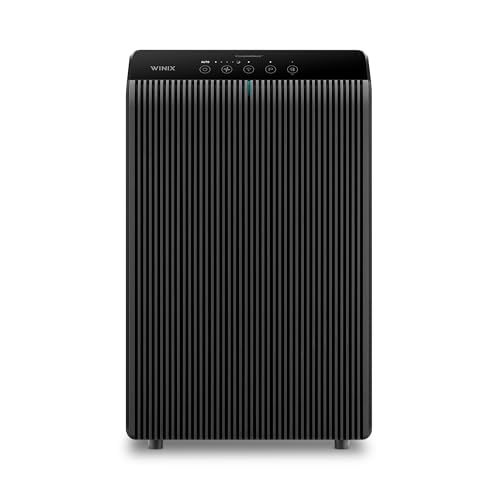
Begin with what the machine is. The 5300-2 is a floor-standing tower purifier aimed at large rooms — living rooms, open-plan spaces, big primary bedrooms — drawing air through a filtration stack that made Winix’s name. First comes a washable pre-filter that catches hair, lint, and the coarse dust that would otherwise shorten the life of everything behind it. Behind that sits the heart of the machine, the Filter A pack: an activated carbon stage for odors and gases married to a true HEPA stage for fine particles — pollen, dander, dust mite debris, smoke particles. Last comes PlasmaWave, Winix’s bipolar ionization stage, on its own switch, for owners who want it and available to be declined by owners who do not. The controls are physical and legible: fan speeds, a timer, auto operation in the plain sense, and a filter replacement indicator. There is no app because the machine predates the expectation that a purifier needs one, and there is a real argument — made by many of its owners across many years — that it is better for it.
In daily service, the 5300-2’s character is steadiness. It is a machine you set to a middle speed in the living room and forget, whose contribution announces itself in the dust that no longer accumulates on the television at the old rate and in cooking smells that clear by evening instead of by Thursday. Its fan is audible on high, as every honest tower is, and unobtrusive on the lower speeds where it spends a sensible life. The washable pre-filter is the maintenance feature that owners consistently underrate until they have lived with a machine that lacks one: a monthly rinse under the tap keeps airflow near design values and stretches the expensive pack behind it, which is the entire economics of the appliance in miniature. The 5300-2 asked little, filtered much, and explained itself to anyone who walked up to it. Categories are built on machines like this.
Mini spec box — Winix 5300-2 (subject, prose-only)
- Format: large-room tower purifier
- Filtration: washable pre-filter; Filter A pack (activated carbon + true HEPA); PlasmaWave ionization stage, switchable
- Replacement filter: genuine Winix 115115 Filter A
- Controls: onboard panel — fan speeds, timer, PlasmaWave switch, filter indicator; no app
- Current status: unit not returned in this site’s latest catalog verification; genuine filters remain the owner’s lifeline
Strengths
- Filter-first architecture with a washable pre-filter — the design that made running costs predictable and performance durable.
- PlasmaWave on a physical switch, so the ionization stage is a choice rather than a commitment.
- Controls any household member can run without an account, an app, or a phone — a genuine accessibility virtue in a family living room.
Trade-offs
- No air quality sensor feedback of the modern kind and no app control; the machine cannot show you the air or respond to a schedule from your phone.
- The unit itself is no longer the readily listable product it once was, so new buyers cannot simply purchase the legend.
- Its generation’s ergonomics — a taller, plainer tower — lack the display polish of the current line.
Best for: existing owners deciding whether to keep it (keep it, on genuine filters) and researchers who want to understand what made Winix’s reputation. Not suited for: a new purchase today, or a household that wants sensors, displays, and app scheduling — those buyers are served by the successors below.
Why is the 5300-2 itself not linked here?
Because honesty about availability is part of reviewing. This site’s verification process searched the current Amazon catalog for the 5300-2 as a purchasable unit and found its genuine replacement filters rather than the machine; a review that linked you to a filter while calling it a purifier would be a small fraud, and a review that invented a listing would be a larger one. So the 5300-2 is treated in prose — accurately, from its documented design — and the linked products are Winix’s current large-room machines in the same PlasmaWave line: the 5510 and 5530 — Winix’s own titled successors to the 5500-2, the family the 5300-2 belongs to, and the 5520, the line’s current monitor-equipped sibling. If you own the 5300-2, nothing about its care changes: genuine Filter A packs, a rinsed pre-filter, and it will keep doing the job it has always done.
The Successors: Where a New Purchase Should Land

WINIX 5510 — the direct heir
Badge: Best successor to the 5300-2
The 5510 is Winix’s own answer to the question this review keeps asking. Its listing describes a large-room purifier rated to cycle the air of 1,881 square feet within the hour, filtering through true HEPA and a carbon stage specified for heavy deodorization, running an auto mode with app support — and titles it, in Winix’s own words, the new generation of the 5500-2. Translate that into 5300-2 terms and the inheritance is exact: the same large-room tower mission, the same carbon-plus-HEPA heart, the same PlasmaWave line, now wrapped around a sensor-driven auto mode and a phone app for scheduling and filter tracking. For a 5300-2 owner whose machine finally retires, this is the purifier that will feel like a continuation rather than a change of religion.
Mini spec box — WINIX 5510
- Sizing (manufacturer’s numbers): a large-room rating — 1,881 sq ft of air in an hour
- Filter arrangement: PlasmaWave family, with true HEPA and a carbon filter specified for heavy deodorization
- How it is run: app-supported auto mode alongside controls on the body
- Targets per listing: pet allergens, smoke, odors
Strengths
- The 5300-2 formula modernized: sensor-driven auto mode does the thinking the older machine left to you.
- App support adds scheduling and filter-life awareness without removing onboard control.
- High deodorization carbon stage keeps the family’s odor credentials intact.
Trade-offs
- App setup is a small tax on day one that the 5300-2 never charged.
- Current-generation filter packs are their own ongoing cost to budget for.
- Buyers who loved the old machine’s total simplicity gain features they may only partly use.
Best for: 5300-2 owners replacing a retired unit and new buyers who want the classic Winix formula in current form. Not suited for: anyone who specifically wants the air quality display of the 5520 instead.
WINIX 5520 — the one that shows you the air
Badge: Best for data-minded households
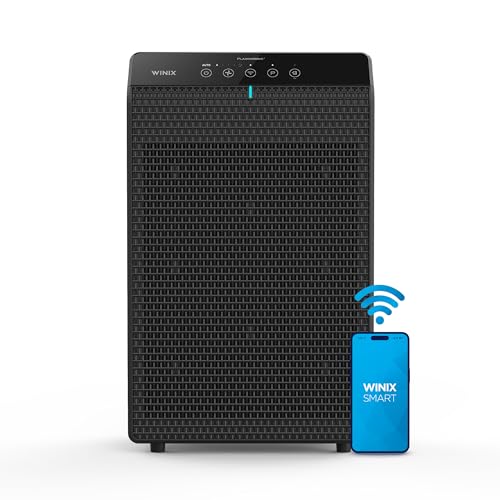
The 5520 works the same large-room ground — rated, per its listing, to cycle 1,882 square feet of air in an hour — filtering through true HEPA and the family’s high-deodorization carbon stage under auto mode, and adds the feature the 5300-2 generation never had: an air quality monitor that reports the room’s condition on the machine itself. For owners who always wondered what their purifier was actually responding to, that display closes the loop; you can watch a cooking event register, watch the auto mode answer it, and watch the room settle. It is the successor for the household that likes its appliances to show their work.
Mini spec box — WINIX 5520
- Sizing (manufacturer’s numbers): a large-room rating — 1,882 sq ft of air in an hour
- Filter arrangement: PlasmaWave family, with true HEPA and a carbon filter specified for heavy deodorization
- Its own extra: an air quality monitor built in
- How it is run: auto mode alongside controls on the body
Strengths
- The air quality monitor makes filtration visible, which teaches better habits — doors, cooking bursts, filter timing — faster than any manual.
- Same large-room carbon-plus-HEPA substance as its siblings.
- Auto mode anchored to a displayed reading feels accountable rather than mysterious.
Trade-offs
- The display is one more light source to consider in a bedroom setting.
- Sensor readings describe the air near the machine, not the far corners of a big room.
- Households that will never look at the display are paying for a window they will not open.
Best for: allergy-season households and anyone who wants feedback from their purifier. Not suited for: buyers who prioritize app scheduling above all — compare the 5510 and 5530 first.

WINIX 5530 — the app-controlled sibling
Badge: Best for connected homes
The 5530 completes the successor trio: the same large-room rating, the same filter pairing of true HEPA and the high-deodorization carbon stage, auto mode — and app control headlined in its title, which likewise names it a new generation of the 5500-2. Where the 5510 modernizes the classic formula and the 5520 adds the monitor, the 5530 leans into remote operation: schedules set from the sofa, a purifier checked from the office, a living room pre-cleared before guests arrive. For the household whose life already runs through an app drawer, it is the natural landing spot after the 5300-2.
Mini spec box — WINIX 5530
- Sizing (manufacturer’s numbers): a large-room rating — 1,882 sq ft of air in an hour
- Filter arrangement: PlasmaWave family, with true HEPA and a carbon filter specified for heavy deodorization
- How it is run: auto mode under app control, controls on the body as well
- Targets per listing: pet allergens, smoke, household odors
Strengths
- Full app control suits scheduled, routine-driven households.
- The same verified filtration core as the rest of the current line.
- Remote checking is genuinely useful during smoke events and allergy peaks while you are away.
Trade-offs
- Its headline virtues depend on your Wi-Fi and your willingness to live in another app.
- Overlaps heavily with the 5510; the choice between them is about control style, not cleaning power.
- Like its siblings, it is a large-room machine that would be wasted in a small bedroom.
Best for: connected households replacing or echoing a 5300-2 in a big room. Not suited for: the proudly app-free — the 5300-2’s own philosophy, continued in spirit by running any of these from their onboard panels.
5300-2 vs its successors: what actually changed?
| Dimension | 5300-2 | 5510 / 5520 / 5530 generation |
|---|---|---|
| Filtration philosophy | Washable pre-filter, carbon + true HEPA pack, PlasmaWave | The same philosophy: pre-filter, high deodorization carbon, true HEPA, PlasmaWave line |
| Feedback | Filter-change indicator; your nose for the rest | Sensors and auto mode; air quality monitor on the 5520 |
| Control | Onboard panel only | Onboard plus app support or app control on the connected models |
| Buying position | Unit not currently returned by catalog verification; genuine Filter A packs remain | Current listings, verified for this guide |
| Running costs | Filter A packs on roughly an annual rhythm in typical homes | Model-matched packs; budget the same rhythm |
The table’s honest summary is that Winix changed the wrapper, not the recipe. That is a compliment to the 5300-2 and a relief to its owners: the thing you trusted — filtration substance — is the thing the successors kept, while the things time made expected — sensors, displays, apps — were added around it. The background technology is explained in full in what is PlasmaWave technology, and readers whose main problem is odor rather than particles should also weigh the carbon-focused advice in best air purifiers for odors before choosing among the three successors.
How do you keep a 5300-2 performing like itself?
The pre-filter ritual
Once a month in a pet household, every couple of months in a calmer one, slide the pre-filter out and rinse or vacuum it clean, letting it dry fully before it goes back. This five-minute ritual is the highest-value maintenance in the machine’s life, because everything downstream — airflow, noise, the HEPA pack’s lifespan — is priced off a clear pre-filter.
Filter A discipline
Replace the Filter A pack when the indicator calls, with the genuine 115115 pack, and resist the false economy of stretching a saturated carbon stage: the HEPA element may still catch particles while the exhausted carbon waves odors through, and the machine gets blamed for a retirement it announced politely. Note the change date on the pack’s frame in marker; future you will be grateful.
Placement and running pattern
Keep the tower where the living room’s air actually circulates, with clearance at its intakes, and run it low and constant rather than in occasional heroic bursts — the pattern that suits a big room’s slow dust economy. During smoke events or a pollen siege, close the room, run high for the first hour, then settle back. The machine’s simplicity is the point: no accounts, no updates, just a rhythm a household can keep for years.
Should a 5300-2 owner upgrade, and when?
The upgrade case rests on three honest triggers. Trigger one: the machine itself falters — fan noise that cleaning does not cure, controls failing, a housing cracked by a move. A purifier is a fan and a filter path; when the fan’s health goes, the economics of loyalty go with it. Trigger two: your needs outgrow its feedback — a new allergy diagnosis in the family, a smoke-prone region’s worsening summers, a household that now wants the air shown and scheduled; the 5520’s monitor and the connected models’ apps answer needs the 5300-2 was never built to hear. Trigger three: the room changes — a move to a larger open plan where a second machine or a current large-room model belongs beside the veteran rather than instead of it. Absent those triggers, the correct upgrade is a fresh Filter A pack and another year of service. Loyalty to a working, honestly built appliance is not sentimentality; it is the cheapest filtration there is, and the 5300-2 has earned more of it than most machines ever will.
Common mistakes in the 5300-2 story
Buying a secondhand unit without pricing its filter first is the classic error: the machine is the cheap part of any purifier’s life, and a bargain tower needing an immediate genuine pack is less of a bargain than it looked. Substituting an unverified off-brand pack is the second — fit and sealing are the HEPA promise, and a poorly sealed substitute leaks the very particles it advertises. The third is retiring a healthy unit purely for age, in a category where the wear parts are the filters you already replace. The fourth is the mirror image: nursing a genuinely dying fan for years because the model is beloved, breathing its declining output and calling it loyalty. And the fifth is expecting any of these machines, old or new, to compensate for a source problem — the smoker’s balcony door left open, the litter box overdue — instead of filtering bravely around a problem that wants removing. Avoid those five and the 5300-2 story, whether yours continues or hands over to a successor, ends the way its owners usually tell it: with a machine that simply did its job.
A year with the 5300-2: the machine across the seasons
Abstract specifications flatten what ownership actually feels like, so consider the 5300-2’s calendar. Spring is its audition: pollen season is when a large-room HEPA tower earns a household’s trust, and the 5300-2’s pattern in a living room — doors managed, machine on a steady middle speed, pre-filter rinsed after the worst yellow weeks — is the pattern its owners describe with the loyalty usually reserved for cars. Summer brings smoke in the regions that now expect it and cooking smells everywhere; the carbon half of Filter A takes the lead role, and the machine’s value shifts from what you can measure on a particle counter to what you notice at the front door after a weekend away: a house that smells like a house, not like its last six dinners. Autumn is filter season in the owner’s mind, when the indicator’s suggestion and the household’s rhythm agree on a fresh pack before the windows close for winter. Winter is the quiet shift — dust from heating systems, air dried and recirculated, the machine on low in the corner doing unglamorous work while the household forgets it entirely, which is the highest compliment a purifier can be paid. A machine that has a sensible job in every season is a machine that stays plugged in for a decade, and that, more than any specification, is the 5300-2’s review.
The true cost of owning a 5300-2: filter economics
Every purifier is two purchases: the machine, and the stream of filters that keeps it a purifier. The 5300-2’s economics were always its quiet argument. The washable pre-filter costs nothing but tap water and five minutes. The Filter A pack — carbon and HEPA as one matched unit — is the single recurring expense, on roughly an annual rhythm in a typical home, more quickly in homes where cigarette smoke or several pets load the carbon stage ahead of schedule. Against that, weigh what the design avoids: no separate carbon canisters on a different schedule, no proprietary cartridges in odd sizes, no subscription-shaped surprises. Owners budgeting a successor should run the same arithmetic on the current line — the 5510, 5520, and 5530 each take their own matched packs — because across a five-year horizon the filter stream, not the sticker, is where purifier budgets are actually decided. The 5300-2 also teaches the counterfactual: a cheaper machine with a pricier, shorter-lived pack overtakes it in total cost while delivering less filtration the whole way there. When this guide says the 5300-2 was a value machine, this arithmetic — not its launch price — is the evidence.
Noise, light, and living beside a tower
A large-room tower lives in shared space, so its manners matter. The 5300-2’s fan speaks in the category’s usual voice: a present rush on the highest setting that no one schedules for conversation, a workable middle for daytime living rooms, and a low that coexists with television and sleep in the next room. It predates the era of elaborate light shows; its indicators are modest, which bedroom-adjacent households count as a virtue lost in some successors. Placement is the owner’s share of noise control — off bare resonant corners, not wedged between hard surfaces that turn a cabinet into a drum, and with the outlet aimed at the room’s circulation rather than into a wall’s embrace. None of this is exotic, and that is the point: the 5300-2’s ownership experience contains no exotic failure modes at all, which is a sentence very few appliances of any kind can have written about them honestly.
How did the 5300-2 stack up against its era’s rivals?
Context sharpens the verdict. The 5300-2’s contemporaries included prestige towers that cost considerably more for filtration no better, big-box store brands whose filter packs vanished from shelves within a few seasons, and early smart purifiers whose apps were abandoned before their HEPA media was. Against that field, Winix’s proposition — honest filters, a washable pre-filter, a switchable ionization stage, a price in the reachable middle, and replacement packs that stayed in production — reads in hindsight like a list of everything the category’s buyers turned out to value. The current Winix line’s existence, and its explicit “new generation” titling, is the market’s own review of the formula. Rival brands have since converged on much of the same architecture, which is what usually happens to the machine that got it right first: it stops looking distinctive because everyone else moved toward it.
Bought one secondhand? How to bring a used 5300-2 back to standard
The 5300-2’s durability means a healthy secondhand market, and a used unit can be an excellent buy if it is recommissioned properly. Start with the filter: assume the installed pack is spent regardless of the seller’s story, price a genuine Filter A into the purchase, and install it before judging anything else about the machine. Wash the pre-filter and let it dry completely. Wipe the interior cavity and the outlet grille with a dry or barely damp cloth, and clean the intake faces where dust mats invisibly. Then run the machine on its highest speed in a ventilated room for an hour — a burn-in that clears storage smells and lets you listen to the fan with a critic’s ear: a smooth rush is healthy; grinding, rattling, or a wobble in the note suggests bearings or debris that cleaning may or may not cure. Test every control, including the PlasmaWave switch and the filter indicator’s reset. Finally, place it by the same rules as a new machine and give it a week of ordinary service before deciding what you bought. A 5300-2 that passes that week with a fresh pack is, functionally, the machine its reputation describes — the design’s whole point is that its performance lives in replaceable media rather than in aging electronics.
Troubleshooting an aging 5300-2
Most complaints about veteran units trace to four causes, in this order. Weak airflow is almost always the pre-filter or a spent pack; clean and replace before suspecting the fan. Odors returning despite a running machine point at the carbon stage’s saturation — the HEPA half can be healthy while the carbon half is done, and the pack is replaced as a unit for exactly this reason. New noise after years of quiet service deserves a look for debris in the fan path and a check that the machine sits level on all four feet, since a tower rocking on an uneven floor amplifies its own voice. A PlasmaWave stage that seems inert is hard to judge by feel — its work is not the kind you can sense directly — and the practical test is the switch and indicator behaving as the manual describes; owners who prefer certainty can simply run filters-only, losing nothing measurable. What rarely fails is the concept: owners who work this list in order almost always find their machine at the end of it, which is why so many 5300-2s are still on duty.
What the 5300-2’s design got right, in one analysis
It is worth pausing on why this particular machine, among hundreds of purifiers sold in its years, is the one still being searched for by name. The answer is a stack of unglamorous decisions, each of which aged well. The filtration was honest: true HEPA, a real carbon stage, no mystery media with invented grades. The pre-filter was washable, acknowledging that the cheapest filter to own is the one you never buy. The ionization was optional, acknowledging that households differ and that a supplement should behave like one. The controls were physical, acknowledging that a living-room appliance serves everyone in the room, including the people without the app. The replacement pack was a single matched unit on a humane schedule, acknowledging that maintenance people cannot decode does not happen. And the machine was sized and priced for the rooms people actually have, rather than for a spec-sheet contest. Every one of those decisions is visible, continued, in the 5510, 5520, and 5530 — which is why this review can recommend the successors with unusual confidence: they are not a new bet, they are this bet, placed again.
The 5300-2 in specific households
The allergy household
For pollen and dander, the 5300-2’s virtues align exactly: a HEPA stage with honest media, a pre-filter that keeps pet hair from eating the pack, and a tower format that can run a living room or a large bedroom around the clock. The household disciplines matter more than the model badge — the machine in the bedroom during the season, the door closed, the speed honest rather than whispered — and owners who observe them describe the same result across the Winix line, which is why the successors inherit this household without argument.
The smoke-prone region
Wildfire country has become an air-purifier constituency of its own, and the 5300-2’s carbon-plus-HEPA stack is the right shape for it: particles are the emergency, odor is the aftermath, and the machine addresses both in one pass. The operating pattern changes — windows sealed, speed high during events, filters inspected afterward because a smoke season can spend a carbon stage in weeks — and households in these regions are exactly the ones who should read the successor reviews closely, since a second, current machine for the bedroom is often the real conclusion.
The household with a new baby
New-parent households ask the most careful questions, and deserve the most careful framing. A purifier is a comfort appliance, not a medical device; what it offers a nursery-adjacent home is cleaner-feeling air and less dust, delivered by filtration. The 5300-2’s physical controls and switchable PlasmaWave suit cautious households — run it filters-only if that is your clinician-guided preference — and its lack of an app means one less account holding a baby-adjacent device. Place it outside the crib’s immediate zone, keep cords and towers sensibly arranged as you would any appliance, and let it do its ordinary, unglamorous work.
Reading the successors’ listings like a 5300-2 owner
Owners of the veteran machine bring useful skepticism to the new listings, and three habits will serve them. First, translate coverage claims: the current models quote the room size cleaned in one hour, a faster air-change basis than older ratings used, so a successor’s headline area is not directly comparable to the number on your old box — compare the machines to each other, and to your room, rather than to memory. Second, price the pack, not the machine: each successor takes its own matched filter set, and the three-year filter stream is the true price difference between models that share a filtration philosophy. Third, choose the control style your household will actually use — a monitor you will glance at, an app you will genuinely open, or the 5510’s balanced middle — because in a line this closely related, the daily interface is the real product differentiation. A 5300-2 owner who shops that way will land exactly where Winix intended, and will recognize the new machine, on delivery day, as a relative rather than a stranger.
The owner’s checklist: a 5300-2 year on one page
Everything this review advises, compressed into the calendar of a well-kept machine. Monthly: rinse the pre-filter, more often if a pet is shedding against it, and glance at the intakes for the dust matting that precedes a complaint. Quarterly: check placement and clearance, confirm the tower still sits where the room’s air circulates, and note the filter indicator’s state so its eventual call is not a surprise. At the indicator’s call, or roughly annually in a typical home: replace the Filter A pack with the genuine 115115, write the date on the frame, and reset the indicator as the manual directs. After any smoke event or renovation dust episode: inspect early — extraordinary loads spend filters extraordinarily, and a pack consumed by one bad month should be retired on the evidence, not on the calendar. At any house move: pack the machine upright if you can, and recommission it at the new address with the secondhand routine described earlier, because a move is just a change of ownership by the same household. Keep that rhythm and the 5300-2’s second decade will look much like its first.
Why this review spends so long on a machine you cannot easily buy
A fair question, worth answering directly before the verdict. The 5300-2 matters for three reasons that outlive its listing status. First, a very large number of them are still in service, and their owners deserve guidance calibrated to the machine they own — its filters, its rituals, its honest remaining life — rather than a sales page pretending it never existed. Second, it is the reference point for its successors: the 5510, 5520, and 5530 cannot be evaluated without knowing what they are a new generation of, and shoppers comparing Winix’s current line are, whether they know it or not, asking how the new machines compare with this one. Third, it is a case study in what to look for in any purifier — honest media, washable pre-filtration, optional ionization, physical controls, available consumables — and a reader who absorbs the 5300-2’s lessons can walk into any brand’s catalog and shop it competently. Reviews of unavailable legends are useless when they are nostalgia; this one aims to be a manual for owners, a yardstick for shoppers, and a small argument that the appliances which respect their owners tend to be respected back, for years.
Second machine strategy: where a successor joins a working 5300-2
Many households reading this review do not need a replacement at all; they need a second machine, because the 5300-2’s one honest limitation is geography — it cleans the room it is in. The commonest mature setup in Winix households is a large-room tower in the living area and a second purifier where the household sleeps, and the current line gives that second purchase a natural shape: keep the veteran on living-room duty, where its daytime, doors-open service suits it, and put a 5520 in the primary bedroom, where its air quality monitor and auto mode can manage the night shift with feedback the older machine never had — or a 5530 where the household would rather schedule the bedroom from an app. The two machines share a brand, a filter philosophy, and an owner’s habits, which is why multi-Winix households form so easily. If the budget forces a sequence, buy for the bedroom first: the eight-hour room is where purified air is breathed longest, and the living room’s veteran can hold its post while the new machine takes the night.
Open-plan reality check: the 5300-2 where kitchen meets living room
The floor plan that defines modern housing — kitchen flowing into living room, no doors between — is both the 5300-2’s natural habitat and its sternest test, and it deserves a direct account. In an open plan, the purifier’s rated room becomes the whole connected volume, cooking events are living-room events, and the machine’s job is less about achieving a sealed-room ideal than about steadily winning against a continuous source. Owners who thrive with the setup share habits: the tower placed in the living zone rather than exiled beside the stove, where grease would coat its intake; a deliberate high-speed hour across dinner rather than a day of low-level hope; the range hood used as the first line, with the purifier as the second; and the carbon stage respected as the consumable it is, because open-plan cooking spends carbon faster than any bedroom duty. Judged by sealed-room standards the arrangement is imperfect; judged by the standard that matters — does the home smell like dinner at breakfast, does the dust film on the shelves grow at the old rate — the big Winix earns its floor space. Households whose open plan defeats a single tower should read that as a volume verdict, not a brand verdict, and answer it the way the second-machine section suggests.
What would make this review change its mind?
Reviews should state their falsification conditions, so here are this one’s. The keep-it advice to owners rests on genuine Filter A packs remaining available and fairly priced; if that lifeline were cut, the calculus would flip overnight and the successor sections would become the whole review. The successor recommendations rest on the current models’ listings remaining as verified — filtration as titled, coverage as stated — and on Winix continuing to support their filter packs with the same longevity it showed the 5300-2’s; a brand that orphaned the new line’s consumables would forfeit the inheritance argument entirely. And the architectural praise — washable pre-filter, matched pack, switchable ionization, physical controls — would need revisiting if the industry produced a genuinely better ownership pattern at the same honesty of filtration, rather than the same pattern with louder marketing. None of those conditions is met today, which is why the review reads as it does. But a reader who knows what would change a reviewer’s mind knows exactly how much the review is worth, and this one is content to be judged that way.
A short note on this review’s method
Because the 5300-2’s situation is unusual, its review method deserves a sentence of daylight. The machine is assessed from its documented design and its genuine consumables, both verifiable, rather than from a purchase link that current catalog checks could not honestly supply; the successors are assessed from their verified current listings, whose exact titles and official images anchor their sections. Where this review describes ownership patterns — seasons, rituals, failure modes — it describes the patterns this model family’s owners consistently report and that its architecture predicts, and it avoids inventing laboratory measurements for any machine, old or new. That restraint is the same one applied across this series, and it is why the prose-only treatment here should be read as a sign of the process working, not of the machine failing: the 5300-2 was reviewed as carefully as anything in this guide, and the only thing withheld was a link it could not honestly be given.
And for the reader who wants one more detail: the 5300-2’s controls, decoded
Because the machine’s interface is its philosophy made visible, a last look at the panel is worthwhile. The fan control offers the speeds a household actually uses, from a sleep-adjacent low to a turbo reserved for events, and the auto behavior of its generation simply modulates among them rather than performing sensor theater. The timer exists for the two honest jobs — clearing a room before bedtime occupancy, and shutting down a treatment in an empty house — and the PlasmaWave switch sits as a peer among the controls rather than as a hidden menu item, which is the physical form of the word optional. The filter indicator is a counter with a reset, not an oracle; owners learn to read it alongside the calendar and the household’s load, the way you read a car’s service light alongside its mileage. Nothing on the panel requires a manual after the first week, nothing phones home, and nothing about the machine becomes obsolete when a server somewhere is retired — a sentence that cannot be written about many of its contemporaries, and one more reason the secondhand market in this model stays as healthy as the machines themselves.
For the reader who just wants the answer
Some readers arrive with one question and limited patience, so here is the entire review in a paragraph. The Winix 5300-2 is a large-room tower purifier whose design — washable pre-filter, carbon-and-HEPA Filter A pack, switchable PlasmaWave, plain physical controls — made it the default Winix recommendation of its generation, and the design has aged well because it was honest. The unit itself is no longer what current catalog searches return; its genuine filters are. Owners should keep it and feed it. New buyers should choose among its verified successors — the 5510 for the classic formula with app support, the 5520 for the air quality monitor, the 5530 for full app control — confident that the filtration philosophy they are buying is the one this machine proved. Everyone else can take the 5300-2 as the category’s yardstick: when a purifier of any brand is described to you, ask whether it does what this one did, and you will know most of what matters before the second paragraph of its listing.
Frequently Asked Questions About the Winix 5300-2
Is the Winix 5300-2 still worth keeping in 2026?
Yes, if yours is healthy. Its filtration architecture — washable pre-filter, genuine carbon-plus-HEPA pack, switchable PlasmaWave — remains sound, and its running costs are a filter pack on a predictable rhythm. Keep it on genuine Filter A replacements, keep the pre-filter rinsed, and it will continue to do the work it was bought for. The reasons to replace it are a failing fan, changing household needs, or a room it no longer fits — not its birth year.
Which filter does the 5300-2 use, and is it still available?
The 5300-2 uses Winix’s Filter A, sold as the genuine 115115 replacement. In this site’s current catalog verification, that genuine filter is exactly what the search returned for the 5300-2 — the machine itself was not returned, its filters were — which tells owners two useful things: the consumable lifeline is intact, and anyone selling you a “5300-2” link today deserves a careful second look at what is actually in the box.
What is the difference between the 5300-2 and the 5500-2?
They are siblings from the same Winix generation: both large-room PlasmaWave towers with the same design philosophy, with the 5500-2 positioned around heavier odor duty and its own Filter H pack. Their stories converge in the current line, since the 5510 and 5530 carry Winix’s new-generation-of-the-5500-2 title — making those models, covered above and in Winix 5500-2 review, the heirs of both machines.
Which successor should a 5300-2 owner choose?
Match the feature you actually missed. If you never missed anything, the 5510 is the formula continued, detailed in Winix 5510 review. If you wanted the machine to show you the air, the 5520 and its monitor — see Winix 5520 review — are the answer. If your household runs on schedules and apps, the 5530, reviewed in Winix 5530 review, fits that life. All three keep the filtration core you trusted.
Can the 5300-2 handle pet hair and dander in a large room?
That was close to its design brief: the washable pre-filter exists for hair, the HEPA stage for the dander, and the carbon for the accompanying smells. The discipline is maintenance — a hair-loaded pre-filter throttles any purifier — and placement near where the animals actually live. Households going deeper on the pet problem will find the sizing perspective in best air purifiers for homes with pets a useful companion.
Does the 5300-2’s PlasmaWave need to stay on?
No. PlasmaWave is on its own switch precisely so owners can choose, and the purifier’s filtration — the part with measurable particle performance — runs identically with the stage off. Households with respiratory sensitivities often run Winix machines filters-only after a conversation with their clinician, and the machine loses nothing essential by it. The technology itself is explained in the PlasmaWave explainer linked earlier in this review.
The verdict on the Winix 5300-2
The 5300-2 is that rare appliance whose review writes itself as a respect piece: a large-room purifier whose architecture was right, whose filters stayed genuine and available, and whose maker had the confidence to title its successors as a new generation of the same idea rather than a repudiation of it. Owners: keep yours fed with Filter A packs and a clean pre-filter, and let it work. Shoppers: you cannot easily buy the legend anymore, but you can buy its inheritance — the 5510, 5520, and 5530 carry the same filtration faith into the sensor age, and any of them will feel, in the best sense, familiar.
One more consideration belongs in the verdict, because owners raise it often: the environmental ledger of keeping versus replacing. A purifier’s footprint lives mostly in its manufacture and its filter stream, and a healthy 5300-2 kept in service spends only the second of those, while a replacement spends both afresh. That arithmetic flatters loyalty — up to the point where a failing fan or a genuinely outgrown room makes the new machine the honest choice, at which point the successors’ efficiency and the old unit’s retirement are both defensible. The 5300-2’s longevity is thus not merely a compliment to its build; it is a standing argument that the greenest purifier is usually the one already in the corner, fed with genuine filters and run with sense.
There is a final, practical way to summarize the whole review for the reader who scrolled to the end with a decision still open.
If your 5300-2 hums in the corner as you read, close this page and order its next genuine filter when the indicator asks; your research is done, and it ended in a compliment to a past decision. If you came because the name kept surfacing in your research, you now know why it surfaces — and you know that the current Winix shelf is where that reputation is purchasable today, in three flavors of the same good idea. Either way, the 5300-2 has done what the best appliances do: it made the decision after it easier than the decision before it.