Disclosure: As an Amazon Associate, dailyhomedecorating.com earns from qualifying purchases. Links on this page are affiliate links; they cost you nothing extra. Prices and availability change often, so check the current Amazon listing before you buy.
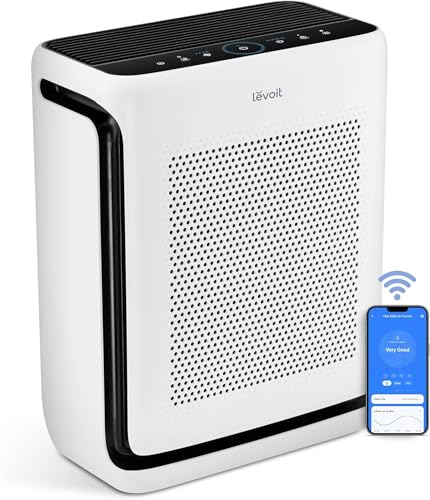
Some reviews in this cluster are about machines you can buy, and this levoit lv h133 article is about one you mostly cannot: the LV-H133, a large-room tower of Levoit’s earlier generation, has effectively left the shelf — the listings that remain under its name are its replacement filters, not the machine itself. That fact shapes everything below. For owners, this article is a keeping guide: how to judge the machine you have, how to feed it genuine filters while they exist, and how to read its remaining years. For shoppers who arrived here looking for a big Levoit to buy, it is a redirection, honestly labelled, to the current large-room machines — the Core 400S and Core 600S — which inherited the H133’s parish and improved on nearly everything in it.
The machine that was
The H133 belonged to the generation when a large-room purifier was a tower: tall, floor-standing, manually governed, and built around a substantial filter stack rather than a smart cartridge. Its parish was the living room before the living room had an app, and by the standards of its day it was a serious instrument — real filtration at real scale, from the brand whose current range fills this cluster. Its owners, in the record, are loyal in the specific way owners of discontinued machines are loyal: the machine has done a decade’s work, its rhythms are known, and its replacement is contemplated the way one contemplates replacing a car that has never failed. This article honours that loyalty with facts rather than sentiment — beginning with the central one, verified in this programme’s own checks: the unit is no longer sold as a unit in the marketplace this site links to, and any listing suggesting otherwise should be read as a filter, an accessory, or a third-party remainder, priced and judged accordingly.
In this guide
For owners: the keeping of an H133
Keeping begins with the filter discipline the machine was designed around: its stack is replaced in stages on the maker’s rhythm, and the genuine filters — the ones this site’s checks still find listed under the model’s name — are the only ones whose fit and media the machine’s seals were built for. A generic substitute in a tower of this age is a gamble on tolerances that were never published, and the cluster’s standing counsel for all discontinued machines applies: feed it genuine while genuine exists, and treat the day genuine disappears as the machine’s true retirement date, whatever its motor still believes. Between now and then, the keeping is the manual covenant at its purest — the pre-filter vacuumed, the stack’s dates kept in the household file, the tower’s post away from the room’s damp and direct sun — and an H133 so kept has, in the record, years left in it.

Levoit Core 400S-P — the heir for the doored living room
Best for H133 owners whose room has a door and whose next machine should sense and govern itself
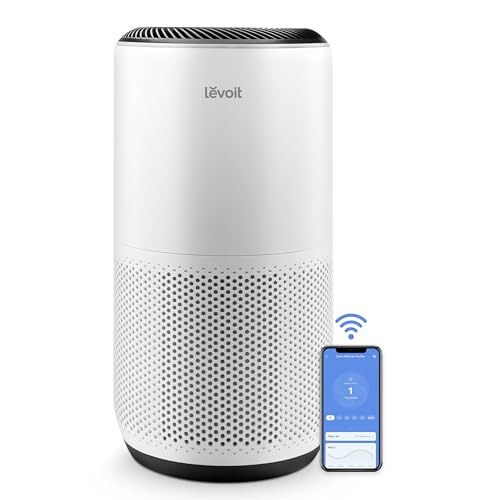
When the tower retires, its parish divides by architecture, and the doored half belongs to the 400S: AHAM-verified, claimed to 1,718 square feet, with the sensor governance and app control the H133 generation never had. The upgrade an owner feels is not primarily power — the tower had power — but perception: the new machine reads the room the owner used to read by nose and by dust on the shelves, and governs itself against the reading. Its full review in this cluster is its case; here it stands as the first of the two legitimate heirs.
- Model: Core 400S-P
- Verification: AHAM VERIFIDE, per its listing
- Features: air quality monitor, auto mode, Alexa
- Coverage: up to 1,718 sq ft claimed
- Filtration: family 3-in-1 architecture
Strengths
- The doored room’s complete modern answer.
- Perception the tower generation never offered.
- The fleet’s keystone, with the family’s full support.
Trade-offs
- A cartridge rhythm where the tower had stages.
- Outrun by the merged open plan.
- An app where the tower had a dial — a change, not only a gain.
Best for: the doored living room’s succession. Not suited for: the open plan — the second heir’s parish.

Levoit Core 600S-P — the heir for the open plan
Best for H133 owners whose living space has since merged, opened or grown
The second heir: verified, claimed to 2,933 square feet, the family’s flagship of scale. Houses change across a purifier’s decade — walls come down, families grow into the whole floor — and an H133 bought for a doored room may retire from an open one. The succession should be measured against the house as it now stands, not as it stood when the tower arrived, and where the space has merged, the 600S is the heir with the headroom the new geography demands. Its full review is beside this article in the cluster.
- Model: Core 600S-P
- Verification: AHAM VERIFIDE, per its listing
- Filtration: 3-in-1 cartridge
- Coverage: up to 2,933 sq ft claimed
- Control: app, Alexa, sensor governance
Strengths
- Headroom for the house as it now stands.
- The family’s flagship support and stock.
- Perception and governance at the largest scale.
Trade-offs
- Wasted behind a door — the first heir’s parish.
- The flagship toll, in price and in filters.
- Equally a cartridge citizen now.
Best for: the open plan’s succession. Not suited for: the doored room, which the 400S serves for less.
For shoppers: why you were redirected, and why it is honest
Search results for discontinued machines are a small swamp — filter listings wearing the machine’s name, remainders at collectors’ prices, and review pages, like this one’s less scrupulous cousins, that pretend the shelf is still stocked. This article’s policy is the cluster’s policy, stated plainly: where the programme’s own verification cannot find the machine sold as a machine, the article says so in its first paragraphs, links only what genuinely exists — here, the heirs — and spends its remaining length on the two honest services left: keeping the survivors, and choosing the succession. A reader who came to buy an H133 and leaves with a verified 400S has not been baited; they have been told the truth in time to act on it, which is the entire difference.
Final word
The LV-H133 is a good machine at the end of its commercial life: keep it genuinely, feed it genuinely, and let its retirement be decided by its filters’ availability rather than by fashion. When the day comes, divide its parish by the house’s current architecture — the 400S behind doors, the 600S across the open floor — and know that the succession, in either direction, is an upgrade in everything except familiarity. Familiarity was the tower’s last gift, and it is not transferable; the heirs will have to earn their own, and on the evidence of this cluster’s reviews, they do.
How to judge the tower you have
An ageing purifier announces its state in a short list of signs, and the H133’s owners can audit theirs in an evening. Airflow first: a tower whose output feels thin on its top setting, with a fresh stack fitted, is telling you about its motor or its seals, not its filters. Sound second: new rattles, hums or a fan note that wanders are the bearings’ correspondence, to be read promptly. Smell third: a mustiness that survives a filter change lives in the machine’s internals and is the hardest sign to argue with. And the file fourth: a stack whose genuine replacements have become scarce, expensive or both is the market delivering the retirement notice the manufacturer never sent. None of these signs is a disgrace — a decade of governed air is a completed service, not a failure — and the audit’s purpose is timing: to let the succession be chosen calmly, by architecture and by review, rather than in the week the tower stops.
An owner’s decade, in four seasons
Spring, in the tower’s prime, was pollen season governed without thought — the stack fresh, the living room’s windows opened in defiance, the machine’s hum the house’s background music. Summer was the cooking-and-guests season, the tower worked hardest and thanked least, as infrastructure is. Autumn brought the file’s rhythm: a stage replaced, a date written, the pre-filter vacuumed while the heating was serviced, two keepings in one afternoon. Winter was the closed-house season, the tower’s parish at its most sealed and most governed. The decade turned on those seasons until the signs began — a thinner note here, a scarcer filter there — and the owner’s loyalty, this article has argued, is best honoured not by denying the signs but by timing the succession as calmly as the keeping was done. Calm, in both directions, is the manual covenant’s final form.
Discontinuation as a domestic event
Products die quietly, without announcement, and households discover the death sideways — a filter listing where the machine used to be, a review that speaks of the model in the past tense. This article exists because that discovery deserves better handling than the swamp gives it. A discontinued machine is not a scandal and its owner is not a fool; it is the normal end of a normal commercial life, and the household’s business is simply to convert surprise into schedule: audit the signs, stock one genuine set, choose the heir by the house’s present shape, and let the tower’s last seasons be as governed as its first. Conversion of surprise into schedule is, the cluster’s readers will recognise, the same service its guides perform for smells, filters and thermometers — the domestic world runs better when its endings are planned, and the H133’s ending, planned here, is a credit to its decade rather than a comment on it.
The tower’s last gift
Familiarity, the final word called it — the knowledge of a machine’s hum, its dial’s resistance, its stack’s appetite, accumulated across ten years of evenings. No heir inherits it, and the review does not pretend otherwise; what the heirs offer instead is a different accumulation, of readings and governances the tower never had, which will become its own familiarity in time. Households grieve appliances more honestly than they admit, and the grief is rational: it is the loss of a known system in a world of new ones. The article’s counsel, at the end, is simply to let the grief and the upgrade coexist — to buy the heir with clear eyes, to keep the tower while keeping is genuine, and to record both in the same file, which is where the household’s air has always actually been governed from.
The tower shape, and what it still does better than its replacements
Before the keeping advice, the shape deserves its due, because the LV-H133’s tall, narrow cabinet solved a placement problem that the current range’s squatter boxes have quietly un-solved. A tower stands in the footprint of a floor lamp: beside a sofa arm, in the corner a bookcase left over, in the strip between a wardrobe and a wall that no cube-shaped purifier will usefully occupy. Its intake runs up its height rather than across a broad face, so it draws from several levels of the room’s stratified air at once, and its outlet at the top throws the cleaned stream across the ceiling, where it spreads before it descends. In narrow rooms and furnished rooms — which is to say, in the rooms people actually have — that geometry is worth real filtration, and owners who replace the tower with a box often discover the box exiled to a worse position, behind furniture, where its broader intake is half-muffled by a sofa back.
The shape’s costs are the mirror of its virtues. A tall cabinet is a lever: a toddler’s pull or a large dog’s shoulder against its upper half tests its base in a way no low box is tested, and the H133 in a house with either should stand in a corner’s protection rather than in open floor. Its height also puts its controls and its display at standing eye level, which its owners loved and its successors have mostly abandoned for top panels read from above. None of this resurrects the model — the filter supply decides that argument — but it explains why its keepers are reluctant, and why the succession advice in this article steers them to placement thinking first and model numbers second.
Reading a filter listing for a tower that no longer exists
The marketplace situation for H133 filters resembles the PUR131’s, with one tower-specific complication: this model’s name has been reused in search results as a magnet for filters that fit nothing Levoit ever made. Sellers attach a string of model numbers to generic tower cartridges, counting on the discontinued machine’s owners to be grateful rather than precise. The keeper’s defence is measurement before brand. A genuine-fit cartridge for this tower has a specific height and a specific rectangular footprint, both knowable from the spent cartridge in the machine: measure the old one’s frame in millimetres, photograph its printed label, and buy only a listing that states dimensions matching yours or shows the same label. A cartridge a few millimetres tall will jam or leave a bypass gap at the top seal; a few millimetres short will sit loose and leak unfiltered air around its frame with every hour the fan runs.
Seals deserve a paragraph of their own because a tower’s stack depends on them entirely. The air path in this cabinet passes through the cartridge’s full height, and any gap at the frame’s edge is a short circuit the fan will prefer, since air takes the easy route with complete indifference to the keeper’s intentions. When a new cartridge goes in, run a hand slowly around the seated frame’s edges with the machine on its middle speed: a leak announces itself as a thin, cool draught against the skin. Foam tape of the kind sold for window insulation, applied to the frame rather than the cabinet, closes a marginal gap honestly and is a legitimate keeper’s repair — unlike the perfumed or washable substitutes the listings will offer, which this article has already advised against in its keeping section.
Judging your tower’s fan, seals and sensors without instruments
An earlier section of this review described judging the tower you have; this one gives the judgement a procedure, in the order a keeper should perform it on a quiet morning with the machine unplugged and then running. First, the cabinet: rock it gently on its base and listen for the creak of a stressed joint, then check the base itself for the hairline cracks that years of being nudged by vacuum cleaners leave in ageing plastic. Second, the door or panel that closes the filter bay: its latch should engage with a definite click, and the seal behind it should be continuous to a fingertip run along its whole length. A bay that no longer closes fully is the commonest mechanical reason a sound tower filters badly, and it is also the most fixable — a compressed seal can be coaxed back with warmth and patience, and a failed latch is a reason to tape and note, not yet to retire.
Third, the running tests. On the lowest speed, from a metre away, a healthy tower is a murmur without rhythm; a repeating tick or scrape at rotation speed is a bearing or a foreign object, and the two are distinguished by switching off and turning the fan by hand through the grille if it can be reached — grit announces itself as a rough arc in the rotation. On the highest speed, hold a tissue at the outlet: it should stream steadily, not flutter in pulses, which would suggest the fan is labouring against a loaded cartridge. Finally the display and buttons, pressed one by one: a control that needs two presses is a membrane ageing, worth knowing about, not worth retiring over. A tower that passes these five checks has years in it if its filters hold out; one that fails the fan checks has given its keeper the answer the filter listings cannot.
Where a retired tower can still work: the second-duty rooms
Retirement planning for this machine differs from a box purifier’s in one practical respect: the tower’s height makes some second-duty rooms unsuitable and others ideal. The unsuitable list is short and physical — a small child’s bedroom, where a tall cabinet invites climbing; a hallway narrow enough that the tower becomes an obstacle with a power cord; a bathroom, whose humidity no purifier of this generation was built to breathe. The ideal list is longer. A home office, where it stands in the corner’s dead space and its standing-height controls suit a seated keeper reaching sideways. A guest room, where its lamp-like footprint costs the room nothing and its presence reads as a courtesy rather than an appliance. A dressing room or large wardrobe space, where the air is still, the dust is textile, and a tall intake draws from the hanging clothes’ whole height.
The workshop and garage question arises for every retiring purifier and deserves a direct answer for this one: a tower that has finished its indoor life can serve a hobby workshop’s dust for a season, but its cartridge will load at several times the domestic rate, its sensors were never calibrated for that air, and the arrangement should be understood as spending the machine, not employing it. As a deliberate final posting for a tower whose filters are nearly done — extracting a last season of rough service before the e-waste stream — it is defensible. As a plan that justifies buying one more cartridge, it is not.
Moving house with a discontinued tower
House moves are where ageing towers die unnecessarily, and the deaths are almost all transport injuries: a tall cabinet laid on its side in a van, unbraced, arrives with a stressed base joint or a fan knocked a degree off its mount, and the keeper discovers the damage as a new noise in the new house and misreads it as the machine’s age. The precautions are cheap. Move it upright if the vehicle allows; if it must lie down, lay it on its back — the panel side up — on something soft, and brace it so it cannot slide. Remove the cartridge for the journey and carry it separately in its own bag: a loaded cartridge shaken loose in its bay can crack a frame corner, and a cracked frame leaks from the day it is refitted.
At the new house, the tower gets one more decision than the other furniture: its parish is reassigned, not assumed. Room sizes change, the bedroom may be smaller, the open plan larger, and the succession question this article has pressed — which room’s load can this machine still carry completely — should be asked fresh with the new floor plan in hand. More than one keeper has used a move as the natural succession point, the tower beginning its step-down in a new guest room while a successor takes the new bedroom from the first night. A move is an administrative nuisance for every other appliance and a genuine planning opportunity for this one.
The successors’ shapes, and fitting the same corner
The two successors linked in this review — the Core 400S and the Core 600S — are both low, wide machines, and a keeper attached to the tower’s corner should measure that corner before ordering either, because the succession fails physically more often than it fails electrically. The 400S wants a footprint roughly the width of a small side table; the tower’s corner, which held a cabinet the width of a dinner plate, may not have it, and the successor then migrates to a worse position against a wall’s middle or behind the sofa, where its intake is compromised in exactly the way the tower’s never was. The honest solutions are a rearrangement made deliberately — a plant or a lamp evicted, the purifier given the corner as the room’s first citizen — or, where the room truly cannot take a wide machine at a good position, a different successor class altogether, chosen for the position rather than the brochure.
There is a second fitting question, of height rather than footprint. The tower threw its cleaned air from the top of a tall cabinet, over furniture, across the ceiling. A low successor throws its air from knee height, and in a room where a sofa or a bed stands between the machine and the breathing zone, the stream’s path is interrupted in a way the tower’s never was. Keepers in furnished rooms should expect to give the successor a clearer line to the room’s centre than the tower needed — pulled a little further from the wall, angled a little into the room. These are small adjustments, but they are the difference between a succession that feels like an upgrade and one that feels, mysteriously and unfairly, like a downgrade.
What to tell the person who inherits your tower
Towers pass between households more than most appliances — to a student child, a parent downsizing, a friend setting up a first flat — because a tall, working purifier looks like a gift rather than a cast-off. The honest handover, as with the PUR131 guidance elsewhere in this cluster, is a short conversation rather than a long document, but it has four facts that must be in it. The model is discontinued, and its maker no longer sells the machine. Its filters are still findable, are a legacy purchase, and must be matched by dimension, as this article’s filter section describes. The installed cartridge’s age, stated plainly, with the next change’s rough season. And the machine’s one or two known quirks — the button that needs a firm press, the speed where a faint hum lives — because a quirk disclosed is a characteristic, and a quirk discovered is a defect.
Sent with those four facts and, ideally, the spent cartridge’s label photographed for the new keeper’s phone, the tower begins its second household with its dignity and its usefulness intact. Sent without them, it becomes a puzzle that a busy recipient will solve by unplugging it. The difference between a retired machine that serves for years more and one that serves for a month is very often nothing mechanical at all — it is whether the second keeper was told the truth in time to act on it.
A tower’s seasons: the year as its keeper lives it
Spring asks the most of this machine and always did: the pollen weeks arrive through open windows just as the household starts airing the house, and a tower in a living room earns its keep in the season when its cartridge also ages fastest. The keeper’s spring ritual is the pre-filter’s vacuum and a decision about the cartridge’s remaining life made before the season peaks, not during it. Summer is the smoke and barbecue season in many regions, and the tower’s carbon stage — the part of its stack that handles the gaseous load — spends itself against the neighbourhood’s grills and, in the bad years, against wildfire drift that can load a filter in a fortnight. A keeper in a smoke-prone region plans the cartridge calendar around the fire season rather than the birthday of the last change, and keeps the windows’ discipline that the machine’s manual always assumed.
Autumn is the mould and leaf-mould season indoors, the tower drawn on steadily rather than dramatically, and the right season for the deep clean this article’s judging procedure describes — seals, bay, intake, the whole unplugged inspection — because winter is coming and winter is the closed-house season when the machine runs longest hours at the closest quarters. Winter itself asks only consistency: the tower on its ordinary schedule, the room’s humidity watched so the machine is not fighting a damp problem that belongs to a dehumidifier, and the keeper’s patience for a cabinet that has become part of the room’s furniture and its soundscape alike. Read across the year, the pattern is the one this review keeps returning to: the machine’s needs are seasonal and knowable, and a keeper who meets them in season will be met, in season, by a machine that still works.
Storing the tower if the house pauses
Houses pause — for a renovation, a posting abroad, a year with family — and a stored purifier can be ruined by the storage more thoroughly than by any use. The rules for this tower are few and specific. The cartridge comes out and is sealed in a bag, because an installed cartridge in a stored machine spends the pause adsorbing the storage space’s air and arrives at the restart pre-spent. The machine itself is cleaned before it is wrapped, not after: dust left on an intake for a year in a warm loft sets like felt and takes the restart’s first weekend to remove. It stands upright, in the driest available space, with its cord coiled loosely rather than wound tight against the cabinet, and nothing stacked against its height.
The restart has its own small protocol. Inspect the seals before the cartridge goes back — a year of heat can take the spring out of ageing foam, and the leak test from this article’s filter section applies unchanged. Run the machine in a ventilated room for its first hour, since a stored cabinet exhales a faint mustiness of its own that should not be delivered into a bedroom. Then the fan tests from the judging procedure, briefly, before the parish is reassigned. A tower stored and restarted on those terms loses nothing but the year; a tower thrown in a garage corner loses the seals, the cartridge and usually the fan’s quiet, and its keeper misreads the loss as the model’s fault.
The economics of one more cartridge, worked honestly
Every keeper of this tower eventually faces the same sum, and it deserves to be worked in the open rather than felt in the stomach. On one side: the price of one more genuine-fit cartridge, which buys the machine roughly another year in a main room or nearer two in a step-down parish. On the other side: the same money as a contribution toward a successor that will serve a decade, take filters from a living supply chain, and carry a warranty. The sum has no universal answer because its terms are the household’s — a keeper bridging a single year before a house move, a renovation or a known change of circumstances is buying time rationally, and a cartridge that bridges a defined gap is money well spent. A keeper with no gap in view, buying the cartridge because the alternative is a decision, is paying a year’s rent on a machine whose tenancy has already been ended by its maker.
Two refinements keep the sum honest. First, the cartridge’s year is worth less in the tower’s last parish than in its prime one: a year of guest-room service, occupied forty nights, delivers a fortieth of the breathing that a year in the main bedroom delivered, and the cartridge should be priced against the nights it will actually filter. Second, the successor’s cost should be counted net of the overlap value — the fortnight of comparison and the step-down service the tower still gives — which this cluster’s succession writing has argued for elsewhere. Worked with those two refinements, most households find the sum resolves itself: one more cartridge if a defined bridge exists, none if it does not, and the decision recorded so that next year’s identical temptation arrives pre-answered.
Noise, honestly: the tower in the room at night
The H133 was never the quietest machine in its class, and its keepers have always known its voice in a way the current range’s sleep-mode marketing has made unfashionable to admit. On its lowest speed it is a soft, even rush — the kind of sound bedrooms have incorporated into their silence for as long as the machine has stood there. Age changes the voice in the ways the judging section described, but it also changes it in one benign way worth naming: a tower whose fan has run for years often settles, its note dropping slightly and evening out as bearings polish, so that long-kept examples can sound gentler at year eight than they did at year two. Keepers replacing the tower for a successor’s quieter specification occasionally report the odd result that they miss the sound, and sleep worse to a near-silence their ears no longer trust.
The practical advice follows from that honesty. If the tower’s parish is a bedroom, judge its noise at the pillow, at two in the morning, on the speed it will actually run at — not at the shop’s specification or at noon. If a new noise has entered the voice, use the fan checks to decide whether it is the benign settling or the beginning of the bearing’s confession, because the two are distinguished by rhythm, not volume: settling is even, failure is cyclical. And if the household replaces the machine partly for quiet, keep the old tower in a second room for the first fortnight of the succession, so that the ears have a bridge between the two soundscapes rather than a cliff.
Children, cats and a tall cabinet: the stability question settled
Because the tower is tall, the question of its stability in a house with small children or large, careless animals deserves more than a sentence. The cabinet’s base is weighted and its stance is sound on a level floor; it is not a piece of furniture and will not survive being climbed, swung from or used as a pulling-up post by a cruising toddler, and no purifier of any shape should be asked to. The keeper’s mitigations are positional rather than mechanical: the corner placement this article has already recommended for airflow reasons is also the stability placement, since two walls limit the directions from which the cabinet can be pushed and the distance it can travel; a position in open floor, mid-room, is the worst on both counts. The power cord should run behind the machine to the wall, never across a walkway where a caught foot converts the tower’s height into leverage.
Cats present the comic version of the same physics. A warm outlet at standing-cat height is an invitation, and more than one H133 has spent its career with a cat asleep against its upper intake, filtering at half capacity through a layer of cat. The intake check in the keeper’s monthly round exists for this household: a glance at the grilles, a brush-down of the occupied side, and the acceptance that in a cat’s house the machine’s parish includes the cat. None of this is an argument against keeping the tower in such a house — it is an argument for placing it, from its first day in the step-down room, where the household’s smallest and furriest members cannot make a project of it.
The end, when it comes: dismantling and the e-waste stream
A tower’s retirement day has a practical shape worth rehearsing before it arrives, because a tall cabinet is awkward to move in grief or in haste. Unplug it and let it stand an hour; the last cartridge comes out and goes with household waste, as spent filters do in most places, since its contents are the room’s own dust made portable. The cabinet itself is electronic waste — motor, control board, fan — and belongs in the e-waste stream where its copper and steel are recovered. Retailers delivering a successor will often take the old unit away if the arrangement is made at ordering, which is the easiest ending of all and worth asking about before the hallway fills with two machines.
Before it goes, the keeper’s final courtesies from the earlier sections apply: undamaged panels, the grille and the cord are occasionally wanted by the remaining community of keepers, and an honest parts listing finds them homes quickly. The rest is sentiment, and sentiment is allowed its moment — this machine has stood in the room through years of the household’s life, and a household that has kept it well, on genuine filters, in a defined parish, with its judgements made by the procedures in this review, has nothing to apologise for in either keeping it or letting it go. The tower’s whole story, as this article has told it, is that its value was real, bounded and honestly come by — and a bounded thing, ended cleanly, is not a sad ending at all.
Two towers’ endings, and what they teach
One keeper, in a terraced house, ran her tower in the front room for nine years and replaced its cartridge on the smell test and the calendar’s compromise between them. When the fan developed its cyclical tick in the tenth year, she did the sum this article describes, found no bridge to justify another cartridge, and ordered the Core 400S the same week — then spent the overlap fortnight discovering that the tower, moved to the spare room, still had a quieter voice at pillow distance than the new machine’s specification had led her to expect, and kept it there for guests for two further years on the cartridge already in it. Her ending was not the planned one; it was better, because the plan had given her the tests by which to recognise the better ending when it appeared.
Another keeper, in a flat with a new baby, faced the stability question in its sharpest form and solved it by reassigning parishes entirely: the tower went to his parents, whose bungalow’s spare room it suits exactly, with the four-fact handover and a photograph of the cartridge label, and a low, wide successor took the flat’s bedroom where a cruising child will meet it at bumper height. Neither household did anything exotic. Both asked, in order, what the machine could still carry completely, who else could use it, and what the honest facts were — which is the whole method of this review, and the reason a discontinued tower, kept by that method, tends to end its life employed rather than abandoned.
What this tower taught the range that replaced it
It is worth ending the substantive part of this review by naming the tower’s legacy in the current line, because a keeper choosing among the successors linked here is choosing among its descendants in design if not in name. The tall cabinet proved that a purifier could be furniture-shaped — that households would give a machine a permanent, visible place if the place it asked for was small and its manners were decent — and every current model’s attention to finish, footprint and night-time voice descends from that proof. It also proved the negative lesson the whole cluster has learned from this generation: that a machine’s life is bounded by its filter supply, and that the supply is a promise a maker makes implicitly at the sale and should be judged on at the next one.
The successors in this review were chosen with both lessons in view: living supply chains, honest footprints, voices a bedroom can incorporate. A keeper who buys one of them is not betraying the tower but applying it — the same tests, the same parish thinking, the same refusal to be sold a specification in place of a fit. The tower stands in its corner while it can, on genuine filters, in the room whose load it can still carry whole. When it cannot, it goes cleanly, and what it taught stays in the house and governs whatever hums there next.
A keeper’s checklist, on one card
For the keeper who has read this far and wants the whole method in a form that fits on the inside of the filter-bay door, here it is as a single sequence. Measure the spent cartridge before buying its replacement, and buy by dimension and label, not by a listing’s promises. Seat the new cartridge and run the hand-around-the-frame leak test at middle speed. Vacuum the intake and pre-filter monthly, and clean the whole cabinet each autumn by the judging procedure. Judge the fan by rhythm, not volume, and the cartridge by the two-day smell test, not by hope. Keep one page of dates with the machine. Reassign its parish when the house changes, and re-ask the succession question every year on the same date. When the sum says stop, stop — and send it to the e-waste stream with its records, its dignity and its lessons intact.
Frequently asked questions
How can I tell whether my LV-H133’s filter stock is worth buying ahead?
Count your remaining runtime honestly before spending on a discontinued line’s consumables. A tower in daily service in a pet household consumes its stack on the rhythm this article describes, so a shelf of spares bought without that arithmetic can outlive the machine’s own motor and become waste. Check each candidate listing for the exact H133 fitment rather than a near-name, confirm the seller’s returns terms before ordering multiples, and inspect a stored filter’s wrapping for damage before paying for a second. One spare ahead is prudence; four is a bet on the tower’s remaining years. If the honest answer is that the machine itself is nearing retirement, put the money toward the successor instead and let the last fitted filter be the tower’s final one.
What should an H133 owner measure before choosing its replacement?
The room, again, as it is used now rather than as it was when the tower arrived. Households change around a long-lived machine: the spare room became a nursery, the cat became three, the door that stayed shut now stands open to a hallway. Measure the floor area, note the ceiling height if it is unusual, and decide whether the successor must match the tower’s tall footprint or whether the space now suits a broader, shorter unit. Carry the old machine’s lessons into the choice — which speeds were actually used, whether a sensor would have been trusted, whether app control was missed. The H133’s years of service amount to a long trial of the household’s own habits, and the replacement bought with that evidence rarely disappoints.
Can I still buy an LV-H133?
Not as a new unit through the listings this programme verifies — what remains under the name is overwhelmingly its replacement filters and accessories. A third-party remainder, if one surfaces, should be priced as the used, unsupported machine it is, and this article’s heirs are the recommended purchase for anyone shopping today.
Are its filters still available?
Genuine filters under the model’s name are the listings that persist, and owners should stock with a light hand — a spare set is prudence, a cupboard of them is a bet against the succession this article recommends planning. Check the listing’s own description carefully: filters for the H133’s siblings wear similar names, and the fit is the whole point.
When should I replace the machine rather than the filter?
When the evening audit’s signs accumulate — thinning airflow with a fresh stack, new mechanical sounds, smells that survive a change — or when genuine filters become genuinely scarce. Any one sign is a note; two together are the notice. The succession paragraph above then applies: measure the house as it stands, and choose the heir by its doors.
Is a generic filter acceptable in the meantime?
The cluster’s standing counsel is no, for the reason the keeping section gave: the tower’s seals were built to the genuine stack’s tolerances, which were never published for imitators to meet. A generic that fits loosely filters loosely, and a purifier filtering loosely is furniture with a fan. Genuine while genuine exists is the rule.
What is the closest current equivalent?
By parish, the Core 400S for the doored living room and the Core 600S for the open plan — both verified, both sensed and governed, both reviewed in full in this cluster. By philosophy there is no equivalent: the manual tower’s covenant survives in the family’s small elders, not in its large-room line, and owners who loved the dial should read the Core 300’s review for the covenant’s current address.
What is this article’s one-line verdict?
Keep the tower genuinely while its genuine filters last, plan its succession by your house’s present architecture, and do not believe any page that offers to sell you a new one. The heirs linked above are the purchase; the machine itself is now a keeping, not a buying, matter.
Should I keep the tower as a second machine after upgrading?
Many owners do — demoted to the bedroom corridor, the workshop or the guest suite, where its remaining years serve a smaller parish at no new cost. Demotion is an honourable end for infrastructure, and the file should record the new post and the filter dates as faithfully as the prime years were recorded.
A note on disposing of the old stack
Spent filters are household waste in most jurisdictions, not recycling — check the local rule, bag the stack against its own dust, and let the machine’s electrical end follow the area’s e-waste route when the final retirement comes. A decade’s service deserves a tidy ending, and the household file’s last entry should record it.