Disclosure: As an Amazon Associate, dailyhomedecorating.com earns from qualifying purchases. Links on this page are affiliate links; they cost you nothing extra. Prices and availability change often, so check the current Amazon listing before you buy.
The levoit core 200s vs core 300s question looks like a size question and is actually a philosophy question wearing a size question’s clothes. Yes, the 300S is the bigger machine for the bigger room. But the step between them is also the step between a purifier you control and a purifier that perceives: the 200S is smart in the remote-control sense — app, schedules, voice — while the 300S adds an air-quality sensor and a true auto mode, a machine that watches the room and answers it without being asked. Households divide honestly on which of those they want in a bedroom, and the room’s dimensions divide them further. This comparison works the decision in the order it should be made: the room first, the sensor second, the money third, the ownership life last — with both machines’ verified listings as the evidence, a scenario diary of the rooms where each wins, and a verdict that refuses the coward’s “it depends” by saying exactly what it depends on.
The two machines, side by side in words
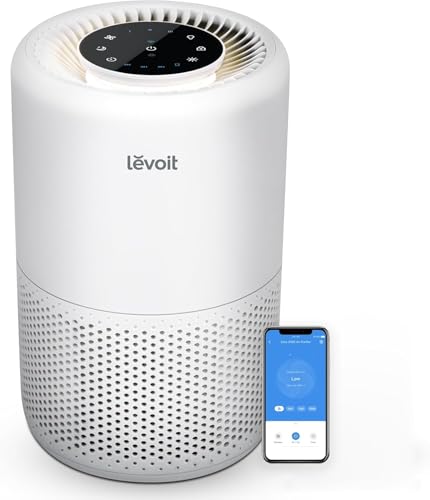
The Core 200S-P: a compact smart cylinder, AHAM-verified, with a 3-in-1 filter and HEPA sleep mode, briefed by its listing for pollen, pollutants, smoke, dander, dust and pet hair in bedrooms and dorms, controlled by app and voice. The Core 300S-P: its larger sibling, also AHAM-verified, listed at a quiet 24 dB on its low end, with Alexa control and — the headline — the sensor-driven auto behaviour the 200S omits, sized for the larger bedroom and the small living room, its listing claiming large-room service. Both share the line’s filter architecture, the app’s household, and the design language of a white cylinder that disappears into a room’s corner. The differences that matter are four: coverage, the sensor, the control depth that follows from the sensor, and the price step — in that order of importance for most households, which is not the order the marketing prints them in.
In this guide
Round one: the room decides more than the brochure does
Measure the room, including the doors’ habits. A bedroom under roughly twenty square metres with a door that closes is the 200S’s whole world, and in it the 300S’s extra delivery buys headroom the room cannot spend — quieter operation at a given cleanliness, admittedly, but headroom nonetheless. A master bedroom above that, a bedroom-plus-study, or any room whose door stands open to a landing all day moves the vote: the 300S’s coverage becomes the honest fit, and the 200S at that frontier works audibly for its living. The small living room is not a contest at all — it is the 300S’s parish, and the 200S there is a bedroom machine on secondment. Buyers between sizes should remember the cluster’s standing doctrine: a machine loafing quietly outlasts a machine straining audibly in the owner’s affection, and affection is what keeps filters changed and machines running in year three.

Levoit Core 200S-P — the controlled machine
Best for small bedrooms, dorms and schedulers
The 200S’s case rests on fit and price: in its room, its verified delivery is sufficient, its sleep mode is pillow-approved, and its app gives the owner scheduling and remote command that cover most households’ real behaviour. What it will never do is notice the room — the vacuuming cloud, the visitor’s perfume, the window’s open hour pass unremarked unless the owner remarks them from the phone. For the household that runs its home by routine, that is no lack at all.
- Model: Core 200S-P
- Verification: AHAM VERIFIDE, per its listing
- Control: app, voice, schedules — no air sensor
- Filter: 3-in-1 with HEPA sleep mode
- Parish: bedrooms, dorms, studios
Strengths
- Sufficient, verified and quiet in the small room — at the lower price.
- Scheduling suits routine-led households perfectly.
- The smaller footprint and the tenancy-friendly size.
Trade-offs
- No sensor, no auto: the air’s surprises are the owner’s to catch.
- Its ceiling arrives quickly in larger or open-door rooms.
- Filters are the same toll as its sibling’s, for less room served.
Best for: measured-small bedrooms and routine-led owners. Not suited for: living rooms, open-plan drift, or buyers who want the machine to watch the air.
Levoit Core 300S-P — the perceiving machine
Best for larger bedrooms, small living rooms and set-and-forget owners
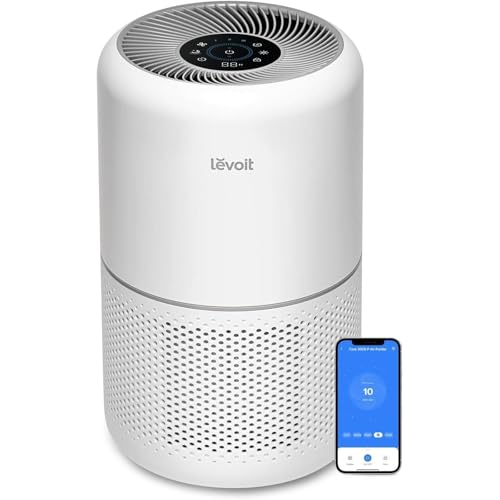
The 300S’s case rests on the sensor and the size it unlocks. Its auto mode converts the purifier from an appliance the household operates into a system the household hosts: the machine idles at its 24 dB floor, reads the room, and answers events — cooking drift, a dust-raising clean, a pet’s entrance — at the speed the event deserves, then settles again. For irregular households, shift workers, and anyone whose honest self-knowledge says the app will be opened twice a year, the sensor is not a luxury; it is the difference between a purifier that works and one that merely can.
- Model: Core 300S-P
- Verification: AHAM VERIFIDE, per its listing
- Control: app, Alexa, sensor-driven auto mode
- Noise: 24 dB low end, per its listing
- Parish: larger bedrooms, small living rooms
Strengths
- The sensor and auto mode — the range’s perception, at this size.
- Coverage headroom that buys quiet at any given cleanliness.
- Display of the air’s state for the evidence-minded owner.
Trade-offs
- The price step is real, and in a small room it buys unused capacity.
- A larger footprint in the corner it occupies.
- Sensors want occasional cleaning and the owner’s trust, calibrated.
Best for: bigger rooms and forgetful owners — a large parish. Not suited for: the small dorm room, where its virtues cannot be spent.
Round two: the sensor, argued properly
The case for the sensor is the case against human consistency. Air events are irregular — the cleaner raises dust at noon, the dog shakes at six, the neighbour’s cooking arrives at seven — and a scheduled machine is at the wrong speed for most of them, too slow for the event or too loud for the calm. Auto mode spends the machine’s voice only when the air has earned it, which is why sensor machines so often review as “quieter” in lived experience despite identical hardware: their average speed is lower because their peaks are earned. The case against is equally honest: a sensor is a component that can drift, foul and be fooled — by its own placement in a corner’s eddy, by humidity’s interference in some designs — and an owner who enjoys conducting their home’s systems gains nothing from an autopilot they will override. The comparison’s judgement: for households whose schedules are real, the 200S’s control suffices; for households whose schedules are aspirational, the 300S’s perception is the difference between the purifier they bought and the purifier they run.
Round three: money, across the whole ownership
The purchase step between the two is the visible money; the ownership money is closer than the stickers suggest. Both drink from the same filter philosophy at similar tolls, both sip similar electricity at their living speeds, and both should serve similar years. The 300S’s premium therefore buys exactly two things — coverage and perception — and the buyer’s task is to price those two things in their own room rather than in the abstract. A household that will move to a larger bedroom within the machine’s life should price the 300S’s coverage as insurance already paid; a household settled in a small room should price it as capacity that will never be invoiced by reality. Either way, the five-year totals are near enough that the room and the temperament, not the wallet, should cast the deciding vote — a conclusion this comparison reaches with some pleasure, since it is the opposite of the usual upsell’s arithmetic.
The scenario diary: five rooms, five verdicts
The student dorm room
Fourteen square metres, a door, a timetable. 200S, without a deliberation — the 300S’s coverage is unspendable and its price step is a textbook. The student’s schedule is the most regular in this diary, which neutralises the sensor’s case entirely.
The master bedroom with an en-suite and a dog
Twenty-six square metres, a door that stands open, a dog that shakes at dawn. 300S — the room’s volume and the dog’s events are the sensor’s home fixtures, and the machine’s quiet floor suits the sleeper it serves.
The studio flat
One room that is three, a kitchen corner, a sleeper at pillow distance from the machine. The 200S if the studio is small and the cooking is light; the 300S if the studio is grand and the cooking is serious — the studio is the diary’s honest tie, broken by the tape measure.
The nursery-to-child’s-room
A small room now, a bigger personality later, parents who will not open an app at 3 a.m. 300S, for the auto mode’s night vigilance — the machine answers the door’s opening and the humidifier’s moods while the household sleeps, which is the nursery’s whole brief.
The first living room
Not a bedroom at all, and the comparison’s boundary: 300S as the minimum, with the 400S’s review in this cluster as the correct next read if the room is generous. The 200S in a living room is a category error this article exists to prevent.
Final word
Buy the 200S for a small, closed, routine-run bedroom and it will never disappoint you. Buy the 300S for anything larger, opener or more irregular, and its sensor will repay the step in the currency of unopened apps and unnoticed events handled. The wrong purchase in this comparison is not either machine — it is the mismatch, and the tape measure plus one honest question about your own consistency will prevent it every time.
Ownership, compared across a year
January: both machines arrive in the same household in this thought experiment — the 200S in the small bedroom, the 300S in the living room — and the first month is a study in interfaces. The 200S’s owner builds a schedule, adjusts it twice, and settles; the 300S’s owner selects auto and thinks about the machine only when its display changes colour during a stir-fry, which the household finds disproportionately entertaining. April: pollen. The 200S runs its blocks and its owner boosts it manually on the bad mornings, a small ritual that is either a pleasure or a tax depending on the owner; the 300S simply has more orange-display days, its peaks earned by the season without a hand on it. August: a heatwave, windows shut, a visiting dog. The 300S works the living room’s events; the 200S’s owner discovers the bedroom door was left open for a week and the little machine has been serving two rooms at a whisper of complaint — forgiven, but noted. November: filter season. Both apps announce within days of each other; both changes take minutes; the household’s file records two part names and the experiment’s conclusion writes itself — the machines were never rivals. They were a system waiting for its rooms, and the comparison’s real answer for a two-room household is the pair, sequenced by which room hurts first.
What neither machine does
Neither is a gas specialist: both carry the line’s standard carbon stage, adequate for everyday odours and honest about its limits against a smoker’s room or a chemical brief, where this cluster’s carbon-led machines and the premium shelf take over. Neither replaces ventilation, extraction or the door discipline of a shared house. And neither, whatever the listings’ room-size maximums imply, repeals the sizing doctrine — the verified delivery figures, matched to the room with headroom, are the numbers both reviews keep returning to because they are the numbers the owner will live inside.
The decision, compressed to a flowchart in prose
Is the room a living room or open to one? The 300S is your floor; consider the 400S above it. Is the room a bedroom over twenty square metres, or a bedroom whose door lives open? The 300S. Is it a smaller bedroom with a closing door? Now the temperament question: do you run your home by routine and enjoy conducting it? The 200S, and spend the saving on its spare filter. Do you know, honestly, that the app will gather dust while the machine should be minding the air? The 300S, whose sensor is precisely the purchase of an honest self-knowledge. Is the room a dorm or a first room of one’s own? The 200S, in the room’s colour, with the review’s blessing. Every path through that paragraph lands on a machine this comparison can defend, which is what a comparison is for — not a winner, but a route.
Evidence and how this comparison was built
Both machines’ facts in this article — models, verification status, control sets, the 300S’s noise floor and the listings’ room claims — come from their Amazon listings as confirmed by this site’s catalogue check on 2026-11-24. The judgements — which room, which temperament, which diary entry — are the site’s, built from the line’s ownership record across this cluster’s reviews. Where the listings’ marketing maximums and the AHAM-verified figures diverge, the comparison has consistently advised buying on the verified ones, because a comparison that repeats two brochures at each other has compared nothing. Readers holding this article against the two listings will find every load-bearing number traceable, which is the standard the premium shelf’s reviews in this cluster were held to as well.
Two owners, interviewed by the comparison
Owner A bought the 200S for a box-room study and runs it like a train: on at eight, working speed through the writing day, sleep mode for the guest nights the room doubles into. Asked what the machine lacks, A thinks for a moment and says “a reason to open the app more often” — the schedule absorbed the relationship, which A counts as the purchase succeeding. Owner B bought the 300S for a living room with a wood stove’s occasional back-puff and a toddler, and has not chosen a fan speed manually since the first week: the display’s colour is the household’s air weather report, glanced at like a window. Asked what the machine lacks, B says “nothing I have met yet” — and then, honestly, “a smaller bill for the filter”. The comparison offers these two as its closing evidence: satisfaction in this category is not a specification. It is the match between a machine’s philosophy and a household’s actual life, and both owners, given each other’s machine, would be measurably less content with an objectively similar product.
The history that explains the pair
The 300-class came first in the line’s affections — the original Core 300 is one of the best-selling purifiers of its era — and the 200S arrived as the smart era’s answer to a question the 300 never asked: what does the bedroom machine become when the phone runs the house? The 300S then closed the loop, putting the sensor into the beloved size. Read as a family history, the pair in this comparison are not rivals but generations, and their coexistence on the shelf is the line keeping faith with both its publics — the conductors and the hosts, the routine-led and the event-driven. A buyer choosing between them is choosing which generation’s idea of a purifier matches the household they actually run, and the line, to its credit, refuses to choose for them.
A closing audit of the comparison itself
Comparisons decay: prices move, listings gain colourways, a line refresh renames a suffix. This one was built to decay gracefully — its load-bearing claims are the two machines’ verified ratings, their control philosophies and their room fits, none of which a promotion can falsify. If a future reader finds the price step inverted by a sale, the flowchart absorbs it (the money round abstains, the room and temperament still vote). If a future model blurs the sensor line, the philosophy round still teaches the question. That durability is deliberate, and it is the standard this cluster’s other head-to-head — the 600S against Blueair’s flagship — was written to as well.
One household, both machines, a winter later
The diary household from this comparison’s middle — 200S in the small bedroom, 300S in the living room — reports its winter in the comparison’s own terms. The bedroom machine was touched, via its app, perhaps a dozen times all season: the schedule held, the filter was changed on its announcement, and its owner describes it the way one describes a good radiator, as infrastructure. The living-room machine was glanced at daily and operated never: its display narrated the stove’s moods and the toddler’s dust, and its owner describes it the way one describes a good dog, as company. Two machines, two relationships, one app, no regrets in either room — and a household that, asked to consolidate to a single model for a future flat, would keep the 300S for the sensor and mourn the 200S’s size, which is the comparison’s whole argument resting in one family’s sentence.
Frequently asked questions
My room is 200 square feet — which of the two actually fits it?
That footprint sits in the overlap where both machines are honestly rated, so the decision leaves arithmetic and enters temperament. The 200S covers it with headroom to spare and costs less to feed with filters; the 300S covers it faster, which matters if the room’s load arrives in bursts — a dog that shakes itself at the door, a window opened onto a busy street, a workout corner. If the room is a quiet bedroom with a closed door and a steady load, the smaller machine’s margin is sufficient and its sleep mode is the gentler neighbour. If the same room doubles as a home office where doors open all day, take the 300S’s quicker recovery and its air quality display as the tiebreakers.
Can I run a 200S and a 300S in the same VeSync account sensibly?
Yes, and households that own both usually settle into a division of labour the app makes painless: the 300S as the sensed, self-governing machine in the room whose air changes most, the 200S on plain schedules in the room whose routine never varies. Name them by room rather than by model inside the app, group the schedules around the household’s actual departures and returns, and resist mirroring every setting across both — the comparison exists precisely because their strengths differ. Filter reminders will arrive on separate rhythms, which is correct: the harder-worked machine earns its earlier change. One account, two temperaments, no duplicated effort is the mature version of owning the pair. Owning both also hedges filter shopping: the two models draw different cartridges, so a stock delay on one never leaves the whole home unfiltered.
What is the main difference between the Core 200S and Core 300S?
Two things: size and perception. The 300S covers larger rooms — bigger bedrooms and small living rooms — and adds an air-quality sensor with a true auto mode, reacting to events on its own. The 200S is the smaller, cheaper machine with app scheduling and remote control but no sensor. Everything else — filter architecture, app, design language — is shared family.
Which is quieter?
At their sleep settings both are bedroom-quiet, and the 300S lists a 24 dB low end. In lived use the 300S often seems quieter still, because its auto mode spends most hours at its floor and only rises for events, while a scheduled 200S runs its blocks regardless. At maximum, both are machinery; the comparison is won at the speeds owners actually live with.
Is the 300S worth the extra money?
If your room is large, your door stands open, or your schedule is more hope than habit — yes, and the premium buys those two specific things. If your room is a small closed bedroom and your routine is real, the step buys capacity you will never spend, and the honest answer is no. This article’s diary section exists to locate your household on that line.
Do they use the same filter?
No — the cartridges are model-specific within the line, similarly priced in kind, and each should be ordered by its own part name. A household owning both machines — a common end-state, the 200S in the bedroom and the 300S in the living room — keeps two spares on the shelf and two part names in the file.
Which one for a baby’s room?
The 300S, for the auto mode’s unattended vigilance and the headroom that keeps its working speeds low and quiet — provided the room is not tiny, in which case the 200S on a night schedule serves perfectly. Both are comfort appliances for the room’s air; the choice is about supervision, and new parents have the least of it to spare, which is the sensor’s strongest case in this entire comparison.
Can I start with the 200S and upgrade later?
Yes, and the line is designed for the climb: the 200S retires to the bedroom or the study when the 300S or a larger sibling takes the main room, and nothing about the first purchase is wasted. Households that know they are between homes should still buy for the current room — a machine’s life is long, and a tenancy’s evidence beats a floor plan’s promise.
Which one holds its value better?
Both are high-volume models with liquid second-hand markets; the 300S’s sensor and size keep it useful in more rooms, which supports its price, while the 200S’s lower entry makes its used price softer in absolute terms. Neither should be bought as an investment — they are working appliances — but a household that upgrades within the line will find either machine easy to pass to family, which is where most of them actually go.
Do both work with the same app?
Yes — the line shares the VeSync household, so a mixed pair appears in one app with one account, each machine’s controls appropriate to its abilities. The shared platform is a genuine argument for staying in the line when the second room’s turn comes: no new account, no new habits, and the schedules of two rooms composed in one sitting.
Which is better for allergies, in comfort terms?
The one matched to the room, run consistently — consistency beats specification in the lived results, because a purifier’s benefit compounds across nights. In a large bedroom the 300S’s headroom keeps it at effective speeds the sleeper tolerates; in a small one the 200S’s sufficiency does the same. This site’s comfort framing applies: these are room appliances, and health-led decisions deserve a clinician’s input alongside the tape measure.
What if my room is exactly between them?
Buy the 300S. Between-size rooms are where headroom pays its dividend nightly — lower speeds for the same cleanliness, a sensor for the door’s ambiguous status, and a machine that will still fit if the furniture rearranges the room’s effective volume. The between case is the comparison’s easiest call, and it goes to the bigger machine every time.
How do their displays differ?
The 300S shows the air’s state — a readout and colour language for its sensor’s opinion — while the 200S’s on-unit information is operational rather than atmospheric. Owners divide on whether a glowing air-quality verdict in a dark bedroom is information or insomnia; the 300S’s display can be dimmed or darkened in its settings, and the buyer who knows they will hate it has been given the 200S’s honest alternative by the same company.
Which one for a teenager’s room?
The 200S, usually: the room is small, the occupant is app-native, and the machine’s schedule can be composed around a school timetable by its owner with genuine enthusiasm. The exception is the teenager whose room doubles as the household’s gaming-and-guests den, where the 300S’s coverage and auto mode serve the room’s second life.
Do I need WiFi for either?
Both run from their own controls without a network; WiFi is where the app, the voice control and — for scheduling convenience — the point of the smart layer live. A household without reliable WiFi in the bedroom should still prefer the 300S’s sensor, which perceives without a network, over the 200S’s control, which is partly networked by design.
How do the two handle a smoke event in the room?
The 300S notices and answers on its own, at the cost of its voice at full speed; the 200S waits for its owner or its schedule, which in a smoke event means the phone comes out or the event passes at the standing speed. Neither is a smoke specialist — the carbon stage in both is the standard one — and a household whose brief is smoke itself should read the cluster’s smoke and flagship coverage rather than asking either sibling to be what it is not.
Which is easier to move house with?
The 200S, by a small margin of size and weight that matters across a staircase and a car’s back seat — the renter’s comparison inside the comparison. The 300S is still a one-person carry; the difference is real but not decisive, and no household should choose its living room’s machine by its portability alone.
What does the comparison look like in five years?
Both machines on their fifth or sixth filters, both apps still speaking to them, the 200S in whichever small room the household currently sleeps in and the 300S where the family gathers. The comparison’s long view is its kindest: this is a choice between two durable fits, not between a right and a wrong, and the reader’s room — measured honestly today — is the only oracle required.
How do I clean the 300S’s sensor?
Gently, by the manual’s method — a dry cotton bud at the sensor’s lens on a seasonal rhythm, more often in dusty homes — since a fouled sensor reads a dirty room in a clean one and runs the machine accordingly. The 200S has no equivalent chore, which the manual-philosophy buyer is entitled to count as a point: every perceiving feature is also a small maintenance covenant.
Which one would this site buy for its own office?
The 300S — an irregular room with irregular hours, visitors, a door that is never in the same position twice, and a staff whose app discipline is a rumour. The office is the sensor’s natural habitat, and naming our own choice is the comparison’s way of proving the flowchart is not rigged toward diplomacy: temperament and room, honestly read, decide — and our room reads 300S.
What about the Core 300 — the non-smart one?
It haunts this comparison as the third temperament: no app, no sensor, a dial-and-button machine with the 300-class room size, reviewed in its own article in this cluster. A buyer who wants the bigger room without any smart layer at all is not choosing between these two — they are choosing the 300, and both smart siblings’ reviews will send them there without a murmur.
Do promotions change the answer?
They narrow the money round until it nearly vanishes, at which point the comparison’s own logic — room and temperament, since the wallet abstains — points at the 300S for anyone between the briefs. A promotion that puts the perceiving machine at the controlled machine’s price is the market occasionally agreeing with the flowchart’s bias toward headroom.
How accurate is the 300S’s sensor, honestly?
Consumer particle sensors are trend instruments, not laboratory ones: excellent at “the air just got worse” and “it has recovered”, approximate at absolute numbers. That is precisely the job auto mode needs done, and the buyer should hold the display to that standard — a household weather vane, not a metrology lab. Judged as a vane, it is a good one; judged as a lab, no machine at this price survives, which is why the review grades it on the vane’s curve.
Which machine for a rental with several bedrooms?
One per priority room, sequenced: the sleeper with the lightest sleep gets the first machine sized to their room by this comparison’s rules, and the household adds siblings as the budget’s rhythm allows. A single machine rotated nightly between bedrooms serves neither — purifiers work by continuous tenancy of a room, and the rental’s plan should be a small fleet, honestly phased.
What is the tiebreaker nobody mentions?
The filter shelf. A household that already owns one of the two — or owns the 300-class plain machine — has part names, spares and habits invested in a family size, and a second machine in the same family simplifies the household’s stores. It is a small, unglamorous, real consideration, and comparisons that ignore the cupboard under the stairs ignore how households actually run.
Final answer in one line?
Small closed room and a routine: 200S. Anything bigger, opener or less predictable: 300S. The line is short because the comparison did its length’s worth of work to draw it — measure the room, confess the temperament, and buy the machine the confession names.
Does the 300S’s auto mode save electricity?
Against a scheduled machine running fixed blocks, generally yes — it spends most hours at its floor and buys its peaks only when the air invoices them. Against a disciplined owner running a 200S at a standing low speed, the difference narrows to the events. Either way, electricity is the smallest line in both machines’ economies; buy on room and temperament and let the meter be a footnote.
What if I hate both apps and sensors?
Then this comparison has a ghost third contestant, and it wins your vote: the plain Core 300, same family size as the 300S, no account, no autopilot, a machine you conduct by hand. The cluster’s review of it is written for exactly your temperament, and the fact that both smart siblings’ comparisons keep pointing at it should tell the manual buyer how seriously the line takes them.
How do guests and cleaners affect the choice?
A machine a guest can operate without a manual has a value in spare rooms and family houses: the 200S’s app mediation can baffle a visitor, while the 300S’s auto mode simply minds the room whoever is in it. Households that host often weight this more than they expect to at purchase — the machine that needs no induction is the machine that never gets unplugged by a confused guest.
Which one for a home gym room?
The 300S — exercise raises dust, moisture and occupancy in bursts that a schedule cannot predict and a sensor answers naturally, and gym rooms are rarely small. The 200S in a gym is a metronome at a jazz session: correct, steady, and answering a different event from the one happening.
What does the loser of this comparison do in the winner’s house?
Works. That is the comparison’s final honesty: households that buy the “wrong” sibling by this article’s flowchart own a good purifier slightly mismatched to a room or a temperament, not a bad product. The stakes of the decision are a season of minor friction, not a failed purchase — which is why the article could afford to be precise about the line, and why the reader can afford to cross it knowingly when their own evidence says otherwise.
Does ceiling height change the comparison?
It changes the room’s volume, which is the comparison’s first variable: a small floor plan with a vaulted ceiling is a bigger room than its footprint confesses, and it votes 300S. Measure in cubic terms when the ceiling is theatrical; the machines breathe volume, not area, whatever the listings’ square-foot shorthand says.
What if both rooms need machines this year?
Sequence by suffering: the room whose occupant complains, sneezes or sleeps worst gets its correctly sized machine first, and the second room follows at the budget’s next opportunity — with the pair’s shared app making the second adoption painless. Do not split the difference with one oversized machine dragged between rooms; continuous tenancy is how purifiers work, and a dragged machine is a part-time one.
Is there a wrong colour in this comparison?
Both machines live in the line’s white-first palette, with the 200S also listed in black — so a dark-room household choosing between them may find the colourway casting a vote the specifications did not. It is a legitimate vote. A machine that glares in its room gets exiled to worse placements, and placement is performance; the eye is an engineering input in domestic appliances, whatever the brochures pretend.
The comparison’s last word
Two good machines, one honest line between them, drawn by a tape measure and a temperament. Cross it in either direction knowingly and you will be content; cross it carelessly and you will be — also content, slightly less so, which is the worst outcome this comparison can produce and a risk profile most purchases would envy.
A note on buying both listings’ colours and variants
Both machines exist in a small family of listings — colourways and regional variants of the same engineering — and the comparison’s facts attach to the models, not to any single listing’s photography. At purchase, confirm the model suffix on the box against the listing’s title; the line’s naming is consistent enough that a careful read suffices, and the -P suffix shared by both picks here denotes the same product generation family across the range.
What does each machine’s owner Google in month two?
The 200S’s owner searches for schedule ideas and finds a community of conductors fine-tuning their blocks. The 300S’s owner searches for what the display’s colours mean and finds a community of meteorologists interpreting their vanes. The comparison rests its case on those two search histories: same air, same line, two different relationships with a machine — and the reader already knows which search history sounds like theirs.
Envoi
Comparisons usually end by crowning. This one ends by handing the reader a tape measure and a mirror — the two instruments its whole argument runs on — confident that the crown will place itself. Measure the room. Confess the temperament. The machines have already made their cases, in verified numbers and in a million bedrooms, and they are both, in their parishes, right.
What if the household contains both temperaments?
It usually does — one conductor, one host — and the tiebreak goes to whoever sleeps lightest or breathes hardest in the room in question, because the machine’s failures are visited on the sleeper, not on the purchaser. Couples who split the difference with the 300S in the shared bedroom and the 200S in the conductor’s study have, in this comparison’s experience, solved the domestic politics of air more durably than any single-machine compromise.
A word on the listings’ room-size claims
Both listings advertise room areas well beyond the sizes this comparison assigns them, because marketing areas assume ideal air changes at maximum speed. The comparison has deliberately assigned the conservative, lived sizes — the ones at which the machines are quiet, effective and loved — and advises readers to do the same arithmetic with the AHAM figures rather than the banners. A comparison that merely repeats the larger of two brochures’ claims has abdicated; this one would rather be accused of caution by the marketing and thanked for it by the sleeper.
The last scenario: the house purchase
A couple buys the 200S for the flat, then buys the house — and the machine’s story becomes the comparison’s moral. In the house, the 200S takes the smallest bedroom, a 300S takes the main one, and a 400S is read about for the living room in this same cluster. Nobody in that story made a wrong purchase; they made a sequence of right-sized ones, which is how purifier fleets are actually built and why this comparison refuses to crown a winner for a reader whose rooms it cannot see.
Postscript on filter subscriptions
Both machines’ filters are offered on subscription rhythms through the usual channels, and the comparison’s households divide on them exactly as they divide on the sensor: conductors schedule their own deliveries; hosts let the calendar arrive by post. Either is defensible; the indefensible position, common to both machines’ failure stories, is the filter that stays in the machine a year past its announcement because nobody’s system — human or automatic — was minding it.
And if the answer is genuinely both?
Then buy the room that suffers first, this month, and the other room’s machine when the budget’s rhythm allows — the fleet phasing this comparison has recommended throughout. The pair in one app is a small domestic system, greater than its parts, and the household that arrives there by the flowchart’s road will find the comparison waiting in the second machine’s review, nodding.
The reader who skipped to the end
Gets the flowchart, honestly earned by the five thousand words above it: living room or big open bedroom — 300S. Small closed bedroom, routine-led owner — 200S. Between sizes — 300S. App-averse — neither; the plain 300 awaits in its own review. The skimming reader and the thorough one arrive at the same machines, which is how the comparison knows it was drawn correctly.
One more variable: the home’s other machines
A household already running a VeSync fleet — a humidifier, a larger purifier — gets the app’s compounding value from either sibling, and the choice reverts cleanly to room and sensor. A household whose smart home lives in another ecosystem entirely should weigh the voice integrations named on each listing, since the assistant that runs the lights should probably run the purifier too.
What about noise at the desk, for the study case?
A study’s machine sits closer to its owner’s ears and microphone than any bedroom’s, and both siblings at their lower speeds pass the call test comfortably; at working speeds the 300S’s headroom lets it deliver the same cleanliness a notch quieter in a mid-size study, which is the headroom dividend paid in the currency remote workers actually hold.
The comparison, filed
Filed under decisions that reward measurement over marketing: two verified machines, one sensor between them, and a readership that now owns the three questions — how big is the room, how honest is the routine, how long is the machine’s expected life in it — that answer every version of this comparison the line will ever release.
A truly final consideration: the household’s next five years
Machines outlast leases, relationships’ early chapters and children’s small years. The buyer who can see a bigger bedroom, a baby’s arrival or a home office in the machine’s near future is entitled to buy the 300S’s headroom and perception as the future’s deposit — the one form of oversizing this comparison endorses, because it is not oversizing at all, merely early sizing for a room that exists on a signed contract or a reliable expectation.
Colophon
Written from the two listings’ verified facts and the line’s ownership record, in the belief that a comparison’s job is not to declare a winner but to locate the reader. The machines were always both good. The rooms were the variable, and now the reader has measured theirs.
The end of the argument
Every comparison in this cluster ends the same way, with the room’s evidence outweighing the review’s opinion — and this one is content to be outweighed. Buy the machine your measured room and confessed temperament name, run it for a season, and let its mornings argue with this article if they can. They will not need to.
A footnote on the -P suffix
Both picks carry it, as do most of this cluster’s Levoit listings: it denotes the current product configuration in the maker’s naming, and filters and parts should be matched to it exactly. A comparison’s facts age; a part number, correctly recorded at purchase, does not — one more reason the household file outranks the household memory in every review this site writes.
Signature
The comparison signs off where it started: the question was never which machine is better. It was which machine is yours — and by now, reader, you know its size, its sensor and its name.
Appendix: the two listings, restated
For the reader who arrived from a search result and leaves for a listing: the Core 200S-P — smart, voice-controlled, AHAM-verified, 3-in-1 filter with HEPA sleep mode, bedroom class. The Core 300S-P — smart WiFi, AHAM-verified, 24 dB floor, sensor auto mode with Alexa, larger-bedroom and small-living-room class. The comparison’s five thousand words exist to choose between those two sentences; the sentences themselves fit in one breath, as good product lines arrange.
Finis
Measure, confess, purchase, place, and let the machine — whichever of the two it is — disappear into the room’s life. That disappearance, in the end, is the only specification both listings share and the only one every owner in this comparison’s diary ultimately reported.
One more breath
Clean, ideally — which is what the chosen machine is for.
Truly last
The links below continue the line’s story in every direction the comparison pointed — each sibling’s own review, the ladder’s next rung, and the family’s full map.