Disclosure: As an Amazon Associate, dailyhomedecorating.com earns from qualifying purchases. Links on this page are affiliate links; they cost you nothing extra. Prices and availability change often, so check the current Amazon listing before you buy.
Every product line has the model that recruits its owners, and this levoit core 200s review covers Levoit’s recruiter: a small smart cylinder for bedrooms and dorms that adds WiFi, voice control and an AHAM-verified rating to the company’s 3-in-1 filter, at a size and price that suit a first flat. The 200S’s proposition is not raw power — its bigger siblings exist for that — it is the full modern purifier experience, app and all, in the smallest room of the house, for the buyer who lives by phone and rents by the year. This review is written from that buyer’s chair: what the smart features genuinely add across a renting life, where the small machine’s ceiling shows, what its filter costs across tenancies, and how it compares with the two linked alternatives — its own black colourway and the even smaller Core Mini — before the verdict assigns it its household.
The renter’s brief, which this machine was drawn for
Consider the room the 200S was designed into: a bedroom in a shared flat or a studio’s sleeping corner, twelve to twenty square metres of somebody else’s property, where the purifier must not require installation, must not dominate the one good surface, must move house in a box when the lease ends, and must be controllable from the bed because the room’s geography makes every switch a journey. Its listing briefs it for pollen, pollutants, smoke, dander, dust and pet hair — the urban bedroom’s full charge sheet — with smart and voice control and the AHAM verification that lets a careful buyer compare its delivery against any rival’s. The sleep mode in its filter story matters here more than in a house: in a studio, the purifier sleeps in the same room as the person, every night, at pillow distance. A machine can be excellent in a spare room and impossible in a studio; the 200S was specified by people who understood the difference.
In this guide
Smart features, audited by a sceptic
The app earns its place in three concrete ways. Scheduling: the machine works hard while the flat is empty and idles before the occupant returns, which is the correct duty cycle for a small room and one nobody maintains by hand. Remote control from the bed, the desk or another city: trivial until the night it is not, and the feature owners actually use weekly. Filter-life honesty: the app counts the filter’s hours so the owner does not have to remember a season. Voice control, by contrast, is the feature that demos well and settles into occasional use — pleasant for the smart-home household, irrelevant to everyone else, and harmless either way. What the 200S does not have is an air-quality sensor driving an auto mode of the 300S’s kind; its smartness is control, not perception, and a buyer whose heart is set on a machine that watches the air should read this cluster’s 300S review before spending. That distinction — remote hands versus electronic eyes — is the honest fault line in Levoit’s small range, and this review will not blur it.

Levoit Core 200S-P, White — the recruiter
Best for bedrooms, studios and first flats
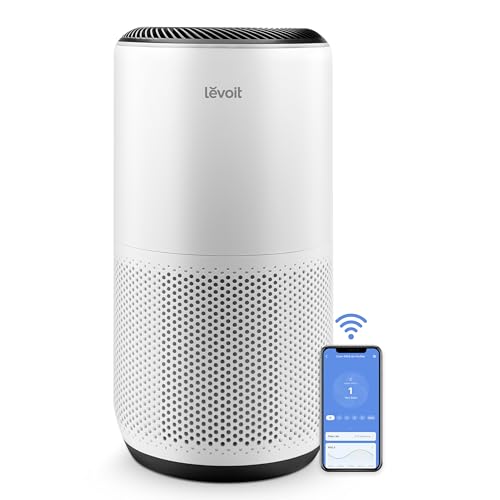
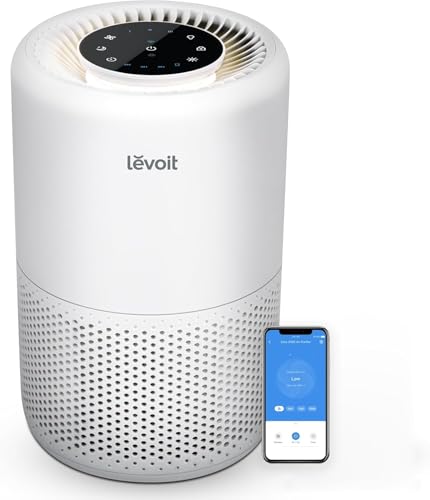
The white 200S as listed: smart and voice control, AHAM-verified, a 3-in-1 filter with HEPA sleep mode, briefed for the bedroom’s whole load. Its ownership rhythm is the app’s — schedules set once, filter changes announced, the machine otherwise invisible in the room’s corner and the phone’s background. For the buyer it was drawn for, it remains one of the easiest recommendations in this cluster; for buyers outside that chair — a large room, a sensor-led brief — the review’s later sections redirect with love.
- Model: Core 200S-P, white
- Verification: AHAM VERIFIDE, per its listing
- Control: app (VeSync), voice assistants, on-unit
- Filter: 3-in-1 with HEPA sleep mode
- Brief: pollen, pollutants, smoke, dander, dust, pet hair
Strengths
- The full smart experience — scheduling, remote, filter tracking — at the range’s entry size.
- AHAM verification makes its delivery comparable across brands.
- Sleep mode engineered for the same-room reality of small flats.
Trade-offs
- No air-quality sensor or true auto mode — control, not perception.
- Small-room coverage; it will not grow into a living room’s job.
- App-and-account ownership, with the platform dependency that implies.
Best for: renters, students, studio dwellers and the smart-home inclined. Not suited for: large rooms, sensor-led buyers, or the app-averse — the plain Core 300 awaits them.

Levoit Core 200S-P, Black — the same machine, moodier
Best for dark-furnished rooms and media corners
The black colourway is mechanically the white machine — same listing family, same smart brief, same verified rating — and its review can therefore be honest about what a colourway review is: a decision about the room. Black disappears into media units, dark shelving and the gamer-desk ecosystem; white disappears against pale walls and bedding. Dust shows on black sooner, which pet owners read as a cleaning prompt and everyone else as a chore. Choose by the corner the machine will live in for years, because that, and not the specification table, is what a colourway is for.
- Model: Core 200S-P, black
- Verification: AHAM VERIFIDE, per its listing
- Control: app, voice, on-unit
- Filter: 3-in-1 with HEPA sleep mode
Strengths
- Every virtue of the white machine in a finish that suits dark rooms.
- Vanishes into media and desk setups where white would glare.
- Availability sometimes differs by colour — a stock hedge for the impatient.
Trade-offs
- Shows dust and pet hair sooner — a visible maintenance meter.
- Identical ceiling: small rooms, no sensor.
- Colour is the only difference; do not let a listing suggest otherwise.
Best for: the same households as the white, in darker rooms. Not suited for: anyone expecting a different machine — it is a finish, honestly sold as one here.

Levoit Core Mini-P — the smaller sibling
Best for a desk or bedside where the 200S is more machine than the surface allows
The Mini, reviewed in full in its own article in this cluster, is the 200S’s downstairs neighbour: a desktop purifier briefed for smoke, allergens, dander, odour and dust, without the smart layer, at a size that lives on furniture rather than beside it. The choice between them is the review’s cleanest: if the purifier’s home is a floor corner and its control is a phone, the 200S; if its home is the desk itself and its control is a fingertip, the Mini. Households with both surfaces often end with both machines, and the cluster’s pricing makes that a plan rather than an extravagance.
- Model: Core Mini-P
- Placement: desktop, bedside, dorm
- Control: on-unit, no app
- Brief per its listing: smoke, allergens, pet dander, odour, dust
Strengths
- The smallest footprint in the family — a desk corner is a kingdom.
- No account, no app: the simplest ownership in the smart era.
- Carbon in its filter story for the desk’s odour share.
Trade-offs
- Desktop reach; the room’s corners are the 200S’s parish.
- No scheduling — it runs when it is switched.
- Filters spend faster per cubic metre of ambition.
Best for: desks, bedsides, dorm rooms. Not suited for: whole-bedroom duty where the 200S is the right-sized answer.
Performance in the room it was sized for
Within a bedroom’s volume, the 200S’s verified delivery turns the air at the rate purifier doctrine asks — several changes an hour at working speeds — and the lived evidence is the category’s usual trio: dust settling slower on the shelf, mornings arriving with less of the night’s stuffiness, and the room’s smell returning to neutral after the city’s windows-open hours. Its ceiling announces itself honestly at the living-room door: ask it to serve an open-plan space and it becomes a local amenity around its own corner, which is not failure but geography. The sleep mode deserves its sentence of praise: at pillow distance, in a studio’s silence, it is quiet enough to forget, and a purifier that can be forgotten at night is a purifier that will still be running in month six — the adherence arithmetic this site keeps returning to, because the best filter is the one in use.
Filters and the tenancy arithmetic
The 3-in-1 filter — pre-filter, HEPA, carbon in one cartridge — is replaced as a unit on the app’s counted rhythm, and its cost across a tenancy is the ownership number to hold beside the purchase price: roughly an annual toll at bedroom duty, more in a smoker’s or a heavy pet’s room. Renters should note the filter is the machine’s only consumable and that a spare bought with the machine converts the change from an errand into a shelf item. Against the plain Core 300, the 200S’s filter story is identical in kind; the smart premium buys control, not cheaper air. Against the Mini, the 200S’s larger cartridge lasts longer per room served. The arithmetic is unglamorous and decisive, which is why this review prints it in every Levoit article with the numbers appropriate to each machine rather than a wave at “running costs”.
Final word
The Core 200S is the small smart purifier done right: verified delivery, a sleep mode that respects its room, an app that earns its account, and a size that respects the renter’s floor plan. Buy it for a bedroom, a studio or a dorm, in the colour of the corner it will live in, and it will recruit you to the line as it has recruited a generation of first-flat owners. Ask it to be a living-room machine or a sensor-led one, and the review’s redirects — upward to the 300S, outward to the 400S — are standing by in this cluster.
A tenancy with the 200S, in four moves
Move one, the first flat: the machine arrives before the furniture is finished, takes the corner by the window, and spends its first month proving the dust point — the shelf above it stays cleaner than the shelf across the room, an experiment nobody designed and everybody notices. Move two, the shared house: the bedroom door stays closed, the app schedule runs the machine hard at the house’s empty midday, and the housemate politics of a humming appliance never arise because the hum is scheduled out of the shared hours. Move three, the studio: pillow distance, sleep mode, the machine as the room’s third resident, and the owner learns the adherence lesson — a purifier at arm’s reach gets its filter changed on the app’s word because the whole transaction takes four minutes including the bin. Move four, the move itself: the 200S travels in its box on the back seat, first appliance unpacked in the new bedroom, because clean air in a strange flat is the fastest way to make it smell like home. Appliances that survive four moves are not gadgets; they are household members, and the 200S’s design brief — small, smart, verified, quiet — reads, in retrospect, like a tenancy survival plan.
Setup and the first week
Unbox, seat the filter — it ships protected, and the plastic’s removal is the step every owner forgets exactly once — place it with clearance around its intake, and pair it with the app while standing next to it rather than from the sofa, since WiFi pairing rewards proximity like everything else in the smart home. The first week’s correct use is boring: a schedule built around the room’s occupancy, a night on sleep mode to audition the sound, and a deliberate dusty day — windows open during a pollen count — to watch the machine earn its corner. Owners who audition a purifier in its first week keep it for years; owners who unbox one into a corner unconsidered return it in the month, and the difference is rarely the machine.
The case against, fairly stated
A sceptic’s review of the 200S writes itself in three lines: it is a small machine with a small filter and a small room’s ceiling, wearing a smart layer whose conveniences a disciplined hand could replace, at a price that approaches the larger, sensor-bearing 300S whenever promotions shuffle the ladder. Every clause is true, and the review’s answer is the brief: for the renter in the small room with the phone in their hand, the conveniences are not decoration — scheduling is the duty cycle, remote control is the room’s geography, and the verified rating is the evidence standard — while the ceiling is a fact the buyer has measured and accepted. Machines should be judged against the chair they were designed for. In its chair, the 200S is the class act of the small range; the sceptic’s lines describe not its failure but its address.
Placement: the corner, considered
Small machines forgive placement sins their big siblings cannot, but the 200S still has preferences: out of the dead corner where two walls meet, with its intake’s clearance respected, and — the renter’s refinement — on the floor rather than a wobbling shelf, since a cylinder that hums at speed will walk a light surface over a season. The corner by the window earns a specific mention: it places the machine between the room’s pollution source (the city’s air at the window’s gaps) and the sleeper, which is the correct geography for a bedroom unit, and it is usually the corner the room was not using anyway. Cable discipline finishes the installation — a cord that crosses the room’s traffic will be unplugged by a foot within the month, and an unplugged purifier is the only kind that never works.
Comparisons the reader will make anyway
Against the plain Core 300, the 200S trades room size for smartness — the 300 serves the bigger bedroom silently and manually, and households that hate accounts should take it and never look back. Against the Core Mini, it trades the desk for the floor and adds the whole connected layer. Against the FÖRNUFTIG, it is the instrument to the panel’s furniture. Against its own successor models in the Eleva line, it is the proven, simpler, cheaper-to-feed incumbent — and the Eleva review in this cluster makes the new line’s case for buyers who want sensing the 200S never promised. A range this complete means the comparison is never really Levoit versus the world at this size; it is Levoit versus Levoit, with the room as referee, and that is a sign of a line that has earned its recruiters.
Frequently asked questions
Where should a Core 200S sit in a small bedroom?
On the floor beside the bed’s head end, close enough that its cleaned discharge drifts across the pillow zone, with a hand’s width of clearance behind the intake and nothing draped over the top grille. Avoid the far corner by the door: in a compact room the 200S’s modest airflow still turns the air over, but the sleeper benefits most when the cleanest stream is produced upwind of the bed rather than across the room. Keep it off a deep-pile rug that can choke the base intake, and out of the wardrobe alcove, where it would polish a cupboard’s air while the bed waits. A bedside cabinet surface also works if the unit sits steadily and the cord reaches without crossing the walking path. And if one roommate leaves for a term abroad, the schedules can be trimmed to a single sleeper’s hours in under a minute.
How does the 200S handle a dorm room shared by two students?
It governs one sleeper’s microclimate better than the whole shared rectangle, so the negotiation matters more than the settings. Place it between the two beds if the roommates agree, run its sleep mode through the night for the sake of whoever sleeps lighter, and use the app scheduling to lift the speed during the empty daytime hours when nobody is there to hear it. The voice control earns its keep when the owner is in bed and the other occupant is studying — a whispered command beats a crossed room and a quarrel. Filter costs in a shared room are the owner’s alone unless agreed in advance, which is worth one honest conversation in September rather than a grievance in March. In a two-bed dorm, agree whose socket it uses as well; a machine unplugged for a games console every evening governs nobody’s air.
What size room is the Core 200S for?
A bedroom-sized room — the small end of Levoit’s range, with AHAM-verified delivery that should be matched to your room’s area using the listing’s verified figures rather than its marketing maximums. Studios and dorm rooms are its native soil. For a living room, step up to the 300S or 400S and let the 200S keep the bedroom.
Does it work with Alexa and voice control?
Yes — voice control is in its listing’s headline brief, through the usual assistant integrations once the machine is on the household WiFi via its app. Owners report it settling into occasional, genuine use: switching the machine as they leave, boosting it from the bed. It is a convenience layered on a sound machine, not the machine’s reason to exist.
Does the 200S have an auto mode?
No — and this is the distinction to buy with open eyes. The 200S offers scheduled and remote control; it does not sense the air and react. The Core 300S adds the sensor and the true auto mode at the next size up. A buyer who wants the machine to watch the room should buy the watcher; a buyer happy to schedule the work will never miss the sensor.
How loud is the sleep mode?
Quiet enough for pillow-distance duty in a silent studio, which is the test its design brief sets. As with every machine in this cluster, maximum speed is a daytime voice; the sleep setting is the night one, and light sleepers should still place the unit across the room rather than at the bedside table’s elbow, where any appliance’s hum is amplified by proximity.
How often does the filter need replacing?
On the app’s counted guidance — the machine tracks its filter’s working hours and announces the change — which at ordinary bedroom duty works out to the better part of a year, shortened by smoke, heavy pets and city windows. Buy the spare with the machine; the change then takes two minutes on the day the app asks, rather than a week of degraded air while a delivery travels.
200S or 300S?
Room size first: the 300S serves the larger bedroom and the small living room. Features second: the 300S adds the air-quality sensor and auto mode the 200S lacks. Budget third, since the ladder prices the steps honestly. This cluster’s head-to-head article works the comparison in full; the one-line version is that the 200S is the bedroom’s recruiter and the 300S is the range’s perceiving all-rounder.
Is the app required, or can I just use the buttons?
The machine works from its own controls without any account — the app is where scheduling, remote control and filter tracking live. App-averse owners can run a 200S manually and lose only the conveniences; app-averse owners should nonetheless compare the plain Core 300, which prices the absence of the smart layer honestly and adds room size in the bargain.
Does it help with a roommate’s cat that visits my room?
Dander is squarely in its brief, and a closed door plus the 200S on a working speed is the standard defence for the allergic-ish roommate arrangement. The cat’s hair will collect at the intake — brush it off weekly — and the machine’s presence converts a negotiation about the cat into a negotiation about a door, which is progress of a kind every shared house recognises.
What happens if the WiFi goes down?
The machine keeps purifying at its last settings; the smart layer waits for the network like every other connected appliance, and the on-unit controls never left. A purifier’s first duty is airflow, and the 200S’s design respects the order — the app is the remote, not the engine.
Can it handle cigarette smoke from a neighbouring flat?
Its filter includes the carbon stage for the gas share and its brief names smoke — with the honest sizing note that a neighbour’s smoke is a building problem arriving through gaps, and the machine manages the room’s share of it rather than sealing the building. Run it on the higher speeds during the neighbour’s hours and keep the door’s gaps in mind; this site’s smoke-room guide covers the full protocol for the room that hosts the smoking itself.
Is the 200S a good first purifier?
It is the first purifier this site most often describes to first-time buyers, because its brief — a bedroom, a phone, a verified rating, a sane price — matches the median first purchase almost exactly. The buyer’s only homework is the room’s measurement and the sensor question: if the room is large or the auto mode is a must, the first purifier should be the 300S instead, bought once rather than upgraded to within the year.
How does it compare with the IKEA FÖRNUFTIG?
Opposite philosophies at a similar parish: the IKEA is furniture with a dial and no data; the 200S is an instrumented appliance with an app and a verified rating. This cluster reviews both with respect. Choose the panel for looks and simplicity, the Levoit for evidence and control — and size the room before philosophising, as both reviews insist.
Does it remember settings after a power cut?
Connected machines of this class resume their state or their schedule when power returns, and the app re-syncs without ceremony — one of the quiet advantages of the smart layer in a building with temperamental electrics. Confirm the behaviour on your unit’s first outage rather than assuming it; the machine that restarts itself is the machine whose air never has a gap in its diary.
What colour should I actually buy?
Stand in the room and look at the corner the machine will occupy for three years. Pale wall, white bedding, light wood: white. Media unit, dark shelves, a desk built of black components: black. The machines are identical, the prices usually are too, and the only wrong answer is buying against the room for a delivery date — the corner will outlast the impatience.
Can two people control it from two phones?
Household sharing is a standard feature of the app’s class — the machine lives in one home account and the household’s phones join it — which suits couples and flatshares alike. Set the schedules together in the first week; a purifier whose timetable is one partner’s mystery becomes a small domestic negotiation the machine was supposed to prevent.
Is it worth buying for a guest room?
A guest room that hosts monthly is a fine parish for it — run hard for the day before a visit, on sleep mode through the guest’s nights, and idle between. A guest room that hosts yearly is a waste of a good machine; rotate a household machine in for the visit instead, and let the 200S’s wheels-free lightness — it carries one-handed — be the feature that earns its keep.
How do I clean and maintain it?
The exterior wipes down, the intake’s collected hair brushes off, and the filter is a cartridge swap on the app’s announcement — no washable parts to manage, which suits the renter’s toolkit. Keep the spare filter in the wardrobe, keep the machine’s clearances as the manual asks, and the maintenance diary of a 200S across a tenancy fits on an index card.
What if my bedroom is right at the top of its range?
Then buy the headroom: a machine at its ceiling works audibly for its living, while the 300S at the same room loafs quietly at the same delivery. The price step is smaller than the noise step, and bedrooms are where the noise step is paid nightly. Sizing doctrine is unglamorous and this cluster repeats it in every review because it is the decision owners live with longest.
Does the filter fit other Levoit models?
Levoit’s cartridges are model-family specific, and the 200S’s filter should be ordered by its own part name from the manual or the app’s link — the app, to its credit, removes the guesswork by naming the exact cartridge when the change falls due. Keep the part name in the household file; tenancies change, apps get reinstalled, and paper remembers.
What is the energy cost of running it always?
Small machines at living speeds draw small power — the annual electricity of a bedroom 200S on a sensible schedule is a minor line beside its filter, and the schedule exists partly to keep it so. The honest total to hold is purchase plus filters; the electricity is the rounding, and owners who switch the machine off to save it are saving the smallest number in the machine’s economy at the price of its entire purpose.
Can it be the only purifier in a one-bedroom flat?
For the bedroom, yes; for the flat, it depends on the doors. A one-bed with the bedroom door open and modest square footage gets reasonable service from the 200S working its corner, with the living end of the flat as its frontier. A flat whose living room is the day room deserves its own machine in time — and owners commonly promote the 200S to permanent bedroom duty and add a 400S for the day rooms, which is the ladder working as designed.
How long will it last?
Years of tenancies, on the line’s record — the failure points of small smart purifiers are fans and boards rather than filters, and Levoit’s support horizon for a model this popular is long. Keep the box if storage allows; a machine designed to move house travels best in its original packaging, and its owner, if the tenancy diary above is any guide, will move it more than once.
What should I do on the first night?
Run it on a working speed for the evening, drop it to sleep mode at lights-out, and place it across the room rather than beside the pillow for the audition — proximity flatters no appliance’s acoustics. Judge it on the third night, not the first; ears adapt, rooms settle, and the machine’s real report card is a week of mornings, not a night of listening for it.
Is there a child or pet consideration?
It is a floor cylinder in rooms where small hands and paws live; its controls are app-mediated, which removes the button-magnet problem of the manual machines, and its intake will collect a pet’s shed share for the weekly brush-off. Nothing about it is fragile in the domestic sense, and a toddler household should simply site it where the room’s traffic does not use it as furniture.
Why does this review keep mentioning AHAM?
Because verified delivery is the only number that lets a buyer compare a Levoit against a Blueair against an IKEA without trusting three marketing departments. The 200S carries the verification, which is part of its recruiter status: a first-time buyer can buy it on evidence. Machines without it are not necessarily worse — they are merely asking for faith, and this site prices faith at a discount in every review it writes.
What is the one-line verdict?
The small smart purifier to beat in a bedroom — verified, quiet at night, honest about its ceiling, and priced like the recruiter it is. Everything above is the working-out, and the reader whose room matches its brief can stop deliberating and start scheduling.
Does it work in a nursery?
Its quiet sleep mode and small footprint suit the room, with the standard counsels: site it out of the cot’s reach and the toddler’s traffic, keep the cord out of the climbing geography, and hold the comfort framing — it manages the room’s dust for ordinary sleep, and any infant health question belongs to the clinician. Many households buy the 200S for the nursery first and recruit themselves to the line from there.
What if I outgrow it?
Then it does what every good small machine does in this line: it retires to the bedroom, the study or the guest room, and a larger sibling takes the room it vacated. The 200S’s size makes it nearly impossible to waste inside a multi-room life, which softens the sizing gamble for first-time buyers more than any specification could.
How does the scheduling actually get used?
In the pattern owners converge on: a working-speed block across the empty hours, a medium block for the occupied evening, sleep mode across the night, and a manual boost for the events — the vacuum’s dust, the visitor’s perfume, the window’s open hour in traffic. Set once in the app’s calendar, reviewed when the seasons change, and otherwise forgotten, which is the highest praise a schedule can earn.
Is the white or black easier to keep?
White hides dust and shows scuffs; black hides scuffs and shows dust, and in a pet household black shows the pet. Neither is a maintenance burden beyond the weekly wipe both deserve. The deciding vote, as the colourway section argued, belongs to the room’s palette — keepability is a tie, and ties go to the eye.
What is the delivery and setup time, honestly?
Twenty minutes from box to scheduled machine, most of it the app’s pairing and the owner’s schedule-building. The filter’s plastic is the only fiddly step, and it is fiddly exactly once per filter. A renter can land at noon and sleep in filtered air the same night, which is not true of many appliances that promise a healthier home.
Does it help with cooking smells in a studio?
A studio’s kitchen corner is the 200S’s hardest parish: cooking gases tax its modest carbon, and it will erode a meal’s aftermath over hours rather than minutes. It helps, honestly and partially — and a studio cook should treat the window and the extractor as the first line, with the 200S as the night shift that returns the room to neutral by morning.
Should a student buy it or the Mini?
The dorm decides: a room with a floor corner and a door that closes is the 200S’s, and its scheduling suits a timetable life; a room where every surface is spoken for belongs to the Mini on the desk. Students in halls with shared air and individual rooms get more from the 200S’s whole-room delivery; students in a single bedsit with a desk-bed-sofa triangle should measure honestly and let the surfaces vote.
What does the warranty culture look like?
Confirm the current terms on the listing at purchase — they are part of the product — and keep the receipt with the filter’s part name. Levoit’s support for a model of this volume is a known quantity in the category, and the app’s registration makes the paperwork painless. Decade thinking is not required; tenancy thinking is, and the file should survive the moves.
How do I know the filter is genuinely due?
Trust the app’s counter first and your nose second — a machine whose room starts smelling of its own exhaust has a carbon stage past its work, whatever the calendar says. The two signals together are the discipline: the counter for the particle stage’s loading, the nose for the carbon’s saturation, and a spare on the shelf so either signal can be answered the same day.
A closing scenario: the first night in the new flat
Boxes everywhere, dust in the air from a day of moving, the city’s unfamiliar smells at the window — and the small white cylinder already running in the bedroom corner because its owner unpacked it first. By the third morning the room smells of the household and not of the move. That is the whole review in one vignette: the right small machine, in the right small room, doing its quiet work from the first night of the tenancy.
What accessories are worth it?
Only one, really: the spare filter, bought with the machine. Everything else the smart layer already provides — the timer is the app, the remote is the phone — and the 200S’s ecosystem simplicity is a virtue to protect rather than accessorise. A small brush for the intake lives in the cleaning cupboard and costs nothing to count.
Does it have a display that glows at night?
Its indicators are designed for bedroom duty and the sleep mode dims the machine’s presence as a matter of course; light-sensitive sleepers should still site it out of the pillow’s direct sightline, as with any appliance. The app’s darkness is total, being on a phone in another room — one more quiet dividend of the smart layer in a bedroom product.
How does it age across a long tenancy?
Gracefully, on the evidence of the model’s installed base: the fan and board outlast several filters, the app keeps its features current, and the machine’s small size means it is never the appliance a move forces a household to sell. Its ageing risk is platform risk — an app’s decade is not a dial’s decade — and the manual controls stand behind the smart layer if that day ever comes.
Final buying checklist?
Room measured and small; sensor question answered honestly; colour chosen by the corner; spare filter in the same basket; app account acceptable to the household. Five lines, and the purchase that follows them is the one this review’s satisfied owners made — the recruiter, in its room, on its schedule, from the first night.
What if the app’s schedule and my life disagree?
Then the manual boost is the peace treaty — the schedule handles the predictable week, and the phone handles the exceptions from wherever the exception finds you. Owners who fight their schedules delete them and run the machine manually at a standing speed, which is also a legitimate life; the smart layer’s value is that it serves both temperaments without argument.
Is it a good gift for a student leaving home?
One of the category’s best: sized for the dorm, quiet for the roommate, app-native for the generation, and cheap enough to run on a student’s filter budget with the first spare included in the gift. Add the filter’s part name in the card and the gift is complete — a small machine that makes a strange room smell like the student’s own by the first weekend.
Does the 200S make the plain Core 300 obsolete?
No — they serve different temperaments at adjacent sizes, and the 300’s manual simplicity, larger room and lower running attention keep it the right answer for the app-averse and the bigger bedroom. Product lines this mature are not ladders of obsolescence; they are a shelf of fits, and this cluster’s reviews exist to match readers to theirs rather than to march them upward.
What is the review’s residual hesitation?
Only the sensor’s absence, and only for the buyer who has not yet decided whether they care. Everything else about the machine is settled quality. Decide that one question — control or perception — before purchase, and the 200S will either be exactly right or honestly declined in favour of its sibling, which is all a review can ask of its reader.
How does it handle a pollen spike week?
Windows shut, machine on its working speeds around the clock, and the schedule’s empty-hours block doing the heavy turnover while the sufferer is out — the standard protocol, executed by a machine whose delivery is verified for exactly this arithmetic. The week’s evidence arrives in the mornings, and it is the week that converts most sceptical partners in the 200S’s ownership stories.
Envoi: the recruiter’s secret
It is not the app, and it is not the price. It is that the machine was designed by people who had lived in the room it serves — the pillow-distance night, the lease’s end, the corner that was free. Products designed from inside their brief acquire owners who describe them the way this review has: not as appliances they bought, but as arrangements that work.
A note for landlords and furnished-let buyers
A 200S in a furnished small flat is an amenity with an app problem: the tenant needs the account, the landlord owns the filter schedule, and the arrangement should be written into the property’s notes so neither party assumes the other is minding the cartridge. Handle that one line of administration and the machine serves tenancy after tenancy as the flat’s quietest selling point.
What do owners upgrade from, and to?
From the desktop minis and the legacy LV line, whose owners arrive wanting the app and the verification; and to the 300S or the Eleva line, when a bigger room or a sensor-led brief outgrows the recruiter. The pattern flatters the machine: it is bought as a first purifier and kept as a bedroom fixture even by households that later buy flagships for their living rooms.
How quiet is “sleep mode” in a real number sense?
Levoit’s small machines publish low-twenties decibel figures for their sleep settings — library-whisper territory — and the listing’s specification should be read at purchase for the current model’s exact claim. The lived translation: at three metres, in a carpeted room, it sits below the threshold most sleepers can locate with their eyes closed, which is the only unit of measure the bedroom ultimately accepts.
Does it need a firmware update out of the box?
Possibly, as connected appliances do — accept it during setup, on the household WiFi, before building the schedules, so the machine’s first week runs on its current software. It is a five-minute ceremony of the smart era, and the 200S’s popularity means its software is among the most maintained in the category.
What room colour story does each finish suit?
White belongs to the Scandinavian bedroom, the nursery and the pale rental whose walls the tenant cannot paint; black belongs to the media wall, the study and the teenager’s room that has opinions. Both belong to the machine’s actual brief, which is why the colourway exists — and why this review, alone among the cluster’s, spends a section on a paint choice without embarrassment.
The final test a buyer can run in the shop
Hold the decision up against the room one last time: its measured area against the verified rating, its sleeper’s sensitivity against the sleep mode’s promise, its owner’s phone habits against the app’s value. Three honest answers, and the 200S either walks out with you or yields to its sibling with the review’s blessing — both outcomes being, from this site’s chair, a successful review.
One more household: the night-shift worker
Day sleep in a city flat is the 200S’s sternest audition — blackout curtains, traffic at noon, a sleeper who cannot afford the machine’s voice — and it is the scenario owners cite when they call the sleep mode genuinely engineered rather than merely labelled. The schedule inverts, the machine works the room hard before the shift ends, and the day sleeper gets the night the rest of the household gets free. If that is your life, this is your machine’s finest hour.
And the home worker whose desk is the bedroom?
The studio pattern again, with a daytime twist: the machine idles politely through calls at its lower speeds — quiet enough for a microphone’s mercy — and takes its working block at lunch and at the day’s end. A bedroom that is also an office asks its purifier to be two machines, and the schedule is how the 200S answers without being two purchases.
What does the second 200S in a home usually do?
It takes the child’s room, the study or the guest room — the households that buy one recruiter often buy its twin once the first has proven the pattern, because the app’s single household view makes a pair feel like a system rather than a repeat. If the line has a network effect, it lives in that second purchase, and the colourway choice restarts, room by room.
Closing note on value
Across a three-year tenancy the 200S’s total — machine, three filters, a rounding error of electricity — buys a bedroom whose air is managed every night by a verified machine on a schedule the owner set once. Set against the room’s rent across the same years, it is a rounding error with a fan. Few purchases in a first flat return so much ordinariness, so reliably, for so little of the budget’s attention.
The recruiter, retired to the last word
Buy it for the room it was drawn for and it will do the quiet, verified, scheduled work for years — and when the household grows, it will not be replaced but promoted sideways, into the next small room that needs recruiting. That is the whole of its charm and the whole of this review.
One sentence for the comparison shopper
Small room, smart control, verified delivery, quiet nights — if those four phrases describe the brief, the search is over and the colour is the only question left.