Disclosure: As an Amazon Associate, dailyhomedecorating.com earns from qualifying purchases. Links on this page are affiliate links; they cost you nothing extra. Prices and availability change often, so check the current Amazon listing before you buy.
Put helix vs casper into any mattress forum and you will get two loyal camps talking past each other, because the two brands are not really selling the same bed. Helix builds a whole shelf of hybrids, each one tuned for a named sleeper type, and expects you to pick your firmness the way you would pick a shoe size. Casper built its name on one foam bed meant to suit almost everybody, then widened into hybrids and a cooling line while keeping the lineup deliberately short. So the honest question is not which logo wins. It is whether you want a menu or a default, a coil bed chosen for your sleep position or a simpler foam bed with a long track record.
This comparison walks through the models you can actually buy through the listings linked below: the Helix Midnight, the Helix Midnight Luxe, the Helix Dusk, the Casper Original in its hybrid and all-foam versions, and the Casper Snow. Every one of them is a bed-in-a-box that arrives compressed, expands on your frame, and is judged here on the same criteria: how it is built, who it supports well, how it handles a restless partner, how warm it sleeps, what the edges feel like when you sit to tie your shoes, and what owning it looks like after the first month.
Helix vs Casper: the quick verdict before the details
If you sleep on your side and want a bed chosen for that job, the Helix side of this comparison is the easier recommendation. The Midnight and Midnight Luxe are medium-feel hybrids built around pressure relief at the shoulder and hip, with coils underneath so you do not feel parked in a foam trench. If you are a back or stomach sleeper, Helix answers with the Dusk, a firmer-feeling hybrid from the same family. Casper’s strength is different: the Original foam and hybrid beds are the low-decision option, a medium to medium-firm feel that has been sold in huge numbers, with zoned foam that firms up under the hips. Hot sleepers comparing within Casper should look at the Snow, which adds cooling bands to that familiar foam recipe.
Neither brand is the right answer for everyone. Very heavy sleepers, people who want a traditional innerspring bounce, and anyone who strongly prefers a plush pillow-top feel will find both lineups a little restrained. But for the broad middle of shoppers — couples in a queen size, side and back sleepers between roughly 130 and 230 pounds, guest rooms that need to please whoever visits — the six beds below cover the realistic shortlist.
How the two lineups are built, layer by layer
Helix’s core range is hybrid-only. A Helix bed pairs foam comfort layers with a pocketed-coil support core, a steel perimeter for edge support, and a choice of cover, including a cooling cover option on some models. The naming is a map: Midnight is the side-sleeper model, Dusk is the back-and-stomach model, Sunset is the softest, Twilight the firmest, and the Luxe versions add a pillow top, zoned coils and taller profiles. That means a helix vs casper decision starts with a question Casper never asks you: how do you actually sleep?
Casper’s construction story runs the other way. The Original began as an all-foam bed — a breathable perforated foam on top, a memory-foam transition layer with zoned support (softer under the shoulders, firmer under the hips and lower back), and a durable foam base. The hybrid version swaps the base for springs, which adds bounce, airflow and edge support while keeping the same comfort layers. The Snow keeps the foam approach and adds HeatDelete bands, strips of phase-change material meant to pull heat away from the surface during the first part of the night. Where Helix differentiates by sleeper type, Casper differentiates by temperature and by whether you want springs.
Where to buy, and what to check on the listing
Both brands sell direct and through Amazon, and the listings linked in this article are the Amazon ones. Whichever route you take, read the size and model name twice before ordering: Helix sells a standard and a Luxe version of most models, and Casper sells the Original as foam and hybrid, and a queen in either brand is a very different delivery from a king. Check the trial and warranty terms on the listing at the time you buy, because those policies are set by the seller and can differ by channel. Links in this article say “Check price on Amazon” because mattress pricing moves with promotions constantly; a number printed here would be stale within weeks.
In this guide
Quick picks: the six beds in this comparison
- Helix Midnight — the side-sleeper hybrid and the default Helix recommendation for couples who share a bed and sleep in different positions.
- Helix Midnight Luxe — the same side-sleeper idea with a pillow top, taller profile and zoned coil support for people who want a more finished, hotel-style surface.
- Helix Dusk — the firmer hybrid for back and stomach sleepers who found the Midnight too yielding.
- Casper Original Hybrid — the balanced Casper: foam comfort with springs underneath for airflow and easier movement.
- Casper Original Foam — the classic all-foam Casper feel, medium-firm, quiet and motion-absorbing.
- Casper Snow — Casper’s cooling build for sleepers who run warm and like a foam bed’s hug but not its heat.
How these picks were chosen
Every bed in this article was confirmed through the site’s own Amazon Creators API lookup before it was linked, so the model names and listings below are the ones actually for sale, not remembered versions from older model years. Both brands revise their beds periodically — Casper has changed the Original’s layer stack more than once, and Helix has refreshed its covers and coil units — so this comparison sticks to construction themes that hold across recent versions and flags the points you should confirm on the current listing. Feel descriptions use the brands’ own positioning plus the broad consensus of how these builds behave: medium hybrids with memory-foam comfort layers sleep the way this article describes, whoever sells them.

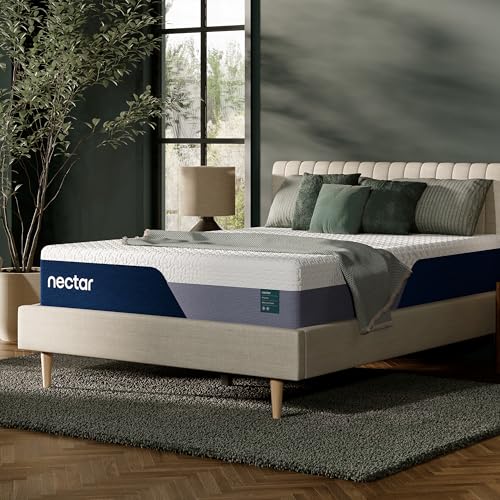
Helix Midnight — the side sleeper’s hybrid
Best all-round Helix for most couples
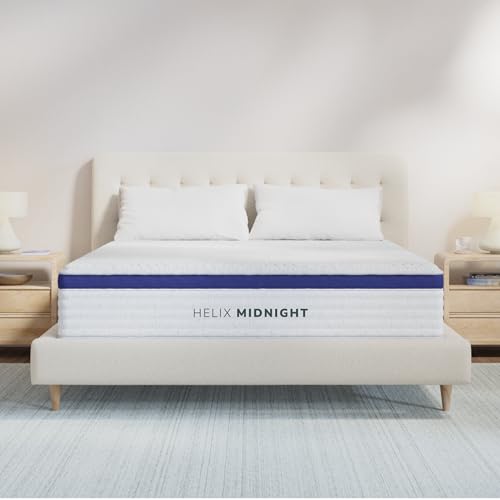
The Midnight is the bed Helix points its quiz-takers toward most often, and the reason is simple: side sleeping is the most common position, and it is the position foam-only beds handle worst when they are too firm and hybrid beds handle worst when they are too bouncy. The Midnight threads that needle with memory-foam comfort layers over pocketed coils, at a medium feel that lets a shoulder sink without dropping the hips into a hammock.
- Construction: memory foam comfort layers over pocketed coils
- Feel: medium, aimed at side sleepers
- Profile: standard Helix height, taller than most all-foam beds
- Size referenced: queen
Strengths
- Shoulder and hip pressure relief is the design brief, and the medium foam-over-coil stack delivers it without the stuck feeling of deep memory foam.
- Coils give the bed a responsive surface, so changing position at 3 a.m. does not feel like climbing out of a mould.
- Edge support from the reinforced perimeter makes the full width of a queen usable, which matters when two people and a dog negotiate territory.
Trade-offs
- Strict stomach sleepers may find the medium feel lets the midsection dip more than they like; that is what the Dusk exists for.
- It sleeps cooler than all-foam but is not a cold bed; very hot sleepers should consider the cooling cover option.
- The hybrid build is heavier than a foam bed of the same size, so rotations are a two-person job.
Best for: side sleepers and combination sleepers in the average weight range, especially couples. Not suited for: dedicated stomach sleepers who want a firm, flat platform, or anyone shopping for the softest possible pillow-top feel.

Helix Midnight Luxe — the upgraded side-sleeper bed
Best for side sleepers who want a pillow-top finish
The Luxe version of the Midnight adds the things the standard bed leaves out: a plush pillow top that changes the first impression from “supportive foam” to something closer to a hotel bed, a taller overall profile, and a zoned coil unit that firms the centre third where your hips rest. If you liked the Midnight’s brief but your current bed is a traditional pillow-top and plain foam tops feel unfinished to you, this is the Helix you are actually shopping for.
- Construction: pillow top over foam comfort layers and zoned pocketed coils
- Feel: medium with a plusher first touch than the standard Midnight
- Profile: tallest of the Helix beds in this comparison
- Size referenced: queen
Strengths
- The pillow top spreads pressure over a wider area, which side sleepers with sharp hip bones tend to notice in the first week.
- Zoned coils keep the lumbar region from sagging while the shoulder zone stays forgiving — the combination the standard model approximates with foam alone.
- The taller profile pairs better with deep-pocket sheets and taller bed frames, and looks less like a slab on a platform.
Trade-offs
- It sits at a higher tier in the Helix range, and the upgrades are about surface feel and zoning rather than a different sleep position.
- The pillow top softens the first impression, which back sleepers who like a taut surface may read as too much give.
- Deep-pocket sheets are effectively required; standard sheets can pop off the corners.
Best for: side sleepers upgrading from a pillow-top innerspring, and couples who want the most finished version of the Midnight idea. Not suited for: shoppers who prefer a low-profile bed, or anyone who disliked pillow tops in the past for sleeping warm.

Helix Dusk — the firmer hybrid for backs and stomachs
Best Helix for back and stomach sleepers
Every helix vs casper discussion needs the Dusk, because it is the clearest proof that Helix’s menu approach does something Casper’s short lineup cannot: it gives back and stomach sleepers their own bed instead of a compromise. The Dusk uses a firmer foam recipe over the same hybrid coil base, so the pelvis stays level with the shoulders instead of sinking below them — the alignment detail that decides whether a stomach sleeper wakes up comfortable or with an arched, aching lower back.
- Construction: firmer foam comfort layers over pocketed coils
- Feel: medium-firm, aimed at back and stomach sleepers
- Profile: standard Helix height
- Size referenced: queen
Strengths
- Hip support is the headline: the firmer surface keeps the heaviest part of the body from over-rotating the spine in prone and supine positions.
- The coil base keeps the bed easy to move on, which back sleepers who shift between back and side during the night appreciate.
- It shares the Midnight’s reinforced edges, so sitting on the side to dress feels stable rather than collapsing.
Trade-offs
- Pure side sleepers under about 150 pounds may find the shoulder pressure builds up; the bed is honest about not being built for them.
- The firmer feel reads as “hard” in the first nights if you are coming from a soft foam bed — give it the adjustment period.
- Like the Midnight, it is a substantial bed to move or rotate.
Best for: back and stomach sleepers, and couples where one partner’s back pain has veto power over mattress choice. Not suited for: lightweight dedicated side sleepers, who should stay with the Midnight side of the family.

Casper Original Hybrid — foam comfort, spring support
Best Casper for couples who move around
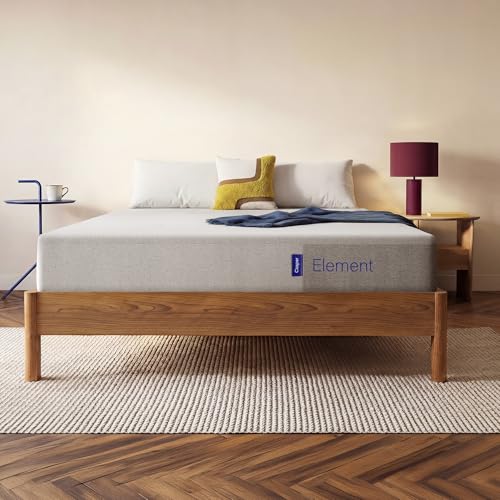
The hybrid version of the Casper Original keeps the brand’s signature zoned foam — softer where shoulders land, firmer through the middle — and puts it on springs instead of a foam base. That one change alters the personality of the bed more than any other in this comparison: it breathes better, bounces a little, holds its edges, and makes the surface easier to cross, while the top still feels recognisably Casper, a balanced medium that offends almost nobody.
- Construction: perforated foam and zoned memory foam over springs
- Feel: medium, the most middle-of-the-road in this article
- Profile: 11 inches in the queen listing referenced here
- Size referenced: queen
Strengths
- Zoned support is a real ergonomic idea, not marketing garnish: firmer foam under the hips counters the natural tendency of the pelvis to sink deepest.
- Springs answer the two classic foam complaints — sleeping warm and feeling stuck — in one move.
- The balanced feel makes it the safest guest-room and first-apartment choice here, because it asks the least adaptation from whoever sleeps on it.
Trade-offs
- Side sleepers with pronounced shoulder pressure may still want more dedicated cushioning than a one-feel-fits-all design provides.
- Motion isolation is good for a hybrid but not the equal of the all-foam version; very light sleepers partnered with restless ones should note that.
- The medium feel is a compromise by design, so shoppers at either firmness extreme will find a Helix tuned closer to them.
Best for: combination sleepers, couples with different positions, and anyone who wants one safe recommendation. Not suited for: shoppers who already know they need a distinctly soft or distinctly firm bed.

Casper Original Foam — the classic all-foam Casper
Best for motion isolation and a quiet bed
The all-foam Original is the bed that made Casper famous, and its virtues are the virtues of foam done carefully: nothing creaks, nothing bounces, a partner’s exit at dawn barely registers, and the zoned transition layer keeps the lower back from hammocking. In its current form the foam version is rated a touch firmer than the hybrid, which suits back sleepers and lighter stomach sleepers who found older foam beds too enveloping.
- Construction: perforated comfort foam, zoned memory foam, foam support base
- Feel: medium-firm in the current listing
- Profile: 11 inches in the queen listing referenced here
- Size referenced: queen
Strengths
- Motion isolation leads this comparison; foam absorbs movement that coils transmit, however well pocketed.
- The bed is silent — no springs, no squeak — which light sleepers and parents of nearby infants value more than any spec.
- It is the lightest bed here to unbox, position and rotate, a genuine advantage in walk-up apartments.
Trade-offs
- Edges compress under a seated adult, so the usable sleep surface of a queen feels slightly smaller than the hybrids’.
- Foam holds more warmth than coils; the perforated top layer helps, but hot sleepers should compare the Snow before settling.
- Changing position takes more effort than on a springy surface, which some combination sleepers find tiring by morning.
Best for: light sleepers sharing a bed, back sleepers who like a calm, quiet surface, and anyone in a smaller bedroom where a lighter bed is easier to handle. Not suited for: hot sleepers who have already rejected foam once, or couples who sit on the edge of the bed every morning.

Casper Snow — Casper’s answer for hot sleepers
Best Casper for people who sleep warm
The Snow takes the Casper foam formula and attacks its known weakness. HeatDelete bands — strips of phase-change material laid across the bed where body heat concentrates — absorb warmth during the first hours of the night, and the foam stack is tuned to feel cool to the first touch rather than neutral. The result is still a foam bed, with foam’s motion isolation and quietness, but one that delays the 2 a.m. kick-the-duvet-off moment that drives hot sleepers to hybrids.
- Construction: cooling foam layers with HeatDelete phase-change bands
- Feel: medium-firm, cool to the touch at first contact
- Profile: comparable to the Original line
- Size referenced: queen
Strengths
- The cooling is built into the bed rather than added by a pad you must wash and re-fit, so it is there every night without effort.
- It keeps the all-foam virtues — silence and motion absorption — that the hybrid trades away for bounce.
- For couples split on temperature, it narrows the gap without forcing the cooler partner under extra blankets in summer.
Trade-offs
- Phase-change cooling is strongest in the first part of the night; by the small hours the bed reaches equilibrium like any other, so expectations should be “cooler”, not “cold”.
- It sits above the Original in Casper’s range, so you are paying specifically for temperature performance.
- Foam edges still compress, the same caveat as the Original foam.
Best for: hot sleepers who otherwise like foam, and couples arguing over the thermostat. Not suited for: cold sleepers, who may find the surface actively chilly in winter, or shoppers who want springs for other reasons.
Helix vs Casper head to head: the criteria that actually separate them
Firmness choice: a menu versus a default
This is the philosophical split. Helix assumes your body and position should dictate the bed, and sells firmness as a choice: soft Sunset, medium Midnight, firmer Dusk and Twilight, each also in a Luxe tier. Casper assumes most people cluster in the middle and sells one balanced feel, adjusted by build — foam a shade firmer, hybrid a shade livelier. If you have a diagnosed preference (you know you sleep best on firm, or you always end up on your side), Helix’s map will land you closer on the first try. If you genuinely do not know, Casper’s default is the statistically safer blind buy, and its trial period exists precisely for the people it does not suit.
Pressure relief for side sleepers
Side sleeping concentrates your weight on two narrow points, and the bed either lets those points sink to a neutral spine or it does not. The Midnight and Midnight Luxe are designed around exactly this, with memory foam that yields at the shoulder while the coil unit stops the hip from following it down too far. Casper’s zoned foam approaches the same problem from the other direction — soften the shoulder zone, firm the hip zone — and for average-weight side sleepers the result is respectable. The gap shows up at the extremes: lighter side sleepers often find Casper’s medium-firm foam a little unyielding at the shoulder, while heavier side sleepers sink through foam comfort layers faster than through a coil-supported Helix.
Support for backs and stomachs
Prone and supine sleeping punish a soft middle. The Dusk is the most deliberate answer in this article, and the Casper foam Original’s medium-firm rating makes it the sleeper pick on the Casper side for back sleepers who dislike bounce. Between the two, the Dusk’s coils give heavier back sleepers more durable lift, while the Casper foam’s zoning gives lighter back sleepers a gentler transition. Stomach sleepers above roughly 230 pounds should be cautious with every bed here and prioritise the firmest option their comfort allows.
Temperature regulation across a whole night
Three different strategies are on the table. Helix relies on coil airflow — air moves through a spring unit in a way it never moves through a foam block — plus optional cooling covers. The Casper hybrid borrows that same airflow advantage. The Snow instead manages heat at the surface with phase-change bands, which feel dramatic in the first hour and modest by the fifth. In practice: chronic hot sleepers who toss all night usually do better on coils; hot sleepers whose problem is falling asleep on a warm surface often prefer the Snow’s cool first touch. Room temperature, bedding and mattress protectors swamp these differences if they are working against you, so fix the duvet before blaming the bed.
Motion transfer when one of you is restless
Foam wins this category outright, and the all-foam Casper beds — Original foam and Snow — are the calmest surfaces here. Helix’s pocketed coils isolate far better than an old interconnected innerspring, and most couples will never be woken by them, but a light sleeper who wakes at a partner’s every turn will notice the difference between the Midnight and the foam Casper on a bad night. The Casper hybrid sits between the camps, as it does on most criteria.
Edges, sitting, and the usable width of a queen
Reinforced perimeters are a Helix habit and a hybrid Casper improvement over the foam model. If you dress sitting on the bed, share a queen with a partner who claims the middle, or are buying for a teenager who will inevitably sit on the corner with a laptop, the hybrids — Midnight, Dusk, and Casper Original Hybrid — give you a stable edge and the full measured width. The foam beds compress at the perimeter, which is not a defect so much as a property to plan around.
Comparison table
| Model | Build | Feel | Best position | Cooling approach |
|---|---|---|---|---|
| Helix Midnight | Foam over pocketed coils | Medium | Side | Coil airflow, optional cooling cover |
| Helix Midnight Luxe | Pillow top, zoned coils | Medium, plush surface | Side | Coil airflow, optional cooling cover |
| Helix Dusk | Firmer foam over pocketed coils | Medium-firm | Back, stomach | Coil airflow |
| Casper Original Hybrid | Zoned foam over springs | Medium | Combination | Spring airflow, perforated foam |
| Casper Original Foam | All foam, zoned | Medium-firm | Back, light sleepers | Perforated foam |
| Casper Snow | All foam with cooling bands | Medium-firm | Hot sleepers, back | HeatDelete phase-change bands |
How to choose between Helix and Casper: a buying guide
Start with position, not brand. Write down how you fall asleep and how you wake up; the waking position is the honest one. Side-dominant sleepers should shortlist the Midnight pair; back and stomach sleepers the Dusk and the Casper foam; true combination sleepers the Midnight or the Casper hybrid. Next, weigh temperature. If you have returned a foam bed for heat before, do not buy another foam bed on a promise — choose a hybrid or the Snow with open eyes about what phase-change can and cannot do. Then consider the sleeper beside you: a big weight difference between partners argues for coils and zoning, because foam tuned for one body rarely suits a body sixty pounds heavier sharing the same surface.
Budget framing matters too, without printing prices that will change: Helix prices by model and tier, so the Luxe costs more than the standard for surface upgrades; Casper prices by build, with the Snow above the Original. Both brands run promotions so frequently that the list price is a weak guide — the listing on the day you buy is the only honest number, which is why every link here simply says to check it. Finally, confirm the trial length and return route on your chosen channel before ordering, and keep the packaging until the first fortnight has passed.
Foundations are the forgotten variable. Both brands design for solid, supportive bases — platform beds, slats spaced closely, or their own foundations. A sagging box spring or wide-spaced slats will make a good mattress feel broken and can void warranty support, so inspect what the bed will sit on before blaming what it is. If you are pairing a new mattress with an adjustable base, both lineups’ foam and hybrid builds flex as required, but confirm on the listing for your exact model.
Setting up and living with a bed-in-a-box: the practical how-to
Unbox on the frame, not on the floor across the room: a queen hybrid is awkward enough without carrying it expanded. Cut the outer plastic, unroll, then cut the inner vacuum seal and stand back — most expansion happens in the first hour, with full firmness settling over the first day or two, so judge the bed on night three, not hour one. A faint new-foam smell is normal for both brands; open a window and let the room air out before dressing the bed. Rotate the mattress head-to-foot every few months (these are no-flip designs), keep a protector on from the first night because trial returns and warranties both assume a stain-free bed, and give your body the full adjustment window: two to three weeks is typical when changing firmness families, and shoulders in particular complain before they adapt.
Common mistakes in the Helix vs Casper decision
The most common mistake is buying the brand a friend loves without matching the model to your position — a Dusk and a Midnight share a logo and almost nothing else. Second is judging by the first night, especially when moving from a worn-out bed whose sag your body had memorised. Third is ignoring the foundation and then reviewing the mattress for the frame’s failures. Fourth is ordering the Luxe or Snow tier for features you will not feel — pillow tops and cooling bands are real, but only if surface plushness or heat are actually your problems. Fifth is forgetting to measure the stairwell and door frames; a king hybrid that cannot turn the landing corner is a very expensive return.
Final recommendation
Forced to hand out one verdict per reader type: side sleepers, take the Helix Midnight, or the Midnight Luxe if you want the pillow-top finish. Back and stomach sleepers, take the Helix Dusk for coil-backed firmness, or the Casper Original Foam if you want that support in a silent, motion-absorbing bed. Couples who cannot agree on anything, take the Casper Original Hybrid — it is the compromise engineered to be one. Hot sleepers, take the Casper Snow if you love foam, a Helix hybrid if you do not. The helix vs casper question resolves the moment you answer the position question honestly; the brands have simply placed their bets on opposite sides of it.
Helix vs Casper for specific households
The apartment dweller with a walk-up
Delivery day argues for Casper foam: the lightest box, the easiest carry, and a bed one person can position alone. But the apartment case usually also means a smaller bedroom where the bed doubles as seating, luggage surface and occasional desk — and there the hybrids’ firmer edges repay the harder carry every day that follows. If a friend can help for twenty minutes on delivery day, buy for the years, not the afternoon: a hybrid. If you truly move alone and move often, the foam Original’s portability is a legitimate feature, not a compromise.
The guest room that must please everyone
Guest rooms punish specialisation. Your side-sleeping sister, your back-sleeping father and a teenage grandson will all sleep in the same bed across a year, and a bed tuned hard for one position will draw a complaint from another. This is the Casper Original Hybrid’s home turf: medium feel, zoned support, a little bounce so nobody feels trapped. The Helix counter is the Midnight, which skews side-sleeper but remains civilised for guests who sleep otherwise. Between the two, choose the Casper if your guests skew older (they tend to prefer the easier surface to get out of) and the Midnight if they skew younger and lighter.
The couple where one partner is much heavier
A sixty-pound difference across one mattress is a physics problem before it is a shopping problem. The heavier partner compresses foam deeper, tilting the surface and stealing the lighter partner’s level ground. Coil units resist this better because each spring works semi-independently, and zoned coils resist it best of all. That points to the Midnight Luxe for a side-sleeping lighter partner, or the Dusk if the heavier partner sleeps prone and sets the household’s firmness agenda. All-foam beds can still work here if both partners are under the mid-weight range, but this is the scenario where foam’s compromises surface first.
Older sleepers and anyone with limited mobility
Getting out of bed is a design criterion nobody lists and everybody over sixty feels. Deep, soft foam makes the sit-to-stand transfer harder; a responsive hybrid with a firm edge makes it a non-event. Both brands’ hybrids pass this test, and the Casper hybrid’s medium feel is often the sweet spot — supportive without the board-like first impression of the firmest models. Pair whichever you choose with a frame height that lets feet land flat on the floor when seated; mattress choice cannot fix a bed that is simply too low or too high.
The teenager’s room and the first dorm upgrade
Teenagers sleep in every position, grow through weight ranges, and treat the bed as furniture for studying, gaming and hosting friends. Durability and edge support outrank fine firmness tuning. A Helix hybrid or the Casper hybrid both serve; the foam Original is the pick only where the bed must be moved by the teenager themselves, such as a first off-campus apartment. Buy the size for the sleeper they will be at eighteen, not the one they are at fourteen.
Trials, warranties and what ownership really involves
Both brands built their businesses on home trials, and the trial is the product as much as the foam is: you cannot judge spinal alignment in a showroom minute. Confirm the exact trial length and return mechanics on the listing you buy from, because terms differ between a brand’s own store and marketplace channels, and keep the bed protected and stain-free throughout — a protector is cheap insurance for your return rights. Warranties from both companies run for years and cover defects like deep impressions beyond a stated depth; they do not cover comfort preference, which is what the trial is for. Read the impression threshold before you need it, and photograph the bed on delivery day so any later claim starts from evidence.
Longevity expectations should be set by build. Coil hybrids from either brand typically hold their support longer than all-foam beds in the same home, because steel fatigues slower than foam softens. Rotation every few months evens the wear either way. If a bed develops a noticeable dip inside its first couple of years, that is a warranty conversation, not a topper purchase — document it with a straight edge and photos before spending money to mask a defect.
What the first month actually feels like
Week one is adjustment, not verdict. Shoulders that spent years on a sagging bed will complain about honest support; backs that were over-supported may miss the old softness. Both brands’ foams also finish their last expansion and lose their new-bed smell across this window. By week three the pattern stabilises: side sleepers on the Midnight stop waking to change position, back sleepers on the Dusk or Casper foam report the morning as the best part, and couples discover whether motion transfer was ever really their problem or whether it was the old bed’s tilt all along. Judge at day twenty-five, not day two — and if the bed is wrong, use the trial while it is still open rather than hoping month four redeems it.
Matching firmness to body weight, honestly
Firmness labels describe how a bed feels to an average body, and your body may not be average. Under about 130 pounds, every medium bed in this article feels firmer than its label, because you do not compress the comfort layers enough to reach the cushioning they promise. Lightweight side sleepers should lean toward the Midnight’s standard build rather than the Dusk or the Casper foam, and should expect even the Midnight to feel “supportive-medium” rather than soft. Between roughly 130 and 230 pounds, the labels in the comparison table mean what they say, and position should drive the choice.
Above 230 pounds the physics invert: medium foams feel softer than labelled, because the comfort layers compress fully and the sleeper meets the support core sooner. Heavier readers should read the table one step firmer than written — the Dusk becomes the balanced choice for a heavier back sleeper, the Midnight Luxe’s zoned coils become the safer side-sleeper bet, and the all-foam Casper models become the risky end of the list, not because they are badly made but because a foam base has less reserve to give. Both brands sell heavier-duty models outside this comparison; if you are well above that range, shop those lines rather than asking these six beds to do a job they were not specced for.
Pairing the bed: pillows, protectors and bedding that change the verdict
A mattress does not sleep alone, and two accessories routinely flip a helix vs casper decision after purchase. The first is pillow height. Side sleepers on the Midnight pair need a loftier pillow because the shoulder sinks and the head must be held level from a lower starting point; back sleepers on the Dusk need a thinner one because the surface barely yields. Swapping a bed without revisiting the pillow is the single most common reason a good mattress gets a bad first week. The second is the protector: thick, padded protectors add a soft layer that can mute the Snow’s cool touch and the Luxe’s pillow-top definition alike. Choose a thin, waterproof protector if you bought the surface for its feel, and a padded one only if you are deliberately softening a bed that came in firmer than hoped.
Sheet depth is the third quiet variable. The Luxe’s taller profile needs deep-pocket sheets; standard pockets ride up and bunch, and a bunched sheet feels like a mattress defect at 2 a.m. Measure the mattress including any topper before ordering bedding, and remember that both brands’ hybrids sit taller than the foam beds they might replace, so the old sheet set is not guaranteed to fit the new arrival.
Spending tiers: what the extra money buys in each lineup
Within Helix, the step from a standard model to its Luxe version buys surface and structure: a pillow top you feel immediately, zoned coils you feel over months, and a taller profile you feel every time you make the bed. It does not buy a different firmness philosophy — a Dusk Luxe is still a back-and-stomach bed — so upgrade only after the base model matches your position. Within Casper, the step from Original foam to hybrid buys springs: airflow, edges and responsiveness, the three things foam owners most often say they miss. The step from Original to Snow buys temperature management and nothing else, which makes it the easiest upgrade to evaluate honestly — if heat has never woken you, it is money spent on a problem you do not have.
Across the brands, the same money tends to buy specialisation at Helix and refinement at Casper. A household that knows its problem — a side sleeper’s shoulder, a stomach sleeper’s hips — gets more from Helix’s targeted spend. A household that cannot name its problem beyond “our bed is old and neither of us sleeps well” gets more from Casper’s generalist spend, where the money goes into a balanced feel and a long refinement history rather than a position-specific build.
A note on buying these beds second-hand
Both brands appear constantly on resale marketplaces, and both are poor second-hand buys for the same reason: foam and coils fatigue invisibly, trials and warranties do not transfer reliably, and a bed that has already moulded to another household’s bodies will never feel like the model described here. If budget forces the question, a used hybrid in visibly good condition is the lesser risk, and it should be inspected in daylight, unmade, with a straight edge across the surface to reveal dips the seller may not mention. For most households the honest saving is a smaller size or a standard-tier model bought new with its trial intact, not a flagship bought used without one.
Frequently asked questions
Is Helix or Casper better for side sleepers?
Helix, on design intent: the Midnight models are built specifically for side sleeping, with memory foam over coils tuned for shoulder and hip pressure. Casper’s zoned foam serves average side sleepers well, but it is a generalist bed solving the problem with zoning rather than a dedicated build.
Which brand sleeps cooler?
It depends on the model. Helix hybrids and the Casper hybrid use coil airflow, which manages heat all night. The Casper Snow feels coolest at first contact thanks to its phase-change bands. The all-foam Casper Original is the warmest bed in this comparison, though its perforated top layer keeps it reasonable for most sleepers.
Do Helix and Casper mattresses need a box spring?
No — both are designed for solid platforms, closely spaced slats, or dedicated foundations, and a worn traditional box spring can undermine them. Check the listing for your model’s base requirements, and use a foundation in good condition.
How long do these mattresses take to expand?
Most expansion happens within the first hours after the vacuum seal is cut, and you can sleep on the bed the first night. Full firmness and the final feel settle over roughly one to three days as the foams finish recovering.
Which is better for a couple with different sleep positions?
The Casper Original Hybrid is the safest shared compromise, with the Helix Midnight close behind for couples where one partner is side-dominant. Large firmness disagreements are better solved by choosing the firmer partner’s support needs and softening the surface with a topper on one side than by buying a soft bed for two.
Are Helix and Casper mattresses good for heavier sleepers?
Heavier sleepers generally do better on the hybrid models from either brand, because coils support weight more durably than foam bases. Within this comparison, the Dusk and Midnight Luxe are the strongest candidates; very heavy sleepers should look for models each brand markets specifically for higher loads.
Can I put a Helix or Casper mattress on an adjustable base?
Yes — foam and hybrid beds from both brands are built to flex with adjustable bases, and neither uses the rigid border wire that makes traditional innersprings incompatible. Two practical notes: a split king is the configuration couples actually want, because it lets each side incline independently, and the taller Luxe profiles bend less willingly than the standard ones, so they sit slightly proud at the hinge when the head is raised high. Confirm your exact model on its listing if an adjustable base is central to how you read or watch television in bed.
What if we cannot agree on firmness at all?
When one partner wants soft and the other wants firm, the worst purchase is a medium bed bought as a peace treaty, because it gives each person half of what they hate. The better routes, in order, are: a split king with two different twins (both brands’ lineups make this easy — a Midnight on one side and a Dusk on the other, for example); the firmer partner’s bed plus a soft topper on the softer partner’s side only; or, if the budget allows one bed only, the hybrid with the best edge and motion performance, since shared-surface problems compound firmness disagreements at night. Decide by who sleeps worse now, not by who argues better.
Do these mattresses sleep well in hot climates without air conditioning?
They cope rather than excel. In a genuinely hot room, no mattress chemistry outruns ambient air, and the ranking inside this comparison still holds: the hybrids move the most air, the Snow delays surface warming longest, and the foam Original asks the most of your ceiling fan. Pair any of them with breathable cotton or linen sheets rather than microfibre, which traps a layer of warm air against the surface and can erase the difference between a cooling model and a standard one. If the room regularly stays hot through the night, spend on the room first — a fan or a small air conditioner improves every bed, while a cooling mattress improves only its own surface.
Should I rotate a Helix or Casper mattress, and how often?
Yes, and rotating is not the same as flipping. Turn the mattress end for end, so the head becomes the foot, roughly every three to six months during the first couple of years. Most models in this comparison are not designed to be flipped over, because the comfort layers sit on top of a support base that would feel far too hard to sleep on. Rotation spreads body impressions across two zones instead of letting the same hip and shoulder area compress every single night. Mark the calendar when you change the bedding nearest each solstice, do the turn then, and the job never becomes the heavy, postponed chore it turns into once a deep body impression has already formed.
What should I do in the first month if the firmness feels wrong?
Give the mattress a fair trial before you judge it, but keep notes while you do. A bed that feels too firm on night two often softens noticeably by the end of week three, as the foams flex and your own body stops bracing against an unfamiliar surface. Sleep on it for full nights rather than testing it with afternoon naps, keep the same pillow for the first fortnight so only one variable changes, and write down morning stiffness or shoulder ache in a few words each day. If the pattern is still clearly wrong after three weeks of ordinary use, that diary is exactly what a trial-period conversation needs, and it separates a genuine mismatch from a slow adjustment. Keep the protector and sheet combination unchanged throughout those weeks too, because a thicker protector added midway can quietly firm up the surface and send your notes chasing a change the mattress never made.
Related reading on this site
best mattresses for staying cool
best mattresses for snoring partners
Avocado versus WinkBed compared