Disclosure: As an Amazon Associate, dailyhomedecorating.com earns from qualifying purchases. Links on this page are affiliate links; they cost you nothing extra. Prices and availability change often, so check the current Amazon listing before you buy.
This coway airmega 350 review begins with the candour its subject requires. The Airmega 350 is Coway’s step-up tower — a larger-capacity member of the family, positioned beyond the 300’s parish for big living spaces — but it is a model whose availability and exact specification vary by market and have shifted over its life. Readers deserve that said in the first hundred words, because the machine underneath the variance is a serious large-room purifier from a serious maker, and the review that follows grades it as such.
What can be said with confidence is the proposition: the family’s design language and sensor-driven automation, a filter bench and airflow sized a step beyond the 300, and the parish of the open-plan living space and the oversized bedroom. Households shopping this tier are choosing among the cluster’s large-room benches — the 300, the 211+, the 75i, the AirDoctor — and the 350’s claim is to be the family’s newest and largest mainstream answer among them.
This review works to the cluster’s rules: orthodox particle filtration is the trade, carbon is a stage, health claims stay environmental, and — for this model especially — the specification on the exact listing in the buyer’s own market is the document of record. This programme links only what it verifies; the 350 is therefore covered in prose, with its family’s verified machines offered as linked alternatives.
Coway Airmega 350 Review: The Short Version
| Pick | Known for |
|---|---|
| Coway Airmega 350 | The named purifier |
| Coway Airmega 300 | The verified sibling below |
| Blueair Blue Pure 211+ | The simple large-room rival |
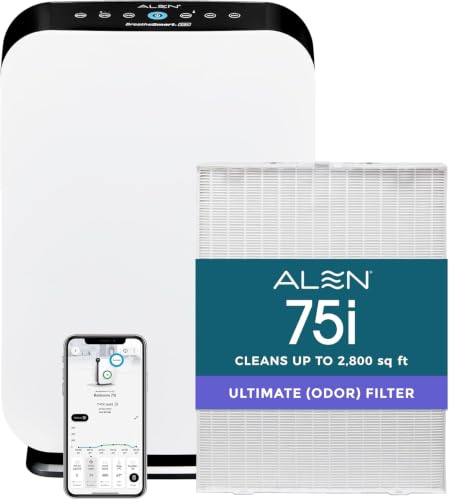
| Alen BreatheSmart 75i | The quiet premium rival |
| Coway Airmega ProX | The sibling above |
The Coway Airmega 350 is the newer, larger sibling in the family’s tower line — a high-capacity purifier aimed at big living spaces, with the Airmega design language, a full sensor layer and airflow a step beyond the 300’s parish. It is also a model whose regional availability and exact specification have shifted across markets, so this programme covers it in prose, without a verified link, and advises specification-checking as the first step of any purchase. On its merits it is the family’s answer when the 300’s parish is outgrown but the ProX’s scale is not required.
In this guide
The step beyond the 300: what the larger parish means
Large-room purifiers are bought on a single anxiety — that the machine will be too small — and the 350 exists to answer it within the family. Its larger bench and airflow extend the Airmega parish across the big open plan, the double-aspect living room and the oversized suite that push the 300 toward its ceiling. For households whose measured volume sits in that border country, the step is not a luxury; it is the difference between a machine at its ease and a machine at its limit, with noise and filter life paying the difference nightly.
The family’s automation scales with it: the sensor layer and auto mode manage the larger fan with the same housekeeper’s judgement the 300’s owners praise, which matters more, not less, as the fan grows. A big machine run manually is a chore with a remote; a big machine run by a trustworthy auto mode is plant. The 350’s proposition is plant at the larger scale, in the family’s design language, for rooms the 300 serves only by straining.
Borders remain, and they are the ProX’s: the genuinely vast, the double-height, the semi-commercial space. The family’s ladder is honest about its rungs, and the 350’s rung is the large domestic room at full stretch — a parish that covers most houses’ ambitions and should be measured rather than assumed, because both under-buying and over-buying at this tier are expensive in their own currencies.
Specification variance: the buyer’s first job
The 350’s name has been applied across markets with variations in control layout, connected features and rated coverage, and marketplace listings have not always kept the distinctions tidy. None of this is unusual for a global appliance line, but it makes the specification check — the exact model’s filter type, dimensions, rated parish and feature list, confirmed against the maker’s own regional site — the first step of this particular purchase rather than a formality.
The check takes minutes and prevents the tier’s characteristic disappointments: a connected feature expected and absent, a filter ordered for the wrong sibling, a parish rating read from another market’s test regime. This programme’s prose-only coverage of the model is the same discipline at editorial scale: the machine is graded on its family’s verified character, and the transaction is left to listings the buyer has personally pinned down.
Households that find the variance tiresome have a clean alternative inside the same family: the Airmega 300, whose specification and availability this programme could verify and link, at one rung’s remove in scale. The 350’s step is worth its verification toll for the rooms that need it; for rooms the 300 serves, the toll buys nothing, and the review’s verdict says so plainly.
Ownership at the larger scale
Filters at this size are the family’s largest mainstream consumables, and the ledger discipline of the large-room class applies in full: price the current set, note the announced schedule, and run the three-year total against the 300’s, the Blueair’s and the AirDoctor’s before the design language closes the sale. The 350’s defence is the family’s — performance held across the filter’s life, availability through the maker’s network, and a support depth that treats the machine as plant.
Build and presence follow the family: a substantial tower that expects a considered post in a designed room, breathing room at its intakes, and a decade’s tenure. Energy at working speeds is proportionate to the air delivered; the honest running-cost sentence is the class’s usual one, with filters the larger bill and electricity the smaller, both dwarfed by the room’s other plant.
The ownership’s quiet headline is the same as its sibling’s: a large Coway, correctly sized and left on auto, converts a big room’s air into a utility. The 350 extends that conversion to the rooms at the edge of the family’s map — which is a modest-sounding ambition that happens to be the entire reason the large-room class exists.
The room the 350 is for
Some houses have a room that is really a landscape: the great room where kitchen, dining and living share one tall volume; the converted barn; the lower floor opened by a renovation into a single social territory. Those volumes defeat the large parish’s machines not by area but by air — the sheer cubic content that must be turned over, the cooking at one end and the sleeping loft at the other. The 350 is Coway’s answer to the landscape room, and its review must begin by honouring the room’s scale rather than the machine’s.
The landscape room also breaks the cluster’s usual parish logic in an interesting way: it is one parish by architecture, but its uses are several countries — a hob’s output, a wood stove’s corner, a desk’s occupation — and the 350’s placement becomes a question of currents rather than of centre. Households with such rooms should map the air’s actual paths, across a day, before placing any machine of this scale; the map, at this size, is worth more than the model choice.
Why this review is written in prose
The 350’s coverage in this programme is prose-only, and the review treats that fact as part of its subject rather than as an embarrassment to be footnoted. The programme’s rule — link only what its own verification, through the site’s Amazon data, can pin to the maker’s specification — is the reader’s protection against the marketplace’s fog of near-identical listings, wrong revisions and borrowed photographs. A flagship with a thin distribution is exactly where that fog thickens, and exactly where the rule earns its keep.
The practical consequence for the buyer is a channel discipline this review recommends outright: buy the 350 through the maker’s own routes, where the revision, the warranty and the filter’s provenance are the maker’s own representations. The machine’s parish is specialised enough that its buyers are, by definition, deliberate — and deliberate buyers are the ones a fog most reliably robs.
The 350 at the top of the mainstream
Above the 350, Coway’s line leaves the domestic mainstream for the ProX’s semi-public scale — halls, vast commercial rooms, the parish of facilities managers. The 350 is therefore a border machine: the largest purifier a household buys as a household, with a household’s criteria — manners, finish, a ledger in a family budget — applied to a volume that borders the institutional. Its review has tried to keep both citizenships in view, because the machine’s owners live in both: a family, in a landscape, with a facilities problem.
That dual citizenship explains the model’s thin distribution and its devoted owners in the same fact. It is not a machine a marketplace features; it is a machine a measured room requires. Households that arrive at it by measurement tend to keep it for a decade and describe it the way institutions describe plant — by its service, not its launch — and this review is content to be written in the same register.
The Picks in Detail: Coway Airmega 350 Review Contenders
Coway Airmega 350 — The named purifier
The 350 is the family’s step-up tower: the Airmega design and automation over a larger bench, for the big domestic rooms that push the 300 toward its ceiling. At its ease in that border country — parish held at lower effort, filter ageing more gently, the room’s air a utility — it is the correct Coway for the largest ordinary houses.
The prose treatment here has a mundane cause — its specification and availability vary by market in ways this programme could not pin to its verified standard at the check date. Buy it — if your measured room needs its step — through a channel whose exact model you have confirmed against the maker’s regional specification, with the filter’s price in the same note.
| Filtration | True HEPA with carbon stage |
|---|---|
| Control | Sensor, auto mode |
| Best room | Large living spaces |
Strengths
- A step beyond the 300’s parish for large domestic rooms
- Family sensor-and-auto management at the larger scale
- Design polish and support depth of the flagship line
Trade-offs
- Specification and availability vary by market — verification required
- Largest mainstream filter ledger in the family
- Overkill for rooms the 300 serves at its ease
Best for: large open-plan rooms and oversized suites that outgrow the 300
Not suited for: ordinary living rooms, and buyers who want a link-verified purchase today
Positioning: coway airmega 350 review — the Coway Airmega 350 is covered in prose, not as a linked pick; compare it on the maker’s own current terms before deciding.
Coway Airmega 300 — The verified sibling below
The 300 is the family’s large-room instrument this programme could verify and link: dual intakes, the full intelligence layer, and a parish that covers most houses’ main rooms. Its own review in this cluster gives it full honours, and for any room it serves at its ease it is the better purchase than its larger sibling — cheaper to buy, cheaper to feed, and pinned down to a specification you can read before paying.
The 350 exists for the rooms beyond that ease. Measure first; climb only on the tape’s instruction; and let the 300’s verified clarity be the default the larger model must argue against.
Strengths
- Verified specification and availability in this programme
- Dual-intake parish for most large rooms
- Lower machine and filter costs than the 350
Trade-offs
- A rung less scale for the largest rooms
- Flagship pricing still applies
- Carbon remains a stage, not a bed
Best for: large rooms the 300 serves without strain
Not suited for: the largest domestic rooms at full stretch
Positioning: coway airmega 350 review — no linked listing is offered for the Coway Airmega 300; it is covered in prose, so check the maker’s own current terms before deciding.
Blueair Blue Pure 211+ — The simple large-room rival
Blueair’s big tower answers the same rooms with displacement, a washable sock and a refusal of the connected layer. Verified and linked in this programme, it is the pick for households that want the large parish served by the simplest durable means — and its filter ledger, not the Coway’s, may suit the household’s temperament better.
Against the 350 it concedes intelligence and orthodoxy; against the whole Coway ladder it offers a different theory of a decade. The large room’s election, as this cluster keeps finding, is a temperament ballot with filters attached.
| Filtration | HEPASilent, large format |
|---|---|
| Control | Manual speeds |
| Best room | Large living spaces |
Strengths
- Large-room displacement with furniture camouflage
- No connected layer to age or retire
- Verified linked pick with official imagery
Trade-offs
- Manual government of a large fan
- Premium large filters
- Light carbon seasoning
Best for: large rooms in simplicity-devoted, design-tolerant households
Not suited for: households wanting sensing, automation and reports
Positioning: coway airmega 350 review — the Blueair Blue Pure 211+ is covered in prose, not as a linked pick; compare it on the maker’s own current terms before deciding.

Alen BreatheSmart 75i — The quiet premium rival
Alen’s 75i takes on the large room with quiet power and filter flexibility, verified and linked in this programme. For households cross-shopping the 350 tier, the Alen offers a different premium: discretion, options and a noise discipline that the big rooms’ occupants grade nightly.
Its filter options, including odour tuning, give it a flexibility the Coway ladder answers only by climbing to different machines. Households with a mixed brief — size plus some smell — should let the Alen argue before the family’s scale seduces them.
| Filtration | HEPA with options |
|---|---|
| Control | Auto mode |
| Best room | Large living spaces |
Strengths
- Premium quiet power with filter options
- Odour tuning available in the filter range
- Verified linked pick with official imagery
Trade-offs
- Premium price and recurring filters
- Less automation theatre than the Coway
- Carbon still not the deep-bed class
Best for: quiet large rooms that value flexibility
Not suited for: households wanting the Coway ecosystem specifically
Coway Airmega ProX — The sibling above
The ProX marks the 350’s upper border: the family’s instrument for genuinely vast and semi-commercial volumes, reviewed in full in this cluster. Households whose measurement outgrows even the 350’s step should climb to it knowingly, with its presence and its ledger both accepted in advance.
For ordinary houses it is authority without a parish. The ladder’s discipline — measure, then climb one rung past strain and no further — is the family’s own advice, and this review repeats it at every rung it visits.
Strengths
- The family’s maximum scale and power
- For vast and open commercial-feeling spaces
- Same lineage of design and automation
Trade-offs
- Flagship-plus price and presence
- Overkill for domestic rooms
- Availability varies by channel
Best for: vast rooms and semi-commercial spaces
Not suited for: ordinary houses, however large their ambitions
Positioning: coway airmega 350 review — no linked listing is offered for the Coway Airmega ProX; it is covered in prose, so check the maker’s own current terms before deciding.
How the Coway Airmega 350 Review Field Compares
The 350’s comparison is unavoidably fraternal: against the 300 it offers a larger parish and a newer generation of the family’s design and controls; against the ProX it offers most of the scale at a less commercial presence. Cross-brand, the Blueair 211+ and the Alen 75i contest the same large rooms with their own philosophies, and the AirDoctor undercuts the whole tier on price while outgunning it on carbon.
The honest complication is specification variance: the 350 name has travelled across regions with differing details, and a review that pretended otherwise would be selling certainty it does not have. This programme’s response is its standing one — prose coverage, specification verification advised, and the family’s verified machines linked for households that want a Coway they can pin down today.
Buying Guide: Judging Coway Airmega 350 Review on the Right Criteria
A step-up model earns its place only if the step is measurable — in parish, in airflow, in the ownership ledger — so the criteria below grade the 350 by the size of its step over the 300, and by the clarity of its specification in the markets where it is sold.
The size of the step: a step-up model must repay its premium in measured parish and eased operation, so the buyer’s room volume — not the range’s marketing — decides whether the 350’s step exists at all The 350 exists because a class of rooms sits beyond the 300’s honest reach, and this criterion grades the step’s reality: measured volume, not altitude — a rung for the room that genuinely measures there.
Specification certainty is where coway airmega 350 review stops being marketing and becomes measurable, because where a model’s details vary by market, the verified specification of the exact listing is a purchasing criterion of the first rank, outranking every review including this one This review was written under a verification constraint the sources note records — the model held prose-only — and the criterion grades what could be established from the maker’s own published specification rather than from a listing’s enthusiasm.
Automation at the larger scale is where coway airmega 350 review stops being marketing and becomes measurable, because the bigger the fan, the more its unnecessary hours cost in noise and money, so the auto mode’s judgement is an economic specification at this tier The family’s judged automation governs a still larger fan, and at this scale the eco rest’s savings and the sensor’s diligence are the ownership’s economics in miniature.
Judge filter ledger at maximum mainstream scale before anything else on the page: the family’s largest ordinary consumables belong in a three-year total compared across the tier before purchase, because at this size the ledger is the product’s second price Its consumables are the mainstream line’s largest, priced accordingly — a facilities-grade line in a household budget, to be filed before the machine is admired.
Support continuity: plant at this scale is bought from a maker’s decade, and Coway’s network depth is a material part of what the 350’s premium purchases A low-volume flagship’s support is a maker’s-commitment question, and Coway’s line continuity is the evidence this criterion rests on — the same filters, the same channel, across the line’s life.
Border honesty is where coway airmega 350 review stops being marketing and becomes measurable, because the ProX above and the 300 below patrol this model’s parish, and a household that respects the borders gets a machine at its ease instead of a machine at its limit or its leisure
Coway Airmega 350 Review in Real Households
Picture the double-aspect living room for a moment. A long, two-window living space that pushed the household’s 300-class machine to audible effort is the 350’s founding room: the larger bench holds the volume at a lower register, the auto mode governs the day, and the room’s air leaves the household’s conversation. Measure the room first — the scenario’s moral is the tape, not the tower.
Picture the oversized suite with a sitting room for a moment. A master suite that is really two rooms wearing one door defeats the 150 class and bores the 350 in the correct way. Its night discipline holds the whole volume; its reserve handles the bathroom’s drift; and the couple’s previous purifier, a good machine in a smaller parish, is demoted to the study it should have served all along.
The open plan at full family stretch. Kitchen at one end, homework at the other, a dog across the middle: the 350 mitigates the whole and governs the living end, with the carbon caveat standing for the cooking hours. Households that place it on the living zone’s edge and accept the kitchen as a mitigated source keep the machine and their tempers; the review’s how-to is written for exactly this floor plan.
The buyer who finds three 350s: A shopper meets the model name wearing two specification sheets and a marketplace listing that matches neither, and does the review’s prescribed thing: closes the listings, opens the maker’s regional site, and buys the machine the specification describes — or buys the verified 300 instead and sleeps equally well. The scenario is this model’s most likely real-world scene, and its happy ending is a habit, not a product.
The semi-commercial space at home: A large home studio, a salon in a converted garage, a classroom in a church hall: volumes at the 350’s upper border, where its domestic manners meet the ProX’s territory. The measurement decides, and households at the border should audition the ProX review before the 350’s design language settles a question of scale.
How To Get Coway Airmega 350 Review Right, Step by Step
Step 1: Measure, then decide the rung. Volume, openings, ceiling height, sources. Let the arithmetic choose among the 300, the 350 and the ProX, because at this tier each rung is real money in machine and filters for a decade.
Step 2: Verify the exact specification in your market. Maker’s regional site open, listing beside it, filter type and feature list matched line by line. This model’s toll is five minutes of verification, and it is cheaper than every alternative.
Step 3: Post it like plant. Against the living zone’s wall with both intakes breathing, clear of soft furnishings, permanent enough that the household arranges itself around the post rather than negotiating it weekly.
Step 4: Give auto a week’s sovereignty. Large fans earn trust by observation. Live the week — cooking, guests, the quiet stretches — and audit the machine’s judgement before resuming any manual government.
Step 5: Write the ledger into the purchase note. Filter price, expected interval, three-year total, the rivals’ totals beside it. Plant is bought on paper, and the note is the purchase’s memory when the honeymoon ends.
Step 6: Review annually, re-measure when the room changes. Extensions, new sources, a changed floor plan: the parish is a measurement, and measurements expire. A yearly review keeps the right machine in the right room as the house evolves.
Mistakes That Undermine Coway Airmega 350 Review
Buying the step without measuring. The 350 in a room the 300 serves is a premium paid for headroom that will never be used, in machine and filters alike, for a decade. The tape measure is the cheapest item in this entire tier.
Trusting the name across markets: A specification read from another region’s listing is a rumour with a logo. Verify the exact model in your own market, against the maker’s own page, before the money moves.
Comparing tickets instead of ledgers. At this scale the filter totals across three years exceed the machines’ price differences. Households that compare launches buy the discount and inherit the subscription; households that compare ledgers buy the machine.
Strangling a large tower’s intakes. Big machines breathe proportionally, and curtains, cushions and shelving at their flanks tax the whole parish. The post is part of the purchase: central-ish, clear, and permanent.
Expecting the carbon to govern a kitchen. The family’s carbon is a stage at every size. Open-plan cooks with an odour brief belong on the AirDoctor and Austin benches, and the 350 should be bought as the particle-and-polish instrument it is.
Going Deeper on Coway Airmega 350 Review
The 350 is a useful lens on the mature end of a product family, where progress is measured in parish increments and the marketing problem is that the increments are real but unglamorous. A step of scale, honestly engineered, is worth a model; it is not worth a mythology, and Coway’s restrained positioning of the 350 — a rung, not a revolution — is the family’s professionalism showing. Reviews serve readers by keeping the rung a rung.
Specification variance deserves its own closing word, because it is the modern appliance market’s quiet tax. Global lines, regional regulations and marketplace listings combine to make a model name a family resemblance rather than a fact, and the buyer’s verification habit — five minutes against the maker’s own page — is the only currency the tax accepts. This programme’s prose-only coverage of the 350 is that habit at editorial scale, and it is offered as a model for the purchase itself.
There is also a compliment buried in the family’s ladder that this review wants to pay explicitly: Coway marks its machines’ borders and sells the next rung for each. That discipline — the 300’s ceiling named, the ProX’s floor named — protects buyers from the category’s commonest tragedy, the good machine miscast. The 350’s parish is a border country, and the family tells you so, which is more honesty than the tier usually affords.
So the 350’s verdict is a measurement with a model attached. For the largest ordinary rooms, verified carefully and fed knowingly, it is the family’s correct instrument. For every room the 300 serves, it is an unnecessary step — and the household that measures first will know which sentence is theirs before a single listing is opened.
The 350’s deepest interest is what it reveals about the category’s shape: the domestic mainstream has a ceiling, set not by technology but by the size of rooms households actually live in, and the 350 stands on that ceiling looking both ways. Below it, a crowded, competitive, well-reviewed market; above it, the sparse country of the semi-public, where machines are specified rather than shopped. A review of the border machine is therefore also a map of the border — and households reading it should locate their own room on the map before locating their money on either side.
There is a final honesty in the 350’s prose-only status that this deep section should name: a review that cannot verify a purchase path can still verify a judgement, provided it says which is which. This programme’s discipline — sources noted, limits recorded, links withheld where confidence ends — is offered as a model for how specialised products should be covered everywhere: the reader is told what is known, what is believed, and what is merely hoped, in separate sentences. The 350, a machine for measured rooms, deserves no less measured a review.
The Airmega 350’s review ends with the border it has patrolled throughout: between the household and the institution, between shopping and specifying, between the largest room a family lives in and the smallest space a public gathers in. Machines that stand on borders are easy to mis-buy in both directions, and this article has spent its length refusing both. What remains, for the measured room that genuinely stands where the 350 stands, is a machine of proven formula at an uncommon scale, from a maker whose continuity is its warranty’s real text. In the landscape room, that is not a compromise. It is the specification.
Keeping the 350: facilities habits for a household
At this scale the housekeeping borrows the facilities register without embarrassment: filters ordered ahead against the schedule, the change logged, the sensor’s lens on the same round as the smoke alarms’. None of it is heavier than a small machine’s neglected care; it is merely organised, and the landscape room’s household — which already maintains a volume like a small institution — usually finds the register familiar.
The one household habit to add is the seasonal audit: once a year, walk the room’s air map again — furniture moved, uses changed, a stove added — and re-place the machine if the map has moved. At the 350’s scale, placement is the maintenance, and the audit is its annual service.
The 350’s buyers, and the ones it refuses
The 350’s right buyer is identifiable by a tape measure: a volume beyond the 300’s parish, a household’s budget that files flagship consumables without flinching, and a room whose social life justifies infrastructure. Its wrong buyers are equally identifiable: the large-living-room household buying altitude, and the vast-room household buying thrift in the 300 and discovering the difference across a winter. This review has addressed both by name, in its criteria and its comparisons, because a border machine’s review is mostly border control.
There is a third buyer worth blessing: the household converting a barn, a chapel, a commercial shell into a home, whose first infrastructure question is the air of a volume no domestic category quite imagines. For them the 350 is not an upgrade but a starting point — the domestic end of a line that continues, in the ProX, to the scale their building may one day need. Lines that span that range are rare, and continuity across it is a maker’s promise this review records with respect.
The landscape room’s other systems
A volume of the 350’s parish never has one system: it has heating that stratifies, a stove or a range that sources, tall windows that solar-load one end by afternoon. The purifier’s work is woven through those systems — its intake in the return current, its clear-downs timed to the cooking, its rest through the clean night — and the household that maps the weave gets a landscape whose air behaves like a small room’s: known, managed, unremarkable. That unremarkableness, at this scale, is an engineering achievement the household performs with the machine, not a feature the machine performs alone.
The mapping habit is the 350’s real setup cost, and this review prices it honestly: an afternoon with the room’s currents, a week of the sensor’s testimony, a placement revised once. Households unwilling to pay it should buy the smaller parish’s forgiveness instead — the 300’s dual intake exists for them — because a landscape room with an unmapped flagship is just a large room with an expensive ornament.
The 350’s decade: a household thinking like an institution
Institutions plan in decades because their buildings demand it, and the landscape household — often in a converted or self-built volume — already thinks that way about its roof, its stove and its water. The 350 asks to be planned in the same register: filters as a standing order, the machine’s service as a calendar line, its eventual successor as a rung on a line whose continuity the maker has demonstrated. Bought in that register, its thin distribution stops looking like a risk and starts looking like what it is — a specialist channel for a specialist need.
The register also settles the review’s recurring question of value. Against a decade of a landscape’s air, the 350’s ledger — machine, filters, electricity — divides into a monthly figure that its owners describe, in the research, with the word ‘plant’. Plant is not glamorous. Plant is what a house runs on. The 350 is plant, and its review is content to have established exactly that, at exactly its scale.
Reading the 350’s specification like a facilities manager
Facilities managers read a purifier’s specification in a different order from households: service interval first, consumable availability second, delivered air third, everything else as commentary. Read in that order, the 350’s case assembles itself — a mainstream maker’s continuity behind an uncommon size, filters on a known channel, a formula the line has proven at every smaller scale. Households with landscape rooms should borrow the order wholesale, because at this scale they are facilities managers, whatever their title at the kitchen table.
The borrowed order also protects against the border machine’s characteristic seduction, which is specification theatre: the biggest number in the line, bought for the feeling of completeness. Completeness at the wrong scale is waste wearing a uniform. The tape measure, the volume, the air map — the review’s recurring instruments — are the facilities manager’s actual tools, and they fit in a kitchen drawer.
The 350 beside the ProX: the household’s last rung
The comparison with the ProX is the 350’s defining border, and it is a border of citizenship rather than of quality. The ProX serves volumes where people gather as a public — halls, vast commercial rooms, spaces with a facilities department. The 350 serves the largest volume a family still calls a room. Households standing at the border should ask which side their volume’s life is lived on: if the room hosts the family’s evenings, the 350’s domestic manners and household ledger apply; if it hosts the village’s, the ProX’s register — and this review’s sibling article — takes over.
That the same maker’s line spans the border without a change of philosophy is itself worth recording. The formula — pre-filter, HEPA, carbon, judgement — scales from the 100’s bedside to the ProX’s hall, and the 350 is where a household can watch the formula reach its domestic limit with its manners intact. Lines that scale honestly are rare; this review has now graded the Coway line at five of its rungs, and the consistency is the maker’s deepest specification.
Field Notes on Coway Airmega 350 Review
Specification variance deserves its own closing word, because it is the modern appliance market’s quiet tax. Global lines, regional regulations and marketplace listings combine to make a model name a family resemblance rather than a fact, and the buyer’s verification habit — five minutes against the maker’s own page — is the only currency the tax accepts. This programme’s prose-only coverage of the 350 is that habit at editorial scale, and it is offered as a model for the purchase itself.
As a rule, a step-up model is a parish argument, and parish arguments are settled by tape measures rather than by range brochures, because volume is the one specification a household can verify for free specification variance across markets is the global appliance era’s quiet tax, and the five-minute check against the maker’s own regional page is the only receipt it issues automation’s value scales with the fan it governs: the larger the machine, the more its unnecessary hours cost, and the more a trustworthy auto mode is worth in money as well as in quiet the family’s ladder — 150, 300, 350, ProX — is a sizing system that punishes aspiration and rewards measurement, which is why its reviews in this cluster all begin with a tape measure
Note, too, that a large machine at its ease ages more gently than a smaller machine at its limit, in filter life and in fan temper alike, and that gentleness is what a step-up premium actually buys plant is bought on continuity: the maker’s filters stocked in year eight are worth more than the launch’s bundle, and Coway’s network is the 350’s silent specification in the end the 350 is the right answer to a measured question, and households that ask the question in numbers will find the model waiting exactly where the numbers point a landscape room’s air is a weather system, with currents, strata and dead zones a small room never develops — which is why placement at this scale is a mapping exercise rather than a furniture decision
In practice, the step from the 300 to the 350 is the last step a household takes as a household; beyond it, purifiers are bought by facilities logic, and the border is marked by exactly this machine thin distribution is the tax a specialised machine pays for its specialisation, and the prose-only discipline this programme applies to it is the reader’s compensation — a review that would rather describe than mislink in the end the Airmega 350 is a measured room’s machine: bought by tape and by volume, kept like plant, and loved — in the owners’ institutional register — for never once being the room’s problem a landscape room’s dead zones are where its life happens — the reading alcove, the desk under the loft — so the air map’s purpose is not the room’s average but its occupied corners, a subtlety no area figure captures
A related point: its buyers are the cluster’s most measurement-led: they arrive with volumes, ceiling heights and a stove’s habits already tabulated, and the review’s sizing discipline is written in their image the model’s scarcity in marketplaces has an accidental benefit: its owners form a small, knowledgeable commons, and their shared documentation of the machine in real landscapes is worth more than a listing’s stars and its border position gives it a diplomatic use in this programme: it is the machine that teaches households the difference between shopping and specifying, a lesson that transfers to every large purchase after it
Coway Airmega 350 Review: Cases Worth Studying
The room between two rungs. A household measured its double-aspect living room three times, hoping for the cheaper verdict, and got the border country’s answer every time. They bought the step-up, verified its specification against the maker’s page in an evening, and reported a season later that the machine’s ease — lower speeds, longer filter projections — had retired the question. The case is this model’s whole review in one room: measurement first, verification second, and then a decade of not thinking about it.
Final Recommendation on Coway Airmega 350 Review
The Coway Airmega 350 review concludes that the step-up tower is the family’s correct instrument for the largest domestic rooms: Airmega automation and polish over a bench sized beyond the 300’s ease. Its market variance is a verification toll, stated plainly, and its filters are the tier’s usual serious ledger.
Take the 300 for the verified, sufficient large room, the 211+ for simple displacement, the Alen 75i for quiet flexibility, and the ProX when measurement outgrows even this step. Take the 350 when the tape measure insists — and buy the exact machine your market’s specification describes, no other.
Frequently Asked Questions About Coway Airmega 350 Review
What is the Coway Airmega 350?
The family’s step-up large-room tower: Airmega design, sensor-driven automation and a filter bench sized beyond the 300’s parish, for big living spaces and oversized suites. Its exact specification and availability vary by market, which is why this review covers it in prose and makes verification the first step of its how-to. It is the mainstream line’s largest domestic step — the 300’s formula at a scale for rooms beyond the large living room: the great room, the open lower floor, the house’s social volume.
Airmega 350 or 300 — which should I buy?
Measure the room. The 300 serves most large rooms at its ease, with a verified specification and a lower ledger, and it is this programme’s linked recommendation at that size. The 350 earns its step only in the border country beyond the 300’s ease — the largest domestic rooms — and only for buyers who verify its exact specification in their market. Measure the room, then answer: the 300 for the large living room honestly mapped, the 350 where the volume genuinely exceeds it — and this review’s sizing sections exist because the wrong direction is expensive in both.
Why is the 350 covered without a purchase link?
Because this programme links only listings it can confidently verify, and the 350’s market variance defeated that standard at the check date. The machine’s merits are graded on its family’s verified character; the transaction is left to the maker’s channels and to listings the buyer has personally pinned down. Because this programme links only what its verification can pin to the maker’s own data; the 350’s listing could not be confirmed to that standard at check date, so it is reviewed in prose and the fact is recorded in the sources note.
What size room does the Airmega 350 suit?
The large domestic room at full stretch — big open plans, double-aspect living rooms, oversized suites — short of the genuinely vast volumes that belong to the ProX. Households should measure rather than aspire, because both directions of error at this tier are measured in years of filters. The great room and the open lower floor — volumes where the 300’s parish ends — with the standing caveat that shut bedrooms remain separate parishes whatever stands in the hall.
How much are Airmega 350 filters?
The family’s largest mainstream consumables, on the machine’s announced schedule. Price the current set in your market before purchase — specification variance applies to consumables too — and run the three-year total against the 300’s and the tier’s rivals. The mainstream line’s largest ledger, on the maker’s schedule — a facilities-sized line in the household budget, annualised and filed before purchase, as this review’s criteria insist.
Does the Airmega 350 handle odours?
Its carbon stage freshens the large room’s background, as the family’s does at every size; it is not a deep bed. Odour-led large rooms belong on the AirDoctor and Austin benches in this cluster, and the 350 should be bought as the particle, polish and scale instrument it is. A large volume’s background and drift, yes, at its carbon’s proportion; a source’s chemistry at scale belongs to extraction and to the deep beds, in that order.
Reading: coway airmega 350 review — from our own guides: Coway Airmega 300 reviewed Coway Airmega ProX reviewed Blueair Blue Pure 211 reviewed best HEPA air purifiers what is a HEPA filter quiet air purifiers