Disclosure: As an Amazon Associate, dailyhomedecorating.com earns from qualifying purchases. Links on this page are affiliate links; they cost you nothing extra. Prices and availability change often, so check the current Amazon listing before you buy.
The coway airmega 300 review concerns the point in Coway’s ladder where the parish becomes a floor. The Airmega 300 is a large tower with intakes on both flanks, a filter bench sized for open living spaces, the family’s full sensor-and-auto intelligence, and a design polish intended to let a serious machine stand in a serious room. It is the purifier for the open-plan heart of a house — the room where the family actually lives.
Dual intake is the design’s thesis: by breathing from both sides, the tower feeds its filter without the choked corner behaviour of single-intake machines placed against walls, and it sustains its parish rating in the real placements living rooms allow. This review tests that thesis alongside the usual large-room questions — delivered air at livable volume, the auto mode’s judgement across a family’s day, the filter ledger at flagship scale — and the borders where the ProX above it and the carbon benches beside it take over.
For the record, the framing is standard — orthodox HEPA particles are the trade, carbon is a stage rather than a bed, and health claims stay environmental. The Airmega 300’s constituency is the household whose main living space is both large and designed, and it is graded as that room’s plant — installed, automatic and present for a decade.
Coway Airmega 300 Review: The Short Version
| Pick | Known for |
|---|---|
| Coway Airmega 300 | The named purifier |
| Blueair Blue Pure 211+ | The simple displacement rival |
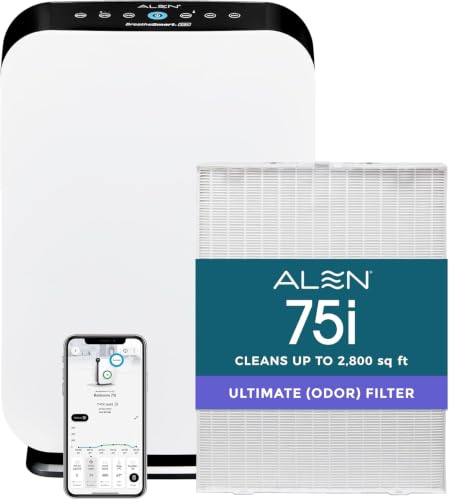
| Alen BreatheSmart 75i | The quiet premium rival |
| AirDoctor AD5500 | The carbon-heavy value rival |
| Coway Airmega ProX | The vast-space sibling |
The Coway Airmega 300 is the line’s large-room instrument: a dual-intake tower with serious airflow, a full sensor-and-auto layer, and the family’s design polish, built for open living spaces and oversized bedrooms. It draws air from both sides to feed a parish smaller machines cannot serve, runs its size with more composure than most, and charges flagship prices for the machine and its filters alike. For a design-led large room that wants orthodox HEPA power with intelligent manners, it is one of the two or three strongest answers in this cluster.
In this guide
Dual intake and the large parish
A large room defeats purifiers by volume and by placement: the machine must move a great deal of air, and it must do so from the position the room actually offers, which is usually against a wall or beside furniture. The 300’s twin intakes answer the placement half of the problem — the tower breathes from both flanks, so a wall behind it does not strangle half its supply — and its fan and filter answer the volume half with the family’s largest mainstream bench.
Delivered clean air at the middle speeds is the figure that matters, and there the 300 performs with the class’s best: the open plan’s air turned over through the waking day at a volume the room’s life can talk over. Its top speed is a clear-down instrument of real authority after cooking, gatherings and the dust of a renovation day; its night floor, in an oversized bedroom’s service, is composed enough for most sleepers who have auditioned it honestly.
The parish’s borders are the class’s usual ones, drawn further out: the double-height loft, the open plan with a working kitchen at full tilt, the house whose volume is really two rooms wearing one ceiling. The ProX exists for the first, placement and a second machine for the second, and the review’s scenarios pace the borders rather than pretending the tower abolishes them.
Intelligence at scale
The sensor-and-auto layer matters more at this size, not less, because a large machine’s fan is a significant appliance whose unnecessary hours are audible and billable. The 300’s auto mode manages the room like a good housekeeper: present against the day’s events, absent in the clean stretches, and conservative enough that owners leave it sovereign for months. Its display reports the room’s state in the family’s legible language, and the app layer serves households that schedule and monitor — with the core competence, again, resident on the machine.
There is a behavioural dividend to a trustworthy large auto mode: the household stops performing air management. Windows, cooking and guests stop being purifier events because the machine has already responded, and the room’s air becomes a utility — like its heating — rather than a topic. That transition, from appliance to utility, is the flagship large machine’s real product, and the 300 delivers it as completely as anything in this cluster.
The connected terms are the era’s standard ones, and the review repeats its proportion rule: Coway keeps the sensing and the judgement on the box, so the app is a window rather than a life-support system. Households that lose the app in a decade will lose the graphs and the remote, not the purifier — a distinction worth its paragraph in every connected review this programme writes.
The flagship ledger: filters, build and support
The 300’s filters are large, paired with its dual intake, and priced at the family’s flagship rate on a schedule the machine announces. Across a decade the consumable total is the purchase’s true second half, and it should be written into the buying note beside the rivals’ — the Blueair’s large filter, the Alen’s options, the AirDoctor’s heavier but cheaper-feeling subscription. At this tier all the ledgers are serious; the differences are in schedule, availability and what the filter contains.
Build and support follow the family’s standard: a tower that feels engineered for service, a maker’s network with depth, and a model whose filters will be stocked while the machine is middle-aged. In the large-room class, where the machine is plant rather than gadget, that continuity is worth a line in the criteria and a weight in the verdict — plant is bought from companies that keep their promises in years, not in launch cycles.
Energy at the working speeds is proportionate to the air delivered — the dual intake’s efficiency shows here — and the honest running-cost sentence is the cluster’s usual one: electricity is the smaller bill, filters are the larger, and both together still undercut the cost of the room’s other plant by an order of magnitude. The 300 is expensive to buy and reasonable to run, which is the flagship pattern at its most defensible.
The 300 as the living room’s system
A large purifier is not an appliance in its room; it is a system the room is organised around — placed where two intakes can breathe, given a parish on the household’s air map, serviced on a calendar the family keeps. The 300 rewards that systemic treatment more than most, because its dual intake and its judged fan are designed for a room that is lived in continuously: cooking, gathering, sleeping’s overflow, the dog’s whole biography. Its review is best read as a systems report, and its criteria are a system’s criteria.
Households that treat it as an appliance — cornered, obstructed, forgotten until it complains — will grade it as an expensive fan. Households that treat it as infrastructure will find, as its owners testify, that the living room’s air simply stops being a subject. That difference is not in the machine; it is in the household’s theory of it, and this review exists to sell the second theory.
Dual intake: the forgiveness dividend
The 300’s two breathing faces deserve their section because they solve the large parish’s most common silent failure: the flagship placed against a wall or a sofa, breathing its own exhaust, delivering a fraction of its specification while its owner blames the category. A dual-intake machine placed almost anywhere in a real room still breathes the room — one face or the other finds the air — and that forgiveness, across a decade of furniture rearrangements, is worth more delivered air than any specification advantage a single-intake rival can print.
Forgiveness also applies to the household’s habits: doors opened, rooms reconfigured, a party’s furniture pushed to the walls. The 300’s parish survives its own life, which is the definition of a living-room machine as opposed to a showroom one. Coway’s designers clearly placed their bet on real rooms, and the bet is the product.
The 300 beside the ProX and the 350
Coway’s large line is a ladder of scale: the 300 for the large domestic room, the 350 for the room beyond it, the ProX for the genuinely vast and the semi-public. The ladder’s honesty is that each rung is a sizing decision, not a quality decision — the 300 is not a lesser ProX but a correctly sized one — and households should climb it by measured volume rather than by aspiration, because an oversized machine’s short-cycling and an undersized one’s labour are the same error in opposite directions.
This review’s subject sits on the ladder’s most domestic rung, and its comparisons have treated the family’s larger machines as borders rather than as rivals. The household whose room honestly measures beyond the 300’s parish should climb with the review’s blessing; the household tempted to climb for altitude’s sake should reread the sizing sections, where the parish is defined by the room and not by the brochure.
The Picks in Detail: Coway Airmega 300 Review Contenders
Coway Airmega 300 — The named purifier
The Airmega 300 is Coway’s large-room argument complete: dual intakes that forgive real placements, a filter bench sized for open spaces, a sensor-and-auto layer with a housekeeper’s judgement, and the family’s design polish standing in the room’s sightlines. It turns a large room’s air into a utility — present, managed, unmentioned — which is the highest state a purifier can achieve in a house’s main room.
Its debits are the flagship’s: a serious ticket, serious filters, and a carbon stage that freshens rather than feasts. Households inside its brief get one of the cluster’s two or three best large-room machines; households outside it — the odour-led, the budget-bound, the simplicity-devoted — are directed to this review’s other benches with their own honours intact.
| Filtration | True HEPA, dual intake, carbon stage |
|---|---|
| Control | Sensor, auto mode, app |
| Best room | Large living spaces |
Strengths
- Dual-intake design sustains its parish in real placements
- Sensor and auto management of flagship judgement
- Design polish for the house’s main room
Trade-offs
- Flagship price and flagship filter ledger
- Carbon is a stage, not a deep bed
- A large object that needs its post respected
Best for: open-plan living spaces and oversized bedrooms in design-led homes
Not suited for: odour-led briefs, tight budgets and small rooms
Positioning: coway airmega 300 review — the Coway Airmega 300 is covered in prose, not as a linked pick; compare it on the maker’s own current terms before deciding.
Blueair Blue Pure 211+ — The simple displacement rival
The 211+ answers the large room with displacement and refusal: the big HEPASilent filter, the washable sock, manual speeds and no connected layer to retire. Its full review in this cluster is the detailed account, and it remains the pick for households that want the parish served without a dashboard’s correspondence.
Against the Coway it trades intelligence for simplicity and orthodoxy for the electrostatic path. The contest is the large room’s real election, and it is decided by the household’s temperament about automation more than by any figure either maker publishes.
| Filtration | HEPASilent, large format |
|---|---|
| Control | Manual speeds |
| Best room | Large living spaces |
Strengths
- Large-room displacement with a washable sock
- No connected layer — a decade-proof simplicity
- Quiet at working speeds for its size
Trade-offs
- Little feedback or automation
- Premium large filters
- Carbon is the family’s light seasoning
Best for: large rooms in simplicity-devoted households
Not suited for: households wanting the room managed and reported
Positioning: coway airmega 300 review — the Blueair Blue Pure 211+ appears as a prose pick rather than a linked one; the maker’s own current listing is the place to confirm its terms.

Alen BreatheSmart 75i — The quiet premium rival
In the large room, Alen’s 75i competes on quiet power and filter choice, with a premium finish designed to disappear. Verified and linked in this programme, it is the pick for households that found the Coway too present and the Blueair too plain, but share their parish and their budget.
Its filter options — including heavier odour tuning — give it a flexibility neither rival matches, and its noise discipline at working speeds is the class’s benchmark. The three machines divide the premium large room by temperament: intelligence, simplicity, discretion.
| Filtration | HEPA with options |
|---|---|
| Control | Auto mode |
| Best room | Large living spaces |
Strengths
- Premium quiet power for large rooms
- Filter options include odour tuning
- Verified linked pick with official imagery
Trade-offs
- Premium price and recurring filters
- Less domestic presence than the Coway’s design
- Carbon still not the deep-bed class
Best for: large rooms wanting quiet discretion with options
Not suited for: households wanting maximum automation or minimum price

AirDoctor AD5500 — The carbon-heavy value rival
The AirDoctor brings the large room a deeper filtration bench — UltraHEPA with substantial carbon — plus its own sensor layer, at a lower ticket than the flagship pair. Verified and linked here, it is the pick when the open plan’s brief includes the kitchen’s output, the dog’s territory and the road’s drift in chemical form.
It concedes polish, quiet and finish to the Coway, and its filters are a subscription of their own. But for the mixed brief — particles and odours together, at scale — its bench is the deepest in this price country, and households should let their brief, not the showroom’s lighting, arbitrate.
| Filtration | UltraHEPA plus substantial carbon |
|---|---|
| Control | Sensor, auto mode |
| Best room | Large rooms, open plans |
Strengths
- Substantial carbon for mixed large-room briefs
- Whole-floor ambitions at a lower ticket
- Sensor and auto operation included
Trade-offs
- Louder and plainer than the flagship pair
- Filter costs are a serious subscription
- No design camouflage for visible rooms
Best for: open-plan homes with odour and smoke in the brief
Not suited for: quietness-first and design-first living rooms
Coway Airmega ProX — The vast-space sibling
The ProX is the family’s answer when the 300’s parish is honestly outgrown: a larger, more powerful instrument for very large rooms, open commercial-feeling spaces and houses whose volume is measured in zones. It is covered in its own review in this cluster; here it marks the 300’s upper border and the correct destination for households that measure their space and find the 300’s rating a size too small.
Climbing to it costs flagship-plus money and a larger presence. Households should climb only on measurement’s instruction — the ProX in an ordinary living room is authority without a parish, and the 300’s composure is the better purchase beneath that border.
Strengths
- The family’s maximum mainstream parish
- Power for vast and open spaces
- Same design and automation lineage
Trade-offs
- Flagship-plus price and presence
- Overkill beneath its border
- Availability varies by channel
Best for: very large rooms and open, commercial-scale spaces
Not suited for: ordinary living rooms, which the 300 serves with better proportion
Positioning: coway airmega 300 review — the Coway Airmega ProX appears as a prose pick rather than a linked one; the maker’s own current listing is the place to confirm its terms.
How the Coway Airmega 300 Review Field Compares
The Airmega 300 and the Blueair 211+ are the large room’s thesis and antithesis: Coway’s dual-intake intelligence against Blueair’s simple displacement, orthodox HEPA against the electrostatic path, a designed appliance against a socked tower. The Alen 75i contests both on quiet; the AirDoctor undercuts all three on price and outguns them on carbon. The large-room shelf is the cluster’s most complete argument, and this review’s verdict is one household’s answer rather than a universal one.
Within the family, the 300 is the parish ceiling for ordinary houses: the 150 below it for the generous bedroom, the ProX above it for the genuinely vast or the commercially serious. Households should climb to the 300 when the room’s volume — measured, with its openings counted — defeats the 150’s honest best, and not before, because the family’s ladder charges for every rung.
Buying Guide: Judging Coway Airmega 300 Review on the Right Criteria
A large-room flagship is judged by delivered air at a livable volume, by the intelligence of its management, and by the decade ledger of its filters. The criteria below grade the Airmega 300 and its large-room rivals — the Blueair 211+, the Alen 75i, the AirDoctor — on that single scale.
Judge delivered air at livable volume before anything else on the page: the large room’s grading figure is clean air delivered at the middle speeds the room can talk over, sustained for the waking day without the fan becoming the room’s loudest citizen The 300’s dual intake is an acoustic strategy as much as an airflow one: two paths loafing where one would labour, delivering a living room’s air at a voice the room can host.
Placement forgiveness. dual intake and real-world positioning decide whether the rated parish survives the room’s furniture, and a machine that must float centrally to perform will underperform in every real house A machine that breathes from two sides forgives the room’s furniture — the sofa’s proximity, the wall’s nearness — and in real living rooms forgiveness is a first-class specification.
Automation judgement at scale deserves its own line in your notes. a large fan’s unnecessary hours are audible and billable, so the auto mode’s conservatism is an economic specification as much as a convenience Its sensor governs a large fan with the family’s usual discretion, and at this scale discretion is money: the big parish’s clean hours are long, and a judged machine rests through them.
Filter ledger and continuity is where coway airmega 300 review stops being marketing and becomes measurable, because flagship filters across a decade, from a maker that will stock them throughout, are the ownership’s true terms and should be compared in totals rather than in launch bundles Two filter sets, priced as the flagship consumables they are — the ledger is the purchase’s second price, and Coway’s continuity makes it a price the household can plan across a decade.
Judge design tenure before anything else on the page: the main room’s machine lives in sight for years, so its polish is a tenure specification — the difference between plant that stays central and plant that migrates to a corner and suffocates The 300’s design has served across years without chasing fashion, which in a living room — where the machine is furniture — is a form of respect for the room’s other decade-objects.
Carbon proportion: in an open plan the kitchen is always partly in the parish, and households should grade the carbon stage against their cooking reality rather than the category’s averages Its carbon is a living room’s stage: cooking’s drift and the street’s background, honestly served; a smoking household’s chemistry remains the deep beds’ parish, as this cluster keeps ruling.
Coway Airmega 300 Review in Real Households
The open-plan family floor. The 300’s home fixture: posted against the living wall, breathing from both flanks, auto managing the day’s cooking, gathering and settling. The family’s experience of it, after the first month, is an absence — of smells that linger, of dust on the shelves, of the purifier as a topic — which is the utility state this class exists to deliver.
The oversized master suite is the situation readers describe most often. A suite with a sitting area defeats the 150 class and bores the 300: its night floor holds the whole volume in near-silence, and its reserve handles the bathroom’s steam drift and the dressing room’s dust without waking its judgement. Couples who ‘tried purifiers’ in vast suites usually tried small ones; this is the correction at flagship standard.
The design-led loft is the situation readers describe most often. A loft’s volume pushes the 300 toward its border, and placement becomes the review’s whole advice: centrally, on the living zone’s edge, with the kitchen accepted as a mitigated rather than a governed territory. Households that measure honestly may end at the ProX; households that place honestly often find the 300 sufficient, and the difference is a tape measure’s verdict.
The house with a serious kitchen. Serious cooking in an open plan is the carbon caveat’s home: the 300 will clear the particles of a fry-up admirably and freshen its smell politely, while the AirDoctor pick would feast on both. Cooks should buy their brief, and the brief here is written in oil smoke.
The allergy-season living room: When the windows must stay shut and the family lives in one large room, the 300’s parish discipline — door management at the hall, auto through the day, a clear-down after every entry — turns the main room into the house’s refuge. The standing note applies: refuge is an environmental word, and clinicians keep the medical one.
How To Get Coway Airmega 300 Review Right, Step by Step
Step 1: Measure the volume, count the openings. Length, width, ceiling, then a discount for every open doorway and stair. Buy the 300 when the discounted volume defeats the 150’s honest parish — and not on a showroom’s optimism.
Step 2: Post it against the living wall, breathing freely. A wall behind is fine; obstruction at the flanks is not. Keep curtains, cushions and shelving clear of both intakes, and let the tower’s output cross the room’s living zone.
Step 3: Give auto mode a week’s sovereignty. Set it, live the week, and audit its judgement against the events you remember. Trust in automation is earned by observation, and a flagship deserves the week’s evidence before the household resumes manual government.
Step 4: Write the filter ledger into the purchase note. Current replacement price, expected interval, the three-year total beside the rivals’. Plant is bought on ledgers, and the note protects the purchase from its own honeymoon.
Step 5: Clear down after events, on purpose. For the party, the renovation day, the smoke drift: an hour at the top speed with the room empty, then back to auto. The flagship’s power is a tool; sovereignty with occasional decrees is the constitution.
Step 6: Review the plant annually. Position, filters, the room’s changing sources — a yearly sentence of attention. Large purifiers are the house’s air plant, and plant is reviewed on a calendar, not on a breakdown.
Mistakes That Undermine Coway Airmega 300 Review
Buying it for a generous bedroom sounds harmless in the showroom and expensive at home. The 150 serves that room at a lower ticket with the same manners. The 300’s premium buys volume, and volume unused is the flagship’s commonest waste.
Strangling the intakes. Dual intake forgives a wall behind the machine; it does not forgive curtains, cushions and a sofa’s flank pressed to its sides. Give the tower its breathing room and the parish rating becomes real.
Comparing launch bundles instead of ledgers. At this tier the filter totals across three years separate the machines more honestly than any launch discount. Run the totals, including the AirDoctor’s, before the design decides.
Expecting the kitchen to be governed sounds harmless in the showroom and expensive at home. An open plan’s cooking end is a source, not a parishioner. The 300 mitigates it admirably and abolishes it never, and households that understand the distinction keep the machine and their tempers.
Running it manually out of habit. Owners upgrading from manual machines often drive the 300 by hand for months, paying flagship money for an auto mode they never trust. Give it a week’s sovereignty; its judgement is the purchase.
Going Deeper on Coway Airmega 300 Review
The Airmega 300 represents the moment a purifier becomes plant: equipment whose success is measured in years of unmentioned service, like a boiler or a roof. That transition changes the buying discipline entirely — ledgers over launches, continuity over novelty, placement over features — and Coway, alone among the design-led makers, has always sold to it fluently. The 300 is plant with polish, which is a rarer combination than the market’s noise suggests.
Dual intake deserves its closing word as a piece of honesty in design. Most purifier ratings are earned in test chambers with the machine in free air; most purifier lives are lived against walls. A design that spends its engineering on the gap between those two facts is designing for the customer’s house rather than the laboratory’s, and the 300’s real-world parish — sustained where rivals’ ratings quietly deflate — is that honesty made measurable.
The flagship ledger, finally, is where this class will be judged by history. Machines at this price are kept for a decade if their makers keep faith with filters and parts, and discarded in five years if they do not. Coway’s record argues for the decade; the household’s part is merely to run the totals before buying, place the tower like plant, and then — the flagship’s whole promise — forget the subject of air for years at a time.
So the 300’s verdict is the plant verdict: expensive to install, reasonable to run, and successful exactly in proportion to how completely it disappears. Households that want their main room’s air to become a utility will find few machines in this cluster that utility as completely. Households that want a topic — data, theatre, a hobby — should buy a different machine and enjoy it honestly.
The 300’s deepest idea is forgiveness as engineering. Most flagships are designed for the room in the photograph — clearances observed, doors arranged, life suspended — and deliver their specification only there. The 300 is designed for the room in the life: obstructed, rearranged, occupied at cross-purposes. That design humility, expressed as a second intake and a judged fan, is worth more delivered air across a decade than any laboratory advantage, and it is why this review grades placement forgiveness beside delivered air itself.
There is a scale lesson in the 300 for the whole cluster: as machines grow, the household’s theory of them must grow too, from appliance to system to infrastructure. The reviews in this programme have used those words deliberately, rung by rung, because each theory carries its own housekeeping, its own budgeting and its own definition of failure. The 300 is where most households first meet the systems rung — and a household that learns it here will buy every large machine afterward, in every category, with better questions.
The Airmega 300 closes its review with the large parish’s simplest truth: a living room’s air is a household system, and systems are graded on their worst weeks and their longest silences, not on their launches. The 300 — dual-breathing, judged, forgiving — is built for both gradings, and its owners’ decade-long tenures are the evidence. Households that buy it as a system, keep it as a system and let its sensor do the worrying will find, as this review has, that there is very little left to say about their living room’s air — which is the highest sentence a purifier review can write.
Keeping the 300: a system’s housekeeping
Two filter sets, a sensor’s lens, a pre-filter rhythm for each face — the 300’s housekeeping is a system’s, and it rewards a calendar kept in the household’s ordinary way: the same week as the boiler’s service, the same day as the gutters. Households that file it so find the big machine’s maintenance lighter than a small machine’s neglected one, because a system serviced on rhythm never becomes an event.
The dual intake adds one inspection: both faces’ pre-filters, not just the visible one. The hidden face’s filter is the 300’s most commonly forgotten consumable, and its condition is the difference between the machine the household bought and the one it is currently running.
The 300 in the house’s social seasons
A living room’s air has social seasons — the winter’s gatherings, the summer’s open windows, the renovation’s month, the new baby’s visitors — and the 300’s parish includes them all. Its clear-down after a party, its diligence through a pollen week with the windows open anyway, its patience during the builders’ dust: these are the episodes its owners recount, and they share a shape — the machine meeting the household’s life at its least convenient, which is the only test infrastructure ever really faces.
Households planning those seasons should let the 300’s sensor lead and its calendar follow: the filter changed before the renovation rather than after, the clear-downs scheduled around the gathering rather than discovered during it. A system, again, is a machine plus a household that thinks in its rhythms — and the 300 teaches the rhythms quickly, because its feedback is honest enough to learn from.
The 300 and the wood stove, the dog, the kitchen island
The large living room’s real biography is written by its sources: a wood stove’s door opened twice an evening, a large dog’s comings and goings, a kitchen island where the household actually cooks. The 300’s parish work is mostly source work — diligence in the hour after each event, rest in the long clean intervals — and its sensor’s authority is earned in exactly those episodes. Households should judge a large machine by its behaviour around their own sources, listed honestly, rather than by its performance in a sealed test chamber none of them lives in.
The sources also set the filter’s true calendar, which the maker’s schedule only estimates: a stove household and a dog household will feed the 300 faster than a quiet flat’s, and the review’s advice is to let the pre-filters’ faces, inspected monthly, keep the real ledger. A system’s household reads its system; that, in one habit, is the difference this article has been describing.
Two 300s, one 300, or the ladder’s next rung
Very large or divided spaces pose the large parish’s arithmetic question: one big machine, two medium ones in separate parishes, or the ladder’s next rung. The 300’s own review can state the principle plainly — purifiers serve parishes, and a divided volume is divided parishes whatever stands in it — and the two-machine answer, often two 300s in a long open space’s two ends, is a legitimate architecture the single-flagship instinct overlooks.
The arithmetic should be run on delivered air per parish and on the household’s tolerance for maintaining twins. Two machines double the filters and halve the single point of failure; one machine concentrates both. Coway’s line, unusually, prices the choice fairly at every rung, which is why this review can afford to describe the principle and let the room decide.
The 300 in the open-plan’s hardest week
Every open plan has a hardest week: the renovation’s dust, the visiting smokers of another era’s habits, the puppy’s first month, the flu that moves through a household in a shared volume. The 300’s owners date their loyalty from such a week, when the machine’s diligence — sensor up, fan working, pre-filters grey by the day — converted an air problem from a household grievance into a managed event. Flagships are bought for those weeks the way insurance is bought, and graded, afterward, by whether the week felt handled.
The household shopping the large parish should therefore audition the 300 against its own hardest week’s memory, not against its ordinary Tuesday. Ordinary Tuesdays flatter every machine in the cluster; the hardest week is the distribution’s tail, and the tail — as this programme’s sizing philosophy keeps insisting — is where purifiers earn their price or expose it.
The 300’s voice, considered as a room tone
A living room has a tone — the fridge’s hum, the heating’s tick, the street’s wash — and a large purifier joins that tone for a decade. The 300’s contribution at its living speeds is a low, even wash that rooms absorb the way they absorb weather, and its owners’ testimony is that the machine is noticed chiefly when it stops: in the eco rest’s silence, or in the moment a visitor asks why the room feels calm. Acoustic integration at that level is a design achievement no decibel figure captures, because the figure measures the sound and the room measures the absence of annoyance.
The clear-down’s louder voice is the tone’s other register, and it is socially legible in a way owners come to value: the machine audibly working after the party, after the vacuuming, after the dog’s wet return — a sound a household reads as diligence rather than as noise, because it arrives with its cause. A fan whose loudness always has an explanation is a fan a room can live with for a decade.
Field Notes on Coway Airmega 300 Review
Dual intake deserves its closing word as a piece of honesty in design. Most purifier ratings are earned in test chambers with the machine in free air; most purifier lives are lived against walls. A design that spends its engineering on the gap between those two facts is designing for the customer’s house rather than the laboratory’s, and the 300’s real-world parish — sustained where rivals’ ratings quietly deflate — is that honesty made measurable.
For the record, dual intake is a placement technology disguised as a power figure, because the large purifier’s real enemy is not volume but the wall its owner puts behind it a large machine’s auto mode is an economic instrument: every unnecessary hour at speed is audible money, and a conservative sensor is a pay cut the machine gives itself daily the transition from appliance to utility — air handled like heating, unmentioned for months — is the flagship large machine’s actual product, and it cannot be photographed for a listing flagship filters across a decade cost more than the machine that eats them in most of this class, which is why the ledger, not the launch, is the purchase
Separately, a maker’s continuity — filters stocked in year eight — is plant’s defining specification, and Coway’s record is the quiet core of its flagship pricing the 300’s parish ceiling is a courtesy: by marking where the ProX begins, the family protects the 300 from the miscasting that ruins lesser machines’ reputations in the end the big Coway is bought by households that have finished experimenting with their main room’s air and want the subject closed — closed, at flagship standard, for years dual intake is a bet on real rooms: a machine that breathes from two faces cannot be silenced by a sofa, and in the housing stock as it is — furnished, rearranged, lived in — that bet collects every single day
One detail matters here: a large room’s clean hours outnumber its dirty ones by an order of magnitude, so a judged big fan’s electricity is mostly spent waiting — the automation criterion, at this scale, is an energy policy its design tenure is a support specification in disguise: a machine that looks the same for years is a machine whose filters, parts and knowledge stay current, because nothing about it has been orphaned by fashion in the end the Airmega 300 is the living room’s infrastructure argument won — capacity, judgement and forgiveness in one system — and its review’s warmth is for a machine that treats a real room as it finds it its dual intake makes it the cluster’s most rearrangement-proof flagship: a household can re-plan its living room annually for a decade and never once strand the machine’s breathing, which is a decade-scale specification disguised as a design detail
Separately, the big parish’s parties are its filter’s biography — each gathering’s cooking and candles written into the pre-filter’s grey — and owners who read the filter read their own social year in it its sensor’s long clean rests make its electricity a rounding error beside the room’s heating, which reframes the large machine’s running cost from a bill into a footnote and its tenure in a room tends to reorganise the room around it — the reading chair migrates to its parish’s calmest corner, as households quietly optimise for the air they paid for
Coway Airmega 300 Review: Cases Worth Studying
The floor that became a utility. A family with an open-plan ground floor ran the 300 on auto through a full year — cooking seasons, a puppy, a smoky August — and reported at the end that they could not remember adjusting it. The filter reminder, when it came, was the first time the machine had been a topic since spring. The case is filed here because it is the product’s entire ambition, achieved and almost unreviewable: nothing happened, at scale, for a year.
Final Recommendation on Coway Airmega 300 Review
The Coway Airmega 300 review concludes that this is the large room’s intelligent flagship at its most complete: dual-intake power that survives real placement, automation with a housekeeper’s judgement, and design polish that keeps plant central for a decade. Its ticket and its filters are the flagship’s stated toll.
Take the Blueair 211+ for simple displacement, the Alen 75i for quiet discretion, the AirDoctor for carbon depth at a lower ticket, and the ProX when measurement says the parish is bigger still. Take the 300 for the open-plan heart of a design-led house — and expect, within a month, to stop thinking about its air entirely.
Frequently Asked Questions About Coway Airmega 300 Review
What size room does the Airmega 300 suit?
A large living space or an oversized bedroom — the open-plan heart of a house — with the usual discounts for double-height ceilings and working kitchens. It is the family’s mainstream parish ceiling: beyond it sits the ProX, reviewed in this cluster, for genuinely vast volumes. A large living room or open studio, honestly mapped; a flat of shut bedrooms is several parishes, and the 300 serves the one it stands in — the cluster’s standing lesson at its largest domestic scale.
What does the dual intake actually do?
It lets the tower breathe from both flanks, sustaining its rated airflow in the real placements living rooms offer — against walls, beside furniture — where single-intake machines lose half their supply to obstruction. It is a placement technology as much as a power one, and in real rooms that is the same thing. It lets the machine breathe from two faces, which doubles its placement options and divides its fan’s labour — the source of both its forgiveness and its livable voice.
Airmega 300 or Blueair 211+ — which large purifier?
The Coway for intelligence, orthodoxy and design polish; the Blueair for simplicity, the sock and freedom from connectivity. Their delivered air in a large room is a closer contest than their philosophies, and the household’s temperament about automation is the honest ballot — both reviews in this cluster are written to be read as a pair. The large parish’s cleanest fork: Coway’s judged, dual-breathing completeness against Blueair’s dialled displacement and design — automation’s value to the household, not the air, decides.
How much are Airmega 300 filters?
Flagship-priced, sized for the dual-intake bench, on a schedule the machine announces. Price the current set before purchase and compare three-year totals with the Blueair and AirDoctor ledgers; at this tier the consumables, not the tickets, are where ownership is decided. Flagship-priced, in pairs, on the maker’s schedule — annualised, they are the ownership’s second price, and households should file them as a budget line from the first year.
Does the Airmega 300 handle cooking smells?
Particles from cooking, excellently; the smell itself, politely — its carbon is a stage, not the deep bed the AirDoctor and Austin machines carry. Open-plan cooks with an odour brief should weigh those benches seriously and treat the Coway as the particle-and-polish champion it is. A kitchen’s drift across an open plan, yes, as a second line; the hob’s output at source belongs to extraction, and no purifier in this cluster outranks a working cooker hood.
Is the Airmega 300 quiet?
At its auto mode’s working speeds, composed for its size — the room can talk over it all day. At top speed it is a clear-down instrument with a voice to match, intended for empty-room hours. In bedroom service its night floor is respectable, though light sleepers should audition any large machine’s night voice in person. At its living speeds, a room can host it; at full displacement it is a large fan being honest — the parish’s bargain is the clear-down hour’s voice for the evening’s calm.
Reading: coway airmega 300 review — from our own guides: Coway Airmega ProX reviewed Blueair Blue Pure 211 reviewed Coway Airmega 350 reviewed best HEPA air purifiers what is a HEPA filter quiet air purifiers