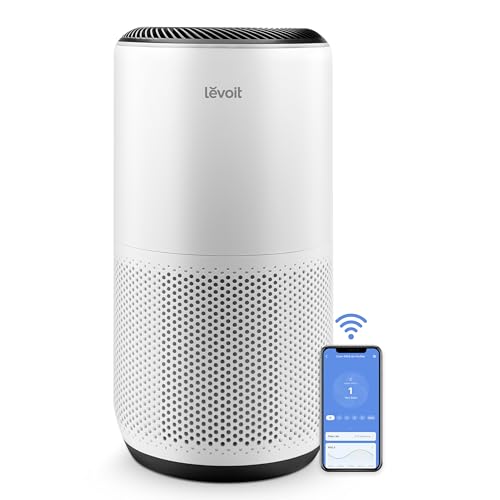
Disclosure: As an Amazon Associate, dailyhomedecorating.com earns from qualifying purchases. Links on this page are affiliate links; they cost you nothing extra. Prices and availability change often, so check the current Amazon listing before you buy.
The subject of this blueair blue pure 311 auto review is the family member that splits the difference most households actually argue about. The Blue Pure 311 Auto keeps the 311 line’s HEPASilent filtration and mid-size parish, fits a real particle sensor, and lets an automatic mode run the fan — then stops, deliberately, before the app, the account and the Wi-Fi radio that its Max sibling adds. It manages itself and minds its own business.
That combination sounds modest and is in fact a position: that a purifier should respond to its room the way a thermostat responds to temperature — locally, immediately, without a server’s permission. This review tests the position in practice: the sensor’s honesty, the auto mode’s judgement across a day’s events, the feedback a colour-coded indicator can and cannot give, and the ownership ledger of Blueair’s premium filters without an app to announce them.
By this programme’s standing rules, particles are the trade, carbon is a seasoning, health claims stay environmental — and the parish is the family’s familiar one: a generous bedroom, a flat’s main room, a nursery whose parents are too tired for settings. In that parish, autonomy without theatre may be the most valuable specification in this entire cluster.
Blueair Blue Pure 311 Auto Review: The Short Version
| Pick | Known for |
|---|---|
| Blueair Blue Pure 311 Auto | The named purifier |
| Blueair Blue Pure 311i Max | The connected sibling |
| Coway Airmega 150 | The orthodox smart rival |
| Blueair Blue Pure 411 Auto | The smaller automatic sibling |
| AirDoctor AD5500 | The carbon-heavy rival |
The Blue Pure 311 Auto is the thinking household’s compromise inside the Blueair family: the 311 parish and HEPASilent filtration, a genuine particle sensor and an automatic mode that manages the fan — and no app, no account, no Wi-Fi, no dashboard. It is the machine for owners who want the purifier to respond to the air without reporting to the cloud. Its filters carry the family’s premium pricing, its carbon is a light seasoning, and its feedback is a colour rather than a graph — but for a main bedroom that should manage itself in silence, it is arguably the family’s most balanced member.
In this guide
The sensor and the auto mode: judgement without a dashboard
The 311 Auto’s sensor samples the room’s particles and drives the fan through its range with a conservatism this review came to respect: it rises against real events — the vacuum’s pass, the cooking hour’s drift, the pollen morning — and, more importantly, it settles, returning the room to quiet without the hunting and surging that teach owners to disable lesser auto modes. A good automatic purifier should be boring in exactly this way, and the 311 Auto is boring to a professional standard.
Feedback is a colour and a light rather than a number and a graph. The household learns the machine’s language in a day — the calm colour, the working colour, the rare alarm — and loses the historian’s pleasures the Max’s app provides: no timeline of the party, no graph of the smoke day. For many owners that loss is the purchase’s point. The air is managed; the data stays home; nothing is uploaded, compared or gamified.
There is a reliability dividend folded into the simplicity: no pairing failures, no router changes orphaning the appliance, no feature retiring when a server does. The 311 Auto bought today will behave identically in a decade, which cannot be said of any connected rival in this cluster — a sentence that reads as a limitation in a features table and as a promise in a bedroom.
Filtration and parish: the family’s middle room
The HEPASilent path is the family’s standard: charged particles, a low-resistance filter, fine capture at a noise level that lets the middle speeds be living speeds. The 311 Auto’s parish is the generous bedroom and the modest living room — the flat’s main space — where its airflow at auto’s chosen speeds turns the room over through the day and idles through the night at a volume sleep forgives.
The fabric pre-filter wraps the tower in the family’s domestic camouflage, washing on the house’s laundry rhythm and sparing the main filter the coarse load. The main filter itself is the family’s premium consumable on its longish schedule, announced by the machine rather than an app — a light, a state, a note to self — and the three-year ledger should be compared, as ever, against the Coway’s and the AirDoctor’s before the parish is assigned.
Carbon remains the family’s light seasoning: enough to freshen a room’s background, not enough to answer a kitchen’s output, a smoker’s legacy or a litter empire. The 311 Auto’s buyers should be particle households — dust, pollen, dander, the street’s drift — and this review’s pick list hands the odour briefs to the machines built for them without any diminishment of this one’s parish.
Ownership without an account
Set-up is the old ceremony: unbox, place, plug, set to auto, leave. There is no password to invent, no firmware to await, no permission to grant a microphone it does not have. In a house accumulating connected objects like sediment, the 311 Auto’s silence on the network is a felt quality — guests cannot break it, children cannot reconfigure it, and a power cut returns it to duty without a negotiation.
The trade-offs arrive as absences rather than failures: no remote start for the guest room, no schedule for the office hours, no notification when the filter’s day comes. Households run by calendars and phones will feel each absence; households run by habit will not notice them for years. The review’s scenarios below sort the two households with some care, because this machine’s satisfaction curve depends almost entirely on which one is buying.
Longevity is the ownership’s quiet headline. A purifier with no connected layer has no connected layer to decay, and the 311 Auto’s decade should look like its first year: a sensor, a fan, a filter calendar and a sock in the wash. In a cluster full of machines whose intelligence has a server address, that sentence is the Auto’s whole campaign — and for a significant minority of households, it is enough to win the election.
The Auto’s philosophy: judgement without connection
The 311 Auto occupies the most interesting position in its family: automated but not connected, sensed but not networked. Its sensor reads the room, its logic answers, and nothing leaves the house. In a category racing to put every fan on a cloud, that localism reads at first as a missing feature and on reflection as a philosophy — the machine as a thermostat rather than as a phone. Households weary of accounts, updates and sunsets will recognise the philosophy as the one their other appliances have forgotten.
The philosophy has a practical dividend the review should record: the Auto cannot be bricked by a server’s retirement, confused by an app’s redesign, or stranded by a maker’s pivot. Its intelligence is soldered, and soldered intelligence ages at the speed of hardware rather than of software — which is to say, at the speed of the filter and the fan, the two things a purifier actually is.
A season of the Auto’s light
Owners learn to read the machine’s indicator the way they read a barometer: a glance in passing, a story accumulated. The light reports the vacuuming hour, the dog’s wet return, the window opened on the street’s traffic, the candle’s evening — and in reporting them, teaches the household its own air’s biography more effectively than any graph, because the lesson arrives in the room where the air is, at the moment it happens.
That pedagogy is the Auto mode’s sleeper virtue across this whole cluster: the machine manages the air, and in managing it visibly, manages the household’s habits too — doors closed during pollen hours, cooking’s drift anticipated, the bedroom’s door treated as the parish boundary it is. The 311 Auto’s light is a small teacher with a perfect attendance record.
The 311 Auto between its siblings
The family’s ladder puts the Auto between the 411’s simplicity and the Max’s connected flagship, and its rung is the one this review suspects most bedrooms actually need: judgement without infrastructure. The 411 asks the household to be the sensor; the Max asks it to be a subscriber; the Auto asks it to be neither, merely to place the machine well and feed it on schedule. That middle ask — competence without commitment — is a distinctly grown-up proposition, and the Auto’s steady sales suggest the parish knows it.
Cross-shoppers should nonetheless climb deliberately: the nursery still belongs to the 411’s manners, the suite-sized bedroom to the Max’s reach, the living room to the 211’s displacement. The Auto’s parish is the standard generous bedroom, which happens to be the most common purifier room in the housing stock — a parish whose size explains why this middle machine, neither cheapest nor finest, is the one its owners replace with itself.
The Picks in Detail: Blueair Blue Pure 311 Auto Review Contenders
Blueair Blue Pure 311 Auto — The named purifier
The 311 Auto is Blueair’s parish machine with a local brain: HEPASilent filtration for a generous bedroom, a sensor that watches the room, an auto mode with the judgement to be left alone, and a fabric sock that keeps it furniture. It asks for no account, no network and no attention beyond a filter on its calendar and a sock in the wash — the connected era’s most dignified refusal, in tower form.
Its limits are its philosophy’s shadow: feedback is a colour, control is local, and carbon is a seasoning. Households that want graphs, remotes and schedules should take the Max sibling with this review’s blessing; households that want their air managed the way their heating is — automatically, locally, silently — have found the machine that still believes in that arrangement.
| Filtration | HEPASilent with fabric pre-filter |
|---|---|
| Control | Sensor and auto mode, on-machine |
| Best room | Large bedroom, modest living room |
Strengths
- Sensor and auto mode with no app, account or Wi-Fi
- HEPASilent quiet at the speeds auto actually chooses
- Fabric pre-filter and a decade-proof simplicity
Trade-offs
- Feedback is a colour, not data — no history or remote control
- Premium Blueair filter pricing applies in full
- Carbon stage is light for odour-led briefs
Best for: main bedrooms and flats wanting self-managing purification without connectivity
Not suited for: data enthusiasts, remote-control households and deep odour problems
Positioning: blueair blue pure 311 auto review — Blueair Blue Pure 311 Auto is described rather than linked; this programme links only verified listings, so confirm its terms with the maker.
Blueair Blue Pure 311i Max — The connected sibling
The Max adds everything the Auto refuses: the app, the account, the history graph, the remote hand on the fan. Its full review in this cluster grades it as the family’s most complete member, and households whose lives run through their phones will find its layer worth every penny of the step up.
The choice between the siblings is the cluster’s cleanest temperament test, because the filtration and the parish are shared. Buy the brain’s location, not the machine: in the cloud with the Max, or in the box with the Auto, and let the household’s relationship with its other appliances cast the deciding vote.
| Filtration | HEPASilent |
|---|---|
| Control | Sensor, auto, app |
| Best room | Large bedroom |
Strengths
- Full app layer: remote, schedules, history, filter status
- Same HEPASilent parish with richer feedback
- The family’s most complete specification
Trade-offs
- Connected terms: Wi-Fi, account, server-dependent features
- Costs more to buy than the Auto
- Same premium filters and light carbon
Best for: households that run their homes through apps and value air data
Not suited for: the connectivity-weary, who are the Auto’s entire constituency
Positioning: blueair blue pure 311 auto review — the Blueair Blue Pure 311i Max is covered in prose, not as a linked pick; compare it on the maker’s own current terms before deciding.

Coway Airmega 150 — The orthodox smart rival
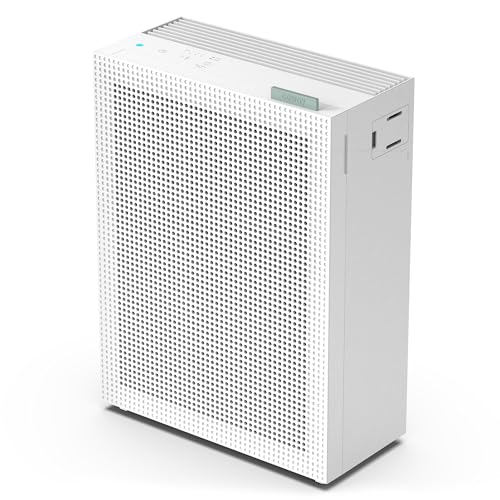
Coway’s 150 offers the connected, sensor-driven parish with an orthodox HEPA path and a design polish the Blueair answers with its sock. It is verified and linked in this programme, and it is the pick for households that want the full modern arrangement — app included — with their filtration done the conventional way.
Against the Auto it argues that intelligence should be visible and remote; against the Max it argues filtration orthodoxy and value. The three machines triangulate the modern bedroom, and this review’s verdict simply notes which vertex the Auto occupies and why a household might choose to stand there.
| Filtration | True HEPA with carbon |
|---|---|
| Control | Sensor, auto, app |
| Best room | Bedroom to living room |
Strengths
- Conventional HEPA with full smart features
- Polished design and composed manners
- Verified linked pick with official imagery
Trade-offs
- Connected decay applies to its feature set
- Carbon is light here too
- Seasonal filter rhythm to maintain
Best for: households wanting the complete modern package with orthodox filtration
Not suited for: autonomy purists and the app-fatigued
Blueair Blue Pure 411 Auto — The smaller automatic sibling
The family’s small-room intelligence — the 411 parish with a sensor and auto mode in the line’s automatic variants — serves the nursery, the study and the second bedroom with the Auto philosophy in miniature. Its siblings are reviewed in full in this cluster’s 411 and 411+ reviews; here it completes the ladder for households building a Blueair fleet room by room.
A house that takes the 311 Auto for its main room and the small automatic for its satellite rooms has bought a coherent philosophy at two scales: local brains, fabric socks, premium filters, and not one password among them.
| Filtration | HEPASilent |
|---|---|
| Control | Sensor, auto mode |
| Best room | Small bedroom |
Strengths
- Auto philosophy scaled to the small room
- Fabric sock and family filtration in miniature
- Pairs coherently with the 311 Auto in a fleet
Trade-offs
- Small parish only
- Model variants and names require care when ordering
- Premium filters at every scale
Best for: nurseries, studies and second bedrooms in an automation-without-apps household
Not suited for: main rooms and the connectivity-committed
Positioning: blueair blue pure 311 auto review — the Blueair Blue Pure 411 Auto appears as a prose pick rather than a linked one; the maker’s own current listing is the place to confirm its terms.

AirDoctor AD5500 — The carbon-heavy rival
The AirDoctor remains the bench’s answer when the brief turns chemical: UltraHEPA with substantial carbon, its own sensor and auto operation, and whole-floor reach at a lower ticket and a higher voice. Verified and linked here, it is the pick the 311 Auto’s shoppers should cross-examine hardest if their particle problem has an odour riding on it.
The Blueair’s quiet and camouflage are beyond it, and its filters are a heavier subscription. But its filtration bench is deeper where the Auto’s is thinnest, and households with smoke, pets and cooking in the brief should let that depth argue before the sock seduces them.
| Filtration | UltraHEPA plus substantial carbon |
|---|---|
| Control | Sensor, auto mode |
| Best room | Large rooms |
Strengths
- Substantial carbon for smoke and odour briefs
- Sensor and auto with whole-floor ambitions
- Lower purchase price than the Blueair
Trade-offs
- Louder, plainer, more appliance than furniture
- Filter costs are the ownership story
- Connected and consumable commitments both apply
Best for: mixed particle-and-odour households wanting automation
Not suited for: quietness-first bedrooms and simplicity seekers
How the Blueair Blue Pure 311 Auto Review Field Compares
Within the family, the 311 Auto is the Max minus the cloud: same parish, same filtration, a sensor and auto mode retained, the app and the rich display surrendered. Against the Coway Airmega 150 it offers the electrostatic-assisted path and the fabric sock against orthodox HEPA and Korean polish. Against the manual 411 models it is the intelligence upgrade for a larger room; against the AirDoctor it is the quiet parishioner facing the carbon heavyweight.
The comparison that matters most is philosophical and this review will not dodge it: automation without connectivity is a shrinking category, because makers prefer the app’s data and the subscription’s gravity. The 311 Auto is one of its best remaining citizens, and households that value the combination — response without reporting — should recognise that they are shopping a deliberate niche, not a default.
Buying Guide: Judging Blueair Blue Pure 311 Auto Review on the Right Criteria
The 311 Auto is judged by the quality of its autonomy: whether its sensor is honest, whether its auto mode’s judgement matches a thoughtful owner’s, and whether the absence of connectivity is a relief or a lack in daily life. The criteria below apply that standard to it and to the connected rivals it refuses to imitate.
The auto judgement test separates a considered buy from a hopeful one, since an automatic mode earns its place only if its choices match a thoughtful owner’s across a whole day — rising for events, settling without hunting, and idling at a volume the room forgives The 311 Auto’s judgement is its product: a sensor that spends the machine’s effort when the room earns it and rests it when it does not — graded here across a season’s evidence rather than a demonstration’s afternoon.
The sensor honesty test separates a considered buy from a hopeful one, since a particle sensor that responds to real events and ignores theatre is the difference between automation and animation, and it can be tested with a vacuum cleaner in five minutes Its sensor reports in the parish’s honest units — a graded indication rather than a laboratory’s false precision — and the review counts that restraint as the mark of a maker who trusts its own filtration.
Connectivity terms is where blueair blue pure 311 auto review stops being marketing and becomes measurable, because every connected feature is rented from a server, so the household should price the rental — accounts, updates, eventual retirement — against the remote conveniences it actually buys It has none, and in this machine that absence is a position: the automation is local, the judgement is the sensor’s, and no account stands between the household and its air — a position whose value grows as connected rivals age.
Feedback sufficiency. a colour is enough for a household that wants management and a graph is necessary for a household that wants understanding, and confusing the two appetites is how both machines disappoint A light that changes colour is feedback reduced to its essence — enough to act on, never enough to obsess over — and the 311’s household learns its room from that light the way sailors learn weather from a glass.
Judge filter ledger before anything else on the page: the family’s premium consumables apply to the Auto in full, and the absence of an app means the household, not a notification, owns the calendar The family’s filters price at the parish’s premium, on a schedule the machine announces; the Auto’s efficiency with its own effort stretches the interval, which is automation paying part of its own consumable bill.
Judge parish discipline before anything else on the page: the 311 parish is a generous room with a managed door, and households that respect the border get the quiet, effective machine the specification describes It is a bedroom machine that knows it — a generous bedroom’s air, managed — and the review holds it to that discipline against both the brochure’s reach and the household’s hope.
Blueair Blue Pure 311 Auto Review in Real Households
The nursery of two exhausted parents is the situation readers describe most often. The Auto’s finest post: the machine senses the day’s events, settles for the night, and never once asks a parent holding a baby to open an app. Its colour is readable from the doorway at 3 a.m., which is the only dashboard that household will consult this year.
The flat of a connectivity sceptic is the situation readers describe most often. A household burned by two retired smart devices buys the Auto as a matter of policy: intelligence that lives in the box or not at all. A year later it remains the only ‘smart’ appliance in the flat whose smartness has never sent an email, and its owners have become insufferable about it at dinner parties.
Picture the guest bedroom that hosts monthly for a moment. Auto mode is the guest room’s ideal staff: the machine wakes against the week’s dust before visitors arrive, idles during their stay, and returns to watchfulness after — all without the host remembering it exists between visits.
The study of a data lover is the situation readers describe most often. Here the Auto is miscast and the Max should have been bought: the owner wants the graph of the working day, the schedule for the calls, the number for the argument with the landlord. The scenario’s lesson is that feedback appetite is a specification, and it should be declared before purchase rather than discovered after.
The bedroom of a light sleeper. The Auto’s night behaviour — sensor idling, fan at its floor, indicator dimmed — respects the room’s first purpose. Light sleepers should still audition any purifier’s night voice in person where possible, because this parish’s tolerance is measured in decibels nobody else can grade for them.
How To Get Blueair Blue Pure 311 Auto Review Right, Step by Step
Step 1: Commission it on auto and leave it. Place with clearance, set the mode, and give the machine a week of sovereignty before judging it. Automation is a relationship, and the first week’s graphs — had it any — would mostly record the owner’s interference.
Step 2: Learn its colour language. Spend one day noticing what the indicator does during vacuuming, cooking drift and the night. Once the household reads the colour fluently, the machine’s whole feedback philosophy is in place.
Step 3: Keep the sock in the laundry rhythm. Wash the fabric pre-filter when it greys, monthly in ordinary service. The sock is the main filter’s bodyguard, and its condition is the cheapest air quality improvement in the house.
Step 4: Own the filter calendar on paper. Note the installation date on the filter and the expected change season on the household calendar. The machine will signal; the paper will remember; between them the premium filter gets its full, honest life.
Step 5: Use manual speeds for events. For the party, the renovation day or the smoke drift, override to a working speed deliberately, then return the machine to auto. Sovereignty with occasional decrees is the intended constitution.
Step 6: Review the parish each season. As rooms and routines change, re-ask the placement question. The Auto’s intelligence is local and literal: it manages the air it can reach, and the household’s job is to keep the right air within reach.
Mistakes That Undermine Blueair Blue Pure 311 Auto Review
Buying the Auto and mourning the app. The absence is the product. Households that discover a month later that they wanted history graphs and remote control bought the wrong sibling, and the Max’s premium would have been cheaper than the regret.
Buying the Max and never opening the app: The mirror error: a connected premium paid for a layer that goes unused, while the Auto would have managed the same air in silence. Know your household’s app record with its other appliances and believe it.
Testing the sensor with perfume sounds harmless in the showroom and expensive at home. A spray of fragrance proves the sensor reacts to something, not that it judges well. Test with the vacuum and the cooking hour — the events it will actually govern — and watch whether it settles as wisely as it rises.
Forgetting the filter without a notification sounds harmless in the showroom and expensive at home. The Auto’s owners own their calendar. Write the filter’s expected season on the machine itself in marker, because a premium filter run a year past its life taxes the whole parish’s air.
Asking it to handle the kitchen’s output. The parish is a room, not a floor, and its carbon is a seasoning. Open-plan households should assign the 311 Auto a room with a door and let the deep-carbon picks argue about the kitchen.
Going Deeper on Blueair Blue Pure 311 Auto Review
The 311 Auto is a small monument to a idea the industry is abandoning: that intelligence can be a property of a device rather than a service. Its sensor thinks locally, its judgement is its own, and its maker cannot retire its brain from a server farm in five years’ time. Whether that idea survives the decade is a market question; that it serves a real constituency today is a household fact, and this review has tried to give that constituency its due without nostalgia’s varnish.
There is a privacy corollary that deserves its sentence. A purifier with an app knows when you cook, when you clean, when the house is empty and when the baby wakes — a diary written in particles. The Auto keeps that diary in the room, in a colour, forgotten by morning. Households differ in how they price such things, but the difference should be a choice, and the Auto is currently one of the few machines still offering it at this level of competence.
The machine also clarifies what automation is actually for. Not data, not control, not the smart home’s theatre — but the removal of a recurring decision from a household’s day. The 311 Auto removes exactly one decision, the purifier’s speed, and removes it completely. Rivals that remove the same decision while adding three new ones — accounts, updates, integrations — have a different definition of help, and households should notice which definition they are buying.
So the Auto’s verdict is a constituency’s verdict. For the household that wants its air managed like its heating — automatically, locally, and without a correspondence — this is the most complete machine in the cluster. For the household that wants its air as data, the Max is waiting in the same family’s showroom, and the distance between the two is not quality but philosophy, measured in a single question: should your purifier have a password?
The 311 Auto marks a fork in the category’s philosophy of intelligence. One road puts the intelligence in the cloud, where it can be graphed, shared and sunsetted; the other solders it into the machine, where it can only ever be what it was on the day it was bought. This review has no doctrine about which road a household should take — the Max’s connected layer earns its own warm review in this cluster — but it insists the fork be seen. The Auto is the soldered road’s best argument: that a bedroom’s air needs a judge, not a correspondent, and that a judge who never phones home cannot be retired by anyone’s server.
There is also a privacy footnote that grows more material each year: a sensor that reads a home’s air learns its rhythms — occupancy, cooking, sleep — and the Auto’s design keeps that knowledge in the room where it was learned. Households that have begun, quite reasonably, to ask what their appliances report will find the 311 Auto’s silence on the subject to be the most complete answer in this cluster: it reports nothing, to no one, ever, because it cannot. In 2026 that incapacity reads less like a limitation than like a design ethic, and the review records it as one.
The 311 Auto’s final lesson is about enough: enough intelligence to manage a room, enough feedback to learn from, enough connection to none. In a decade when every appliance bids for a household’s attention, accounts and data, a machine that asks for a shelf, a filter and nothing else is making an argument about what domestic technology owes the people who live with it. The Auto makes that argument quietly, in a bedroom, with a small coloured light — and the households who have heard it tend not to buy the other kind again.
Keeping the Auto: the light housekeeping of a judge
An automatic machine’s maintenance is mostly custodial: the sensor’s lens wiped when the exterior is, the intake kept clear of the curtain’s drift and the wardrobe’s shadow, the filter changed when the machine’s own accounting calls it. Households that keep those three find the Auto’s judgement stays calibrated to the room rather than to its own accumulating dust — the sensor’s version of the Blast school’s media inspection, translated into optics.
The discipline has a failure mode worth naming: the machine placed where its sensor reads an exception — beside the kitchen door, in the humidifier’s plume — will govern by that exception, diligently and wrongly. Placement is the Auto’s one true setup decision, and this review’s advice is to give it the room’s representative air, at breathing height, away from sources and sinks.
The Auto in the rented bedroom
Renters are the Auto’s second constituency, for the same reasons they are the MK01’s, at a higher altitude: no installation, no network to configure in a landlord’s router, a footprint that fits the room the tenancy actually provides, and a sensor that adapts to a new parish in an afternoon when the tenancy moves. A machine whose intelligence travels in its own case is a machine designed for housing as it is lived now, and the Auto’s localism — so easily mistaken for a missing feature — is precisely its portability.
The renter’s one adaptation is the filter’s calendar against the tenancy’s: a lease shorter than a filter’s life argues for buying the machine early in the tenancy and carrying its consumable onward, box kept, as this review advises for every parish machine. The Auto in its box, sensor and all, is a bedroom’s air in a single lift — which is, for its constituency, the entire point.
The Auto’s second room and second owner
Automatic parish machines cascade gracefully: the bedroom’s Auto, replaced one day by a flagship, becomes the study’s or the spare room’s intelligence — a demotion that suits it, because its sensor adapts to the new parish in an afternoon and its localism asks nothing of the new room’s network. Households should buy it, as this cluster advises for every parish machine, with the second room already in mind; the Auto’s second room is usually the one whose air nobody was managing at all.
The cascade also disciplines the first purchase: a machine destined to serve two rooms across a decade should be bought from the channel with the cleanest paperwork and fed genuine filters from the first year. The Auto’s owners, who tend to keep machines, understand this instinctively — the review merely writes down what their receipts already say.
Field Notes on Blueair Blue Pure 311 Auto Review
There is a privacy corollary that deserves its sentence. A purifier with an app knows when you cook, when you clean, when the house is empty and when the baby wakes — a diary written in particles. The Auto keeps that diary in the room, in a colour, forgotten by morning. Households differ in how they price such things, but the difference should be a choice, and the Auto is currently one of the few machines still offering it at this level of competence.
One more consideration: an auto mode’s wisdom is measured by its settling as much as its rising, because a fan that hunts teaches its owner to reach for the manual switch and end the experiment a colour indicator is a complete language for a machine whose decisions are trusted, and an impoverished one for a machine whose decisions are audited — the household should know which relationship it wants local intelligence cannot be discontinued, which makes the 311 Auto’s feature set the most future-proof in this cluster precisely by being the smallest the particle diary a connected purifier keeps — cooking, cleaning, occupancy — is household data of a sensitivity nobody prices when they tick the app’s terms
Closer to home, Blueair’s decision to sell both the connected and the unconnected sibling is a market courtesy that costs the maker money and buys the customer a genuine choice the fabric sock’s laundry rhythm quietly sets the household’s maintenance tempo, and machines that join existing rituals outlive machines that invent new ones a sensor’s conservative judgement — rising late, settling early — is a design philosophy about trust, and it is the reason this auto mode survives its owners’ first month the 311 parish at night is a study in enough: enough airflow to hold the room, enough quiet to forget it, enough light to find the door
Meanwhile, premium filters are the family’s toll at every size, and the Auto’s owners pay it without the anaesthetic of an app notification — they should budget it with open eyes the machine’s ideal owner has a sentence ready — ‘it just handles the bedroom’ — and that sentence, repeated across a decade, is the product’s entire marketing department in a cluster of machines competing to be noticed, the 311 Auto competes to be forgotten, and wins its parish by the widest margin of any virtue measured here its sensor’s graded light is a deliberate refusal of false precision — a maker confident enough in its filtration to report air the way a barometer reports weather, in tendencies rather than in decimals
Meanwhile, local automation ages like hardware rather than software: no sunset, no subscription, no redesign — the Auto bought today will behave identically in a decade, which is a specification connected flagships cannot print the machine’s resting habit is an energy argument as much as a filtration one: a sensor that lets a fan idle through clean hours divides the parish’s electricity by the room’s actual need in the end the 311 Auto is the family’s grown-up middle — judgement without infrastructure, manners without theatre — and its review’s warmth is for a machine that trusts its owners to want exactly that its resting fan is an acoustic mercy with a filtration logic: air already clean does not need re-cleaning, and a machine that knows the difference saves its filter, its electricity and its welcome in the same decision
Households report that the light’s grammar — a colour, a change, a return to calm — can be taught to a child, a guest or a grandparent in one sentence, which makes the Auto the rare automatic appliance a whole household can actually read its automation has one more constituency: the household member who would never operate a purifier at all, whose room is managed because the machine needs no one’s permission to begin the Auto’s sensor makes it the family’s diagnostician as well as its servant — the machine that first reports the new rug’s shedding season, the heating’s dusty debut, the window seal’s failure — findings its owners act on far beyond filtration its lack of an account means a house move costs it nothing: unplug, carry, place, and the judgement resumes in the new parish by evening, which is the renter’s definition of a smart appliance
For the record, and its middle position in the family is a market verdict as much as a design one: most bedrooms need judgement more than they need either simplicity or a flagship, and the Auto is judgement, packaged
Blueair Blue Pure 311 Auto Review: Cases Worth Studying
The household that fired its apps. After a smart thermostat’s maker retired its app and a doorbell’s cloud changed its terms, one household adopted a rule: nothing in the bedroom reports to anyone. The 311 Auto was bought as the rule’s purifier, and two years on it remains the only appliance in the house whose intelligence has never sent a notification, requested an update or changed its behaviour overnight. Its owners describe this not as a missing feature but as the feature, and the case is recorded here because that household is larger than the industry currently believes.
Final Recommendation on Blueair Blue Pure 311 Auto Review
The Blueair Blue Pure 311 Auto review concludes that this is the family’s most balanced member for the households it understands: HEPASilent filtration, a sensor with judgement, an auto mode that can be left sovereign, and not one connected string attached. Its colour-only feedback and premium filters are the philosophy’s stated prices.
Take the Max for the data and the remote hand, the Coway 150 for orthodox smart polish, the AirDoctor for carbon, and the little automatics for the satellite rooms. Take the 311 Auto when the brief is a main room that manages itself in silence — it will do so for a decade, and it will never once ask for your password.
Frequently Asked Questions About Blueair Blue Pure 311 Auto Review
What is the difference between the 311 Auto and the 311i Max?
Filtration and parish are shared. The Max adds the connected layer — app control, history graphs, remote schedules and richer feedback — for a higher price. The Auto keeps the sensor and the automatic fan management on the machine itself, with a colour indicator as its voice. Choose by where you want the intelligence to live. The Max adds reach, refinement and the connected layer for a larger room; the Auto is the same philosophy at the honest middle — and in a standard bedroom the difference is one the sleeper may never invoice.
Does the Blue Pure 311 Auto have an air quality sensor?
Yes — a particle sensor that drives the auto mode and the colour indicator. It is the machine’s local brain: it cannot show you a graph or a number, but it can and does run the fan like a thoughtful owner would, which is the sensor’s actual employment. Yes — the sensor is the machine’s namesake and its manager, and its indications are deliberately graded rather than falsely precise, as the criteria above record.
What size room does the 311 Auto suit?
A generous bedroom, a nursery or a flat’s modest living room — the family’s middle parish — with the door discipline any purifier needs. Larger open spaces belong to the 211 line; smaller rooms to the 411 models, both reviewed in this cluster. A generous bedroom or small living room with the door managed; open-plan households belong to the 211’s displacement or the cluster’s large-room benches.
How much are the filters, and how often?
Blueair’s premium consumable pricing on a longish schedule, signalled by the machine. Price the current replacement before purchase and write its season on your calendar — without an app, the household is the notification system, and the three-year ledger is the honest comparison against rivals. Premium-band, on the machine’s announced schedule — and the Auto’s habit of resting when the air is clean stretches real intervals beyond the pessimist’s calendar.
Does the 311 Auto help with odours?
Lightly. Its carbon stage freshens a room’s background but is not a deep bed, and odour-led briefs — heavy cooking, smoke legacy, litter empires — belong to the AirDoctor and Austin picks in this cluster. The Auto is a particle machine with excellent manners. Its carbon stage handles a bedroom’s background and a kitchen’s drift; a smoke room’s chemistry belongs to the deep-carbon machines, as this cluster’s comparisons keep ruling.
Is the 311 Auto quiet enough for a bedroom?
At the speeds its auto mode chooses for the night, yes — quietness at working speeds is the HEPASilent design’s signature, and the indicator dims for sleep. Its highest speed is an event tool with a fan’s voice, and the auto mode’s wisdom is precisely that it so rarely goes there uninvited. At its resting speeds it is a bedroom machine by design; its working voice appears when the room gives it cause, which is usually when the room is empty or the sleeper is already awake to the cause.
Reading: blueair blue pure 311 auto review — from our own guides: Blueair 311i Max reviewed Blueair Blue Pure 411 Plus reviewed air purifier versus humidifier best HEPA air purifiers what is a HEPA filter quiet air purifiers