Disclosure: As an Amazon Associate, dailyhomedecorating.com earns from qualifying purchases. Links on this page are affiliate links; they cost you nothing extra. Prices and availability change often, so check the current Amazon listing before you buy.
Scale is the whole story of this blueair blue pure 211 review. The 211 line — sold today in its 211+ form — is the Blue Pure family’s large-room instrument: a tall tower, a big HEPASilent filter, a fabric pre-filter sock, and airflow rated for the open-plan living spaces, playrooms and generous bedrooms where the cluster’s smaller machines become decorative. It is the purifier for the room the others cannot serve.
Blueair keeps the proposition simple at this size: three speeds, a filter calendar, the washable sock, and none of the 311i Max’s connected intelligence in the line’s classic form. This review examines what that simplicity buys in a big room — delivered clean air at working speeds, the noise ledger at each setting, the real cost of its large filters — and where the parish ends: the open-plan-with-kitchen, the very large loft, the odour-led brief.
The ground rules are the programme’s usual ones — particles are this machine’s honest trade, gases are a light sideline, and health claims stay environmental. A big room is where those distinctions matter most, because a large space forgives nothing — an undersized purifier in a small room is a disappointment, while an undersized purifier in a big room is a sculpture.
Blueair Blue Pure 211 Review: The Short Version
| Pick | Known for |
|---|---|
| Blueair Blue Pure 211+ | The named purifier (current 211 model) |
| Coway Airmega 300 | The conventional large-room rival |
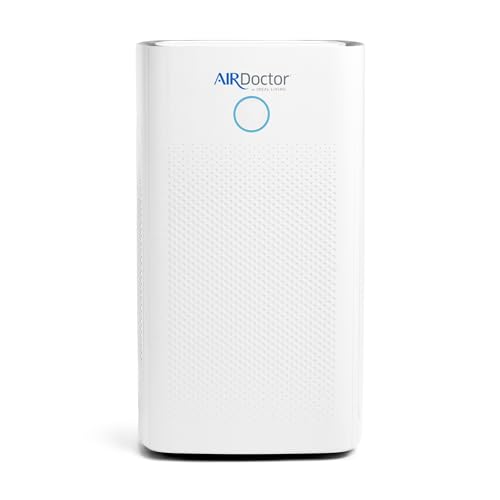
| AirDoctor AD5500 | The heavy-carbon large rival |
| Blueair Blue Pure 311i Max | The intelligent smaller sibling |
| Alen BreatheSmart 75i | The premium quiet rival |
The Blue Pure 211+ — the current form of the 211 line — is Blueair’s big-room bruiser: a tall tower with HEPASilent filtration, a washable fabric pre-filter and airflow sized for open living spaces, playrooms and large bedrooms where smaller purifiers go to be ignored. It trades the 311i Max’s intelligence for displacement: less app, less sensor theatre, more air. Its top speed is a clear-down roar, its filters are premium consumables, and in a large room at a working speed it is one of the most effective domestic purifiers in this cluster.
In this guide
Airflow for big rooms: the displacement argument
A living space of several hundred square feet, open to a hall or a kitchen, reloads its air continuously through every doorway and stairwell. Serving it requires displacement — a fan and filter that can turn the volume over repeatedly at a speed the room can tolerate — and that is the 211’s entire engineering brief. Its middle speed, run for hours, does the work; its top speed clears the room after events; its low speed maintains the peace overnight in a large bedroom.
HEPASilent’s low-resistance filtration is what makes the displacement civilised: the big filter’s particles are charged and caught without the dense wall that would make a fan this size roar at working speeds. The result is a large-room machine whose ordinary voice is a room tone rather than an appliance’s complaint — the quality owners mention first, ahead of the clean-air figures that justified the purchase.
The parish still has borders. A true open-plan with a working kitchen is two parishes wearing one ceiling — the cooking source will defeat any single machine’s placement — and a loft beyond the rating is a two-machine problem. The 211’s honesty is that its borders are far out; the review’s honesty is that they exist, and the scenarios below pace them off.
The sock, the filter and the cost of size
The fabric pre-filter at this scale is a tarpaulin of a thing, washing in a machine load of its own and returning the tower to its furniture disguise. Colours let the big box participate in the room’s palette — a non-trivial mercy for an object the size of a small side table that must live in sight for years. Guests will mistake it for a speaker; owners will correct them for the first month and then stop bothering.
The main filter is correspondingly large and priced accordingly: the 211’s consumable is the family’s heavyweight, on a schedule the machine’s indicator announces. The three-year ledger for a big-room machine should be compared against the AirDoctor’s and the Coway 300’s, because at this size all the makers charge like it — the differences are in schedule and in what the filter contains, with Blueair’s carbon the lightest of the three benches.
Energy follows size more gently than expected, thanks again to the low-resistance path: the middle speed’s draw is modest for the air it delivers. The real running cost is the filter, as it is across this whole category, and the 211 at least spends it on the component that does the work rather than on electronics that will date.
Controls, intelligence and the case for simplicity
The classic 211 proposition is a dial’s worth of speeds and a filter light. There is no app to pair in the line’s standard form, no sensor to perform, no account to keep — a deliberate archaism that its owners defend with surprising passion. In a living room that hosts a television, a sound system and three other connected objects, a purifier that simply purifies has become a luxury position.
The cost of the refusal is feedback: the machine cannot tell you the room’s number, cannot rise by itself against the cooking hour, cannot be scheduled from the sofa. Households that want those behaviours should buy the 311i Max for a smaller parish or accept a rival’s smart layer at this size. Households that have watched smart features decay across a house full of appliances will recognise the 211’s bet and may take it gratefully.
Placement completes the ownership picture: central in the open space rather than cornered, clear of curtains and soft furnishings that would drink its output, and near the room’s dominant source — the kitchen’s edge, the dog’s territory, the wood stove’s parish. A big machine rewards a deliberate post more than a small one, because its airflow, well placed, organises the whole room’s air rather than a corner of it.
The 211+ in the open-plan flat
The open-plan flat is the 211+’s designed parish and its sternest test: kitchen, living and sleeping in one volume, a hob’s output at one end and a sleeper at the other. In that volume the machine’s virtues align — displacement enough for the whole space’s slow turnover, a clear-down speed for the cooking hour, a low speed that lets the sleeper forget it — and its presence, a designed object at furniture scale, suits a room that cannot hide an appliance in a corridor.
The flat also teaches the machine’s border: the volume is one parish only while it stays one volume. The bedroom door shut at night makes a second parish the 211+ cannot patrol, and flat-dwellers in this review’s research routinely end with the big machine’s parish mapped honestly and a small second machine — a 411’s worth of hush — behind the bedroom door.
A dial in an automatic age
The 211+’s refusal of automation deserves the same hearing this review gave the Austin’s, at the opposite end of the price scale. A sensor-driven machine manages itself; the 211+ is managed — its speeds chosen by a household that learns its own room’s rhythm and sets the dial the way it sets a thermostat. For a constituency that distrusts delegation, or simply enjoys the ritual, that is not a missing feature but the product’s character, and its owners defend it with the fervour of people who chose it twice.
The review’s position is the cluster’s: automation is worth money when the household will not supply the judgement, and worth nothing when it will. The 211+ prices that position into a flagship’s body, and households should buy it as a position — knowingly, the way its owners do — rather than discovering it as an omission.
The 211+ and the large dog household
Large rooms with large dogs are the parish where displacement earns its keep most visibly: hair and dander produced at a big animal’s rate, doors opened at a dog’s schedule, mud imported by the paw-load. The 211+’s pre-filter takes the coarse load that would choke a lesser machine’s week, its volume turns the room’s air over at a rate the animal’s output respects, and its washable sock — the family’s signature — makes the weekly shake-out a laundry act rather than a maintenance event.
Dog households should nonetheless read the carbon criterion with the review’s honesty: a wet dog’s perfume is a source, and sources are managed at the dog — the wash, the towel, the mat — with the purifier as the room’s second line. The 211+ is an excellent second line. It is not a bath, and its owners, who also own the towels, have never asked it to be.
The Picks in Detail: Blueair Blue Pure 211 Review Contenders
Blueair Blue Pure 211+ — The named purifier (current 211 model)
The 211+ carries the 211 line’s brief into its current form: the tall tower, the big HEPASilent filter, the washable sock and airflow for the rooms that defeat ordinary purifiers. It is the machine for the open living space and the oversized bedroom, delivering clean air at a working volume that conversation can live with, and asking in return only a filter on a calendar and a post with clearance.
Its simpleness is its sophistication: no app to decay, no sensor to distrust, no account to keep. Households that want intelligence at this size should shop the rivals below; households that want displacement with manners have found the category’s benchmark, in the line’s current model, exactly where its predecessors left it.
| Filtration | HEPASilent, large format |
|---|---|
| Control | Manual speeds, filter indicator |
| Best room | Large living spaces |
Strengths
- Large-room airflow with HEPASilent quiet at working speeds
- Washable fabric pre-filter and furniture-grade presence
- Simple, durable control story with no connected decay
Trade-offs
- Premium large filters on a recurring schedule
- Little automation or feedback in the classic form
- Carbon is light — a particle machine first
Best for: open-plan living spaces, playrooms and large bedrooms needing real displacement
Not suited for: odour-led briefs, feedback enthusiasts and small rooms
Positioning: blueair blue pure 211 review — Blueair Blue Pure 211+ is described rather than linked; this programme links only verified listings, so confirm its terms with the maker.
Coway Airmega 300 — The conventional large-room rival
Coway’s Airmega 300 answers the big-room brief with orthodox HEPA filtration, a dual-intake design and a sensor-driven auto mode the Blueair declines to offer. Its own review in this cluster gives it full honours; here it is the pick for households that want the large parish managed intelligently, with a conventional filter path and a maker’s polish that suits design-led rooms.
The contest between it and the 211+ is the size class’s real debate: displacement and simplicity against displacement and intelligence. Either machine serves the room; the household’s temperament about automation is the ballot paper.
| Filtration | True HEPA, dual intake |
|---|---|
| Control | Sensor, auto mode |
| Best room | Large living spaces |
Strengths
- Dual-intake HEPA power with sensor and auto mode
- Design polish for visible living spaces
- Conventional filtration path for the orthodox
Trade-offs
- Premium filters and a premium ticket
- More machine to hear at its top speeds
- Carbon still not a deep bed
Best for: large rooms wanting intelligent management with orthodox filtration
Not suited for: simplicity devotees and the app-weary
Positioning: blueair blue pure 211 review — Coway Airmega 300 is described rather than linked; this programme links only verified listings, so confirm its terms with the maker.

AirDoctor AD5500 — The heavy-carbon large rival
The AirDoctor AD5500 brings the big room a deeper bench: UltraHEPA with substantial carbon, a sensor, and whole-floor claims at a lower purchase price than either premium rival. For the open-plan house whose problem includes a kitchen’s output, a dog’s territory and a road’s drift, its carbon column is the argument, and it is verified and linked in this programme.
It concedes the Blueair’s quiet elegance and the Coway’s polish, and its filters are a serious subscription. The three machines divide the large-room shelf by philosophy — simple, smart, deep — and this review’s verdict names the 211’s philosophy without demoting the others’.
| Filtration | UltraHEPA plus substantial carbon |
|---|---|
| Control | Sensor, auto mode |
| Best room | Large rooms, open plans |
Strengths
- Substantial carbon for mixed particle-and-odour briefs
- Whole-floor ambitions at a lower ticket
- Sensor and auto operation included
Trade-offs
- Louder and plainer than the premium pair
- Filter costs are the ownership
- No furniture camouflage
Best for: open-plan floors where cooking, dogs and traffic all contribute
Not suited for: rooms where quiet and design lead the brief
Blueair Blue Pure 311i Max — The intelligent smaller sibling
The Max, reviewed in full in this cluster, is what happens when the parish shrinks and the intelligence grows: sensor, app, auto mode and the same sock, in a machine for a generous bedroom rather than an open floor. Households whose ‘large room’ is actually a master suite should take the Max’s brain over the 211’s displacement every time.
The siblings also pair well in a house: the 211 holding the open plan, the Max managing the bedroom, the family’s filter calendar running both. Blueair’s ladder is designed for exactly that fleet, and this review’s ladder of picks is the family’s catalogue.
| Filtration | HEPASilent |
|---|---|
| Control | Sensor, auto, app |
| Best room | Large bedroom |
Strengths
- Full smart layer with sensor, app and history
- Quieter parish manners for bedrooms
- Same fabric-sock domestic camouflage
Trade-offs
- Smaller parish than the 211 line
- Premium filters and connected terms
- Carbon remains a seasoning
Best for: master bedrooms and flats’ main rooms wanting automation
Not suited for: genuinely large open spaces
Positioning: blueair blue pure 211 review — the Blueair Blue Pure 311i Max appears as a prose pick rather than a linked one; the maker’s own current listing is the place to confirm its terms.

Alen BreatheSmart 75i — The premium quiet rival
Alen’s 75i contests the large room on quiet power: strong particle performance at low volume, filter options that tune toward odour, and a premium finish. It is verified and linked in this programme, and it is the pick for households that found the 211’s simplicity too plain and its sock too casual, but share its parish and its budget.
Against the Blueair it argues finish and filter choice; against the Coway, quiet; against the AirDoctor, manners. The large-room shelf is the cluster’s most contested, and the 75i’s presence in it is earned rather than honorary.
| Filtration | HEPA with options |
|---|---|
| Control | Auto mode |
| Best room | Large living spaces |
Strengths
- Premium quiet power for large rooms
- Filter options include odour tuning
- Finish and design above the 211’s utility
Trade-offs
- Premium price and recurring filters
- Less domestic camouflage than the sock
- Carbon still not the Austin class
Best for: premium quiet for large rooms, with filter flexibility
Not suited for: simplicity-first households and tight budgets
How the Blueair Blue Pure 211 Review Field Compares
The 211+ and the 311i Max divide Blueair’s parish map between them: displacement against intelligence, the big room’s engine against the main bedroom’s manager. Against the AirDoctor AD5500 it offers quieter, more elegant airflow with far less carbon; against the Alen 75i it offers the fabric sock and the simpler control story at a similar premium tier. The Coway Airmega 300, reviewed in this cluster, is its closest conventional rival for the open-plan brief.
Households should notice what the 211 line refuses: the dense smart layer. In a category sprinting toward dashboards, the big Blue Pure remains a machine you set and leave, and its buyers consistently cite that refusal — plus the sock — as the reason it holds the living room while smarter machines migrate to bedrooms.
Buying Guide: Judging Blueair Blue Pure 211 Review on the Right Criteria
A large-room purifier is judged by delivered clean air at a bearable volume, by whether its parish claim survives a real open-plan space, and by the filter bill for feeding that airflow. The criteria below grade the 211 line and its large-room rivals on those terms.
Judge displacement at a bearable volume before anything else on the page: a large room needs air changes delivered at a speed the room can live with for hours, so clean-air rate at the middle speed — not the roaring top — is the figure that grades this class The 211+ moves living-room air with a fan whose voice stays conversational at its working speeds — the large parish’s defining bargain, and the one this machine’s reputation rests on.
Parish honesty: open-plan claims should be discounted by doorways, kitchens and ceiling height, and a machine whose borders are stated plainly outranks one whose rating assumes a sealed box Its claimed parish is a real one — the open living space, the studio flat — provided the household grades it on delivered air with doors as they actually live, not as the brochure arranges them.
The filter weight and price test separates a considered buy from a hopeful one, since big machines eat big filters, and the three-year consumable ledger is the true price difference between the premium rivals in this class Its filter is a serious object with a serious price, and the annualised ledger belongs in the purchase decision; the machine’s defenders and its critics both start from that number.
Judge presence at scale before anything else on the page: an object this size lives in sight for years, so its domestic camouflage — the sock, the silhouette, the colour — is a functional specification, not a garnish A large purifier is furniture whether it wants to be or not, and the 211+’s design accepts the assignment — a considered object rather than an appliance in hiding.
Judge intelligence, wanted or not before anything else on the page: the class divides into machines that manage themselves and machines that decline to, and the household should buy its own temperament rather than the market’s direction It offers little, and the review grades that as a constituency question: households that want automation should buy it elsewhere in the family; households that want a dial and displacement are home.
Carbon proportion deserves its own line in your notes. at this size the kitchen is usually in the parish, so the carbon stage’s seriousness decides whether cooking is an event the machine answers or merely witnesses Its carbon stage is proportioned to a living room’s background rather than a smoke room’s chemistry — honest at its parish, and not a substitute for the deep-bed machines when chemistry is the brief.
Blueair Blue Pure 211 Review in Real Households
The open-plan family room. The 211’s home fixture: central post, middle speed through the waking hours, the room’s air turning over while life happens around it. Expect the benefit as an absence — the cooking hour that does not linger, the dog’s corner that does not announce itself — rather than as a sensation.
The playroom over the garage is the situation readers describe most often. Large, dusty, carpeted and full of small lungs at floor level: the parish where displacement earns its price. The machine’s sock will grey faster here than anywhere; wash it on the room’s rhythm and let the big filter do the season’s work.
The oversized master bedroom is the situation readers describe most often. A bedroom big enough to defeat the 411 class gets the 211 at its low speed: quiet, dark-friendly in its indicator discipline, and sized to the volume rather than to the furniture. Couples who ‘tried a purifier and it did nothing’ in a vast bedroom usually tried a small one; this is the correction.
The loft with a kitchen at one end. One machine, honestly placed near the kitchen’s edge, will manage the living end and mitigate the cooking end; it will not make the kitchen’s own air a bedroom’s. The scenario’s lesson is placement and expectation, and households that learn both keep the machine; the rest return it and blame the category.
The house with a wood stove. A stove’s parish is particles with occasional smoke events, and the 211’s displacement serves it well — placed to intercept the room’s circulation rather than beside the stove itself. Carbon-light caveats apply to the smokiest nights, when closed doors and the stove’s own manners matter more than any machine.
How To Get Blueair Blue Pure 211 Review Right, Step by Step
Step 1: Measure the parish in volume. Length by width by ceiling height, minus a realism discount for open doorways and stairs. Buy the machine whose honest parish covers the discounted figure, not the brochure’s flattery.
Step 2: Give it the central post. Place the tower where the room’s air circulates — near the centre of the open space, clear of curtains and soft furnishings — and let its output organise the room rather than decorate a corner.
Step 3: Live at the middle speed. Make the working speed the default, the top speed the event response, and the low speed the overnight setting in sleeping parishes. The three-speed rhythm is the machine’s whole operating system.
Step 4: Wash the sock monthly. Into the laundry when it greys, sooner in pet and playroom service. At this size the pre-filter’s condition is visible from across the room, which is the machine’s own reminder system.
Step 5: Budget the big filter on paper. Write the replacement price and the expected interval into the purchase note. Large-room ownership is a filter subscription with a machine attached, and the households that price it first are the ones still satisfied in year three.
Step 6: Review the room each season. Furniture moves, sources change, a dog arrives. Re-place and re-judge the machine seasonally, because a big room’s air system deserves the same review as its heating — it is, functionally, the same kind of plant.
Mistakes That Undermine Blueair Blue Pure 211 Review
Buying the parish by the rating’s best case: Large-room ratings assume favourable conditions. Measure your space’s volume, count its openings, and buy for the room you have — the 211 rewards honesty by being sized for the honest end of its claims.
Cornering the machine. A big tower behind a sofa delivers clean air to the sofa. Central placement with clearance is not fussiness at this scale; it is the difference between a room’s system and a corner’s ornament.
Expecting it to deodorise the kitchen sounds harmless in the showroom and expensive at home. The carbon is a seasoning. Open-plan households with serious cooking or pet odour should take the AirDoctor’s bench or manage sources, and let the 211 do its particle work without the blame.
Running only the top speed, then complaining sounds harmless in the showroom and expensive at home. The top speed is the clear-down, not the lifestyle. Households that live at middle speed get the machine they bought; households that live at the top get a fan they resent.
Skipping the sock’s washing: At this scale the pre-filter is a tarpaulin for the room’s coarse load, and a grey, choked sock taxes the main filter’s life and the fan’s effort together. The laundry rhythm is the maintenance.
Going Deeper on Blueair Blue Pure 211 Review
The 211 line is a reminder that in appliance design, displacement is a form of honesty. It does not promise to know your air, score your air or share your air with an app; it promises to move a great deal of it through a serious filter, quietly, for years, in a sock you can wash. In a market drunk on feedback, the big Blue Pure’s refusal to converse is its character — and its sales suggest the refusal is a position many households have been waiting for a maker to take.
There is an architectural point inside the parish question that this review wants to leave behind. Open-plan living was sold as freedom, and its air is the bill: one volume, every source, no doors to close. The large purifier is open-plan’s necessary appliance, as the extractor was the kitchen’s, and the 211’s size is simply the honest physical consequence of the floor plan. Households that love their open space should budget its air plant as they budget its heating — by volume, without surprise.
The sock deserves the last word it keeps demanding. A pre-filter you wash like a curtain dissolves the boundary between appliance maintenance and housekeeping, and that dissolution is why these machines stay in their rooms for a decade while smarter rivals migrate to cupboards. Design that survives is design that joins the household’s existing rituals; the laundry was already happening, and Blueair simply put the purifier in it.
Buy the 211+, then, as plant: sized to the volume, posted centrally, lived with at its middle speed, its sock in the wash and its filter in the calendar. It will not entertain you, report to you or surprise you — it will hold a large room’s air at a standard the room’s occupants will feel as an absence of everything they used to notice. In this category, absence is the product, and at this scale nobody delivers it more plainly.
The 211+ marks the point where purification becomes architecture: a machine sized to a volume, placed like furniture, maintained like a household system, and judged across years. The category’s smaller machines are appliances; this one is infrastructure, and infrastructure is graded by different virtues — capacity, durability, presence, the grace to be forgotten at scale. On those virtues the 211+ has few rivals in this cluster, and its review is best read as an infrastructure report that happens to concern air.
The 211+ also closes an argument the category has with itself about whether purification is an appliance or a utility. At this scale, with this presence and this maintenance rhythm, the machine behaves as a utility behaves: always on, occasionally serviced, noticed only in its absence. The households that thrive with it are the ones that wanted a utility and bought accordingly; the disappointed are those who wanted a gadget and received infrastructure. The review’s whole effort has been to let the buyer know, in advance, which of the two is in the box.
The 211+ closes this review where infrastructure always closes: with the observation that its success is measured in its own invisibility. A year in, the household no longer discusses it; the room simply smells of nothing, the dog’s season passes without its usual tenancy in the curtains, and the filter’s change is a calendar event like the boiler’s service. That is the living room’s highest grade for any system, and the big Blueair earns it by the unfashionable virtues — capacity, presence, patience — that this review has itemised at length.
Keeping the 211+: the big machine’s liturgy
Scale changes maintenance’s character: the filter is a two-handed object, the sock a laundry item, the exterior a surface that shows a living room’s dust and asks a weekly wipe. None of it is difficult, and all of it is visible — the 211+ is maintained in public, like the furniture it resembles, and households that enjoy that visibility keep it better than households that hide their appliances and their duties together.
The schedule’s one trap is the filter’s price arriving as a surprise in a lean month. The review’s standing advice applies at flagship scale: the spare bought in a fat month, the calendar marked, the indicator believed. A big machine’s consumable is a household budget line, and it should be filed as one from the first year.
The 211+ in the house’s social life
A living-room purifier works the room’s social hours: the dinner party’s cooking and candles, the film night’s closed door, the children’s birthday with its dozen small guests and its one large dog. The 211+’s clear-down speed exists for the hour after each of these, and its low speed for the hours themselves — a rhythm its owners conduct without thinking, the way they dim lights. A machine that joins a room’s social machinery has passed a test no specification names, and the 211+ passes it at furniture scale.
The social test includes the guests’ verdict, which owners report with surprising consistency: the machine is asked about, admired as an object, and never once mistaken for a dehumidifier — a small vanity, perhaps, but in a living room, presence is a function, and this review’s criteria grade it as one.
The 211+ across the seasons
A living room’s air has four distinct years: spring’s pollen at the open window, summer’s dust and the barbecue’s drift, autumn’s first-heating bloom, winter’s sealed accumulation. The big machine’s seasons are correspondingly plain — the sock washed more often in spring, the clear-downs after summer’s gatherings, the filter’s calendar landing where it lands — and its owners’ testimony is that the machine makes the seasons legible, which is an infrastructure’s way of being interesting.
Households buying at flagship scale should expect that legibility and budget for it: the filter’s price is a season’s event, not a month’s, and the household that files it so will never resent it. Resentment, in this parish, is almost always a filing error rather than a pricing one.
The 211+ and the household’s air map
Every home has an air map — the rooms where air is made, the rooms where it is spent, the currents between them — and a machine of the 211+’s scale forces its household to draw that map for the first time. Owners discover the kitchen’s true reach, the hallway’s role as a lung, the living room’s evening accumulation, and they place the machine where the map says the volume turns over, which is rarely where the first photograph put it. The education is the infrastructure’s by-product, and it outlasts the machine.
Households that have drawn the map also stop asking the cluster’s most common wrong question — whether one machine can serve a house — and start asking the right one: which parish, in which order, at what scale. The 211+ is usually the answer for the largest parish on the map, and this review’s comparisons exist to staff the others.
Field Notes on Blueair Blue Pure 211 Review
There is an architectural point inside the parish question that this review wants to leave behind. Open-plan living was sold as freedom, and its air is the bill: one volume, every source, no doors to close. The large purifier is open-plan’s necessary appliance, as the extractor was the kitchen’s, and the 211’s size is simply the honest physical consequence of the floor plan. Households that love their open space should budget its air plant as they budget its heating — by volume, without surprise.
Beyond that, a large room’s air is a volume problem before it is a filtration problem, and displacement — honest air changes per hour at a livable volume — is the only currency that settles it HEPASilent’s low-resistance path is worth more at large scale than small, because the fan energy and noise of a dense wall grow with the airflow demanded of it the fabric sock at this size is a serious textile that washes like a curtain, and its greying is the room’s coarse-load diary written in dust open-plan houses have one parish and many sources, which is why placement near the dominant source outperforms placement near the dominant sofa
As a rule, a big purifier’s middle speed is its personality: the top is theatre, the low is maintenance, and the middle is the machine the household actually lives with the absence of an app in a decade-long appliance is a longevity feature, because the machine’s intelligence cannot be discontinued by a server decision large filters cost large money in every brand in this class, and the honest comparison is the three-year ledger rather than any launch bundle guests mistaking the tower for a speaker is a measurable design success: the machine has achieved furniture status, which is the precondition of a decade in the room
Beyond that, ceiling height is the forgotten variable in every parish calculation, and the double-height loft is where large-room ratings go to be humbled the 211’s owners are disproportionately households that previously owned a small purifier in a big room, which makes the line the category’s correction purchase a wood stove, a kitchen and a dog can share one parish if the machine is posted to intercept the room’s circulation rather than to guard one chair in the end the big Blue Pure is plant, not gadget — and households that install it as plant, with a post, a rhythm and a calendar, are the ones who write its reviews
In real homes, its washable fabric sock is a pre-filter you can launder — a small domestication of industrial practice that turns the coarsest maintenance into a laundry day’s afterthought a large room’s air changes slowly even under a big machine, which is why the parish’s real specification is patience: the 211+ is a climate, not an event, and it should be bought as one its design has been exhibited as furniture, which its owners find less surprising than its reviewers: at this scale a purifier is in the room’s photograph whether it applies for the position or not in the end the 211+ is the living room’s answer to the question the 411 answers for the nursery — the same maker’s air, at the scale the room actually is — and the family’s coherence across that range is its quiet distinction
Worth knowing: its scale gives its pre-filter a parish of its own: the sock catches the room’s coarse biography — hair, lint, the dog’s contribution — before the expensive media is troubled, which is why its filter’s life is longer than its size suggests a machine of this presence changes a room’s layout permanently — a corner becomes its corner — and households should choose that corner for the air’s paths, not the photograph’s, as this review’s placement advice insists its fan’s size lets it loaf where smaller machines labour, so its working voice carries the low, unhurried note of equipment operating well inside its capacity — a sound rooms tolerate for decades the sock’s weekly shake-out becomes, in dog households, a census of the animal’s week — hair, seeds, the evidence of walks — read by owners the way farmers read weather
Quietly, its parish includes the home cinema’s closed door and the dinner party’s candles, the two occasions a living room’s air is worked hardest, and its clear-down after each is its owners’ favourite party trick and its scale makes it the cluster’s most borrowed machine — moved for a renovation, a new baby, a smoky week — because a parish-sized purifier is, in a family’s economy, a shareable asset its owners discover its absence exactly once: the week it is loaned or serviced, when the room’s air reverts and the household understands, retroactively, what the machine had been doing all along and the machine’s scale gives its filter changes a ceremonial weight — two hands, a fresh sock, a reset dial — that owners describe with unexpected fondness, as the room’s seasonal rite
Blueair Blue Pure 211 Review: Cases Worth Studying
The playroom that stopped smelling of playroom. A family with a large, carpeted playroom over a garage fitted the 211+ centrally and ran its middle speed through the waking day. Within a fortnight the room’s permanent background — dust, carpet, small socks — had faded to neutral, and the sock’s first wash produced a grey water the parents described as the room’s confession. The machine had not performed a miracle; it had performed displacement, at scale, in the parish that needed it.
Final Recommendation on Blueair Blue Pure 211 Review
The Blueair Blue Pure 211 review concludes that the line — in its current 211+ form — remains the large room’s benchmark for simple, quiet displacement: HEPASilent filtration at scale, a washable furniture disguise, and a control story from before the dashboard era, kept deliberately. Its filter bill and its light carbon are the stated prices.
Take the Coway 300 for intelligence with orthodox filtration, the AirDoctor for carbon depth, the Alen 75i for premium finish, and the 311i Max for a smaller, smarter parish. Take the 211+ when the room is big, the brief is particles, and the household wants its air moved rather than discussed — it will be moved, quietly, for years.
Frequently Asked Questions About Blueair Blue Pure 211 Review
What is the difference between the Blue Pure 211 and 211+?
The 211+ is the line’s current form — the same tall tower, HEPASilent filtration, fabric pre-filter and large-room parish, with the line’s incremental updates. This review addresses the 211 proposition in its current model, and owners of the earlier form will recognise every material fact in it. The plus denotes the line’s updated filtration and finish in the maker’s naming; households should verify the exact revision at purchase, because the family’s badges have shifted across the years.
What size room does the 211+ really serve?
A large living space or oversized bedroom — several hundred square feet with ordinary ceilings — at its working speeds, with the usual discount for open kitchens and stairwells. It is the machine for the room that made smaller purifiers look decorative, and its borders are honest: a true loft or a double-height space is a two-machine conversation. A living room or studio with the air’s paths open; a flat divided into shut bedrooms is several parishes, and this machine serves the one it stands in — the cluster’s standing lesson, at its largest scale.
Is the Blue Pure 211+ quiet?
At its low and middle speeds, remarkably so for its displacement — the HEPASilent path’s low resistance is the reason. At top speed it is a clear-down roar that empties a room’s particles and its occupants’ patience in equal measure, and it should be scheduled accordingly. At its low speeds, a background presence; at full displacement, a working fan’s honest voice — the parish’s bargain is that the clear-down hour is loud so the evening need not be.
Does the 211+ have an app or auto mode?
In its classic form, deliberately not: manual speeds and a filter indicator are the proposition, and this review treats that simplicity as the product rather than a missing feature. Households wanting automation at scale should take the Coway 300 or Alen 75i picks, or the 311i Max for a smaller parish. Its intelligence is a dial, which this review counts as the machine’s position rather than its poverty: the household supplies the judgement, and the machine supplies the air.
How are the 211+ filters priced and scheduled?
Large, premium and announced by the machine’s indicator on a longish cycle — the exact figures belong in the purchase note, priced from the current listing before buying. Across the large-room class the filter ledger, not the ticket, is where ownership is decided. Priced as the flagship consumable they are, on a schedule the machine’s indicator announces — buy the spare when the first is fitted if the household’s memory is human.
211+ or 311i Max — which Blueair should I buy?
The Max for a generous bedroom or a flat’s main room where you want sensing, automation and a graph; the 211+ for a genuinely large space where displacement matters more than intelligence. Houses with both rooms often end with both machines, which is the family’s ladder working as designed. The room decides: the Max for the generous bedroom’s hush and automation, the 211+ for the living space’s displacement and presence — the family’s two answers to two different questions.
Reading: blueair blue pure 211 review — from our own guides: Blueair 311i Max reviewed Coway Airmega 300 reviewed Austin Air HealthMate compared best HEPA air purifiers what is a HEPA filter quiet air purifiers