Disclosure: As an Amazon Associate, dailyhomedecorating.com earns from qualifying purchases. Links on this page are affiliate links; they cost you nothing extra. Prices and availability change often, so check the current Amazon listing before you buy.
Shoppers hunting for zinus mattress alternatives usually arrive by one of two roads: they bought a Zinus, liked the price more than the bed, and want the same budget discipline with a better outcome — or they are about to buy one and want to know what else the same money’s neighborhood contains before committing. Either way, the useful question is not “what beats Zinus?” but “what does each nearby brand do differently with a similar brief?” This guide answers with five verified Amazon mattresses, including two Zinus models themselves as the baseline, and organizes the field by the reasons people actually leave Zinus: support that fades, heat, a shoulder that needs more, a trial that feels too short, or a guest room that needs furnishing without drama.
In this guide
Quick Picks
| Pick | Why it is here | Feel direction |
|---|---|---|
| Zinus 12-Inch Green Tea Memory Foam | The baseline: the bed most leavers are leaving, at its best configuration | Medium firm |
| Lucid 10-Inch Gel Memory Foam | The lateral move: similar tier, gel story, fiberglass-free build | Medium |
| Nectar 12-Inch Memory Foam | The upgrade: a year-long trial and a firmer, taller foam stance | Firm-leaning |
| Casper Element | The brand-name simplicity play: one medium feel, no homework | Medium |
| Tuft & Needle Original | The foam that is not memory foam: responsive, cooler-leaning, adaptive foam | Medium firm |
How These Picks Were Chosen
Every mattress below was confirmed in the Amazon catalog through the retailer’s product interface on 23 November 2026, with its listing title recorded in this article’s sources; no bed appears here on reputation alone. The selection logic mirrors the exit reasons: each pick must answer at least one documented reason shoppers move on from a budget foam bed — durability of support, temperature, pressure relief, trial length, or simple trust in a maker’s consistency — and the five together must span the tier from Zinus’s own ground up to the edge of the premium field, so a reader can stop climbing at the rung their complaint actually requires. Prices are not printed, by this site’s standing rule, because they move; tiers are described instead, and the listing carries the live figure.
Why People Look Beyond Zinus in the First Place
Zinus built an empire on a legitimate insight: a compressed foam mattress, sold at scale, can undercut the entire traditional industry while sleeping perfectly well for a great many bodies. Its Green Tea line — foam infused, in the maker’s account, for freshness — became the default first apartment, dorm-adjacent, and guest-room purchase of its era. The exit reasons are equally legitimate and worth naming without malice. Budget foam compresses under nightly load on a schedule measured in a few years rather than a decade, and heavier sleepers shorten the schedule. Memory foam at this tier sleeps warm for the heat-sensitive. The support is uniform, so backs that need zoning go unserved. And the purchase, while easy, comes with the shorter protections of its tier, which makes a miss more expensive than the sticker suggests. None of that makes the original purchase a mistake; it makes the second purchase a different and more informed one, which is what this guide is for.

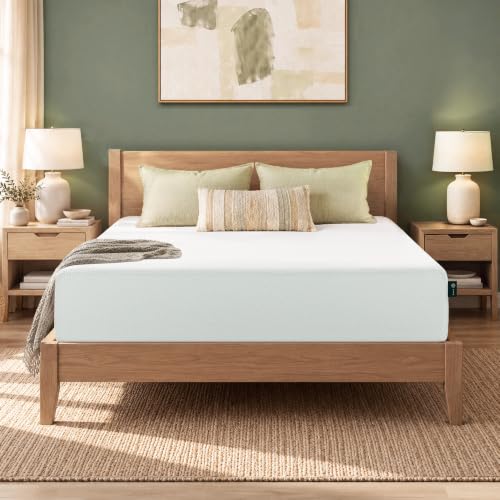
Best Zinus Mattress Alternatives Start With the Baseline: Zinus 12-Inch Green Tea, Queen
Badge: The one to beat. Any honest alternatives guide has to price the incumbent, and the 12-inch Green Tea is Zinus at its most defensible: enough foam depth to serve average bodies properly, a medium-firm stance the listing states plainly, and the freshness infusion story the line is named for. Readers whose complaint about Zinus is really a complaint about the 8-inch or 10-inch version they bought should consider that the alternative they need may be this thicker sibling rather than another brand.
Spec box — listing-verified facts:
- Profile: 12 inches
- Feel stated by maker: medium firm
- Construction: Green Tea memory foam
- Certifications noted in listing: CertiPUR-US and OEKO-TEX
- Size referenced: queen
Strengths
- The deepest Zinus foam configuration serves average sleepers genuinely well.
- Medium-firm stance suits back sleepers and couples better than softer budget foam.
- Budget tier that leaves money for the foundation and bedding the bed deserves.
Trade-offs
- Foam support still softens on a budget schedule under nightly heavy use.
- Sleeps warm for the heat-sensitive, infusion notwithstanding.
- Uniform support — no zoning for backs that need targeted resistance.
Best for: shoppers whose Zinus complaint was thinness, not the brand. Not suited for: heavy sleepers or anyone replacing a sagged Zinus with an identical plan.

Lucid 10-Inch Gel Memory Foam, Queen — the Lateral Move
Badge: Same tier, different details. Lucid competes for exactly Zinus’s customer and differentiates on the margins that matter to some leavers: a gel infusion aimed at the surface warmth complaint, and a fiberglass-free construction stated in the listing, which matters to households that worry about flame-barrier materials. The feel is a friendlier medium than Zinus’s medium firm, which suits side sleepers leaving a Zinus that felt like a plank.
Spec box — listing-verified facts:
- Profile: 10 inches
- Feel stated by maker: medium
- Construction: gel memory foam, fiberglass free
- Cover material noted in listing: bamboo charcoal
- Size referenced: queen
Strengths
- Softer welcome than the Zinus baseline — kinder to shoulders.
- Gel story moderates the first hours’ surface warmth.
- Fiberglass-free build answers a specific household concern directly.
Trade-offs
- Ten inches is thin insurance for heavier bodies.
- Same foam aging curve as the incumbent; this is a feel change, not a durability upgrade.
- Edges compress as all budget foam edges do.
Best for: side sleepers and guest rooms leaving Zinus on feel. Not suited for: shoppers whose Zinus failed by sagging — they need the next rung, not this one.

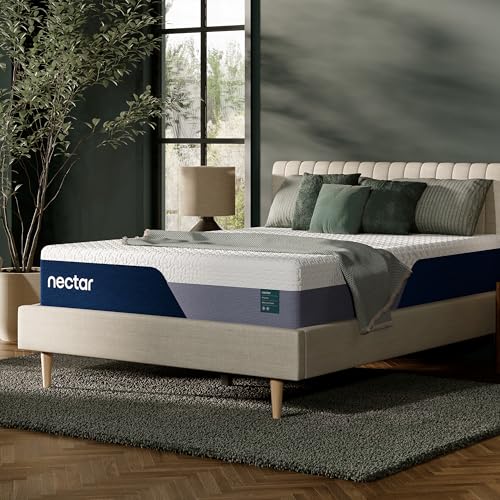
Nectar 12-Inch Memory Foam, Queen — the Trial Upgrade
Badge: A year to decide. Nectar’s proposition to the Zinus leaver is protection: a trial its listing states at a full year, a forever-warranty posture in the maker’s terms, and a firm-leaning foam stance that holds a back sleeper’s line better than budget foam’s uniform give. The bed itself is a serious foam mattress — cooling top layer over contouring foam — but the reason it anchors this guide’s upgrade rung is the calendar: a leaver burned by a short trial can take a year to be sure.
Spec box — listing-verified facts:
- Profile: 12 inches
- Feel stated in listing: firm feel
- Construction: memory foam with cooling top layer
- Trial stated in listing: 365-night trial
- Size referenced: queen
Strengths
- The longest stated trial in this guide transforms the risk calculation.
- Firmer foam stance serves back sleepers leaving soft budget foam.
- Cooling top layer moderates foam’s warmth honestly.
Trade-offs
- Firm-leaning feel can strand light side sleepers on the surface.
- Still a foam core, with foam’s edges and foam’s long aging curve.
- A tier above the incumbent — the upgrade is real money.
Best for: back sleepers and the trial-burned. Not suited for: light side sleepers or the strictest budgets.

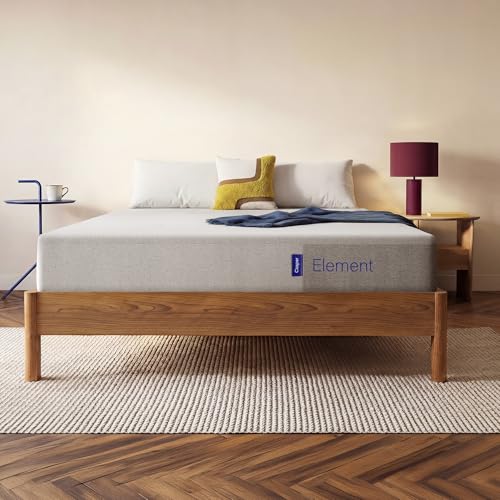
Casper Element, Queen — the Name-Brand Simplification
Badge: For shoppers who want a brand to decide. Some Zinus leavers are not chasing specifications at all; they are chasing confidence, and Casper’s Element sells exactly that — one medium foam feel from the company that invented the category’s modern form, with a 100-night trial in its listing and the consistency of a maker whose whole reputation rides on the middle of the market feeling right.
Spec box — listing-verified facts:
- Feel stated by maker: medium
- Construction: memory foam, all-foam
- Trial stated in listing: 100-night trial
- Certification noted: CertiPUR-US
- Size referenced: queen
Strengths
- Medium feel is the safest single guess in the category.
- Motion isolation is excellent, as solid foam’s always is.
- Simple, light, and easy to live with in apartments and guest rooms.
Trade-offs
- Uniform foam support, like the incumbent’s, with no zoning.
- Warmest architecture in this guide.
- Brand confidence costs a tier step above Zinus’s ground.
Best for: guest rooms, first apartments, and decision-weary shoppers. Not suited for: heavy back sleepers or heat-sensitive sleepers.

Tuft & Needle Original, Queen — the Not-Memory-Foam Foam
Badge: For leavers whose complaint is memory foam itself. Tuft & Needle built its name on a proprietary adaptive foam that behaves differently from memory foam: quicker to respond, less enveloping, cooler in character, with a medium-firm stance that back and combination sleepers tend to prefer. For the Zinus leaver whose diary reads “slept hot, felt stuck,” this is the alternative that changes the material rather than the label, and its listing carries a 100-night trial and a ten-year warranty in the maker’s stated terms.
Spec box — listing-verified facts:
- Feel stated by maker: medium firm, gel foam
- Construction: adaptive foam (not memory foam)
- Trial stated in listing: 100-night trial
- Warranty stated in listing: 10-year limited
- Size referenced: queen
Strengths
- Responsive surface ends the stuck-in-foam complaint.
- Cooler character than memory foam at a similar tier.
- Supportive stance flatters back and combination sleepers.
Trade-offs
- Less cradle for pressure-sensitive shoulders than memory foam gives.
- Still an all-foam core, with foam edges.
- Medium-firm may read firm to light sleepers in week one.
Best for: combination sleepers and the heat-and-stuck constituency. Not suited for: side sleepers who love deep memory-foam cradle.
Comparison Table: the Field at a Glance
| Mattress | Material | Feel | Stated trial | Leave-Zinus reason it answers |
|---|---|---|---|---|
| Zinus 12 Green Tea | Memory foam | Medium firm | Per listing terms | “Mine was too thin” |
| Lucid 10 Gel | Gel memory foam | Medium | Per listing terms | “Too firm, too warm at the surface” |
| Nectar 12 | Memory foam, cooling layer | Firm-leaning | 365 nights stated | “The trial was too short; my back needs firmer” |
| Casper Element | Memory foam | Medium | 100 nights stated | “I want a brand to trust” |
| Tuft & Needle Original | Adaptive foam | Medium firm | 100 nights stated | “Memory foam itself is the problem” |
How to Choose Among Them: Start From Your Exit Reason
The guide’s organizing claim deserves its own section, because choosing by exit reason outperforms choosing by brand in this tier every time. If your Zinus sagged, the variable that failed was support durability, and the honest moves are up a rung — the Nectar’s firmer stance and longer protection — or out of the material entirely, toward the hybrids this site covers elsewhere; buying another budget foam bed of any logo repeats the experiment with a new label. If your Zinus slept hot, the variable was foam’s insulation, and the Tuft & Needle’s different foam or a hybrid’s airflow addresses it, while another memory foam bed, gel story or not, merely moderates it. If your Zinus hurt your shoulder, the variable was surface kindness, and the Lucid’s softer medium or a plush-topped design answers it. If your Zinus was fine and the room is a guest room, the variable is economics, and the baseline Zinus or the Element closes the question without further research. Diagnose first, and the shortlist writes itself; shop logos first, and the same complaints will be waiting in the new bed’s second year.
Body weight is the second filter, and it is not close. Sleepers well above the average range should treat every all-foam pick in this guide as a provisional answer and give the hybrid and plus-calibrated fields their first attention, because foam’s aging curve under heavy nightly load is the single most predictable disappointment in the category. Sleepers near or below average weight own the whole table, and for them the choice is genuinely about feel, heat, and trust — the pleasant version of the problem.
Setup and the First Month on a Budget Bed
Budget foam beds reward the same setup discipline as premium ones, and skipping it is how good purchases become bad reviews. Unbox on the foundation the bed will actually use, confirm that foundation is flat, supportive, and free of the wide slat gaps that let foam sag between rails, and give the mattress a full day of ventilated expansion before its first night — budget foams in particular can carry a stronger new-foam smell, which fades with air and patience rather than with scented sprays. Keep the protector on from night one, because at this tier a stain’s threat to a return or a warranty is proportionally larger. Judge the bed across the trial’s real length rather than its first week, rotate it once in the first month, and take the dated morning notes this site recommends everywhere, because a budget bed’s evidence is no less decisive for being cheaper. Readers furnishing around the purchase can size the room with mattresses for apartment living, compare the incumbent’s thicker sibling in the ten-inch Zinus class among foam depths, and explore the step beyond this guide’s ceiling in the best purple mattresses and Casper’s own alternatives gathered.
Common Mistakes When Leaving a Budget Mattress
The canonical mistake is buying the same bed with a different logo — another uniform budget foam slab — and being surprised when the same failure arrives on the same schedule. The second is overcorrecting: the sleeper whose soft Zinus sagged buys the firmest bed in the category and trades a support problem for a shoulder problem, when the diagnosis only ever required support that lasts. The third is ignoring the foundation, which at this tier is often a hand-me-down frame whose gaps and flex manufactured the sag now blamed on the mattress. The fourth is judging by the first three nights, before break-in, in a category where foam’s first week is its least representative. And the fifth is forgetting the total basket: a budget bed plus a worthy foundation, a protector, and suitable pillows is the real purchase, and it still undercuts the premium field by enough to matter.
The Zinus Backstory Every Leaver Should Know
Understanding why Zinus feels the way it does helps a leaver choose better than loyalty or resentment can. The company’s model is vertical integration at enormous scale: its own factories, its own foam production, and a logistics system built around compressing a mattress into a box that ships like furniture’s idea of a paperback. Scale is what buys the tier, and scale is also what sets the ceiling — foam formulations are chosen for cost, consistency, and compressibility across millions of units, not for the last increment of resilience a premium maker buys with denser material. The Green Tea story itself, an infusion marketed around freshness, tells the same tale in miniature: a real formulation choice, genuinely differentiating on a shelf, whose practical effect is modest beside the variables of density and depth. A leaver who understands this stops asking which brand is “better” in the abstract and starts asking the productive question — which of the incumbent’s economies is the one my body has been paying for? For the average sleeper in the first years, the honest answer is often none of them, which is why so many Zinus owners replace like with like and sleep contentedly. For the heavy body, the hot sleeper, the zoned-support back, and the five-year horizon, the answer names itself, and this guide’s picks are arranged along exactly those names.
What About the Other Names in This Tier?
Attentive shoppers will notice deserving absences, and a guide earns trust by explaining them. Several budget and mid-tier brands sell heavily on Amazon — the Novillas, Sweetnights, and BedStorys of the catalog — and a number of them appeared in this wave’s verification searches with confirmed listings. They are not reviewed here for a structural reason rather than a judgmental one: an alternatives guide earns its keep by spanning the decision space — stay, move laterally, climb, simplify, change materials — and five picks that each own one of those moves serve the reader better than nine picks that blur them. A shopper whose exit reason matches none of the five moves should treat the wider catalog with the same diagnostic discipline: name the failed variable, then read listings for the construction that addresses it, and let brand novelty count for nothing. The hybrids and premium beds elsewhere in this wave — the zoned, the latex, the calibrated — stand ready for the leaver whose diagnosis points above this guide’s ceiling, and the internal links in the setup section point toward them deliberately.
Room by Room: Where Each Alternative Belongs
The primary bedroom is the demanding case, and it has been this guide’s implicit subject, but Zinus-class mattresses live most of their lives in the other rooms, and the alternatives sort themselves there with unusual clarity. The guest room wants the bed that offends nobody and survives a decade of occasional nights: the Element’s medium or the baseline Zinus itself, bought once and forgotten, with the savings spent on the pillows and linens guests actually remember. The student’s or young renter’s room wants portability and a forgiving tier — the Lucid or the Zinus — because the bed will be moved, stored, and eventually handed on, and a mattress whose price assumed permanence is wasted there. The child’s room transitioning to a first real bed wants firmness honesty and a protector above all, and any pick in this guide serves it, chosen by the family’s budget rather than by marketing aimed at parents. The spare room that doubles as a home office and occasional sick bay wants the bed that can be a sofa’s rival in a pinch — medium, inoffensive, quick to make — which is the Element’s home ground again. And the vacation property wants the bed whose delivery and trial can be managed at a distance, which is an argument for the platform’s logistics over any construction detail. Matching the room’s actual duty to the pick’s actual virtues is the whole skill this tier asks of a shopper, and it is a more reliable skill than brand divination.
The Five-Year Cost of a Cheap Bed, Counted Honestly
Budget mattresses invite a piece of arithmetic their marketing never performs, and a leaver should perform it before choosing the replacement’s tier. A very cheap bed replaced twice in a decade, with a foundation sacrificed to the second failure and a set of mornings taxed throughout, can cost more — in money, in sleep, and in the labor of two deliveries and two disposals — than the mid-tier bed that would have served the decade entire. The arithmetic runs the other way just as honestly: a guest bed used thirty nights a year will never collect the premium bed’s durability dividend, and a young renter’s bed will be abandoned to a move long before its foam’s character matters. The variable that decides which way the arithmetic cuts is nights of use multiplied by body weight, the same product that governs foam aging everywhere in this wave’s guides. A household that computes its own product — nightly, heavy, settled: buy up; occasional, light, mobile: buy the tier without guilt — has performed the only cost analysis in the category that cannot be gamed by a sale event.
How to Verify a Budget Mattress Listing Like an Editor
Budget mattress listings are the noisiest documents in the category, and a shopper equipped with three reading habits will extract more truth from them than any review can supply. First, read the title the way this guide’s spec boxes do — as the one part of the listing the seller must keep accurate — and extract the checkable facts: profile, stated feel, construction family, trial length, certifications. Everything below the title is advocacy, including the photographs of couples levitating in contentment. Second, sort the owner reviews by the reviewer’s situation rather than by sentiment: find the bodies like yours, the rooms like yours, the durations like the one you intend, and let a two-year update from a heavy back sleeper outweigh fifty first-week raves from bodies you do not have. Third, treat every superlative as a translation exercise — “hotel luxury” means a quilted cover, “cooling” means an infusion story over an insulating material, “orthopedic” means nothing enforceable at all — and re-derive the bed’s actual properties from its construction, which cannot be exaggerated because it has to be manufactured. A shopper who reads listings this way will notice that this guide’s five picks were chosen to survive the treatment: each one’s title alone tells you what it is, which is more than the wider shelf can promise.
What Couples Should Do With This Guide
Couples leaving a Zinus carry an extra variable, because two bodies file two exit reports and they rarely match. The discipline that works is to rank the reports rather than average them: the partner whose complaint is physical and nightly — the sagging side, the numb shoulder — outranks the partner whose complaint is aesthetic or occasional, and the replacement should be bought against the physical report first, with the other’s preference accommodated by size, bedding, or a topper’s diplomacy. Motion deserves its specific mention in this tier, because budget foam’s one unambiguous glory is stillness, and a couple leaving it for a hybrid should expect a small tax there in exchange for the support and airflow they came for; couples for whom stillness was the marriage’s foundation should stay in foam and climb within it, toward the Nectar’s depth, rather than change physics. And the king, in this tier as in every other, remains the cheapest peace treaty in the category — a fact worth weighing before either partner wins an argument about foam formulations.
The Environmental Footnote for the Budget Shelf
Budget foam mattresses carry the category’s most uncomfortable environmental arithmetic, and a guide that serves its readers should state it without lecturing them. A foam bed is a petroleum-derived object with a limited service life, and the budget tier shortens that life, so the shelf’s true footprint is measured in beds per decade rather than in any single bed’s materials. The mitigations are the unglamorous ones this wave keeps recommending: buy the deepest, best-supported configuration the budget allows so the bed serves its full span; keep it protected and rotated so the span is not shortened by neglect; and at the end, route the old mattress to a recycling or donation stream where one exists rather than to the curb by default. Certifications such as the CertiPUR-US and OEKO-TEX marks that appear in the verified listings above speak to the foam’s content and emissions, which are the parts of the ledger a buyer can actually inspect. None of this should shame a household whose budget is what it is — a bed is a necessity, not a statement — but the arithmetic does reward, environmentally as financially, the same behavior the sleep does: buy once, buy the configuration that lasts, and let the decade do the rest.
A Short Digression on Green Tea, Charcoal, Copper, and Gel
The budget shelf’s vocabulary of infusions deserves one calm paragraph, because leavers encounter it on every listing and deserve a exchange rate for it. Infusions are real formulation choices — substances blended into foam before it sets — and their effects are real in the way a seasoning’s effects are real: perceptible at the margins, incapable of changing the dish. Gel moderates a surface’s first-hour warmth. Charcoal and green tea address odor and freshness in the foam’s early life. Copper is marketed toward a warmth-and-circulation story that outruns its evidence. None of them changes the foam’s density, its support character, or its aging curve, which are the properties that decide whether a leaver’s complaint is answered. The shopper’s rule is therefore simple: choose the bed by its architecture and depth, accept the infusion as a garnish if the architecture is right, and never let a garnish talk you out of a rung you needed to climb.
Sizes, Depths, and the Geometry of the Budget Purchase
The budget shelf’s most consequential choice is not brand but geometry, and it deserves a section of its own. Depth first: in foam, inches are function, because a sleeper’s load must be absorbed across the stack before it reaches the foundation, and every additional inch of well-chosen foam is an inch of pressure relief and a margin against bottoming out. That is why this guide’s baseline is the 12-inch Zinus rather than its thinner siblings, why the 10-inch Lucid is recommended for lighter duties, and why a heavy sleeper shopping this shelf at all should buy the deepest configuration on it and no other. Size second: the jump from queen to king is the largest comfort-per-dollar transaction in the entire category for couples, dwarfing every formulation difference on this page, and a household agonizing between two of these brands at queen size should price the king of the cheaper one before concluding anything. Twin and twin XL, finally, are this shelf’s home territory — dorms, first rooms, narrow staircases — and there the compressed box’s logistics, which every pick here shares, matter more than any feel distinction between them. Geometry first, brand second: the budget shopper who internalizes that ordering will outperform the brand loyalist at every tier.
When the Alternative Should Not Be a Mattress at All
A alternatives guide owes its reader one act of restraint: naming the cases where the correct purchase is not on its list. If the Zinus being replaced is structurally sound and merely too firm, a topper answers the complaint for a fraction of any pick here, and this site’s topper guides exist for that reader. If the Zinus is fine and the sleeper is not — if the mornings’ problem has migrated from the bed to the body — then the purchase to make is a clinician’s appointment, because no alternative in this guide treats a condition and several of them will happily take money that a diagnosis would have saved. If the room is the problem — a hot attic, a snoring partner’s acoustics, a street’s worth of light — then curtains, a fan, and a door seal outperform every mattress on this page at their specific jobs. And if the budget is genuinely exhausted, the honest alternative is the interim kit of the earlier comparisons: a bunkie board under the incumbent, a rotation, a protector, and time. A guide that can say “do not buy yet” has earned the right to be believed when it says “buy this.”
Three Leavers and the Picks That Fit Them
A graduate student whose dorm-era Zinus had followed her to a first job and a first real apartment reached the end of the bed’s honest service with a back that had begun filing complaints. Her diagnosis was support fade at a light body weight — the gentlest version of the category’s failure — and her correct move was the smallest one that changed the variable: the Nectar’s firmer stance and year of trial protection, in the same room, on a new platform her old frame had been quietly sabotaging. Her case is the template for the largest class of leavers, whose problem is real but modest and whose replacement should be proportionate.
A couple whose Zinus guest bed had begun embarrassing them — visitors too polite to complain, a daughter not polite at all — replaced it with the Element and redirected the savings into the guest room’s pillows and sheets, on the reasoning that hospitality is experienced at the surface. Their case isolates the guest-room logic this guide keeps returning to: occasional bodies need inoffensiveness and freshness, not engineering, and the money a premium mattress would have absorbed does more work in the textiles.
A heavy combination sleeper whose second Zinus in five years had begun its sag recognized the pattern as structural rather than incidental and left the material entirely, climbing to a zoned hybrid of the kind this wave covers elsewhere. His case is the guide’s ceiling announcing itself: when the same failure has happened twice on schedule, the variable is the architecture, and loyalty to a tier becomes the most expensive option on the table. He is the reader the exit-reason method was built for, and his story is why this guide insists on diagnosis before brand.
The Delivery and Disposal Problem Nobody Mentions
Every mattress purchase in this tier is secretly two logistics problems — a new bed arriving and an old bed leaving — and the second is the one that ambushes households. The arriving bed, in this entire guide, is a compressed box that one or two adults can manage up ordinary stairs, which is the budget shelf’s founding convenience and needs no further praise. The departing bed is a full-size, possibly stained, possibly heavy object that municipal services handle on schedules ranging from generous to never, that donation streams accept only in presentable condition, and that retailers in this channel do not collect. A household that has not planned the exit will store the old mattress against a wall for a season, and more than one alternatives purchase has been soured by a predecessor haunting the hallway. Plan the exit before the order: the city’s bulky-item calendar, the donation stream’s condition rules, a friend with a truck and a free Saturday, or the paid removal services that exist in most metros. It is unglamorous counsel, and it is the difference between a replacement that feels like an upgrade and one that feels like an accumulation.
A Word on Warranties at This Tier
Budget mattress warranties reward a reading as skeptical as any in this wave, because the gap between the headline and the mechanism is widest where the prices are lowest. The headline will promise a decade or more; the mechanism will define a defect as an impression deeper than a stated threshold, measured in a stated way, on a bed that has been supported in a stated manner and kept free of stains. Gradual softening — the failure this tier actually dies of — lives outside the mechanism almost by definition. None of this makes the warranty worthless: manufacturing defects exist, and a documented claim in the first years is a real protection. It makes the warranty a poor reason to choose one budget bed over another, and it returns the shopper, once again, to the protections that actually bind: the trial’s length, the listing’s accuracy, the construction’s honesty, and a protector that keeps every option alive. The Nectar’s year-long trial posture is the standout in this guide precisely because it substitutes a usable protection for a rhetorical one, and leavers who have once tried to claim on a budget warranty will understand the substitution’s value immediately.
The Temperature Question, Settled for This Tier
Because heat is the second most common exit reason after sagging, it deserves a settlement rather than a mention. Every mattress in this guide is a foam bed, and foam beds as a class sleep warmer than the hybrids and latex beds elsewhere in this wave; within the class, the differences are of degree and of mechanism. The Tuft & Needle’s adaptive foam holds the body less closely and answers fastest, which is why it leads this guide on temperature. The gel stories in the Lucid and the baseline moderate the surface’s first hours without changing the material’s insulating nature. The Nectar’s cooling top layer works at the same surface level. And beneath all of these product-level differences sit the household levers that outrank them: a room cooled to the sleeper’s actual preference, bedding that breathes — the subject of this wave’s sheet guides — a lighter duvet than habit suggests, and a fan’s moving air, which together will move a night’s temperature further than any two mattresses in this guide differ by. The hot sleeper whose room cannot be cooled should hear this guide’s honest boundary: the alternative they need may be a change of architecture, to coils or latex, rather than a change of foam brand, and the internal links in this article point toward those fields deliberately.
The One-Page Version, for the Reader Comparing at Midnight
It is worth compressing the guide once, because most of its readers are comparing with tired eyes. Zinus is a good budget bed that ages on a budget schedule; people leave it because it sagged, slept warm, felt wrong at a shoulder, or came with protections too short to trust. If it sagged, climb — to the Nectar among foams, or out of foam entirely. If it slept warm, change the foam’s character — the Tuft & Needle — or change the architecture. If the shoulder complained, soften the surface — the Lucid. If nothing was wrong and the room is for guests, simplify — the Element, or the 12-inch Zinus itself. If the body is heavy, distrust the whole shelf’s longevity and shop the hybrid and heavy-duty fields with this guide as your floor. Choose by the complaint, protect the purchase with its trial, put the bed on a foundation that deserves it, and the second mattress of your adult life will be the informed one the first was never going to be.
A Final Note on Loyalty, in Both Directions
Brand loyalty in this tier takes two forms, and both deserve a gentle audit before the order. The first is loyalty to Zinus itself — the household that has bought three and sees no reason to change — which is rational exactly as long as the household’s bodies, rooms, and horizons match the tier’s design, and which curdles into habit the moment a heavy body or a decade-long horizon arrives and the old answer is repeated by reflex. The second is loyalty against Zinus — the leaver who has converted a single sagged bed into a doctrine that the brand is worthless — which is equally a failure of diagnosis, because the same bed at a lighter body in a guest room would have been a success story told for years. The alternative this guide actually recommends is loyalty to a method: name the failed variable, match the construction to it, verify the listing, protect the trial, and let brands be the answer to a question rather than the question itself. Households that shop by method find that their loyalty, over a lifetime of beds, attaches to their own judgment — which is the only brand in this category that has never once sagged.
Housekeeping: Models Change, Methods Do Not
Budget mattress lines revise themselves constantly — a profile appears, a formulation is renamed, a listing is refreshed — and this guide’s descriptions reflect the listings verified on the date stated in its sources, with the live listing as the authority on the day any reader orders. What does not drift is the method the guide is built on, because it rests on the physics of foam and the economics of tiers rather than on any season’s catalog: foam ages under load, depth is function, trials outrank warranties, foundations confess or absolve, and a complaint correctly diagnosed is a purchase half made. A reader who finds a model here superseded has lost a link and kept a compass, which is the correct ratio for a category that reinvents its shelf twice a year.
And a Word for the Reader Who Is Not Leaving at All
Some fraction of this guide’s readers arrived with a Zinus that sleeps perfectly well, drawn by the vague sense that an upgrade must exist, and they deserve a direct address before the verdict: it is entirely possible that the correct alternative to your mattress is a better foundation under it, a protector over it, a set of pillows matched to it, and another five years of its service. The mattress industry’s growth depends on households replacing beds that have not failed, and a guide that cannot recognize a non-purchase as a success has confused its purpose. Audit the incumbent honestly — its age, its middle, its mornings — and if the audit acquits it, spend the research energy this article demanded on the room around the bed instead, where the returns are still compounding. The leavers will leave when leaving is right; the staying, done deliberately, is not a failure to shop but the shopping’s happiest possible outcome.
A closing practical note gathers the guide’s scattered logistics into one breath. Measure the frame before the order, not after the box arrives. Decide the old bed’s exit while the new one is still a tracking number. Wash the protector and the first sheets before delivery day so the bed is dressed within the hour. Keep the packaging until the mattress has expanded fully and the size is confirmed. Photograph the label for the records a warranty may one day want. And write the first morning note before the second night, while the comparison against the old bed is still fresh enough to be evidence — because a leaver’s most valuable asset is the memory of exactly what they left, and it fades faster than any foam in this guide.
That discipline, more than any single pick above, is what separates the second purchase from the first.
One last word for the household that came to this page with a Zinus already on the frame and a suspicion already forming: suspicion is data, and the alternatives above are the five most honest places to spend it. Try the diagnosis first, the trial second, and the verdict will arrive with the authority that only a slept-on fortnight can issue.
Final Recommendation
Stay with Zinus, in its 12-inch form, if your complaint was thinness and your body is average; the incumbent at its best configuration is a rational bed. Move laterally to the Lucid if the complaint was surface feel. Climb to the Nectar if the complaint was support, softness, or a trial that ended before your body had voted. Choose the Casper Element if the complaint was trust and the room is a guest room. Choose the Tuft & Needle if the complaint was memory foam itself. And if your complaint was a heavy body’s sag inside two years, let this guide be the floor of your research rather than its ceiling, and take the hybrid and heavy-duty fields seriously from here. The right alternative is the one that answers your exit reason; everything else is a logo.
Frequently Asked Questions
What is the closest alternative to a Zinus mattress?
The Lucid gel memory foam bed occupies the same tier and brief most directly, with a softer medium feel and a fiberglass-free build. Shoppers whose complaint is Zinus’s firmness or surface warmth usually find the Lucid the smallest honest change.
Why do Zinus mattresses sag sooner than premium beds?
Budget foam uses less dense, less resilient foam than premium beds, and foam softens under nightly load on a schedule that body weight accelerates. The support is adequate for average bodies for a reasonable span; heavier bodies and longer horizons expose the tier’s economics.
Is a thicker Zinus a good alternative to switching brands?
Often, yes. The 12-inch Green Tea corrects the commonest Zinus complaint — insufficient depth — at the same tier. If the complaint is heat, zoning, or early sagging under a heavy body, thickness alone will not answer it and another design should be chosen.
Which alternative is best for back sleepers?
The Nectar, for its firmer stance and year-long stated trial, among this guide’s foam picks; back sleepers needing targeted support should also consider zoned hybrids. No mattress treats back conditions, and persistent pain deserves professional advice.
Which alternative sleeps coolest?
The Tuft & Needle, whose adaptive foam has a cooler, less enveloping character than memory foam — with the caveat that every all-foam bed in this guide sleeps warmer than a hybrid, and room temperature and bedding remain the dominant factors.
Can I put one of these mattresses on my existing bed frame?
Yes, if the frame provides flat, even support — a solid platform or closely spaced slats in sound condition. Wide gaps and tired sprung bases undermine foam mattresses of every tier and are a leading hidden cause of the sagging blamed on budget brands.