Disclosure: As an Amazon Associate, Reviews Took earns from qualifying purchases. Links to Amazon on this page are affiliate links; they cost you nothing extra.
Check pack count and size.
This guide is built from Amazon product listings and maker specs, not our own testing, so confirm size, contents and current price on each product page. Health products are for general information and are not medical advice.
Check the current price on Amazon.
Last updated: November 2, 2026.
In this guide
Quick Picks
| Product | Type | Best for |
|---|---|---|
| Wool Dryer Balls 6 Pack 100% New Zealand Wool Reusable Dryer | Wool dryer balls | laundry |
| Wool Dryer Balls – Smart Sheep 6-Pack – XL Premium Natural Fabric | Wool dryer balls | laundry |
| Wool Dryer Balls XL 6-Pack 100% New Zealand Wool Handmade | Wool dryer balls | laundry |
| WoollyPals Dryer Balls (6-Pack XL Size) – 100% New Zealand Wool | Wool dryer balls | laundry |
| Wool Dryer Balls 6-Pack Drying Balls for Laundry Reusable As | Wool dryer balls | laundry |
| Wool Dryer Balls XL 6-Pack 100% New Zealand Wool Handmade | Wool dryer balls | laundry |
| Wool Dryer Balls New Zealand Dryer Balls Laundry Reusable Reduce | Wool dryer balls | laundry |
| Handy Laundry Wool Dryer Balls 6-Pack Reusable Natural Fabric | Wool dryer balls | laundry |
Our Picks

1. Wool Dryer Balls 6 Pack 100% New Zealand Wool Reusable Dryer
A Wool Dryer Balls 6 Pack 100% New Zealand Wool Reusable Dryer (wool dryer balls), per the listing. Check price on Amazon.
Good for: laundry. Watch out: Check wool quality.

2. Wool Dryer Balls – Smart Sheep 6-Pack – XL Premium Natural Fabric
A Wool Dryer Balls – Smart Sheep 6-Pack – XL Premium Natural Fabric (wool dryer balls), per the listing. Check price on Amazon.
Good for: laundry. Watch out: Check wool quality.

3. Wool Dryer Balls XL 6-Pack 100% New Zealand Wool Handmade
A Wool Dryer Balls XL 6-Pack 100% New Zealand Wool Handmade (wool dryer balls), per the listing. Check price on Amazon.
Good for: laundry. Watch out: Check wool quality.

4. WoollyPals Dryer Balls (6-Pack XL Size) – 100% New Zealand Wool
A WoollyPals Dryer Balls (6-Pack XL Size) – 100% New Zealand Wool (wool dryer balls), per the listing. Check price on Amazon.
Good for: laundry. Watch out: Check wool quality.
5. Wool Dryer Balls 6-Pack Drying Balls for Laundry Reusable As
A Wool Dryer Balls 6-Pack Drying Balls for Laundry Reusable As (wool dryer balls), per the listing. Check price on Amazon.
Good for: laundry. Watch out: Check wool quality.
6. Wool Dryer Balls XL 6-Pack 100% New Zealand Wool Handmade
A Wool Dryer Balls XL 6-Pack 100% New Zealand Wool Handmade (wool dryer balls), per the listing. Check price on Amazon.
Good for: laundry. Watch out: Check wool quality.
7. Wool Dryer Balls New Zealand Dryer Balls Laundry Reusable Reduce
A Wool Dryer Balls New Zealand Dryer Balls Laundry Reusable Reduce (wool dryer balls), per the listing. Check price on Amazon.
Good for: laundry. Watch out: Check wool quality.
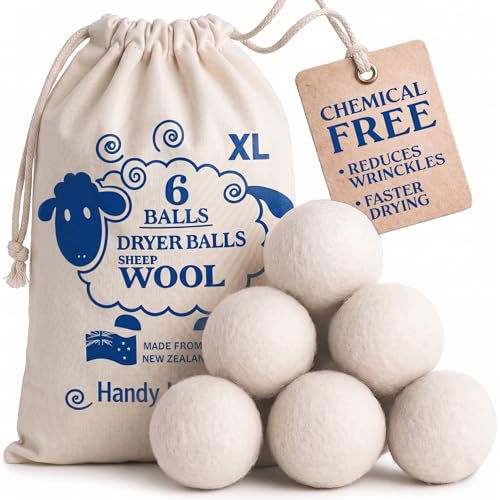
8. Handy Laundry Wool Dryer Balls 6-Pack Reusable Natural Fabric
A Handy Laundry Wool Dryer Balls 6-Pack Reusable Natural Fabric (wool dryer balls), per the listing. Check price on Amazon.
Good for: laundry. Watch out: Check wool quality.
How to Choose
Size and fit
Check dimensions for your space or vehicle.
Build and materials
Durable materials last longer.
Ease of use
Simple setup and cleaning help.
What Dryer Balls Actually Do in the Drum
Wool dryer balls are dense balls of felted wool that tumble with the laundry. Their main job is to separate clothes as they spin so hot air can move between them. That can help loads dry more evenly and may reduce drying time for some loads, especially bulky ones like towels and bedding that tend to clump. They also bump against fabrics, which many people find leaves clothes feeling softer than if they dried untouched.
It helps to keep expectations realistic. Dryer balls are not a substitute for a clean lint filter, a properly vented dryer or a sensible load size. Drying time savings vary with the dryer, the load and the fabric, and listings that promise a specific percentage should be read as marketing, not as a guarantee. Softening is a matter of feel, and some people notice a difference while others do not.
Dryer balls do not add fragrance on their own. They also do not remove static in every situation, though some users find that they reduce it a little. If static is a problem, you may also want to avoid overdrying and mix fabric types carefully. For people who dislike the residue and fragrance of sheets or liquid softeners, reusable balls can be an appealing alternative that keeps the load free of added chemicals.
Wool Quality and How Balls Are Made
Not all dryer balls are the same, even when they look alike. The wool, the density of the felting and the finishing determine how well they hold up. Dense, tightly felted balls keep their shape and resist unraveling, while loose or lightly felted ones can shed fibers or flatten over time. Pick up a ball in a store if you can. It should feel firm and heavy for its size rather than fluffy.
Read the listing for the wool source, the stated percentage of wool and any descriptions of how the balls were made. Phrases such as 100 percent wool and handmade appear often, but they are claims, and you should look for detail on the construction. Some balls are made with a core of other fiber wrapped in wool, and the listing should say so. Check whether the wool is dyed or undyed, and whether any dyes are described as colorfast, since poorly set dye could transfer to fabric.
- Firm, evenly shaped balls last longer than lumpy ones.
- Check for loose threads or visible seams, which may unravel.
- Look for wool-only construction if you want to avoid synthetic filling.
- Be cautious about listings that give no information on materials.
Anyone with a wool allergy should check carefully before buying, and ask a medical professional if unsure.
Size, Count and Load Matching
Dryer balls work best when matched to the load. Larger balls tumble with more force and separate fabrics well, while smaller ones may be lost in a big load. The post’s picks are mostly extra-large six-packs, which is a common configuration. Six balls suit a normal-size family load, while smaller loads need fewer and extra-large loads may benefit from more. Check the listing for the diameter of the balls and how many are in the pack.
A practical way to use them is to start with the number the maker recommends, then adjust. For a small load of a few items, two or three may be enough. For a full drum of towels or bedding, use the full set. Too many balls can make noise and take up space in a small drum, while too few reduce the effect. If your dryer is compact, such as an apartment or stackable unit, measure the drum before you buy large balls.
Noise is another consideration. Dense balls make a thudding sound as they tumble, which some people find annoying, particularly with a dryer in a living area. Some listings mention that the balls may be quieter than alternatives such as plastic spiked ones, but this varies. Check whether a cloth bag or storage pouch is included, since it helps keep the balls clean between loads.
Scent, Static and Sensitive Skin Considerations
One draw of dryer balls is that they are unscented. For people who react to fragrances or dyes in dryer sheets or liquid softeners, that can be a benefit. If you like a light scent, some users add a few drops of essential oil to the balls, but this carries risks. Oils can stain fabrics, can be a concern around pets and children, and some dryer manufacturers advise against them. Check your dryer’s manual and the maker’s instructions before trying it.
For static, there is no guarantee that balls will remove all of it. Static is more likely with synthetic fabrics and very dry loads. To help, avoid overdrying, remove items while slightly damp and mix fabric types sensibly. You can also dry synthetics separately from natural fibers.
For babies, children and anyone with sensitive skin, many parents like the lack of added fragrance, though you should still wash new fabrics in line with care labels. If someone in your household has a wool allergy or sensitivity, test the balls on a small scale or choose another approach. Keep dryer balls out of reach of pets and small children when they are not in the dryer, since they can look like toys and could be chewed or swallowed.
Lifespan, Care and Replacement
Wool dryer balls can be used for many loads, but they do wear out. Over time, they may become flatter, lose firmness or shed small fibers. Taking a quick look every few weeks helps you spot problems early. A ball that is coming apart, has holes or leaves visible lint on clothing should be replaced.
Care is simple. Keep them in the dryer or in a bag, shake out any lint and fluff if they have matted. If a ball becomes dirty or picks up a stain, spot clean it gently with a damp cloth and let it air dry rather than washing it hard, since agitation and heat can cause further felting. Check the maker’s instructions for any other advice.
Do not expect them to last forever, and avoid claims about a specific number of loads unless the maker explains how it was determined. Budget tiers are easy to compare. Simple sets cover everyday laundry, while higher-priced options may use denser construction or include extras like storage bags. Judge by firmness, material description and pack size, not by price alone. If your dryer is noisy or the balls start to stick together, adjust the load or number of balls until the performance improves.
How Dryer Balls Compare With Sheets and Liquid Softener
Dryer balls, dryer sheets and liquid fabric softener all aim at softer, less static laundry, but they work in different ways. Sheets and liquid softener coat fibers with a thin layer of conditioning chemicals. That layer makes fabric feel soft, though over time it can build up on towels and reduce their absorbency. Dryer balls do no coating. They bounce through the load, separate the laundry and let hot air circulate, which is the mechanical way they can shorten drying time and soften fabric.
- If you want a scented, silky feel, sheets or liquid softener deliver it more strongly than plain wool balls.
- If you wash towels, athletic wear or cloth diapers, dryer balls avoid the residue that can hurt absorbency or wicking.
- If anyone in the house has skin sensitivities, the lack of added fragrance and chemicals is a point in favor of plain balls.
- If you run big loads of bulky bedding, balls help prevent clumping, a benefit sheets cannot offer.
Many households use balls for most loads and add a sheet only for special items, which is a reasonable compromise.
Getting the Most From Each Load
A few small habits change how well dryer balls work. The simplest is loading the dryer sensibly. Balls need room to move, so an overstuffed drum limits the effect. Fill the drum about two thirds full at most, and separate heavy items such as jeans and towels from light items like shirts and sheets so each dries at its own pace.
Shaking out wet clothes before they go in also helps. Wet laundry tends to ball up after the wash, and untangling it lets air reach every surface. For bulky items like comforters and pillows, balls are especially useful because they bump against the filling, fluffing it as the cycle runs.
- Match the number of balls to the load. More for large or heavy loads, fewer for small ones.
- Clean the lint filter every load. Dryer balls do not replace this step and a clogged filter can cancel any time savings.
- Check the damp spots near the end of the cycle. If a load still feels wet, add a few minutes instead of assuming the balls failed.
- Consider a lower heat setting on delicate or knit items, since balls help even drying without extra heat.
Noise, Wear and Practical Quirks
One honest drawback is sound. Dryer balls thump against the drum during a cycle, and in a laundry area close to bedrooms or living space the noise can be noticeable. Wool balls are generally quieter than plastic or rubber types, but they still make a soft tumbling sound. If noise is a concern, consider the size and count and try a smaller number to see whether it bothers you.
Other small quirks come with the territory. New wool balls can shed a little fuzz in the first few loads, which usually settles. They may also pick up lint over time, and sometimes a ball will turn up inside a duvet cover or a pillowcase, so check bedding as you unload. Balls can also shrink or felt a bit with use, and this is normal as the fibers tighten.
- Check for any ball that has come apart or has loose stitching, since loose bits can cling to dark clothes.
- Keep balls away from pets and small children, who may mistake them for toys.
- If a ball starts to look worn, replace it rather than letting it fall apart.
Deciding Whether They Fit Your Household
Dryer balls are a small, low-risk purchase, and the best way to judge them is a trial. Use them for a few weeks, note drying times if you wish, and see whether your laundry feels softer and less clingy. Savings in time and energy vary by dryer, load size and climate, so treat any claims on a listing as a general idea, not a promise.
They are most useful for households that dry large loads, wash towels and bedding often, or want to avoid scented products. If you live in a dry climate with little static, or you love a strong fresh scent, you may find the effect modest. In either case, balls are easy to pair with other habits, such as cleaning the lint trap and venting the dryer properly, that matter more to drying performance than any accessory.
Price comparisons between packs are worth a quick look at count and size rather than the headline price. A pack with more balls costs more but covers larger loads, and a very low price per ball can signal thinner, loosely wound wool. Look for details on how the balls are made and whether they are described as firmly wound, since tight winding helps them keep shape. If you wash many loads a week, a larger pack may be the better value over time.
Eight Packs of Wool Balls: What Actually Differs Between Them
At first glance this is the simplest list in the batch: eight packs of wool dryer balls, most of them six-packs, several built around New Zealand wool, with names like Smart Sheep, WoollyPals and Handy Laundry recurring across the years. The differences are real but quiet. Density and felting quality decide how long a ball keeps its shape and weight; a well-felted ball stays firm and round for years, while a loosely made one softens, sheds fibres and shrinks in influence long before it looks worn. Size matters within the XL pattern most of these follow: a larger ball separates loads more assertively and suits big drums and bulky items, while standard sizes circulate better in small machines. Workmanship at the surface matters too, because a ball that pills and sheds will leave your laundry faintly woolly, defeating part of the purpose.
Since the picks are so similar, the honest way to choose is to weight consistency and sourcing. Wool described clearly, with origin and construction stated, tends to come from makers who expect scrutiny; vague packs tend to vary from batch to batch. Count is the other real variable, and it should follow your drum and your loads rather than the pack sizes on offer, a subject the next section takes up in earnest. Beyond that, buy the pack whose balls feel dense and springy in the hand if you can, and do not expect any brand to repeal the physics the rest of this guide describes.
How many balls, and for which loads
The working principle is separation: balls bounce between layers of laundry, letting hot air reach surfaces that would otherwise cling together in a damp mass. Too few balls in a large load merely ride along; enough balls change the load’s whole behaviour. As a practical rhythm, small loads do well with a few balls, family loads want the full six that most packs here provide, and very large or bulky loads, duvets, towels and bedding, can use more still, which is why some households keep two packs in rotation. Balls also migrate: one will hide in a duvet cover or a sleeve, so a headcount at folding time keeps the set at strength. Choosing a six-pack from this list covers most homes; choosing two covers the homes with the biggest drums and the heaviest laundry habits.
What Dryer Balls Can and Cannot Do for Static and Softness
Wool balls soften mechanically, by tumbling against fibres, and the result is a genuine but moderate softness, different in character from the coated softness of liquid or sheets. Towels are the showcase: balls keep them absorbent, where fabric softener would film the fibres and reduce the very quality a towel exists for. Static is the more conditional promise. Balls reduce static by keeping items separated and by holding a little moisture early in the cycle, but in a load dried hard and long in dry winter air, some static can survive any ball. The honest technique is to stop the cycle while items are very slightly damp rather than baked, which helps static, wrinkles and the laundry’s lifespan at the same time.
Scent is the other expectation to set honestly. Wool balls arrive unscented and stay that way unless you add fragrance yourself, a few drops of essential oil left to soak in before the load, which gives a light, personal scent rather than a commercial perfume. Households that love a strong laundry fragrance may miss sheets; households with sensitive skin, babies or scent-triggered headaches usually experience the absence as the entire point. The picks in this guide serve the second group by design, and the first group should buy knowing the trade they are making.
Drying time and energy: realistic expectations
By separating the load, balls can shorten drying time, most noticeably on heavy, clumping loads like towels, bedding and cloth nappies, and least on small, light loads that were never the bottleneck. The saving is real but should be claimed modestly: think in terms of a cycle shortened and loads that finish evenly, rather than a transformation of your energy bills. Even finishing is itself a benefit, because it ends the familiar ritual of restarting the dryer for the one damp waistband or the duvet’s wet heart. Judge the balls on that evenness across your heaviest loads, and any time saved will arrive as a bonus on top of a result you already value.
Loads That Love Balls, and Loads to Keep Them Out Of
Towels, bedding, washable duvets, cloth nappies and everyday family laundry are the showcase loads, emerging softer, fluffier and more evenly dry. Down jackets and duvets benefit particularly, because the balls’ gentle beating helps restore loft as the filling dries, especially when the cycle includes a pause to shake the item out. Everyday synthetics dry fast with or without help, and balls mainly guard their static. The cautions are few but real: very delicate items that should not be tumble dried at all gain nothing from a ball, and loads containing items with hook-and-loop fasteners can trap fibres and tangle a ball into the load, so fasten those closures first. Dark loads deserve one more habit: check new balls for loose fibres over the first uses, as a well-made ball sheds little and a poor one announces itself early, when returning it is still easy.
Noise is the household consideration nobody mentions until the first evening load. Balls thump, gently, against the drum, and the sound carries differently in every home: unnoticed in a utility room, noticeable in a flat where the dryer shares a wall with a bedroom. Wool is the quietest material in this role, far softer in impact than plastic or PVC alternatives, which is one more reason this list is all wool. If your laundry runs at night beside sleeping children, run the first load in the daytime and let the household vote with its ears before the balls become a nightly fixture.
Care, refreshing and knowing when a ball is done
Wool balls ask almost nothing: an occasional wash with the towels to remove lint and detergent build-up, a full dry afterwards, and storage somewhere airy rather than sealed in the drum’s damp. Over months a ball can compact and lose its spring; a hot wash and a thorough dry refreshes many, and a ball that has become small, hard and dense has simply finished its work and should be retired to the compost or the garden, where wool returns gracefully. Lifespan in this category is measured in years and hundreds of loads for the well-felted picks in this guide, which is why the cost per use of even the proudest pack here is tiny. Keep the set together in a small basket by the machine, count them at folding time, and the system runs itself.
More Questions Dryer Ball Buyers Ask
Will they damage my dryer or my clothes?
Wool balls are soft by design and are among the gentlest things that can share a drum. They do not melt, outgas or coat the machine’s sensors the way dryer sheets can film a moisture sensor over time, which is a quiet mechanical advantage owners rarely hear about. Clothing wear from tumbling exists with or without balls; the balls’ separation tends to reduce the twisting and friction of a clumped load rather than add to it. The one precaution is the fastener check already mentioned, and it takes seconds.
Can I use them in a washer-dryer or a small compact dryer?
Yes, with the count scaled to the drum. Compact machines want fewer balls so the load can still move, and the benefit shows most on their smaller, heavier loads like towels. In a washer-dryer running a continuous cycle, add the balls at the drying stage if the machine allows a pause, rather than washing them through the whole programme, which felts and tires them faster for no benefit.
Why are my balls picking up a smell?
Almost always storage: balls left in a closed, damp drum absorb its odours. A wash, a full dry and airy storage cure it, and leaving the dryer door ajar between loads prevents it. Wool is naturally resistant to holding odours compared with synthetic alternatives, so a persistent smell is the environment talking, not the wool failing.
Choose the pack with the densest, clearest-described wool, in the count your drum earns, and let the balls do their quiet work. This is the lowest-technology product in the entire batch and, for the right household, one of the most satisfying, because its benefits arrive with every single load and its demands amount to almost nothing.
Dryer Balls in a Household System
The balls work best as part of a small laundry system rather than as a lone experiment. Sort loads so the heavy, clumping ones the balls transform are dried together, shake items out as they go into the drum so the balls start with a load that can move, and fold or hang promptly at the cycle’s end while the separation the balls created is still doing you favours against wrinkles. Households that line-dry part of the year often use the dryer and balls for a short finishing tumble, which softens line-dried towels and bedding beautifully without the full energy cost of a complete dry. That hybrid rhythm is where many owners settle, and it suits the balls perfectly.
Children, incidentally, tend to adopt the balls as household characters, which has the practical benefit that the balls get counted, fetched and returned with enthusiasm. A product that a family enjoys handling gets used consistently, and consistency is the entire mechanism by which something this simple delivers its value. Keep them visible, keep them together, and let the laundry routine absorb them until they feel less like a purchase and more like part of the machine itself.
A word on alternatives, honestly
Tennis balls are the folk substitute and they do separate loads, but they can mark light fabrics, smell of rubber when hot and are not designed for the heat; wool balls exist because the substitute has limits. Plastic and PVC dryer balls add spikes and noise without wool’s moisture handling. Aluminium foil balls, the internet’s other suggestion, do little beyond occupying the drum. The picks in this guide are the considered version of the idea, felted wool in sensible counts, and the premium over improvisation buys quietness, gentleness and years of service. For a product that will tumble through hundreds of loads, that is the right place to spend a small amount of money once.
Buy them once, use them every load, refresh them occasionally, and retire them gracefully when they are small and tired. Few purchases in this batch ask so little and return so steadily, load after load, year after year.
Steady return is an underrated virtue in a home full of demanding appliances. The balls demand no charging, no descaling, no filters and no updates; they simply need to be in the drum when the door closes. If your household is tired of maintenance, that simplicity alone can justify the small basket by the machine, and the softer towels are a bonus on top of the peace.
Peace and towels aside, there is a small environmental satisfaction in retiring a recurring consumable from the shopping list. No sheets to buy, wrap and bin, no softener bottles to rinse and recycle, just the same six balls doing the same quiet work. Households that track such things find the laundry shelf slowly empties around the basket of balls, and the shelf looks better for it.
An emptier shelf, a quieter drum than plastic rivals, towels that still absorb and a dryer that finishes its loads evenly: assemble those small goods and you have the complete case for this humble category, a case that does not need exaggeration to be persuasive.
Persuasion, in the end, will happen in your own drum or not at all. Give a pack from this guide a month of honest loads, towels first, and let the results argue. Most households that run that experiment keep the balls, which is the only statistic this category has ever really needed.
Run the experiment with the full count for your drum, not with a token pair, because an under-strength set is the commonest reason the experiment fails and the category gets blamed for a half-hearted trial.
Half-hearted trials are the enemy of simple products everywhere in this batch, because simple products work by accumulation rather than by drama. Six balls, every load, for a month: that is the fair test, and it costs nothing beyond the pack itself.
And if the test succeeds, as it usually does, the balls join the small honour roll of household objects that are simply never reconsidered: the good knife, the right mop, the kettle that pours well. Honour-roll objects share a trait, they remove a recurring small friction so completely that the friction is forgotten.
Forgotten friction is the quiet goal of this entire series of guides, and it is pleasant to find it achieved by something as unassuming as a ball of felted wool. Let it be forgotten in your laundry, in the best sense, from the first load onward.
From the first load onward is the right ambition. No learning curve, no setup, no settings: shake the load, add the balls, close the door. Simplicity that immediate is rare in modern appliances, and it deserves to be recognised as the luxury it quietly is.
Recognise it, choose the densest pack you can find in this list, and let the laundry room become the calmest corner of the house’s machinery. The balls will see to the rest, tumbling away in the warm dark, load after load.
Load after load is the whole promise, kept without ceremony. It is enough. For most households that try them properly, it turns out to be more than enough, and the empty space where the softener bottle used to stand becomes its own small daily satisfaction.
Small daily satisfactions compound into a household that runs smoothly, and smoothness, pursued honestly across a whole home, is what every guide in this batch is really about. The wool balls are simply its most modest expression.
Modest, effective and content to stay that way: buy the pack that matches your drum, and let modesty do its work.
Its work is waiting in your next load of towels, which is as good a place as any in the home to start believing in simple things again. Run that load with the full set, stop the cycle a touch early as this guide suggests, and feel the difference in the towels’ loft and absorbency with your own hands. That small, tactile verdict is worth more than any claim printed on any pack, and it is available to you within the hour of the balls arriving at your door.
Within the hour, and then within every hour the dryer runs for years afterwards. Few products in any of these guides can promise an apprenticeship that short or a service life that long, and the combination explains why a product with no moving parts of its own has outlasted so many cleverer rivals for the laundry shelf.
Outlasting rivals is not the same as being exciting, and the balls would not claim to be. They claim a drum that works better, laundry that feels better and a shelf that stays emptier, and they keep those claims in the plainest possible way. In a batch of guides full of motors, boilers and batteries, there is something restful about ending a purchase with nothing to plug in at all.
Nothing to plug in, nothing to charge, nothing to descale, nothing to update. Just wool, warmth and motion, arranged by a tumble that was happening anyway. If that arrangement appeals to you, the choice among the packs above is the last decision the category will ever ask of you for years.
Years of not deciding is a genuine feature, and one the rest of this batch’s appliances, for all their virtues, cannot offer. Savour it when the balls arrive, and then forget about them in the way this guide keeps recommending: completely, and with thanks.
Thanks, in this case, for towels that drink water as towels should, for bedding that dries to its heart, and for a laundry routine with one less bottle, one less sheet and one less thing to remember at the shop.
One less thing to remember is a benefit that grows with the household. In a busy home the balls simply remove a line from the mental shopping list forever, and mental space, like shelf space, is a resource worth protecting wherever a simple product can protect it.
Protect it with the pack you choose today, and let the dryer get on with its work in the company of six quiet, woolly colleagues who ask for nothing and give a little with every turn.
A little with every turn adds up, across a year of laundry, to a great deal.
Frequently Asked Questions
Is it easy to install?
Check the manual.
Is it worth the price?
Budget options cover basics.
How do I care for it?
Clean as directed.
Do wool dryer balls reduce drying time?
They may help for some loads by separating items so air moves better, but the effect varies with the dryer and load. Treat specific time-saving claims with caution.
How many dryer balls should I use?
Many people use about six for a full load and fewer for small ones. Check the maker's guidance and adjust to your dryer and load size.
Can I add essential oils to dryer balls?
Some people do, but oils can stain fabric and may not be advised by the dryer maker. Check the manual first and keep oils away from pets and children.
Do dryer balls get rid of static?
They may reduce it a little for some loads, but they are not a guaranteed fix. Avoid overdrying and separate synthetic fabrics for the best results.
Are wool dryer balls safe for people with allergies?
People with wool allergies or sensitivities should avoid them or ask a medical professional. The balls are unscented, but the wool itself may still be a problem.
Do they leave lint or fibers on clothes?
Well-felted balls should shed little, but loosely made ones may leave fibers. If you see lint, check the condition of the ball and replace it if it is falling apart.
Can I use dryer balls with a low-heat or delicate cycle?
Generally yes, but check your dryer manual and the care labels on garments. Heavy balls can be rough on very delicate items.
How long do wool dryer balls last?
With regular use they can last for many months to a few years, depending on how often you run the dryer and how large your loads are. Replace a ball if it comes apart, becomes lopsided or stops fluffing laundry. Check the maker’s guidance on the listing.
Can I use dryer balls with bedding and towels?
Yes, they are especially helpful with bulky items. Balls separate towels and comforters, so hot air circulates and clumps break up. Use more balls for larger loads, and avoid overfilling the drum so they have room to move.
Are dryer balls a replacement for dryer sheets?
For many people they are, since balls help with softness and drying without chemical coatings. They do not add fragrance and may not reduce static as much in very dry conditions. Try balls alone first, then add a small amount of an alternative if needed.
Do dryer balls make noise in the dryer?
They do, usually a soft thumping as they tumble, and the noise can be more noticeable in small homes. Wool is generally quieter than plastic. If it bothers you, try fewer balls or keep the laundry room door closed.
Bottom Line
Wool balls can shorten dry time and reduce static.
More Home Cleaning Guides
- Best Handheld Clothes Steamers
- Best Home Irons
- Best Foldable Laundry Drying Racks
- Best Lint Rollers and Sweater Shavers
- Best Steam Mops
- Best Spray and Flat Mops for Hardwood and Tile
- Best Mop and Bucket Systems
- Best Lightweight Cordless Vacuums for Home