Disclosure: As an Amazon Associate, Reviews Took earns from qualifying purchases. Links to Amazon on this page are affiliate links; they cost you nothing extra.
Check suction modes and bin size.
This guide is built from Amazon product listings and maker specs, not our own testing, so confirm size, contents and current price on each product page. Health products are for general information and are not medical advice.
Check the current price on Amazon before you buy.
Last updated: November 2, 2026.
In this guide
Quick Picks
| Product | Type | Best for |
|---|---|---|
| Shark Freestyle Max Cordless Upright Vacuum Nordic Blue SV2002 | Cordless vacuum | quick cleanups |
| Cordless Vacuum Cleaner 580W 50Kpa Powerful Stick Vacuum with 65 | Cordless vacuum | quick cleanups |
| VIPSUN Cordless Vacuum Cleaner 40KPa Powerful Vacuum Cleaners | Cordless vacuum | quick cleanups |
| Shark PowerPro Plus Cordless Stick Vacuum Pure Water IZ377H | Cordless vacuum | quick cleanups |
| BLACK+DECKER POWERSERIES+ 20V MAX Cordless Stick Vacuum Cleaner | Cordless vacuum | quick cleanups |
| Shark PowerPro Flex Reveal Plus Cordless Vacuum Java IZ382H | Cordless vacuum | quick cleanups |
| Cordless Vacuum Cleaner Upgraded 650W 60KPA 70Mins Cordless Stick | Cordless vacuum | quick cleanups |
| Cordless Vacuum Cleaner Stick Cleaners – Vacuums for Home Pet | Cordless vacuum | quick cleanups |
Our Picks

1. Shark Freestyle Max Cordless Upright Vacuum Nordic Blue SV2002
A Shark Freestyle Max Cordless Upright Vacuum Nordic Blue SV2002 (cordless vacuum), per the listing. Check price on Amazon.
Good for: quick cleanups. Watch out: Check battery runtime.

2. Cordless Vacuum Cleaner 580W 50Kpa Powerful Stick Vacuum with 65
A Cordless Vacuum Cleaner 580W 50Kpa Powerful Stick Vacuum with 65 (cordless vacuum), per the listing. Check price on Amazon.
Good for: quick cleanups. Watch out: Check battery runtime.

3. VIPSUN Cordless Vacuum Cleaner 40KPa Powerful Vacuum Cleaners
A VIPSUN Cordless Vacuum Cleaner 40KPa Powerful Vacuum Cleaners (cordless vacuum), per the listing. Check price on Amazon.
Good for: quick cleanups. Watch out: Check battery runtime.

4. Shark PowerPro Plus Cordless Stick Vacuum Pure Water IZ377H
A Shark PowerPro Plus Cordless Stick Vacuum Pure Water IZ377H (cordless vacuum), per the listing. Check price on Amazon.
Good for: quick cleanups. Watch out: Check battery runtime.

5. BLACK+DECKER POWERSERIES+ 20V MAX Cordless Stick Vacuum Cleaner
A BLACK+DECKER POWERSERIES+ 20V MAX Cordless Stick Vacuum Cleaner (cordless vacuum), per the listing. Check price on Amazon.
Good for: quick cleanups. Watch out: Check battery runtime.
6. Shark PowerPro Flex Reveal Plus Cordless Vacuum Java IZ382H
A Shark PowerPro Flex Reveal Plus Cordless Vacuum Java IZ382H (cordless vacuum), per the listing. Check price on Amazon.
Good for: quick cleanups. Watch out: Check battery runtime.
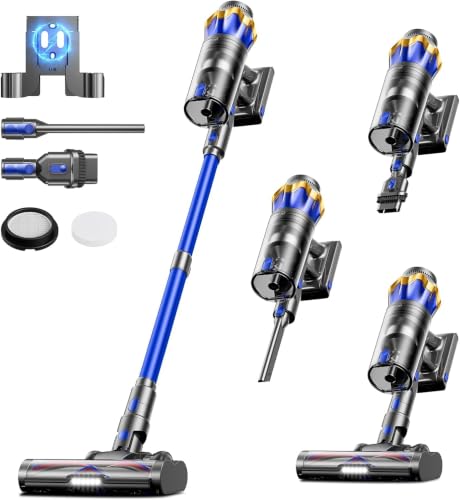
7. Cordless Vacuum Cleaner Upgraded 650W 60KPA 70Mins Cordless Stick
A Cordless Vacuum Cleaner Upgraded 650W 60KPA 70Mins Cordless Stick (cordless vacuum), per the listing. Check price on Amazon.
Good for: quick cleanups. Watch out: Check battery runtime.
8. Cordless Vacuum Cleaner Stick Cleaners – Vacuums for Home Pet
A Cordless Vacuum Cleaner Stick Cleaners – Vacuums for Home Pet (cordless vacuum), per the listing. Check price on Amazon.
Good for: quick cleanups. Watch out: Check battery runtime.
How to Choose
Size and fit
Check dimensions for your space or vehicle.
Build and materials
Durable materials last longer.
Ease of use
Simple setup and cleaning help.
Reading Battery Runtime Claims Honestly
Runtime is the number that shoppers fixate on, and it is also the easiest to misread. A figure on a listing usually describes the lowest power setting with a motorized head switched off or working lightly. Boost or max modes, thick carpet and a full bin all pull the same battery down much faster. When you compare machines, look for the runtime stated for each mode, and ask which mode you will actually use for most of your cleaning.
Think in sessions rather than minutes. If you clean a small apartment in one pass, a modest battery is plenty. If you vacuum a whole house in one go, you need either a long-running pack or a model with a swappable battery, so you can change packs partway through. Check whether the maker sells spare batteries separately and whether the listing says the pack is removable or sealed in.
Battery habits matter too. Lithium-ion packs generally last longer if you avoid leaving them completely drained for weeks and avoid charging them in a hot garage or a sunny window. Many machines slow down or cut out when the pack gets hot, which is a protective feature rather than a fault. Read the manual for charging time and for guidance on storage, and note that a machine that sits on a charging dock is only convenient if the dock’s mounting suits your wall.
Floor Heads, Brush Rolls and Suction Modes
Suction numbers printed in listings are not directly comparable between makers, because they are measured and reported in different ways. A better guide to real cleaning is the floor head. A motorized brush roll agitates carpet fibers and lifts embedded grit, while a soft roller head is gentler on hard floors and helps pick up larger crumbs and fine dust. Some heads have LED lights along the front edge that reveal dust in the shadow under a sofa, and that is a practical feature if your floors are mostly hard.
Match the head to your flooring. Homes with a mix of hard floors and low rugs benefit from a head that works well on both without scattering debris. Thick or shaggy rugs can tangle a brush roll and strain the motor, so check the manual for guidance on high-pile surfaces. If you have long hair or pet fur at home, look for descriptions of anti-tangle brush designs or an easy way to cut and remove wrapped hair.
Power modes are worth understanding. A low setting is for daily light cleaning and saves battery. A medium setting suits most routine jobs. A boost setting is for stubborn spots and drains the pack quickly, so it is a tool for short bursts. An auto mode that adjusts to the floor can be convenient, but verify in the listing how it behaves and whether you can override it.
Bin Size, Filtration and Emptying
Cordless stick vacuums have small bins by design, to keep weight down. That is fine for quick cleanups but means you will empty the bin often in a larger home or a house with pets. Check how the bin opens: a bottom-release flap that drops debris straight into a trash can is cleaner than a design where you pull out a filter and shake dust back toward your hands. Also look at how far you can see into the bin so you know when it is time to empty it.
Filtration decides what leaves the machine through the exhaust. Many listings mention multi-stage filters or sealed systems, but the claim itself is the maker’s, so read what is described and whether the filters are washable or must be replaced. People with allergies or sensitivities should read the maker’s information carefully, and anyone with a medical concern should ask a clinician, since a vacuum listing is not medical advice.
Plan for filter upkeep before you buy. Washable filters save money over time but need full drying before they go back in, which means you may want a spare. Foam and felt pre-filters collect fine dust and clog first, and a clogged filter is the most common reason suction seems to fade. Confirm that replacement filters and brush rolls are sold by the maker or are easy to find, because a machine with no spare parts has a shorter useful life.
Weight, Balance and Everyday Handling
A stick vacuum is used at arm’s length, so how the weight sits matters as much as the total. Motor-in-the-handle designs feel top heavy when you push along the floor but are easy to lift for ceiling corners. Designs with the motor lower down feel steadier on the floor and can be more tiring when you hold them overhead. Read where the motor and battery sit, and think about whether you clean mostly floors or lots of vertical surfaces.
Many models convert into a handheld unit for stairs, car seats and sofa cushions. Check how that conversion works. Some require you to remove the wand and attach the nozzle by hand, and a latch that is stiff or fiddly will discourage you from using it. Look at the length of the wand, whether it adjusts for taller or shorter users, and whether the head swivels enough to steer around chair legs.
If you have limited hand strength, a trigger that must be held down continuously can be tiring, and a switch that stays on is easier. Look for one-touch mode buttons that you can reach with your thumb, and check whether the display shows mode and battery state. Standing-upright storage is helpful in a closet. A machine that tips over when parked is an annoyance you will notice daily.
Signs It Is Time to Replace or Repair
Before deciding a stick vacuum is finished, rule out simple causes. Weak pickup is most often a full bin, a clogged filter, hair wrapped around the brush roll, or a blockage in the wand or hose. Clear each of these and test again. A pulsing or cutting-out motor can also point to a hot battery, so let it cool and retry.
Real battery wear shows up as runtime that keeps shortening even with clean filters, or a pack that no longer reaches a full charge. If the maker sells a replacement battery and the rest of the machine is sound, replacing the pack is often reasonable. If batteries are not offered, or the cost approaches that of a new machine, replacing the whole unit makes more sense.
Other warning signs include a cracked housing near the battery, a charger that gets unusually hot, a battery that swells, or a burning smell. Stop using the machine in these cases and follow the maker’s guidance on safe disposal, since lithium-ion packs should not go in household trash. Check the warranty terms in the listing and keep proof of purchase so you can claim if something fails early.
A Room-by-Room Cleaning Plan for a Cordless Stick
One of the easiest ways to judge whether a lightweight cordless vacuum suits you is to walk through your home and list what each space actually asks of it. A stick vacuum that feels perfect on a kitchen floor can feel awkward the moment you carry it up a staircase or push it under a low sofa. Thinking in rooms, rather than in spec sheets, keeps the decision grounded in the way you really clean.
- Kitchen and dining area: crumbs, dry spills and grit on hard floors. A soft roller head or a head with a bare-floor mode copes well, and a fast reach under table legs matters more than raw suction.
- Living room: a mix of rugs and hard floor. Look for a head that handles both without constant swapping, and check that the wand can lie low enough to get beneath furniture.
- Bedrooms: mostly carpet, lint and hair. A motorised brush roll earns its place here, and quiet running is a bonus.
- Stairs and landings: weight is everything. A lighter body and a handheld conversion make carrying and cleaning each tread far less tiring.
- Car and garage: short bursts with a crevice tool or small brush, so check which accessories come in the box.
Write down the two rooms you clean most, then compare the listings against those two first. If a model suits them, the rest is usually manageable.
Where the Charger and Dock Should Live
Charging sounds like a minor detail until the vacuum is stuck in a cupboard and nobody can be bothered to fetch it. The best habit is a fixed home for the machine, close to where you use it, so a quick tidy takes seconds rather than a search. Wall docks keep the floor clear, while a freestanding charging stand suits rented homes where you would rather not drill.
If you do mount anything on a wall, follow the maker’s fitting instructions and use fixings suited to your wall type. When unsure about plasterboard, brick or tile, ask a qualified installer. For the charger itself, keep the lead away from walkways, use the supplied adapter only, and read the manual for guidance on where the battery should and should not be charged.
Quick Space Check
Measure the height of the machine when docked, then compare it with the shelf or cupboard space you have in mind. Many people forget that the floor head sticks out, so allow for depth as well as height.
Comparing Two Common Setups at a Glance
Most shoppers end up choosing between a compact, handheld-friendly stick and a larger upright-style cordless. The table below sums up how they usually differ, based on general product design rather than any single listing.
| Consideration | Compact stick | Larger upright cordless |
|---|---|---|
| Carrying weight | Usually lighter, easier on stairs | Often heavier in the hand |
| Floor head | Smaller, good for tight spots | Wider, covers more per pass |
| Bin size | Smaller, emptied more often | Larger, fewer trips to the bin |
| Storage | Fits cupboards and wall mounts | Needs a dedicated corner |
| Best for | Flats, quick daily tidying | Larger homes, bigger messes |
Neither type is automatically the better choice. If your home is small and you tidy often, the compact stick usually feels more natural. If you clean fewer times but cover more floor, a wider head and bigger bin may save effort.
Brand-Backed Sticks and High-Spec Challengers: Reading This List Honestly
The eight vacuums in this guide divide into two camps that shoppers weigh against each other constantly. The Shark models and the BLACK+DECKER entry carry established service networks, accessory ranges and designs refined over many generations. The high-specification challengers in the list, the models advertising very large suction figures and long runtimes, compete on paper performance and included extras. Neither camp should be chosen on faith. Brand machines earn their premium through parts availability, honest runtime figures and floorheads that have been tested on real homes; challengers earn consideration when their real-world behaviour, bin design, filtration and build match their claims. The way to compare them is to translate every claim into a job in your home and ask which machine does that job with less fuss.
Suction numbers are the least portable claim in the category, because brands measure at different points and in different modes. What reaches the carpet is a system: the floorhead’s seal, the brush roll’s agitation, the airflow path and the filter’s condition. A vacuum that feels modest on paper and keeps its filters clean will out-clean a stronger claim choked by a clogged cyclone after a month of pet hair. Weight the picks above by their cleaning systems and their maintenance demands, and treat headline suction as the last tiebreaker rather than the first argument.
Floorheads decide more than motors
On hard floors, a soft roller or a well-sealed head with gentle brushes lifts fine dust without scattering it; on carpet, a driven brush roll with the right stiffness beats pile and frees embedded grit. Homes with both surfaces need a head that adapts or a second head in the box, and swapping should take seconds without tools. Edge cleaning shows in the head’s shape and the brush’s reach to its sides. Hair wrap is the other daily reality: anti-wrap combs and easily removed rollers, features the established brands in this list have refined, save the scissor ritual that otherwise accompanies pet ownership. Judge the head as carefully as the motor, because the head is the part that meets your floors.
Runtime in Real Rooms, Not in the Laboratory
Quoted runtimes belong to the gentlest mode on hard floors with a non-motorised tool, a combination nobody uses for a whole clean. Real planning starts from your home’s size and surfaces: work out the minutes your current clean takes, then look for a machine whose mid-power runtime covers it with margin, because the higher modes you will actually use on carpet and rugs draw the battery far faster. Removable batteries change the arithmetic entirely, letting a large home clean in one session with a swap, and they change the economics too, since a tired battery can be replaced without replacing the vacuum. The challengers in this list often include generous batteries; the brand machines often offer them as part of a system. Either way, buy runtime for the home you have, not the flat in the advertisement.
Charging arrangements shape habits. A wall dock near the door turns the stick into a grab-and-go tool for the daily crumbs, which is where cordless vacuums earn their keep; a charger in a cupboard turns it into an appointment. If drilling a dock is impossible, a freestanding stand or a consistent parking spot achieves most of the same effect. What matters is that the vacuum is charged, assembled with its main head and within reach at the moment a mess happens, because a cordless vacuum’s greatest advantage over a corded one is the thirty-second clean that prevents a week’s ground-in dirt.
Filtration, bins and the unglamorous maintenance
A vacuum’s performance in month six is a maintenance story. Washable filters washed and fully dried on schedule, bins emptied before they pack solid, brush rolls freed of hair and threads, and airways checked when suction dips: that small liturgy keeps any of these machines near their first-day performance. Sealed filtration matters in homes with allergies, because a vacuum that exhausts fine dust back into the room is undoing its own work; look for complete sealing claims rather than a filter name alone. Bin size trades against weight and balance, and the right answer depends on your dirt: pet homes empty often whatever the bin, while a large, low-shedding home may value capacity. Read the picks above with your own dirt in mind, because dirt, unglamorous as it is, is the specification that decides satisfaction.
The Daily Clean Versus the Weekly Clean
Cordless sticks change behaviour before they change cleanliness. Owners stop saving vacuuming for a weekly event and start erasing messes as they happen: the spilled cereal, the litter trail, the muddy hallway after a walk. That shift keeps floors at a higher baseline and makes the weekly deep clean shorter. To support it, keep the vacuum configured for the most common job, usually the main floorhead fitted and the crevice tool on the dock, rather than stored as a kit of parts. A stick that must be assembled is a stick that loses to the dustpan for small jobs, and small jobs are its kingdom.
The weekly clean still has its method. Work from the furthest room towards the entrance, use the higher mode where carpet and rugs justify it and the gentler mode on hard floors to stretch the battery, and empty the bin when you pass the kitchen rather than nursing a full bin to the end. Stairs deserve their own habit: handheld mode, one hand on the rail, working down so debris falls towards the step you are about to clean. Cars, upholstery and curtains belong to the same weekly circuit for many owners, because the stick is already in hand and charged; that secondary work is where the accessory sets in this guide, from the brand ecosystems to the challengers’ bundled tools, quietly justify their inclusion.
Troubleshooting suction loss and strange noises
When a stick loses suction, the cause is almost always a blockage or a filter, and the search order matters. Empty the bin, then check the floorhead’s neck and the wand’s airway, where socks and large debris lodge; then the filter, washed if washable and dried fully before refitting; then the brush roll, whose wrapped hair can stall the head and mimic motor failure. A new rattling noise is usually a hard object in the head or the bin, and a burning smell with reduced power means stop and investigate rather than finish the room. Batteries that fade early in cold weather recover indoors, a quirk worth knowing before concluding a pack has died. This order of checks restores most machines in minutes and costs nothing, which is why it belongs in every owner’s first month of habits.
More Questions Cordless Buyers Ask
Can a stick replace a full-size vacuum entirely?
In flats and smaller homes with mostly hard floors, increasingly yes. In large, carpeted homes with heavy shedding, a stick often becomes the daily tool while a larger machine keeps the deep-clean role, and there is no failure in that arrangement. The honest test is your longest pile and your largest floor area: run both through the runtime and floorhead logic above, and the answer for your home will be clear. Many households in this guide’s audience buy the stick first and discover, a season later, which role it has actually taken.
What wears out first, and can it be replaced?
Batteries age first, then brush rolls and filters, then wheels and seals. Replaceability is therefore a buying criterion, not an afterthought: a model whose battery, filters and brush roll are available as parts has a service life measured in many years, while a sealed, partless design is a countdown. The established brands in this list built their reputations partly on that parts support, and the challengers should be asked the same question before their specifications seduce you.
How do I keep pet hair from owning the machine?
Empty little and often, free the brush roll weekly, and wash filters on the maker’s schedule rather than your memory’s. Hair is not an enemy these machines fear; neglect is. A pet home that keeps that small routine will find any competent pick here stays strong, while a neglected flagship clogs as surely as a budget model.
Choose by system, head and battery honesty, keep the dock where life happens, and maintain the small liturgy of filters and rolls. A cordless stick treated that way stops being a compromise with a corded machine and becomes the vacuum your home actually revolves around.
Balance, Weight and the Body of the User
A stick vacuum is held, pushed and lifted for the whole of its working life, and its ergonomics are therefore performance features. Motor and bin placement decide whether the weight sits in the hand or distributes along the wand; a top-heavy design tires the wrist on ceilings and stairs, while a balanced one disappears during a long clean. Trigger style matters more than it sounds: a trigger that must be held continuously suits quick jobs and saves battery, but it punishes arthritic fingers across a whole house, where a latching switch is kinder. If the vacuum will serve an older user or anyone with hand weakness, that single detail can decide between two otherwise equal picks in this guide, and it deserves to be checked before the specifications are even read.
Storage height and head parking complete the ergonomic picture. A stick that stands securely against a wall without sliding, or locks upright on its dock, gets parked properly and charged; one that must be laid down gets laid anywhere and forgotten. In a home with toddlers or large dogs, a docked machine is also a safer machine than one leaning in a hallway. These are the considerations that separate a vacuum that is used daily for years from one that is technically excellent and practically avoided, and they cost nothing to weigh before you buy.
A note on noise and timing
Cordless sticks are loud in short bursts rather than in long sessions, and households adapt their timing accordingly: the quick morning pass before work, the evening hallway after the dog’s walk, the nursery-adjacent cleans saved for waking hours. Higher modes are markedly louder on every model here, which is another reason to reserve them for the surfaces that need them. A vacuum whose noise profile fits the household’s rhythms gets used at the moments messes happen, and that fit, like the dock’s position, is part of the machine’s real performance in your home.
Judge the picks above by that whole picture, motor, head, battery, body and household together, and the right stick usually identifies itself without much drama. It is the one you can picture charged, in reach and in your hand tomorrow morning, which is where every vacuum in this guide will either earn its place or begin its slow exile to the cupboard.
The first fortnight: habits that lock in
When the vacuum arrives, resist the urge to judge it on a single heroic clean. Use it the way it will actually live: dock it, charge it, and let it handle two weeks of ordinary messes, from crumbs to the hallway after rain. In that fortnight you will learn its true runtime in your rooms, which head your floors prefer, where its bin needs emptying and whether its weight suits your hand on the stairs. Those lessons, not the first impression, predict the next five years. If a small friction appears, fix the system around the machine first, a moved dock, a stored attachment, a filter routine on the calendar, because most frictions in this category belong to the setup rather than the stick.
By the end of that fortnight the vacuum will have taken its place in the household’s reflexes, grabbed without thought when something spills and returned to its dock without ceremony. That reflex is the entire point of cordless cleaning, and every pick in this guide, honestly matched to its home, is capable of earning it.
Earning it, finally, is a shared achievement between the machine and the household. The machine brings the power, the head and the battery; the household brings the dock position, the filter routine and the habit of reaching for it early and often. When both sides keep their part of the bargain, floors stay at a level that visitors mistake for effort, and the weekly clean shrinks to a fraction of what the corded era demanded. That is the transformation this category promises, and it is available from every family represented in the picks above.
So before you order, walk your home once with a buyer’s eyes: the socket for the dock, the stairs your hand must carry it up, the rug that defeats lesser heads, the dog whose hair will test its filters. The vacuum that fits that walk is the vacuum to buy, and the walk takes five minutes that will be repaid every day the machine is in service.
Five minutes of walking and a month of small habits: that is the whole investment beyond the purchase itself, and it converts a specification sheet into a clean home with a reliability that owners of well-matched sticks describe with something close to affection.
Affection for a vacuum is really affection for the ease it creates, the spill that is gone in thirty seconds, the guests announced without panic, the dog welcomed without a sigh at the hallway. Choose the stick that creates that ease in your home, and the specifications will have done their job and can be forgotten.
Forgotten specifications and remembered ease: that is the right way round, and it is how every durable appliance in this batch earns its place, from the humblest mop to the hardest-working vacuum on this list.
Let the ease begin with the next mess, then, and let it compound quietly from there, one quick clean at a time, until a tidy floor is simply the background of life in your home.
Background tidiness is an underrated luxury, and it is the one this category sells more honestly than any other in the batch. Buy it in the form that fits your floors and your hands, and enjoy it daily.
Enjoy it, too, without ceremony. The best cleaning tools are the ones nobody talks about after the first month, because they have dissolved into the routine of a house that simply stays clean.
That dissolution is the goal. Choose, dock, maintain lightly, and let the vacuum disappear into the background of a home that no longer schedules its cleanliness around a cord.
A home unchained from the cord and the calendar is a calmer home, and calm, in the end, is what all this suction and filtration is actually for.
Buy the calm in the size your home requires, keep its filters honest, and let the machine take its place among the quiet infrastructure of daily life.
Infrastructure is the right word. Like good lighting or a reliable kettle, a well-chosen stick vacuum improves a hundred small moments a week without ever asking to be admired for it.
Let it be unadmired and indispensable, then, which is the highest station a cleaning tool can reach in any household that values its time.
Time is the currency here, as it is throughout this batch, and a stick vacuum that returns it in small daily instalments is paying a dividend few appliances can match.
Collect the dividend gladly, starting with the first spill the new machine erases before it can become a stain, a smell or a Saturday project.
That prevention, repeated invisibly across a year, is worth more than any single deep clean, and it is the reason owners defend their sticks with surprising warmth when the category is questioned.
Join them knowingly. Choose the system, the head and the battery that fit your home, and let the warmth of that defence become yours in time.
It becomes yours through use, not through argument, and use begins the moment the dock is fixed and the first charge completes.
Fix the dock thoughtfully, then, in the place your messes actually happen, and let the machine start its quiet career.
Its career will be measured in hallways kept, stairs survived and weekends shortened, which is a fine ledger for any appliance to accumulate.
Let it accumulate that ledger in your home, starting this week, and the choice you made from this guide will keep proving itself in the background.
The background is exactly where it belongs, and where you will be glad, daily, that it is there.
Glad, and a little surprised at how completely the cord has been forgotten.
Forgotten, that is, until you visit a home still wrestling with one, and remember what the freedom costs and why it was worth it.
Frequently Asked Questions
Is it easy to install?
Check the manual.
Is it worth the price?
Budget options cover basics.
How do I care for it?
Clean as directed.
Do I need a swappable battery on a cordless stick vacuum?
It is not essential for small homes, but it helps if you clean a large area in one sitting. A spare pack lets you keep going without waiting for a recharge. Check the listing to see whether the pack is removable and whether spares are sold.
Is higher suction always better?
Not necessarily. Suction figures are reported differently by different makers, and floor head design, filter condition and bin fullness affect real pickup. Use listed numbers as a loose guide and rely more on the head type and how it suits your floors.
Can a cordless stick vacuum replace a full-size vacuum?
For small homes with mostly hard floors or low rugs, many people use one as their main machine. For large homes, thick carpet or heavy pet hair, a stick vacuum may work better as a second machine for daily cleanups. Think about bin size and runtime before relying on it alone.
How often should I wash the filter?
Follow the manual, since schedules and washability differ by model. Many makers suggest cleaning filters every month or so with regular use. Always let a washed filter dry completely before refitting it.
Why does my vacuum cut out in boost mode?
Boost draws the most power and can heat the motor and battery quickly. Some machines cut out to protect themselves from overheating or low voltage. Let it rest, check for blockages, and use boost only in short bursts.
Is it safe to leave the vacuum on its charger all the time?
Most modern chargers and docks are designed to stop charging when the pack is full, but the manual is the authority for your model. Keep the charging spot cool, dry and away from direct sun. Unplug it if you will be away for a long time.
How do I deal with hair wrapped around the brush roll?
Switch the machine off, remove the brush roll if the design allows it, and cut the hair away with scissors. Do this regularly rather than waiting for it to stall the motor. Some roller designs are described as resisting tangles, but still check them periodically.
Questions to Ask Before You Buy
- What floor types do I have: hard floors, low rugs, thick carpet, or a mix?
- Do I need to clean stairs, car interiors or furniture tops as well?
- How large is my home, and will one charge cover a typical session?
- Where can I store and charge it, on a wall or in a closet?
- Do I share the home with long-haired people or pets?
- Are replacement filters, brush heads and batteries available from the maker?
Matching It to Your Use
A small apartment with mostly hard floors places lighter demands on a machine than a family house with rugs and pets. Think about how often you plan to vacuum. Daily quick passes favor something light that is simple to grab, while weekly deep cleans may call for a larger bin and longer running time. Weight matters more than it appears on paper, particularly when you lift the unit above your head to reach corners. Read the maker’s listing for details on run time, modes and attachments, since figures depend on the setting used.
Storage and Care Notes
Empty the bin before it is completely full and clear tangled hair from the brush roll regularly. Check the maker’s instructions to see which filters may be washed and how long they must dry before they go back in. Charge the battery in a cool, dry place, away from direct sun and heaters. If you use a wall dock, make sure the fixing suits your wall type. Inspect seals and hose connections occasionally, and refer to the manual if suction seems to fade.
Bottom Line
Battery runtime and filter care matter most.
More Home Cleaning Guides
- Best Portable Carpet and Upholstery Cleaners
- Best Portable Steam Cleaners for Home
- Best Reusable Dryer Balls
- Best Handheld Clothes Steamers
- Best Home Irons
- Best Foldable Laundry Drying Racks
- Best Lint Rollers and Sweater Shavers
- Best Steam Mops