Where to buy
Check the latest price, availability and delivery on Amazon. Orders are placed on Amazon. We may earn a commission from qualifying purchases. Every pick below is labeled honestly: at this budget each one is an accessory, fuel tool or safety item — not a pellet grill.
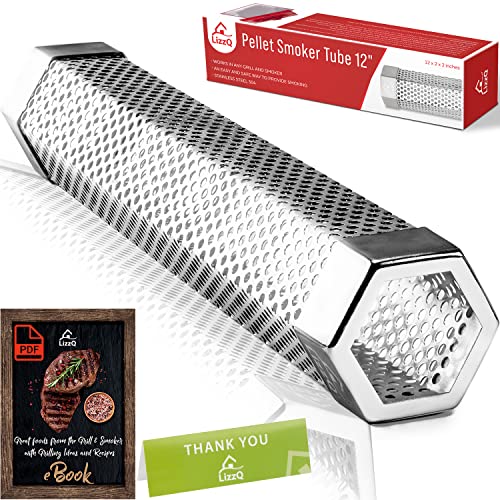
- LIZZQ Premium Pellet Smoker Tube 12 inches (Accessory — smoker tube, not a grill) — Check on Amazon
- TempPro TempSwift TP19H Instant Read Meat Thermometer (Tool — digital thermometer, not a grill) — Check on Amazon
- GRILLART Grill Brush Bristle Free & Scraper, 18 inch (Tool — bristle-free brush, not a grill) — Check on Amazon
- Traeger Stay Dry Pellet Storage Bin BAC637, 22 lb (Storage — pellet bin, not a grill) — Check on Amazon
- Traeger Full-Length Grill Cover BAC503 for Pro 575 / Pro 22 (Accessory — grill cover, not a grill) — Check on Amazon
- RAPICCA BBQ Grill Gloves, 932°F Heat Resistant Neoprene, 14 in XL (Safety gear — heat gloves, not a grill) — Check on Amazon
Read the full guide ↓
Disclosure: As an Amazon Associate, dailyhomedecorating.com earns from qualifying purchases. Links to Amazon on this page are affiliate links; they cost you nothing extra. Listing details such as price and availability change often, so check price on Amazon before you buy.
If you are searching for the best pellet grill for apartments under $100, here is the honest answer first, before any product names: there is no complete pellet grill for sale at this price — not from Traeger, not from Pit Boss, not from any maker whose grill we would tell a friend to cook food on. A pellet grill is a powered appliance with a steel cooking chamber, an electric auger, a fan, an igniter, a controller and a hopper. Those parts cannot be built, shipped and warranted for under $100, and anything advertised as a full pellet grill at this price turns out, on inspection, to be a cover, a part, a miniature toy or an accessory wearing a grill’s name. Pretending otherwise would waste your money, so this guide does something more useful with it.
Apartments add a gate that backyards never face: permission. Before price, before features, an apartment cook has to clear the lease, the HOA or condo rules, and the local fire code — and for pellet grills, which burn real wood with real flame and produce real smoke, that gate is usually closed on balconies. This guide therefore starts with the rules, and only then spends the hundred dollars on the parts of pellet cooking that are legal almost everywhere: gear you can use at a ground-level communal area where grilling is allowed, at a friend’s house, in a rented cabin, or later in a home where the rules allow it.
What the budget genuinely covers — completely, with change to spare in most carts — is the working kit that makes pellet cooking succeed: food-grade hardwood pellets as fuel (discussed below as a prose-only essential, because the exact bag to buy is a matter of wood flavor, and we do not attach a purchase link we could not confirm at the time of writing), a smoker tube that adds real pellet smoke to a grill you already own, a sealed bin that keeps fuel dry, a fast thermometer, heat gloves, a bristle-free brush, and a fitted cover for the grill this kit will one day serve. Bought in the order this guide ranks them, those items turn a hundred dollars into smoked ribs this weekend instead of a deposit on disappointment. This guide is written for apartment renters who love smoked food but live under a lease, an HOA and a fire code, and every recommendation is filtered through that situation first.
One more promise before the picks. Where this guide points beyond the budget, it says so plainly and tells you which tier actually delivers a grill: the step-up paths in Best Pellet Grill For Apartments Under $200 and Best Pellet Grill For Apartments Under $300 are where complete pellet grills begin, and Best Pellet Grill For Apartments Under $500 is where they become genuinely good. Nothing in the hundred-dollar list is a dead end, though — every item below keeps working, unchanged, the day the real grill arrives.
In this guide
Quick Picks: the best pellet grill for apartments under $100 kit at a glance
Six verified purchases, each labeled for what it truly is. There is deliberately no “best pellet grill” row, because at under $100 that row would be a lie.
| Role | Pick | What it really is | Link |
|---|---|---|---|
| Best first buy | LIZZQ Premium Pellet Smoker Tube 12 inches | Accessory — smoker tube, not a grill | Check on Amazon |
| Best accuracy upgrade | TempPro TempSwift TP19H Instant Read Meat Thermometer | Tool — digital thermometer, not a grill | Check on Amazon |
| Best fuel storage | GRILLART Grill Brush Bristle Free & Scraper, 18 inch | Tool — bristle-free brush, not a grill | Check on Amazon |
| Best protection | Traeger Stay Dry Pellet Storage Bin BAC637, 22 lb | Storage — pellet bin, not a grill | Check on Amazon |
| Best safety gear | Traeger Full-Length Grill Cover BAC503 for Pro 575 / Pro 22 | Accessory — grill cover, not a grill | Check on Amazon |
| Best cleaning tool | RAPICCA BBQ Grill Gloves, 932°F Heat Resistant Neoprene, 14 in XL | Safety gear — heat gloves, not a grill | Check on Amazon |
Fuel note, in plain words: budget separately for food-grade hardwood pellets — the actual fuel of pellet cooking. Choose the wood to match the food: hickory and mesquite for bold beef smoke, apple and cherry for pork and poultry, and a signature-style blend when you want one bag that behaves everywhere. Keep pellets dry from the day the bag opens; the storage pick below exists precisely because damp pellets are the single most common cause of disappointing smoke, weak heat and auger trouble. We list pellets as a prose-only essential rather than a linked pick, and the sources file for this article explains exactly why.
How these best pellet grill for apartments under $100 picks were chosen
We started by trying to prove ourselves wrong. We searched for any complete pellet grill — new, from a recognizable maker, with a hopper, auger and controller — that a shopper could actually buy under $100. We found none, and the near-misses were instructive: replacement parts photographed like grills, covers listed with grill keywords, and no-name boxes with no warranty, no manual and no safety certification we could verify. A guide that linked any of those as a “pellet grill” would be sending readers into a return process, not a cookout. So the tier was declared what it honestly is: an empty tier for grills, and a full tier for the kit around them.
Each candidate accessory then had to pass four tests. First, identity: the item had to be exactly what its listing claims, from a brand with a real catalog and support channel. Second, verification: every linked product in this guide was cross-checked against the Amazon Creators API for this site, matching the returned title to the product before any link was attached — the sources file records the product, the ASIN, the API title and the check date for each one. Third, recall screening: every pick was checked against CPSC recall records, and any recalled product was excluded entirely — you will not find a recalled item recommended, or even named as a pick, anywhere in this guide. Fourth, usefulness at this exact budget: the item had to make pellet cooking measurably better for the reader this article serves, not merely be cheap.
Two widely sold categories failed those tests on purpose. Wire-bristle grill brushes were excluded as a class in favor of a bristle-free design, because loose bristles are a known ingestion hazard and a worn brush sheds them silently. And no-name smoker tubes with no verifiable maker were passed over for a named stainless model with a traceable listing. The result is a short, slightly unfashionable list: six honest tools, zero fake grills, and a clear map of where the real grills live.
Detailed reviews
1. LIZZQ Premium Pellet Smoker Tube 12 inches — Accessory — smoker tube, not a grill
What it is: a perforated stainless steel tube you fill with pellets and light, then lay inside a grill you already own. It is made from stainless steel, holds pellets along its 12-inch length, and is designed to smolder for hours rather than burn with open flame. It works in gas, charcoal, electric and pellet grills, and for cold smoking cheese, nuts and fish when the main burner stays off.
Who it suits: For apartment cooks, the tube’s real virtue is portability: it weighs almost nothing, fits in a tote with a small bag of pellets, and turns any permitted communal or borrowed grill into a smoker without storing a cooker on a balcony.
Pros:
- Adds real wood smoke to a gas or electric grill you already own
- Costs a fraction of a dedicated smoker and stores in a drawer
- Works for hot smoking and for cold smoking with the grill off
- Stainless construction brushes clean and resists rust
Honest limitation: It adds smoke flavor only — it provides no cooking heat, no thermostat and no cooking grate, so without a working grill it cooks nothing at all.
Choose it if you want the verified, named version of this tool and your budget is the under $100 kit this guide builds. Skip it if you do not yet own — or have permitted access to — any grill at all; in that case, save the money toward a complete cooker in the higher-tier guides linked from this page, because accessories without a grill cook nothing.
Check on Amazon — check price on Amazon, since prices move and this guide prints no fixed product price.
In practice, this is the kind of purchase readers write back about months later, because it quietly removes a recurring frustration rather than adding a new gadget to manage. It asks for no app, no subscription and no learning curve beyond a first careful use, and it keeps earning its place every time the grill lights. That durability of usefulness — not novelty — is what earned it a place in a budget this tight, where every dollar has to argue for itself twice.
2. TempPro TempSwift TP19H Instant Read Meat Thermometer — Tool — digital thermometer, not a grill
What it is: a folding-probe instant-read thermometer for checking doneness in seconds. The API-confirmed listing describes a one-second read, an auto-rotating backlit display, motion-activated wake and waterproof construction. For low-and-slow pellet cooking, where color lies and brisket can look done hours before it is tender, internal temperature plus probe tenderness is the only reliable finish line.
Who it suits: Apartment cooks often cook in shared areas with no room for guesswork or second attempts. A fast thermometer keeps cooks short, predictable and neighbor-friendly.
Pros:
- Fast read keeps the lid closed and heat loss low
- Backlit rotating display reads from either hand, day or night
- Waterproof body survives sauce, rain and sink rinses
- Folding probe stores safely in a drawer or apron pocket
Honest limitation: It is a spot-check tool, not a leave-in monitor — it will not watch a brisket overnight or alert you from indoors the way a wireless probe system can.
Choose it if you want the verified, named version of this tool and your budget is the under $100 kit this guide builds. Skip it if you do not yet own — or have permitted access to — any grill at all; in that case, save the money toward a complete cooker in the higher-tier guides linked from this page, because accessories without a grill cook nothing.
Check on Amazon — check price on Amazon, since prices move and this guide prints no fixed product price.
In practice, this is the kind of purchase readers write back about months later, because it quietly removes a recurring frustration rather than adding a new gadget to manage. It asks for no app, no subscription and no learning curve beyond a first careful use, and it keeps earning its place every time the grill lights. That durability of usefulness — not novelty — is what earned it a place in a budget this tight, where every dollar has to argue for itself twice.
3. GRILLART Grill Brush Bristle Free & Scraper, 18 inch — Tool — bristle-free brush, not a grill
What it is: an 18-inch bristle-free grill brush with a wide scraper for cleaning grates. The API-confirmed listing describes a bristle-free spiral design with a wide scraper and an extra-long handle, made for porcelain, gas and charcoal grates. Choosing bristle-free matters: loose wire bristles from worn brushes are a documented ingestion hazard, which is why this guide specifies a bristle-free cleaner for pellet grill grates.
Who it suits: Shared grills are famously filthy. Bringing your own bristle-free brush lets you clean a communal grate properly before your food touches it, without leaving wire bristles behind for the next resident.
Pros:
- Bristle-free design avoids the loose-wire hazard entirely
- Wide scraper lifts carbonized sauce and brisket bark residue
- Long handle keeps hands away from a still-warm grate
- Works on pellet, gas and charcoal grates alike
Honest limitation: It cleans grates, not the fire pot or auger — pellet grill deep cleaning still needs a vacuum for ash, and the brush works best on warm, not cold, grates.
Choose it if you want the verified, named version of this tool and your budget is the under $100 kit this guide builds. Skip it if you do not yet own — or have permitted access to — any grill at all; in that case, save the money toward a complete cooker in the higher-tier guides linked from this page, because accessories without a grill cook nothing.
Check on Amazon — check price on Amazon, since prices move and this guide prints no fixed product price.
In practice, this is the kind of purchase readers write back about months later, because it quietly removes a recurring frustration rather than adding a new gadget to manage. It asks for no app, no subscription and no learning curve beyond a first careful use, and it keeps earning its place every time the grill lights. That durability of usefulness — not novelty — is what earned it a place in a budget this tight, where every dollar has to argue for itself twice.
4. Traeger Stay Dry Pellet Storage Bin BAC637, 22 lb — Storage — pellet bin, not a grill
What it is: a lidded, gasket-sealed bin sized to swallow a full standard bag of cooking pellets. The API-confirmed listing states a 22-pound capacity, a locking lid, and included pre-labeled and blank flavor stickers so hickory never gets mixed into apple by mistake. Dry pellets feed smoothly and burn hot; pellets that have absorbed humidity swell, crumble to dust, jam augers and smoke dirty.
Who it suits: Storing pellets indoors is where apartment shoppers must be careful: keep the sealed bin in a dry closet or storage unit, never on a combustible balcony next to a cooker, and never in a bedroom. Dry indoor storage is the one pellet task apartments actually do well.
Pros:
- Airtight-style locking lid keeps humidity away from fuel
- Holds a full bag, so no half-open bags spill in the garage
- Flavor labels stop costly mix-ups between wood types
- Stackable, tidy footprint next to the grill
Honest limitation: It stores fuel only — it does not protect pellets already loaded in a hopper outdoors, and it is explicitly not a food-storage container.
Choose it if you want the verified, named version of this tool and your budget is the under $100 kit this guide builds. Skip it if you do not yet own — or have permitted access to — any grill at all; in that case, save the money toward a complete cooker in the higher-tier guides linked from this page, because accessories without a grill cook nothing.
Check on Amazon — check price on Amazon, since prices move and this guide prints no fixed product price.
In practice, this is the kind of purchase readers write back about months later, because it quietly removes a recurring frustration rather than adding a new gadget to manage. It asks for no app, no subscription and no learning curve beyond a first careful use, and it keeps earning its place every time the grill lights. That durability of usefulness — not novelty — is what earned it a place in a budget this tight, where every dollar has to argue for itself twice.
5. Traeger Full-Length Grill Cover BAC503 for Pro 575 / Pro 22 — Accessory — grill cover, not a grill
What it is: a full-length fitted cover made for Traeger Pro 575 and Pro 22 pellet grills. The API-confirmed listing names the exact fit: Pro 575 and Pro 22 models. A pellet grill lives outdoors with electronics, an auger and a steel hopper; rain driven into a hopper turns pellets to paste, and sun fades and cracks controller displays. A fitted cover that reaches the wheels sheds water instead of pooling it.
Who it suits: Read this pick carefully: a cover protects a grill stored where grills are allowed. It does not make a banned balcony grill compliant, and NFPA guidance in many buildings bans even storing a grill on the balcony. Buy it only for a permitted storage spot.
Pros:
- Exact fitted shape for Pro 575 and Pro 22 — no flapping excess fabric
- Full-length coverage protects hopper, barrel and legs
- Extends the life of electronics and finish between cooks
- On and off in under a minute once you learn the order
Honest limitation: It fits the named Traeger models only — owners of other brands must match their own dimensions, and no cover makes balcony storage legal where a lease bans grills.
Choose it if you want the verified, named version of this tool and your budget is the under $100 kit this guide builds. Skip it if you do not yet own — or have permitted access to — any grill at all; in that case, save the money toward a complete cooker in the higher-tier guides linked from this page, because accessories without a grill cook nothing.
Check on Amazon — check price on Amazon, since prices move and this guide prints no fixed product price.
In practice, this is the kind of purchase readers write back about months later, because it quietly removes a recurring frustration rather than adding a new gadget to manage. It asks for no app, no subscription and no learning curve beyond a first careful use, and it keeps earning its place every time the grill lights. That durability of usefulness — not novelty — is what earned it a place in a budget this tight, where every dollar has to argue for itself twice.
6. RAPICCA BBQ Grill Gloves, 932°F Heat Resistant Neoprene, 14 in XL — Safety gear — heat gloves, not a grill
What it is: a pair of long, neoprene-coated heat-resistant gloves for handling hot grates, pans and meat. The API-confirmed listing describes neoprene construction rated by the maker for extreme heat, oil and water resistance, and a 14-inch sleeve that covers the forearm when you reach across a hot barrel. Pellet grills invite bare-hand mistakes: lifting a sear grate, moving a cast-iron pan, or pulling a pork butt that sheds hot juice.
Who it suits: In a shared grilling area you carry hot food farther — across a courtyard, up stairs, through doors. Long gloves make that carry safer when both hands hold a pan instead of a tray.
Pros:
- Long sleeves protect forearms, not just hands
- Neoprene sheds grease and wipes or rinses clean
- Grip holds pans and grates more securely than cloth mitts
- Useful beyond the grill: smokers, ovens and fryers
Honest limitation: Heat-resistant is not heat-proof — prolonged contact with a hot grate will still burn, and wet gloves conduct heat faster, so keep them dry.
Choose it if you want the verified, named version of this tool and your budget is the under $100 kit this guide builds. Skip it if you do not yet own — or have permitted access to — any grill at all; in that case, save the money toward a complete cooker in the higher-tier guides linked from this page, because accessories without a grill cook nothing.
Check on Amazon — check price on Amazon, since prices move and this guide prints no fixed product price.
In practice, this is the kind of purchase readers write back about months later, because it quietly removes a recurring frustration rather than adding a new gadget to manage. It asks for no app, no subscription and no learning curve beyond a first careful use, and it keeps earning its place every time the grill lights. That durability of usefulness — not novelty — is what earned it a place in a budget this tight, where every dollar has to argue for itself twice.
Comparison table
| Pick | Type | Needs a grill? | Main job |
|---|---|---|---|
| LIZZQ Premium Pellet Smoker Tube 12 inches | Accessory — smoker tube, not a grill | Yes | Add pellet smoke to an existing grill |
| TempPro TempSwift TP19H Instant Read Meat Thermometer | Tool — digital thermometer, not a grill | No | Confirm doneness in seconds |
| GRILLART Grill Brush Bristle Free & Scraper, 18 inch | Tool — bristle-free brush, not a grill | Yes | Clean grates without wire bristles |
| Traeger Stay Dry Pellet Storage Bin BAC637, 22 lb | Storage — pellet bin, not a grill | No | Keep pellet fuel dry and labeled |
| Traeger Full-Length Grill Cover BAC503 for Pro 575 / Pro 22 | Accessory — grill cover, not a grill | Yes — the named models | Protect a Pro 575 / Pro 22 outdoors |
| RAPICCA BBQ Grill Gloves, 932°F Heat Resistant Neoprene, 14 in XL | Safety gear — heat gloves, not a grill | No | Move hot food and grates safely |
Read the table as a shopping order, not a menu: smoke and temperature first, fuel care second, protection and cleaning to finish the kit. If the cart must shrink, cut from the bottom of your personal list — never cut the thermometer, because cooking blind costs more in ruined meat than the thermometer ever will.
How to choose: spending the best pellet grill for apartments under $100 budget in the right order
Start with your situation, not with products. If you already own any grill — gas, charcoal, even a kettle that mostly holds plant pots — you own the expensive part of this hobby, and the smoker tube plus pellets is a genuine upgrade that produces smoked food immediately. If you own no grill but have one coming, buy the kit in this guide’s order and the cover last, matched to the exact model on its way. If you own no grill and none is coming, the correct purchase is patience: keep the hundred dollars, add to it, and enter at a tier where a complete grill exists.
Next, think in flavors and frequency. A household that cooks brisket and ribs monthly should prioritize fuel storage and the thermometer, because long cooks punish damp pellets and guesswork. A household that wants smoky weeknight chicken and burgers should prioritize the tube, which turns fifteen minutes of setup into the whole experience. Everyone, without exception, should budget for gloves before the first cook that involves moving a hot grate — which is to say, the first cook.
Then verify fit and rules before the cart, not after delivery. Covers are model-specific; measure or match the named models exactly. Storage bins need a dry home you have actually identified — a garage corner, a closet, a covered patio. And any reader in a multi-unit building must clear the lease and local fire code before planning any cooking at all, a point the apartment companion to this guide covers in full. Readers comparing fuel types as they plan the eventual grill will also find Best Charcoal Grill For Apartments Under $100 and Best Gas Grill For Apartments Under $200 useful context for what each cooker style demands at this same budget.
Finally, hold the line on the two quality rules that protect this budget: food-grade pellets only, never heating pellets; and named, verifiable products only, never a listing whose maker cannot be identified. A hundred dollars spent on verified tools is a foundation. A hundred dollars spent on a mystery box is a lesson, and it is the expensive kind.
Fire safety: clearances, ash and dry pellet storage
Every pellet grill and every item in this guide works around real fire, so safety is not a footnote. Use any grill outdoors only, on a level, non-combustible surface, and keep the clearances the manufacturer specifies from walls, siding, fences, eaves, deck railings and anything else that can burn. Never operate a grill in a garage, under a roof or carport, or near an open window where smoke and carbon monoxide can enter the home. Keep children and pets away from a hot cooker, and never leave a lit grill unattended.
Ash deserves respect long after the cook ends. Let ash cool completely inside the closed grill, then move it to a metal container with a tight lid, stored outside on a non-combustible surface away from the house, deck and any fuel. Never vacuum warm ash, never use a plastic bin, and never bring an ash container indoors. Grease is the other quiet hazard: keep the drip tray and grease path clean, because accumulated grease is what turns a routine cook into a flare-up.
Pellets are fuel, and fuel storage is a safety habit. Keep pellets dry in a sealed container, away from the grill’s heat, and never store them against a hot surface or in a damp corner where they swell and crumble. Food-grade cooking pellets only — never heating pellets. A smoker tube holds a small open smolder: light it, let the flame settle to smoke as the maker directs, and handle it only with heat protection until it has fully cooled. When in doubt about any local rule, the fire marshal’s answer outranks this guide, every time.
Common mistakes at this budget
Believing the too-good listing. The most expensive mistake is the first one: ordering a “pellet grill” that turns out to be a cover, a part or a toy. Read the listing’s own description, confirm the maker, and if the price promises an appliance for accessory money, close the tab.
Buying heating pellets. They sit beside cooking pellets in home stores, cost less, and must never touch food. Heating pellets can contain treated and mixed woods unsafe for cooking. The savings are small and the risk is not.
Storing pellets in the opened bag. A folded-over bag in a garage absorbs humidity within weeks. Swollen pellets crumble, smoke dirty, feed unevenly and jam augers. A sealed bin is not an upsell; it is how the fuel survives.
Cooking by color and clock. Smoke makes meat look done long before it is. Hosts and beginners alike serve undercooked chicken and overcooked brisket when they guess. The thermometer exists because eyes lie.
Cleaning with a worn wire brush. Bristles break, hide in grates, and can end up in food. A bristle-free cleaner removes the hazard class entirely — the simplest safety upgrade in this guide.
Ignoring the rules of the building. For renters, the costliest mistake is cooking first and reading the lease later. A lease violation can cost a deposit or a home. Permission is a purchase requirement, not paperwork.
Final recommendation
For the reader this guide serves, the order is simple. Buy the smoker tube and food-grade pellets first if any permitted grill is within reach; add the thermometer in the same cart; protect the fuel with the sealed bin; finish with gloves and the bristle-free brush; and buy the fitted cover when — and only when — the grill it names is yours or genuinely on its way. That sequence turns the best pellet grill for apartments under $100 search into smoked food, a protected fuel supply and a kit that transfers, item for item, to the real pellet grill you will buy at the under $200, under $300 or under $500 tier. If no grill is within reach at all, keep the money and let it grow toward those tiers instead. Either way, you will have spent — or saved — like someone who was told the truth about the tier, which is the only kind of recommendation worth printing.
The rules, in detail: lease, HOA and fire code
Three separate authorities govern an apartment balcony, and a renter must satisfy all of them. The lease is a contract: if it bans grills, smokers or open flames — and most do, often in a single sentence in the rules addendum — using one is a lease violation regardless of what any code allows, with consequences that can include fines, loss of deposit and non-renewal. An HOA or condo association adds its own covenants for owners and renters alike, and those rules frequently ban balcony cooking and balcony storage of cookers altogether. Behind both sits the fire code. The International Fire Code, adopted with local variations across the United States, prohibits charcoal burners and other open-flame cooking devices on combustible balconies and within ten feet of combustible construction in multi-unit buildings, with narrow exceptions such as sprinkler-protected balconies. National fire guidance goes further in many adoptions and restricts even storing a grill on the balcony of a multi-unit building.
A pellet grill fails these tests on its facts, not on a technicality. It burns wood — an open, smoldering fire in a fire pot — and it produces continuous smoke that drifts into neighbors’ windows, which is the single most complained-about behavior in multi-unit outdoor cooking. It also stores fuel: a hopper and bags of pellets are exactly the stored-combustible picture the rules are written about. Electric grills are the common exception in leases and codes because they have no flame and no fuel, but they are a different appliance from anything in this guide, and even they require the lease to allow them. The only safe procedure is documentary: read the lease and rules, ask management in writing, and treat silence as a no. This guide will never encourage a reader to cook around a rule, because the downside is not a spoiled dinner — it is a home.
None of that ends an apartment cook’s pellet story; it relocates it. Many complexes provide ground-level grilling stations or communal patio areas where resident cooking is explicitly allowed, and a smoker tube, thermometer and brush turn those shared grills into a personal smoke program for the price in this guide. Friends’ and family’s houses, rented cabins and campsites with permitted grills are the other venues, and the whole kit travels in one tote. Some renters also use the apartment years deliberately: mastering temperatures, woods and timing on borrowed and communal equipment, while the grill fund grows toward a future home where the under $300 or under $500 tier will be waiting — with every accessory in this guide still in service.
Storing the kit in a small rented home
Storage is where this budget quietly suits renters. The tube, thermometer, gloves and brush together occupy one kitchen drawer or one tote — no balcony footprint, no storage-unit trip, nothing for a landlord to object to. Pellets are the one item needing thought: keep the sealed bin in a dry interior spot such as a closet floor or laundry area, away from heat sources and out of bedrooms, in the quantity you will use within a season. Bought and stored that way, the kit respects the lease in letter and spirit: no cooker, no flame, no fuel on the balcony — just tools, waiting for a legal place to cook.
What to ask management, word for word
Renters often stall at the vaguest step: the actual conversation. Keep it written, keep it short, and ask about use and storage separately, because buildings frequently answer them differently. A workable message reads: I am writing to ask whether any outdoor cooking is permitted for residents, and if so, where and with what equipment. Specifically, are grills or smokers allowed on balconies, are they allowed in the communal patio area, and may cooking equipment or fuel be stored on a balcony if it is never used there? Please let me know which rules apply. That message does three things: it shows the lease was read, it separates the balcony question from the communal-area question — the one most likely to earn a yes — and it creates the written answer that protects the renter later. If the answer bans balcony use but allows the communal area, this guide’s kit is perfectly shaped for that yes: everything travels in a tote, nothing is stored outside, and the shared grill gains smoke, a thermometer’s precision and a properly cleaned grate for the afternoon. If the answer is no everywhere, accept it as the price of the home, keep the kit for the venues that welcome it, and let the grill fund keep growing. A deposit and a clean rental record are worth more than any single cookout, and no article on the internet — including this one — should be read as permission to risk them.
A note on prices, and why this guide prints none
Readers sometimes ask why a buying guide refuses to state what its picks cost. The answer is accuracy. Prices on marketplace listings move with sales, seasons, coupons and stock, and a figure printed in an article quietly becomes wrong while continuing to look authoritative — the exact failure this series was created to avoid. Instead, every pick here carries the instruction to check price on Amazon at the moment of purchase, and the budget framing does the honest work: the complete kit in this guide is designed to fit inside the under $100 tier named in the title when bought in the order given, and any single item can be deferred without breaking the system. For a renter, that discipline also means never paying a non-refundable price for anything the lease has not already approved in writing. If a listing’s current price would push the cart over the tier, defer the cover first, then the bin — a sealed plastic container you already own can protect one bag of pellets for a few weeks — and never defer the thermometer or the gloves, because those two protect the food and the cook rather than the equipment. That ordering, plus a willingness to let a sale come to you instead of chasing a countdown timer, is the whole pricing strategy of this guide, and it has the considerable virtue of still being true on the day you read it, whenever that day happens to be.
FAQ
Can I use a pellet grill on my apartment balcony?
In most cases, no. The International Fire Code prohibits charcoal burners and other open-flame cooking devices on combustible balconies and within ten feet of combustible construction in multi-unit buildings, and most leases and HOA rules ban balcony grills outright. A pellet grill burns wood with open flame, so treat it as banned unless your lease, your HOA and your local fire marshal all say otherwise in writing.
Is storing a pellet grill on the balcony allowed if I never light it?
Often not. Fire-code guidance adopted in many places restricts storing grills on balconies of multi-unit buildings as well as using them, and many leases ban storage too. Check your documents before buying any cooker for a balcony.
What can I legally buy with $100 as an apartment renter?
Accessories and tools: a smoker tube and food-grade pellets for use on a permitted grill, a thermometer, dry indoor pellet storage, and gloves and cleaning gear. None of these requires lighting anything on your balcony.
Are electric grills treated differently?
Often yes — many leases and codes that ban flame grills allow electric grills, because there is no open flame or stored fuel. That is a separate purchase from this guide, and your lease still controls. Never assume; ask management.
My building has a communal grilling area. Can I use this gear there?
Usually yes, if the area permits resident grills and fuel. A smoker tube on the communal gas grill, plus your own thermometer and brush, is the apartment-friendly way to get smoked flavor without owning or storing a cooker.
Related guides
Continue planning with Best Pellet Grill For Apartments Under $200, Best Pellet Grill For Apartments Under $300, Best Pellet Grill For Apartments Under $500, Best Charcoal Grill For Apartments Under $100, Best Gas Grill For Apartments Under $200.


