Where to buy
Check the latest price, availability and delivery on Amazon. Orders are placed on Amazon. We may earn a commission from qualifying purchases.
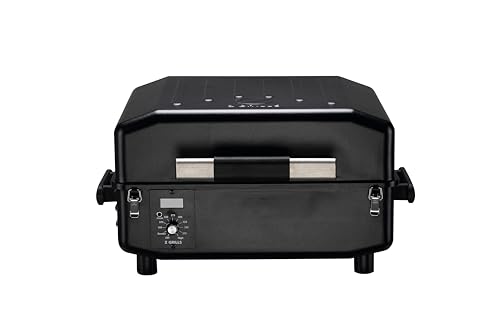
- Best where permitted: Z Grills 200A Table Top Wood Pellet Grill & Smoker — Check on Amazon
- Best searing tabletop: Pit Boss PB150PPG Table Top Wood Pellet Grill — Check on Amazon
- Best for a ground-floor patio: Z Grills ZPG-450A Wood Pellet Grill & Smoker — Check on Amazon
- Most cooking space: Pit Boss 440 Mahogany Series Wood Pellet Grill & Smoker (PB440D2) — Check on Amazon
- ASMOKE AS350 Portable Wood Pellet Grill & Smoker — check price on Amazon (prose-only pick in this guide; see the review below)
- Camp Chef Pursuit 20 Portable Pellet Grill (PPG20) — usually above this budget; prose-only reference, see the review below
Read the full guide ↓
Disclosure: As an Amazon Associate, dailyhomedecorating.com earns from qualifying purchases. Links to Amazon on this page are affiliate links; they cost you nothing extra. Listing details such as price and availability change often, so check the current Amazon listing before you buy.
Searching for the best pellet grill for apartments under $300 deserves an honest answer before it deserves a product list, so here it is: on most apartment balconies, the correct number of pellet grills is zero. A pellet grill is a combustion appliance. It burns wood in a firepot, it makes real smoke — that is the entire point of it — and it has a hot exhaust, an electrical cord and a grease path. Most leases ban grills on balconies outright, many ban them anywhere within a set distance of the building, and a large share of city and county fire codes prohibit any open-flame or solid-fuel cooking device on the balcony of a multi-family building, often allowing exceptions only for listed electric appliances or for grills kept a required distance from the structure at ground level. Those rules exist because balcony grill fires are a recurring cause of apartment building fires, and “the listing said apartment-friendly” is not a defense your landlord or your fire marshal will accept.
So this guide is written for the apartment situations where a pellet grill can be legitimate, and there are more of them than the balcony ban suggests. Ground-floor units with a private patio at grade, where the lease allows grills with clearance from the building. Townhome and duplex renters with a small yard. Apartment dwellers whose complex has a communal grill area where personal grills are permitted. And renters who want one grill that lives in a storage closet and travels — to the complex’s permitted grilling spot, to a park, to a friend’s backyard, to a campsite. For those readers, the picks below are ranked by apartment logic: footprint, storage size, weight, smoke manners and how completely the grill disappears when it is not cooking. If your situation is a third-floor balcony and a strict lease, skip to the section on compliant alternatives — it will save you money and possibly your deposit. Readers still weighing the general category can compare this ranking with our broader guide to the Best Pellet Grill Under $300.
Everything else about this budget still applies. Under $300 is the tier where real pellet grills begin: auger-fed firepots, digital controllers, and hoppers that hold hours of fuel. The apartment lens does not change which machines are good; it changes which good machine fits a life with a lease, a storage closet and neighbors on the other side of a wall. Smoke deserves a special word, because it is the complaint that actually reaches apartment managers. Pellet grills burn cleaner than charcoal and produce their heaviest smoke at startup and at low smoking temperatures; at grilling temperatures the exhaust is comparatively light. “Comparatively” is doing work in that sentence. A pellet grill on a permitted ground patio, positioned so exhaust drifts away from windows — yours and your neighbors’ — is a reasonable neighbor. The same grill tucked under an upstairs balcony is not, which is why placement and permission, not the product, decide most apartment grilling questions.
In this guide
Quick Picks
Short on time, or comparing several options at once? Each row below names a buyer type and the product that suits it, with a link to the listing where one is available. Every pick assumes a permitted location — read the rules section before buying any of them for apartment use.
| Buyer type | Pick | Why it stands out | Link |
|---|---|---|---|
| Best where permitted | Z Grills 200A Table Top | Smallest footprint in the guide at about 25 × 20 × 13 in, with an 8 lb hopper and shelf-friendly storage | Check on Amazon |
| Best searing tabletop | Pit Boss PB150PPG Table Top | 256 sq in plus Flame Broiler direct-flame searing in a locking-lid portable | Check on Amazon |
| Best for a ground-floor patio | Z Grills ZPG-450A | A full-size grill with a 15 lb hopper for long cooks where a private at-grade patio allows it | Check on Amazon |
| Most cooking space | Pit Boss 440 Mahogany Series (PB440D2) | 518 sq in and direct-flame searing — only for homes with a yard or large private patio | Check on Amazon |
| Best ash-cleaning design | ASMOKE AS350 Portable | 256 sq in and an ash-collection system that keeps cleanup contained — prose-only in this guide | Check price on Amazon |
| Best travel reference | Camp Chef Pursuit 20 (PPG20) | 501 sq in on folding legs for permitted communal areas and trips — usually above this budget | Check price on Amazon |
First, the rules: can you actually use a pellet grill at your apartment?
Before any product talk, run three checks, in this order. Check your lease. Most apartment leases address grills explicitly — commonly prohibiting them on balconies and patios entirely, or prohibiting charcoal and solid-fuel devices while allowing nothing else either. If the lease bans grills, that is the answer, whatever the fire code says. Check your local fire code. Many jurisdictions adopt rules modeled on the International Fire Code, which prohibits charcoal burners and other open-flame cooking devices on combustible balconies or within ten feet of combustible construction in multi-family buildings, with narrow exceptions (buildings with sprinklered balconies, or listed electric appliances). Your city’s exact distance and exceptions are local facts — the fire department’s website or a two-minute call settles them. Check with your landlord or property manager, in writing. If the lease is silent and the code allows ground-level use, written permission protects your deposit and your tenancy. An email that says “a pellet grill on the ground-floor patio, ten feet from the building, is fine” is worth more than any feature on any grill in this guide.
Notice what is not on that list: the product’s marketing. “Apartment-friendly,” “balcony-sized” and “smokeless” appear on listings for devices that still burn wood. A pellet grill always produces smoke and always contains fire; a smaller fire in a smaller box is still both. Also note what a pellet grill is not exempt from by being electric-assisted: the cord powers the auger, fan and igniter, but the heat comes from burning pellets, so codes and leases that restrict solid-fuel or open-flame cooking generally capture it. The genuinely compliant routes for a balcony cook are usually a listed electric grill where the lease allows one — a different category with no wood fire at all — or moving the cooking to a permitted place: a ground-level spot at the required distance, a communal grill area, or off-site entirely. The picks below are ranked for those permitted places, and each review says plainly where that pick does and does not belong. If none of the permitted routes exist in your building, the honest recommendation of this guide is to not buy a pellet grill for home use at all, and to put the budget toward the travel-and-communal-area scenario or an electric alternative your lease allows.
How we chose the best pellet grill for apartments under $300
The filters start with legitimacy: every pick is a real pellet grill from a maker with a warranty and parts support, with specifications checked against the manufacturer or the current Amazon listing, and each linked listing cross-checked before inclusion; models whose listings could not be confirmed to that standard, or whose street price habitually exceeds the budget, appear prose-only and are labeled as such. Each model was also checked against the CPSC recall database. On top of that base, apartment-specific criteria re-ranked the field. Footprint and storage dimensions came first — a grill that cannot be stored cannot be owned in most apartments. Weight and carry format came second, because apartment grills move: from closet to patio, from car to communal area. Hopper size mattered in a specific way — big enough for a real cook, in a body small enough to store. Smoke and cleanup manners mattered too: ash systems, grease containment and cool-down behavior decide whether a grill is a good neighbor and a clean closet tenant. Full-size cart grills were included only where a ground-floor patio or yard makes them plausible, and each such review says so.
The best pellet grill for apartments under $300: full reviews
Z Grills 200A Table Top Wood Pellet Grill & Smoker — best where permitted
Who it suits: The renter with a permitted ground-level spot, a communal grill area, or a storage closet and a car — someone cooking for two to four who needs the grill to vanish between cooks.
The 200A is the apartment pick because its dimensions were clearly drawn by someone who has seen a storage closet: roughly 25 inches wide, 20 deep and 13 tall, with 202 square inches of cooking area inside and — the spec that separates it from every other tabletop — an eight-pound hopper. Eight pounds is around ten hours of low-and-slow cooking, which means this little grill does not merely grill; it genuinely smokes, start to finish, on one fill. The PID controller holds 180°F to 450°F, the current version adds an LCD display and meat probes, and the small furniture is right for the life it will lead: a folding front rack that stages a tray, a removable side rack with utensil hooks, and a three-year Z Grills warranty behind the machine.
In apartment use, the 200A’s virtues compound. It heats quickly because the chamber is small, so a weeknight cook is realistic. It sips pellets. It cools down faster than a barrel grill, which matters when the grill has to be carried back inside the same evening. And its smoke output at a given temperature is proportionate to its size — still real smoke that needs an open, permitted spot and a thoughtful position relative to windows, but the smallest plume in this guide. What it will not do is feed a crowd or sear hard: 202 square inches is dinner for two to four in one batch, a rack of ribs needs trimming to fit, and the 450°F ceiling with indirect heat means steaks finish with good color rather than a crust. Within its brief — small, storable, long-running — nothing else at the budget matches it.
Pros:
- Smallest storage footprint in the guide; genuinely closet- and shelf-sized
- Eight-pound hopper delivers full-length smokes that rival portables twice its price
- PID control, LCD display and meat probes on the current version
- Fast heat-up and cool-down suit weeknight, cook-and-store apartment rhythms
Honest limitation: Capacity is the compromise — two to four people per batch, large cuts trimmed, and no direct-flame searing. It also still needs an outlet, so “anywhere” means anywhere permitted with power.
Choose it if you have a legal place to run it and storage is your binding constraint. Skip it if your permitted space is a real yard — a cart grill will serve you better there — or if no permitted space exists, in which case skip the category, not just this pick. Safety for apartment use specifically: run it only in the open at ground level with the full ring of clearance the manual requires, never on a balcony, never under a balcony, awning or low ceiling, and let it cool completely and brush out cooled ash before it comes back indoors; ash goes into a lidded metal container kept outside, and pellets stay sealed and dry so the hopper never holds swollen, smoldering fuel.
Check on Amazon — check price on Amazon and confirm the current PID version before ordering.
Pit Boss PB150PPG Table Top Wood Pellet Grill — best searing tabletop
Who it suits: The apartment cook whose permitted cooking happens at a communal area, a ground patio or off-site, and who refuses to give up a proper steak sear just because the grill is portable.
The PB150PPG is the tabletop for grillers rather than smokers. Its 256 square inches of porcelain-coated cooking space sit over Pit Boss’s Flame Broiler system, which slides the heat shield aside and lets the firepot’s flame hit the grate directly — Pit Boss rates the sear at up to 1,000°F at the flame, and no other portable in this guide does anything like it. The digital controller spans 180°F to 500°F, a meat probe is included, and the hopper carries seven pounds per the current listing, several hours of smoking when the plan changes from steaks to ribs. The lid locks, the format carries at about 43 pounds, and Pit Boss backs it with a five-year warranty.
For apartment life, the honest summary is: nearly as storable as the 200A, noticeably more versatile, slightly larger in every direction. It will live on a closet floor or a deep shelf rather than a shallow one. The bigger chamber makes it the better choice when the communal grill area hosts four friends, and the sear makes it the better choice when the menu is burgers and steaks rather than a shoulder. Its smoke behavior is typical pellet grill — a heavier plume at startup and low temperatures, lighter at grilling heat — and it needs the same permitted, open, ground-level placement as everything else here. If your building’s permitted spot is a ground-floor patio of your own, this is arguably the sweet spot of the whole guide: real grilling, real smoking, and a grill that still stores away.
Pros:
- Direct-flame Flame Broiler searing — unique among apartment-sized pellet grills
- 256 sq in and a 180–500°F range cover grilling and smoking in one portable
- Locking lid, carry format and a five-year warranty
- Seven-pound hopper gives real smoking duration for its size
Honest limitation: At about 43 pounds and a larger body than the 200A, it is the less closet-friendly of the two tabletops, and its grate still cooks for two to four per batch. Tall foods are a squeeze under the low lid.
Choose it if searing matters and you have the storage depth for it. Skip it if storage is measured in inches — take the 200A — or if your lease and code leave you no permitted place to run any pellet grill. Safety: set it only on a stable, heat-proof, non-combustible surface — never a plastic patio table or a wooden balcony rail setup — with open clearance on all sides and above, away from the building wall even at ground level, and let it cool fully before carrying it through your home to storage.
Check on Amazon — check price on Amazon; it is frequently discounted well under the budget.
Z Grills ZPG-450A Wood Pellet Grill & Smoker — best for a ground-floor patio
Who it suits: The ground-floor renter or townhome tenant with a private at-grade patio or small yard where the lease and local code allow a grill with clearance — the apartment scenario that can honestly host a full-size machine.
Where a cart grill is legitimate, the 450A is the apartment pick of the full-size pair, and the reason is its hopper. Fifteen pounds of pellets over a 459-square-inch chamber (324 square inches on the main grate) means the long, low cooks that justify owning a pellet grill at all — a pork shoulder that runs all day without a refill. The PID V3.0 controller holds 180°F to 450°F steadily, a meat probe is included, the front shelf folds down when the patio is tight, and Z Grills warrants the grill for three years. On a small patio, a parked cart grill is patio furniture: it lives in its corner, rolls out for cooks, rolls back. The 450A’s footprint is the standard barrel-cart footprint, so measure your corner — if it fits with the required clearance from walls, fences and anything combustible, it fits the life.
The apartment-specific cautions are placement and smoke path. A ground patio usually sits under someone else’s balcony or windows; position the grill at the far edge of your space, exhaust pointed away from the building, and keep the full clearance ring — the manual’s distances are minimums, not targets. At smoking temperatures the plume is real, and a courteous pattern is to do the longest, smokiest cooks when neighbors’ windows are closed or the wind carries exhaust away from the building. What the 450A does not do is sear — 450°F, indirect — and at roughly 85 pounds it does not travel or store; it is a commitment to one permitted corner.
Pros:
- 15 lb hopper — all-day smoking with no refill, unmatched at this budget
- 459 sq in of cooking space with PID temperature control and a meat probe
- Folding front shelf trims its parked footprint on a small patio
- Three-year warranty and a mature, well-supported model line
Honest limitation: No direct-flame searing, and no portability — this pick is only honest where a private ground-level space legally hosts a full-size grill. If your “patio” is a balcony, this is not your pick; it is not anyone’s.
Choose it if you have a permitted ground-floor patio and long smokes are the goal. Skip it if you need to store the grill indoors between cooks — the tabletops exist for you. Safety: keep it in the open with clear space on all sides and above, never under the balcony or deck above you, check the grease path and firepot before long cooks, and store pellets sealed and dry indoors — in an apartment, a lidded bin by the door beats a swollen hopper every time.
Check on Amazon — check price on Amazon and confirm the controller revision on the current listing.
Pit Boss 440 Mahogany Series Wood Pellet Grill & Smoker (PB440D2) — most cooking space
Who it suits: Apartment-adjacent housing that is barely an apartment for grilling purposes — a rented house, a duplex with a yard, a ground-floor unit with a large private patio — where a full-size grill is permitted and cooking for five or six is normal.
The 440 Mahogany is the biggest in-budget cooker in this guide: 518 square inches total, 373 on the main grate, porcelain-coated, with a 180°F to 500°F LED digital controller, a meat probe, and Pit Boss’s Flame Broiler for direct-flame searing up to 1,000°F at the flame. It is the only full-size pick here that sears properly, and for a household whose menu is steaks, burgers and chops with occasional ribs, it is the most complete grill at the budget. Its five-pound hopper is the known compromise — fine for grilling and ribs-length smokes, a refill errand on long cooks — and the mahogany-finish steel wants a cover in its corner.
Why is it fourth in an apartment guide? Because everything that makes it great needs space: space to park a cart, space for its clearance ring, space for its smoke to go somewhere that is not a neighbor’s window. In the housing situations named above, that space exists and this ranking understates it — it would be first. On a typical apartment patio it does not fit the life, and on a balcony it does not fit the law. Read this review as conditional: if your lease, code and floor plan all say yes, the 440 is the best-value full-size pellet grill under $300 we found, full stop.
Pros:
- Largest in-budget cooking area: 518 sq in total, 373 sq in on the main grate
- Flame Broiler direct-flame searing, unmatched by the other full-size pick
- Simple LED digital control, meat probe included, five-year warranty
- The best per-dollar cooking space in the guide where space is available
Honest limitation: The five-pound hopper is small for the barrel, and the grill is a stay-in-place cart — no storage, no travel, and no business on a balcony under any circumstances.
Choose it if your home has a yard or large private patio and permission in writing. Skip it if any of those three conditions is missing. Safety: the manual’s minimum is 12 inches from combustible construction on the sides and back — treat it as a floor, give it more where the yard allows, keep it level and out from under eaves and tree cover, and let ash cool completely into a lidded metal container stored away from the house.
Check on Amazon — check price on Amazon, as this model moves in and out of the budget seasonally.
ASMOKE AS350 Portable Wood Pellet Grill & Smoker — best ash-cleaning design (prose-only)
Who it suits: The renter whose permitted cooking spot is a communal area or ground patio, who cooks for two to four, and who wants the cleanest possible cook-store cycle.
The AS350’s apartment argument is its cleanup. ASMOKE’s ASCA system sweeps ash toward a removable collection bucket instead of leaving it caked in the firepot, and for a grill that lives in a closet, ash discipline is the difference between a tidy appliance and a smelly problem. The grill itself is a strong tabletop: 256 square inches across two tiers of porcelain-coated cast-iron grids, a 180°F to 500°F range, a body around 24.4 by 17.5 by 16 inches, and a five-year warranty. It is prose-only in this guide because our listing cross-check for it could not be completed in this verification pass, so we present it on its specifications and invite you to check price on Amazon directly rather than link an unconfirmed listing.
The compromises are a four-pound hopper — the smallest here, so plan cooks of a few hours, with a refill for longer smokes — and a weight of about 49 pounds, the heaviest tabletop in the guide. For the communal-area cook who drives to the spot, neither matters much. For the closet-to-patio carrier, both are worth a thought against the lighter, longer-running 200A.
Pros:
- ASCA ash collection makes the cook-store cycle the cleanest here
- 256 sq in over two tiers with cast-iron grids and a full 180–500°F range
- Five-year warranty and a compact, self-contained body
Honest limitation: The four-pound hopper limits long smokes, and it is heavy for a tabletop. Prose-only status means you verify the current listing yourself.
Choose it if cleanup and storage tidiness top your list. Skip it if long unattended smokes are the plan. Safety: empty the ash bucket only when its contents are fully cold, into a lidded metal container stored outside — ash systems make ash handling easy, not safe to rush — and keep the grease path clean, since a stored grill with old grease is a pest and odor problem indoors.
Check price on Amazon — search the ASMOKE AS350 by name and confirm the seller before ordering.
Camp Chef Pursuit 20 Portable Pellet Grill (PPG20) — the travel reference (prose-only)
Who it suits: The apartment dweller whose pellet grilling will happen mostly away from home — permitted communal areas, parks, campsites, friends’ yards — and who wants one big, capable grill for all of it.
The Pursuit 20 folds its legs, locks its lid and carries 501 square inches of cooking space — 253 on the lower grate, 248 above — wherever it is legal to cook. The Gen 2 PID controller runs 160°F to 500°F, Smoke Control adjusts smoke level independently, two meat probes are included, Slide and Grill gives it direct-flame searing, and the hopper holds ten pounds. It is, specification for specification, the best portable pellet grill in this guide. It is prose-only for two stacked reasons: its street price usually sits above this guide’s $300 budget, and apartment storage for an 82-pound folding grill is a real commitment — it needs a garage corner, a storage unit or a generous closet, and a two-person carry plan.
For the right renter, though, it reframes the problem: instead of a small grill squeezed into apartment life, one full-size grill that lives folded and cooks where cooking is welcome. If that is your situation and your budget stretches, it is the pick. If the budget is hard, the tabletops above deliver the permitted-place lifestyle for in-budget money.
Pros:
- 501 sq in of cooking space in a folding, locking format
- Gen 2 PID, Smoke Control, two probes and direct-flame Slide and Grill
- Ten-pound hopper and a three-year warranty
Honest limitation: Usually priced above this budget, heavy at about 82 pounds, and too large to store in most apartments. Prose-only: check price on Amazon yourself.
Choose it if your grilling life is mobile and your storage is real. Skip it if the budget or the closet says no. Safety: lock the folding legs and level the grill before every cook, confirm the lid latch for transport only after the grill is fully cold, and clean grease and cooled ash out of it before it goes back into storage or a vehicle.
Check price on Amazon — seasonal sales occasionally pull it toward the budget.
Comparison table
| Pick | Cooking area | Hopper | Temp range | Format | Apartment verdict |
|---|---|---|---|---|---|
| Z Grills 200A | 202 sq in | 8 lb | 180–450°F | Tabletop, ~25 × 20 × 13 in | Best storage fit; permitted spots only |
| Pit Boss PB150PPG | 256 sq in | 7 lb | 180–500°F | Tabletop, locking lid | Best sear; needs deeper storage |
| Z Grills ZPG-450A | 459 sq in (324 main) | 15 lb | 180–450°F | Full-size cart | Ground-floor patio with permission |
| Pit Boss 440 (PB440D2) | 518 sq in (373 main) | 5 lb | 180–500°F | Full-size cart | Yard or large private patio only |
| ASMOKE AS350 | 256 sq in (191 main) | 4 lb | 180–500°F | Tabletop | Cleanest storage; prose-only |
| Camp Chef Pursuit 20 | 501 sq in (253 lower) | 10 lb | 160–500°F | Folding-leg portable | Travel and communal areas; prose-only |
For apartment readers, read this table right to left: the verdict column eliminates most rows before the specifications get a vote. What remains is a short list of one or two, and the hopper and temperature columns settle it. If your home has a tighter footprint than any row here, our guide to the Best Pellet Grill For Small Patios Under $300 applies the same discipline to small private outdoor spaces.
How to choose a pellet grill for an apartment
Settle permission before product. Lease first, fire code second, written landlord approval third. This sequence takes an afternoon and decides whether you are shopping for a tabletop, a cart grill, or a travel grill — or not shopping at all. No review, including this one, can grant you an exception.
Measure storage, not just cooking space. The grill’s home address is a closet, a shelf or a corner of a storage unit. Compare the folded or parked dimensions against that space with the door closed, and remember the accessories: a bag of pellets, a cover, a metal ash can that lives outside. If the total does not fit, the grill does not fit.
Match the hopper to your permitted sessions. Communal-area and patio cooks have a rhythm — set up, cook, cool, store — and a hopper that covers your longest realistic session (eight pounds covers most) beats a giant hopper in a body you cannot store. Readers on a tighter budget can also see what survives the apartment filter in our guide to the Best Pellet Grill Under $200.
Think about the smoke path, not just the smoke. Every pellet grill smokes most at startup and low temperatures. In multi-family living, where the exhaust goes — away from windows, doors and the unit above — matters as much as how much there is. Ground level, open air, exhaust pointed away from the building: that is the whole technique.
Compare against the compliant alternatives honestly. If your lease allows an electric grill on the balcony, that is a legal cook at home whenever you want — a different flavor, but a real one. Our guides to the Best Gas Grill For Apartments Under $300 and the Best Charcoal Grill For Apartments Under $300 carry the same lease-and-code warnings for their fuels, because gas and charcoal face the same balcony rules in most buildings.
Fire safety: the non-negotiables for any pellet grill
Placement: outdoors only, in the open, on a level, heat-proof, non-combustible surface, with clear space on every side and above the grill — the manufacturer’s minimum clearance (Pit Boss specifies 12 inches from combustible construction) is a floor, not a goal. Never on a balcony where your lease or code prohibits it, never under a balcony, eave, awning or umbrella, never in a garage or enclosed porch, and never while you are away from home. Operation: be present for startup and shutdown, keep the firepot and grease path clean, and if grease ignites, close the lid, switch off, and let it starve — never water on burning grease. Ash: let it cool completely, then into a metal container with a tight lid, stored outside away from the building and anything combustible; ash can hide embers for days. Pellets: store sealed and dry; wet pellets swell, jam augers and smolder. Power: outdoor-rated outlet, cord clear of walkways and water, unplugged when the shutdown cycle ends. In an apartment, add one rule of your own: when in doubt about a location, do not cook there — the permitted spot is the one you have in writing.
Common mistakes apartment buyers make
Believing “balcony-sized” marketing. Size is not permission. A compact pellet grill on a prohibited balcony is a lease violation with a power cord.
Assuming electric-assist means electric-grill rules. The cord runs the auger and fan; the heat is burning wood. Most grill bans capture pellet grills for exactly that reason.
Asking forgiveness instead of permission. The first complaint about smoke reaches the office, and the grill, the deposit discussion and possibly the lease renewal all go badly at once. Written approval costs an email.
Storing a warm grill. Closets and storage units are full of combustibles. A grill goes away cold, ash emptied, grease wiped — every time, without exception.
Buying a cart grill for a patio that cannot host it. If the clearance ring does not fit on the patio with the grill in it, the grill does not fit on the patio.
Final recommendation
If your lease, your fire code and your landlord all clear the way, the Z Grills 200A is the apartment answer: the smallest storage footprint here, a hopper that out-smokes tabletops twice its size, and manners suited to cook-and-store living. Take the Pit Boss PB150PPG instead if searing is non-negotiable, and step up to the Z Grills ZPG-450A or the Pit Boss 440 only when a ground-floor patio or yard makes a cart grill honest. And if the permission checks fail, let them fail: a pellet grill you cannot legally light is the most expensive kind there is.
Living with a pellet grill in an apartment: the practical details
Power is a logistics question. Every grill in this guide plugs in. At home on a ground patio, that means an outdoor outlet or a heavy-duty outdoor extension cord routed where nobody trips and no door crushes it. At a communal area, it means asking management where a personal grill may plug in — some complexes provide outlets at the grill station, some do not, and discovering that with a cold grill and hungry guests is the wrong order. Ask first, and keep a cord rated for outdoor use in the grill’s storage bin so the kit travels as one unit.
Pellets need a home too. A twenty-pound bag is the standard purchase, and in an apartment it wants a sealed, dry container — a lidded plastic bin is fine for the pellets themselves (the metal-container rule is for ash, not fuel). Store it where you store the grill, off a damp floor, and never leave pellets sitting in the hopper for weeks between cooks in humid weather; they absorb moisture through the grill’s vents, swell, and jam the auger on the next startup. The small-grill habit that prevents most problems is simple: cook, cool, empty the hopper back into the bin if the grill will sit for more than a week or two, and start each season with fresh, dry fuel.
Cool-down time is part of the schedule. A pellet grill’s shutdown cycle runs the fan to burn out the firepot, and the body stays hot well after the fan stops — a tabletop may need the better part of an hour before it is a closet-safe object, and a cart grill longer. Plan apartment cooks backward from that: the meal ends, the grill cools while you eat, and only then does it travel. Carrying a warm grill through a hallway is how burns and smoke-alarm incidents happen, and it is entirely avoidable with a dessert’s worth of patience.
Neighbors are a feature to manage, not a risk to ignore. The cooks who get complaints share a pattern: low-and-slow sessions started under open windows on still evenings. The cooks who do not share the opposite pattern: grills positioned at the far edge of their permitted space, exhaust pointed away from the building, long smokes timed for breezy days or closed-window hours, and a heads-up to the nearest neighbor before a big cook — often with a plate promised. None of this is in any manual, and all of it decides whether apartment pellet grilling remains a pleasure or becomes a file in the leasing office.
FAQ
Are pellet grills allowed on apartment balconies?
Usually not. Most leases ban balcony grills outright, and many fire codes prohibit open-flame or solid-fuel cooking devices on balconies of multi-family buildings or within a set distance of the structure. A pellet grill burns wood, so it is generally covered by those bans despite being electrically assisted. Check your lease and local code; where balcony cooking is allowed at all, it is typically limited to listed electric appliances.
Do pellet grills make a lot of smoke?
They make real wood smoke — that is their purpose. Output is heaviest during startup and at low smoking temperatures, and lighter at grilling temperatures. It is less than a charcoal fire but far from zero, which is why permitted placement and exhaust direction matter more in apartments than the choice of model.
What if my complex has a communal grill area?
That is one of the best apartment scenarios for a pellet grill, if the complex permits personal grills there. Confirm the rule with management, choose a tabletop like the 200A or PB150PPG that carries easily, and remember you will need access to an outlet — ask before you assume one is available.
Can I run a pellet grill on a ground-floor patio?
Often yes, where the lease allows grills and the local code’s distance-from-building requirement can be met on your patio. Get the permission in writing, keep the full clearance ring, position exhaust away from the building and windows, and never run it under the balcony above you.
Is an electric grill a good alternative?
For balcony cooking where a lease permits listed electric appliances, yes — it is the compliant way to grill at home, with the trade-off of no wood smoke flavor. Many apartment pellet-grill owners end up with both: electric at home, pellet for permitted places and trips.
Will a pellet grill set off my smoke alarm through the window?
It can, if exhaust drifts into an open window — another reason placement and wind direction matter. Keep windows on the grill side closed during cooks, especially at startup, when smoke is heaviest.


