Where to buy
Check the latest price, availability and delivery on Amazon. Orders are placed on Amazon. We may earn a commission from qualifying purchases.
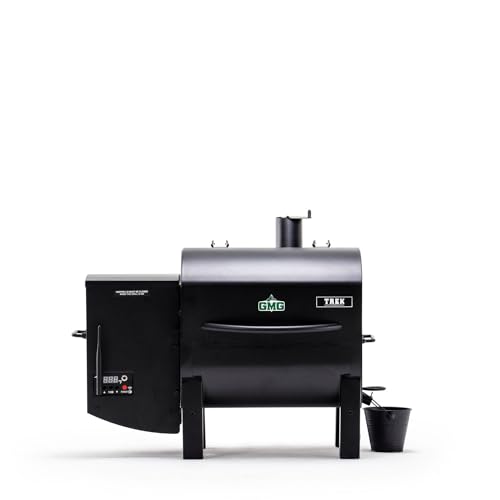
- Best portable with Wi-Fi: Green Mountain Grills Trek Prime Portable WiFi Pellet Grill — Check on Amazon
- Z Grills 200A Tabletop Wood Pellet Grill & Smoker — Check on Amazon
- Traeger Tailgater Portable Wood Pellet Grill & Smoker — Check on Amazon
- Z Grills ZPG-450A Wood Pellet Grill & Smoker — Check on Amazon
- Pit Boss 500 FB2 Series Wood Pellet Grill & Smoker — Check on Amazon
- Ninja Woodfire Outdoor Grill & Smoker (OG301) — electric alternative, not a pellet grill — Check on Amazon
Read the full guide ↓
Disclosure: As an Amazon Associate, dailyhomedecorating.com earns from qualifying purchases. Links to Amazon on this page are affiliate links; they cost you nothing extra. Listing details such as price and availability change often, so check the current Amazon listing before you buy.
Start with the sentence most guides bury: the best pellet grill for apartments under $500 is, for many apartment dwellers, no pellet grill at all — because most leases and many local fire codes prohibit grills, smokers and any open-flame appliance on apartment balconies, and a pellet grill is exactly that: a wood-burning appliance with a real fire pot, real smoke and real ash. We will not help you break your lease or your local code, and no purchase link in this guide is worth an eviction notice or a fine. So this guide works in two honest parts: first, how to establish whether any combustion grill is allowed where you live; second, the smallest, most manageable pellet grills for the situations where one is allowed — a ground-floor patio with written permission, a private terrace a code permits, or a property whose rules you have confirmed in writing.
If a pellet grill is allowed in your situation, apartment logic inverts normal grill logic. Smallest footprint wins. Storage matters as much as cooking: the grill must fit a closet, a storage unit or a corner when not in use, because it cannot live against a railing it is not allowed to burn near. That is why this list leads with portables — Green Mountain Grills’ Trek Prime, the Z Grills 200A tabletop, Traeger’s Tailgater — and only then admits two compact full-size grills, the ZPG-450A and Pit Boss 500 FB2, for apartment patios with genuine room. The final entry is labeled for what it is: an electric alternative, not a pellet grill, for leases that ban flame but allow electric appliances.
Smoke etiquette is the unwritten second lease. Pellet grills smoke most at startup and at low temperatures; a considerate apartment cook schedules long smokes when neighbors’ windows are closed, keeps the grill as far from neighboring windows and doors as the space and the safety clearances allow, and never runs a grill in a shared courtyard, stairwell or covered balcony — covered spaces trap smoke and carbon monoxide and are prohibited territory for combustion appliances everywhere. When in doubt, ask the landlord in writing. An email that says yes is worth more than any grill in this guide.
One more framing note, because it decides which pick is ‘best’ here more than any specification: the right apartment answer is the most capable grill your specific permission allows, in the smallest format that cooks your real menu. A tabletop you are allowed to use beats a barrel you are not, every single time — and a portable you can also take to the park, the campsite and a friend’s driveway is not a compromise purchase but a flexible one. Read the picks below through that lens and the ranking will make sense.
In this guide
Best pellet grill for apartments under $500: quick picks
Six picks, verified against current listings, screened for recalls, and ordered for this guide’s specific brief. Detailed reviews follow below.
| Pick | Best for | Key specs | Amazon |
|---|---|---|---|
| Green Mountain Grills Trek Prime Portable WiFi Pellet Grill | Best portable with Wi-Fi | Compact portable format, Wi-Fi app temperature control, folding legs, 12V-capable power for off-grid use, roughly 219 sq in of cooking space. | Check on Amazon |
| Z Grills 200A Tabletop Wood Pellet Grill & Smoker | Best tabletop footprint | 202 sq in cooking area, tabletop format, PID 3.0 precision control, auto pellet feed, meat probes. | Check on Amazon |
| Traeger Tailgater Portable Wood Pellet Grill & Smoker | Best mid-size portable | 300 sq in of cooking space, folding legs, 6-in-1 cooking, compact hopper, Traeger digital arc-style control. | Check on Amazon |
| Z Grills ZPG-450A Wood Pellet Grill & Smoker | Best value PID control | 459 sq in cook area, PID V3.0 controller, meat probe, foldable front shelf and side shelf, 8-in-1 cooking. | Check on Amazon |
| Pit Boss 500 FB2 Series Wood Pellet Grill & Smoker | Best direct-flame sear | 518 sq in of cooking space, Flame Broiler direct-flame plate, LCD digital controller, 180–500°F range, meat probe, 5 lb hopper. | Check on Amazon |
| Ninja Woodfire Outdoor Grill & Smoker (OG301) — electric alternative, not a pellet grill | Electric alternative — not a pellet grill | Electric-powered grill and smoker that burns a small amount of real wood pellets for smoke flavor; grills up to 6 steaks or smokes up to a 9 lb brisket per the listing; no open flame. | Check on Amazon |
How these picks were chosen
Selection for this guide started with a compliance filter, not a product filter: we only considered grills an apartment dweller could plausibly store, move and site legally — portables and compact models — and we included one clearly-labeled electric alternative for flame-prohibited leases. Every linked model was verified through the Amazon Creators API on 2026-11-20: the ASIN in each link is the ASIN the API returned for that exact listing title. We screened candidates against CPSC recall records and excluded recalled models entirely, without naming them. We weighted footprint, storage, weight class, startup smoke behavior and controller quality over raw cooking space, and we were honest where a famous compact model was subject to a past recall — it is simply absent, and we do not name it.
The permission playbook: how apartment grill approvals actually work
Landlords and property managers think in categories, and your request lands better when it speaks their language. The three questions they are silently asking are: does it make open flame, does it make smoke that reaches other units, and where does it live when not in use? A pellet grill’s honest answers — yes it burns wood, yes it smokes most at startup, and the portable models store indoors — let you propose the version of grilling that fits the property: a portable used on a ground-floor patio or in a designated area, stored inside, with cooks kept short and considerate. Put the proposal in an email, attach nothing, promise nothing you will not keep, and save the reply forever.
If the property has a designated grill area, that is usually the path of least resistance — many buildings that ban balcony grills maintain a courtyard station precisely because the fire code pushed cooking there. A portable pellet grill fits that arrangement beautifully: carry it down, cook where the building wants cooking to happen, carry it back cold. If your building has an amenities deck with its own grills, ask whether bringing your own portable to that deck is allowed; the answer is often yes where balconies are no.
And if every answer is no, treat it as information, not defeat. The portable formats in this guide travel to parks with grill-friendly rules, to friends’ houses, to campsites and tailgates — the cooking life stays rich, the deposit stays intact, and when you next move, ‘is there a patio where a grill is allowed?’ joins your apartment-hunting checklist with the seriousness it deserves.
Best pellet grill for apartments under $500: detailed reviews
Green Mountain Grills Trek Prime Portable WiFi Pellet Grill
Who it suits: the apartment cook with a permitted ground-floor patio or a storage locker and a car — the Trek folds, travels to the park or the campsite where grills are welcome, and its Wi-Fi control means fewer trips outside to check a cook in winter. It is the most complete lawful answer where a small pellet grill is allowed at all.
The Trek Prime takes the full pellet-grill idea — auger, fire pot, digital control — and shrinks it into a portable body with folding legs and Wi-Fi control from your phone. It runs on standard household power and can also run from 12V sources, which is why it follows owners to campsites, tailgates and RV trips. Cooking space is roughly 219 square inches: enough for a tri-tip, a chicken, or burgers for four, cooked with real wood smoke rather than a tabletop gas compromise.
Portability always bills you somewhere, and here the bill is capacity and hopper size. This is a grill for small groups and deliberate cooks, not for feeding a team. The lid height limits tall items, so spatchcock birds rather than stand-up beer-can chickens. Within those limits it is remarkably complete — the app control that full-size grills charge a premium for is standard here.
In practice, the Trek suits apartment logistics beautifully: it rides an elevator without drama, stores in a closet corner, and its app control means one trip outside to light it and one to collect the food. On a permitted patio its small smoke signature at grilling temperatures is as neighborly as pellet cooking gets — save the long low smokes for the park.
What we like:
- Real pellet cooking in a portable body
- Wi-Fi app control included
- 12V capability for camping and tailgating
- Folding legs store flat
Honest limitation: Roughly 219 sq in and a small hopper cap both group size and cook length — it is a specialist, and households wanting one grill for everything will outgrow it.
Choose it if you have written permission, storage, and any interest in cooking beyond home. Skip it if your lease bans grills — no feature justifies the risk.
Z Grills 200A Tabletop Wood Pellet Grill & Smoker
Who it suits: the dweller with the tightest storage — a closet shelf — and a permitted spot to set it up. It cooks for two to four, stores like a suitcase, and its PID control means the food tastes like it came from a much bigger machine.
The 200A is a pellet grill reduced to its essentials and set on a tabletop: 202 square inches of cooking area, a PID 3.0 controller with automatic pellet feed, and meat probes, in a body one person can carry and store in a closet or garage corner. For small households it covers the real menu — burgers, sausages, a small pork butt, a couple of chicken halves — with genuine smoke flavor and set-and-hold temperature control.
It needs a proper stand: a stable, heat-resistant, non-combustible surface at a safe working height, never a plastic folding table. The hopper is small, the grate is small, and both facts are the point. What surprises people is how little they give up in food quality — PID control at this size produces the same steady smoke as the big barrels, just less of everything at once.
In practice, the 200A’s apartment virtue is disappearance. Dinner ends, the grill cools, ash goes to the metal can, and the whole appliance is back in the closet before dessert — the patio returns to being a patio. Its PID steadiness surprises everyone who assumes small means crude; the food tells a full-size story.
What we like:
- Smallest footprint in this guide
- PID 3.0 control with auto feed
- One-person portable and easy to store
- Meat probes included
Honest limitation: 202 sq in cooks for two to four people at most, and you must supply a heat-safe stand — budget and plan for the surface as part of the purchase.
Choose it if storage space is your hardest constraint. Skip it if you lack a heat-safe stand or cook for more than four.
Traeger Tailgater Portable Wood Pellet Grill & Smoker
Who it suits: the apartment household that cooks for family-size groups when it cooks — big enough for a real Sunday cook, folding flat enough for a storage unit, and backed by Traeger’s network. Best where you have a permitted patio with a few square feet to spare.
The Tailgater is the portable for people who found tabletop grills too small: 300 square inches is enough for a full family cook — a rack of ribs laid flat, a chicken with room to spare, or burgers for six — while the folding legs collapse it into a car trunk. It keeps Traeger’s 6-in-1 brief (grill, smoke, bake, roast, braise, barbecue) and the brand’s straightforward digital control.
It is still a compromise format. The hopper is compact, so long smokes need topping up; the folding-leg stance is stable on flat ground but deserves a check on gravel or grass; and there is no Wi-Fi. What you get instead is Traeger’s dealer and parts network behind a grill that travels — a combination the pure tabletop brands do not match.
In practice, the Tailgater is the family compromise: big enough that Sunday dinner for six is not a juggling act, portable enough that storage is a solved problem. Its weight is the honest tax — it is a two-hand carry — but the folding legs mean it leans flat against a storage wall instead of squatting in the middle of the patio all week.
What we like:
- 300 sq in cooks for a family, yet folds away
- Traeger parts and support network
- 6-in-1 cooking range
- Legs fold for trunk transport
Honest limitation: Compact hopper limits unattended cook time, and the folding legs need level ground to feel truly planted — check stability before the first cook, not during it.
Choose it if you want family capacity that still folds away. Skip it if carrying a mid-size grill to storage sounds like a chore you will abandon.
Z Grills ZPG-450A Wood Pellet Grill & Smoker
Who it suits: the apartment with a genuinely spacious private patio where a compact full-size grill is permitted in writing. You give up portability; you gain PID precision and shelves, and a grill that does not need a stand or a table.
The ZPG-450A is built around one idea: put a proper PID controller — the kind that constantly recalculates pellet feed instead of cycling on a timer — into a mid-size grill at a value price. The PID V3.0 holds set temperatures tightly, which shows up where it counts, in even bark and predictable cook times. Around that controller you get 459 square inches of cooking area, a meat probe, an 8-in-1 cooking brief, and two shelves — a foldable front shelf and a side shelf — that most rivals charge extra for or skip.
Size is the honest framing here. 459 square inches handles a family dinner easily — a spatchcocked chicken, a rack or two of ribs, a modest pork butt — but it is not a party grill, and the hopper is sized for hours, not days. Z Grills’ support network is smaller than Traeger’s or Pit Boss’s, so keep the manual and register the warranty; the parts that wear (igniter, auger motor) are standard and replaceable.
In practice, on a permitted apartment patio the 450A behaves like a shrunken backyard setup: shelves replace the side table you have no room for, PID holds the cook while you prep inside, and the footprint leaves the patio usable for chairs. It is the pick for renters whose patio is effectively a small yard — with the paperwork to match.
What we like:
- PID V3.0 controller holds temperature tightly
- Front and side shelves included, not upsold
- 459 sq in suits households of two to five
- 8-in-1 range from smoke to bake
Honest limitation: Cooking area and hopper are mid-size, so big gatherings mean cooking in waves, and the brand’s service network is thinner than the two biggest names here.
Choose it if your patio is permitted and roomy. Skip it if the grill must be stored indoors between cooks — it is a full-size appliance.
Pit Boss 500 FB2 Series Wood Pellet Grill & Smoker
Who it suits: the permitted-patio cook who grills more than they smoke — burgers and steaks with a real flame sear, in a mid-size footprint. The 5 lb hopper, a liability for overnight cooks, is nearly irrelevant for apartment grilling sessions.
The 500 FB2 exists for one job most pellet grills do badly: searing. Its Flame Broiler plate slides open to expose the fire pot, so burgers, steaks and chicken skin get genuine direct flame instead of the indirect heat every other grill here is limited to. Around that party trick it is a complete mid-size grill — 518 square inches, an LCD controller running 180–500°F, and a meat probe in the box.
Then there is the hopper: 5 pounds. That is the smallest in this guide by a wide margin, and it defines how this grill should be used. For grilling sessions and three-to-five-hour smokes it is a non-issue. For an overnight brisket it means setting an alarm, because a pellet grill that runs dry mid-cook loses its fire and its temperature with it. Buy this grill for the sear, and simply plan refills into long cooks.
In practice, the FB2’s apartment case rests on session length. Apartment cooks skew short — burgers, chops, chicken — and at those timescales the small hopper is a non-issue while the Flame Broiler delivers the sear that makes weeknight grilling feel like a restaurant skill. Long smokes were never the apartment format anyway; etiquette saw to that.
What we like:
- Flame Broiler gives true direct-flame searing
- 518 sq in is a useful mid-size footprint
- 500°F top end plus LCD controller
- Meat probe included
Honest limitation: The 5 lb hopper is the smallest here — long unattended smokes are not its game, and pretending otherwise ends with a cold grill at 3 a.m.
Choose it if searing matters and your patio allows a standing grill. Skip it if long smokes are the plan; the hopper is small and apartment smoke etiquette argues against them anyway.
Ninja Woodfire Outdoor Grill & Smoker (OG301) — electric alternative, not a pellet grill
Who it suits: the dweller whose lease bans flame appliances but allows electric ones — after confirming that distinction in writing. It is the only entry here that can be lawful where every true pellet grill is banned, and it still delivers real wood smoke flavor.
Label first, because honesty matters more than the sale: this is not a pellet grill. It is an electric grill and smoker that uses a small quantity of real wood pellets purely to generate smoke flavor, with electric elements doing the cooking. It grills up to six steaks or smokes up to a 9-pound brisket per the listing, plugs into a standard outlet, and produces no open flame.
That last fact is why it appears in an apartment-focused guide at all. Where a lease or fire code prohibits flame appliances but permits electric ones — a distinction many, though not all, properties draw — a Woodfire-class electric can be the only lawful route to wood-smoked food on the premises. It will never match a full pellet grill’s capacity or bark, and you must still confirm your own lease allows it. But as a compliant alternative it is genuinely capable, weatherproof in ways pellet grills are not, and ready in minutes.
In practice, the Woodfire wins apartment hearts with logistics: no ash can ritual beyond a pellet-cup cleanup, no hopper, no auger, weather resistance that shrugs at a rainy balcony where it is permitted, and food on the table fast. The smoke flavor is real but gentler than a barrel’s — most apartment cooks, feeding two to four on a weeknight, call that trade gladly.
What we like:
- No open flame — the only format some leases allow
- Real wood-pellet smoke flavor
- Plugs into a standard outlet, fast to start
- Compact and weather-resistant
Honest limitation: It is not a pellet grill: capacity is small, smoke depth is lighter than a pellet barrel, and some leases ban all outdoor cooking appliances regardless of fuel — check before you buy.
Choose it if flame is banned but electric is allowed — confirmed in writing. Skip it if your lease bans all outdoor cooking appliances, or if only a true pellet grill will satisfy you.
Comparison table
| Model | Cooking space | Standout trait | Link status |
|---|---|---|---|
| Green Mountain Grills Trek Prime Portable WiFi Pellet Grill | Compact portable format | Best portable with Wi-Fi | Check price on Amazon |
| Z Grills 200A Tabletop Wood Pellet Grill & Smoker | 202 sq in cooking area | Best tabletop footprint | Check price on Amazon |
| Traeger Tailgater Portable Wood Pellet Grill & Smoker | 300 sq in of cooking space | Best mid-size portable | Check price on Amazon |
| Z Grills ZPG-450A Wood Pellet Grill & Smoker | 459 sq in cook area | Best value PID control | Check price on Amazon |
| Pit Boss 500 FB2 Series Wood Pellet Grill & Smoker | 518 sq in of cooking space | Best direct-flame sear | Check price on Amazon |
| Ninja Woodfire Outdoor Grill & Smoker (OG301) — electric alternative, not a pellet grill | Electric-powered grill and smoker that burns a small amount of real wood pellets for smoke flavor; grills up to 6 steaks or smokes up to a 9 lb brisket per the listing; no open flame. | Electric alternative — not a pellet grill | Check price on Amazon |
All models above are digital-controller pellet grills (or, where labeled, a clearly-marked alternative) that burn food-grade hardwood pellets. Prices are never printed in this guide because they change constantly — use the Amazon links to see the current figure.
How to choose the best pellet grill for apartments under $500
Step one is paperwork, not products. Read your lease’s grill and balcony clauses, then your building’s house rules, then your city or county fire code — many jurisdictions prohibit grills on combustible balconies and within a set distance of multi-family buildings, and some ban them on any balcony at all. If any layer says no, the answer is no for combustion grills; ask specifically about electric appliances, which many properties treat differently, and get any permission in writing.
Measure storage before cooking space. An apartment grill lives 95 percent of its life stored. The 200A fits a closet; the Trek and Tailgater fold for a storage unit or car trunk; the two standing grills need a permitted patio corner and a cover. A grill you cannot store lawfully and conveniently becomes a lease violation with a lid.
Plan the cooking surface. A tabletop grill needs a stable, heat-resistant, non-combustible stand at working height — never plastic, never a wobbly camp table. A standing grill needs a non-combustible surface beneath it and the manual’s clearances from railings, walls and anything above. Covered balconies are out for combustion, full stop: smoke and carbon monoxide collect under ceilings.
Be a smoke diplomat. Startup produces the thickest smoke; low-and-slow produces it for hours. Time long cooks for when neighbors are out or windows are closed, keep the grill as far from neighboring openings as your permitted space allows, and tell the adjacent neighbor before a big cook. More apartment grilling privileges die from complaints than from codes.
Setting up in a small space: the compliant first week
Week one with an apartment pellet grill is mostly logistics, and it starts before the box arrives: confirm the permission in writing, choose the cooking position that honors the manual’s clearances, and decide where the grill, the pellet bin and the ash can will live. When the grill arrives, assemble it indoors if you like — the portables here go together on a living-room floor — then run the manufacturer’s burn-off in the approved cooking position, never in a hallway, garage or covered space, and let it complete its full shutdown cycle while you learn its sounds.
Use the first cook as a neighborhood rehearsal as much as a meal: a short, hot, small cook — sausages, burgers, a couple of chicken breasts — at a considerate hour. You learn the grill’s startup smoke signature, your neighbors learn that your cooking is brief and civilized, and everyone calibrates expectations on evidence instead of imagination. Keep the session tidy: ash stays in the grill until it is fully cold, then goes to the lidded metal can; pellets return to their sealed bin indoors; the grill cools, wipes down and goes back to storage the same evening.
Write yourself a tiny checklist on the storage bin lid — permission spot, surface, clearances, ash can, extinguisher location — because apartment grilling done well is a routine, and routines are what keep small-space cooking safe and welcome. If any element of the routine cannot be met on a given day — the designated area is occupied, the wind is wrong, the space is crowded — the correct move is to postpone the cook. The grill will keep; so will your standing with the building.
Care and cleaning at apartment scale
The apartment maintenance virtue is that everything is small. After each cook: complete the shutdown cycle, let the grill cool fully — truly fully, not warm-ish — then empty the small ash load into your lidded metal can and wipe the grates. Weekly in season: check the fire pot for ash buildup, confirm the pellet supply in your indoor bin is dry, and wipe exterior surfaces so the grill returns to storage clean enough for a closet. A grill stored dirty in a small apartment announces itself; a grill stored clean disappears.
Monthly: inspect the igniter and fire pot, clean the temperature probe of smoke film so the controller reads honestly, and check seals and fasteners — portable grills live a traveling life and screws loosen with movement. For the electric alternative, care is lighter still: empty the pellet cup residue, clean the cooking chamber per its manual, and keep vents clear. In all cases, store pellets sealed indoors, store the grill dry, and never store any combustion grill with ash aboard in an enclosed space.
This routine has a social dimension in a building: a clean, promptly-stored grill is invisible to neighbors and management alike, while a greasy barrel abandoned on a patio invites exactly the scrutiny apartment cooks do not need. Tidiness is not just safety here — it is strategy.
Apartment-scale running costs and storage kit
The apartment pellet kit is admirably small. The grill itself, one sealed pellet bin that lives in a kitchen corner or closet — pellets stored dry indoors also stay fresher than any balcony arrangement — a lidded metal ash can, a cover for any grill that lives on a permitted patio, and a heat-safe stand if you chose the tabletop. Pellet consumption at apartment scale is modest: shorter, hotter cooks for two to four people sip fuel compared with all-day smokes, and a single bag lasts many weeknight sessions. Electricity is a standard outlet and a trivial draw.
The cost nobody budgets is the fine, the confiscation or the non-renewed lease that follows ignoring the rules — which is why this guide spends so many words on permission. The compliant setup is also the cheap setup: no storage unit is needed for the portables, no patio furniture rearrangement for the tabletop, and the electric alternative needs nothing but an outlet and a surface. Spend the savings on better meat; it is the only upgrade every guest notices.
Fire safety: clearances, ash and grease
Every pellet grill in this guide is a combustion appliance: it burns wood, makes real fire, and produces ash that can stay hot long after the lid looks cold. Place any of them on a non-combustible, heat-resistant surface — concrete, pavers, or a rated grill mat on a deck — and keep the clearances the manual specifies from siding, railings, fences, eaves and anything that can burn; when a manual number exists it overrules any general advice, and where you are unsure, more distance is always the right answer. Never run a pellet grill unattended for long stretches, and never overnight in a building’s shared space: check the fire, the hopper and the grease bucket on a schedule, and keep a working fire extinguisher within reach of the cook, not in a closet.
Ash and grease are the two quiet hazards. Let ash cool completely — a full day is the safe habit — then move it to a metal container with a tight lid, stored away from the house and anything combustible; never vacuum warm ash and never tip ash into a plastic bin or a cardboard box. Empty the grease bucket before it fills, because an overflowing bucket under a hot grill is a fire looking for a moment. Keep pellets dry in a sealed bin: damp pellets swell, jam augers, and a jammed auger that suddenly clears can dump fuel into the fire pot. Children and pets stay clear of the barrel while it runs and while it cools, and the grill moves only when it is stone cold.
Apartment-specific fire discipline adds three rules to the general ones. First, never leave a grill running while you leave the property — ‘unattended’ in a multi-family building includes being three floors away at the laundry. Second, know where your building’s nearest extinguisher lives before the first cook, and keep your own rated extinguisher inside your door, not beside the grill where a flare would block access to it. Third, treat every cook’s end as a procedure, not an afterthought: shutdown cycle complete, lid closed, ash untouched until stone cold, and the grill never wheeled back into a closet or storage room while it holds any warmth at all.
Common mistakes to avoid
Buying first, reading the lease second. The most expensive apartment grill is the one confiscated, fined or ordered removed in week two. Paperwork first — it takes one email.
Assuming ‘pellet’ means ‘not really fire’. A pellet grill burns wood in a fire pot and makes ash, embers and smoke. Fire codes classify it as a solid-fuel appliance, and your insurer will too. Treat every rule about grills as applying to it, because it does.
Cooking under a covered balcony or in a garage. Carbon monoxide and smoke accumulation make enclosed and semi-enclosed spaces dangerous and almost universally prohibited for combustion appliances. Open air, full clearances, or the electric alternative.
Storing pellets and ash badly. Ash goes only into a metal container with a lid, fully cold, stored away from combustibles — never in a plastic bin on a wooden balcony. Pellets live in a sealed container indoors, where they stay dry and the auger stays happy.
Running long smokes against the neighbors. A ten-hour brisket smoke drifting into a neighbor’s nursery window is how buildings rewrite their rules to ban everything. Keep apartment cooks shorter, hotter and considerate — or take the portable to a park where grills are welcome.
Final recommendation
If your paperwork says yes, the Trek Prime is the apartment answer: portable, storable, Wi-Fi-equipped and genuinely capable. The 200A wins on pure storage, the Tailgater on family capacity that still folds away, and the two compact standing grills serve the lucky few with big, permitted patios. If your paperwork says flame is out but electric is in, the Woodfire keeps wood smoke in your life lawfully. And if the answer is no to everything, believe it — take a portable to the park, cook at a friend’s house, and keep your deposit and your record clean. Check price on Amazon for whichever lawful route fits, and keep the landlord’s yes in your inbox.
Frequently asked questions
Are pellet grills allowed in apartments?
Often not on balconies. Many leases prohibit any grill on a balcony, and many local fire codes prohibit grills on combustible balconies or near multi-family buildings. Ground-floor patios, private terraces and designated grill areas are the usual lawful exceptions — but the only answer that counts is your lease plus your local code, confirmed in writing with your landlord.
Is a pellet grill safer than a charcoal grill for an apartment?
It is more controllable — no lighter fluid, no open bed of coals, digital temperature control — but it is still a solid-fuel fire appliance with ash and embers, and codes generally treat it like other grills. ‘Safer’ does not mean ‘exempt’; do not let the electronics talk you into a violation.
My lease bans grills but says nothing about electric appliances. What can I use?
Ask the landlord in writing whether an electric outdoor grill is permitted — many properties allow them because there is no open flame. The Ninja Woodfire in this guide is the leading example: electric cooking with real pellet smoke. If the answer is no or unclear, cook at a park, a friend’s house, or a designated building grill area instead.
How much smoke does a pellet grill make?
Most at startup and during low-temperature smoking; less at high grilling temperatures. It is real wood smoke and it drifts. On a permitted patio, position and timing keep it neighborly; in a prohibited space, no amount of ‘it is only a little smoke’ changes the legal position.
Where do I store a pellet grill in an apartment?
Portables like the 200A, Trek and Tailgater are designed for it: cool fully, empty ash into a metal container, and store in a closet, storage unit or car. Standing grills belong only on permitted patios under a cover. Never store a grill with pellets in the hopper in a humid space — the pellets swell and jam.
Can I use a pellet grill in a shared courtyard or on a rooftop deck?
Only if the building explicitly designates that space for grills and your use follows its rules — shared spaces are the most commonly prohibited of all. When a building provides a communal grill area, a portable you carry down and back is usually the most welcome format.
Can my landlord ban pellet grills specifically?
Yes — a lease can prohibit grills generally or by fuel type, and properties increasingly name pellet grills explicitly as the category has grown. A ban in the lease controls regardless of what the fire code allows; the code is a floor of restrictions, not a grant of permission. Read both, and where they differ, obey the stricter one.
What about a pellet grill on a rooftop deck I own access to?
Rooftop decks concentrate every concern at once: wind, shared access, building materials, and other residents’ enjoyment. Unless the building designates the deck for grilling and your use follows its rules, treat it as prohibited for combustion appliances — and ask the HOA or management in writing before assuming your access rights include cooking rights.
What if my lease is silent about grills?
Silence is not permission. Local fire codes may still prohibit the use you have in mind, and a landlord can object under general safety and nuisance clauses. Ask in writing anyway — a silent lease plus a written yes from management is a solid position; a silent lease plus an assumption is not.
Can I run a pellet grill from a balcony power outlet on any floor?
Power is not the obstacle — permission and fire code are. Many jurisdictions prohibit grills on upper-floor balconies regardless of fuel, and covered balconies are out for combustion anywhere. The outlet question only becomes relevant after the location itself is lawful and approved, which is why this guide puts paperwork before products.
Do pellet grills set off smoke alarms?
Outdoors, no — but smoke drifting through an open window can, yours or a neighbor’s. Position the grill so its startup smoke does not pour into open windows, keep your own nearest window closed during the first minutes, and never — under any circumstances — run a combustion grill indoors or in a garage to ‘avoid the alarm question’. Carbon monoxide is the real hazard, and it does not negotiate.
Related guides
- Best Pellet Grill For Small Patios Under $500 — our companion guide to the best pellet grill for small patios under $500
- Best Pellet Grill Under $300 — smaller budgets in the best pellet grill under $300
- Best Pellet Grill Under $500 — the full-size options in the best pellet grill under $500
- Best Gas Grill For Apartments Under $500 — the best gas grill for apartments under $500 — subject to the same lease checks
- Best Charcoal Grill For Apartments Under $500 — the best charcoal grill for apartments under $500, with the same cautions


