Where to buy
Check the latest price, availability and delivery on Amazon. Orders are placed on Amazon. We may earn a commission from qualifying purchases.
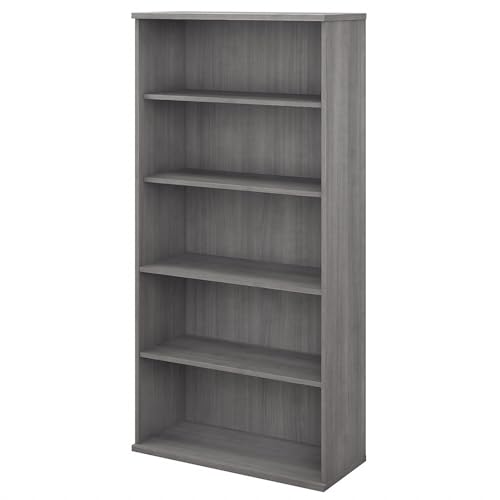
- Best overall: Bush Business Furniture Studio C Tall 5 Shelf Bookcase, Platinum Gray — Check on Amazon
- Bush Home Cabot Tall 5 Shelf Bookcase, Modern Gray — Check on Amazon
- Sauder Barrister Lane Bookcase, Scribed Oak (Model 414724) — Check on Amazon
- Casual Home 100% Solid Wood 5-Shelf Ladder Bookcase — Check on Amazon
- Tribesigns 79-Inch Tall Bookshelf, 8-Tier Staggered Bookcase — Check on Amazon
See 1 more Amazon option
- Bush Home Key West Tall 5 Shelf Bookcase, Linen White Oak — Check on Amazon
Read the full guide ↓
Disclosure: As an Amazon Associate, dailyhomedecorating.com earns from qualifying purchases. Links to Amazon on this page are affiliate links; they cost you nothing extra. Listing details such as price and availability change often, so check the current Amazon listing before you buy.
Finding the best bookshelf under $1000 is less about spending the whole budget and more about knowing what the extra money actually buys in this category. A four-figure ceiling is generous for a bookcase: it covers commercial-grade ready-to-assemble cases from office furniture brands, solid pine construction, wide cubby storage that works like a low library wall, and tall designer-look etageres that would be statement pieces in any other price band. What it does not automatically buy is solid hardwood throughout, dovetail joinery or heirloom craftsmanship — most bookcases sold online at any price under this ceiling are engineered wood, laminate or wood-and-steel hybrids, and the honest differences are board thickness, hardware quality, shelf adjustability, tested load capacity and how square and stable the finished case feels once it is loaded. This guide is written for a general living-room buyer who wants one substantial bookcase — for a real book collection, for display, or for a mix of both — and wants to spend once and correctly rather than replace a wobbling budget case in two years.
Below you will find a quick picks table covering all six verified bookcases, an explanation of how the picks were chosen, a detailed review of each one — who it suits, what it does well, its honest limitation, and a clear choose-or-skip verdict — followed by a side-by-side comparison table, a how-to-choose section, the common mistakes buyers make at this budget, a final recommendation, and answers to frequent questions. If your ceiling is lower, our guide to the Best Bookshelf Under $700 covers the strongest step-down options, and the Best Bookshelf Under $300 guide shows how much case the mid tier buys.
In this guide
Quick Picks: Best Bookshelf Under $1000 at a Glance
Short on time? Each row names a buyer type and the bookcase that suits it, with a direct link to the listing. Every product below was verified on Amazon during research for this guide — check price on Amazon for the current figure.
| Buyer type | Pick | Why it stands out | Link |
|---|---|---|---|
| Best overall | Bush Business Furniture Studio C Tall 5 Shelf Bookcase, Platinum Gray | Commercial-grade build from an office furniture line — 36 in wide x 15 in deep x 73 in tall, two fixed and three adjustable shelves, deeper shelves than most living-room cases, optional door kit available separately | Check on Amazon |
| Best finished, furniture look | Bush Home Cabot Tall 5 Shelf Bookcase, Modern Gray | Transitional styling with 0.75 in shelf thickness, two fixed and three adjustable shelves, wall attachment hardware included in the box | Check on Amazon |
| Best wide cubby storage | Sauder Barrister Lane Bookcase, Scribed Oak (Model 414724) | Ten cubbyholes with ID label tags and a gallery display top — 53.15 in wide x 12.13 in deep x 47.52 in tall, storage that works like a low library wall | Check on Amazon |
| Best solid wood | Casual Home 100% Solid Wood 5-Shelf Ladder Bookcase | Real solid pine instead of particleboard, five ladder shelves about 72 in tall and 24.75 in wide, shelves deepening toward the 16 in deep base, anti-tip straps included | Check on Amazon |
| Best tall statement piece | Tribesigns 79-Inch Tall Bookshelf, 8-Tier Staggered Bookcase | The tallest case here at 79 in, eight staggered tiers across a 39.98 in width, 200 lb maximum capacity, E1 particle board on a steel frame | Check on Amazon |
| Best farmhouse style | Bush Home Key West Tall 5 Shelf Bookcase, Linen White Oak | Coastal farmhouse detailing with X-pattern accents, two fixed and three adjustable shelves, tall five-shelf format in a bright linen white oak finish | Check on Amazon |
How the Picks Were Chosen
Every bookcase in this guide had to pass the same verification process before it earned a place. First, the exact model had to be identifiable on Amazon with a confirmed ASIN, a named manufacturer and a specification sheet that could be cross-checked against the maker’s own product information or a second retailer record — no anonymous listings with invented dimensions, and no pick included on the strength of a catalogue photo alone. Second, the model had to be a genuine step up from the mid tier: at a $1000 ceiling there is no excuse for the thinnest board, the wobbliest frame or fixed shelves that fit nothing taller than a paperback, so each pick needed at least one of thicker shelving, commercial or tested construction, solid wood, unusual width or height, or a storage format — cubbies, staggered tiers — that cheaper cases do not offer. Third, safety: we checked the shortlist against CPSC recall records, and no bookcase named in a recall appears in this guide; because every tall case is a tip-over risk if it is loaded badly or climbed, we also note which makers include wall-attachment hardware and we recommend anchoring every pick regardless.
Within those gates, the six picks were chosen to cover different shapes of need rather than six versions of the same case. Two are conventional tall five-shelf bookcases from Bush Furniture’s business and home lines — the strongest, squarest ready-to-assemble cases in this price band. One is a wide, low cubby unit for buyers whose storage problem is horizontal. One is solid pine for buyers who refuse particleboard on principle. One is a tall staggered etagere for buyers furnishing a wall, not just storing books. And one is a farmhouse-styled tall case for rooms where a gray office bookcase would look like it wandered in from a cubicle. Prices were not printed in this guide because they move constantly; every pick sits comfortably under the $1000 ceiling at the time of research, and the listing is the only place to confirm the current figure — check price on Amazon before you decide.
One more honesty note: at this budget you will see listings claiming solid wood, huge load capacities and premium materials that dissolve under scrutiny. Where a maker publishes a capacity or a dimension, we report it as the maker’s figure. Where a listing was vague, we said less rather than inventing detail. That restraint is deliberate, and it is the same standard applied in our Best Bookshelf Under $400 guide for buyers comparing tiers.
Detailed Reviews
The six reviews below follow the same order as the quick picks table, and each one is written to be read on its own: who the case suits, what it genuinely does well, the limitation a salesperson would leave out, and a plain choose-or-skip verdict tied to a type of buyer rather than to a score. Read the two or three that match your room and load, then use the comparison table to settle the dimensions. Where two picks seem similar — the two Bush tall cases especially — the difference is real and stated in each review: depth and commercial build on one side, finish and furniture manners on the other. No pick in this list is a bad bookcase; each is the wrong bookcase for someone, and the skip verdicts exist to tell you if that someone is you.
1. Bush Business Furniture Studio C Tall 5 Shelf Bookcase, Platinum Gray — Best Overall
Who it suits: Buyers with a serious book collection — reference books, binders, art volumes — who want the deepest, strongest shelves in this guide and a case that still looks right in a living room. It is also the natural pick for a home library wall built from two or three matching units.
The Studio C comes from Bush’s business furniture division, and that origin shows in the specification: 36 inches wide, 15 inches deep and 73 inches tall, with two fixed shelves for structural strength and three adjustable shelves that move to fit taller items. Fifteen inches of depth is meaningfully more than the 12 inches of a typical living-room bookcase — binders sit fully on the shelf instead of overhanging, storage boxes fit without bowing the door line of the room, and big coffee-table books lie flat or stand without leaning. The Platinum Gray finish is a neutral mid-gray that works with modern and transitional rooms, and Bush sells an optional door kit separately if you later want the lower shelves concealed. The line is built to commercial standards rather than occasional-use standards, which is exactly what a $1000-ceiling buyer should be shopping for: not decoration, but duty cycle.
Pros: Deepest shelves in this guide at 15 in; three adjustable shelves plus two fixed for rigidity; commercial-line construction; optional door kit extends the design later; wide 36 in format holds a full collection on one wall run.
Honest limitation: The styling is honest office furniture — clean, square and gray. In a warm traditional room it can read a little corporate, and the case is heavy and a two-person assembly and placement job.
Choose this if your priority is capacity and strength and your room tolerates a clean modern gray. Skip it if you want furniture warmth, visible wood grain or a decorative silhouette — look at the Cabot or the Barrister Lane below instead.
2. Bush Home Cabot Tall 5 Shelf Bookcase, Modern Gray — Best Finished Furniture Look
Who it suits: Buyers who want a conventional tall bookcase that looks like finished furniture rather than office equipment — for a living room, a hallway wall or a bedroom where the case is part of the decor, not just storage.
The Cabot is Bush Home’s transitional take on the same tall five-shelf format: five shelves with two fixed and three adjustable, shelf thickness of 0.75 inches — a figure worth noting, because shelf thickness is where cheap cases cheat and where sagging starts — and styling details drawn from the wider Cabot collection, including the fluted-glass-door and metal-hardware design language of its sibling pieces. The Modern Gray finish keeps it current without going stark. Two practical points lift it above lookalike cases: wall attachment hardware is included in the box for family-friendly safety, and the bookcase’s height is designed to match Cabot desks with hutches, so it integrates into a coordinated wall rather than standing as an orphan. It is tested to meet ANSI/SOHO quality standards and backed by the Bush Furniture manufacturer’s warranty, which at this tier is the kind of paperwork that separates a considered purchase from a gamble.
Pros: 0.75 in shelves resist sag better than thin board; wall attachment hardware included; transitional styling suits living rooms better than office lines; three adjustable shelves; standards-tested with manufacturer warranty.
Honest limitation: It is still engineered wood under the finish — the Cabot wins on thickness, hardware and finish quality, not on raw material. Assembly is a full ready-to-assemble build, so budget an afternoon and a second pair of hands for the tall panels.
Choose this if you want one handsome, conventional bookcase and like the idea of matching pieces later. Skip it if you need the Studio C’s extra depth for binders and boxes, or if only solid wood will do.
3. Sauder Barrister Lane Bookcase, Scribed Oak (Model 414724) — Best Wide Cubby Storage
Who it suits: Buyers whose storage problem is wide rather than tall — craft supplies, board games, vinyl, photo boxes, kids’ bins, a media collection — and anyone furnishing a low wall under windows or a sloped ceiling where a 73-inch case cannot go.
The Barrister Lane inverts the usual bookcase shape: 53.15 inches wide, 47.52 inches tall and 12.13 inches deep, divided into ten storage cubbyholes — eight smaller and two larger — each fitted to take an ID label tag, with a gallery-style top surface for display. That format does things a shelf case cannot: bins slide into cubbies and disappear, categories get their own labeled cell, and the low profile doubles as a display ledge for plants, framed photos or a turntable. The Scribed Oak finish gives it a warm cottage character that suits traditional and farmhouse rooms, and because it is low and wide, its center of gravity is inherently more stable than a tall narrow case — though Sauder’s anchoring guidance still applies and should still be followed. This is the pick for the buyer who has walked past a dozen tall bookcases thinking “that’s not my problem” — because their problem is a spreading horizontal mess, and this is the piece that organizes it.
Pros: Ten labeled cubbies organize categories better than open shelves; wide low format fits under windows and eaves; gallery top adds display surface; inherently stable shape; warm Scribed Oak finish.
Honest limitation: Cubbies are fixed — tall books, large art volumes and anything over the cubby height simply do not fit, and the 47.52 in height wastes the vertical space a tall case would use in a room with full-height walls.
Choose this if you need categorized, bin-friendly storage on a low wall. Skip it if your main load is tall books or you need maximum volume per square foot of floor — the Studio C stores far more in a smaller footprint.
4. Casual Home 100% Solid Wood 5-Shelf Ladder Bookcase — Best Solid Wood
Who it suits: Buyers who want real wood — for the feel, the repairability, the way it ages — and who like the open, airy look of a ladder case in a reading corner, beside a sofa or in a bedroom.
Most bookcases at any online price are board products wearing a wood photograph. This one is what its name says: 100% solid wood — pine — in a five-shelf ladder format about 72 inches tall and 24.75 inches wide, with shelves that deepen as they descend to a base roughly 16 inches deep. That graduated depth is the ladder format’s quiet genius: the deep bottom shelf takes oversized books, baskets and storage boxes, the shallow top shelves take paperbacks and small objects, and the leaning profile is inherently steadied by its own geometry. Solid pine can be sanded, re-stained and repaired in ways laminate never can, and it carries weight with a different, more forgiving character than particleboard. Anti-tipping straps are included, and assembly is simpler than a full case build because there is no back panel or door hardware to square up. In a guide full of engineered wood, this is the pick for the material purist — with the purist’s trade-offs stated plainly below.
Pros: Genuine solid pine construction; graduated shelf depth fits mixed loads intelligently; open ladder profile keeps rooms feeling light; repairable and refinishable material; anti-tip straps included.
Honest limitation: Pine is a softwood — it dents and marks more easily than hardwood or a hard laminate, and a ladder case has no back or sides, so books need bookends and nothing is hidden from dust or view.
Choose this if material honesty matters more to you than enclosed storage. Skip it if you need to hide clutter, protect books from dust, or store very heavy loads on every shelf.
5. Tribesigns 79-Inch Tall Bookshelf, 8-Tier Staggered Bookcase — Best Tall Statement Piece
Who it suits: Buyers furnishing a tall blank wall who want the bookcase to be the room’s visual event — part library, part display gallery — and who mix books with plants, ceramics and objects of different heights.
At 79 inches tall and 39.98 inches wide, this is the largest presence in the guide, and its eight staggered tiers are the reason to buy it: the offset shelf arrangement creates compartments of varying heights and widths, so a tall vase, a stack of art books and a trailing plant each find a cell that fits instead of being forced into uniform rows. Tribesigns rates the unit to a 200 lb maximum capacity, built from E1 particle board on a metal frame — the steel is doing the structural work, which is why a case this tall can stay this open. The maker instructs buyers not to overload individual shelves beyond 30 lb and to secure the case to the wall with the provided anchor kits, and both instructions should be treated as part of the product, not fine print: a 79-inch open case loaded unevenly is exactly the profile anchoring exists for. Styled well, nothing else in this guide transforms a wall like it; styled badly, its openness shows every bit of clutter, which is the honest bargain of etagere design.
Pros: Tallest and most dramatic case here; staggered tiers fit varied object heights; steel frame under the open design; 200 lb maker-rated maximum capacity; works as room-defining display, not just storage.
Honest limitation: Open on all sides — no dust protection, no hidden storage, and books need support at row ends. Individual shelf limit of 30 lb per the maker means dense reference rows belong on a case like the Studio C instead.
Choose this if the wall is the project and display matters as much as storage. Skip it if your load is mostly heavy books in uniform rows, or if you cannot anchor to the wall.
6. Bush Home Key West Tall 5 Shelf Bookcase, Linen White Oak — Best Farmhouse Style
Who it suits: Buyers decorating in coastal, farmhouse or cottage styles who need a full-size tall bookcase that speaks the room’s language — X accents, a bright washed finish, casual lines — instead of importing office gray.
The Key West applies Bush Home’s tall five-shelf chassis — two fixed shelves, three adjustable — to a completely different mood: Linen White Oak finish, X-pattern accents on the side panels in the collection’s signature style, and the relaxed proportions of the wider Key West coastal-farmhouse range. Under the styling it is the same practical proposition as the Cabot: a full-height case with real adjustability, from a maker with standards testing and warranty support, sized for paperbacks and hardcovers alike with room for baskets and bright decor between the books. The bright finish earns its keep in north-facing and low-light rooms where a dark case turns into a hole in the wall, and it pairs naturally with the woven textures, pale upholstery and weathered woods of the style. If your room is shiplap and linen rather than chrome and gray, this is your pick in this guide — the one case designed for your wall instead of adapted to it.
Pros: Authentic coastal-farmhouse styling with X-pattern detailing; bright finish lifts low-light rooms; two fixed and three adjustable shelves; part of a wider matching collection; established maker with warranty support.
Honest limitation: The style is committed — in a modern or traditional dark-wood room it will look like a guest. The light finish also shows scuffs and dust sooner than mid-tone cases, so it asks for slightly more housekeeping.
Choose this if your room is coastal or farmhouse and you want the bookcase to belong. Skip it if your decor is modern, industrial or traditional dark wood — the Cabot or Studio C will sit more naturally.
Side-by-Side Comparison
The table below puts the six cases on the same measures — footprint, format and the trait that should actually decide between them. Dimensions are the makers’ published figures.
| Pick | Dimensions (W x D x H) | Format | Deciding trait | Link |
|---|---|---|---|---|
| Bush Studio C | 36 x 15 x 73 in | 5 shelves, 3 adjustable | Deepest shelves, commercial build | Check on Amazon |
| Bush Cabot | Tall 5-shelf format | 5 shelves, 3 adjustable | 0.75 in shelves, wall hardware included | Check on Amazon |
| Sauder Barrister Lane 414724 | 53.15 x 12.13 x 47.52 in | 10 cubbies, gallery top | Wide labeled cubby storage | Check on Amazon |
| Casual Home Ladder | 24.75 in wide, about 72 in tall, 16 in deep base | 5 ladder shelves | 100% solid pine | Check on Amazon |
| Tribesigns Staggered | 39.98 x 12 x 79 in | 8 staggered tiers | Tallest, display-first design | Check on Amazon |
| Bush Key West | Tall 5-shelf format | 5 shelves, 3 adjustable | Coastal farmhouse styling | Check on Amazon |
How to Choose a Bookshelf Under $1000
Start with the load, not the look. Weigh your real collection honestly: a shelf of hardcovers is a different proposition from a shelf of paperbacks and a plant. If your load is dense and heavy, prioritize shelf thickness, fixed center shelves and commercial construction — the Studio C profile. If your load is mixed display, an open etagere’s flexibility matters more than raw capacity. Makers’ per-shelf limits are real constraints, not decoration; a case rated at 30 lb per shelf will sag or fail under a full row of reference books no matter what it cost.
Measure depth before width. Buyers measure the wall and forget the shelf. Standard bookcase depth runs 12 inches; the Studio C’s 15 inches swallows binders and boxes that overhang shallower cases, while the Barrister Lane’s 12.13 inches suits standard books and bins. Check your largest item — an art book, a storage box, a board game — against shelf depth and against the vertical spacing too, especially on fixed-format cases like cubbies where nothing adjusts.
Decide what adjustability you actually need. Three adjustable shelves, the pattern on both Bush tall cases, covers almost every real mix: one tall bay for art books, standard bays elsewhere. Fixed formats — cubbies, staggered tiers, ladder shelves — trade that flexibility for a specific talent. Buy the fixed format only when its talent is your actual problem: categorized bins, varied display heights, graduated depth.
Treat anchoring as part of the purchase. Every tall case in this guide should be fixed to the wall; two of the makers include the hardware, and the rest supply anchor kits or straps per their instructions. Plan the anchor point before assembly, while the case is empty and movable, and load heaviest items lowest once it is secured. If your household includes children or climbers of any species, this step is not optional at any price — see also our family-focused guide to the Best Bookshelf For Families Under $1000 for the full safety routine.
Spend on structure, save on styling. At this ceiling the money should go to board thickness, frame material, hardware and tested construction — the things you cannot upgrade later. Finish and silhouette are taste, and taste is free to satisfy at several points in this guide: the same budget buys office-grade gray, cottage oak, washed farmhouse white or open industrial steel, all structurally respectable. Choose structure first, then pick the style among the survivors.
Common Mistakes When Buying a Premium Bookshelf
Assuming price means solid wood. The most expensive-looking cases in this category are usually laminate over engineered board — good laminate, on thick board, from reputable makers, but not solid timber. If solid wood is your requirement, verify it in the specification the way the Casual Home ladder states it, and accept the softwood trade-offs that come with pine at this price.
Ignoring per-shelf limits and loading the top. A 200 lb total capacity does not mean 200 lb anywhere. Buyers stack dense books on the highest shelf of an open etagere, exceeding its per-shelf limit and raising the center of gravity in one move. Distribute weight downward, respect the maker’s per-shelf figure, and anchor before loading, not after a wobble appears.
Buying tall for a room that needs wide. A 79-inch case on a wall that only offers four feet of width, beneath a window or a sloping ceiling, is a measuring failure, not a storage solution. The Barrister Lane exists because many real rooms need low and wide. Measure the wall’s height and interruptions — windows, vents, outlets, trim — before falling for a silhouette.
Skipping the assembly reality check. Large cases arrive as heavy flat packs, sometimes in multiple boxes, and the tall panels need two people to raise safely. Check the delivery weight and box count on the listing, clear the room before the build, and do not schedule the assembly for the hour before guests arrive.
Forgetting the floor. A loaded tall bookcase concentrates serious weight on four small feet. On hardwood, use the pads provided; on carpet, expect settling and re-check the anchor tension after a week; on uneven floors, shim before loading rather than letting a lean become permanent.
What This Budget Buys That Cheaper Tiers Do Not
Readers comparing this guide with lower tiers often ask a fair question: the cases at $300 look similar in photographs, so what does the climb to a $1000 ceiling actually purchase? The first answer is board. Shelf thickness is the single best predictor of whether a bookcase still looks straight in five years, and it is the first thing cost engineers thin out. The Cabot’s published 0.75 inch shelf figure is the kind of specification that only appears when a maker expects to be compared on it. The second answer is hardware and tolerance: cam locks that pull panels square and stay tight, shelf pins that sit in drilled metal-sleeved holes rather than soft board, back panels that are screwed or rabbeted rather than tacked. You feel these differences during assembly — parts meet flush, doors and panels align, the finished case does not rack when you push its corner — and you keep feeling them every time the case is loaded, moved or reloaded.
The third answer is tested construction. The Bush cases in this guide come from lines built and tested to ANSI/SOHO standards, a claim that means the design has survived standardized load, stability and durability testing rather than a marketing department’s optimism. The fourth answer is format choice: at lower tiers you take the case the price allows — narrow, shallow, fixed shelves — while at this ceiling you can choose the shape your room actually needs, whether that is the Barrister Lane’s labeled cubby wall, a solid-pine ladder or a 79-inch staggered display. The fifth answer is support: established makers publish model numbers, warranty terms and replacement-part channels, which matters the first time a shelf pin snaps or a panel arrives damaged. None of this makes a $300 case a bad purchase — our lower-tier guides recommend several with confidence — but it does mean the premium here is payment for verifiable structure and choice, not for a logo.
There is also a ceiling to what this ceiling buys, and honesty requires naming it. You are not buying solid hardwood case goods, hand-cut joinery or furniture that appreciates; with the single solid-pine exception, these are manufactured cases, and their realistic promise is a decade or more of straight, stable service rather than a lifetime heirloom. Buyers who want true hardwood furniture should expect to leave this price band entirely. Buyers who want the best manufactured case their money can reach are exactly who this guide serves.
Assembly, Delivery and Placement: What to Expect
Every pick in this guide arrives flat-packed and requires assembly, and at this size the logistics deserve the same planning as the purchase. Large cases may ship in more than one box — the Tribesigns etagere’s specification, for instance, lists two packages — and the boxes are heavy enough that you should plan the route from door to room before they arrive, including stair turns and door widths. Open the boxes in the room of final placement, inventory the hardware against the manual before touching a panel, and assemble on a blanket or the flattened carton to protect both the finish and your floor. Tall cases should be built lying down and raised by two people; raising a 73- or 79-inch case alone is how panels crack and people get hurt.
Placement decisions made before assembly are hard to reverse afterward. Confirm the wall run is long enough with the skirting board accounted for, check that the case will not block a vent, outlet or door swing, and locate the wall studs you will anchor into while the wall is still accessible. If the case will stand on carpet, expect the pile to compress under load over the first week and plan to re-level and re-check anchor tension once it settles. Leave the case unloaded for the first day, then load it heaviest-first at the bottom, working upward, and keep the top shelf for the lightest display items. Finally, photograph the model label and keep the manual with your household documents: if you ever need a replacement shelf, a pin or a warranty claim, that model number — 414724 for the Barrister Lane, SCB136PG-family numbering for the Studio C line — is the difference between a five-minute fix and a dead end.
Keeping a Premium Bookcase Looking Premium
A bookcase at this level should still look deliberate in five years, and that outcome is mostly housekeeping rather than luck. Dust shelves from the top down with a dry or barely damp cloth; standing water is the enemy of every laminate and veneer in this guide, so a plant that lives on a shelf should sit in a saucer, and any spill should be wiped the day it happens rather than discovered at the next deep clean. Keep the cases out of prolonged direct sun where you can — finishes fade unevenly when one half of a case sits in a window’s path — and if a case must live in a sunny room, rotating the displayed objects occasionally keeps the exposed and covered areas from diverging visibly.
Once a year, give the case a five-minute structural check: confirm the anchor is still taut, test each adjustable shelf’s pins for seating, and look along each loaded shelf from the side for the first hint of a bow. A shelf caught early can be flipped, moved to a lighter duty position or replaced through the maker’s parts channel; a shelf ignored until it fails takes its load down with it. Tighten any cam locks that have worked loose — a quarter turn is usually all they ask — and re-level on the adjustable feet or shims if the floor has shifted. None of this is demanding, but it is exactly the maintenance that separates the ten-year case from the two-year disappointment, and it costs nothing but attention.
Styling deserves one practical note as well, because it affects the structure: the popular look of tall stacks of books laid flat is heavy, and a horizontal stack of oversized volumes can exceed a per-shelf limit faster than an upright row. Alternate vertical rows with horizontal stacks, leave breathing room at the ends of rows for bookends to work, and keep the heaviest material — encyclopedias, atlases, archives — on the fixed shelves and the lowest bays, where the case is strongest and the center of gravity works for you instead of against you.
Final Recommendation
For most buyers spending at this level, the Bush Business Furniture Studio C Tall 5 Shelf Bookcase is the buy: the deepest shelves, commercial-line construction and honest adjustability make it the case least likely to be replaced. If your room wants finished furniture rather than office discipline, the Cabot delivers the same tall format with warmer manners, and if your wall is low, wide or style-led, the Barrister Lane, the solid-pine ladder and the Key West each solve a specific room better than a generic tall case would. Whichever you choose, anchor it, load it heavy-side down, and confirm the current figure on the listing — check price on Amazon — before ordering. Readers furnishing tighter rooms should also see the Best Bookshelf For Small Spaces Under $1000 guide, where this same budget is spent on footprint instead of presence.
FAQ
Is it worth spending up to $1000 on a bookcase?
It can be, if the money buys structure: thicker shelves, commercial construction, solid wood or a format cheaper cases do not offer. It is not worth it for styling alone — a decorative case at this price with thin board is a worse buy than a plain case at half the price with thick board. Every pick in this guide was chosen because its specification justifies its tier.
Are any of these bookcases solid wood?
One: the Casual Home ladder bookcase is 100% solid pine. The Bush and Sauder cases are engineered wood with quality finishes, and the Tribesigns staggered case is E1 particle board on a steel frame. Each review states its material plainly so you can choose with open eyes.
How much weight can a bookshelf shelf hold?
It varies by model and is set by the maker — the Tribesigns staggered case, for example, carries a 30 lb per-shelf instruction within a 200 lb total. Treat the per-shelf figure as the real limit, keep the heaviest rows lowest, and never judge by total capacity alone.
Do I really need to anchor a bookcase to the wall?
Yes. Tall loaded furniture can tip, and anchoring is cheap insurance that makers increasingly include hardware for. Two picks in this guide include wall attachment hardware or straps in the box; for the others, follow the maker’s anchor instructions and use suitable hardware for your wall type.
Which bookcase here holds the most books?
For pure book volume, the Studio C — 36 inches wide, 73 inches tall, five shelves at 15 inches deep — stores the densest load. The Barrister Lane holds more categorized items across its ten cubbies but fits fewer tall books, and the staggered Tribesigns holds the most display objects rather than the most books.
How long should a bookcase at this price last?
With correct assembly, anchoring and loading within the maker’s per-shelf limits, a well-built manufactured case at this tier should give a decade or more of service. The usual causes of early failure are not age but abuse: overloaded shelves, a case dragged rather than lifted when moved, water left standing on laminate, and anchors never fitted so the case racks a little further with every nudge. The solid-pine ladder can outlast the board cases if its surface wear is acceptable to you, because dents in pine are cosmetic while a swollen, delaminating particleboard shelf is structural.
Can I build a library wall from these bookcases?
Yes, and the conventional tall cases are the right tools for it: the Studio C and Cabot share the disciplined, square geometry that lets two or three units sit in a run and read as one wall of shelving. Keep finishes identical, align the tops carefully on an uneven floor with shims rather than by forcing the cases, and anchor every unit individually — a run is only as stable as its least-secured member. Cubby and ladder formats work better as single accent pieces than as runs, because their profiles are designed to be looked at, not repeated.
What should I check on the listing before I order?
Four things: the exact dimensions against your measured wall and door route; the shelf configuration — how many shelves adjust, and the vertical spacing if it is published; the per-shelf and total load figures if your collection is heavy; and the box count and package weight, so delivery and assembly help can be planned. Finishes also vary between screens, so if the case must match existing furniture precisely, order with the maker’s finish name, not the photograph, in mind. Then confirm the current price and availability on the listing itself, since both change often.


