Where to buy
Check the latest price, availability and delivery on Amazon. Orders are placed on Amazon. We may earn a commission from qualifying purchases.
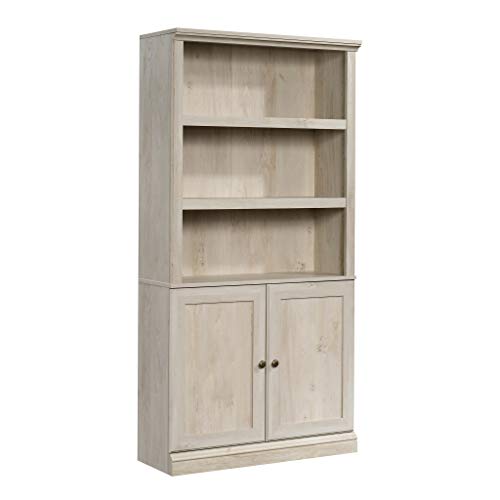
- Best overall: Sauder Bookcase with Doors, Chalked Chestnut — Check on Amazon
- Concepts In Wood Traditional Triple Wide Bookcase, Dry Oak — Check on Amazon
- International Concepts Shaker Bookcase, Solid Parawood — Check on Amazon
- Sauder Barrister Lane Bookcase, Scribed Oak — Check on Amazon
- VASAGLE 6-Tier Glass Bookshelf, Metallic Gold — Check on Amazon
See 1 more Amazon option
- Prepac Nordik 6-Tier Corner Bookcase, Natural Oak — Check on Amazon
Read the full guide ↓
Disclosure: As an Amazon Associate, dailyhomedecorating.com earns from qualifying purchases. Links to Amazon on this page are affiliate links; they cost you nothing extra. Listing details such as price and availability change often, so check the current Amazon listing before you buy.
Searching for the best bookcase under $1000 puts you in a completely different conversation from the budget shelves most guides cover. Down at the lower tiers, the question is whether a case will wobble, bow or peel. Up here, near the top of the flat-pack and ready-to-assemble market, the question changes: which construction, which silhouette and which storage format will still feel like the right purchase in ten years? A four-figure ceiling buys real choices — genuine wood veneers over solid molding, solid parawood you finish yourself, framed cabinet doors that hide the untidy half of your life, tempered glass display shelving, and triple-wide library walls that hold an entire collection on one footprint. This guide sorts those choices properly.
The six picks below were not chosen by spending the whole budget six times. They were chosen because each one spends it on something different. The Sauder bookcase with doors is the balanced default: tall, wide, adjustable, with a hidden cabinet for the things you do not want on display. The Concepts In Wood triple wide is the library wall — six feet of shelving with real wood veneer and a proper furniture finish. The International Concepts Shaker is the solid-wood purist’s pick, sold unfinished so the final color is yours. The Sauder Barrister Lane trades height for a wide, low cubby format with a gallery top. The VASAGLE glass case is the display piece, built for objects as much as books. And the Prepac Nordik turns the deadest square footage in any room — the corner — into six tiers of storage. If your budget is smaller, our guides to the Best Bookcase Under $700 and the Best Bookcase Under $400 cover the tiers below this one.
One thing this budget does not buy is immunity from measuring. Every mistake that ruins a cheap bookcase purchase ruins an expensive one too, just at a higher price: shelf gaps that strand your tallest books, depth that swallows or rejects your storage bins, a footprint that overwhelms the wall it stands on. The how-to-choose section below is written for this tier specifically — what the extra money should buy, where it is wasted, and how to check a listing’s claims before you commit. Read it even if you already know which pick you want; at this price, the details are the product.
It also helps to be honest about what “under $1000” means in this category. Almost nothing here is solid hardwood throughout, and nothing here is bench-made furniture. What the ceiling buys is the top of the engineered and mixed-material market: thicker panels, better finishes, real veneer, framed doors, rated hardware, and brands with replacement-part support measured in decades. Judged against that standard — rather than against a carpenter’s commission — the six cases below are genuinely strong value, and several of them will outlast furniture that cost more but was built worse.
A final framing note before the picks: at this level, buy for the room’s next decade, not this season’s arrangement. Finishes should tolerate redecorating, formats should tolerate a collection that grows and changes character, and dimensions should work in more than one room of the house. Every review below names the room and the reader each case suits best, because at this budget the wrong format is a more expensive mistake than the wrong finish.
In this guide
Quick Picks
| Pick | Bookcase | Best for | Size (W × D × H) | Amazon |
|---|---|---|---|---|
| Best overall | Sauder Bookcase with Doors, Chalked Chestnut | Display plus hidden storage | 35.3 × 13.2 × 69.8 in | Check on Amazon |
| Best library wall | Concepts In Wood Triple Wide, Dry Oak | Whole collections, wide walls | 72 × 10.6 × 72 in | Check on Amazon |
| Best solid wood | International Concepts Shaker, Unfinished | Real parawood, finish it yourself | 48 in tall, Shaker profile | Check on Amazon |
| Best wide and low | Sauder Barrister Lane, Scribed Oak | Cubbies, bins and display top | 53.2 × 12.1 × 47.5 in | Check on Amazon |
| Best display case | VASAGLE 6-Tier Glass, Metallic Gold | Objects, plants, bright rooms | 31.5 × 11.8 × 70.9 in | Check on Amazon |
| Best for corners | Prepac Nordik Corner, Natural Oak | Dead corners, mid-century rooms | 23.3 × 23.3 × 71.5 in | Check on Amazon |
How These Picks Were Chosen
We started from every bookcase format that credibly sells under the $1000 ceiling and filtered hard. First, verified identity: each pick is a real, currently listed model from an established furniture maker, with a manufacturer model number we could confirm against the brand’s own catalog or a major retailer — no white-label clones with invented dimensions. Second, construction above the commodity tier: genuine wood veneer, solid wood, framed doors, tempered glass, or panel work noticeably thicker and better finished than the entry-level cases in our lower-budget guides. Third, useful depth — roughly ten inches or more on the main shelves, because a premium case that cannot hold a standard hardcover or a storage bin has failed its basic job. Fourth, adjustability or a format (cubbies, doors, corner geometry) that solves a specific storage problem rather than merely looking expensive. Fifth, a stability story: every tall pick must accept a wall anchor, and we say so where it matters.
We deliberately mixed formats instead of crowning six tall rectangles. At this budget the format decision — open versus doored, tall versus wide, rectangular versus corner — matters more than any single specification, so the six picks map onto six different jobs. Prices in this category move with sales and finish options, so instead of printing numbers that go stale we ask you to check price on Amazon; the under-$1000 framing is the ceiling these picks were selected against. Readers who want the same formats at lower tiers will find the Barrister Lane’s smaller siblings and the mainstream tall cases in our Best Bookcase Under $300 guide.
What did not make the cut says as much as what did. We dropped two handsome glass-door cabinets whose interior shelf depth was too shallow for anything but paperbacks, a run of “solid wood” listings whose fine print quietly admitted particleboard cores, and several oversized import cases with no verifiable model number or parts support — at this price, a brand that cannot sell you a replacement shelf pin in five years is a liability, not a bargain. The six survivors are the cases we could defend spec by spec to a reader spending serious money.
The 6 Best Bookcases Under $1000
Sauder Bookcase with Doors, Chalked Chestnut (426310)
Who it suits: Most households spending at this level. If you want one tall, wide case that displays the presentable half of your collection and hides the rest behind proper framed doors, this is the default recommendation.
The numbers first: 35.28 inches wide, 13.23 inches deep and 69.76 inches tall, with three adjustable shelves in the open section and a hidden storage area behind doors below. That depth is the quiet headline — 13-plus inches swallows atlases, board games, vinyl, and the standard storage bins that shallower premium cases reject. The Chalked Chestnut finish is a warm, weathered tone with decorative metal hardware, and the framed door fronts give the case a furniture silhouette that open etageres never achieve. At roughly 89 pounds assembled, it has the planted, substantial feel this budget promises, and Sauder’s replacement-part support is among the best in flat-pack furniture — a real consideration at this price.
Pros:
- Deep 13.2-inch shelves handle big books, bins and games
- Three adjustable shelves plus hidden storage behind doors
- Framed doors and metal hardware read as furniture, not flat-pack
- Wide 35-inch format fills a wall better than narrow towers
Honest limitation: It is engineered wood, as nearly everything under this ceiling is — the money buys thickness, finish and hardware, not solid timber. It is also a two-person assembly and stand-up job at its weight.
Choose it if you want the best all-round balance of display, hidden storage and depth under $1000. Skip it if you want genuine solid wood — the International Concepts below is your pick — or if your wall is narrower than about three feet.
Living with it: The doors change daily life more than any spec suggests: the bottom of the case becomes the home for everything that makes a living room look tired — chargers, paperwork, games, the router — while the open shelves stay styled. Load the heaviest rows on the fixed bottom shelf, set one adjustable shelf tall for art books, and anchor it to a stud before loading; at nearly 70 inches tall and fully loaded, the strap is not optional.
Concepts In Wood Traditional Triple Wide Bookcase, Dry Oak (MI7272-CCC)
Who it suits: Serious collectors with a wide wall and a whole-library problem — the reader whose books currently live in stacks, boxes and double rows on cases that ran out years ago.
This is the biggest case in the roundup by a wide margin: 72 inches wide, 72 inches tall and 10.63 inches deep, arranged as a triple-wide wall with fifteen shelves. Concepts In Wood builds differently from the flat-pack mainstream — genuine wood veneers over the panels with solid wood molding, finished in a ten-step polyurethane process the maker describes as stain-resistant and zero-VOC. The Dry Oak finish is a warm, traditional library tone. Fifteen shelves across three bays means you can organize the way libraries actually do: a bay for fiction, a bay for reference and oversize, a bay for the household’s shared shelves — with room left for objects to break up the rows.
Pros:
- Fifteen shelves across a full six-foot wall — capacity nothing else here matches
- Genuine wood veneer and solid wood molding, not printed foil
- Ten-step polyurethane finish resists stains and wear
- Three-bay format organizes a real collection properly
Honest limitation: It is a major piece of furniture: heavy, a substantial assembly project, and committed once placed — you do not rearrange a six-foot library wall on a whim. The 10.63-inch depth also suits standard books better than oversized bins.
Choose it if capacity and a traditional library look are the whole point. Skip it if you rent, move often, or your widest available wall is under six feet — measure honestly, because this case does not forgive optimistic walls.
Living with it: Plan the wall before it arrives: studs located, anchor points decided, and the bays assigned on paper. Owners of triple-wide cases consistently say the discipline that makes it work is leaving one shelf per bay partially empty — a collection wall with no breathing room reads as storage, while the same wall with a few objects and gaps reads as a library. Dust is the ongoing tax on fifteen open shelves; a long-handled duster is part of the purchase, realistically.
International Concepts Shaker Bookcase, Solid Parawood, Unfinished
Who it suits: Buyers who want actual solid wood and are willing to finish it — the one pick in this roundup where the material story is timber all the way through.
International Concepts builds from solid parawood, also called rubberwood — a genuine hardwood harvested from plantation rubber trees past their latex years, which makes it both durable and one of the more sustainable solid woods in furniture. This Shaker-profile case stands 48 inches tall and arrives unfinished: sanded-ready timber that you paint, stain or oil to match your room exactly, something no factory finish at any price can do. The Shaker styling — clean rails, no ornament — is deliberately timeless, and solid wood changes the long game entirely: edges can be re-sanded, scratches can be repaired rather than hidden, and the case can be refinished a decade from now into a different room’s color scheme.
Pros:
- Genuinely solid parawood — repairable, refinishable, no peeling foil
- Unfinished surface means an exact match to your room
- Shaker profile suits traditional and modern rooms alike
- 48-inch height keeps everything reachable and the profile low
Honest limitation: Unfinished means unfinished — budget a weekend and materials for staining or painting before it holds a single book, and note the 48-inch height gives fewer shelves than the tall picks here. Solid wood also moves slightly with humidity, so very damp rooms are not its best home.
Choose it if material honesty and a custom finish matter more than maximum shelf count. Skip it if you want a case that is finished the day it arrives, or you need tall storage.
Living with it: The finishing weekend is the whole ownership story in miniature: this is the one bookcase in the guide that becomes yours in a literal sense. Owners who stain it tend to match a floor or a table; owners who paint it get the crisp, built-in look that factory white never quite achieves. After that, care is wood care — coasters under plants, a wipe for spills — and the reward is a case that ages into character instead of aging into damage.
Sauder Barrister Lane Bookcase, Scribed Oak (414724)
Who it suits: Anyone whose storage problem is wide rather than tall — households that think in bins, baskets and categories, and rooms where a low, broad case works better than a tower.
The Barrister Lane inverts the usual bookcase proportions: 53.15 inches wide, 12.13 inches deep and only 47.52 inches tall, organized as ten storage cubbyholes with a gallery-style top surface edged to keep display items in place. Each cubby accepts an ID label tag — a small, unglamorous feature that turns out to be the reason owners love it, because ten labeled cubbies end the “where does that live?” question for games, craft supplies, school things and media. The Scribed Oak finish has a weathered, planked character that suits farmhouse, cottage and transitional rooms, and the low height keeps the top at display level: a lamp, a plant, a row of framed photos, all at a height where they actually get seen.
Pros:
- Ten cubbies organize by category — bins and baskets fit the format
- ID label tags on each cubby keep a household system honest
- Gallery top is a genuine display surface, not wasted space
- Low 47.5-inch profile keeps rooms feeling open
Honest limitation: Cubbies are fixed-format storage: tall art books and oversized volumes have no home here, and per-cubby loads should stay moderate — this is an organizer, not a vault for a reference library. The wide footprint also needs a genuinely wide wall.
Choose it if your storage is categorical — many kinds of things, each needing a labeled home. Skip it if your collection is mostly tall books; the Sauder with doors or the Concepts In Wood will serve you better.
Living with it: The Barrister Lane earns its place under windows, under wall-mounted televisions and along the long wall of a family room, where its top becomes the room’s display ledge and its cubbies swallow the daily clutter that otherwise colonizes flat surfaces. It is also the easiest tall-storage alternative for households that cannot anchor a tower — at under four feet tall, its tip profile is far more forgiving, though anchoring is still good practice in homes with climbers.
VASAGLE 6-Tier Bookshelf, Tempered Glass, Metallic Gold (ULGT502A01)
Who it suits: Display-first buyers — the collector of objects, ceramics, plants and beautiful editions who wants shelving that shows things off and brightens a room instead of darkening it.
At 31.5 inches wide, 11.8 inches deep and 70.9 inches tall, this six-tier case pairs tempered glass shelves with a metallic gold frame, and the effect is categorically different from every wood case in this guide: light passes through it, sightlines pass through it, and the objects on it appear to float. That makes it the natural pick for bright, modern and glam-leaning rooms, for displaying collections that wood cases visually swallow, and for corners where a solid case would create a dark block. The glass shelves are also the easiest surface in this roundup to keep clean — a wipe, not a dusting ritual — and the open frame keeps even a fully loaded case feeling like furniture rather than storage infrastructure.
Pros:
- Tempered glass shelves keep rooms bright and sightlines open
- Six tiers at nearly 71 inches — real capacity in a display format
- Gold frame makes it a deliberate design piece
- Glass wipes clean in seconds; no dusting texture
Honest limitation: Glass and heavy book rows are not natural partners — this case is happiest with mixed loads of objects and moderate book stacks, not six tiers of solid hardcovers. Fingerprints show on glass, and in homes with very young children, a glass display case deserves a thoughtful placement conversation.
Choose it if display and light matter as much as storage. Skip it if your load is a working reference library — choose the Concepts In Wood or the doored Sauder instead.
Living with it: Style it like a display, not a warehouse: group objects in odd numbers, leave deliberate gaps, and let one shelf be mostly empty — the negative space is what makes glass shelving look expensive. A small plant trailing from the second tier and a stack of large-format books laid flat on another is the classic arrangement, and it takes five minutes to refresh seasonally, which is exactly the kind of furniture that keeps a room feeling current.
Prepac Nordik 6-Tier Corner Bookcase, Natural Oak (SBR-2210-1)
Who it suits: Anyone with a dead corner and a storage shortage — which is most homes. Also the mid-century fans: this is the one pick here with genuine period styling.
The Nordik is purpose-built for the corner: 23.25 inches deep, 23.25 inches wide and a notably tall 71.5 inches, with six tiers, solid sides and a leg structure designed so the case sits flush into the corner rather than floating awkwardly off the walls. Prepac finishes it in a durable natural oak laminate with a lacquered look and mid-century lines — tapered legs, clean planes, no ornament. Corner shelving is the most underused storage geometry in the average home: the corner is already dead space, so every shelf here is storage bought with floor area you were not using. Six tiers of it, at over 71 inches, is a full bookcase’s worth of capacity conjured out of a corner.
Pros:
- Turns a dead corner into six tiers of storage
- Extra-tall 71.5-inch format maximizes the vertical corner
- Mid-century styling with a natural oak finish
- Leg structure lets it sit flush into the corner
Honest limitation: Corner geometry means triangular-ish shelf space — large bins and wide items do not fit the format, and the stated per-shelf weight limit is modest, suiting books and objects rather than heavy loads. It is also a one-trick footprint: it only makes sense in a corner.
Choose it if your room has a corner doing nothing and a collection doing too much. Skip it if you need wide, bin-friendly shelving — that is the Barrister Lane’s job.
Living with it: Corners are where rooms go dark, so the Nordik works best with a little help: a plant on top, the brightest objects on the upper tiers, and books below. In a home office it becomes the reference corner; in a bedroom, the reading corner with a chair angled beside it. Because it touches two walls, anchoring is straightforward, and at its height the anchor matters — fit it before loading.
What the Extra Money Actually Buys
Readers stepping up from the lower tiers reasonably ask what several hundred extra dollars purchase in a bookcase, because the honest answer is not “more shelves.” It buys thickness and finish: panels that do not flex when you slide a heavy row across them, veneers and polyurethane systems that shrug off the ring from a coffee mug, framed doors that close flush in year five because their hardware was specified properly. It buys format: doors, cubbies, corner geometry and glass — storage shapes that cheap cases rarely attempt because each one complicates manufacturing. And it buys support: brands like Sauder, Prepac and International Concepts sell replacement parts and answer for their model numbers years later, which is a form of insurance no listing photograph shows.
What it does not buy, at any point under this ceiling, is solid hardwood construction in a tall, wide case — the timber alone would consume the budget. The single exception in format is the International Concepts pick, which achieves solid wood by keeping the case low and letting you supply the finishing labor. Knowing that trade — size and features in engineered materials, or solid wood in a smaller case you finish yourself — is the real decision this guide asks you to make, and there is no wrong answer, only an uninformed one.
Comparison Table
| Bookcase | Format | Adjustable shelves | Standout trait | Amazon |
|---|---|---|---|---|
| Sauder with Doors, Chalked Chestnut | Tall, doored | Yes, 3 shelves | Deep shelves + hidden storage | Check on Amazon |
| Concepts In Wood Triple Wide | 72-in library wall | Yes, across 3 bays | 15 shelves, real wood veneer | Check on Amazon |
| International Concepts Shaker | Low, solid wood | Yes | Solid parawood, unfinished | Check on Amazon |
| Sauder Barrister Lane | Wide, low cubbies | Fixed cubbies | 10 labeled cubbies, gallery top | Check on Amazon |
| VASAGLE 6-Tier Glass | Tall, open glass | Fixed tiers | Tempered glass, gold frame | Check on Amazon |
| Prepac Nordik Corner | Corner tower | Fixed tiers | 71.5-in corner format | Check on Amazon |
How to Choose the Best Bookcase Under $1000 for Your Room
Choose the format before the finish. At this budget, format is destiny: doors decide whether clutter disappears, cubbies decide whether a household system works, glass decides whether a room brightens, and a corner case decides whether dead space earns its keep. Finishes can be lived with; formats cannot be changed. Decide what the case must do, then pick the prettiest version of that.
Measure depth against your largest regular item. Standard hardcovers need 9 to 10 inches; textbooks, bins and board games want 11 to 13. The doored Sauder’s 13.2-inch depth is the most forgiving here; the Concepts In Wood’s 10.6 inches suits books better than bins. Buying too shallow is the mistake you notice daily; a little too deep just leaves a styling ledge.
Check shelf spacing, not shelf count. Fifteen shelves with the wrong gaps hold less of your actual life than six with the right ones. Measure your tallest book, binder or vase, then confirm the gap in the listing’s dimension diagram — or choose adjustable shelving (Sauder, Concepts In Wood, International Concepts) and set the gaps yourself.
Respect the load path. A full row of hardcovers is heavy. Long spans bow first, so wide cases need either support structure or sensible loading: heavy rows low and toward the sides, lighter material in the middle spans. Glass shelves take mixed display loads beautifully and dense book walls poorly — match the material to the load honestly.
Plan the anchor and the placement together. Every case here over four feet tall should be strapped to a stud. Decide the wall, find the stud, and check the rotation path — a tall case is stood up by tilting, so the ceiling must clear its diagonal. Baseboards steal depth; measure from the baseboard face. Do this before ordering, not while the box sits in the hall.
Think in decades. A case at this level should survive a redecoration and possibly a move to a different room. Neutral finishes, standard formats and brands with parts support are what make that possible — which is why this guide weights them over this season’s most fashionable silhouette. If a case will work in the living room now and the office later, it is worth more than a slightly prettier one that only works here.
Materials at This Price: Veneer, Solid Wood, Glass and Laminate
Four material stories compete under this ceiling, and each ages differently. Genuine wood veneer — the Concepts In Wood’s construction — lays a thin sheet of real timber over a stable panel core, then seals it with a furniture-grade finish. You get real grain, real repairability for surface wear, and none of solid wood’s seasonal movement across a six-foot span; the trade is that edges and corners, once chipped through the veneer, are hard to make invisible again. Solid parawood — the International Concepts pick — is timber throughout: sandable, refinishable, and honest, at the cost of size and a finishing job before first use. Tempered glass on a metal frame — the VASAGLE — does not age like wood at all; it neither fades nor peels, wipes clean, and asks only that you respect its load character and keep a cloth nearby for fingerprints. Quality laminate over engineered panels — the two Sauder picks and the Prepac — is the pragmatic material of this tier: modern laminates are far tougher than their reputation from decades past, shrug off moisture and daily wiping, and free up budget for depth, doors and hardware.
The mistake is ranking these materials in the abstract. The right question is which failure mode your household produces. Homes with drinks, plants and daily wiping should fear foil finishes and love laminate or polyurethane. Homes that keep furniture for twenty years should buy the material that can be refinished. Homes short on light should buy the material that transmits it. Every pick in this guide is the right material for somebody — the reviews name who, and the wrong match, not the material itself, is what disappoints people at this price.
Two construction details predict longevity better than any material label. The first is the back: a fixed, well-fitted back panel turns a wobbly rectangle into a rigid box, which is why the enclosed picks feel so much more substantial than their panel thickness suggests. The second is how shelves are supported — framed rails, metal pins in reinforced holes, and spans kept short enough for the material. When you compare listings at this level, zoom in on those two details before you compare finishes; they are where the money quietly goes.
Sizing a Premium Bookcase to the Room
A case at this price is a decade-long room decision, so size it to the room twice: once in inches, once in proportion. In inches, leave breathing room on both sides, check the tilt-up diagonal against your ceiling, and measure depth from the baseboard face rather than the wall. Door swings, radiators and the forgotten outlet have ended more premium bookcase plans than any budget ever did. In proportion, designers aim for a case occupying roughly a third to a half of its wall — less looks lost, more looks like warehousing. The Concepts In Wood is built for the half-wall end of that rule; the Nordik exists for rooms where no wall fraction is available at all and only the corner is free.
Height deserves its own thought. A case that stops well below the ceiling looks intentional; one that stops a few awkward inches short looks like a measuring error. Tall picks near 70 inches in an eight-foot room leave a comfortable display gap; in a low-ceilinged room, the Barrister Lane’s 47.5-inch profile keeps sightlines open and puts its gallery top at the height where objects actually get admired. Finally, size for the collection you are becoming, not the one you have: books accumulate, children arrive with their own libraries, and hobbies colonize shelves. One tier of headroom is cheaper than a second case in two years — the spare shelf holds a plant gracefully in the meantime.
Common Buying Mistakes
Spending the whole budget on size. The biggest case is not the best case. A triple-wide library wall in a room that needed doors and depth is an expensive way to display clutter at scale.
Believing “solid wood” headlines without reading the fine print. Several listings in this tier use the phrase for a frame, a top, or nothing at all. Check what the panels actually are — our International Concepts pick is the genuine article, and its listing says so plainly.
Ignoring the doorway and the tilt-up. Premium cases are heavy and tall. Confirm the box fits your stairs and hall, and that the assembled case can rotate upright under your ceiling before you order, not after.
Loading glass like lumber. Tempered glass is strong, but a display case loaded with six tiers of hardcovers is a category error — and it looks wrong, which defeats the purpose of buying glass.
Skipping the wall strap because the case feels solid. Heavy cases feel solid until the day they are pulled, climbed or shaken. Ten minutes with a strap is the cheapest insurance in this entire guide.
Final Recommendation
For most homes, buy the Sauder Bookcase with Doors: the deepest shelves here, three adjustable shelves, hidden storage behind framed doors, and a finish that behaves in real living rooms — it is the pick we would hand a friend who asked for one answer at this budget. If your problem is a whole collection and a wide wall, the Concepts In Wood Triple Wide is the library wall done properly. Every other pick wins its niche honestly: the International Concepts for real solid wood, the Barrister Lane for labeled cubby order, the VASAGLE for light and display, the Nordik for the corner you have been ignoring. Measure your tallest book, choose your format, anchor the result — and the under-$1000 bookcase question is settled for years.
Assembly, Delivery and Long-Term Ownership
Cases at this level arrive heavy and in large cartons, and the ownership experience starts at the curb. Check the delivery path before ordering: stairwells, tight landings and narrow doors are the real gatekeepers of premium furniture, and a six-foot library wall that cannot reach the room is a return, not a bookcase. Inspect panels before assembly rather than after — every brand in this guide runs a replacement-part process, and it is painless for a panel reported before the case is built and frustrating afterward. Keep the model number and the instruction booklet; at this tier, parts support is part of what you bought, and it only works if you can name the model.
Assembly itself rewards patience disproportionately at this price. Work on a rug or blanket to protect finishes, tighten hardware in stages rather than fully at each step so frames pull square, and level the case before loading it — adjustable feet and shims exist because real floors are not flat, and a case leveled empty stays quiet and door-true for years. Doors, where fitted, are adjusted last, once the case is in its final position and loaded; adjusting them on an empty case in the middle of the room is why some owners fight door gaps that were never the door’s fault.
Long-term care is light but specific. Veneer and polyurethane finishes want dusting and coasters, not polishes with silicone that complicate future repairs. Laminate wants only a damp cloth. Solid parawood wants the same respect as any timber: spills wiped, plants on trays, and a fresh coat of finish when the surface eventually dulls — which, unlike every other material here, it fully allows. Glass wants a microfiber cloth and thirty seconds. Do those small things and every case in this guide should still be earning its floor space a decade from now, which is the entire argument for spending at this level in the first place.
Frequently Asked Questions
Is a bookcase under $1000 really better than one under $300?
In specific ways, yes: thicker panels, better finishes, real veneer or glass, framed doors, deeper shelves and long-term parts support. It is not better in raw shelf count — cheaper cases often hold as many books. You are paying for construction, format and longevity, not capacity alone.
Can I get a solid wood bookcase under $1000?
Yes, with a trade: solid wood at this ceiling means a smaller case, an unfinished case, or both. Our International Concepts Shaker pick is solid parawood sold unfinished, so your finishing labor closes the gap. Tall, wide, finished solid-hardwood cases generally sit above this budget.
How much weight can these shelves hold?
It varies by construction, and honest makers state per-shelf limits — check the listing for the model you choose. As a rule, panel cases with short spans and framed construction carry full book rows comfortably; glass display shelves and corner units carry lighter, mixed loads. Load heavy rows low regardless.
Do I really need to anchor a heavy bookcase?
Yes. Weight does not prevent tipping — a tall, loaded case is front-heavy by geometry, and a pull on an upper shelf multiplies force at the base. Every tall pick in this guide should be strapped to a stud; it is invisible in use and takes minutes.
Engineered wood, veneer or solid wood — which lasts longest?
Solid wood has the longest ceiling because it can be repaired and refinished. Good veneer over stable panels is next, and quality engineered wood with a rigid frame gives a decade of ordinary service. What shortens any case’s life fastest is overloading single shelves and moving it assembled.
What depth do I need for storage bins and board games?
Most fabric bins and standard board-game boxes want 11 to 13 inches of depth. Of these picks, the doored Sauder at 13.2 inches is the comfortable choice; the Barrister Lane’s cubbies are sized for bins by design. Measure your largest bin before ordering anything.
Should a bookcase match my other furniture exactly?
Almost never exactly — finishes differ across brands and photographs lie gently. Contrast cleanly instead: a chalked chestnut case against a light sofa, a gold-and-glass case against matte wood. Or repeat the case’s tone in one small accent elsewhere in the room.
Can one person assemble these?
The smaller picks, yes. The tall and wide ones — the doored Sauder, the Concepts In Wood, the glass VASAGLE — are two-person jobs at the stand-up stage for safety, whatever the instructions imply. Budget an afternoon, not an hour, at this size.
Are bookcases with doors better than open bookcases?
Neither is better in general — they solve different problems. Doors hide the untidy half of real life and keep dust off what is behind them, which is why the doored Sauder leads this guide for shared living rooms. Open cases display better, cost less per shelf, and suit collections you want to see and reach daily. Many households end up with one of each, in different rooms, for exactly this reason.
How do I stop a tall bookcase from looking like it dominates the room?
Three things work: leave the top shelf partially empty so the case breathes, break long book rows with horizontal stacks and one or two objects per shelf, and match the case’s visual weight to the room — glass or light finishes in small or dark rooms, rich wood tones where the room has the light and size to carry them. A case styled with air in it reads as furniture; the same case packed solid reads as storage.
Related guides: smaller budget — Best Bookcase Under $700; tighter still — Best Bookcase Under $400; family rooms — Best Bookcase For Families Under $1000; modern rooms — Best Bookcase For Modern Homes Under $1000; compact rooms — Best Bookcase For Small Spaces Under $1000.


