Where to buy
Check the latest price, availability and delivery on Amazon. Orders are placed on Amazon. We may earn a commission from qualifying purchases.
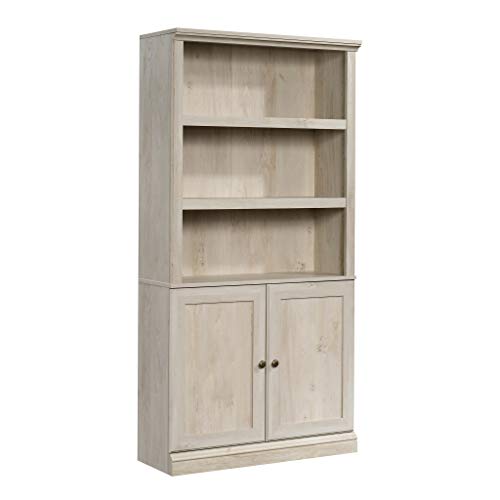
- Best overall for families: Sauder Select Bookcase with Doors, Chalked Chestnut — Check on Amazon
- Sauder Barrister Lane Bookcase, Scribed Oak — Check on Amazon
- Tribesigns 75-Inch Double Wide 6-Tier Bookcase — Check on Amazon
- Tribesigns 72-Inch 6-Tier Bookcase, White — Check on Amazon
- HSH 3-Tier Solid Wood Bookshelf, Natural — Check on Amazon
See 1 more Amazon option
- VASAGLE Custos 6-Tier Bookcase, Rustic Brown — Check on Amazon
Read the full guide ↓
Disclosure: As an Amazon Associate, dailyhomedecorating.com earns from qualifying purchases. Links to Amazon on this page are affiliate links; they cost you nothing extra. Listing details such as price and availability change often, so check the current Amazon listing before you buy.
A family bookcase leads a harder life than any other shelf in the house. It holds the picture books that get pulled out forty times a week and the board games with the missing pieces. It absorbs the school-library overflow, the art projects that cannot be thrown away, the charging cables, the permission slips and the general sedimentary layer of family life. And it does all of this in a house with small climbers, enthusiastic toddlers and teenagers who treat furniture as terrain. The best bookcase for families under $400 is therefore not simply a good bookcase with a family label on it. It has to pass a different set of tests: it must anchor to the wall properly, keep breakables and clutter behind doors when it matters, offer low shelves a child can use independently, survive daily collisions with toys and vacuum cleaners, and still look like furniture the adults chose on purpose.
Safety comes first in this guide, and it is not a footnote. Tall bookcases are a recognized tip-over hazard in homes with young children, and every pick below was screened for the things that make a case safe in practice: a rigid structure that does not rack, a back that keeps the unit square, weight that can be loaded low, and — where the manufacturer provides one — an included anti-tip kit. Families comparing tighter budgets will find the step-down shortlist in Best Bookcase For Families Under $300; this guide covers what the under-$400 tier adds, which in practice means doors, thicker panels, bigger capacity and construction that tolerates a decade of family use rather than a year of it.
Our short answer: start with the Sauder Select bookcase with doors. Its concealed lower section is the single most family-friendly feature in this guide — it swallows the visual chaos of family storage and keeps curious hands away from the things that should stay adult-only — while its open, adjustable shelves above handle the everyday library. If your family’s problem is volume, the Sauder Barrister Lane’s ten cubbies turn tidying into a system children can actually follow. If the problem is a truly large shared collection, the double-wide Tribesigns brings an anti-tip kit and two bookcases’ worth of room. The reviews below judge each pick the way a family will: on safety, on mess management, and on whether it still works when the children are five years older.
In this guide
Quick Picks
In a hurry between school runs? This table matches each bookcase to the family situation it handles best.
| Buyer type | Pick | Why it stands out | Link |
|---|---|---|---|
| Best overall for families | Sauder Select Bookcase with Doors, Chalked Chestnut | Doors hide clutter and keep adult items out of toddler reach; adjustable display shelves above | Check on Amazon |
| Best for toy-and-book organization | Sauder Barrister Lane Bookcase, Scribed Oak | Ten cubbies sized for bins and baskets, with ID label tags children can follow | Check on Amazon |
| Best for big family libraries | Tribesigns 75-Inch Double Wide 6-Tier Bookcase | Double-wide capacity with an anti-tip kit included in the box | Check on Amazon |
| Best rigid tall case | Tribesigns 72-Inch 6-Tier Bookcase, White | Particleboard back keeps the tall case square; wipe-clean water-resistant finish | Check on Amazon |
| Best low shelf for young children | HSH 3-Tier Solid Wood Bookshelf, Natural | Three low tiers a small child can reach independently; solid wood shelves | Check on Amazon |
| Best grows-with-them value | VASAGLE Custos 6-Tier Bookcase, Rustic Brown | Adjustable shelves re-space from picture books to textbooks as children grow | Check on Amazon |
How These Picks Were Chosen
We applied a family filter to the same under-$400 field covered in our main bookcase roundup, and it eliminated several otherwise good shelves. Models with exposed, easily climbed open frames and no anchoring provision went first. Models whose only storage was open shelving dropped down the ranking, because in a family living room the ability to close a door on the mess — and on the breakables, the board-game pieces and the adult paperwork — is worth more than one extra tier of display. Flimsy construction was disqualifying rather than merely disappointing: a case that racks when a child bumps it will rack worse every year, and the back panel material, panel thickness and stated load limits were weighed accordingly.
We did not hands-on test these bookcases. Instead we compared the specifications that predict family performance: overall height and how the design handles anchoring; the mix of open, cubby and doored storage; shelf adjustability, because a family bookcase must reconfigure from board books to binders over its life; surface durability and cleanability, because family shelves meet juice, glue sticks and marker pens; and low-shelf accessibility, because a bookcase children can use themselves is a bookcase that teaches tidying instead of merely storing mess. We also favored makers with real parts support, since family furniture loses shelf pins, door hardware and the occasional caster to the same place socks go.
One rule governed everything: no pick in this guide is safe by default, only safe when installed correctly. Every tall bookcase — including all six here — must be anchored to the wall in a home with young children, loaded heavy at the bottom, and checked after the first weeks as it settles on carpet. We flag the anchoring provisions of each model in its review, and the how-to-choose section below turns that into a checklist you can use for any bookcase, including ones you already own.
The 6 Best Bookcases for Families Under $400
Sauder Select Bookcase with Doors, Chalked Chestnut
Who it suits: Most families — especially those with toddlers and preschoolers, where the living room must look calm to adults while quietly containing everything childhood involves.
The doors are the story, and they solve three family problems at once. First, concealment: the lower section of this Sauder Select case closes behind doors, so the printer paper, the game consoles, the craft supplies and the general overflow vanish from view and the room reads as a living room again. Second, access control: what is behind a closed door is meaningfully harder for a two-year-old to reach than what sits on an open shelf, so the adult shelf — medications-adjacent clutter, good scissors, the nice candles, breakable keepsakes — gets a real barrier rather than a hopeful one. Third, calm: family stress is measurably visual, and a room whose storage closes is a room that feels tidier than it is, which every parent learns to value.
Above the doors, the open section works the everyday side of family storage. Three of the shelves adjust, which matters more in a family case than anywhere else: picture books are tall and thin, chapter books short, board games flat and wide, and a case that re-spaces in minutes follows a child from toddlerhood to homework age without replacement. The unit stands just under 70 inches tall and about 35 inches wide — substantial without dominating — and the Chalked Chestnut finish is warm and forgiving, a tone that hides the minor scuffs of family life better than stark white or black. It sits in the middle of this guide’s budget — check the current price on Amazon.
The honest limitations: doors invite small hands to open them, so households with determined toddlers should add the same inexpensive child latches they would fit to kitchen cabinets — the case accepts them like any cabinet. The concealed section also stores less conveniently than open shelves, so keep daily-grab items in the open section. And like every tall case here, it must be wall-anchored; the doors do not change the physics of a loaded 70-inch bookcase.
- Door-concealed lower storage: hides clutter and barriers adult items from toddlers.
- Three adjustable shelves that re-space as children grow from picture books to textbooks.
- Warm Chalked Chestnut finish that forgives family scuffs; about 35 in wide, just under 70 in tall.
Honest limitation: Doors are not child locks — add cabinet latches for determined toddlers — and concealed storage is slower to access than open shelving.
Choose it if your living room needs to look composed while containing family chaos. Skip it if everything you store is grabbed daily by older kids — the Barrister Lane’s open cubbies are faster.
Sauder Barrister Lane Bookcase, Scribed Oak
Who it suits: Families who organize in bins and baskets — households with a toy rotation, a homework station, or one shelf per child — and anyone whose tidying system needs to be simple enough for children to run themselves.
The Barrister Lane divides its roughly 75-inch frame into ten cubbyholes instead of open shelves, and for families that division is a superpower. A cubby is a category: this one is library books, this one is the current toy rotation in a fabric bin, this one is art supplies, this one belongs to each child. Sauder builds ID label tags into the design, and labeled storage is the difference between a tidying system children can follow — put the thing in its labeled home — and the nightly parental re-sort that open shelves quietly demand. Cubbies also support weight better than long open shelves, since books stand in shorter runs, and the gallery top shelf gives the family’s display pieces — the good photo, the plant, the trophy — a raised stage out of the toddler grab zone.
Construction suits family duty. The engineered panels are a class thicker than budget flat-pack, the Scribed Oak finish has a textured grain that shrugs off the visual evidence of daily use, and Sauder’s US parts support matters in a house where hardware migrates. It sits in the upper-middle of this guide’s budget — check the current price on Amazon — and in family terms the money buys the two things that decide a decade of use: panel substance and a format that organizes itself. Pair it with the bins-and-baskets approach in our Best Storage Ottoman Under $400 guide and the whole room’s overflow has a home.
Limitations, plainly: the cubbies are open, so nothing here is toddler-proofed by design — breakables belong on the top cubbies or in another room until children are older. Compartment sizes are fixed, so very tall binders and oversized art portfolios may not fit every cubby. And at about 13.5 inches deep and 75 inches tall, this is the joint-largest footprint in the guide; it needs its wall, its anchor, and a room that can give it both.
- Ten cubbies sized for standard bins and baskets — one category, or one child, per compartment.
- Built-in ID label tags turn tidying into a system children can follow.
- Gallery top shelf keeps display pieces above the toddler grab zone; thick panels, textured finish.
Honest limitation: Open cubbies offer no barrier to curious hands, compartment sizes are fixed, and the footprint is large.
Choose it if your family’s storage is a mixture of books, toys and supplies that needs categories. Skip it if you need items physically closed away — the Sauder with doors above is your pick.
Tribesigns 75-Inch Double Wide 6-Tier Bookcase
Who it suits: Large families and multi-generational households — the homes where four people’s books, games, school materials and media have overwhelmed every normal bookcase.
Family storage fails by arithmetic before it fails by design. Two adults’ books, three children’s rotating libraries, school references, games, photo albums and the household’s shared media add up to far more shelf-feet than a standard case provides, and the overflow lands on floors and tables. This double-wide Tribesigns is the capacity answer: six tiers across a double width at about 75 inches tall, on a steel tube frame with X-braced sides and E0-grade MDF shelves — roughly two conventional bookcases of storage in a single unit, with one assembly and one wall run instead of two.
For a family guide, its most important feature is the least glamorous: Tribesigns includes a wall anti-tip kit in the box. On a case this tall and this heavily loadable, anchoring is not optional, and a manufacturer that supplies the hardware removes the most common excuse for skipping it. The shelf surfaces are scratch-resistant and wipe-clean per the maker, which in family language means juice rings and glue residue are cleaning events, not damage. It sits in the middle of this guide’s budget — check the current price on Amazon — and its cost per shelf-foot is the lowest here, which is the correct metric for a household buying storage by the yard.
The cautions are real. Everything is open and visible, so this case organizes a family that tidies, and exposes one that does not; pair it with bins on the lower tiers if your household is the second kind. Its size demands a genuinely large wall and a two-person assembly-and-standing plan. And loading discipline matters: the heaviest reference sets and game stacks belong on the bottom tiers, both for the shelves’ sake and for the center of gravity that keeps an anchored case safest.
- Double-wide six-tier capacity — roughly two standard bookcases in one unit.
- Anti-tip kit included in the box; steel frame with X-braced sides.
- Scratch-resistant, wipe-clean shelves that tolerate family spills.
Honest limitation: Fully open storage shows everything, the footprint is the largest here, and heavy loads must be kept low and spread out.
Choose it if your family’s collection has outgrown ordinary furniture. Skip it if you need concealment or your wall run is short — the Barrister Lane organizes more in less width.
Tribesigns 72-Inch 6-Tier Bookcase, White
Who it suits: Families who want one tall, rigid, easy-clean library case — particularly in shared kids-and-adults spaces like family rooms, playroom corners and homework zones.
The family case for this pick is rigidity and cleanability. Its back panels are selected particleboard rather than the folded cardboard found on budget cases, and that matters in a house where a bookcase gets bumped by ride-on toys, leaned on by teenagers and shifted for cleaning: a rigid back keeps the whole 72-inch structure square, so shelves stay level and the case does not develop the slow sideways rack that makes doors, bins and books sit crooked. Six full tiers across about 35.4 inches of width give a family a straightforward library wall — children’s books low, adult books high, shared references in the middle — in a bright white finish that suits the lighter palette of most family rooms.
The finish is water-resistant per the manufacturer, which sounds minor until the first spilled drink, glue-stick incident or enthusiastic plant-watering happens on a shelf; on this case those are wipe-up events. The 11.8-inch depth is deep enough for standard hardcovers and the storage boxes families use for puzzles and games, while staying slim against the wall. It sits in the lower-middle of this guide’s budget — check the current price on Amazon — making it the value route to a tall, proper library case for a family room.
Now the honest parts. White shows marks: crayon, scuffs from toy cars and the grey film of household dust will all be more visible here than on a wood tone, so this case suits families who wipe shelves as part of the routine. Shelf adjustability is more limited than the VASAGLE below, so plan the layout around your tallest regular items. And the anchoring hardware situation should be confirmed on the listing before it arrives — a 72-inch case in a child’s space gets anchored the day it is built, with hardware you have already verified you own.
- Particleboard back panels keep the tall case rigid and square under family bumps.
- Water-resistant white finish wipes clean after spills and craft incidents.
- Six tiers at about 35.4 in wide and 11.8 in deep — full library capacity in a slim depth.
Honest limitation: White shows scuffs and dust fastest, adjustability is limited, and you may need to supply your own anchoring hardware.
Choose it if you want a bright, rigid family library wall at a mid-guide spend. Skip it if your household is hard on finishes — the Scribed Oak Barrister Lane hides family wear better.
HSH 3-Tier Solid Wood Bookshelf, Natural
Who it suits: Families with toddlers and preschoolers who need a low, reachable bookcase children can use entirely by themselves — the Montessori-style reading corner, done in real wood.
Every other pick in this guide is adult furniture that families adapt. This one starts from the child’s height. Three low tiers put every book within a small child’s reach and — just as importantly — within a small child’s ability to put back, which is where reading corners succeed or fail. A toddler who can choose a book and return it to a low shelf builds the habit a family actually wants; a toddler who must ask an adult for every book, and leave it on the floor afterward, builds the other habit. The HSH pairs solid wood shelves with a metal frame in a natural, rustic-industrial finish, so the piece reads as a child’s reading corner now and as a low side shelf for plants, records or the household’s overflow later — furniture that stays in the family after the picture-book years end.
Solid wood is the substantive point at this size. Small bookcases are the most abused furniture in a family home — climbed toward, sat against, dragged — and solid wood shelves tolerate that treatment and can be sanded and refinished in a way laminate cannot. The low profile also changes the safety equation: a three-tier case has a naturally low center of gravity, though it should still be wall-fixed in a toddler’s room as a matter of routine. It sits at the accessible end of this guide’s budget — check the current price on Amazon — and for many families the right configuration is this low case for the children plus one tall case from this guide for the adults, rather than one compromised unit trying to serve both. Families furnishing a child’s corner on a smaller budget will find the entry tier in Best Bookcase For Families Under $150.
The limitations are capacity and reach in the other direction: three tiers hold a young child’s library beautifully and an adult’s not at all, and children outgrow the format as their books multiply — plan on this case graduating to a side role within a few years. The rustic finish also varies piece to piece, as real wood does; if you need a perfect match to existing furniture, a laminate finish is more predictable.
- Three low tiers a toddler can reach, choose from and tidy independently.
- Solid wood shelves that tolerate climbing-age abuse and can be refinished.
- Low center of gravity and a second life as a side shelf after the picture-book years.
Honest limitation: Capacity suits young children only, and natural wood grain varies between units.
Choose it if you are building a reading corner for under-fives. Skip it if you need one case for the whole family’s books — pair a tall pick from this guide with it instead.
VASAGLE Custos 6-Tier Bookcase, Rustic Brown
Who it suits: Families buying for the long arc of childhood — the case whose shelves re-space from board books to binders — and anyone who needs family storage in a shallow footprint at the lowest spend in this guide.
The Custos’s family credential is adjustability. Its six tiers adjust, so the same case that holds tall picture books and toy bins today re-spaces for chapter books next year, school binders after that, and exam-year textbooks eventually — one purchase following a child through school instead of three successive pieces of furniture. At 63.3 inches tall, 23.6 inches wide and only 9.4 inches deep, it is also the shallowest case in this guide, which suits the family rooms and children’s bedrooms where floor depth is contested by play space. The Rustic Brown finish is warm and marks-forgiving, and VASAGLE’s assembly instructions are among the clearer ones in flat-pack furniture — a real consideration for a parent building it during a nap window.
It sits at the value end of this guide’s budget — check the current price on Amazon — low enough that buying two, one per child or one per room, is a realistic family strategy. That pairing approach often beats one large case in houses where children’s materials live where the children are: bedrooms, the homework corner, the playroom end of the living room. The same adjustability also serves the household’s non-book storage — games, craft boxes and school supplies — in the years between reading stages. For the entry-level version of this idea, see Best Bookcase Under $400 for the full roundup this family guide draws from.
Be realistic about the tier, though. Panel and shelf-load quality sit a class below the Sauder picks, so this is a children’s-and-everyday case, not the home for a heavy encyclopedia set; keep weight modest and low. The 9.4-inch shelves exclude the deepest storage boxes and largest art books. And at 63 inches it still needs a wall anchor in a child’s space — shallower cases are, if anything, more dependent on anchoring, not less, because their footprint is smaller.
- Six adjustable tiers that re-space as children grow — board books to binders in one case.
- Shallowest footprint in the guide: 23.6 in wide, 9.4 in deep, 63.3 in tall.
- Value pricing makes a two-case, two-room family strategy realistic.
Honest limitation: Load capacity is a class below the Sauder picks, shallow shelves exclude big boxes, and anchoring is essential precisely because the footprint is small.
Choose it if you want adaptable, affordable storage that grows with your children. Skip it if the shelves must carry heavy reference loads — step up to the Tribesigns or Sauder cases.
Comparison Table
| Product | Type | Best use | Link |
|---|---|---|---|
| Sauder Select Bookcase with Doors | Open shelves + concealed cabinet | Hiding clutter and barrier-ing adult items from toddlers | Check on Amazon |
| Sauder Barrister Lane Bookcase | Cubby library, 10 compartments | Bin-and-basket family organization with labels | Check on Amazon |
| Tribesigns 75-Inch Double Wide Bookcase | Steel-frame open shelving | Maximum capacity, anti-tip kit included | Check on Amazon |
| Tribesigns 72-Inch Bookcase, White | Tall library case | Rigid, wipe-clean family library wall | Check on Amazon |
| HSH 3-Tier Solid Wood Bookshelf | Low child-height shelving | Independent reading corners for under-fives | Check on Amazon |
| VASAGLE Custos 6-Tier Bookcase | Compact adjustable shelving | Adjustable storage that grows with children | Check on Amazon |
How to Choose a Bookcase for a Family
- Anchor first, everything else second. In a home with young children, the purchase is not complete until the case is fixed to the wall. Prefer models with an anti-tip kit included, use stud fixings where possible, and re-check the fixing after the case settles.
- Put a door between toddlers and trouble. Anything breakable, small-parted or adult-only belongs behind a door or on a genuinely high shelf. If your storage includes such items — and every family’s does — a doored section is not a luxury.
- Load low, display high. The heaviest items — reference books, game stacks, full bins — belong on the bottom tiers. It protects the shelves, lowers the center of gravity and puts the things children use at the height children are.
- Give children shelves they can run. Low, labeled, bin-friendly storage teaches tidying because a child can complete the whole task alone. A case only adults can organize will only ever be organized by adults.
- Buy adjustability for the growth curve. Children’s storage needs change completely every two to three years. Adjustable shelves and cubbies that accept standard bins stretch one purchase across those changes.
- Choose finishes that forgive. Textured wood tones hide scuffs; wipe-clean and water-resistant surfaces turn spills into non-events. Stark white and gloss black show every chapter of family life.
- Check the back and the frame, not the photograph. A rigid particleboard back and a frame that does not rack are what separate a ten-year family case from a two-year one. Stated load limits are a good sign; their absence is information too.
- Plan the room around the case’s second job. Family bookcases also hold games, school gear and the household overflow. A case chosen only for books will be colonized anyway — choose one designed for the mixture, like the cubby and doored picks here. Entry points for shoes and coats matter too, which is why many families pair this purchase with Best Shoe Cabinet Under $400.
Setting Up a Family Bookcase Safely
The safest family bookcase is a system, not a product, and the setup takes an hour at most. Start with placement: against a wall the case can be anchored to, away from the tempting climbing routes — not beside the sofa arm a child can launch from, not under the window with the cord blind nearby. Anchor into a stud if the layout allows; if it does not, use hollow-wall anchors genuinely rated for furniture loads, positioned high on the case where the strap has the most leverage. Then load with intent. The bottom tier takes the heaviest, most-used children’s material. The middle tiers take the everyday library. The top tiers take light, adult and display items only — a rule that simultaneously protects the shelves, the stability and the children, since nothing heavy can fall far.
Then make the system legible to its smallest users. Labels or picture tags on the children’s cubbies and bins turn “tidy up” from an argument into a matching game. A small step stool stored nearby extends safe reach to the middle shelves without climbing. And build in a five-minute monthly check: re-tighten any fixing that has worked loose, confirm the anchor is taut, and re-level if the case has settled into carpet. Bookcases in family homes are living structures, loaded and bumped daily; a moment of maintenance keeps them boring, and boring is exactly what safety equipment should be.
Common Buying Mistakes
- Skipping the wall anchor “until the weekend.” The weekend project that matters most is the one that prevents the accident. Anchor the day you build, before the first book goes on.
- Buying only open shelves for a toddler’s home. Open storage displays breakables at grabbing height and offers no barrier at all. Doors and high shelves exist for this stage of life.
- Storing heavy items up high. Encyclopedias on the top shelf are a shelf-life problem, a stability problem and a falling-object problem in one decision. Weight goes low.
- Choosing a case children cannot use. If every shelf is adult-height, children cannot choose books or tidy them, and the case becomes a source of mess rather than its cure.
- Under-buying capacity for a growing family. Children’s books, games and school materials multiply. A case bought exactly full in September is overflowing by spring.
- Ignoring cleanability. Family shelves meet sticky fingers and spilled drinks weekly. Finishes that cannot be wiped down age a decade in a year.
- Assuming a low case needs no anchor. Small footprints tip more easily, not less. Low and shallow cases in children’s rooms get fixed to the wall too.
- Forgetting the case will outlast the current stage. The toddler’s bookcase becomes the schoolchild’s, then the teenager’s. Adjustable, neutral, well-built cases survive the transitions; themed novelty furniture does not.
Final Recommendation
- Most families: Sauder Select Bookcase with Doors, Chalked Chestnut.
- Bin-and-basket organization: Sauder Barrister Lane Bookcase, Scribed Oak.
- Biggest family collections: Tribesigns 75-Inch Double Wide 6-Tier Bookcase.
- Bright, rigid library wall: Tribesigns 72-Inch 6-Tier Bookcase, White.
- Under-fives’ reading corner: HSH 3-Tier Solid Wood Bookshelf.
- Grows-with-them value: VASAGLE Custos 6-Tier Bookcase.
Our top two for family life are the Sauder Select with doors — the only format that simultaneously displays a library, hides the chaos and barriers the adult shelf — and the Barrister Lane, whose labeled cubbies turn storage into a system the whole family can operate. Households with under-fives should add the low HSH case rather than compromise a tall case downward: children who can reach their books read more and tidy more, and that habit is worth a piece of furniture. Whatever you choose, anchor it the day it is built, load it heavy-low and light-high, and check the live listing for the current price and finish before you order.
One Case, Every Age: Staging Family Storage from Toddler to Teen
The families who get the most from a bookcase treat it as a system that gets re-staged as children grow, rather than a fixed arrangement decided on delivery day. In the toddler stage, the configuration is about access and barriers: the child’s own board books and a small toy rotation live on the lowest tiers, ideally in bins small hands can carry, while everything breakable, heavy or adult migrates behind doors or to the top of the tallest case in the house. This is the stage where the doored Sauder and the low HSH case do their best work, and where anchoring matters most, because toddlers pull themselves up on furniture as a developmental job.
The primary-school stage changes the job again. Homework arrives, and with it the need for a working shelf: school books, a stationery caddy, the current term’s projects and a reading pile that turns over weekly. Adjustable cases like the VASAGLE and the Barrister Lane’s cubbies shine here, because the storage can be re-divided in an afternoon — one cubby becomes the school station, another becomes the library-return staging area, and labeled bins keep the system legible to a seven-year-old running it alone. This is also the stage to move the family’s reference material and the good games down from exile: children old enough to be trusted with them are old enough to fetch them, and a case that only adults can use has stopped teaching anything.
By the teenage stage, the bookcase’s role flips from management to identity. The collection becomes personal — their books, their media, their objects — and the family’s shared case often divides, with a tall library case holding the household collection and smaller cases migrating into bedrooms. This is the final argument for buying neutral, well-built furniture at the under-$400 tier in the first place: a Chalked Chestnut or Scribed Oak case makes that migration gracefully, looking equally at home in a living room and a sixteen-year-old’s room, while a novelty children’s piece would have been retired years earlier. Buy once, anchor always, re-stage often — that is the whole family bookcase philosophy, and every pick in this guide was chosen to survive it.
What the Under-$400 Tier Buys a Family That $150 Does Not
Parents comparing this guide with the budget tier reasonably ask what the extra money is for, since a bookcase is, on the surface, shelves in a box. The honest answer is a list of unglamorous specifics. Panel thickness, which decides whether a case shrugs off a ride-on toy collision or cracks at the fixing. A back made of particleboard instead of cardboard, which decides whether the case is still square when your toddler becomes a schoolchild. Doors — the single biggest functional gap between the tiers — which simply do not exist on credible budget cases. Load ratings that are published rather than implied. And finishes that can be wiped for the four-hundredth time without wearing through to the board beneath. None of these appear in a product photograph, and all of them appear in year three of family ownership.
There is also a safety dimension to the tier that deserves stating plainly. The cheapest tall cases are the lightest, and light, tall, narrow furniture is the least forgiving combination in a home with climbers. The cases in this guide carry their weight in thicker panels and steel frames, sit on wider or better-braced footprints, and — in the Tribesigns double-wide’s case — arrive with the anchoring hardware in the box. Paying for substance is not a guarantee of safety; only anchoring provides that. But substance plus anchoring is the combination that lets a family stop thinking about the bookcase, which is the entire point of buying one well.
A Note on Second-Hand and Hand-Me-Down Cases
Family bookcases often arrive by inheritance as much as by purchase — a relative’s spare case, a marketplace find — and they deserve one extra check before joining a child’s space. Confirm the case has its back panel intact and its shelf pins complete, since a missing back is what lets an older case rack and lean. If it predates modern anchoring habits, buy a universal anti-tip strap kit separately; they are inexpensive and fit virtually any case. And give any second-hand finish a honest look for peeling laminate at child height, where small fingers worry at edges. A sound older case, anchored and checked, is a perfectly good family bookcase — the rules in this guide apply to it exactly as they do to the new picks above.
Frequently Asked Questions
How do I stop a bookcase tipping over in a home with children?
Anchor it to the wall — that single step does most of the work. Use the anti-tip kit if one is included, fix into a stud where possible or use properly rated hollow-wall anchors, and position the fixing high on the case. Then load the heaviest items on the bottom tiers to keep the center of gravity low, and re-check the fixing after the first few weeks as the case settles.
What bookcase height is safe for a child’s own room?
For under-fives, a low three-tier case children can reach fully is the practical choice: everything is accessible without climbing, and the low center of gravity is inherently more stable — though it should still be wall-fixed. Tall cases belong in children’s rooms only when anchored, with children’s material loaded low and adult or heavy items kept out entirely.
Are doors on a bookcase really necessary for families?
Not necessary, but genuinely useful in the toddler and preschool years. Doors conceal visual clutter, slow down curious hands and protect breakables better than any open shelf. They are not childproof locks — add inexpensive cabinet latches for determined toddlers — but as a first barrier and a calm-room device, they earn their place.
How much storage does a family actually need?
More than the book count suggests. Beyond books, a family case typically absorbs games, school materials, craft supplies and media. A practical approach is to measure your current books in shelf-feet, add the non-book storage honestly, then buy at least a third more capacity than the total — children’s collections grow faster than adults expect.
What finish survives family life best?
Textured wood-tone laminates hide scuffs and dust best, and water-resistant, wipe-clean surfaces turn spills into minor events. Solid wood can be sanded and refinished, which gives it the longest cosmetic life of all. Stark white and high-gloss finishes show marks fastest and suit lower-traffic rooms.
Can a family bookcase move from the living room to a child’s room later?
Yes, and planning for that migration is smart buying. Adjustable shelves, neutral finishes and standard proportions let a case serve as the living-room library now, a schoolchild’s study case next and a teenager’s media shelf after that. It is one more reason to favor well-built, unfussy designs over novelty pieces tied to one age.