Where to buy
Check the latest price, availability and delivery on Amazon. Orders are placed on Amazon. We may earn a commission from qualifying purchases.
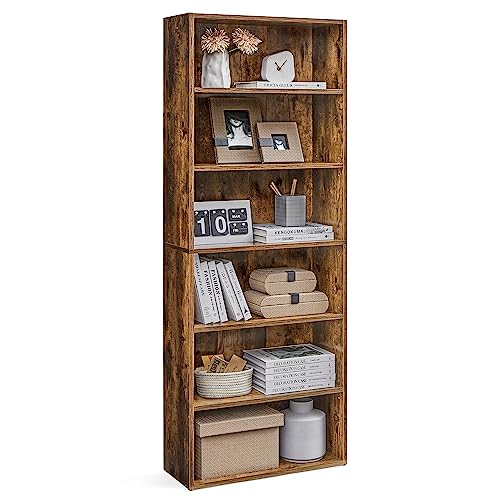
- Best overall: VASAGLE Custos Collection 6-Tier Bookcase, Rustic Brown — Check on Amazon
- Sauder Beginnings 5-Shelf Bookcase, Cinnamon Cherry — Check on Amazon
- NUMENN 5-Tier Bookshelf, Vintage Industrial — Check on Amazon
- HSH 3-Tier Solid Wood Bookshelf, Natural — Check on Amazon
- Tribesigns 72-Inch 6-Tier Bookcase, White — Check on Amazon
See 1 more Amazon option
- Furinno Luder 5-Tier Bookcase with Door Cabinet, White — Check on Amazon
Read the full guide ↓
Disclosure: As an Amazon Associate, dailyhomedecorating.com earns from qualifying purchases. Links to Amazon on this page are affiliate links; they cost you nothing extra. Listing details such as price and availability change often, so check the current Amazon listing before you buy.
Finding the best bookcase under $150 sounds simple until you start measuring. This is the price band where a bookcase stops being a wobbly dorm-room compromise and starts being real furniture — tall enough to matter, deep enough for hardcovers and storage baskets, and finished well enough to sit in a living room without apologizing for itself. It is also the band where the differences between models are easiest to miss in photos. Two bookcases can look nearly identical in a listing image and behave completely differently once they are loaded: one has adjustable shelves and a proper back panel, the other has fixed spacing that strands tall books and a frame that racks sideways every time you pull a volume out. Under $150, you are not paying for heirloom joinery. You are paying for the right combination of shelf depth, adjustability, stability and honest materials — and this guide is built to sort exactly that.
We looked at what this budget actually buys across the main construction styles: enclosed flat-pack bookcases with backs, open metal-frame etageres, solid-wood-and-steel hybrids, and compact cube designs. The six picks below were chosen because each one wins a real job. The VASAGLE Custos is the balanced default for most living rooms. The Sauder Beginnings is the traditional tall case with adjustable shelves and a finished back. The NUMENN brings an industrial steel frame rated shelf by shelf. The HSH is the one pick here with genuinely solid wood shelves. The Tribesigns white bookcase is the big, bright library wall for readers with serious collections. And the Furinno Luder adds a door, because some storage should not be on display. If your ceiling is lower, your budget is tighter, or your room is smaller, our companion guides to the Best Bookcase Under $100 and the Best Bookcase For Small Spaces Under $150 narrow the field further.
One warning before the picks: at this price, the single most common disappointment is shelf spacing, not shelf count. A six-tier case with fixed 11-inch gaps holds paperbacks beautifully and strands every art book, binder and board-game box you own. Every pick below either has adjustable shelves or spacing we call out explicitly, and the how-to-choose section explains how to measure your tallest items before you order. Read that section even if you skip the reviews — it will save you a return.
It helps to picture the three rooms this budget serves most often. In a first apartment, the bookcase is usually the first tall furniture purchase, and it has to multitask: books, a plant, the router, a basket of chargers, the board games. In a family living room, the same money buys the boundary between display and storage — pretty things up top, life down below, ideally behind a door. And in a home office that used to be a spare bedroom, the bookcase is working storage: binders, reference books, a printer, files that need to be reachable but not stared at. The six picks below map onto those jobs deliberately, and the reviews name which room each one is really for, because a case that is perfect for a studio can be exactly wrong for a nursery-adjacent family room.
One more piece of framing before the picks: under $150 is also the ceiling where delivery and assembly realities bite. Every pick here arrives flat-packed and assembles at home — that is how the price is possible — so the reviews note build difficulty honestly. And because finishes are the easiest thing to fake in a listing photo, we weighted brands with a track record of color accuracy and replacement parts. A bookcase is a five-to-ten-year object in most homes; it should be bought like one, even at this price.
A last note on how to use this guide: the Quick Picks table is the whole argument in one screen, the reviews are the evidence, and the how-to-choose section is the part readers tell us they wish they had read before their first purchase rather than their second. If you are furnishing a whole room rather than solving one wall, read the reviews in order — they are sequenced from the most universal pick to the most specialized, so the moment a review describes your room exactly, you have probably found your case.
In this guide
Quick Picks
| Pick | Bookcase | Best for | Size (W × D × H) | Amazon |
|---|---|---|---|---|
| Best overall | VASAGLE Custos 6-Tier, Rustic Brown | Most living rooms | 23.6 × 9.4 × 63.3 in | Check on Amazon |
| Best traditional | Sauder Beginnings 5-Shelf | Adjustable shelves, finished back | 24.6 × 11.5 × 71.1 in | Check on Amazon |
| Best industrial | NUMENN 5-Tier, Vintage | Heavy loads, open display | Steel frame, 5 tiers | Check on Amazon |
| Best solid wood | HSH 3-Tier Solid Wood, Natural | Real wood shelves, low profile | 3 tiers, low and wide | Check on Amazon |
| Best for big collections | Tribesigns 72-Inch 6-Tier, White | Maximum shelf count | 72 in tall, 6 tiers | Check on Amazon |
| Best with a door | Furinno Luder 5-Tier with Cabinet | Hiding clutter | 12 × 9.3 × 52 in | Check on Amazon |
How These Picks Were Chosen
We started from the full field of bookcases that genuinely sell under the $150 ceiling and cut it down with five filters. First, verified identity: every pick is a real, currently listed model from a recognizable furniture brand, with a manufacturer model number we could confirm — no white-label clones with invented specifications. Second, shelf depth of at least roughly 9 inches, because shallower shelves force standard hardcovers to overhang. Third, a credible load path: either adjustable shelves on metal pins, a steel frame with stated per-shelf capacity, or solid wood shelves thick enough not to bow under a full row of books. Fourth, stability hardware — an anti-tip strap or a design that clearly accepts one — because a loaded bookcase over five feet tall is a tip hazard in any home. Fifth, assembly sanity: instructions and hardware that owners consistently describe as manageable for one person with basic tools.
We also deliberately mixed construction styles rather than crowning six versions of the same flat-pack box. Enclosed cases with backs (Sauder, Furinno) behave differently from open frames (NUMENN, Tribesigns) and from panel-built modern cases (VASAGLE). Which style suits you depends on what you store, how dusty your room gets, and whether the case will be seen from the side or back — the reviews call out those trade-offs pick by pick. Prices move constantly in this category, so instead of printing numbers that go stale, we ask you to check price on Amazon; the under-$150 framing is the budget these picks were selected against. If your budget stretches further, the step-up field is covered in our guide to the Best Bookcase Under $300.
What did not make the cut is as instructive as what did. We dropped several tall cases whose fixed shelf spacing stranded standard hardcovers, two cube systems whose connectors were proprietary and unreplaceable, and a run of near-identical white-label etageres whose stated dimensions changed between the listing title and the dimension diagram — a small dishonesty that predicts bigger ones. We also dropped one genuinely handsome case because its only wall-anchor option was adhesive; adhesive is not an anchor. The six survivors are not the six cheapest or the six prettiest — they are the six we could defend line by line, spec by spec, to a reader spending real money.
The 6 Best Bookcases Under $150
VASAGLE Custos Collection 6-Tier Bookcase, Rustic Brown (ULBC166X01)
Who it suits: Most people, most living rooms. If you want one bookcase that looks deliberate rather than improvised, holds a real mixture of books and decor, and does not force you to choose between open display and a finished silhouette, this is the default recommendation.
The Custos is a panel-built case, 23.6 inches wide, 9.4 inches deep and 63.3 inches tall, with six tiers and adjustable shelves — the adjustability is the headline feature at this price, because it lets you set one tall gap for art books and binders and tighten the rest for paperbacks. The design detail that separates it from generic flat-pack is the footless, plinth-style base: the case sits flush to the floor with clean lines, which reads as built-in furniture rather than a rack, and the rustic brown finish photographs warm without tipping into orange. The 9.4-inch depth is the one number to check against your books; it swallows standard hardcovers and most storage baskets, but oversized coffee-table books will sit flush to the edge.
Pros:
- Adjustable shelves — the feature that matters most in daily use
- Six tiers in a footprint under two feet wide
- Footless base and clean sides look like furniture, not racking
- Also sold in cloud white and ebony black if rustic brown is not your finish
Honest limitation: The shelves are engineered wood, not solid timber, and the 9.4-inch depth is shallower than traditional library cases. A full row of heavy hardcovers on every tier is fine; using it as a pantry for canned goods is not what it is built for.
Choose it if you want the best all-round balance of looks, adjustability and capacity under $150. Skip it if your collection is mostly oversized art books — look at the deeper Sauder below instead.
Living with it: Owners tend to style the Custos in thirds — books low, a breathing shelf in the middle with one object and negative space, daily items up top where hands actually reach. The adjustable shelves make that kind of restyling a ten-minute job instead of a rebuild, which is why this design survives redecorating better than fixed cases. Dust the top panel weekly; the footless base means no dust bunnies can hide underneath, a small but real cleaning win.
Sauder Beginnings 5-Shelf Bookcase, Cinnamon Cherry (409090)
Who it suits: Readers who want a traditional, enclosed bookcase — the kind with a back panel, a proper top, and shelves that adjust — and who have the ceiling height for a 71-inch case.
Sauder has sold versions of the Beginnings case for years, and the formula is proven: five shelves (three adjustable, plus the fixed bottom and middle structure), 24.6 inches wide, 11.5 inches deep and 71.1 inches tall. That 11.5-inch depth is the deepest in this roundup, and it matters more than it sounds — atlases, textbooks, vinyl records in sleeves and standard storage bins all fit without overhang. The enclosed back keeps books from sliding through, keeps dust off the wall side, and stiffens the whole case against the sideways racking that plagues open frames. The cinnamon cherry finish is a warm, conventional furniture tone that pairs with the wood furniture most homes already have.
Pros:
- Deepest shelves here — 11.5 inches handles big books and bins
- Three adjustable shelves plus a tall 71-inch frame
- Enclosed back panel adds stiffness and a finished look
- From a US furniture maker with long-running replacement-part support
Honest limitation: It is a big flat-pack build — set aside real time, and ideally a second pair of hands for standing it up. The engineered-wood shelves will bow if you load one shelf with a solid wall of heavy reference books and nothing else; spread heavy loads across shelves.
Choose it if you want maximum book capacity in a classic style. Skip it if your ceilings are low, your doorway is narrow, or you move often — a 71-inch assembled case is not a frequent mover’s friend. Readers furnishing a whole wall should also see our Best Bookshelf Under $150 roundup for wider formats.
Living with it: The Beginnings rewards being loaded thoughtfully: heaviest reference rows on the fixed bottom and middle shelves, adjustable shelves set for paperbacks and media above. The cherry finish hides dust better than black or white cases, and the enclosed back means the wall behind it stays clean — when you eventually move it, there is no grey outline of your reading habits on the paint. Leave an inch of clearance from the wall if your baseboards are deep; the case is designed to sit close, and the anti-tip strap needs that small gap to tension correctly.
NUMENN 5-Tier Bookshelf, Vintage Industrial (C03)
Who it suits: Anyone whose shelves work hard — heavy book rows, plants, a printer, kitchen overflow — and who likes the open steel-and-wood industrial look.
The NUMENN takes the opposite construction approach from the Sauder: a powder-coated steel frame with wood shelves, cross support bars, and adjustable feet for uneven floors. The manufacturer rates each shelf for up to 30 pounds, which is a meaningful, checkable claim in a category full of vague “sturdy” language, and the open sides make it the easiest case here to dust and the most forgiving for odd-shaped items that need to overhang an inch. The vintage brown shelves against the black frame give it the loft look that works in living rooms, offices and bedrooms alike. Because it is open on all sides, it also works as a light room divider in a studio — books accessible from both sides, sightlines preserved.
Pros:
- Steel frame with a stated 30 lb per-shelf capacity
- Adjustable feet level it on old, sloping floors
- Open design — easy to clean, works freestanding or as a divider
- Support bars keep long shelves from flexing
Honest limitation: No back panel means small paperbacks can be pushed straight through if you load carelessly, and the open frame shows dust and clutter honestly — there is nowhere for mess to hide. It also reads industrial; in a formal traditional room it can look like the odd one out.
Choose it if load capacity and easy cleaning top your list. Skip it if you want an enclosed, furniture-formal look or plan to store small loose items without baskets.
Living with it: The NUMENN is the easiest case here to keep clean — a duster passes straight through it — and the adjustable feet quietly solve the wobble that old floors give every other design. Style it with baskets on one shelf to give small items a home, since the open sides will not corral them. In a bedroom it doubles well as a folded-clothes and book tower; in a kitchen it handles cookbooks and small appliances with the same indifference, which is the real charm of a rated steel frame.
HSH 3-Tier Solid Wood Bookshelf, Natural
Who it suits: Buyers who would rather have three shelves of real wood than six shelves of laminate — and whose storage problem is a low, wide stretch of wall rather than a tall narrow one.
Most bookcases under $150 are engineered wood wearing a wood-look film. The HSH is the exception in this roundup: solid wood shelves in a natural finish, carried on a black metal frame in the rustic-industrial style. Solid wood changes the ownership experience in small but real ways — edges can be sanded if they are dinged, the surface does not peel at the corners the way foil finishes can, and a full shelf of hardcovers sits on a board that will not slowly creep into a bow. At three tiers it is a low bookcase, which makes it a natural fit under windows, under a wall-mounted TV, or along a hallway wall where a tall case would crowd the room. The open frame keeps the low profile feeling light rather than blocky.
Pros:
- Genuinely solid wood shelves — repairable, no peeling foil finish
- Low profile suits under-window and hallway walls
- Steel frame keeps the structure rigid
- Natural finish pairs with both rustic and Scandinavian rooms
Honest limitation: Three tiers is three tiers — total capacity is the lowest in this roundup, and if your problem is a thousand paperbacks, this is not your case. Solid wood also moves slightly with humidity; in very damp rooms, engineered wood is the safer material.
Choose it if material honesty matters more than maximum capacity. Skip it if you need tall storage — the VASAGLE or Sauder above will hold roughly twice as much.
Living with it: Treat the HSH like the wood furniture it is: coasters under plants, felt pads under heavy ceramics, a quick wipe for spills. In return it develops the kind of surface character laminate never earns, and it pairs with a second unit beautifully — two of these side by side under a long window read as one built-in bench-height library. The low top surface becomes useful display space for art leaned against the wall, which taller cases cannot offer.
Tribesigns 72-Inch 6-Tier Bookcase, White
Who it suits: Serious collectors in bright, modern rooms — the reader with six shelves of books who wants the case to disappear into a white wall rather than dominate it.
At 72 inches tall with six open tiers, this is the capacity pick of the roundup, and the white finish is doing real work: a bookcase this size in a dark finish becomes the room’s biggest object, while in white it reads as architecture. The open library format suits a wall of books broken up with a few objects, and the height makes it the natural anchor for a reading corner or home office wall. Tribesigns builds in the flat-pack wood-and-frame style, so assembly is a methodical bolt-together rather than a cam-lock puzzle. Because of its height, the anti-tip strap is not optional decoration — plan the wall anchor before you load a single book, a point we return to in the safety notes below.
Pros:
- Six full tiers — the most storage in this roundup
- White finish keeps a very tall case visually light
- Open shelves suit mixed books-and-decor styling
- Strong anchor piece for an office or reading wall
Honest limitation: White shows dust and scuffs faster than wood tones, and a 72-inch case is a commitment: measure your ceiling, your doorway swing and your wall space before ordering. It is also the least mobile pick here once assembled.
Choose it if capacity is the whole point and your room is bright and modern. Skip it if you rent and cannot anchor to the wall, or if you expect to move within the year. Households shopping for shared family rooms may prefer the lower, tougher mix in our guide to the Best Bookcase For Families Under $150.
Living with it: A case this tall organizes a collection by altitude: daily books at hand height, reference above, the rarely touched and purely decorative at the top, reached with a step stool you should budget for if you do not own one. The white finish bounces light into the room — in a bright space it genuinely lifts the corner it stands in — but keep a melamine sponge in the house, because white flat-pack shows the scuffs of book corners within the first month.
Furinno Luder 5-Tier Bookcase with Door Cabinet, White
Who it suits: Anyone whose bookcase has to store two kinds of things: the books and objects worth displaying, and the chargers, paperwork, games and general clutter that are not.
The Luder’s trick is its split personality — open tiers up top for display, and a closed door cabinet section that swallows the mess. At roughly 12 inches wide, 9.3 inches deep and 52 inches tall, it is also the narrowest full-height pick here, sized for the leftover slivers of wall that wider cases cannot use: beside a desk, between a door frame and a corner, at the end of a hallway. Furinno builds from engineered wood with a clean white finish, and the Luder line is designed for straightforward assembly with basic tools. The shallow depth suits paperbacks, DVDs, games and small baskets rather than big hardcovers.
Pros:
- Door cabinet hides clutter — rare at this price
- Narrow footprint fits wall slivers other cases cannot
- Clean white finish suits small, bright rooms
- Light and easy to reposition when you rearrange
Honest limitation: The 9.3-inch depth is the shallowest here; oversized books will not fit, and the light frame is happiest with moderate loads. This is an organizer for everyday items, not a vault for a reference library.
Choose it if hidden storage and a tiny footprint matter most. Skip it if your collection is mostly large-format hardcovers.
Living with it: The Luder earns its keep in the last ten minutes of the day, when everything on the coffee table that has no home goes behind its door and the room resets. That ritual is why small cases with doors punch above their size in real homes. The open tiers are shallow, so style them with paperbacks, small plants and media rather than forcing hardcovers; keep a small basket on one open shelf for remotes and chargers so the door cabinet stays for bigger clutter.
Materials and Construction: What $150 Really Buys
At this budget you will meet four constructions, and each ages differently. Panel-built engineered wood (VASAGLE, Sauder, Furinno) uses particleboard or MDF panels with a laminated finish, joined by cam locks and dowels. Done well — rigid panels, a real back, metal shelf pins — it is flat, stable and looks like furniture. Done badly it bows and chips; the brands above are the done-well end of the market. Steel-frame open shelving (NUMENN, Tribesigns) trades the furniture look for a better load path: metal carries the weight, boards just span between rails, and per-shelf ratings become meaningful numbers instead of marketing.
Solid wood (the HSH’s shelves, the Casual Home folding case elsewhere in this guide series) is rare under $150 because timber costs what it costs — you get it in smaller cases or thinner profiles. Its advantages are repairability and edge durability; its disadvantage is that it moves with the seasons and dislikes standing water. Composite-and-tube systems (Furinno’s Turn-N-Tube family, covered in our small-space picks) are the lightest construction of all: fine for display loads, wrong for a wall of encyclopedias. None of these is “the best material” in the abstract — the right question is which failure mode you can live with. Laminate chips at corners; steel frames show dust; solid wood needs coasters; tubes flex. Pick your poison with eyes open and every case in this guide will serve you well.
Two construction details predict longevity better than any material label. The first is the back: a fixed, screwed-on back panel turns a wobbly rectangle into a rigid box, which is why the enclosed picks feel so much more solid than their price suggests. The second is shelf support spacing: pins or rails near the corners of short shelves beat a single long unsupported span every time. When you compare listings, zoom in on those two details before you compare finishes.
Comparison Table
| Bookcase | Tiers | Adjustable shelves | Back panel | Standout trait | Amazon |
|---|---|---|---|---|---|
| VASAGLE Custos 6-Tier | 6 | Yes | Panel-built case | Best all-round balance | Check on Amazon |
| Sauder Beginnings 5-Shelf | 5 | Yes, 3 shelves | Yes | Deepest shelves (11.5 in) | Check on Amazon |
| NUMENN 5-Tier | 5 | Fixed, barred | No | 30 lb per-shelf rating | Check on Amazon |
| HSH 3-Tier Solid Wood | 3 | Fixed | No | Solid wood shelves | Check on Amazon |
| Tribesigns 72-Inch 6-Tier | 6 | Fixed | No | Most capacity, white | Check on Amazon |
| Furinno Luder with Door | 5 | Fixed | Partial | Closed cabinet section | Check on Amazon |
How to Choose the Best Bookcase Under $150 for Your Room
Measure your tallest item first. Before you fall for a six-tier case, stand your tallest book, binder, vase or game box upright and measure it. Then check the shelf spacing of the case you are considering — not the number of shelves, the inches between them. Fixed-spacing cases in this price band often land around 11 to 13 inches per gap, which is fine for novels and too tight for a 14-inch art book. If your tallest items matter, either pick an adjustable case (VASAGLE, Sauder) or confirm the fixed spacing in the listing’s dimension diagram.
Match depth to your books, not to the photo. Shelf depth is the quiet spec that decides whether a bookcase feels right. Paperbacks need about 7 inches; standard hardcovers 9 to 10; textbooks, atlases and storage bins 11 or more. A 9.4-inch case like the VASAGLE is a sweet spot for mixed fiction and decor. If your shelves will hold records, board games or file boxes, the Sauder’s 11.5-inch depth earns its place. Buying too shallow is the mistake you notice every single day; buying a few inches too deep just leaves a styling ledge.
Decide open versus enclosed honestly. Open frames (NUMENN, Tribesigns, HSH) are lighter, cheaper per shelf, easier to clean and kinder to odd shapes — but they display everything, including dust and disorder, and books can slide out the back. Enclosed cases (Sauder, VASAGLE, Furinno) look like furniture, protect books, and hide a multitude of sins, especially the Luder’s doored section. Think about where the case will stand: against a wall in a tidy room, either works; freestanding in the middle of a studio or in a dusty hallway, enclosed wins.
Respect the load path. A shelf of hardcover books weighs more than most people guess — a full three-foot row can exceed what a thin, long, unsupported board can carry without bowing. Under $150, look for at least one of: short shelf spans (narrow cases bow less), support bars under shelves (NUMENN), thick solid boards (HSH), or metal-pin adjustable systems in a rigid panel case (VASAGLE, Sauder). Then load heavy rows low, where every design is strongest.
Plan the anchor before the books. Any bookcase over about four feet tall should be strapped to a wall stud, full stop — and the time to drill is when the case is empty and you can still move it with one hand. Check that your pick includes an anti-tip kit or accepts a universal strap, locate your stud, and if you rent, read the families and small-space guidance in this batch of guides for lower-profile alternatives that reduce the need.
Sizing a Bookcase to Your Wall, Not Just Your Books
The case has to fit the room twice: once in inches, and once in proportion. In inches, leave at least two inches of breathing room on each side of the case and check the ceiling diagonal trick — a tall case is stood up by rotating it, so the ceiling must clear the case’s diagonal, not just its height; for a 72-inch case in an eight-foot room that rotation is comfortable, in a basement with a low soffit it may not be. Baseboards steal about half an inch of depth and skirting heaters steal more; measure from the baseboard face, not the wall, when you check depth. Door swings, radiator valves and the one outlet you forgot about have ended more bookcase plans than any measurement error, so stand where the case will stand and look at the whole wall before ordering.
In proportion, the rule of thumb designers use is that a bookcase should occupy roughly a third to a half of the wall it stands on — less looks lost, more looks like storage warehousing. A single 24-inch case on a 14-foot wall reads as an apology; two matched cases or one case flanked by a plant and a floor lamp read as a composition. Height matters the same way: a case that stops a foot below the ceiling looks intentional, a case that stops four inches below it looks like a measurement error, and in small rooms a low, wide case like the HSH keeps sightlines open in a way no tall case can. If you are between sizes, the wider, lower option is usually the one that survives future room layouts.
Finally, size for the collection you are actually going to have. Books accumulate at a predictable rate — most households add a shelf-foot or two a year when anyone in the house reads seriously. Buying one tier more than you need today is cheaper than buying a second case in eighteen months, and the spare shelf holds a plant gracefully in the meantime. That is the quiet argument for the six-tier picks at the top of this guide: they are not bigger than you need, they are bigger than you need yet, which is exactly right for furniture.
Think about light and sightlines. A bookcase is a wall you build yourself, and it will block light like one. Tall cases belong on walls perpendicular to windows, not across from them where they shadow the room, and in a room you read in, leave the case where its shelves catch some ambient light — spines in a dark corner are storage, spines in soft light are decor. Open-frame cases soften this entirely, which is one more reason studios and dark hallways suit the NUMENN and Tribesigns designs.
Decide how the case will be cleaned around. Footless and enclosed cases (VASAGLE, Sauder) hide the floor beneath them and never need moving for vacuuming; legged and open designs let a robot vacuum pass or demand a weekly dusting routine underneath. Neither is wrong, but one of them matches your actual habits — choose that one, because a bookcase you resent cleaning is a bookcase that slowly becomes a dust exhibit.
Common Buying Mistakes
Counting shelves instead of measuring gaps. Six tiers with the wrong spacing hold less of your actual stuff than four tiers with the right spacing. Measure first, count second.
Ignoring the doorway. A 71- or 72-inch case assembles flat but lives tall. Check it can stand up in the room (ceiling height minus the diagonal when you tilt it upright) and that the box fits your stairs and hallway on delivery day.
Loading the top shelf heaviest. Heavy rows belong low. A top-heavy bookcase is both a bow risk and a tip risk, and no finish looks good from the floor.
Skipping the wall strap because the case “feels solid.” A loaded bookcase feels solid right up until a child, a pet or an earthquake test gives it a reason not to be. Ten minutes with a strap is the cheapest insurance in this entire guide.
Buying the darkest finish for a small, dim room. Tall furniture eats light. In north-facing or small rooms, the white Tribesigns or a light finish will keep the room feeling open where a dark case turns the corner into a cave.
Final Recommendation
For most homes, buy the VASAGLE Custos 6-Tier: adjustable shelves, six tiers, a footprint under two feet wide and a finish that behaves in real living rooms — it is the pick we would hand to a friend who asked for one answer. If your books run large and deep, step to the Sauder Beginnings and its 11.5-inch shelves. Every other pick here wins its niche honestly: the NUMENN for loads, the HSH for real wood, the Tribesigns for sheer capacity, the Luder for hiding life away behind a door. Measure your tallest book, pick your style, anchor the result — and the under-$150 bookcase problem is solved for years.
Frequently Asked Questions
How many books does a bookcase under $150 actually hold?
It depends on width and spacing more than price. A 24-inch-wide, five- or six-tier case typically holds somewhere in the range of 150 to 250 standard books once you leave sensible gaps; wide or double cases hold more. The honest way to estimate is linear feet: measure your current books laid spine-to-spine and compare with the total shelf width of the case you are considering.
Are adjustable shelves worth it at this price?
Yes — they are the single feature that most extends a bookcase’s useful life, because your storage changes (kids’ books, then textbooks, then decor) while fixed spacing never does. Two of our six picks adjust; if your collection mixes tall and short items, start with those.
Do I really need to anchor a bookcase to the wall?
If it is taller than about four feet and will hold books, yes. Bookcases are tall, narrow and front-heavy when loaded — exactly the profile that tips. Every tall pick in this guide should be strapped to a stud; it takes minutes and is invisible in use.
Engineered wood or solid wood under $150?
Under $150, solid wood means a smaller case (like the 3-tier HSH) or thinner boards; engineered wood buys you size and features. Good engineered wood with a rigid frame is a rational choice for a big case; solid wood is the better buy when a low, wide case covers your needs.
What depth bookcase do I need for hardcover books?
Standard hardcovers sit comfortably on 9 to 10 inches of depth. Textbooks, atlases and most storage bins want 11 inches or more. Paperbacks and media are happy at 8 to 9 inches. Match the case to the largest thing you store regularly, not the largest thing you own once.
Can one person assemble these bookcases?
Mostly yes — all six picks are designed for home assembly with basic tools, and the smaller cases are easy solo jobs. For the two tallest cases (Sauder and Tribesigns), a second person makes the stand-it-up step safer and faster; budget an evening rather than an hour for those.
Should a bookcase match my other furniture exactly?
No — and trying to match a wood tone exactly across brands usually fails, because finishes are photographed and manufactured differently. It looks more deliberate to contrast cleanly (a white case against wood furniture, a black frame against a light sofa) or to repeat the bookcase finish in one small accent, like a tray or frame, elsewhere in the room.
How long should a bookcase at this price last?
With a wall anchor, sensible loading and dry indoor conditions, the panel and steel-frame picks in this guide should give five to ten years of ordinary service; the solid-wood HSH can go well beyond that with basic care. What shortens life fastest is moving an assembled case repeatedly and overloading single shelves — disassemble for moves and spread heavy rows.
Is a bookcase or a bookshelf better for a living room?
The words are used interchangeably by most retailers, but traditionally a bookcase is the enclosed, furniture-style piece with sides, a back and a top, while a bookshelf is the open shelf unit. For a living room, the enclosed bookcase style (Sauder, VASAGLE) reads more finished and protects books better; open bookshelves (NUMENN, Tribesigns) cost less per shelf and suit offices and studios. Our Best Bookshelf Under $150 guide covers the open-format field in depth if that is the direction you lean.
What is the difference between a bookcase and an etagere?
An etagere is the open-frame member of the family — shelves on uprights, no back, often graduated or decorative — while a bookcase proper encloses its shelves with sides, a back and a top. Etages (the NUMENN and Tribesigns styles here) cost less per shelf and suit display; enclosed cases protect books and read as furniture. Most rooms want the enclosed form for the main collection and can enjoy an etagere as the secondary piece.
Related guides: tighter budget — Best Bookcase Under $100; bigger budget — Best Bookcase Under $300; compact rooms — Best Bookcase For Small Spaces Under $150; shared family rooms — Best Bookcase For Families Under $150; wider formats — Best Bookshelf Under $150.