Disclosure: As an Amazon Associate, dailyhomedecorating.com earns from qualifying purchases. Links on this page are affiliate links; they cost you nothing extra. Prices and availability change often, so check the current Amazon listing before you buy.
This patio heater buying guide is written for one job: matching a heater to a real patio without a price ladder, a specification contest or a single unsafe compromise. It walks the patio heater buying guide route in order — types first, then prose picks, then the questions that size a heater honestly, then setup and mistakes — with the mandatory safety rules placed before any product is named, because they decide more purchases than any feature list.
Key Takeaways
- Four types cover the market: freestanding propane, tabletop, electric infrared, and wall-mounted or plumbed fixed units.
- Clearances, level ground and storage are buying criteria, not fine print — audit your spot before shortlisting.
- Tiers in this guide are qualitative: entry, mid and premium describe build and finish, never a promise about a listing.
- The right heater is the one whose comfort circle covers your usual chairs and whose routine your household will keep.
Safety First: Non-Negotiable Rules for Any Patio Heater
OUTDOOR USE ONLY. A patio heater — propane, natural gas or electric — is an outdoor appliance, full stop. Never use one indoors, in a garage, in a tent, or on an enclosed or screened porch. A burning heater produces carbon monoxide, which is colourless, odourless and kills silently, and enclosed spaces let it build to dangerous levels without any warning smell or smoke. If a space has a roof and walls that close it in, the heater does not belong there, however cold the evening feels and however short the session seems.
Keep the heater well clear of everything that can burn or melt. That means combustibles of every kind — fabrics, cushions, stored items, anything that can burn or melt — and also walls, ceilings, overhangs, awnings and umbrellas all stay outside the clearances the maker specifies for that exact model, above the reflector as well as around the column. Clearances are not suggestions padded for lawyers; reflectors run extremely hot, and heat rises straight into whatever hangs above. If your patio has a low pergola beam, a ceiling or an overhang you cannot clear in full, choose a different format or a different spot — never a smaller clearance.
Set the heater on stable, level ground and make the base do its job. Fill or fit any weighted base exactly as the maker directs, engage any securing or anchoring the design offers, and never balance a tall heater on decking offcuts, rugs or slopes. A top-heavy column of hot metal is a poor thing to tip, and wind finds tall reflectors like sails. Keep children and pets well back from the hot emitter and reflector at all times: the guard reduces casual contact, it does not make the surface safe to touch, and small hands reach upward exactly where the heat is.
Never leave a lit heater unattended — not during a party, not while you cook, not for a quick trip indoors. If the gathering moves inside, the heater goes off first. Before each season and after any tank change, check every hose and regulator connection for leaks with soapy water: brush the solution over the joints, open the tank valve without lighting, and watch for growing bubbles, which mean gas is escaping and the connection must be remade or the part replaced before the heater is lit. Store tanks upright, outdoors, with the valve closed, away from heat sources and ignition, never in a house, garage or enclosed shed space where leaking gas can pool.
Electric models carry their own version of the same discipline. Plug an electric patio heater only into an outdoor-rated outlet protected by a GFCI, exactly as the maker directs. Do not run one from an indoor socket through a window, and do not use indoor extension-cord workarounds to stretch a heater further from the house than its own outdoor-rated setup allows; cords, plugs and heaters all have to be rated for the outdoor job they are actually doing. Wet ground, trailing cords across walkways and overloaded circuits are the electric equivalents of a leaking hose — unglamorous, foreseeable, and entirely avoidable with a little setup care.
In this guide
What a Patio Heater Does and the Main Types
Freestanding propane heaters
The tall column with a reflector on top is the category’s emblem: portable, independent of the house, and built to throw a circle of warmth down over a dining set. It asks for tank storage and swaps, generous clearances, level ground and a weighted base, and it rewards movable layouts and open patios. Most of the named picks in this guide are of this type, because most patios that buy heaters are buying exactly this job.
Tabletop heaters
A compact unit that sits on the table itself and warms the people around it at face and hand height. Its circle is small, its tank is small, and its whole case rests on scale: for two chairs on a balcony it is perfectly matched, and for eight chairs at dinner it is simply the wrong tool. A stable table and full clearance above are non-negotiable, as with every fuel-burning format.
Electric infrared heaters
Electric units warm people and objects directly, instantly, with no flame and no fuel store, from freestanding columns to slim wall bars. Their comfort zone is the area the element can see, their output is bounded by the outdoor supply, and their routine is the lightest in the category. They suit defined nooks, frequent short sessions and households that want heat like a light switch — provided the supply is outdoor-rated and GFCI-protected and no indoor-cord workarounds are involved.
Wall-mounted and plumbed heaters
Fixed heaters — wall-mounted electric or natural gas — trade portability for permanence: no floor footprint, no tipping, no tanks, and a position that is chosen once and professionally fitted where the maker requires it. They are the connoisseur’s answer for a settled layout and the wrong answer for renters, rearrangers and anyone whose furniture follows the sun. Buy them when the seating plan has stopped evolving.
Top Picks at a Glance
| Pick | Badge | Tier | Suits |
|---|---|---|---|
| Fire Sense Patio Heater | Best Overall | mid | Mainstream dining patios wanting the proven tall format |
| AZ Patio Heaters Freestanding Propane Patio Heater | Best for Larger Circles | mid-to-premium | Full seating circles on open patios |
| Amazon Basics Outdoor Patio Heater | Best Entry Point | entry | First patios, renters, and households testing the habit |
| Bromic Smart-Heat Portable Patio Heater | Best for Design-Led Terraces | premium | Styled terraces where the heater must look like furniture |
| Hampton Bay Patio Heater | Best to See in Person | entry-to-mid | Buyers who want a showroom look before deciding |
| EAST OAK Patio Heater | Best Coordinated Look | mid | Modern patios furnished in one coordinated style |
Every pick below is presented in prose with its slot held for verification; tiers are qualitative and no listing is linked until it is confirmed.
How Much Heat Do You Actually Need?
Need is a seating question disguised as a specification question. Count the chairs in your usual gathering and the area they occupy, then ask whether one comfort circle covers them. Output figures describe what a heater can do in still air in test conditions; your patio adds wind, distance and real bodies in real chairs. A heater matched closely to a modest circle feels generous; a stronger heater straining at a sprawling layout feels inadequate, and the difference is geometry, not quality. Buy the geometry first and let output comparisons happen only between heaters whose circles fit your map.
Which Fuel Fits Your Household’s Routine?
Propane suits households content with tanks: swaps, correct upright outdoor storage, leak checks at changes. Natural gas suits settled homes that will pay for installation once and then forget fuel exists. Electricity suits households with the right outdoor supply and a taste for instant, session-sized heat. There is no league table here, only fit — and fit is decided by the routine’s tenth performance, not its first. Choose the fuel whose chores you will still be doing cheerfully in the third winter, because that is the fuel your heater will actually burn.
How Much Space — and Clearance — Do You Honestly Have?
Measure three spaces before shopping: the spot, with its clearances in every direction including above; the storage, for the unit and any tanks through the worst months; and the walkways, which must stay out of the clearance zone and clear of cords on electric models. Buyers consistently measure the first and improvise the other two, and the improvisation is where heaters go to corrode, crowd and trip. A patio that cannot offer all three spaces is not a failed patio; it is a patio pointing at a smaller or fixed format, and this guide’s job is to let it point.
How Will You Use It Across a Whole Season?
Frequency reshapes value. A heater lit twice a season should be cheap to own and effortless to store; a heater lit four nights a week earns better build, easier controls and a kinder routine. Session length matters too: long dinners favour propane’s independence, short rituals favour electric’s instant answer. Be honest about the pattern before the purchase, because the pattern — not the product — is what the next five years will actually consist of, and every criterion in this guide is secretly a question about it.
Details That Separate Good Buys From Regrets
The reflector does more than look bright
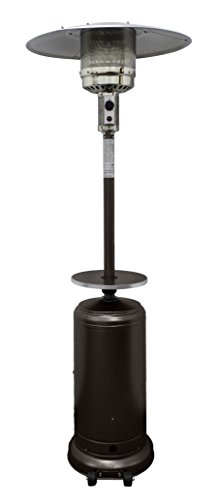
On a tall propane heater the wide disc above the emitter is not decoration. It throws heat that would otherwise rise uselessly into the night back down onto the seating circle. A reflector that is dented, warped or thick with grime throws that heat unevenly, which is why reflectors deserve gentle handling, occasional cleaning once cold, and a cover in storage. When you compare two similar heaters in a showroom, look up: the condition, size and sturdiness of the reflector tells you a surprising amount about how the whole unit will age.
Wall-mounted heat keeps the floor free
A wall-mounted heater solves the two problems freestanding columns create: floor space and tipping. Fixed high on a wall, angled down at the seating, it cannot be knocked by a chair leg or a dog, and it leaves the terrace entirely clear. The costs are commitment and wiring or plumbing — the position is permanent, the angle is set at installation, and a professional fitting is the sensible route for gas and for fixed electrical work. Choose it when the seating layout is settled for good; renters and rearrangers should stay portable.
Storage decides what spring finds
Where a heater spends the wettest, coldest months decides how it greets the new season. The kind routine is simple: clean once cold, dry fully, cover, and store upright under shelter with the tank disconnected and stored upright outdoors, valve closed, away from heat. Before the first lighting of spring, repeat the soapy-water leak check on every connection, clear any insect nests from the burner area as the maker directs, and inspect hoses for cracking. Ten unhurried minutes in spring prevents the season’s most common and most avoidable failures.
Patio Heater Buying Guide: How to Prioritise by Use Case
The dining patio. Prioritise the circle: a tall freestanding unit beside the table, weighted base, rehearsed placement. The balcony. Prioritise scale and the audit: tabletop or small electric, clearances kept in full, storage solved. The lounge nook. Prioritise aim and routine: wall-mounted or electric infrared over fixed seats, floor left clear. The entertaining terrace. Prioritise coverage and looks together: a premium freestanding unit, or two sources for a long layout, with the host’s safety routine set before guests arrive. Each profile also pairs with the wider patio — see chaise lounges for the sunny end of the patio for the loungers that share these spaces.
The Picks in Detail
AZ Patio Heaters Freestanding Propane Patio Heater
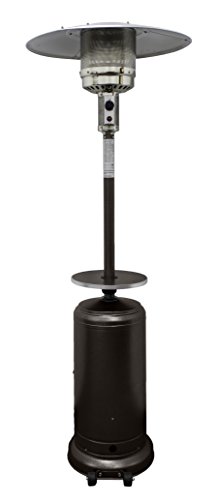
This pick is a tall, freestanding propane heater in the classic mushroom style, with a wide reflector over a central column and the tank housed in the base. In tier terms it sits at the mid-to-premium level of the patio heater market, and it is presented here in prose while verification is pending, so judge it on format, fit and routine rather than on a link.
Strengths: The tall column and broad reflector suit a full seating circle rather than a single chair, the finish options tend to look smart against brick and stone, and the format is the one most hosts picture when they plan an outdoor season.
Trade-offs: Tall heaters catch wind, need generous headroom and clearance, and take up real storage space once the season ends, so measure the spot before the style sells you.
Best for: Larger open patios and hosts who seat a full circle of guests and want the classic tall-heater look. Not suited for: enclosed or semi-enclosed spaces of any kind, low overhangs, or any spot where the maker’s clearances cannot be kept in full.
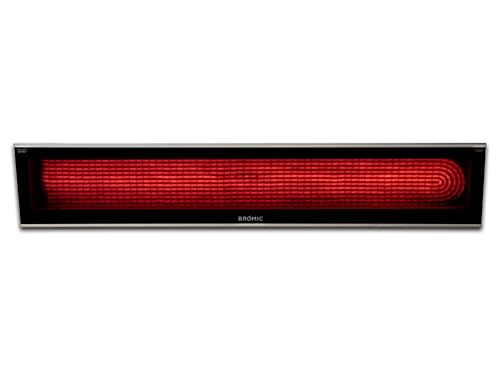
Bromic Smart-Heat Portable Patio Heater
This pick is a design-led portable heater from a maker known for commercial outdoor heating, styled to look deliberate rather than utilitarian beside good furniture. In tier terms it sits at the premium level of the patio heater market, and it is presented here in prose while verification is pending, so judge it on format, fit and routine rather than on a link.
Strengths: The build and styling sit comfortably next to premium furniture, controls feel considered rather than improvised, and the brand has a long track record in hospitality settings where heaters work nightly.
Trade-offs: It sits firmly in the premium tier, replacement parts follow the maker’s own channels, and the design premium only pays off where appearance genuinely matters.
Best for: Design-led terraces, restaurants-at-home entertainers, and buyers who treat the heater as furniture rather than equipment. Not suited for: enclosed or semi-enclosed spaces of any kind, low overhangs, or any spot where the maker’s clearances cannot be kept in full.

Fire Sense Patio Heater
This pick is a widely sold freestanding propane heater line with several finishes, built around the familiar column, reflector and wheeled-base layout. In tier terms it sits at the mid level of the patio heater market, and it is presented here in prose while verification is pending, so judge it on format, fit and routine rather than on a link.
Strengths: The range is broad, finishes are easy to match to existing furniture, wheels on the base make repositioning realistic for one person, and accessories such as covers are easy to find.
Trade-offs: Assembly is a genuine project rather than a ten-minute job, thin hardware deserves careful tightening, and the reflector needs gentle handling to stay true.
Best for: Mainstream patios that want the proven tall format in a finish that matches the furniture, without stepping into the premium tier. Not suited for: enclosed or semi-enclosed spaces of any kind, low overhangs, or any spot where the maker’s clearances cannot be kept in full.
Hampton Bay Patio Heater
This pick is a retail-favourite freestanding propane heater, commonly sold through home-improvement stores in straightforward finishes with a simple control layout. In tier terms it sits at the entry-to-mid level of the patio heater market, and it is presented here in prose while verification is pending, so judge it on format, fit and routine rather than on a link.
Strengths: Buying and seeing one in person is easy, the controls are uncomplicated for guests and family to understand, and the format is the standard one most covers and accessories are sized for.
Trade-offs: Finishes and hardware are built to a price, so coastal and very wet climates will test the coating sooner, and seasonal storage under cover matters more here.
Best for: First-time heater owners who want to see and touch the product before buying and keep the decision simple. Not suited for: enclosed or semi-enclosed spaces of any kind, low overhangs, or any spot where the maker’s clearances cannot be kept in full.

Amazon Basics Outdoor Patio Heater
This pick is a house-brand freestanding propane heater in the standard tall format, sold on simplicity and a plain, neutral finish. In tier terms it sits at the entry level of the patio heater market, and it is presented here in prose while verification is pending, so judge it on format, fit and routine rather than on a link.
Strengths: The proposition is honest and simple: the standard format, a finish that disappears beside most furniture, and a buying process with no surprises for households already ordering household basics there.
Trade-offs: There is little design flair, the accessory ecosystem is generic rather than tailored, and long-term parts support follows a house-brand pattern rather than a specialist maker.
Best for: Renters, first patios and anyone testing whether outdoor heating earns a permanent place before spending more. Not suited for: enclosed or semi-enclosed spaces of any kind, low overhangs, or any spot where the maker’s clearances cannot be kept in full.

EAST OAK Patio Heater
This pick is a freestanding propane heater from an outdoor-living brand that also sells fire pits and patio furniture, styled in contemporary finishes. In tier terms it sits at the mid level of the patio heater market, and it is presented here in prose while verification is pending, so judge it on format, fit and routine rather than on a link.
Strengths: The styling coordinates naturally with modern furniture from the same outdoor-living world, assembly instructions are generally written for real households, and the brand’s covers and accessories are easy to pair.
Trade-offs: The range is narrower than the longest-established names, resale and hand-me-down knowledge is thinner, and you are buying into a younger brand’s support network.
Best for: Households furnishing a patio in one coordinated modern style who want the heater to match rather than clash. Not suited for: enclosed or semi-enclosed spaces of any kind, low overhangs, or any spot where the maker’s clearances cannot be kept in full.
First Setup and Care Essentials
Assemble on a soft surface in the maker’s sequence, keep the fitted tools with the unit, and run the soapy-water leak check on every propane connection before the first lighting and at every tank change thereafter. Rehearse placement in daylight. Through the season: keep emitter and reflector clean once cold, cover only when cold and dry, and store under shelter for the worst months with tanks disconnected and stored upright outdoors, valve closed, away from heat. In spring, repeat the leak check, clear the burner area as the maker directs, and inspect hoses before the first evening rather than during it.
Mistakes to Avoid
The guide’s short list of expensive errors: buying output instead of geometry; treating clearances as flexible; forgetting tank storage until the tank is in your hallway; choosing a fixed format for an unsettled layout; letting a finish decide before fuel and format have had their say; and skipping the daylight rehearsal. Every one of them is avoidable at zero cost before purchase and at real cost after it, which is the entire argument for reading a buying guide before the box arrives rather than after.
Related Guides for a Warmer Patio
The rest of this patio heater cluster looks at the same decision from complementary angles, and the wider patio guides below are already live for the furniture and finishing touches that share the space:
- How to Choose a Patio Heater
- Is a Patio Heater Worth It
- Patio Heater Pros and Cons
- Patio Heater Review
- Patio Heater Reviews
- outdoor heater picks for small patios
- a second look at small-patio outdoor heaters
- patio chairs that gather well around the warmth
More Practical Notes Before You Decide
Think of the comfort circle as a piece of furniture in its own right. It has edges, a centre and a guest list, and it behaves best when the seating plan respects it: chairs inside the circle, the serving table at its edge, and the walkway to the kitchen door outside the zone where people shuffle chairs toward the warmth. Draw it once, honestly, on a sketch of the patio, and most placement arguments settle themselves before a single purchase is made.
A patio heater extends a season at both ends, and the two ends feel different. Spring evenings are about optimism — the first dinners outside, forgiven a little chill — while autumn evenings are about reluctance to surrender the garden. A heater serves both, but autumn is where it truly earns its place, turning the weeks after the clocks change from a write-off into some of the most atmospheric evenings of the year, provided the household’s routine keeps it ready rather than buried in storage.
Sound is part of comfort outdoors. A quiet evening carries conversation, and the best heaters respect that: a gentle burner note that disappears under talk, controls that click rather than clank, and a structure that does not rattle in a breeze. When you see a heater working in a showroom or a friend’s garden, stand beside it for a full minute and listen. It is a small test that predicts a surprising amount of long-term affection, because a heater you can hear is a heater you will eventually switch off early.
Heat and light belong together in an evening plan. A patio arranged for warmth but lit like a car park still sends people indoors, and so does a beautifully lit patio with one cold corner. Plan the heater’s position alongside the lighting: warm light at the table, the heater beside the seating rather than behind it, and no glare from the reflector’s direction into diners’ eyes. The goal is a single, coherent pool of comfort that guests settle into without ever analysing why it works.
Second-hand heaters deserve extra caution rather than automatic suspicion. A used unit can be honest value, but it arrives with unknown hose condition, unknown storage history and no relationship with the maker’s support. Inspect hoses and connections as if they are guilty until proven sound, run the soapy-water leak check before the first lighting without exception, and walk away from any unit with damaged burner parts or a bent reflector. The savings never justify inheriting someone else’s neglect in a gas appliance.
Climate honesty improves every decision on this page. A mild coastal garden asks a heater for gentle top-up warmth on still evenings; a high, exposed terrace in a cold region asks for serious output fighting real wind. Products, formats and fuels that delight in one setting merely cope in the other. Describe your own patio’s climate and exposure in plain words before shopping, and measure every claim you read — including the ones here — against that description rather than against an imaginary average garden.
Finally, remember what the heater is for. It is not a trophy, a specification contest or a test of the household budget. It is there so that dinner lingers, grandparents stay for one more cup, teenagers drift outside instead of in, and the garden you paid for and planted gets used for more of the year. Every criterion in this guide — format, fuel, safety, routine — is only a means to those evenings. Judge any heater, at any tier, by whether it quietly produces more of them.
The reflector does more than look bright
On a tall propane heater the wide disc above the emitter is not decoration. It throws heat that would otherwise rise uselessly into the night back down onto the seating circle. A reflector that is dented, warped or thick with grime throws that heat unevenly, which is why reflectors deserve gentle handling, occasional cleaning once cold, and a cover in storage. When you compare two similar heaters in a showroom, look up: the condition, size and sturdiness of the reflector tells you a surprising amount about how the whole unit will age.
Wall-mounted heat keeps the floor free
A wall-mounted heater solves the two problems freestanding columns create: floor space and tipping. Fixed high on a wall, angled down at the seating, it cannot be knocked by a chair leg or a dog, and it leaves the terrace entirely clear. The costs are commitment and wiring or plumbing — the position is permanent, the angle is set at installation, and a professional fitting is the sensible route for gas and for fixed electrical work. Choose it when the seating layout is settled for good; renters and rearrangers should stay portable.
Covers are cheap insurance, used properly
A fitted cover keeps rain, dust and bird contributions off the reflector and emitter, and it keeps the column finish looking like the furniture it stands beside. The discipline is timing: cover only a heater that is fully cold and dry, or you trap moisture against the metal and invite the corrosion you were preventing. In high-wind spots, a cover turns a tall heater into a better sail, so store the unit under shelter for storms rather than trusting a strap. Cheap, boring and effective is a fair summary of most heater longevity.
Running costs are a habit, not a number
What a patio heater costs to run depends less on the fuel label than on how a household uses it: full output for a whole evening, every evening, is a different budget from an hour at a moderate setting after dinner. Propane costs arrive as visible tank swaps, electricity as a quieter line on a bill, and both reward the same habits — light or switch on when people sit down, turn down once blankets and conversation warm up, and switch off when the party moves. The cheapest heater to run is the one matched closely enough to the job that it rarely needs its maximum.
Two smaller sources can beat one large one
Long or L-shaped seating defeats a single circle of heat. In those layouts, two modest sources — a freestanding heater at the dining end and an electric unit over the lounge chairs, for example — often deliver more even comfort than one large heater whose far seats sit at the cold edge of its reach. The costs are two routines to maintain and two spots to keep clear, so the answer depends on the layout’s honesty: map where people actually sit on a normal evening, and let that map, not the catalogue, decide between one source and two.
Off-season bargains reward the organised
Patio heaters are seasonal stock, and the organised buyer benefits twice: a wider choice in spring when ranges launch, and keener value in autumn when retailers clear lines. Either way, the discipline is identical — decide format, fuel and clearances from your own patio’s measurements first, then shop the season’s offers inside that shortlist. A discounted heater that needs a different fuel routine, a taller clearance or a bigger storage spot than you have is not a bargain at any tier; it is the wrong heater wearing a friendly price tag.
Wind is the silent specification
Every patio heater performs worse in wind, and no brochure leads with that fact. Moving air strips the warm layer away from skin, bends the comfort zone downwind, and makes tall reflectors sway and work harder. A sheltered corner beside a wall or hedge can feel dramatically warmer than an exposed terrace with a nominally stronger heater. Before upgrading the heater, try upgrading the shelter: move the seating out of the wind corridor, add a screen or planting where planning rules allow, and notice how much of the problem was never the heater at all.
Tabletop heaters earn their small place
A compact tabletop heater will never warm a dinner party of eight, and judging it by that standard misses its point. On a small balcony or a bistro set for two, a tabletop unit puts gentle heat exactly at face and hand height, where people feel it most, without a tall column dominating a tiny space. The trade-offs are a small comfort circle, a small tank that needs changing more often, and absolute dependence on a stable table and the maker’s clearances from anything above. Small space, small heater, correctly matched, beats a big heater crammed where it does not fit.
Assembly is the first test of ownership
Most freestanding propane heaters arrive as a kit of column sections, reflector panels, hardware and a hose and regulator set, and the hour or two of assembly tells you how the heater will treat you for years. Holes that line up, instructions written in order, and hardware that tightens without chewing are early signs of a maker who sweats details. Work on a soft surface so finishes survive, tighten in the maker’s sequence, and keep the tools that fit the fasteners with the heater — every seasonal check later will need them again.
Storage decides what spring finds
Where a heater spends the wettest, coldest months decides how it greets the new season. The kind routine is simple: clean once cold, dry fully, cover, and store upright under shelter with the tank disconnected and stored upright outdoors, valve closed, away from heat. Before the first lighting of spring, repeat the soapy-water leak check on every connection, clear any insect nests from the burner area as the maker directs, and inspect hoses for cracking. Ten unhurried minutes in spring prevents the season’s most common and most avoidable failures.
Looks matter because the heater lives in view
Unlike a boiler in a cupboard, a patio heater stands in the middle of your prettiest outdoor room for months at a time. Finish, proportions and silhouette genuinely matter, and there is no virtue in pretending otherwise. The trap is letting looks decide alone: a beautiful heater with the wrong fuel, the wrong clearances or a comfort circle that misses the chairs will be resented by November. Shortlist by format, fuel and fit first, then let appearance choose freely among the survivors — that order gives you a heater that is both welcome and useful.
The first evening is a rehearsal
Treat the first lighting as a rehearsal, not the premiere. Set the heater in its planned spot in daylight, run it while you sit in every chair, and notice which seats catch the warmth, which sit in the wind’s path, and whether the reflector’s heat reaches anything above it that it should not. Adjust position while adjustments are free. Households that rehearse once in daylight rarely spend the season dragging a hot column between courses, and they learn the controls, the ignition quirks and the tank’s behaviour before guests depend on any of it.
Maintenance is minutes, neglect is expensive
Patio heater care is a short list done occasionally: keep the emitter and reflector clean once cold, check hoses and connections with soapy water at tank changes and each spring, keep the burner area clear as the maker directs, tighten what assembly loosened, and store dry under cover. None of it needs a service contract for a typical household unit, but all of it needs to actually happen. The heaters that fail early almost always failed slowly first — a cracked hose ignored, a reflector left filthy, a winter spent uncovered in the rain.
Fuel choice is a lifestyle choice
Propane, natural gas and electricity all heat patios, but they ask different things of a household. Propane is portable and independent, at the cost of tanks to swap, store and keep upright outdoors. Natural gas never runs out mid-evening but ties the heater to one plumbed spot forever. Electric infrared is instant and clean at the point of use, but needs the right outdoor-rated supply and suits smaller, defined zones best. None is universally best; the right answer is the one whose routine — refills, plumbing, or wiring — your household will actually keep up with for years.
Electric infrared feels different — deliberately
Electric infrared heaters warm people and objects directly rather than heating air, so the warmth arrives the moment the element glows and stops the moment it switches off. There is no warm-up wait and no tank, which suits short, frequent sessions — a morning coffee, a half-hour with a book — better than any flame. The limits are reach and supply: the comfort zone is the area the element can see, output is capped by what an outdoor circuit can deliver, and running costs follow your electricity tariff. For a defined nook, that trade is often the smartest one on this page.
The tank routine decides long-term happiness
Propane ownership is mostly tank management. A household that heats often will want a sensible spare-tank routine: one fitted, one full and stored upright outdoors with its valve closed, swapped in minutes when the fitted tank fades mid-evening. Learn how your gauge or simple lift-and-judge method behaves before the first party, not during it. Households who hate errands should count tank runs honestly when choosing fuel — a plumbed or electric option that costs more at purchase can be cheaper in patience across five winters of evenings.
Match heat to the gathering, not the brochure
A couple with coffee needs a different circle of warmth from a table of eight after dinner. Heaters earn their keep when their comfort zone matches the gathering you actually host most: two chairs and a small table argue for tabletop or electric; a full dining set argues for a tall freestanding unit placed beside, not beyond, the table; a sprawling lounge layout may honestly need two smaller sources rather than one hero heater straining at the middle. Count your usual chairs, not your biggest party, and buy for the usual.
Renters and movers should buy portable
If the patio is rented, or a move is likely within a couple of years, portability is not a compromise, it is the correct specification. Freestanding propane and plug-in electric heaters leave with you, need no professional installation, and alter nothing the landlord owns. Plumbed natural gas and fixed wall-mounted units belong to settled homes with settled layouts. Renters should also weigh storage: a heater that dismantles or fits a storage box suits a flat with a cupboard far better than a one-piece column that needs a garage corner.
Guests change the safety maths
A heater that behaves perfectly for two careful adults faces a different test at a party: chairs migrate toward the warmth, drinks loosen attention, children orbit, and someone always leans a cushion somewhere new. Hosts should set the heater’s position before guests arrive, keep its clearance zone visibly clear, and treat moving it mid-evening as a job for after it is off and cooling. The host who thinks about the party version of the patio, not just the quiet version, is the one whose heater never features in an anecdote.
Heat the people, not the patio
A patio heater does not warm the air of a whole garden the way a boiler warms a house. It radiates heat outward and downward onto the people and surfaces in its circle, which is why placement matters more than raw output on a specification sheet. A heater positioned beside the seating, at the distance the maker intends, makes a modest unit feel generous; the same unit stranded in the middle of an empty deck mostly warms paving. Plan the seating first, then put the heat where the people actually are, and expect the edge of the circle to feel cooler than the chairs nearest the column.
The Last Checks That Separate a Good Patio Heater Shortlist From a Guess
Most of the groundwork for choosing a patio heater is covered above, so this section turns to the stage where orders are actually placed: verifying fit, reading listings critically and checking the practical details that photographs tend to hide. Work through it with your measurements and your shortlist in front of you.
Start With Your Space and Your Routine
Start by writing down the job the patio heater has to do in your home, in one plain sentence, before you look at another listing, because a clear job statement turns a long shortlist into a short one. Decide in advance which single feature you would refuse to compromise on, and let that one priority settle ties between otherwise similar patio heater choices. Consider the busiest version of the day, not the calmest one, and ask whether the patio heater still works when people are hurrying, carrying things or sharing the same space. If the patio heater needs assembly, read the instruction preview if one is offered, count the steps honestly against the time you have, and check whether a second pair of hands is recommended.
When Small Problems Appear
A useful buying habit is to read the questions other shoppers have asked about the patio heater, because those questions often expose the exact ambiguities the main description glosses over. If a part of the patio heater can be replaced, refreshed or re-covered separately, that option can extend its useful life well beyond the point where a sealed design would be thrown out. Apply the same checks to each shortlisted example, whether that is the EAST OAK Patio Heater; the AZ Patio Heaters Freestanding Propane Patio Heater; the Hampton Bay Patio Heater, because consistent testing is what makes the differences between models visible. If two options look nearly identical, compare the parts you will touch every day, since those contact points decide whether a patio heater feels solid or flimsy after the novelty wears off.
A Short Decision Checklist
- The one feature you will not compromise on
- The main job the patio heater must do, written in one sentence
- Assembly needs, tools required and whether help is needed
- The material and finish, matched to light, moisture and wear in its spot
- The measured space, including clearance to use and clean around the patio heater
- How the patio heater will be cleaned in an ordinary week
- What your current arrangement does badly that the patio heater must fix
- Delivery path, from the door to the final position
Taken together, these checks take only a little time, yet they answer the questions that decide whether the patio heater suits your home, your household and your routine, and they do so before money changes hands rather than after.
Frequently Asked Questions
What type of patio heater is best for dining outside?
For a dining table with a full circle of chairs, a tall freestanding propane heater placed beside the table is the classic answer, because its reflector throws warmth down across the whole seating circle. For two-person dining in a fixed nook, wall-mounted or electric infrared aimed at the table can be better and leaves the floor clear. The deciding facts are chair count, whether the layout ever moves, and whether your clearances above and around the spot can be kept in full.
How much clearance does a patio heater need?
The exact figures belong to the maker of the model you choose, and they are printed in its manual for a reason: clearances differ by design, output and reflector size. What never changes is the principle — full clearance above the reflector and around the column, from walls, ceilings, overhangs, umbrellas, curtains and anything stored nearby, with no exceptions for one evening. Measure your spot against the manual of the specific model before buying, and walk away from any heater whose clearances your patio cannot honestly provide.
Can I leave a patio heater outside all year?
Many heaters are built for outdoor life, but all year outside still ages them faster than sheltered storage does. Rain finds seams, frost tests hoses, and wind worries tall columns. The kind routine is a fitted cover once the unit is cold and dry, shelter for the worst months, and the tank disconnected and stored upright outdoors with its valve closed. A heater that winters under cover, checked each spring with the soapy-water leak test, will outlast an identical heater left to weather every storm.
Are patio heaters expensive to run?
Running cost is a habit more than a specification. An evening at full output costs more than an hour at a moderate setting after dinner, whatever the fuel. Propane makes costs visible as tank swaps; electricity folds them quietly into a bill. Households that light the heater when people sit down, turn it down as the evening warms socially, and switch off when the party moves indoors consistently spend less than households that run any heater at maximum from arrival to midnight.
What is the safest patio heater for a family patio?
The safest heater is the one whose rules your household can keep at a party, not just on a quiet Tuesday: stable on level ground, base weighted or secured as designed, clearances kept with chairs migrating and children orbiting, and a position the host sets before guests arrive. Electric models remove fuel storage from the picture; propane models remove cords from walkways. Judge safety as a fit between the appliance and your family’s real behaviour, because that fit is what operates on the night.
Should I buy one large heater or two smaller ones?
Let the seating map decide. A single compact circle of chairs is served best by one heater placed beside it. A long or L-shaped layout — dining at one end, loungers at the other — usually feels more even with two smaller sources, each serving its own zone, at the cost of two routines to maintain. Sketch where people actually sit on a normal evening, mark the cold seats honestly, and buy for that map rather than for the largest gathering of the year.