Disclosure: As an Amazon Associate, dailyhomedecorating.com earns from qualifying purchases. Links on this page are affiliate links; they cost you nothing extra. Prices and availability change often, so check the current Amazon listing before you buy.
Good patio heater reviews do not crown a single winner; they sort models by the households they serve, because this category punishes mismatch and rewards fit like few others. These patio heater reviews cover the freestanding propane field in prose — from entry to premium — with every model carrying a pick slot held for verification, the trade-offs stated beside the strengths, and the mandatory safety rules placed before the first model is named.
Key Takeaways
- Best overall for mainstream patios: the Fire Sense line — the proven format, broad finishes, easy accessories.
- Best for larger circles: AZ Patio Heaters freestanding models, built around the classic tall format.
- Best entry points: Hampton Bay and Amazon Basics — simple, standard-format heaters with honestly stated limits.
- Best design-led: Bromic Smart-Heat at the premium end; EAST OAK for a coordinated mid-tier look.
Safety First: Non-Negotiable Rules for Any Patio Heater
OUTDOOR USE ONLY. A patio heater — propane, natural gas or electric — is an outdoor appliance, full stop. Never use one indoors, in a garage, in a tent, or on an enclosed or screened porch. A burning heater produces carbon monoxide, which is colourless, odourless and kills silently, and enclosed spaces let it build to dangerous levels without any warning smell or smoke. If a space has a roof and walls that close it in, the heater does not belong there, however cold the evening feels and however short the session seems.
Keep the heater well clear of everything that can burn or melt. That means combustibles of every kind — fabrics, cushions, stored items, anything that can burn or melt — and also walls, ceilings, overhangs, awnings and umbrellas all stay outside the clearances the maker specifies for that exact model, above the reflector as well as around the column. Clearances are not suggestions padded for lawyers; reflectors run extremely hot, and heat rises straight into whatever hangs above. If your patio has a low pergola beam, a ceiling or an overhang you cannot clear in full, choose a different format or a different spot — never a smaller clearance.
Set the heater on stable, level ground and make the base do its job. Fill or fit any weighted base exactly as the maker directs, engage any securing or anchoring the design offers, and never balance a tall heater on decking offcuts, rugs or slopes. A top-heavy column of hot metal is a poor thing to tip, and wind finds tall reflectors like sails. Keep children and pets well back from the hot emitter and reflector at all times: the guard reduces casual contact, it does not make the surface safe to touch, and small hands reach upward exactly where the heat is.
Never leave a lit heater unattended — not during a party, not while you cook, not for a quick trip indoors. If the gathering moves inside, the heater goes off first. Before each season and after any tank change, check every hose and regulator connection for leaks with soapy water: brush the solution over the joints, open the tank valve without lighting, and watch for growing bubbles, which mean gas is escaping and the connection must be remade or the part replaced before the heater is lit. Store tanks upright, outdoors, with the valve closed, away from heat sources and ignition, never in a house, garage or enclosed shed space where leaking gas can pool.
Electric models carry their own version of the same discipline. Plug an electric patio heater only into an outdoor-rated outlet protected by a GFCI, exactly as the maker directs. Do not run one from an indoor socket through a window, and do not use indoor extension-cord workarounds to stretch a heater further from the house than its own outdoor-rated setup allows; cords, plugs and heaters all have to be rated for the outdoor job they are actually doing. Wet ground, trailing cords across walkways and overloaded circuits are the electric equivalents of a leaking hose — unglamorous, foreseeable, and entirely avoidable with a little setup care.
In this guide
Patio Heater Reviews: How Each Model Is Judged
Each model below is read the same way: the format and fuel routine it asks for, the seating circle it genuinely serves, the strengths that survive a season of use, and the trade-offs a brochure softens. Tiers are qualitative — entry, mid, premium — describing build, finish and support rather than any listing’s current price, and availability is deliberately not promised, because every pick here is prose-only while verification is pending. A model that scores modestly can still be the right buy for a household whose patio matches it, and the reviews say so where it is true.
One judgement runs underneath all the others: how a heater behaves in year three. That is decided by covers and parts availability, hose quality, reflector robustness and the maker’s support habits — unglamorous criteria that separate the heaters owners recommend from the heaters owners replace. Where a younger brand’s long-term picture is necessarily less proven, the review notes it as a fact rather than a fault, and lets the reader price the uncertainty for themselves.
The Models, Reviewed
AZ Patio Heaters Freestanding Propane Patio Heater
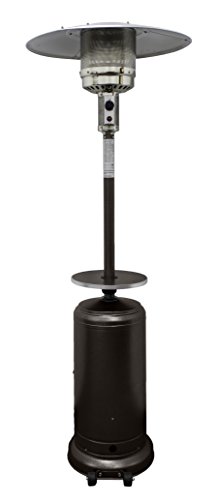
This pick is a tall, freestanding propane heater in the classic mushroom style, with a wide reflector over a central column and the tank housed in the base. In tier terms it sits at the mid-to-premium level of the patio heater market, and it is presented here in prose while verification is pending, so judge it on format, fit and routine rather than on a link.
Strengths: The tall column and broad reflector suit a full seating circle rather than a single chair, the finish options tend to look smart against brick and stone, and the format is the one most hosts picture when they plan an outdoor season.
Trade-offs: Tall heaters catch wind, need generous headroom and clearance, and take up real storage space once the season ends, so measure the spot before the style sells you.
Best for: Larger open patios and hosts who seat a full circle of guests and want the classic tall-heater look. Not suited for: enclosed or semi-enclosed spaces of any kind, low overhangs, or any spot where the maker’s clearances cannot be kept in full.
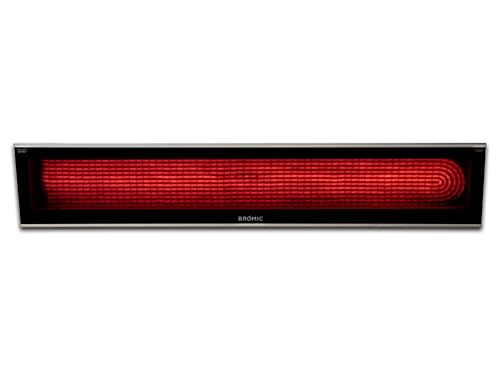
Bromic Smart-Heat Portable Patio Heater
This pick is a design-led portable heater from a maker known for commercial outdoor heating, styled to look deliberate rather than utilitarian beside good furniture. In tier terms it sits at the premium level of the patio heater market, and it is presented here in prose while verification is pending, so judge it on format, fit and routine rather than on a link.
Strengths: The build and styling sit comfortably next to premium furniture, controls feel considered rather than improvised, and the brand has a long track record in hospitality settings where heaters work nightly.
Trade-offs: It sits firmly in the premium tier, replacement parts follow the maker’s own channels, and the design premium only pays off where appearance genuinely matters.
Best for: Design-led terraces, restaurants-at-home entertainers, and buyers who treat the heater as furniture rather than equipment. Not suited for: enclosed or semi-enclosed spaces of any kind, low overhangs, or any spot where the maker’s clearances cannot be kept in full.

Fire Sense Patio Heater
This pick is a widely sold freestanding propane heater line with several finishes, built around the familiar column, reflector and wheeled-base layout. In tier terms it sits at the mid level of the patio heater market, and it is presented here in prose while verification is pending, so judge it on format, fit and routine rather than on a link.
Strengths: The range is broad, finishes are easy to match to existing furniture, wheels on the base make repositioning realistic for one person, and accessories such as covers are easy to find.
Trade-offs: Assembly is a genuine project rather than a ten-minute job, thin hardware deserves careful tightening, and the reflector needs gentle handling to stay true.
Best for: Mainstream patios that want the proven tall format in a finish that matches the furniture, without stepping into the premium tier. Not suited for: enclosed or semi-enclosed spaces of any kind, low overhangs, or any spot where the maker’s clearances cannot be kept in full.
Hampton Bay Patio Heater
This pick is a retail-favourite freestanding propane heater, commonly sold through home-improvement stores in straightforward finishes with a simple control layout. In tier terms it sits at the entry-to-mid level of the patio heater market, and it is presented here in prose while verification is pending, so judge it on format, fit and routine rather than on a link.
Strengths: Buying and seeing one in person is easy, the controls are uncomplicated for guests and family to understand, and the format is the standard one most covers and accessories are sized for.
Trade-offs: Finishes and hardware are built to a price, so coastal and very wet climates will test the coating sooner, and seasonal storage under cover matters more here.
Best for: First-time heater owners who want to see and touch the product before buying and keep the decision simple. Not suited for: enclosed or semi-enclosed spaces of any kind, low overhangs, or any spot where the maker’s clearances cannot be kept in full.

Amazon Basics Outdoor Patio Heater
This pick is a house-brand freestanding propane heater in the standard tall format, sold on simplicity and a plain, neutral finish. In tier terms it sits at the entry level of the patio heater market, and it is presented here in prose while verification is pending, so judge it on format, fit and routine rather than on a link.
Strengths: The proposition is honest and simple: the standard format, a finish that disappears beside most furniture, and a buying process with no surprises for households already ordering household basics there.
Trade-offs: There is little design flair, the accessory ecosystem is generic rather than tailored, and long-term parts support follows a house-brand pattern rather than a specialist maker.
Best for: Renters, first patios and anyone testing whether outdoor heating earns a permanent place before spending more. Not suited for: enclosed or semi-enclosed spaces of any kind, low overhangs, or any spot where the maker’s clearances cannot be kept in full.

EAST OAK Patio Heater
This pick is a freestanding propane heater from an outdoor-living brand that also sells fire pits and patio furniture, styled in contemporary finishes. In tier terms it sits at the mid level of the patio heater market, and it is presented here in prose while verification is pending, so judge it on format, fit and routine rather than on a link.
Strengths: The styling coordinates naturally with modern furniture from the same outdoor-living world, assembly instructions are generally written for real households, and the brand’s covers and accessories are easy to pair.
Trade-offs: The range is narrower than the longest-established names, resale and hand-me-down knowledge is thinner, and you are buying into a younger brand’s support network.
Best for: Households furnishing a patio in one coordinated modern style who want the heater to match rather than clash. Not suited for: enclosed or semi-enclosed spaces of any kind, low overhangs, or any spot where the maker’s clearances cannot be kept in full.
What the Models Share — and Where They Genuinely Differ
Heat the people, not the patio
A patio heater does not warm the air of a whole garden the way a boiler warms a house. It radiates heat outward and downward onto the people and surfaces in its circle, which is why placement matters more than raw output on a specification sheet. A heater positioned beside the seating, at the distance the maker intends, makes a modest unit feel generous; the same unit stranded in the middle of an empty deck mostly warms paving. Plan the seating first, then put the heat where the people actually are, and expect the edge of the circle to feel cooler than the chairs nearest the column.
Assembly is the first test of ownership
Most freestanding propane heaters arrive as a kit of column sections, reflector panels, hardware and a hose and regulator set, and the hour or two of assembly tells you how the heater will treat you for years. Holes that line up, instructions written in order, and hardware that tightens without chewing are early signs of a maker who sweats details. Work on a soft surface so finishes survive, tighten in the maker’s sequence, and keep the tools that fit the fasteners with the heater — every seasonal check later will need them again.
Renters and movers should buy portable
If the patio is rented, or a move is likely within a couple of years, portability is not a compromise, it is the correct specification. Freestanding propane and plug-in electric heaters leave with you, need no professional installation, and alter nothing the landlord owns. Plumbed natural gas and fixed wall-mounted units belong to settled homes with settled layouts. Renters should also weigh storage: a heater that dismantles or fits a storage box suits a flat with a cupboard far better than a one-piece column that needs a garage corner.
Performance Patterns Across the Field
Warmth and the circle
Across the field, the felt difference between similar tall propane models is smaller than the felt difference made by placement, shelter and seating discipline. Every model here warms its circle well in still air and loses the same argument with wind. Buyers choosing between two finalists should therefore spend their deliberation on finish, controls, base design and parts support — the differences that persist after the first evening’s warmth has been forgotten by everyone at the table.
Controls and everyday ease
Ignition willingness on a damp evening, a control knob a gloved or older hand can work, wheels that make repositioning a one-person job — these small easinesses decide whether a heater is lit cheerfully four nights a week or avoided until guests force the issue. The entry models keep controls simplest; the premium models make them feel considered. None of the field is genuinely difficult, and all of it rewards the daylight rehearsal this site recommends for every format.
Build, finish and ageing
Finishes meet weather at different speeds across the tiers, and coastal air accelerates every difference. Mid and premium models generally carry their appearance longer and offer tidier accessory ecosystems; entry models ask more of their owners’ storage discipline in exchange for their accessibility. In every tier, the cover-on-cold-and-dry rule and sheltered winter storage do more for year-three appearance than any coating choice made at purchase, which is why these reviews keep spending words on routine.
Strengths and Trade-Offs of the Field
Strengths:
- A mature format every model here shares: proven warmth, understood routines, easy accessories.
- A genuine spread of tiers and styles, so fit and finish can both be satisfied in one shortlist.
- Portability across the whole field — no model here strands its owner at a move.
Trade-offs:
- Tank routine, storage volume and clearance discipline come with every model, at every tier.
- Premium tiers buy design and support more than extra warmth; entry tiers buy access at the cost of finish longevity.
- Younger brands carry less proven long-term parts support, stated plainly in their reviews above.
How the Field Compares With Other Formats
Read as a group, these freestanding propane reviews describe the category’s centre of gravity. Tabletop models serve two chairs more sensibly; electric infrared serves fixed nooks with less routine; wall-mounted and plumbed units serve settled layouts with none of the storage cost. A household that finishes these reviews suspecting it needs a neighbour format has not wasted its reading — it has done exactly the sorting this page exists to do, and the cluster’s buying guide formalises that decision. For the small end of the patio world, a second look at small-patio outdoor heaters covers the compact alternatives.
Who Each Model Suits — and the Checklist Before Buying
Fire Sense for the mainstream dining patio; AZ Patio Heaters for the larger circle and the classic look; Hampton Bay for the buyer who wants to see it in a showroom first; Amazon Basics for the renter or first patio testing the habit; EAST OAK for the coordinated modern terrace; Bromic for the design-led space where the heater must earn its view. Whoever you are, the checklist is the same: clearances audited against the specific model’s manual, storage solved for column and tank, base planned for your ground, cover sourced, rehearsal scheduled. A model that passes your checklist is a good review made personal.
Setup and Care Essentials Across All Models
Assemble in the maker’s sequence on a soft surface; leak-check propane connections with soapy water before first lighting and at every tank change; weight and secure the base as designed; rehearse in daylight. Keep emitters and reflectors clean once cold, covers on only when cold and dry, and tanks stored upright outdoors, valve closed, away from heat. Electric alternatives in your shortlist ask instead for an outdoor-rated, GFCI-protected supply and no cord improvisation. None of it is skilled work; all of it is the difference between the field’s best and worst ownership stories.
Final Verdict
The field is strong precisely because it is mature: no model reviewed here is a mistake in itself, and every disappointment in this category traces back to a mismatch of space, layout or routine rather than to a villain product. Shortlist by fit, choose by finish and support, keep the routine, and any of these heaters will do the only job that finally matters — keeping people at the table after the sun goes down.
Related Guides for a Warmer Patio
The rest of this patio heater cluster looks at the same decision from complementary angles, and the wider patio guides below are already live for the furniture and finishing touches that share the space:
- How to Choose a Patio Heater
- Is a Patio Heater Worth It
- Patio Heater Buying Guide
- Patio Heater Pros and Cons
- Patio Heater Review
- outdoor heater picks for small patios
- a second look at small-patio outdoor heaters
- patio chairs that gather well around the warmth
More Practical Notes Before You Decide
Think of the comfort circle as a piece of furniture in its own right. It has edges, a centre and a guest list, and it behaves best when the seating plan respects it: chairs inside the circle, the serving table at its edge, and the walkway to the kitchen door outside the zone where people shuffle chairs toward the warmth. Draw it once, honestly, on a sketch of the patio, and most placement arguments settle themselves before a single purchase is made.
A patio heater extends a season at both ends, and the two ends feel different. Spring evenings are about optimism — the first dinners outside, forgiven a little chill — while autumn evenings are about reluctance to surrender the garden. A heater serves both, but autumn is where it truly earns its place, turning the weeks after the clocks change from a write-off into some of the most atmospheric evenings of the year, provided the household’s routine keeps it ready rather than buried in storage.
Sound is part of comfort outdoors. A quiet evening carries conversation, and the best heaters respect that: a gentle burner note that disappears under talk, controls that click rather than clank, and a structure that does not rattle in a breeze. When you see a heater working in a showroom or a friend’s garden, stand beside it for a full minute and listen. It is a small test that predicts a surprising amount of long-term affection, because a heater you can hear is a heater you will eventually switch off early.
Heat and light belong together in an evening plan. A patio arranged for warmth but lit like a car park still sends people indoors, and so does a beautifully lit patio with one cold corner. Plan the heater’s position alongside the lighting: warm light at the table, the heater beside the seating rather than behind it, and no glare from the reflector’s direction into diners’ eyes. The goal is a single, coherent pool of comfort that guests settle into without ever analysing why it works.
Second-hand heaters deserve extra caution rather than automatic suspicion. A used unit can be honest value, but it arrives with unknown hose condition, unknown storage history and no relationship with the maker’s support. Inspect hoses and connections as if they are guilty until proven sound, run the soapy-water leak check before the first lighting without exception, and walk away from any unit with damaged burner parts or a bent reflector. The savings never justify inheriting someone else’s neglect in a gas appliance.
Climate honesty improves every decision on this page. A mild coastal garden asks a heater for gentle top-up warmth on still evenings; a high, exposed terrace in a cold region asks for serious output fighting real wind. Products, formats and fuels that delight in one setting merely cope in the other. Describe your own patio’s climate and exposure in plain words before shopping, and measure every claim you read — including the ones here — against that description rather than against an imaginary average garden.
Finally, remember what the heater is for. It is not a trophy, a specification contest or a test of the household budget. It is there so that dinner lingers, grandparents stay for one more cup, teenagers drift outside instead of in, and the garden you paid for and planted gets used for more of the year. Every criterion in this guide — format, fuel, safety, routine — is only a means to those evenings. Judge any heater, at any tier, by whether it quietly produces more of them.
The reflector does more than look bright
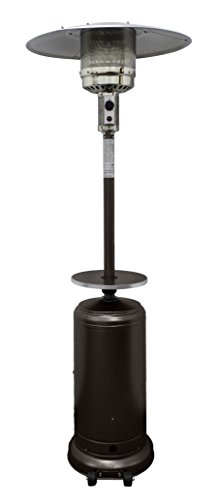
On a tall propane heater the wide disc above the emitter is not decoration. It throws heat that would otherwise rise uselessly into the night back down onto the seating circle. A reflector that is dented, warped or thick with grime throws that heat unevenly, which is why reflectors deserve gentle handling, occasional cleaning once cold, and a cover in storage. When you compare two similar heaters in a showroom, look up: the condition, size and sturdiness of the reflector tells you a surprising amount about how the whole unit will age.
Wall-mounted heat keeps the floor free
A wall-mounted heater solves the two problems freestanding columns create: floor space and tipping. Fixed high on a wall, angled down at the seating, it cannot be knocked by a chair leg or a dog, and it leaves the terrace entirely clear. The costs are commitment and wiring or plumbing — the position is permanent, the angle is set at installation, and a professional fitting is the sensible route for gas and for fixed electrical work. Choose it when the seating layout is settled for good; renters and rearrangers should stay portable.
Covers are cheap insurance, used properly
A fitted cover keeps rain, dust and bird contributions off the reflector and emitter, and it keeps the column finish looking like the furniture it stands beside. The discipline is timing: cover only a heater that is fully cold and dry, or you trap moisture against the metal and invite the corrosion you were preventing. In high-wind spots, a cover turns a tall heater into a better sail, so store the unit under shelter for storms rather than trusting a strap. Cheap, boring and effective is a fair summary of most heater longevity.
Running costs are a habit, not a number
What a patio heater costs to run depends less on the fuel label than on how a household uses it: full output for a whole evening, every evening, is a different budget from an hour at a moderate setting after dinner. Propane costs arrive as visible tank swaps, electricity as a quieter line on a bill, and both reward the same habits — light or switch on when people sit down, turn down once blankets and conversation warm up, and switch off when the party moves. The cheapest heater to run is the one matched closely enough to the job that it rarely needs its maximum.
Two smaller sources can beat one large one
Long or L-shaped seating defeats a single circle of heat. In those layouts, two modest sources — a freestanding heater at the dining end and an electric unit over the lounge chairs, for example — often deliver more even comfort than one large heater whose far seats sit at the cold edge of its reach. The costs are two routines to maintain and two spots to keep clear, so the answer depends on the layout’s honesty: map where people actually sit on a normal evening, and let that map, not the catalogue, decide between one source and two.
Off-season bargains reward the organised
Patio heaters are seasonal stock, and the organised buyer benefits twice: a wider choice in spring when ranges launch, and keener value in autumn when retailers clear lines. Either way, the discipline is identical — decide format, fuel and clearances from your own patio’s measurements first, then shop the season’s offers inside that shortlist. A discounted heater that needs a different fuel routine, a taller clearance or a bigger storage spot than you have is not a bargain at any tier; it is the wrong heater wearing a friendly price tag.
Wind is the silent specification
Every patio heater performs worse in wind, and no brochure leads with that fact. Moving air strips the warm layer away from skin, bends the comfort zone downwind, and makes tall reflectors sway and work harder. A sheltered corner beside a wall or hedge can feel dramatically warmer than an exposed terrace with a nominally stronger heater. Before upgrading the heater, try upgrading the shelter: move the seating out of the wind corridor, add a screen or planting where planning rules allow, and notice how much of the problem was never the heater at all.
Tabletop heaters earn their small place
A compact tabletop heater will never warm a dinner party of eight, and judging it by that standard misses its point. On a small balcony or a bistro set for two, a tabletop unit puts gentle heat exactly at face and hand height, where people feel it most, without a tall column dominating a tiny space. The trade-offs are a small comfort circle, a small tank that needs changing more often, and absolute dependence on a stable table and the maker’s clearances from anything above. Small space, small heater, correctly matched, beats a big heater crammed where it does not fit.
Assembly is the first test of ownership
Most freestanding propane heaters arrive as a kit of column sections, reflector panels, hardware and a hose and regulator set, and the hour or two of assembly tells you how the heater will treat you for years. Holes that line up, instructions written in order, and hardware that tightens without chewing are early signs of a maker who sweats details. Work on a soft surface so finishes survive, tighten in the maker’s sequence, and keep the tools that fit the fasteners with the heater — every seasonal check later will need them again.
Storage decides what spring finds
Where a heater spends the wettest, coldest months decides how it greets the new season. The kind routine is simple: clean once cold, dry fully, cover, and store upright under shelter with the tank disconnected and stored upright outdoors, valve closed, away from heat. Before the first lighting of spring, repeat the soapy-water leak check on every connection, clear any insect nests from the burner area as the maker directs, and inspect hoses for cracking. Ten unhurried minutes in spring prevents the season’s most common and most avoidable failures.
Looks matter because the heater lives in view
Unlike a boiler in a cupboard, a patio heater stands in the middle of your prettiest outdoor room for months at a time. Finish, proportions and silhouette genuinely matter, and there is no virtue in pretending otherwise. The trap is letting looks decide alone: a beautiful heater with the wrong fuel, the wrong clearances or a comfort circle that misses the chairs will be resented by November. Shortlist by format, fuel and fit first, then let appearance choose freely among the survivors — that order gives you a heater that is both welcome and useful.
The first evening is a rehearsal
Treat the first lighting as a rehearsal, not the premiere. Set the heater in its planned spot in daylight, run it while you sit in every chair, and notice which seats catch the warmth, which sit in the wind’s path, and whether the reflector’s heat reaches anything above it that it should not. Adjust position while adjustments are free. Households that rehearse once in daylight rarely spend the season dragging a hot column between courses, and they learn the controls, the ignition quirks and the tank’s behaviour before guests depend on any of it.
Maintenance is minutes, neglect is expensive
Patio heater care is a short list done occasionally: keep the emitter and reflector clean once cold, check hoses and connections with soapy water at tank changes and each spring, keep the burner area clear as the maker directs, tighten what assembly loosened, and store dry under cover. None of it needs a service contract for a typical household unit, but all of it needs to actually happen. The heaters that fail early almost always failed slowly first — a cracked hose ignored, a reflector left filthy, a winter spent uncovered in the rain.
Fuel choice is a lifestyle choice
Propane, natural gas and electricity all heat patios, but they ask different things of a household. Propane is portable and independent, at the cost of tanks to swap, store and keep upright outdoors. Natural gas never runs out mid-evening but ties the heater to one plumbed spot forever. Electric infrared is instant and clean at the point of use, but needs the right outdoor-rated supply and suits smaller, defined zones best. None is universally best; the right answer is the one whose routine — refills, plumbing, or wiring — your household will actually keep up with for years.
Electric infrared feels different — deliberately
Electric infrared heaters warm people and objects directly rather than heating air, so the warmth arrives the moment the element glows and stops the moment it switches off. There is no warm-up wait and no tank, which suits short, frequent sessions — a morning coffee, a half-hour with a book — better than any flame. The limits are reach and supply: the comfort zone is the area the element can see, output is capped by what an outdoor circuit can deliver, and running costs follow your electricity tariff. For a defined nook, that trade is often the smartest one on this page.
The tank routine decides long-term happiness
Propane ownership is mostly tank management. A household that heats often will want a sensible spare-tank routine: one fitted, one full and stored upright outdoors with its valve closed, swapped in minutes when the fitted tank fades mid-evening. Learn how your gauge or simple lift-and-judge method behaves before the first party, not during it. Households who hate errands should count tank runs honestly when choosing fuel — a plumbed or electric option that costs more at purchase can be cheaper in patience across five winters of evenings.
Match heat to the gathering, not the brochure
A couple with coffee needs a different circle of warmth from a table of eight after dinner. Heaters earn their keep when their comfort zone matches the gathering you actually host most: two chairs and a small table argue for tabletop or electric; a full dining set argues for a tall freestanding unit placed beside, not beyond, the table; a sprawling lounge layout may honestly need two smaller sources rather than one hero heater straining at the middle. Count your usual chairs, not your biggest party, and buy for the usual.
Renters and movers should buy portable
If the patio is rented, or a move is likely within a couple of years, portability is not a compromise, it is the correct specification. Freestanding propane and plug-in electric heaters leave with you, need no professional installation, and alter nothing the landlord owns. Plumbed natural gas and fixed wall-mounted units belong to settled homes with settled layouts. Renters should also weigh storage: a heater that dismantles or fits a storage box suits a flat with a cupboard far better than a one-piece column that needs a garage corner.
Guests change the safety maths
A heater that behaves perfectly for two careful adults faces a different test at a party: chairs migrate toward the warmth, drinks loosen attention, children orbit, and someone always leans a cushion somewhere new. Hosts should set the heater’s position before guests arrive, keep its clearance zone visibly clear, and treat moving it mid-evening as a job for after it is off and cooling. The host who thinks about the party version of the patio, not just the quiet version, is the one whose heater never features in an anecdote.
Heat the people, not the patio
A patio heater does not warm the air of a whole garden the way a boiler warms a house. It radiates heat outward and downward onto the people and surfaces in its circle, which is why placement matters more than raw output on a specification sheet. A heater positioned beside the seating, at the distance the maker intends, makes a modest unit feel generous; the same unit stranded in the middle of an empty deck mostly warms paving. Plan the seating first, then put the heat where the people actually are, and expect the edge of the circle to feel cooler than the chairs nearest the column.
The reflector does more than look bright
On a tall propane heater the wide disc above the emitter is not decoration. It throws heat that would otherwise rise uselessly into the night back down onto the seating circle. A reflector that is dented, warped or thick with grime throws that heat unevenly, which is why reflectors deserve gentle handling, occasional cleaning once cold, and a cover in storage. When you compare two similar heaters in a showroom, look up: the condition, size and sturdiness of the reflector tells you a surprising amount about how the whole unit will age.
Wall-mounted heat keeps the floor free
A wall-mounted heater solves the two problems freestanding columns create: floor space and tipping. Fixed high on a wall, angled down at the seating, it cannot be knocked by a chair leg or a dog, and it leaves the terrace entirely clear. The costs are commitment and wiring or plumbing — the position is permanent, the angle is set at installation, and a professional fitting is the sensible route for gas and for fixed electrical work. Choose it when the seating layout is settled for good; renters and rearrangers should stay portable.
Detail by Detail: Reading a Patio Heater Listing Like an Inspector
Listings present a patio heater at its best, so this section slows the assessment down and looks at the evidence an individual model offers: its construction, its finish, its listing detail and the checks you can run before and just after it arrives. The aim is a verdict based on inspection rather than impression.
Start With Your Space and Your Routine
Check the dimensions given in the listing against your own measurements rather than relying on the room name in a photograph, since staged photos routinely make Patio & Outdoor Living pieces look smaller than they are. Consider the busiest version of the day, not the calmest one, and ask whether the patio heater still works when people are hurrying, carrying things or sharing the same space. Photograph the patio heater as delivered, before assembly or first use, so that any later question about condition, parts or finish can be answered from evidence rather than memory. The best patio heater for a rented home may differ from the best for an owned one, because fixings, marks and alterations carry different consequences in each case.
When Small Problems Appear
When you examine a patio heater in detail, work from the largest element to the smallest, checking overall proportions first, then construction, then finish, and only then the small features sellers emphasise. Households with children or pets put different demands on a patio heater than the listing photographs suggest, so judge edges, stability and cleanability against your real household, not a styled one. Apply the same checks to each shortlisted example, whether that is the Bromic Smart-Heat Portable Patio Heater; the EAST OAK Patio Heater; the Amazon Basics Outdoor Patio Heater, because consistent testing is what makes the differences between models visible. Small problems are easiest to solve in order: check position first, then adjustment, then cleaning, and only then conclude that the patio heater itself is at fault.
A patio heater that fits on paper can still fail in daily use if a doorway, a corner, a cupboard door or a walkway cuts into the space it needs, so trace the full path from delivery to final position.
A Short Decision Checklist
- Delivery path, from the door to the final position
- What your current arrangement does well that the patio heater must not lose
- The one feature you will not compromise on
- Assembly needs, tools required and whether help is needed
- What your current arrangement does badly that the patio heater must fix
- The measured space, including clearance to use and clean around the patio heater
- The material and finish, matched to light, moisture and wear in its spot
- Packaging kept until the patio heater has passed its first trial in place
Taken together, these checks take only a little time, yet they answer the questions that decide whether the patio heater suits your home, your household and your routine, and they do so before money changes hands rather than after.
Frequently Asked Questions
How do these patio heater reviews compare models fairly?
Each model is judged on the same owner-centred criteria: the format and fuel routine it asks for, the seating it genuinely serves, the strengths that show up across a season, and the trade-offs a brochure understates. Tiers are described in words rather than prices, and every model appears in prose with its pick slot held for verification, so the comparison rests on fit rather than links. Two households can read the same reviews and choose differently, correctly, because their patios differ.
Which patio heater suits a large dining patio?
For a large open patio with a full dining set, the tall freestanding propane format is the natural starting point, with models such as the AZ Patio Heaters and Fire Sense lines built around exactly that job. Placement beside the table, a weighted base, and full clearances matter more than small differences between similar columns. If the layout stretches long or L-shaped, these reviews suggest considering two sources rather than expecting one reflector to cover every seat at the far end.
Which patio heater is best for a design-led terrace?
Where the terrace is styled as carefully as a room, the Bromic Smart-Heat portable is the model these reviews reach for first, because its design and build sit comfortably beside premium furniture and its maker has a hospitality track record. The EAST OAK line is the mid-tier alternative for a coordinated contemporary look. In both cases the advice is identical: shortlist by format, fuel and clearances first, then let appearance decide among the survivors, so the beautiful heater is also a usable one.
What is a sensible first patio heater?
A sensible first heater matches the household’s real patio without demanding new habits all at once: the Hampton Bay and Amazon Basics freestanding models suit buyers who want the standard format, simple controls and an easy purchase, while their trade-offs in finish and long-term parts support are stated plainly in the reviews. Renters should confirm storage for the column and tank before buying anything. A first heater that gets used weekly teaches more than a premium one that intimidates its owners.
Do these reviews recommend tabletop heaters?
Yes, for the job they are built for: two chairs, a small table, a balcony or bistro corner where gentle heat at face and hand height is exactly right. They are not recommended as a cheap substitute for a full-size heater at a dining table of eight, because their comfort circle and small tank cannot do that job and disappointment follows. Matched to their scale, with a stable table and full clearances above, tabletop heaters are among the most satisfying buys in the category.
How should I use these reviews alongside the buying guide?
Read the reviews for character — how each model behaves across a season, what owners praise and what they forgive — and the buying guide for criteria: types, clearances, fuel routines and the questions that size a heater to a seating map. Then run your own shortlist through both. A model that reads well and passes the guide’s checks for your patio’s measurements, storage and routine is a sound buy; a model that only reads well is a story, not a decision.