Disclosure: As an Amazon Associate, dailyhomedecorating.com earns from qualifying purchases. Links on this page are affiliate links; they cost you nothing extra. Prices and availability change often, so check the current Amazon listing before you buy.
The full kitchen drawer organizer pros and cons list is longer, and more interesting, than the tidy-versus-messy summary most shoppers expect. On the pro side stand genuinely daily benefits: faster reaches, protected tools, safer knife storage and a drawer the whole household can keep without instruction. On the con side stand honest costs that advocates gloss over: a little lost capacity, a small maintenance debt, a learning curve, and a category-wide dependence on measuring a drawer correctly before any money moves.
This article takes both sides seriously, with five to seven entries each, then translates the balance into what it means for different kitchens, how to buy smart if the pros win, and how setup and care can shrink several of the cons. Reference designs, the madesmart Classic Silverware Tray, the OXO Good Grips Expandable Utensil Organizer, the Joseph Joseph DrawerStore and the BambooWorx Bamboo Drawer Organizer, appear in prose where they illustrate a point, and the companion kitchen drawer organizer buying guide turns the conclusions into a shopping method.
Key Takeaways
- Biggest pro: a legible drawer the whole household can use and maintain without thinking.
- Most underrated pro: sheathed, separated knife storage that removes a real hazard.
- Biggest con: compartment walls cost a little capacity, and a wrong-size tray costs the whole purchase.
- Most fixable con: sliding and rattling, solved by liners or expandable fit at setup.
- The balance depends on tempo: daily drawers gain the most, rarely opened drawers the least.
Kitchen Drawer Organizer Pros and Cons: The Quick Verdict
A kitchen drawer organizer suits households that cook often, share the kitchen, and are willing to measure once and reset monthly. It does not suit households hoping compartments will substitute for editing a bloated gadget collection, or kitchens about to be renovated into different drawer sizes. Everything below is the evidence for that verdict, argued from both sides as fairly as we can manage it.
One asymmetry is worth naming at the start: the pros are mostly about frequency, small benefits repeated thousands of times, while the cons are mostly about fit and upkeep, problems that are either solved at purchase or barely exist. That asymmetry is why owners tend to sound more enthusiastic than sceptics expect. It is also why a bad purchase, the wrong size, the wrong type, produces a disproportionately bitter review: the one con that cannot be lived with cancels all the pros at once.
In this guide
The Pros, Argued Properly
Pro: Everything Has a Visible Home
The core benefit is legibility. Compartments announce where each thing belongs, so finding, using and returning items all become single motions. A drawer stops being a container you search and becomes a map you read, and that change is felt at the busiest, tired-est moments of the cooking day, which is precisely when a kitchen should be kind to its cook.
Pro: Faster, Calmer Cooking Routines
Dishwasher unloading becomes one pass instead of a sorting session, table setting needs no second trip, and mid-recipe reaches land first time. Individually these are seconds; across a year of daily cooking they are hours, and the calm that comes with them is worth more than the arithmetic suggests. Rhythm is a real cooking ingredient, and an organized drawer protects it.
Pro: Tools Stop Damaging Each Other
Loose storage is slow violence: edges knock edges, handles chip, finishes scratch, and good tools age years in months. Compartments end the collisions. Cutlery keeps its finish, utensils keep their shape, and the drawer stops being the most abrasive environment your equipment ever meets. Owners of one good knife set feel this benefit first and most personally.
Pro: Knife Storage Becomes Genuinely Safer
With an in-drawer block, blade guards or a protected section, knives gain sheathed, separated homes with tips to the back and handles forward, in a drawer children cannot casually open. Compare that with the traditional loose pile and the safety pro is not marginal; it is the difference between a managed risk and an unmanaged one. No other single upgrade to a drawer delivers this much hazard reduction.
Pro: The Whole Household Can Maintain It
A system guests and children can read at a glance does not depend on one tidy person’s vigilance. Anyone can unload the dishwasher correctly, set the table, or find the serving spoons, because the drawer explains itself. Shared legibility is what separates systems that survive family life from systems that survive until the weekend.
Pro: It Forces One Good Edit
Buying an organizer requires emptying the drawer and judging every item in it, and that single enforced edit often delivers half the total benefit before the tray even arrives. Duplicates surface, broken gadgets leave, and the collection shrinks to a working set. Even households that later abandon compartments tend to keep the edited collection, which is a permanent gain from a temporary project.
The Cons, Stated Honestly
Con: Compartments Cost Capacity
Walls take room. An organized drawer holds slightly less than the same drawer as an open box, and in a very small kitchen that loss is real. The honest defence is that the displaced items are usually the least used, but a household that genuinely needs every cubic inch should choose compact or modular designs and count this con at full weight.
Con: A Wrong Size Wastes the Whole Purchase
Fit is binary. A tray that fouls the frame, will not let the drawer close, or swims in a wide drawer delivers none of the pros and all of the regret. The category punishes guessing more than most, which is why measuring is not a tip in this article but the price of admission. Expandable designs soften the risk; they do not repeal it.
Con: There Is a Maintenance Debt
Small, but real: a monthly lift-out and wipe, a liner to shake, sections to reset when life gets busy. Households that will not pay those minutes watch the system decay into a compartmentalized version of the original mess, which is somehow more disappointing than the mess was. Buy only if the debt sounds trivial to you, because for satisfied owners it genuinely is.
Con: The First Fortnight Feels Slower
Hands reach for where things used to live. Breakfast takes longer while the new map becomes habit, and more than a few organizers have been abandoned in week two by households who mistook the learning curve for a verdict. The curve is real, short and worth warning about: judge the system at one month, not at one week.
Con: Fixed Trays Impose Their Layout on You
A moulded tray is an opinion about your kitchen, and if your collection is long, heirloom or eccentric, the opinion will be wrong in places. Forcing odd tools into standard slots bends the tools’ usefulness and your patience. Modular systems exist precisely for this con, but they demand planning effort in exchange, so the con transforms rather than disappears.
Con: Materials Each Carry a Compromise
Plastic is washable but can feel purely functional and flex if thin. Bamboo is beautiful and planted but refuses soaking and asks for prompt drying. Mesh rinses fast but lets slim handles slip and adds noise. There is no material without a footnote, and shoppers who believe a listing that claims otherwise are being set up for a small, lasting irritation.
What the Trade-Offs Mean for You
If You Cook Daily
The pros compound with your tempo and the cons shrink to a measuring exercise and two minutes a month. For daily cooks the balance is not close: buy, but buy fitted, and give knives their protected section from day one.
If You Cook Weekly
The pros arrive less often and the maintenance debt stays the same size, so choose simplicity: one washable tray in the main drawer, no system-wide rollout, and let the other drawers be. The balance still favours buying, narrowly, provided the edit happens first.
If Your Kitchen Is Tiny
Capacity is your currency, so weigh that con heavily and answer it with compact stacking or modular designs rather than standard trays. A small kitchen organized by footprint gains more than a large one, but only if the design respects the constraint that defines it.
If Your Collection Is Eccentric
The fixed-tray con is aimed at you. Skip moulds, plan a modular layout around your longest and oddest tools, and treat the planning hour as part of the purchase. Your result will look personal and work personally, which is the point.
How the Category Compares With the Alternatives
| Approach | What it gives | What it costs | Best for |
|---|---|---|---|
| Drawer organizer | Legible homes for everything, safer knives, shared system | A little capacity, small monthly upkeep | Daily-use drawers with stable contents |
| Edit only, no organizer | More room, zero upkeep, costs nothing | Items still collide and drift; no knife protection | Rarely used drawers, temporary kitchens |
| Counter crocks and rails | Instant access mid-cooking, no drawer space used | Counter space, visual clutter, limited capacity | The handful of tools used every single meal |
Most good kitchens end up hybrid: a crock for the four tools grabbed with wet hands, organizers for the drawers that hold everything else, and an honest edit underneath it all. The alternatives are not enemies of the organizer; they are its supporting cast, and the table above is really a casting guide. Our verdict piece, is a kitchen drawer organizer worth it, applies this same balance to the households asking the question loudest.
How to Buy Smart
Buying smart in this category means spending your attention on fit and type, where the purchase is decided, rather than on brand theatre. The reference points below show the range in prose.

madesmart Classic Silverware Tray — the low-risk starting point, entry tier
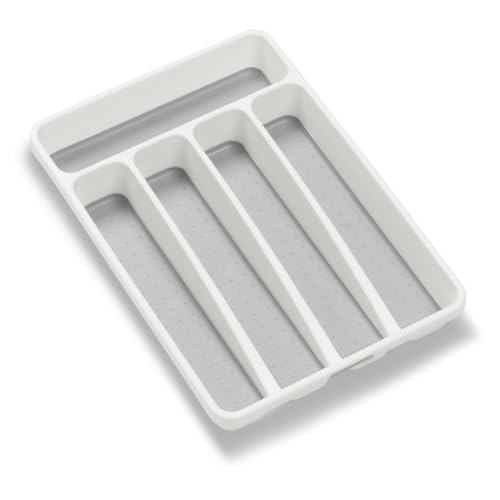
For a standard drawer and a conventional set, the madesmart Classic Silverware Tray is the low-risk way to test the category: washable, simple, and honest about what it is. If the experiment fails, it fails cheaply in effort, and you will have learned your household’s habits for the next decision.

OXO Good Grips Expandable Utensil Organizer — the fit-insurance choice, mid tier
Where drawer size is uncertain or in-between, the expandable OXO Good Grips Expandable Utensil Organizer buys insurance against the category’s biggest con, because a tray that meets the walls cannot swim. Check its expanded range against your measurements and it becomes very hard to buy wrong.
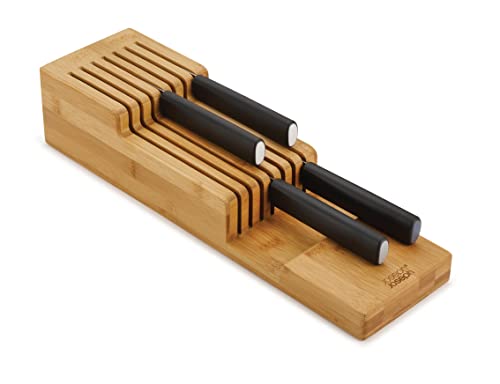
Joseph Joseph DrawerStore — the small-kitchen answer, mid tier
Where capacity is the binding con, the compact stacking of the Joseph Joseph DrawerStore answers it geometrically. It is the smart buy when the drawer count is low and every inch is spoken for, provided your cutlery handles are not oversized.
Setup and Care That Reduce the Cons
Set up properly on day one and care stays easy. Empty the drawer completely, vacuum the corners, wipe the base and let it dry before the organizer goes in, because crumbs sealed under a tray become a permanent archaeological layer. A simple liner or non-slip mat under the tray stops sliding and catches the worst of the debris, and it lifts out for shaking in seconds. Load the organizer outside the drawer if it is a fixed tray, so you can judge the layout on the counter before committing it to the dark.
Weekly care is a thirty-second habit: when the drawer is open anyway, tip loose crumbs from the tray into the bin and give sticky spots a wipe. Monthly, or whenever the drawer starts to smell faintly of old cooking, lift the whole organizer out, wash it in warm soapy water if it is plastic, or wipe and dry it carefully if it is bamboo, and clean the drawer base beneath. Cutlery drawers live close to food preparation, so treat them with the same hygiene instinct as a chopping board, not like a cupboard that can be forgotten for a year.
Bamboo asks for the gentlest routine: no soaking, no dishwasher, and prompt drying after wiping, with food-safe oil only if the maker suggests it and the surface starts to look dry. Plastic trays tolerate more, though very hot water and harsh scouring can dull or warp thin examples over time. Adjustable dividers need their joints and springs checked occasionally, because a divider that has slipped is quietly reorganizing your drawer without permission. Whatever the material, a five-minute reset each month keeps the system you bought instead of the drift you did not.
Use the monthly lift-out as an audit. Anything that has not been touched since the last clean is a candidate for the charity box, the backup drawer or the bin, and every removal makes the remaining system work better. Organizers fail less often from bad design than from slow accumulation, and the household that edits ruthlessly keeps a modest tray feeling generous while the household that edits never makes even a large one feel cramped.
The Safety Rules No Organizer Can Break for You
Loose knives in a drawer are the one storage habit this category exists to end. Reaching into a drawer and finding a blade by touch is how kitchen cuts happen, and an organizer only helps if the sharp tools get a genuinely protected home. The sound options are an in-drawer knife block with slots that sheath each blade, individual blade guards or sheaths on knives stored in a tray, or a dedicated knife drawer section where blades sit separated and cannot slide against each other or against your fingers.
Orientation matters as much as separation. Store knives with tips pointing toward the back of the drawer and handles toward you, so the first thing your hand meets is a handle, never an edge. Keep the knife section in the same place permanently; safety depends on muscle memory, and a blade that migrates around the drawer is nearly as risky as a loose one. Peelers, mandoline blades, skewers and graters with exposed teeth belong in the same protected category: sheathed, separated, and always in their known place.
Households with children need one further step: sharps belong in a drawer children cannot casually open, ideally a higher drawer or one fitted with a simple latch, and never in the low drawer a child can pull open at standing height. Teach the rule early that the knife drawer is an adults-only drawer, and keep it consistent even when guests are cooking. An organizer makes this easier, not optional: a defined, sheathed, out-of-reach place for every blade is the standard to hold, whatever tray or block you choose.
Finally, carry knives to and from the drawer one at a time, blade down and announced if someone is beside you, and never drop a knife into a tray from a height. When you wash up, dry knives and return them to their slots rather than leaving them in a draining rack where the next person reaches blindly. These are small disciplines, but they are the difference between an organized drawer and a merely tidy-looking one, and no purchase substitutes for them.
Bottom Line
The pros of a kitchen drawer organizer are frequent, compounding and shared by the whole household; the cons are concentrated at the moment of purchase and in a few minutes of monthly care. That shape of trade-off favours buying, for kitchens that cook, with three conditions attached: edit first, measure honestly, and protect the knives properly. Meet those conditions and the balance is not delicate at all. Ignore them and even the best tray in the category will read like a con with compartments. For the step-by-step method, follow how to choose a kitchen drawer organizer. The same edit-first logic pays off beyond the kitchen, in vacuum storage bags for seasonal overflow and over-the-door shoe organizers for halls short on space.
Measure First: The Drawer Decides Everything
Every kitchen drawer organizer succeeds or fails on three measurements taken before you spend anything: the inside width of the drawer, the inside depth from front to back, and the clear height once the drawer is closed. Measure the interior, not the drawer front, because side walls, runners and the box construction all eat into the space a catalogue photo pretends is yours. A tape measure and two minutes now prevent the most common disappointment in this whole category, which is a beautiful tray that fits on paper and jams in practice.
Height is the measurement people skip, and it is the one that bites. Tall utensil handles, ladles with hooked ends and the raised rims of some trays can catch on the cabinet frame above a shallow drawer, so close the drawer slowly with your tallest tools inside before committing to a layout. Leave a little breathing room rather than chasing a perfect paper fit: drawers flex, liners add thickness, and a tray that needs force to close will be resented every single day it stays in the kitchen.
Write the numbers down and keep them with you when you compare models, because product pages describe the tray, not your drawer. If your drawer sits between standard sizes, an expandable design that widens to meet the walls is usually the honest answer, while a fixed tray in a too-wide drawer will skate around and rattle. If your drawer is narrower than most trays, modular inserts you arrange yourself beat any single moulded piece. The drawer is the fixed fact of this purchase; the organizer is the variable, and shopping in that order is what separates a calm result from a returns parcel.
While the drawer is empty for measuring, look honestly at what actually lives in it. Most utensil drawers hold a working set used daily, a second tier used weekly, and a sediment of gadgets bought for one recipe and never touched again. An organizer sized for everything you own, including the sediment, will be bigger and more crowded than the one sized for what you genuinely reach for. Measuring is therefore also an editing exercise: measure the drawer, then measure your habits, and let the smaller of the two guide the purchase.
The Main Types of Kitchen Drawer Organizer
The fixed moulded tray is the classic: one piece, a set of compartments shaped for cutlery and common utensils, dropped into the drawer in seconds. It is the fastest route from chaos to order and the easiest to clean, because the whole thing lifts out. Its weakness is rigidity. If your collection includes long carving tools, oddly shaped gadgets or simply more forks than the mould expects, a fixed tray forces your tools to fit its opinion of a kitchen rather than yours.
Expandable trays answer the sizing problem by sliding wider or longer to meet the drawer walls, which also stops the tray migrating every time the drawer opens. Designs like the OXO Good Grips Expandable Utensil Organizer and the BambooWorx Bamboo Drawer Organizer build their whole appeal around that adjustability, and for the many drawers that fall between standard sizes they are often the difference between a tray that looks installed and one that looks borrowed. Check that the expanding sections lock or at least hold their setting under a load of cutlery.
Compact and space-doubling designs, the territory of the Joseph Joseph DrawerStore, stack or angle compartments so a small drawer holds a full cutlery set without spreading sideways. They reward small kitchens and anyone whose drawer count is limited, though the cleverness means individual slots can be snug for chunky handles. Two-tier inserts take the stacking idea further, with an upper tray that slides to reveal a second layer beneath, effectively doubling a deep drawer; they suit deep drawers and disciplined households that will actually keep the layers sorted.
Modular inserts and spring or peg dividers complete the family. Bought piece by piece, they let a drawer hold cutlery at one end, long tools along one side and a small in-drawer knife block at the other, all in one tailored layout. In-drawer knife blocks deserve a special mention: a slotted block that lives inside the drawer keeps blades sheathed, separated and off the counter, and turns a loose knife drawer, which nobody should tolerate, into a safe, deliberate storage place. The types are not rivals so much as answers to different drawers, and the rest of this article is about matching the answer to yours.
Layout That Follows How You Actually Cook
Within one drawer, the front is prime land and the back is storage. Daily forks, knives and spoons sit at the front where a half-open drawer still reaches them. Serving spoons, tongs and the tools used mid-cooking sit in the middle. The back row is for the second tier: the extra ladle, the spare peeler, the tools you want findable but not prominent. Trays that ignore this gradient, spreading daily items across the full depth, make every reach a full drawer pull and a small daily tax on your patience.
Leave one compartment deliberately underfilled. Every kitchen acquires a new tool now and then, and an organizer packed to perfection on day one has nowhere for the new arrival to go except on top of everything else, which is how clutter restarts. A little slack is not wasted space; it is the margin that keeps the system alive. Similarly, resist organizing drawers you rarely open with the same intensity as the main cutlery drawer. Effort follows frequency, and a calm cooktop drawer matters more than a perfect gadget drawer.
If two people cook differently, agree the zones together before buying. Most drawer arguments are not about tidiness but about two incompatible maps of the kitchen, and an organizer locks one map in moulded plastic. A short conversation about where the tongs live saves a year of quiet rearrangement. Where you cannot agree, modular dividers earn their keep, because the layout can evolve without a new purchase every time habits change.
A good drawer layout follows the work, not the alphabet. The cutlery used at every meal belongs in the drawer nearest the table-setting route, ideally close to the dishwasher or sink so unloading takes seconds. Cooking tools belong near the stove, baking tools near the worktop where you roll and mix, and the long tail of occasional gadgets can live further from the action without costing you anything. Before choosing compartments, stand in your kitchen and act out a normal meal; the movements you make are the blueprint the organizer has to serve.
Common Mistakes That Undo a Good Organizer
The most common mistake is buying before measuring, and it is not close. Drawers vary more than catalogues admit, and a tray chosen by eye from a product photo is a gamble dressed as a purchase. The second mistake is organizing for the kitchen you wish you had: compartments for the juicer attachments and fondue forks of an imaginary life, while the four tools you use daily fight for one slot. Organize the real kitchen, with its real habits, and let aspirational gadgets earn their place later if they ever do.
Overfilling ranks third. An organizer is a rationing system, and a compartment holding three layers of spoons has stopped organizing anything. If a section overflows, the answer is to move the overflow elsewhere or let something go, not to press harder. Fourth comes the sliding tray: a fixed tray in a wider drawer that travels every time the drawer opens, mixing its contents and chipping the drawer sides. Non-slip feet, a liner, or an expandable design that meets the walls ends the travel for good.
Fifth, the knife drawer of doom: loose blades kept ‘carefully’ among the spoons, which is careful right up until the evening it is not. Sheathe blades, use an in-drawer block, or give knives their own protected section, and keep that drawer away from children’s hands. Sixth, buying five matching organizers for five different drawers before testing one. Drawers differ in size and job; prove the system in the main cutlery drawer first, learn what your household actually likes, and only then extend it.
The last mistake is treating the organizer as the finish line. It is the starting line. The households whose drawers still look good a year later are not the ones who bought best; they are the ones who reset the drawer monthly, edit what creeps in, and keep the rule that everything in the drawer has a named home. Buy thoughtfully, by all means, but budget a little ongoing attention as part of the price, because that attention, not the tray, is what you are really living with.
When the Cons Should Win the Argument
Fairness requires naming the cases where the honest answer is do not buy. A drawer opened twice a week gains nothing measurable from compartments. A collection still growing by the month will outgrow any layout bought today. A kitchen scheduled for renovation will orphan fitted purchases within the year. A household that knows, honestly, that no monthly reset will ever happen should expect any system to decay and may prefer the simplicity of one edited, open drawer with a liner and strict entry rules.
Notice that none of these cases is a failure of character; they are mismatches of timing and tempo, and each has a better spend attached to it, from a single knife block that fixes the one real hazard, to a storage box that houses the seasonal overflow honestly. The pros-and-cons method is not a funnel toward buying. It is a way of spending only where the balance genuinely tips, and of being able to say why, which is worth as much in the kitchen as the organizer itself.
The Tiebreaker When the Scorecard Splits
When the pros and cons sit level, let safety break the tie. A drawer that stores knives loose is not in balance, whatever the other entries say, because one side of its ledger contains an injury that has simply not happened yet. Sheathed, separated, out-of-reach knife storage is the one upgrade in this entire category that does not need a tempo argument or a tidiness argument to justify itself. If the scorecard splits and the knives are loose, buy for the knives, take the compartments as a bonus, and consider the argument settled by the only entry that was never really debatable.
The Cons, Re-Examined One Season Later
Owners re-interviewed a season on tend to re-rank the cons in a way shoppers do not expect. The capacity loss, feared most before purchase, is mentioned least afterwards, because the displaced items turned out to be genuinely unused and their departure is remembered as a benefit wearing a con’s clothing. The maintenance debt shrinks in the telling as well: two minutes a month, folded into a clean that was happening anyway, reads in retrospect less like a cost and more like the rhythm that keeps everything else true.
Two cons keep their weight with time. The learning curve is remembered with amusement but was real, and households warn newcomers about it precisely because abandoning a good system in week two is the commonest unforced error in the category. And fit, the binary con, never softens: the owners who measured wrong and kept the tray anyway are still annoyed, daily, in a way no other group is. The season-later verdict therefore sharpens this article’s advice rather than changing it: fear the measuring mistake, respect the learning curve, and let the other cons be weighed lightly, because time weighs them lightly too.
There is a final, quieter finding. Households that bought for the drawer they had, rather than the kitchen they intended to become, report the highest satisfaction a season later, across every design family. Aspiration is a poor organizer. The drawer in front of you, its real contents, its real tempo, its real hands, is the only client this purchase has, and the pros and cons balance themselves almost automatically the moment that client is consulted honestly.
How the Balance Shifts as a Household Changes
The pros and cons are not weighed once for life. A couple’s calm cutlery drawer becomes a family’s front line, and capacity and legibility gain weight while presentation loses it. Children tall enough to reach change which drawer may hold the knives, and the safety pro, always present, becomes urgent rather than theoretical. A household that starts cooking seriously discovers the fixed-tray con, the imposed layout, in a way a light-cooking household never will, and graduates to modular thinking with its skills intact.
None of this argues against buying; it argues for buying the adaptable members of the category when change is foreseeable, and for re-running the balance honestly at each life stage instead of treating a student kitchen’s answer as a family kitchen’s truth. The organizer that grows with the household, expandable, modular, re-lay-out-able, charges a small flexibility premium in planning effort and repays it at every transition. The scorecard above is designed to be re-run, and the drawers that still make sense in five years belong to households that re-ran it.
A Scorecard You Can Run on Your Own Drawer
Score your drawer honestly, one point per yes. Is it opened most days? Does it currently cost you a search at least once a day? Do more than one person’s hands use it? Do knives or sharps live in it, today, without sheaths? Has a tool been damaged, or a finger nicked, by loose storage in the past year? Would a two-minute monthly reset genuinely happen in your household? Six questions, and they weigh the pros and cons with your own evidence instead of this article’s generalities.
Five or six points means the pros dominate and the only real work is choosing type and fit well. Three or four means the balance favours a single-drawer trial with a simple or expandable design, judged at one month. Two or fewer means the cons are telling the truth about your kitchen: edit the drawer, sheath the knives with a block or guards, and spend the rest of the budget where your household’s tempo actually lives. The scorecard’s virtue is not precision; it is that it forces the decision onto observable facts.
Re-run the scorecard a season after buying, and be willing to act on it. Households change: children grow tall enough to change which drawer holds the knives, cooking habits deepen or fade, a renovation redraws the map. A pros-and-cons list is a snapshot of a living kitchen, and the households that re-take the photograph occasionally are the ones whose drawers still make sense years later, rather than merely still being tidy.
Finally, judge success by mornings, not by photographs. A drawer that looks stunning in a listing photo but slows breakfast is a failure wearing good lighting. The real test is the half-asleep reach for a teaspoon that lands exactly where the hand expects, the guest who can set the table without asking, and the cook who finds the peeler mid-recipe without breaking rhythm. When a drawer passes those tests for a month, the system is right, whatever it cost and whatever it is made of, and your remaining job is simply to defend it against slow, well-meaning drift.
Deep drawers deserve their own strategy. A deep drawer tempts you to treat it like a small cupboard, piling tools until the bottom layer is archaeology, but depth used well is a gift: two-tier inserts turn one deep drawer into two shallow ones, each fully visible, and tall dividers can stand utensils in grouped bundles so nothing lies buried. The test of a deep drawer is whether you can name everything in it without opening it. If you cannot, the drawer is storing things rather than organizing them, and a tiered insert or a ruthless edit is the fix, not a bigger tray.
Utensil crocks on the counter and organizers in the drawer are partners, not rivals. The crock suits the handful of tools you grab mid-cooking with wet or floury hands, spatula, spoon, tongs, whisk, while the drawer holds everything else in sorted calm. Households that try to force every tool into the drawer end up opening it twenty times a meal; households that crock everything run out of counter. Decide the crock’s short guest list deliberately, organize the drawer for the rest, and the two systems stop competing and start cooperating.
Second-hand and inherited cutlery complicate compartments. Older sets often include serving pieces, butter knives and long-handled items that modern moulded trays never anticipated, and forcing them into standard slots bends both the tools and your patience. Modular dividers or an expandable tray with a long open section absorb heirloom oddities gracefully. Measure the longest piece you genuinely use before choosing, and let that honest measurement, not the standard set in the product photo, set the length you need.
Sustainability in this category is mostly about buying once. A sturdy tray that fits properly and suits your habits will serve for many years, while a flimsy bargain replaced three times costs more in every currency that matters. Bamboo appeals to households avoiding plastic, plastic appeals to households prioritizing hygiene and longevity in a wet zone, and both arguments are respectable; the least sustainable option is the ill-fitting organizer of any material that ends up in landfill by spring. Fit and honesty about habits are environmental decisions as much as shopping ones.
If you are organizing as a gift or for a house-share, choose forgiveness over precision. Expandable trays forgive unknown drawer sizes, modular inserts forgive unknown collections, and a fixed tray forgives nothing at all. Include the measuring step in the gift itself, a note offering to help fit it on a quiet afternoon, because an organizer installed together becomes a shared system, while one handed over in a box often becomes a resident of the cupboard under the sink. The best kitchen gifts are the ones that quietly make Tuesday evenings easier.
Living With the Trade-Offs: How the Kitchen drawer organizer Balance Plays Out Over a Season
A pros and cons list is a snapshot, but a kitchen drawer organizer is a long-term housemate. Advantages that look decisive on paper can shrink once the seasons turn, and drawbacks that seem minor in a showroom can grow teeth in February or during a busy holiday week. The fairest way to weigh a kitchen drawer organizer is to follow one full season of ordinary use and ask how each side of the ledger behaves when the weather, the light and the household routine all change. This section does exactly that, so the balance you act on reflects lived experience rather than first impressions.
When the Advantages Grow — and When They Fade
The strengths of a good kitchen drawer organizer tend to compound quietly. A design that saves steps, stores more, or cleans easily gives that benefit back every single day, and over a season those small repayments add up to the real value of the purchase. By contrast, advantages based on novelty — an unusual finish, a fashionable shape, a feature you showed to guests twice — fade within weeks. When you re-read any pros list, sort each point into one of those two families: daily-compounding benefits deserve heavy weight, while novelty benefits deserve almost none, however attractive they looked at the point of ordering.
When the Drawbacks Bite Hardest
Weaknesses in a kitchen drawer organizer rarely bite at random; they bite at predictable pressure points. Guests arriving, a seasonal deep clean, a heatwave, a power cut, a house move, or a child or pet entering a new stage will each stress a different limitation. Think through those moments for the kitchen drawer organizer you are considering and ask whether the drawback is an occasional annoyance you can plan around or a recurring friction you will meet every week. An occasional annoyance is a fair price for a strong advantage elsewhere; a weekly friction almost never is, and it is the single most common reason owners replace a kitchen drawer organizer long before it wears out.
Use these seasonal pressure tests to judge the trade-offs in any kitchen drawer organizer:
- Picture the kitchen drawer organizer during your busiest week of the year and decide whether its main drawback would matter more, less, or about the same.
- Picture it during the opposite season from now — high summer if it is winter, the dark months if it is spring — and re-check light, heat, moisture and ventilation around it.
- Ask who else in the household touches the kitchen drawer organizer most, and weigh the cons from their height, strength and habits rather than your own.
- Separate the drawbacks you can fix with an accessory or a habit change from the ones built into the design itself.
- Give the kitchen drawer organizer a simple verdict for each season rather than one verdict for the year, and only buy when it passes the seasons you care about most.
Keep the receipt, delivery note and a photograph of the label together, because warranty conversations go smoothly when dates and model details are at hand. If two people in the household disagree about the kitchen drawer organizer, let the person who will use or maintain it most have the deciding vote on practical questions. Beware of buying for the household you hope to become; the kitchen drawer organizer that serves the household you already are will be used this week, not someday. A tape measure, a spirit level and ten patient minutes prevent more kitchen drawer organizer regrets than any amount of comparison shopping after the fact. When a listing is vague about a dimension, material or included part that matters to you, treat the vagueness itself as information and look for a clearer seller. Photograph your room at the time of day you will use the kitchen drawer organizer most, and compare candidates against that light rather than against bright midday photographs. Small households should weight compactness and easy storage more heavily, while large households should weight durability and simple operation, because the failure modes differ. If the kitchen drawer organizer will serve children or older relatives, test the key actions with the weakest grip and the shortest reach in the house in mind. Leave a little capacity unused — in size, storage or power — because a kitchen drawer organizer run permanently at its limit ages faster and annoys sooner than one with headroom.
Judged across a season, most kitchen drawer organizer choices become clearer, not harder. The right model is rarely the one with the longest pros list; it is the one whose drawbacks land in the moments you can tolerate and whose strengths land in the moments you repeat every day. Hold any candidate up against your own calendar before you commit, and the pros and cons stop being abstract and start being a forecast you can trust.
Frequently Asked Questions
What is the biggest advantage of a kitchen drawer organizer?
Legibility: every item gains a visible home, so finding, using and putting things away all become single motions that anyone in the household can perform. That one change speeds up cooking routines, ends most drawer searching, and keeps the system alive without a single tidy person policing it. The safety improvement for knives, when blades are sheathed and separated, runs a close second.
What is the biggest disadvantage?
The dependence on fit. A tray that does not match the drawer’s interior dimensions delivers none of the benefits and all of the frustration, and compartment walls also cost a little raw capacity even when the fit is right. Both disadvantages are manageable, the first by measuring before buying and choosing expandable designs for in-between drawers, the second by editing contents so the capacity you keep is the capacity you use.
Do drawer organizers damage cutlery or drawers?
Used properly they do the opposite: compartments stop cutlery knocking against itself, which is how finishes scratch and edges dull in loose storage. A liner under the tray protects the drawer base from scratches and spills. The only damage risk comes from a travelling tray grinding against drawer sides, which a liner, non-slip feet or an expandable fit eliminates at setup.
Are bamboo organizers better than plastic ones?
Neither is better overall; they trade virtues. Bamboo is heavier, warmer and stays planted, but must be wiped and dried rather than soaked. Plastic is lighter and fully washable, but thin examples can flex and feel purely functional. Choose by the drawer’s job and your cleaning habits, and be suspicious of any source claiming one material wins for every kitchen.
Can an organizer work in a drawer of an unusual size?
Yes, but probably not a fixed moulded tray. Unusual drawers are the home ground of expandable trays, which adjust to meet the walls, and of modular divider systems, which build a layout to the exact space. Measure the interior carefully, including closed height, and choose the adjustable family whose range covers your numbers. A bespoke-feeling result is entirely achievable without bespoke prices in effort.
How do I keep the pros from fading after a few months?
With a two-minute monthly reset: lift the organizer out, shake the liner, wipe the base, and re-judge anything that has crept in. Keep one compartment deliberately slack for new arrivals, and hold a one-in-one-out rule for gadgets. The systems that fade are not badly bought; they are unedited. Small, regular attention is the entire secret, and it is cheaper than any replacement tray.
Related Reading
- how to choose a kitchen drawer organizer step by step
- whether a kitchen drawer organizer is worth it
- our kitchen drawer organizer buying guide
- our in-depth kitchen drawer organizer review
- kitchen drawer organizer reviews compared
- closet organizer shelves for the rest of the house
- jewelry organizers that keep small things sorted