Disclosure: As an Amazon Associate, dailyhomedecorating.com earns from qualifying purchases. Links on this page are affiliate links; they cost you nothing extra. Prices and availability change often, so check the current Amazon listing before you buy.
Hose reel reviews usually fail readers in one of two ways: they crown a single winner for gardens nothing like yours, or they list a dozen near-identical drums with nothing to choose between them. These hose reel reviews take the other path. Six real, distinct designs are reviewed one by one, each judged on the job its design is actually for: the Giraffe Tools Retractable Hose Reel and Gorilla Grip Retractable Hose Reel for convenience, the Eley Wall Mount Hose Reel and Liberty Garden Wall Mounted Hose Reel for permanence, the Suncast Hose Reel Cart for mobility, and the Ames NeverLeak Hose Reel Cabinet for discretion. Every model appears in prose only in this draft, marked where a verified link will be added at publishing.
Read the reviews comparatively. The right question is never which reel is best in the abstract, but which review below describes your garden, your hose and your watering rhythm most accurately. Match on that, and any of these six will serve you; mismatch, and even the finest of them will annoy you daily.
Key Takeaways
- Six designs reviewed: two retractable, two wall-mounted, one cart, one enclosed cabinet.
- No overall winner: each review ends with the household that model suits and the one it does not.
- All picks are prose-only in this draft; check the current listing for the exact variant before buying.
- Shared ownership rules apply to all six: sound mounting, even winding, draining before frost.
Hose Reel Reviews: The Six Models in Detail
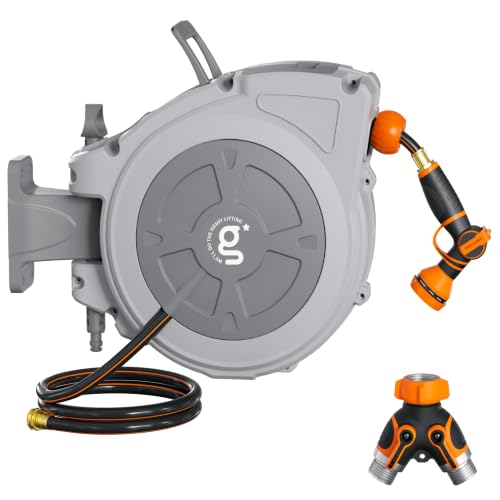
Giraffe Tools Retractable Hose Reel
Best for: retractable convenience. Not suited for: gardeners whose hose, wall or routine fights this design’s basic way of working.
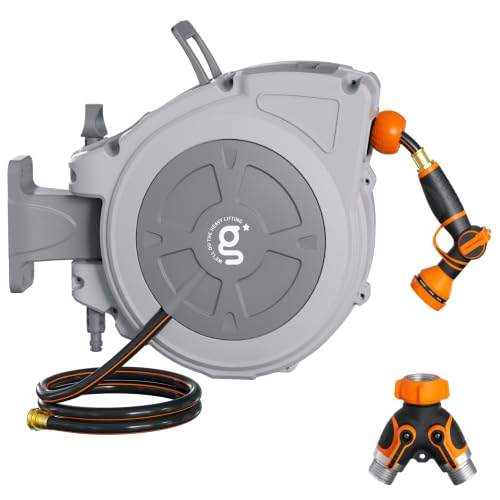
The Giraffe Tools Retractable Hose Reel is the name most gardeners meet first in the retractable category: a wall-mounted housing with the hose already inside, a spring rewind that draws the hose back in a guided return, and a mounting bracket that lets the unit swing to follow the direction of pull. It sits in the mid tier of the category in qualitative terms, and its appeal is pure routine: pull, water, tug, walk away. It is prose-only in this draft, so confirm the current listing and the exact variant before buying, and remember the standing rule for this design: guide the hose home with a hand rather than letting it fly.
Eley Wall Mount Hose Reel
Best for: premium wall-mounted build. Not suited for: gardeners whose hose, wall or routine fights this design’s basic way of working.
The Eley Wall Mount Hose Reel represents the premium, buy-it-once end of wall mounting: a metal reel built around smooth winding, durable fittings and the kind of fit and finish that gardeners describe with the word solid. Eley’s reputation rests on hose equipment engineered to be serviced and kept rather than replaced, and this reel is the storage half of that philosophy. It is a premium-tier product in qualitative terms, listed here prose-only with no verified link in this draft. It suits gardeners who have already replaced one flimsy reel and have no intention of replacing another.

Liberty Garden Wall Mounted Hose Reel
Best for: steel manual classic. Not suited for: gardeners whose hose, wall or routine fights this design’s basic way of working.
The Liberty Garden Wall Mounted Hose Reel is the classic steel answer: a sturdy wall frame, a hand crank, and a drum that asks nothing of the world except a load-bearing wall and a gardener willing to wind. Liberty Garden’s wall reels are long-standing fixtures of the category, valued because there is so little in them to go wrong and because steel tolerates the knocks of a working garden. This is a mid-tier, prose-only pick in this draft. For a fixed watering base beside the tap, it is the design against which the fancier options must justify themselves.
Suncast Hose Reel Cart
Best for: portable wheeled storage. Not suited for: gardeners whose hose, wall or routine fights this design’s basic way of working.
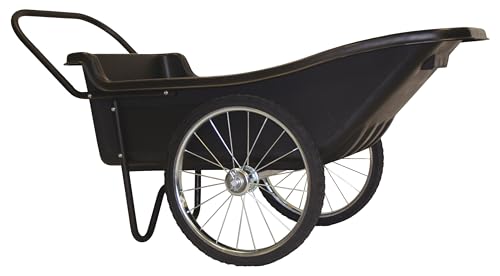
The Suncast Hose Reel Cart is the mobility pick: a wheeled resin cart with a handle, a leader hose to reach the tap, and a drum you wind while the cart stands where the work is. Suncast’s resin construction shrugs off rust and keeps the weight manageable, which matters in a product whose whole purpose is being moved. It occupies the entry-to-mid tier in qualitative terms and appears prose-only in this draft. It suits larger plots, shared gardens, and anyone whose tap and beds refuse to be near each other, provided the ground it must cross is reasonably kind to wheels.

Ames NeverLeak Hose Reel Cabinet
Best for: enclosed cabinet style. Not suited for: gardeners whose hose, wall or routine fights this design’s basic way of working.
The Ames NeverLeak Hose Reel Cabinet hides the hose inside a cabinet-style box, keeping a patio or front garden visually clean while the hose stays coiled, shaded and off the ground. The NeverLeak name refers to its internal water system design, built to resist the connection leaks that plague reels at the drum. It sits in the mid tier in qualitative terms and is prose-only in this draft, so check the current listing for the exact model. Choose it when appearance and enclosure genuinely matter, and be honest about your hose’s bulk, because enclosed capacity is the least forgiving kind.

Gorilla Grip Retractable Hose Reel
Best for: retractable value angle. Not suited for: gardeners whose hose, wall or routine fights this design’s basic way of working.
The Gorilla Grip Retractable Hose Reel is a second route into the retractable life, from a brand most households know for practical home goods rather than specialist garden engineering. Its proposition is the same spring-guided convenience: hose out to the length the job needs, a lock at that length, and a managed return instead of a wrestling match. It sits toward the accessible end of the retractable tier in qualitative terms and is prose-only in this draft. As with every retractable, its happiness depends on a truly solid mount and a household willing to guide the return rather than letting the spring slam the hose home.
In this guide
How the Designs Differ Where It Matters
How a reel rewinds shapes every session you will ever have with it. A hand crank gives total control: you guide the hose with one hand, layer it evenly, and feel immediately when something snags. A spring retractor removes the effort and adds a mechanism, trading your labour for its moving parts. A simple frame or pot asks you to coil by hand entirely, which is slow, honest work that some gardeners genuinely enjoy at the end of a session. None of these is best in the abstract. The right answer is the one matched to how often you water and how much you mind the winding.
Uneven winding is the small fault that grows. A hose layered carelessly piles up on one side of the drum, then binds, kinks, or spills off the edge mid-rewind, and each bad layer makes the next one worse. The fix costs seconds: wind slowly, guide the hose across the drum in even layers, and never let a retractable spring slam the hose home unguided. Keep one hand lightly on the hose as it returns, walking with it rather than letting it whip. That single habit protects the hose, the mechanism, and your fingers all at once, and it is the difference between a reel that ages gracefully and one that fights you by midsummer.
Reel materials decide how a unit ages outdoors, and the honest differences are simple. Steel frames and drums shrug off knocks, carry heavy hoses without flexing, and tolerate years of sun and frost, at the cost of weight and the possibility of rust where coatings chip. Aluminium and quality resins resist corrosion and stay light enough to move easily, while very light plastic reels flex under a full hose, fade in sun, and grow brittle across a few winters. The material question is really a climate and commitment question: the harsher your weather and the longer you expect to keep the reel, the more frame substance matters.
Look past the headline material to the small parts, because that is where reels actually fail. Axles, crank handles, swivel fittings and guide rollers live harder lives than the drum does. A solid frame with a flimsy crank is a flimsy reel wearing a good coat. When you handle a reel before buying, work the crank, wobble the drum, and check how the hose connection is made. Smooth, play-free movement in the shop predicts years of the same in the garden; looseness on day one only ever grows. Gardeners who buy on frame material alone sometimes miss this, and gardeners who check the moving parts rarely regret a purchase.
Capacity is the specification that decides whether a reel works in your garden or merely fits on your wall. A reel must hold your whole hose with room to spare, because a drum filled to its absolute limit winds badly, layers unevenly, and strains the frame every time. Gardeners regularly underestimate the bulk of their own hose: a long hose, a thick hose, or a stiff hose in cold weather all coil larger than the same hose imagined in the abstract. When a reel’s stated capacity and your hose sit anywhere near each other, choose the larger reel. Spare capacity is not waste; it is what easy winding feels like.
There is a second, quieter side to capacity: weight. A long hose full of water is heavy, and that weight hangs on the mount, pulls on the cart, and resists the spring in a retractable housing. This is why honest capacity thinking starts with how much hose you actually use, not how much you own. Many gardens are watered with the first portion of the hose ninety days in a hundred, while the rest exists for one far corner. A reel sized for your real routine, with a plan for the exceptional day, usually serves better than the biggest drum you can hang.
Mounting, Placement and the Real World
Where a reel lives decides how much of your garden it can serve and how much you will enjoy using it. The classic position is beside the outdoor tap, on the wall or ground nearest the areas you water most, with a clear swing for the crank and a straight run for the hose leaving the drum. Before fixing anything, walk your watering route with the hose you own: note where it snags, which corners it must turn, and where you always wish you had more length. That five-minute rehearsal, done before a single hole is drilled, prevents the classic error of a beautifully mounted reel in the wrong place.
Sun and shelter shape a reel’s lifespan from its position too. A reel in full afternoon sun bakes its hose daily, and ultraviolet light is the slow enemy of every hose material; a reel under an eave or in light shade ages noticeably more slowly. Drainage matters at ground level: a cart or cabinet sitting in a puddle line will rust, swell or grow mildew depending on its material. None of these considerations requires equipment. They require standing in the garden for a moment, looking at where water, sun and feet actually go, and placing the reel with that reality rather than with the catalogue photograph.
A wall-mounted reel is only as trustworthy as its mounting, and mounting deserves more respect than it usually gets. The reel, its drum, and a long hose heavy with water together load the fixings every time you pull hose out at an angle, which is most of the time. Fixings must bite into a load-bearing surface: solid masonry, sound timber, or studs, never into render, cladding, or a fence panel that flexes. If the wall beside your tap cannot carry the load, the honest answers are a post set in the ground for the purpose, or a different reel design altogether.
Test the mount before you trust it with a season. Hang the reel, coil the hose, fill it, and pull from the angles your watering actually uses, watching for any movement at the fixings. A mount that shifts on day one will not improve with age; it will work its fixings loose a fraction at a time until the reel comes away from the wall under load, usually mid-session and always at the worst moment. Checking takes five minutes. Re-drilling a damaged wall and replacing a fallen reel takes a weekend, which is why experienced gardeners treat the mounting step as the installation, and everything after it as decoration.
Daily life is the test every reel quietly passes or fails. A system that takes ten minutes of fiddling each session will be used less and less as summer wears on, whatever its build quality; a system that is ready in seconds, winds without a fight, and stores the hose completely becomes part of the household’s rhythm. Weight cuts both ways: too light and a cart dances under winding tension, too heavy and nobody volunteers to move it. Handles, crank height and the direction a hose leaves the drum all sound trivial in a shop and all become the experience of ownership by the second week.
Households edit watering plans in ways no specification predicts. Dogs investigate reels, children discover that a retractable hose is a fascinating machine, bicycles lean where bicycles should not, and delivery drivers take the shortest line across any garden. Place and choose with the real household in mind: a reel tucked sensibly out of the main traffic line survives its environment, and a retractable unit mounted where small hands cannot experiment with the rewind will have a longer, calmer life. Tools that fit the household get used for years; tools that fight it migrate to the back of the shed and stay there.
Whichever model you choose, the practicalities converge: the base must be sound, the route to the beds must be walked before anything is fixed, and the household’s traffic must be part of the plan. how to install a hose reel safely gives the full sequence, and the best garden hose reels places these six in the wider market, while the best garden hoses is the essential companion if a new hose is part of the same purchase.
Living With Them: Winding, Leaks and Winters
Leaks in a hose reel system almost always live at the connections, and they are almost always cheap to fix. The short leader hose between tap and reel, the swivel fitting where the hose meets the drum, and the washers inside each connector take the twisting and pressure cycling of every session. A spray or drip at any of these points is a washer that has flattened, hardened or gone missing, or a fitting that needs reseating, long before it is a failed reel. Keep spare washers wherever the reel lives, replace them at the first sign of spray, and resist overtightening, which crushes washers and strains threads.
A swivel that leaks only while the drum turns is telling you something specific: its internal seal is wearing, and it will get worse rather than better. Some reels allow that seal to be replaced; on others the swivel is part of the unit and its failure marks the reel’s real end of life. Either way, diagnosing honestly saves money. Gardeners replace whole reels for faults that live in a washer, and replace washers for months on reels whose swivel has genuinely gone. Learn which fault you have before spending anything, and the reel you own will usually turn out to be more repairable than you feared.
Safety with a hose reel begins at the rewind. A spring-loaded retractable reel stores real energy, and the pinch point where hose meets housing will catch a careless finger, a child’s exploring hand, or a glove cuff with no malice and no warning. Keep hands clear of the intake as the hose returns, guide it from a distance with a light grip on the hose itself rather than at the guide opening, and never let the hose retract freely at full speed. Teach everyone in the household the same rule, because the person who gets pinched is usually the person nobody warned.
Manual reels have their own modest hazards, and honesty about them prevents silly injuries. A crank handle spinning under a slipping hose load can rap knuckles, a cart can roll onto a foot on a slope, and a wall reel mounted at head height in a narrow passage will eventually meet a head. None of these risks is a reason to avoid owning a reel; all of them are reasons to mount, place and use it with the same ordinary attention you give a ladder or a mower. Tools that live outdoors and involve water, weight and moving parts reward households that treat them as tools rather than furniture.
Winter is the season that quietly destroys hose equipment, and the reel is where the damage concentrates. Water left inside a hose expands as it freezes, and that expansion splits hose walls, cracks reel housings, and bursts the seals where hose meets fitting. The autumn routine that prevents all of it takes minutes: run the water out, disconnect the hose from the tap, drain it fully by pulling it through the reel or walking its length, and store the reel and hose under cover where standing water cannot collect inside them. A reel put away dry in autumn simply works in spring.
Freezing climates add one more step that gardeners in mild regions skip: remove the hose from an outdoor reel entirely, or bring a retractable unit’s housing in if its maker advises it, because a spring mechanism and a housing full of ice are poor companions. Check the outdoor tap is shut off from inside where your plumbing allows it, and leave the outside tap open so any remaining water has somewhere to expand. Come spring, reconnect slowly, open the tap gently, and walk the system once looking for the splits and drips that announce winter damage before they become fountains.
A hose reel asks for very little maintenance, and repays all of it. Rinse grit from the drum and guides when it accumulates, because grit wound into a coil grinds at the hose cover with every layer. Check washers at the start of the season and replace any that have gone hard. Work the crank or test the retraction a few times before the first real watering, and oil or grease the moving points only if the maker provides for it. Ten minutes in spring is the entire annual budget for most reels, and it is the difference between equipment that starts the season ready and equipment that starts it as a repair project.
Hose care and reel care are the same habit seen from two sides. A hose put away clean, drained and evenly coiled lasts longer and winds better next time; a hose abandoned in a pressurised heap on hot paving ages in weeks. Avoid leaving any reel system charged with water pressure between sessions: close the tap, release the pressure through the nozzle, then wind away. That small sequence protects washers, seals and hose walls from living their whole lives under strain, and it makes the next session start with a reel that behaves. Long equipment life is rarely about buying the most expensive version; it is about these unremarkable routines.
Which Review Should You Believe?
Believe the one whose garden sounds like yours. Daily waterers should weight the retractable reviews heaviest; settled gardeners with a good wall should start with Eley and Liberty; large or awkward plots should start with the Suncast; appearance-led patios with the Ames. The category-level weighing is in hose reel pros and cons in full, the single-model deep dive is our our in-depth hose reel review, and the value question is settled in whether a hose reel is worth it. Gardeners watering lawns at the end of these hoses will also want the best oscillating sprinklers, and those feeding beds, the best drip irrigation system for raised beds.
Strengths and Trade-Offs Across the Six
- Strength of the retractables: the fastest, tidiest daily routine in the category.
- Strength of the wall reels: permanence, simplicity and the fewest parts to age.
- Strength of the cart and cabinet: freedom from drilling, and a garden that hides its hose.
- Trade-off of the retractables: a spring mechanism, a pinch point to respect, a hose you cannot swap.
- Trade-off of the wall reels: one fixed base and a wall that must genuinely carry the load.
- Trade-off of the cart and cabinet: floor space, and capacity that punishes an oversized hose.
Before You Order
The most common hose reel mistake is buying for the garden you wish you had. A compact reel bought for a large plot will be cursed at every session; an oversized industrial drum bought for a courtyard will dominate it forever. The second mistake is its cousin: sizing the reel to the hose’s stated length without thinking about the hose’s bulk, stiffness, or the weight of it full of water. The third is mounting in haste, fixing a wall reel wherever the drill was handy rather than where the watering actually happens. Every one of these errors is made before the first watering, and every one is avoidable with a tape measure and ten honest minutes.
Usage mistakes matter almost as much. Overfilling a drum so the last layers spill, letting a retractable hose snap home unguided, leaving the system pressurised between sessions, and abandoning the whole kit full of water at the first frost will shorten any reel’s life, including an excellent one. The encouraging truth is that hose reels are forgiving equipment once the basics are right. They ask for a suitable size, a sound mount or stable stance, an even wind, and a dry winter. Gardeners who give them those four things routinely report the least glamorous and most valuable verdict in all of gardening equipment: it just works, season after season.
Not every hose and reel pairing works, and the mismatch causes more returns than any defect. A reel’s drum needs a hose whose length and stiffness it can genuinely coil: very stiff hoses fight small drums, soft expandable hoses behave differently again and are not made to live wound under tension on every reel, and heavy contractor-style hoses overwhelm light frames. If you already own a hose you love, the reel must fit the hose, not the other way round. If you are buying both, buying them as a considered pair saves the whole problem from arising.
Retractable reels settle the pairing question by arriving with their hose already inside, which is a genuine part of their appeal: the maker has matched hose, drum and spring, and your job is only to mount the unit where that hose length serves your garden. The corresponding limit is that you cannot easily swap in a different hose later. Manual reels and carts ask more of you at purchase and repay it with flexibility for the rest of their lives. Neither philosophy is wrong. Knowing which one you are buying, and why, is most of what hose reel satisfaction is made of.
The humblest safety topic in this whole subject may be the most important: a hose across a walkway is a trip line. It sits at ankle height, it is exactly the colour of the ground in poor light, and it catches the feet of people carrying shopping, chasing children, or simply walking a familiar path without looking down. A reel earns part of its keep precisely here, because a hose that is wound away after use cannot trip anyone. The discipline is to finish the job: water, rewind, and leave paths as clear as you found them, every time, not just when guests are expected.
During watering itself, route the hose along edges rather than across traffic, and be especially careful where a hose crosses a path to reach a bed beyond it. A charged hose under pressure is rounder, harder and more determined to trip someone than a slack one. If a crossing is unavoidable, make it visible and brief, and warn the household. Garden hoses also make wet paving slippery where they leak or drip at connections, which is one more reason to fix weeping washers promptly. None of this is dramatic, and that is the point: reel safety is mostly the accumulation of small, unglamorous habits.
And If None of the Six Fits?
A hose reel is not the only honest way to store a hose, and a good guide should say so. A simple wall hook or hanger costs very little, holds a coiled hose off the ground, and suits a short hose in a small garden perfectly well. A hose pot by the tap hides a modest coil and asks nothing but your hands. Standing hose stands stake into the ground where no wall exists. Each alternative trades the reel’s guided, even winding for simplicity, and for some gardens that trade is correct. The reel earns its place when the hose is long, the watering frequent, or the coiling genuinely disliked.
The other alternative is not storing the hose on a reel but shortening the problem: a shorter hose, a second tap, or a watering setup that needs less hose altogether, such as drip lines for beds. Gardeners sometimes buy an ever-larger reel to manage a hose that the garden never needed. Before upgrading storage, it is worth one honest look at whether the hose itself is the right length for the plot. A reel matched to a sensibly sized hose is cheaper, lighter, easier to mount and kinder to use than a giant reel heroically managing an oversized one. Storage should serve the watering, never the other way round.
Run the final checks in how to choose a hose reel step by step, measure your hose’s real bulk, and confirm the mounting surface before any of these six leaves a basket.
Going Deeper: Living With Your Hose Reel
Depth in this subject comes from noticing how the small decisions compound. The reel you choose decides where the hose lives; where the hose lives decides how the watering starts; how the watering starts decides whether it happens on the tired evenings as reliably as on the keen spring ones. Gardeners who think of the reel as the first step of every watering session, rather than as a storage accessory bought afterwards, consistently end up with systems they like. It is the same logic that puts the tap, the reel and the beds in one mental picture instead of three separate purchases made in three separate months.
Going Deeper: Living With Your Hose Reel
There is also a quiet aesthetic dividend that practical gardeners underrate until they feel it. A garden with its hose wound away looks finished in a way that the same garden with a hose sprawled across the lawn never does, and that finished feeling changes how the space gets used: people sit out more, children play across the grass without negotiation, and the gardener’s own eye rests instead of snagging on the one untidy thing. Tidiness is not vanity here. It is the visible sign that the watering system has an end as well as a beginning, and that the garden returns to being a garden when the work is done.
Going Deeper: Living With Your Hose Reel
Experience teaches a related lesson about seasons. In spring, every reel feels adequate, because watering is light and enthusiasm is high. The reel is truly chosen in the eighth week of summer, when the garden is thirsty daily, the hose is stiff with sun, and the gardener is tired. Equipment that still winds sweetly then, that has not developed a wobble, a leak or a grudge, is the equipment that was bought well. When you read any advice on this subject, including this page, translate it into that eighth week. The purchase that survives August in your imagination is usually the right one in the shop.
Going Deeper: Living With Your Hose Reel
Water itself deserves a word in a reel’s story, because storage affects it more than gardeners expect. A hose left full of water in the sun delivers a first burst hot enough to shock tender plants, and a hose stored drained and shaded delivers water at a kinder temperature from the first moment. A reel encourages the draining habit simply by making winding the natural end of a session, and draining is part of winding done properly. Small, unglamorous, and real: one more way in which the storage you choose reaches all the way into the watering itself, and one more reason the choice deserves more thought than it usually gets.
Going Deeper: Living With Your Hose Reel
Finally, consider the reel as part of the garden’s long memory. Walls keep the marks of old mountings, sheds accumulate the ghosts of abandoned storage ideas, and households develop settled ways of doing the watering that outlast any single product. Choosing a reel is therefore partly choosing a routine the household will repeat for years. The best routine is the one nobody has to argue with: hose out easily, water, hose away completely, paths clear, equipment dry. Judge every design in this guide by how gracefully it supports that routine in your garden, with your hose, your walls, your weather and your people, and you will not go far wrong.
Going Deeper: Living With Your Hose Reel
Consider, too, what a reel does to the hose’s working life at the level of simple physics. Every kink stored overnight becomes a weak point worked at every pressurisation; every layer ground against grit on the ground wears the cover a little thinner; every hour baked in full sun on hot paving ages the material in a way no later care can reverse. Coiled storage on a drum removes all three insults at once, quietly, without the owner doing anything beyond winding the hose home. It is the least visible benefit in this whole subject and, across a hose’s life, very likely the largest one.
Going Deeper: Living With Your Hose Reel
Neighbours, visitors and anyone who has ever borrowed a garden tap will recognise another small truth here: a reel makes a watering setup legible. A guest can see where the hose lives, how it unwinds, and how it goes away, without a tutorial or a tangle. Households that share watering duties across generations feel this most. Grandparents, teenagers and the keen friend housesitting for a fortnight all succeed with a reel in a way they never quite do with an idiosyncratic heap in a corner. Good storage is a form of hospitality to everyone who will ever water your garden, including your future self on a dark evening.
Going Deeper: Living With Your Hose Reel
There is a water-conservation angle that deserves its place as well. A system that is pleasant to use gets used precisely: the gardener waters the beds that need it, for the time they need, and stops. A system that begins with ten minutes of untangling encourages the opposite pattern, the long unattended soak while the gardener does something else, and the forgotten sprinkler discovered an hour later. Reels do not save water by themselves, but they remove the friction that leads to careless watering, and in a dry summer that difference is measured in real volume across a whole street of gardens making the same small choice.
Going Deeper: Living With Your Hose Reel
Think about the tap end of the system for a moment, because reels improve life there too. A hose hanging in loops from a hook beside the tap pulls sideways on the tap fitting with its whole weight, season after season. A hose on a reel carries its weight on the drum and the mount, leaving the tap and its leader hose to do nothing but deliver water. Washers last longer, the tap stays tight in the wall, and the little drips that stain paving and waste water quietly fail to appear. It is an unglamorous benefit that plumbers appreciate and gardeners only notice in its absence, years later, when nothing has gone wrong.
Going Deeper: Living With Your Hose Reel
Durability questions in this category are often asked backwards. Shoppers ask which reel will last longest, as if lifespan were printed on the box, when the truer question is which reel’s way of working matches the care they will actually give it. A simple crank reel in the hands of a gardener who never maintains anything will outlive a sophisticated retractable in the same hands, and the reverse is true for the gardener who enjoys looking after equipment. Honest self-knowledge is a specification. The reel that lasts is the reel whose needs and whose owner’s habits were the same shape from the first day.
Going Deeper: Living With Your Hose Reel
A last reflection on proportion. A hose reel will never be the most exciting purchase in a garden, and it should not try to be. Its whole virtue is proportionate, repeatable usefulness: a small problem, completely solved, at every single session. Gardens are built out of such solutions far more than out of grand gestures. The beds get their water either way; what the reel changes is everything around the watering, the beginning, the end, the storage, the safety of the paths and the life of the hose. Judge it on that whole circumference and its value stops being a puzzle at all.
How to Read Hose Reel Listings Without Being Misled by Headlines
This section exists to look again after the first impression has faded, because the qualities that sell a product in the first hour are rarely the ones that decide whether it is still liked in month three. It adds a layer that a feature list cannot give you, grounded in the garden & lawn context this hose reel will actually live in. Where this guide names examples such as Giraffe Tools Retractable Hose Reel, Eley Wall Mount Hose Reel, Liberty Garden Wall Mounted Hose Reel, use them as test cases for the checks below rather than as shortcuts past them.
Pay close attention to the recurring friction points, because they compound. With a hose reel, owners tend to run into blades, lines and fittings wearing quietly, parts clogging mid-job, and instructions that assume a flat, empty garden that nobody actually has. None of these is dramatic on its own, and that is exactly why they get underestimated at buying time. Ask how the design you are considering handles each one: can the wearing part be replaced, can the awkward part be reached without tools, does the job take two minutes or twenty. A hose reel that makes its own upkeep easy gets maintained; one that makes upkeep a project gets neglected, and neglected products perform badly in ways that then get blamed on the original purchase.
Use the listings as a checklist rather than as entertainment. For each hose reel you shortlist, note the exact variant, the included parts, what is sold separately, and which photographs show the item in a setting like yours rather than in a studio. If a model named elsewhere in this guide catches your eye, treat it as a worked example for this process: run it through the same measurements, the same weekly rehearsal and the same friction list before letting familiarity turn into preference. Consistency is the whole trick. Shoppers go wrong not by choosing the objectively weaker hose reel, but by judging one contender on features, the next on looks and the third on a single enthusiastic anecdote.
Think about who else has a vote. A hose reel is usually shared, moved, cleaned or complained about by more than one person, and the second user’s priorities are often the ones that surface after the return window closes. Check height, weight, reach, noise, heat, sharp edges or sheer visual presence, whichever apply, against the smallest, oldest or least enthusiastic person who will live with it. If you are buying for a household that includes children, pets, elderly relatives or lodgers, run the clumsy scenario too: the spill, the knock, the curious tug, the door left open. A robust hose reel choice survives other people; a fragile one only survives its buyer.
Consider the edge cases that sit just outside normal use, because a hose reel will meet all of them eventually. The unusually large load, the unusually small task, the day you are in a hurry, the day something else in the room is broken and this has to cover for it. Versatility is not about a long feature list; it is about behaving predictably when conditions are imperfect. Where a design offers settings, modes, attachments or configurations, ask what each one is actually for in your home, and be suspicious of flexibility you cannot attach to a real occasion. One well-judged configuration used weekly beats five clever ones used once, and the honest hose reel for your home is the one whose strengths line up with your most frequent edge case, not your rarest.
Build a simple decision checklist and score it in writing. Five lines are enough: fit in the space, fit with the routine, ease of cleaning or upkeep, quality of the parts that move or wear, and how the hose reel will be stored or will look when it is not the centre of attention. Score each contender quickly, then look only at the lowest scores, because purchases are usually ruined by their weakest point rather than saved by their strongest. If two options tie, choose the one whose weakness is cheapest or easiest to live with. This sounds mechanical, and it is meant to: a written checklist is the best defence against the very human habit of falling for the last photograph you looked at.
Frequently Asked Questions
Why does my hose kink when I wind it onto the reel?
Kinks during winding usually come from twisting rather than from the reel itself. A hose develops a natural coil direction, and winding against it, or winding while the hose still holds twists from use, stores those twists as kinks on the drum. Wind slowly, guide the hose in even layers across the drum, and let it rotate freely as it comes in so twists can walk out at the free end. A hose that has lived in a tangled heap may need one patient session of laying it out straight in the sun before it will ever wind sweetly again.
Why is my reel leaking at the centre fitting?
The centre or swivel fitting is where a reel’s water path turns with the drum, and its seal lives the hardest life in the system. A leak there that worsens as the drum turns points to a wearing swivel seal; a leak at the tap end or the leader hose is usually a washer. Start with the cheap diagnosis: shut off the water, release the pressure, and inspect and replace the washers first. If the swivel itself is the source and your reel’s design allows seal replacement, that repair restores it; if not, the leak is the reel honestly announcing its age.
How long does a hose reel usually last?
A hose reel’s life is decided less by its purchase tier than by its winters and its winding. A soundly made reel that is drained before frost, wound evenly, and kept out of the worst sun serves for many seasons; the same reel abandoned full of water in a freezing garden can be ruined in one. Moving parts set the ceiling: a simple crank frame has almost nothing to wear out, while a retractable spring is a mechanism with a working life. Judge lifespan claims accordingly, and weight your own storage habits honestly in the estimate.
What wall can carry a mounted hose reel?
A load-bearing wall in sound condition: solid masonry, sound brick, concrete, or timber fixed into studs. The reel’s weight is not just its own; a long hose full of water hangs on the mount, and every pull at an angle levers against the fixings. Render, cladding, thin fencing and deteriorated mortar are not mounting surfaces, however convenient their position. If the wall beside your tap cannot carry the load, set a sturdy post in the ground for the reel or choose a cart or cabinet design instead of asking a weak wall to do a strong wall’s job.
Is a retractable hose reel safe around children?
It can be, with one rule taught early and enforced kindly: hands stay clear of the housing opening while the hose is moving. The spring return is the pinch risk, and a hose allowed to retract freely can travel fast enough to sting. Show children how the return is guided with a hand on the hose away from the intake, never let them play at letting go of a fully extended hose, and mount the unit where experimentation is not invited. With those habits, a retractable reel is ordinary garden equipment; without them, it is the one reel type that demands supervision.
Can I leave my hose on the reel all winter?
Only if it is fully drained and your winters are mild. The safe universal routine is to disconnect the hose from the tap, drain every drop you can by pulling it through the reel or walking its length, and store the reel under cover. Water trapped in a hose or housing expands as it freezes and splits whatever contains it, and the damage usually announces itself at the first spring watering rather than at the moment it happens. Gardeners in hard-freeze climates should bring the hose, and ideally a retractable unit, indoors for the season.
Related Guides and Next Steps
Keep exploring with these guides from the same garden watering series: