Disclosure: As an Amazon Associate, dailyhomedecorating.com earns from qualifying purchases. Links on this page are affiliate links; they cost you nothing extra. Prices and availability change often, so check the current Amazon listing before you buy.
Gas grill vs pellet grill is the modern patio contest: direct-fire speed against automated smoke. A gas grill lights in seconds, sears hard over open flame, and answers instantly to a knob. A pellet grill feeds wood pellets to a fire pot under electronic control, holding low temperatures for hours of smoking with almost no attention, then struggles to match a gas grill’s sear. This comparison scores both honestly, criterion by criterion, so you can buy for the cooking you actually do.
Quick verdict: choose gas for weeknight grilling, hard sears, and fast mixed dinners. Choose pellet for brisket, ribs, pulled pork, and any cook measured in hours where smoke is the ingredient and your presence is optional. Households that do both kinds of cooking in volume often end up with both machines, and this article explains exactly where each one earns its patio space.
Key Takeaways
- Gas wins: startup, searing, direct grilling, simplicity, price of entry.
- Pellet wins: low-and-slow smoking, set-and-forget control, wood flavor.
- Pellet grills are outdoor ovens with smoke; gas grills are true direct-fire grills.
- Running costs differ: propane and parts versus pellets, electricity, and auger upkeep.
- Your menu decides: hours-long smoke or minutes-fast sear.
In this guide
Gas Grill vs Pellet Grill: The Complete Picture
This overview frames everything that follows: what a propane gas grill does well, where it asks for care, and how the details in the sections ahead connect into one buying, cooking, or cleaning decision you can act on with confidence.
Side-by-Side at a Glance
Gas: open flame under grates, ready fast, sears at full power, fuel is propane or natural gas, moving parts are valves and an igniter. Pellet: an auger feeds compressed wood pellets into a fire pot, a controller holds a set temperature like an oven, smoke is built into every cook, fuel is pellets plus household electricity, and moving parts include the auger, fan, and electronics. One is a grill that can roast; the other is a smoker-oven that can sort of grill. That sentence decides most purchases.
Preheating is not optional ceremony; it is half the cooking. Ten to fifteen minutes with the lid down brings grates to searing temperature, burns off residue from the last cook, and makes food release cleanly instead of tearing. Cold grates grab protein, shred fish, and weld cheese to the bars. Judge readiness by behavior, not by the lid thermometer alone: a hand held a few inches above the grate should feel heat you cannot comfortably keep there for long on high. Build preheating into your routine the way you build it into oven cooking, and half of all sticking complaints disappear overnight.
Size a grill by your biggest regular cook, not your biggest imaginable party. Count the burgers, chicken pieces, and vegetable baskets that must fit at once on an ordinary busy evening, then add a margin for the occasional gathering, remembering you can cook in batches for a crowd but you cannot shrink a huge grill for a Tuesday. Oversized grills burn more propane heating empty space, take longer to preheat, and dominate small patios. Undersized grills force juggling and cold food. The sweet spot for most households is a mid-sized three or four burner cooking surface that swallows a family dinner with room to spare.
Direct Grilling and Searing
Over open flame, gas produces the crust steaks and chops deserve, with drippings vaporizing into grilled flavor. Pellet grills cook by indirect convection, so their sear is gentler even at maximum settings, and many owners keep a cast-iron pan or a second small grill for crust duty. For burgers, steaks, and anything that wants flame-kissed edges in fifteen minutes, this criterion is one-sided. Verdict: gas, by a wide margin.
Dedicated sear zones concentrate intense heat under a small area so steaks get a steakhouse crust while the rest of the grill runs gentler. They genuinely work, and for households that grill thick ribeyes and tuna steaks often, the upgrade earns its keep. For everyone else, a fully preheated cast-iron grate over burners at maximum delivers a deeply respectable crust at no extra cost. Decide by your menu, not by showroom drama: the sear zone is a specialist tool, delightful for specialists, decorative for the rest of us.
Cooking grates come in three main materials, and each cooks a little differently. Porcelain-enameled cast iron holds heat beautifully and leaves deep sear marks, but the coating chips if you bang it with metal tools, and chipped spots rust. Bare cast iron sears hardest of all and rewards cooks who season and oil it faithfully. Stainless steel rod grates heat a touch less aggressively yet shrug off weather, wire brushes, and years of neglect, which is why busy households often end up happiest with them. Whatever the material, thicker, heavier grates store more heat and recover faster when cold food lands.
Smoking and Low-and-Slow Cooking
Reverse the contest and it is equally one-sided. A pellet grill holds smoking temperatures for hours, feeds itself fuel, and lets the cook sleep, work, or host while brisket renders. A gas grill can improvise smoke with a chip box on its lowest zone, but it was not born for twelve-hour cooks and asks for supervision and refills of chips. If ribs and brisket are your love language, this criterion is the decision. Verdict: pellet, decisively.
A rear rotisserie burner turns a gas grill into a self-basting roaster for whole chickens, pork loins, and leg of lamb, with drippings falling into a pan instead of onto the burners. The results are spectacularly juicy, and the show alone entertains guests. The trade-offs are setup time, counterweight balancing, and another burner to maintain. If Sunday roasts outdoors sound like your idea of happiness, prioritize a model designed for rotisserie cooking with a proper rear burner. If weeknight speed is your life, the standard burners will carry you perfectly well.
The thermometer in the lid measures the air near the top of the cook box, not the temperature at the grate where your food actually sits, and the gap between the two can be surprisingly wide. Treat the dial as a rough weather report. For serious work, an instant-read thermometer for the food itself matters far more than any gauge on the grill, because doneness lives inside the chicken breast, not in the dome. Probe the thickest part, away from bone, rest meat before carving, and let carryover heat finish the job gently on the platter.
Speed, Control and Weeknight Fit
Gas starts in seconds, preheats in minutes, and changes temperature as fast as you can turn a knob, which is why it owns weeknight cooking. Pellet grills start quickly too, but their strength is holding a temperature, not changing it, and their cooks trend long by design. Temperature control on a pellet grill is superb within its world: set it and the controller manages the fire. Verdict: gas for pace and responsiveness; pellet for hands-off steadiness.
Two-zone cooking is the single technique that transforms gas grilling. Set one side to high and the other to low or off entirely. Sear steaks and chops over the fierce side until the crust forms, then slide them to the gentle side to finish without burning. Keep burgers warm on the cool side while buns toast. Park delicate fish and vegetables away from direct flame while sausages render beside them. Once two-zone cooking clicks, flare-ups stop being emergencies, thick cuts stop coming out raw-centered, and the grill starts behaving like a real outdoor kitchen instead of a bonfire with a lid.
Ignition sounds trivial until it fails on a rainy Friday with guests arriving. Push-button electronic igniters that spark each burner independently are the most convenient and the easiest to troubleshoot, because one dead module does not kill the whole grill. Battery-powered systems need an occasional battery swap, which is a small price for reliable starts. Whatever system a grill uses, learn the manual lighting hole location before you need it, keep a long lighter in the drawer, and remember the golden rule: lid open, gas on briefly, light promptly, and if it does not catch, turn everything off and let the gas clear.
Flavor Profile
Pellet flavor is real wood smoke, adjustable by pellet species, layered over everything the machine cooks, including vegetables and baked dishes. Gas flavor is the clean taste of seared food and vaporized drippings, brighter and less smoky. Neither is fake; they are different cuisines. Smoke lovers find gas food under-seasoned by the fire itself, while sear lovers find pellet food soft at the edges. Verdict: pellet for smoke depth; gas for clean grilled flavor.
Between the burners and the grates sits the system that manages drippings: angled flavorizer bars, heat tents, or plates that vaporize juices into the smoky sizzle that makes grilled food taste grilled. This system also shields burners from corrosive drips and spreads heat more evenly. It is a wear part. When bars rust through, flare-ups spike and hot spots appear, so inspect them each spring, wire-brush off scale, and replace them when holes appear. Keeping this layer healthy is the difference between a five-year grill and a ten-year grill.
Vegetables are where a gas grill quietly outshines every indoor method. Direct heat blisters peppers, chars corn in its husk, caramelizes onion slabs, and gives zucchini and asparagus the smoky edges that make people eat vegetables voluntarily. A perforated grill basket or sturdy skewers keep small pieces out of the fire, a light coat of oil prevents sticking and drying, and the cool zone lets thick items like potato wedges finish without scorching. Season after grilling as well as before, because charred edges love a final sprinkle of salt and a squeeze of citrus.
Ownership, Costs and Upkeep
Gas upkeep is burners, bars, hoses, and leak checks, with propane bought by the tank. Pellet upkeep is ash vacuuming, grease management, keeping pellets bone dry, and caring for an auger, fan, and controller that live outdoors; damp pellets swell and jam, which is the pellet world’s classic bad day. Both machines reward covers and cleaning rhythms. Pellet grills also need an outdoor outlet and dislike being treated as weatherproof electronics, because that is what they are.
Cleaning a gas grill is mostly a rhythm, not a project. After each cook, while the grates are still hot, brush them clean and let the residue burn off for a few minutes before shutting down. Every few weeks, empty the drip tray and wipe the grease channel, because accumulated fat is flare-up fuel. A few times a season, pull the grates and heat deflectors, scrape the cook box into the tray, and wash components in warm soapy water. Deep-clean once a year before storage or at season start. Small, regular effort keeps flavors clean and fires where they belong.
A fitted cover is the cheapest lifespan extender a grill can own. Rain drives into seams, pollen cakes onto shelves, and sun fades and embrittles plastic knobs and side tables. A breathable, properly sized cover sheds the weather while letting moisture escape so the cook box does not stew. Take the cover off after storms to let everything dry, and never cover a grill that is still warm or damp. Pair the cover habit with an end-of-season clean and a tank stored upright outdoors, and spring startup becomes a pleasure instead of an archaeology dig.
Warranties tell you what the manufacturer expects to fail. Burners and cook boxes carry the longest coverage on quality grills, while igniters, grates, and small parts carry shorter terms, because those are the wear items. Read the pattern, not just the headline years: a brand confident in its burners for a decade is telling you where its engineering money went. Keep your receipt, register the grill, and photograph the model plate, because the day a burner rusts through in year six, that paperwork is the difference between a free replacement and a new grill.
Who Each Option Suits and Who Should Skip Each
Gas suits weeknight grillers, sear-first cooks, small patios, and anyone who wants one machine that handles ninety percent of outdoor cooking. Skip gas if your heart is set on competition-style barbecue at home. Pellet suits patient smokers, hosts who cook for crowds in batches, and bakers who want a smoky outdoor oven. Skip pellet if your grilling is mostly fifteen-minute dinners or your patio lacks sheltered power.
Money in a gas grill divides into structure, heat system, and decoration, and only the first two cook dinner. Entry-level models from reputable makers grill beautifully for years when their burners and lids are sound, even with plain shelves and simple carts. Mid-range money buys thicker materials, better grates, enclosed storage, and smoother ignition. Premium money buys heavy stainless construction, refined fit, and features like sear zones and rotisserie burners. The trap is decoration priced as performance: lights, windows, and novelty panels add cost without adding a single better meal. Spend on the box, the burners, and the grates, in that order.
How to Decide
Count your last twenty outdoor cooks in your head. If most were under an hour, gas. If most were ribs, roasts, and whole birds given hours, pellet. If the count splits evenly and the budget allows, the classic pairing is a mid-range gas grill for daily duty plus a pellet grill for weekends, which is why so many patios end up as two-machine households. Buy the machine for the majority first.
Fish tests a grill and a cook. Fillets stick when grates are dirty, cold, or dry, so preheat thoroughly, brush the grates clean, oil the fish rather than the metal, and do not move the fillet until it releases on its own. Firm fish like salmon, swordfish, and tuna steaks grill directly with confidence; delicate sole and flounder belong in a basket, on a plank, or in a foil packet with aromatics. Skin-on fillets placed skin down are the forgiving middle path, crisping the skin while the flesh cooks gently through.
Resting is the step weeknight cooks skip and steakhouse cooks never do. Off the heat, muscle fibers relax and juices redistribute instead of flooding the cutting board. Tent thick steaks, chops, and roasts loosely and give them a few quiet minutes while you set the table and finish the sides. The grill rewards this patience twice: the meat eats juicier, and the pause lets you clean the grates while they are still hot, which is the easiest moment of the entire cook to do it. Build the rest into your timing and everything downstream gets calmer.
Where to Buy: Representative Models for the Gas Side
Each model below is presented in prose, positioned by tier, with no fabricated specifications: burner layouts and features are described in general terms, and publication will attach verified listings only where the data supports them.

Weber Spirit II E-310 — mid-range three-burner benchmark
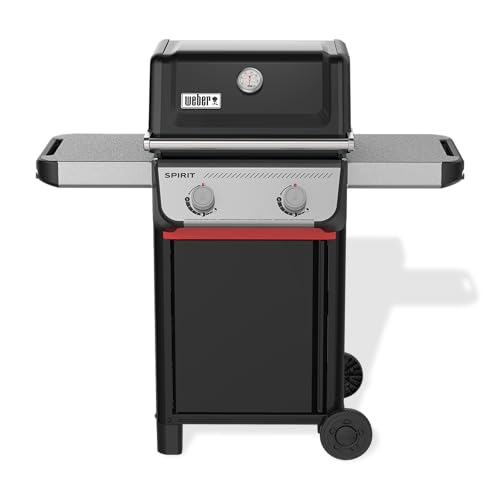
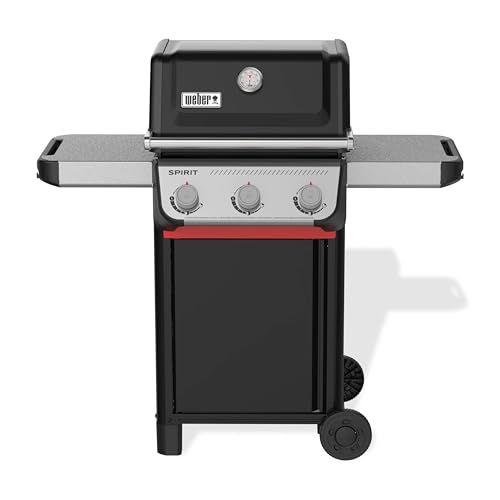
The Weber Spirit II E-310 is the grill this category is measured against, a three-burner propane model sized for real family cooking without swallowing a patio. Its open-cart design keeps the tank accessible and the silhouette light, the porcelain-enameled cast-iron grates sear convincingly, and the burner layout makes a true two-zone fire easy to hold. Parts availability is a quiet superpower: burners, bars, and igniters are obtainable years later, which turns maintenance from a hunt into an errand. Best for: households of three to six who grill several times a week. Not suited for: cooks who regularly feed a dozen at once or who want a fully enclosed outdoor-kitchen look.
Tier positioning: mid-range three-burner benchmark. Check price on Amazon when listings are linked at publication.
Napoleon Rogue 425 — compact premium with folding shelves
The Napoleon Rogue 425 answers a specific problem: premium cooking in a footprint that folds down when space is tight. Its side shelves fold for storage, the grates carry Napoleon’s distinctive wave pattern that helps small items stay put, and the build quality sits clearly above entry level. It is the representative for apartment patios, townhouses, and anyone whose grill must earn a small footprint every day of the year. Best for: smaller patios that refuse to compromise on cooking quality. Not suited for: cooks who need maximum area for very large gatherings.
Tier positioning: compact premium with folding shelves. Check price on Amazon when listings are linked at publication.
Safety First: The Non-Negotiable Gas Grill Rules
Outdoor use only, every single time. A gas grill belongs outside in open air, well away from the house, the garage, eaves, porch roofs, and anything that can trap heat or gas. Never grill inside a garage with the door open, never under a covered patio unless the manufacturer explicitly allows the clearance, and never on a balcony where local rules forbid it. Propane is heavier than air, so leaked gas pools low and waits for a spark. Give the grill clear space on every side, keep it level on a stable surface, and treat the placement decision as a safety decision, not a styling one.
Leak-check before the season and after every tank change. Mix dish soap and water, brush it over the hose, regulator, and connections, open the tank valve with the burners off, and watch. Growing bubbles mean gas is escaping: close the valve, let everything air out, and fix or replace the faulty part before the grill is lit again. Inspect hoses for cracks, stiffness, and insect nests, because spiders love the inside of burner tubes. This five-minute ritual is the cheapest insurance in all of outdoor cooking.
Lid open before ignition, always. Gas that collects under a closed lid can ignite in a sudden fireball when you finally spark it. Open the lid, turn on one burner, ignite, confirm the flame, then light the remaining burners in sequence. If a burner refuses to light after a couple of attempts, turn everything off, keep the lid open, and wait several minutes for gas to clear before trying again. Never lean over the grill while lighting it, and keep children and pets well back during ignition.
Grease fires: burners off, lid down, never water. If fat flares into a real fire, turn the burners off if you can reach the knobs safely, close the lid to starve the flames of oxygen, and close the tank valve if the fire persists. Water on burning grease spreads the fire; a pan lid, baking soda on a small flare, or a rated fire extinguisher are the correct tools. Prevention beats reaction: empty the drip tray regularly, scrape grates after cooking, and give fatty cuts space so drippings do not overwhelm one spot.
Tanks live upright, outdoors, and ventilated. Store spare propane tanks standing upright outside the house, never in a garage, shed corner piled with gear, basement, or car trunk left in the sun. Keep the valve closed and the cap on, away from heat sources and ignition. Transport tanks upright and secured, and drive them home promptly. When a tank feels light, exchange or refill it at a proper station rather than guessing. And whatever the weather, never leave a lit grill unattended: a grill needs a cook, not an audience that wandered indoors.
Going Deeper: Heat Management in Practice
Wind is the gas grill’s natural enemy. Gusts steal heat, push flames sideways, blow out low burners, and turn the lid thermometer into fiction. Site the grill where buildings or fences break the worst of the breeze while keeping it safely away from walls and never inside a garage. Cook with the lid down more in wind, watch low settings for flame-outs, and relight promptly and safely with the lid open if a burner dies. A grill that holds temperature on a breezy evening is one whose cook planned for the weather instead of cursing it.
Going Deeper: Grates, Burners and the Parts That Wear
Even heat is tested with bread, not brochures. Lay slices across the whole grate over medium heat, close the lid for a couple of minutes, and read the toast like a map: pale corners and scorched centers tell you exactly where your grill runs cool and hot. Every grill has a personality map, and learning yours matters more than chasing a mythical perfectly even model. Once you know the hot corner, you rotate food through it deliberately, park delicate items in the calm zones, and turn the grill’s quirks into a system instead of a surprise.
Going Deeper: Ownership, Season After Season
Gas grills work all winter, and cold-weather cooks are some of the most satisfying. Expect longer preheats, keep the lid closed against the wind, position the grill out of gusts while keeping it safely clear of the house, and budget extra propane because cold tanks and cold air both tax output. Snow brushed off the cover, a cleared path to the patio, and a headlamp for early darkness turn winter grilling from ordeal into ritual. The reward is real: a seared steak in January tastes like a small victory over the season.
Going Deeper: Fuel, Placement and Everyday Discipline
Propane is the default fuel for good reasons: tanks are everywhere, exchanges take two minutes, the grill can live anywhere in the yard, and heat output stays consistent from a full tank to a nearly empty one. The discipline propane asks in return is simple. Keep a spare tank so a mid-cook empty never ruins dinner, check the gauge or lift the tank to judge fullness, store spares upright outdoors, and run the soap-bubble leak test whenever you swap. Households that treat the tank as part of the appliance, not an afterthought, almost never have a grilling evening spoiled by fuel.
Natural gas models trade mobility for endless fuel: no tanks, no refills, no mid-cook surprises, just a hose connection to the house line installed by a qualified professional. The grill stays where the line is, forever, which suits a fixed outdoor kitchen perfectly and frustrates anyone who rearranges the patio seasonally. Conversion between propane and natural gas is not a casual swap; orifices and regulators differ, and only manufacturer-approved kits fitted correctly belong anywhere near this job. Choose the fuel by your layout and habits first, then shop models, because changing your mind later is the expensive direction.
Flare-ups are burning fat, nothing more mysterious. They happen when drippings hit hot surfaces faster than they can vaporize, and they are managed, not feared. Move food to a cooler zone, close the lid briefly to cut oxygen, and let the fat burn off. Trim excess fat, pat marinated food dry, and keep a clean drip tray so fuel for flares stays scarce. Never spray water into a grease fire, and never carry a flaming pan across the patio. A cook who understands flare-ups stays calm, keeps the lid strategy ready, and serves food that tastes of sear, not soot.
Four tools do ninety percent of gas grill work: long tongs that keep hands away from heat, a wide sturdy spatula, a brass or stainless brush or coil cleaner for the grates, and an instant-read thermometer. Add a spray bottle of water for minor flare management on the grates only, heat-resistant gloves for moving hot grates and pans, and a chimney-free mindset, because gas needs no fire-starting kit. Buy tools long enough that your knuckles stay out of the fire zone, sturdy enough not to flex under a heavy brisket, and simple enough to wash without a manual.
In the Kitchen’s Shadow: More Ways a Gas Grill Earns Its Keep
A gas grill makes genuinely good pizza, which surprises people until they try it. The closed lid turns the cook box into a fierce little oven, a preheated stone or steel evens the bottom heat, and two-zone control lets you slide the pie away from direct flame while the toppings finish. Keep toppings dry and modest, because a loaded raw pizza steams its own crust. Work in small pies rather than one giant one, rotate for even browning, and let the stone recover between rounds. Pizza night alone justifies the grill for many households.
Breakfast on a gas grill is the trick nobody expects and everybody repeats. A cast-iron skillet or flat griddle plate over the burners handles eggs, pancakes, bacon, and hash browns while the kitchen stays cool and un-smoky. The grill’s size lets you cook for a crowd in one pass, and the coffee tastes better outside as a matter of natural law. Keep temperatures moderate, because breakfast foods punish scorching, and use the cool zone as a warming shelf for finished batches while the last eggs set.
A gas grill reheats leftovers better than the appliances people usually reach for. Pizza regains its crust over low direct heat with the lid down. Sliced steak warms gently in the cool zone without cooking further into sadness. Roasted vegetables recrisp at the edges, and yesterday’s chicken becomes today’s salad topping with a quick char. Because the grill is already part of the household rhythm, using it for leftovers costs no setup drama, and the results quietly outperform the microwave in every category except raw speed.
Dessert is the gas grill’s party trick. Halved peaches, pineapple spears, and stone fruit caramelize over clean medium heat in minutes, their sugars darkening into something that tastes like far more effort than it was. Pound cake slices toast beautifully for strawberry shortcake, and a skillet cobbler bakes happily in the closed grill while the table clears. Keep the grates clean so dessert does not taste of dinner, moderate the heat, and remember that fruit goes from caramelized to burnt while you are telling one short story.
Technique Notes From Many Summers
Chicken is the gas grill’s examination subject, because it punishes both undercooking and scorching. Bone-in pieces belong over indirect heat after a brief sear, where they can render and cook through without the skin carbonizing. Boneless breasts want a hot, fast cook and an early exit, pulled the moment they are done and rested before slicing. Dark meat forgives; white meat keeps score. An instant-read thermometer removes the guesswork entirely, and brining or a simple salt-ahead seasoning keeps lean cuts juicy against the grill’s drying heat.
Burgers reveal a grill’s manners quickly. A hot grate, a gentle hand, and no pressing: pressing squeezes juice into the fire and buys you a flare-up and a dry patty in one motion. Make patties slightly wider than the buns to allow for shrinkage, season boldly, and flip once when the meat releases cleanly. Cheese goes on in the final minute under a closed lid. Toast the buns on the cool zone while the patties rest, and the humble burger becomes a reliable test that your zones, preheat, and patience are all working.
Steak is where sear, rest, and slicing decide everything. Bring the meat toward room temperature while the grill preheats fully, salt it well, and cook over the hottest zone your grill can honestly hold. Thick cuts finish in the cool zone after the crust forms, which is two-zone cooking earning its reputation. Rest the steak, slice against the grain, and finish with the juices from the board. A gas grill treated this way produces steak that silences most arguments about fuel, at least until the charcoal devotees start talking about smoke.
Kabobs and skewers suit gas grills beautifully because the zones let you manage mixed ingredients. Group items with similar cooking times on the same skewer instead of alternating everything decoratively, because peppers and chicken do not finish together no matter how pretty the pattern looks. Flat or double skewers stop the spinning that makes turning a wrestling match. Leave small gaps between pieces so heat circulates, oil the food rather than flooding the grates, and use the cool zone to hold finished skewers while the last batch catches up.
Flavor Experiments Within Honest Limits
A smoker box or foil pouch of wood chips is the gas grill’s honest attempt at smoke flavor. Soaked or dry chips smolder over a hot burner, the lid traps the smoke around the food, and the result is a gentle wood note that plainly improves chicken, pork, and vegetables. It will not reproduce a dedicated smoker, and pretending otherwise helps nobody, but for cooks who want a hint of hickory on a Tuesday without owning a second appliance, the box earns its small cost many times over. Replace chips when they ash out, and keep expectations calibrated.
Marinades and sauces behave differently over gas heat than most beginners expect. Sugary sauces burn fast over direct flame, so brush them on in the final minutes or serve them at the table. Wet marinades should be patted mostly dry before food meets the grate, because surface moisture steams instead of searing and carries fat into flare-ups. Reserve a portion of marinade before it touches raw meat if you want it as a sauce, and never reuse the liquid that held raw protein. Managed this way, marinades add layers of flavor without turning dinner into a soot management exercise.
Corn on the cob is a gas grill masterclass in options. In the husk, it steams gently and stays sweet and tender. Husked and oiled over direct heat, it blisters and chars into something smokier and more dramatic. Either way, the grill beats a pot of boiling water for flavor, and the cool zone holds ears happily while the main course finishes. A brush of butter and salt at the end is all the ceremony required, though chili, lime, and herbs all have their devoted followings at summer tables.
Grilled vegetables deserve their own encore, because they convert more skeptics than any steak. Asparagus needs ninety seconds of respect and a hot grate. Eggplant wants salt, oil, and patience until it slumps. Peppers should char until the skins blister black, then rest in a covered bowl so the skins slip away. None of this needs equipment beyond a basket and tongs, and all of it tastes like the grill was invented for plants as much as for meat, which, on the evidence of any good summer table, it probably was.
Ownership Realities Nobody Mentions in the Store
How long should a gas grill last? With sound construction, a cover habit, and wear parts replaced as they age, a mid-range grill serves a decade; premium builds stretch beyond that. The cook box and frame are the skeleton, burners and bars the consumables, and the igniter the occasional small annoyance. Neglect inverts the math: an uncovered budget grill in coastal air can be scrap in three seasons. Lifespan is therefore less a specification than a relationship between build quality and owner behavior, which is why the same model earns fierce loyalty from one street and complaints from the next.
Secondhand gas grills deserve special caution, because you inherit the previous owner’s maintenance and mistakes. Inspect burners, hoses, and the regulator with fresh suspicion, replace the hose and any doubtful part without debating it, and run the full soapy-water leak test before the first lighting in your yard. Check that the tank is in date and the valve modern, and walk away from any grill with rust in the cook box floor or a history you cannot verify. A cheap grill that needs its entire gas system replaced is not cheap, and safety parts are never the place to save.
Accessories divide into the essential, the delightful, and the drawer clutter. Essential: the cover, the spare tank, long tongs, a spatula, a brush or coil cleaner, gloves, and an instant-read thermometer. Delightful, when your menu calls for them: a griddle plate, a basket for vegetables and fish, a rotisserie kit, a pizza stone. Clutter: most novelty gadgets with a single trick and a celebrity name. Buy in that order, let your actual cooking nominate each purchase, and your accessory shelf will stay as honest as your grill choice.
Apartment and townhouse cooks face rules before they face choices. Many buildings and local codes restrict or forbid gas grills on balconies, limit tank sizes, or require distances from the structure that a small balcony cannot offer. Read the lease and the local fire rules before buying anything, because the finest compact grill is worthless if it cannot legally live where you do. Where gas is allowed, small two-burner models with folding shelves are the honest fit; where it is not, the same cooking ambitions belong to an electric grill or a shared courtyard setup.
Household Safety Culture Around the Grill
Households with children need a grill routine, not just a grill. Establish the hot zone as a no-go area whenever the grill is lit or cooling, because a cook box stays burn-hot long after the knobs turn off. Light and tend the grill with children at a distance, keep the tank valve closed when the grill is idle, and store lighters and tools out of reach. Teach older children the rules as kitchen rules: the grill is an oven that lives outside, and it commands the same respect, which, taught early, becomes permanent common sense.
Pets and grills mix poorly by default. Dogs station themselves under drip trays, cats investigate warm shelves, and both appear exactly when your hands are full of hot food. Keep animals away from the cooking area while the grill runs and while it cools, dispose of grease and drippings where no pet can reach them, and never leave a lit grill unattended with a loose dog in the yard. The safety rules in this article protect the whole household, and the four-legged members are simply the ones least able to read them.
Grill placement is also a neighborly art. Smoke and cooking smells drift, and a grill parked under a neighbor’s open window or against a shared fence makes enemies out of people who might have become guests. Keep the grill in open air on your own space, mind the wind direction on big cooks, and never let placement convenience override the safety clearances from the house, garage, and eaves. The cook who respects both the fire code and the fence line gets invited to more patios than the one who treats placement as an afterthought.
Finally, keep a simple log in your head of what worked: which zone ran hot, which marinade scorched, which cut needed two more minutes in the cool zone. Gas grilling rewards this quiet record-keeping more than any other outdoor method, precisely because its heat is repeatable. The cook who notes the lessons of one dinner serves a better next dinner, and within a single season the grill stops being equipment and becomes a system you understand, which is when outdoor cooking turns from occasional success into reliable craft.
Where the Choice Is Really Made: Gas Grill Versus the Alternative in Practice
Comparisons are usually argued on headline features, but the better test puts the gas grill and the alternative through the same rooms, the same tasks and the same awkward moments. This section sets out that shared test, so the decision rests on differences that will actually be felt.
Start With Your Space and Your Routine
A good test is the two-week question: imagine the gas grill after a fortnight of ordinary use, with no special effort from you, and ask whether you would still choose it. Set the assembled gas grill up fully before deciding it is wrong for the space, since partly built or badly positioned pieces often look worse than they will once finished and levelled. Colour and finish samples in listings are taken under controlled light, so expect the gas grill to look different at home and favour options that sit comfortably with the tones already in the room. The best gas grill for a rented home may differ from the best for an owned one, because fixings, marks and alterations carry different consequences in each case.
When Small Problems Appear
Ask what you would give up, not just what you would gain, by choosing the gas grill over the alternative, since every either-or choice in Patio & Outdoor Living trades one kind of convenience for another. Write down the three tasks you will do most often with the gas grill and score each shortlisted option against those tasks alone, ignoring features you are unlikely to touch. Apply the same checks to each shortlisted example, whether that is the Weber Spirit II E-310; the Napoleon Rogue 425, because consistent testing is what makes the differences between models visible. Beware of choosing a gas grill for a rare occasion, such as a large gathering once a year, if that choice makes everyday use worse for the other fifty-one weeks.
Keep the care routine simple enough to repeat: a gas grill that needs ten minutes of attention weekly will usually get it, while one that needs an hour monthly often gets none. When something about the gas grill starts to annoy you, note whether the cause is the product itself, its position, or the way it is being used, since each cause has a different and usually cheaper fix.
A Short Decision Checklist
- Packaging kept until the gas grill has passed its first trial in place
- How the gas grill will be cleaned in an ordinary week
- Delivery path, from the door to the final position
- The main job the gas grill must do, written in one sentence
- Who will use the gas grill most, and any limits they have
- The one feature you will not compromise on
- What your current arrangement does well that the gas grill must not lose
- What your current arrangement does badly that the gas grill must fix
Taken together, these checks take only a little time, yet they answer the questions that decide whether the gas grill suits your home, your household and your routine, and they do so before money changes hands rather than after.
Frequently Asked Questions
Is natural gas better than propane for a grill?
Neither is better in the abstract; they suit different homes. Propane is portable, available everywhere, and lets the grill live anywhere in the yard, at the cost of tank swaps and refills. Natural gas never runs out and suits a fixed outdoor kitchen, but the grill is anchored to the line and installation belongs to a qualified professional. Heat and cooking results are effectively equivalent when each model is set up correctly. Choose by layout and habit, and never attempt an unapproved conversion between the two.
Why must I open the lid before lighting a gas grill?
Propane is heavier than air and pools inside a closed cook box if burners are on without a flame. Lighting that accumulated gas can produce a sudden fireball that lifts the lid and burns the cook. Opening the lid first lets any stray gas escape, so ignition happens as a small controlled flame at the burner instead. Make it muscle memory: lid open, one burner on, ignite, confirm, then add burners. If lighting fails, everything goes off, the lid stays open, and you wait several minutes before trying again.
How do I check a propane grill for leaks?
Brush a solution of dish soap and water over the hose, regulator, and tank connections, then open the tank valve with the burners off. Bubbles that grow or foam steadily mark escaping gas. Close the valve immediately, let the area air out, and tighten or replace the faulty part, repeating the test until no bubbles form. Run this check at the start of every season and after every tank swap; it takes minutes and catches the most common gas grill hazard before a flame ever gets involved.
When should I replace my gas grill burners?
Replace burners when flames turn uneven or yellow in patches, when ports clog faster than a brush and pin can clear, or when rust eats through the tube so flames escape sideways. Burners are wear parts by design, and on quality grills they are inexpensive and simple to swap with the manual in hand. Even flame color and height across the whole burner is the health check: run each burner alone on high after cleaning and look for gaps. After any replacement, leak-test the connections before cooking.
Can I leave a propane tank connected over winter?
You can, provided the tank valve is closed, the grill is cleaned and covered, and the tank stays upright outdoors in a ventilated spot. Many owners disconnect the tank and store it separately, still upright and outdoors, never in a garage or basement. Before the first spring cook, inspect the hose, run the soap-bubble leak test, and clear any insect nests from burner tubes. Winter itself harms grills less than damp neglect does, so the cover and the autumn clean matter most.
Why does food stick to my gas grill grates?
Sticking usually means the grates were not fully preheated, were dirty, or the food was moved too early. Preheat with the lid down until the grates are properly hot, brush them clean, oil the food lightly, and then leave it alone until it releases by itself; protein lets go when the sear forms. Delicate fish benefits from a basket or plank. Once preheating and patience become habits, sticking largely disappears, and the deep grill marks everyone wants appear as a side effect.
Related Guides and Next Reads
gas grill versus charcoal grill
best grill tool sets for everyday cooking
best under-grill mats for decks and patios